Robert (Bob) Hill, FASM President Solar Atmospheres of Western PA Source: Solar Atmospheres
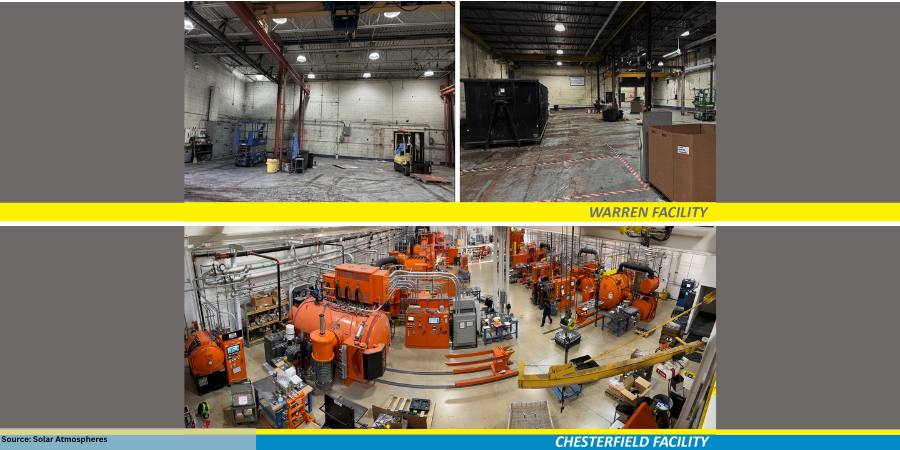
Solar Atmospheres of Michigan has successfully relocated from the old Fraser and Warren facilities to a new location in Chesterfield, Michigan. All ten furnaces (both new and existing) are fully operational at the Chesterfield plant, heralding a new era of efficiency and productivity.
This spring, construction will begin on a 15,000 square foot expansion on an adjacent lot. The expansion will allow for the investment in cutting-edge vacuum furnaces from Solar Manufacturing.
Bob Hill, president of Solar Atmospheres of Michigan, states, “Our future is very bright in Michigan. The consolidation and expansion will allow us to elevate our service standards and meet the evolving demands of our clientele across Michigan and the surrounding states. Solar of Michigan remains steadfast in its dedication to innovation, service excellence, and customer satisfaction as it ventures into this new chapter of growth and expansion.”
This press release is available in its original form here.
Find Heat Treating Products and Services When You Search on Heat Treat Buyers Guide.com
2024 is a big year for heat treaters who work for the DoD.AsJoe Coleman, cybersecurity officer at Bluestreak Consulting, explains, Controlled Unclassified Information is a key topic you need to understand if you want to maintain or grow contracts with the DoD this year.
This Cybersecurity Corner installment was released in part inHeat Treat Today’s March 2024 Aerospace print edition.
If you are a prime contractor for the Department of Defense (DoD) or a subcontractor, then you have CUI in one form or another whether it is in paper or digital format. Learn what is, and is not, considered Controlled Unclassified Information (CUI).
What Exactly Is Considered CUI?
Click to share your Reader Feedback!
The DoD handles CUI in many forms across its operations. CUI includes sensitive information that requires safeguarding but does not meet the criteria for classification as classified information. Examples of DoD CUI include:
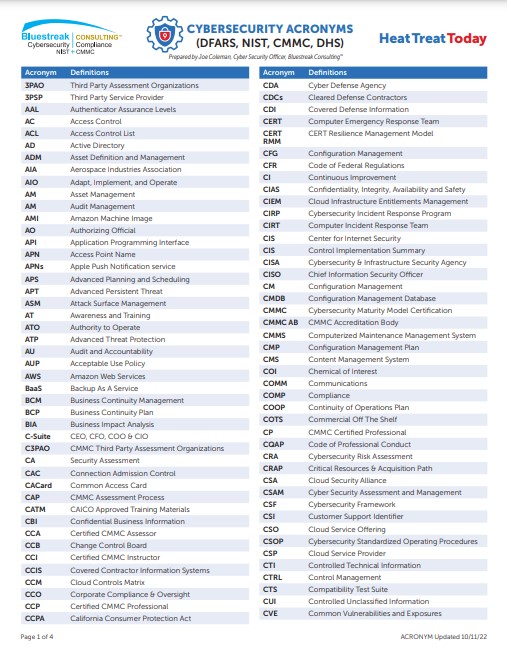
Click image to download a list of cybersecurity acronyms and definitions.
Export Controlled Information (ECI): Information that is subject to export control laws and regulations, such as technical data related to defense goods and services.
For Official Use Only (FOUO): Information that is not classified but still requires protection from unauthorized disclosure for official government use.
Critical Infrastructure Information (CII): Details about critical infrastructure elements like facilities, systems, networks, and assets that are essential for national security, economy, or public health.
Privacy information: Personal information of individuals (e.g., Social Security numbers, medical records) that needs to be protected under privacy laws and regulations.
Sensitive But Unclassified (SBU) Information: Information that, although unclassified, is sensitive and requires protection due to its potential impact if disclosed.
Contract-related information: Non-public details within contracts, such as proprietary information, financial data, or technical specifications.
Proprietary information: Data owned by an entity and protected by intellectual property rights or confidentiality agreements.
In the heat treating industry, DoD CUI might include various sensitive details related to heat treatment processes, materials, or specifications used in defense-related applications. Here are some potential examples of DoD CUI within the heat treating industry:
Material specifications: Specifications for heat treated materials used in defense equipment, weapons systems, or components. This could include details about specific alloys, heat treatment methods, tempering, or hardening processes required for certain applications.
Process documentation: Detailed procedures and technical information regarding heat treatment processes employed in the production of defense-related materials or components. This might involve specific temperature ranges, cooling rates, or other proprietary methods used in heat treating.
Quality control data: Information related to quality control measures specific to heat treating in defense-related manufacturing. This could involve data on testing methodologies, inspection techniques, or standards compliance for heat treated materials used in critical defense systems.
Research and development (R&D) information: Research findings, experimental data, or proprietary knowledge related to advancements in heat treatment technologies tailored for defense applications. This may include innovative heat treatment methods for enhancing material properties, durability, or performance in defense systems.
Supplier information: Details about suppliers providing heat treatment services or materials to the defense industry, including contractual agreements, proprietary processes, or specifications specific to DoD projects.
Cybersecurity measures: Information about cybersecurity measures employed within heat treatment facilities that handle DoD contracts or projects to safeguard sensitive data from cyber threats.
Facility security protocols: Details regarding security protocols, access controls, and clearance requirements within heat treating facilities handling defense-related projects to prevent unauthorized access to sensitive information.
Other items that may be identified as CUI provided by the DoD or generated in support of fulfilling a DoD contract or order include, but are not limited to (in both paper and digital formats):
Research and engineering data
Engineering drawings and lists
Technical reports
Technical data packages
Design analysis
Specifications
Test reports
Technical orders
Cybersecurity plans/controls
IP addresses, nodes, links
Standards
Process sheets
Manuals
Data sets
Studies and analyses and related information
Computer software executable code and source code
Contract deliverable requirements lists (CDRL)
Financial records
Contract information
Conformance reports
What Is Not Normally Considered CUI?
Here are several examples of items that may not typically fall under DoD CUI for the heat treating industry:
General industry standards: Information related to commonly accepted industry standards, processes, or procedures that are widely available and not specific to defense-related applications.
Non-proprietary heat treatment techniques: Basic information about standard heat treatment methods or techniques that are publicly known and not proprietary to a particular organization or application within the defense sector.
Publicly available research: Scientific or technical research findings, publications, or data that are publicly accessible, not subject to proprietary rights, and not specifically tied to defense-related advancements.
Commonly shared best practices: Information regarding widely accepted best practices in heat treating that do not involve proprietary or classified techniques applicable solely to defense-related materials or components.
Non-sensitive business operations: Routine business operations, administrative documents, or general non-sensitive communications within the heat treating industry that do not pertain to defense contracts or projects.
Information approved for public release: Data that has been officially approved for public release by the DoD or other relevant authorities, ensuring it does not contain sensitive or classified details.
Basic material specifications: Information about materials, alloys, or heat treatment processes widely used in commercial applications and not specifically tailored or modified for defense-related purposes.
I hope this information has been helpful to you. Please contact me with any questions and for a free consultation, with a complimentary detailed compliance ebook.
For more information: Contact Joe Coleman at joe.coleman@go-throughput.com.
Find Heat Treating Products and Services When You Search on Heat Treat Buyers Guide.com
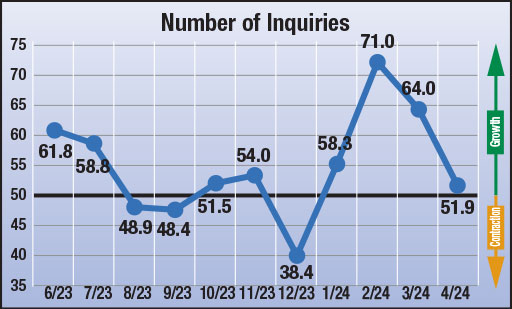
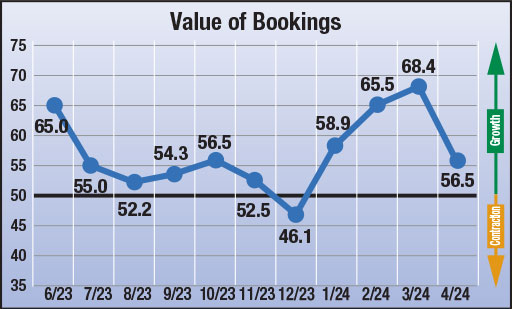
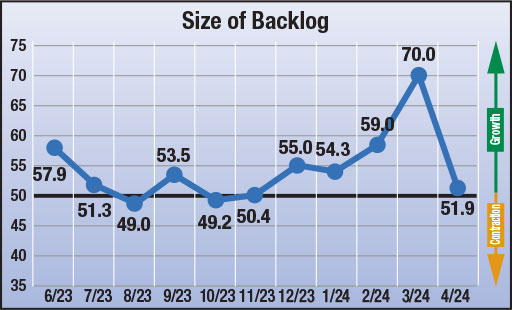
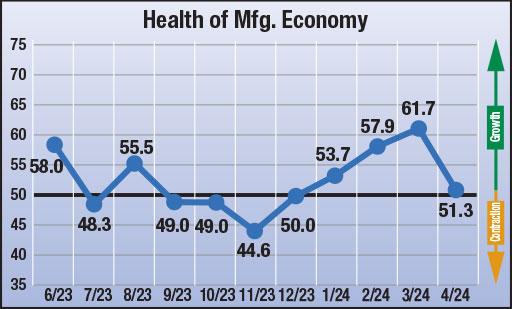
There are four heat treat industry-specific economic indicators gathered by Heat Treat Today each month since June 2023, and this month, we are seeing a marked downturn in expectations across all indicators.
The numbers, compiled in the second week of April, show that responding parties strongly anticipate all four indices — number of inquiry, value of bookings, size of backlogs, and health of manufacturing economy — to grow. However, all projections are significantly down, which would seem to indicate that industry suppliers are approaching April with far more conservative expectations as compared to Q1 2024.
The results from this month’s survey (April) are as follows; numbers above 50 indicate growth, numbers below 50 indicate contraction, and the number 50 indicates no change:
Anticipated change in the Number of Inquiries from March to April: 51.9
Anticipated change in Value of Bookings from March to April: 56.5
Anticipated change in Backlog Size from March to April: 51.9
Anticipated change in the Health of the Manufacturing Economy from March to April: 51.3
Data for April 2024
The four index numbers are reported monthly by Heat Treat Today and made available on the website.
Heat TreatToday'sEconomic Indicatorsmeasure and report on four, heat treat industry indices. Each month, approximately 800 individuals who classify themselves as suppliers to the North American heat treat industry receive the survey. Above are the results. Data started being collected in June 2023. If you would like to participate in the monthly survey, please click here to subscribe.
Find heat treating products and services when you search on HeatTreatBuyersGuide.com
As heat treaters strive for a sustainable future, pressure mounts to make the right choices while running commercially viable operations. This guest column by Michael Mouilleseaux, general manager at Erie Steel, Ltd., explores how and why heat treat operations are now coming under the focus of the U.S. Department of Energy.
This informative piece was first released inHeat Treat Today’s March 2024 Aerospace print edition.
The iron and steel industry contributes approximately 2.1% of energy-related CO2 emissions from primary sectors in the U.S. These statistics may seem insignificant or far removed, but the federal government has now determined that heat treating is a significant contributor and has set in motion critical changes for U.S. heat treaters.
Background
Click to share your Reader Feedback!
On December 8, 2021, President Joe Biden issued an executive order that committed the federal government to “lead by example” in U.S. efforts towards carbon-free and net zero emissions solutions. Since then, the executive has delegated the Department of Energy (DOE) and the Environmental Protection Agency (EPA) to spearhead these initiatives aimed at reducing greenhouse gas emissions (GHGE) and promoting energy efficiency across various sectors of the U.S. economy. To support these efforts, $10,000,000,000 in incentives are being allocated for the DOE and EPA to investigate and promulgate regulations.
Specifically, the government sees the “industrial sector” as responsible for close to a quarter of all greenhouse gas emissions (GHGE); the five industries named within this sector are chemical processing, petroleum processing, iron & steel production, cement production, and food & beverage manufacturing. The DOE is leading the efforts of “supercharging industrial decarbonization innovation” and leveraging the potential of “clean hydrogen.”
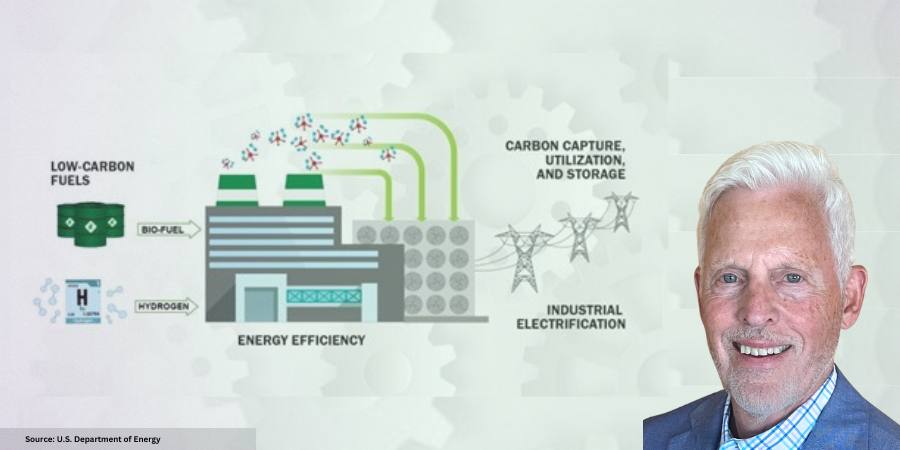
Following these directives, the DOE unveiled the “Industrial Decarbonization Roadmap” in September 2022. This strategic plan will guide decarbonization efforts of the five key industrial sectors to mitigate GHGE. The four pillars are:
Energy efficiency
Industrial electrification (using green electricity)
Adoption of low-carbon fuels, feedstocks, and energy sources (LCFFES)
Carbon capture, utilization, and storage at the generated source (CCUS)
The DOE determined that process heating — accounting for 63% of energy usage within the iron and steel industry — would be the best opportunity to apply these four pillars. However, until May 2023, heat treating had not been explicitly mentioned as a target for decarbonization efforts.
Why Should Heat Treaters Care?
In May 2023, the Industrial Efficiency & Decarbonization Office — an office within the DOE’s Office of Energy Efficiency & Renewable Energy — held a symposium to refine its commitment to the decarbonization of the industrial sector. It was then that heat treating was specifically defined as a process targeted for the reduction of GHGE in the steel, aluminum, and glass manufacturing industries.
The DOE’s refined commitment focuses on two things: reduce GHGE attributable to “process heating” by 85% by 2035 and achieve net-zero CO2 emissions by 2050. To reach these ambitious goals, the DOE emphasized the importance of adopting LCFFES, green electrification, and implementing strategies that promote industrial flexibility, advanced heat management, smart manufacturing, and alternative technologies.
The potential ramifications of the DOE’s efforts on the heat treating industry are momentous. With the development of regulations to support these efforts, businesses within this sector must prepare for significant changes. The focus on green hydrogen, biofuels, and electrification, coupled with advanced technological solutions like ultra-efficient heat exchangers, artificial intelligence, machine learning, and alternative no-heat technologies, are strategies being considered for potential regulation.
Conclusion
The heat treating industry stands at a crossroads, with the DOE’s decarbonization initiatives signaling a shift to adopt cleaner energy practices. As these regulations take shape, businesses will need to adapt, investing in new technologies and processes that align with the nation’s clean energy goals. In the next column, we’ll address potential ramifications of the DOE effort for industrial decarbonization in the heat treating industry to help you be better informed and prepared.
About the Author:
Michael Mouilleseaux General Manager at Erie Steel, Ltd.
Michael Mouilleseaux is general manager at Erie Steel, Ltd. He has been at Erie Steel in Toledo, OH since 2006 with previous metallurgical experience at New Process Gear in Syracuse, NY, and as the director of Technology in Marketing at FPM Heat Treating LLC in Elk Grove, IL. Michael attended the stakeholder meetings at the May 2023 symposium hosted by the U.S. DOE’s Office of Energy Efficiency & Renewable Energy. He will be speaking on the MTI podcast about this subject on March 5, 2024, 2:30 EST, and will present on this topic at the April 3, 2024, MTI Mid-West chapter meeting.
For more information: Contact Michael at mmouilleseaux@erie.com.
Attend the SUMMIT to find out more about the DOE’s actions for the heat treat industry.
Find Heat Treating Products and Services When You Search on Heat Treat Buyers Guide.com
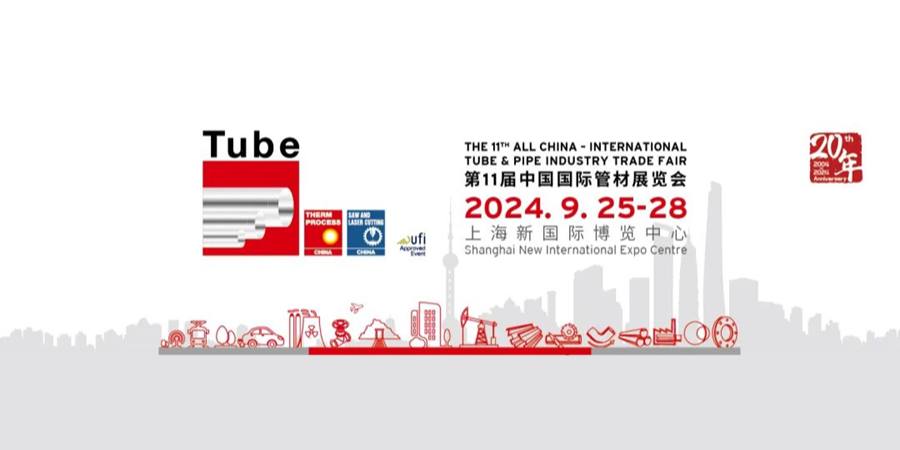
The development of China’s steel industry has been a crucial driver of the country’s rapid economic growth. Within the steel industry, steel pipes are hailed as the “blood vessels” of modern industry, playing an irreplaceable role in the development of the national economy and industrial upgrading. From January to June 2023, China’s steel pipe production reached 48.67 million tons, a year-on-year increase of 12.2%, solidifying China’s position as a major producer of steel pipes.
Processing Technology:
A Key Driver of Progress in the Steel Pipe Industry
Processing Technology directly impacts product specifications and performance. High-precision processing techniques enable steel pipes to better meet diverse application requirements, enhancing production efficiency and reducing costs. Innovative processing technologies are crucial elements in ensuring industry competitiveness and sustainable development.
The rise of heat treatment technology has transformed the mechanical, physical, and chemical properties of metal components, significantly improving their quality. More importantly, green environmental protections have become the core of the future development of the steel industry. Heat treatment-related technologies provide greater feasibility for steel production, supporting the industry’s transition towards a low-carbon and environmentally friendly direction.
Source: THERMPROCESS China
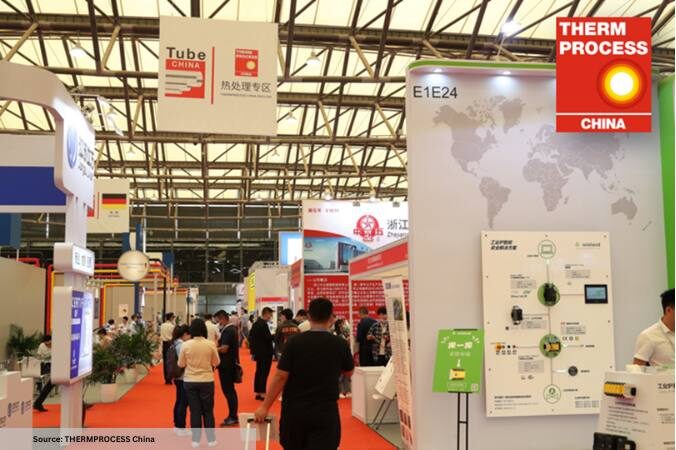
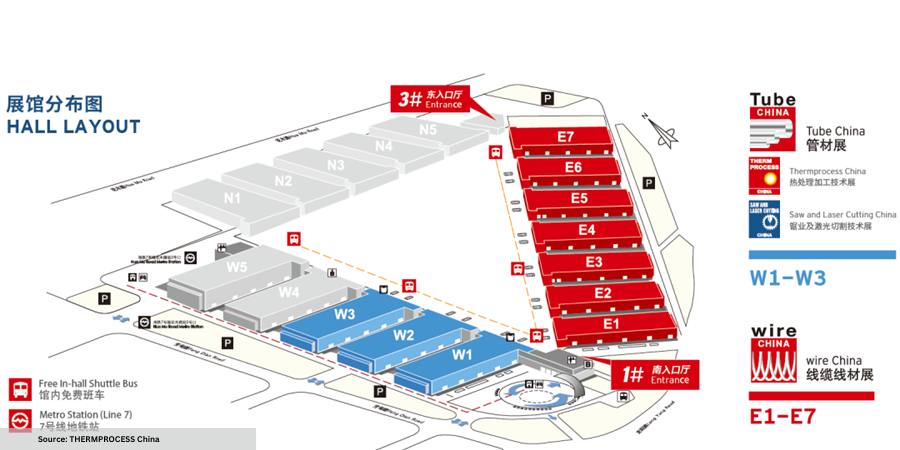
Depending on the excellent reputation and international acclaim of the “Heat Treatment” theme within the Düsseldorf GMTN (GIFA, METEC, THERMPROCESS and NEWCAST), as well as the strong support from domestic industry associations, this year, the organizers upgrade the Thermprocess China Pavilion which was held at Tube China 2023.
Holding Thermprocess China aims to provide a solid communication bridge for heat treatment system and equipment suppliers from all over the world.
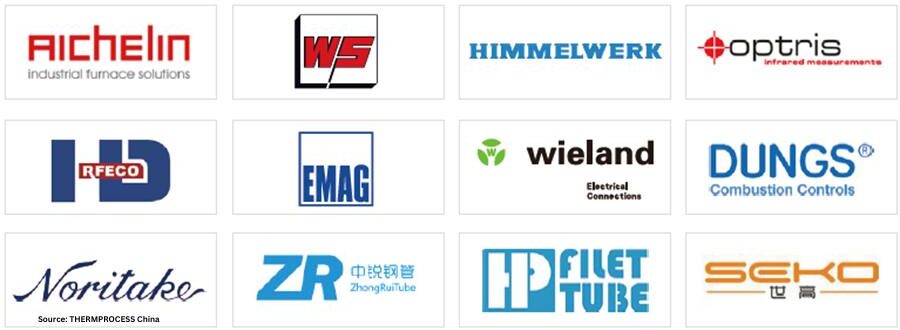
▼ Only part of exhibitors are listed, ranking in random
Welcome to Heat Treat Today’sThis Week in Heat Treat Social Media. We’re looking at some compelling developments in aviation manufacturing, sharing a few metallurgy quizzes, and of course, bringing some fun, social heat treat videos to you.
As you know, there is so much content available on the web that it’s next to impossible to sift through all of the articles and posts that flood our inboxes and notifications on a daily basis. So, Heat Treat Today is here to bring you the latest in compelling, inspiring, and entertaining heat treat news from the different social media venues that you’ve just got to see and read!If you have content that everyone has to see, please send the link to editor@heattreattoday.com.
1. The Power of Engineering vs. Gravity
We usually like to share something rich and technical, but check out this compelling video of dual F119 engines powering an F-22 in an attack maneuver.! “F-22 with a combat capacity of; 1× 20 mm M61A2 Vulcan rotary cannon, 6× AIM-120C/D AMRAAM or 4× AIM-120A/B AMRAAM 2× AIM-9M/X Sidewinder, 2× 1,000 lb (450 kg) JDAM or 8× 250 lb (110 kg) GBU-39 SDB, 4× under-wing pylon stations can be fitted to carry weapons, each with a capacity of 5,000 lb (2,270 kg) or 600 U.S. gallon (2,270 L) drop tanks”
2. It’s a Beautiful Day in the Heat Treat Neighborhood
What’s everyone been up to on the social channels?
Gamifying Quality?? Count Us In!
Marking Milestones
When Precision Meets Creativity
3. Learn with Us – 3 Quick Visuals
Sometimes, it’s the small things on social media that grab your attention or give you the “ah ha!” moment. Do any of these short posts make you say “eureka”?
Rotate Rotate Rotate Rotate. . .
Spring is Here, depending on the Temperature
Quiz Time
4. Open Your Ears: The Podcast Corner
You can’t read everything, we get it. Heat Treat Today is here to recommend one informative podcast to enjoy on your daily commute, suggest a quick video on laser heat treating, and put a comprehensive article on surface treatments for automotive on your radar!
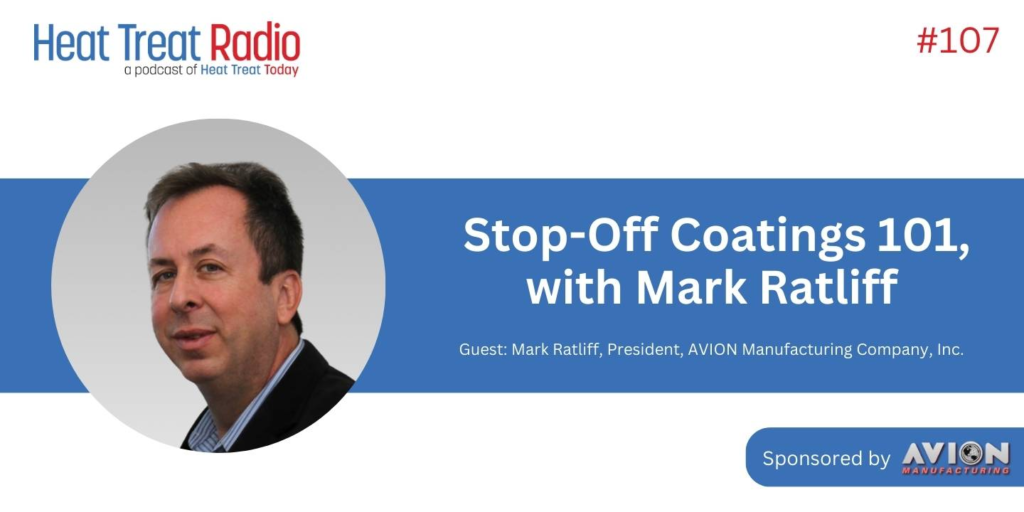
Tune in to Listen to Heat Treat Radio #107! Not Your Average Painting Class
The “Dougs” Talk
a Brazing Celebrity
5. Post-March Madness
Ever wonder the manufacturing processes behind the jump shots? Take March Manufacturing Madness: The Quiz below!
Have a great weekend!
Find Heat Treating Products and Services When You Search on Heat Treat Buyers Guide.com
Richard B. Conway Founder/Director/CTO DELTA H® Technologies, LLC Source: DELTA H
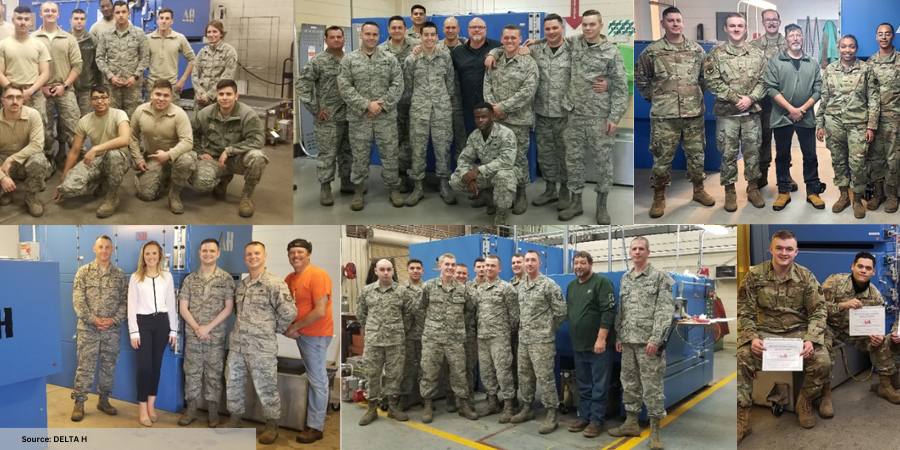
Multiple military facilities now operate more than 50 heat treat systems from a North American furnace and oven supplier. These facilities include Air National Guard bases, USAF bases stateside, Guam, Alaska, and Hawaii, Air Bases in Japan, Germany, United Kingdom – Royal Air Force, Middle East, the U.S. Navy, U.S. Coast Guard, and U.S. Army facilities.
The systems from DELTA H included either single, dual or triple chamber designs of both the heavy duty commercial aviation standard models DCAHT® / SCAHT® Series, the supplier’s Defender Series – developed for the armed forces, and aircraft composite walk-in ovens.
All systems are in full compliance to NAVAIR Tech Order 1-1A-9, and meet AMS2750 accountability standards for accuracy, temperature uniformity, calibration, and secure batch records.
Ellen Conway Merrill with USAF Metal Technology personnel Source: DELTA H TECHNOLOGIES, LLC
Richard Conway, director & CTO of DELTA H®, shares: “It is a deep honor and humbling for the DELTA H team to support our armed forces. We take the utmost care to ensure the best of our craftsmanship and abilities are utilized to deliver the finest heat treating equipment for aircraft maintenance to our Warfighters.”
Military personnel are provided full operator and heat treating and maintenance training, as well as on-site qualifying assistance to meet and maintain the stringent pyrometry standards. Successful trainees receive Certificates of Training as qualified to use their DELTA H® furnace for heat treatment of aircraft parts.
This press release is available available upon request.
Find Heat Treating Products and Services When You Search on Heat Treat Buyers Guide.com
No matter where you sit on the advanced manufacturing supply chain, discover game-changing solutions at Ceramics Expo
Ceramics Expo is North America’s leading technical ceramics exhibition and conference that provides the opportunity to discover how the unique properties of advanced ceramics materials enhance high-tech manufacturing industries.
No other event offers the opportunity for professionals working across sectors such as Automotive, Aerospace & Defense, Electronics, Energy, Telecoms/5G, and Medical to delve into cutting-edge use cases for ceramics materials and components, helping to solve manufacturing and engineering challenges. Attendees can tap into the advantages of cross-sector networking and in-person engagements with the latest material engineering solutions and concepts.
Co-located with Thermal Management Expo, this event is scheduled for April 29 – May 1, 2024, at Suburban Collection Showplace, Novi, Michigan, USA. Global market-leading suppliers and manufacturers including 3M, Almatis, ERG Aerospace, Exentis Group, Fiven, GeoCorp, IPS Ceramics, McDanel, and Saint-Gobain will be showcasing the materials and manufacturing process innovations that are driving innovation across high-tech applications,
In addition to the exhibition, the free-to-attend conference will feature sessions led by technical experts from industry heavyweights such as Lockheed Martin, McDanel, The American Ceramics Society, Himed, Intel, Henkel, and more. These sessions will provide insights into innovation in ceramic materials, supply chain sustainability, piezoelectric ceramics, workforce and talent development, 3D printing, advanced ceramic innovations in aerospace and electronics, and next-generation solid-state batteries.
Ipek Saltik, Exhibition Director, emphasizes, “The pivotal role of advanced ceramics in fueling innovation across critical sectors cannot be overstated. This yearly gathering serves as a catalyst for innovation, fostering crucial exchanges of knowledge, progress, and optimal strategies, thereby propelling the future of advanced ceramics.”
Registration is now open, and Ceramics Expo encourages interested visitors to pre-register for free via the website at https://www.ceramicsexpousa.com/
Guangdong Tayo Motorcycle Technology Co. Ltd., a Chinese manufacturer of motorcycles and bicycles, has invested in a nitriding/nitrocarburizing system, increasing sustainability and growth for its new production facility in Jiangmen City, located in southern China’s Guangdong province.
Heat treat solutions company Nitrex was commissioned to deliver a comprehensive turnkey system, geared towards enhancing the performance and durability of multiple components within Guangdong Tayo Motorcycle, including those for the brands Haojiang, Daye, Shengshi, and Qidian.
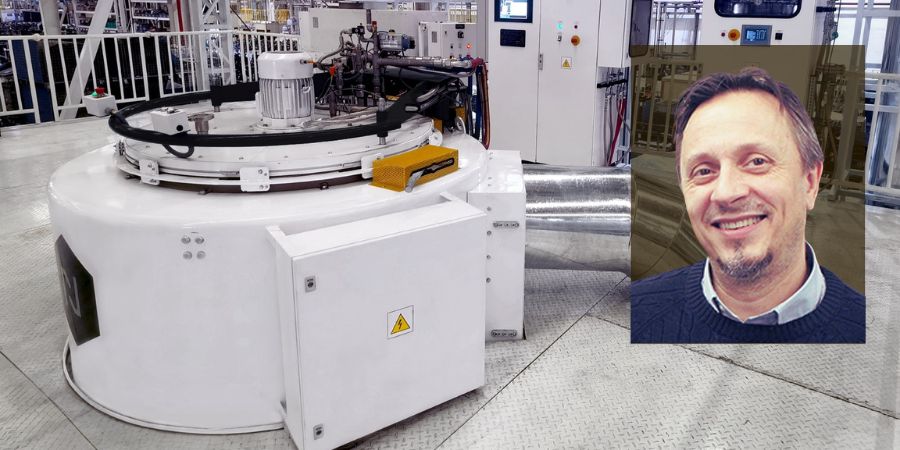
Nikola Dzepina Nitrex Regional Manager – Asia Source: NITREX
Nikola Dzepina, Nitrex account executive, said, “Our partnership with Guangdong Tayo Motorcycle Technology Co. Ltd. will help them in fulfilling their mission of delivering top-notch, highly durable, and reliable motorcycles and bicycles to their global customer base.”
As part of their development strategy, Guangdong Tayo Motorcycle has placed sustainability, product quality, service excellence, and market expansion at the heart of their mission. Paving the way for superior motorcycles and bicycles, the company evaluated various options and ultimately selected Nitrex for its precision-controlled processes, process stability and repeatability, equipment longevity and reliability, and commitment to environmental friendliness.
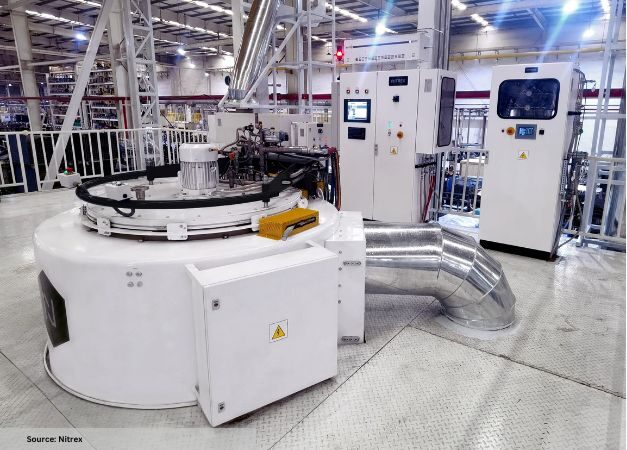
Nitrex pit furnace Source: Nitrex
The turnkey system comprises a large pit-type furnace, model NX-1225, with a 4000-kg load capacity and the Nitreg® controlled nitriding and Nitreg®-C nitrocarburizing technologies. These surface treatments augment the properties of motorcycle and bicycle metal components, significantly enhancing wear resistance and providing protection against rust and corrosion. Additionally, the system features an ammonia dryer and accelerated cooling system, facilitating the delivery of high-purity ammonia and fast cycle times to optimize production efficiency.
Tao Liu, sales manager at Nitrex China, emphasized, “This system’s exceptional reliability, engineered for longevity with minimal maintenance requirements and low utility and production media consumption costs, aligns perfectly with Guangdong Tayo Motorcycle’s vision for a sustainable future.”
This press release is available in its original form here.
Find Heat Treating Products and Services When You Search on Heat Treat Buyers Guide.com
May you have a blessed Easter weekend! Heat Treat Today offices are closed today (Friday, March 29), but will be back open Monday morning.
As we’ve come to Good Friday, we’d like to take a moment to reflect on the gift of the resurrection of the Savior, our Lord Jesus Christ. Through his death and resurrection, we can have eternal life! At Heat Treat Today, our prayer is that as we are helpful to you, you would also see the light of Christ shine through us. See you Monday!