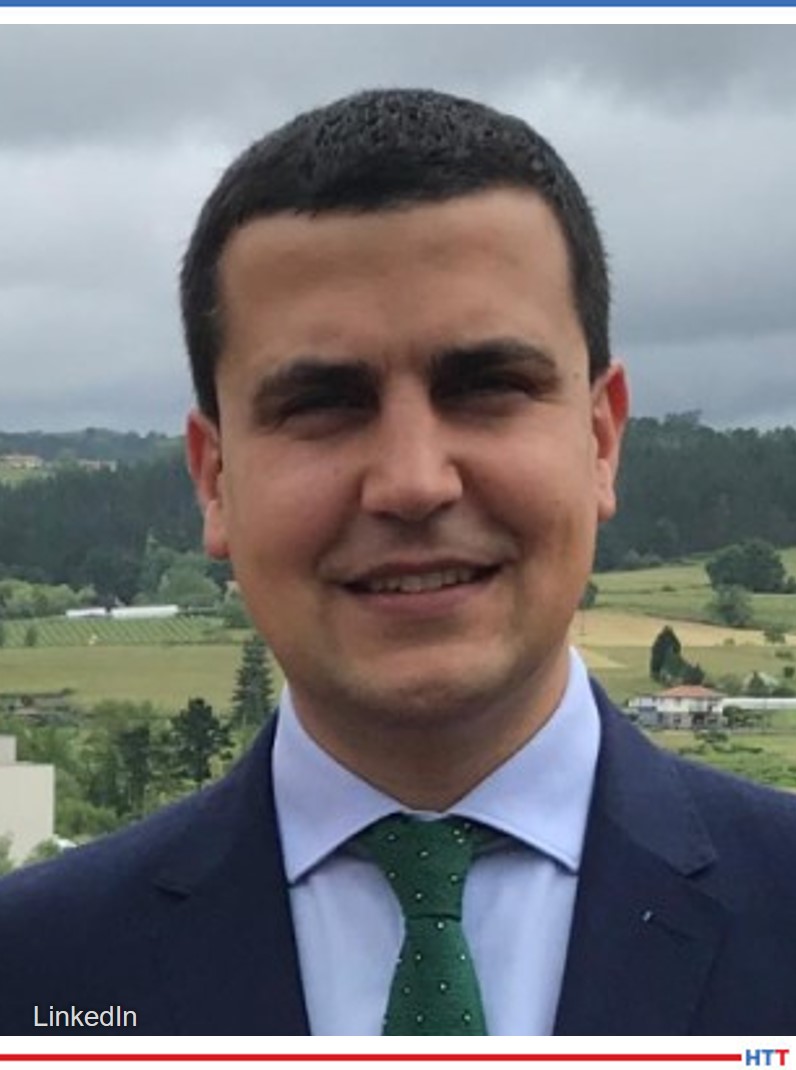
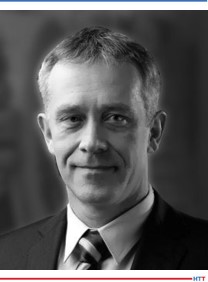
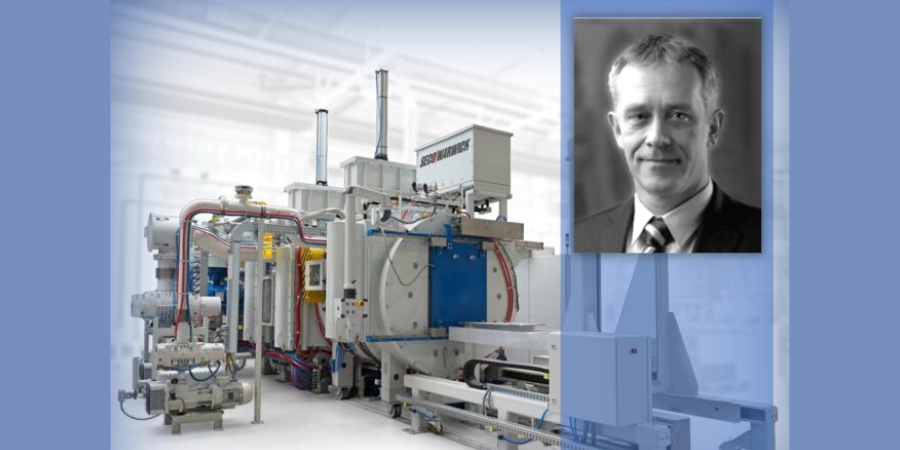
Maciej Korecki Vice President of Business of the Vacuum Furnace Segment SECO/WARWICK
An industrial automation manufacturer has ordered a heat treatment system to establish a captive hardening plant within their machine park. The line of two vacuum furnaces, an atmosphere furnace, and a washer will harden and carburize parts, specifically gears, pinions, and shafts.
SECO/WARWICK, a manufacturer with North American locations, will produce the furnaces to harden and vacuum carburize the elements used in motor reducer production. These parts figure in the automation applications production process for industries such as automotive, aviation, food and printing.
“In these times of constant problems with maintaining the supply chain, having captive heat treatment within a machine park provides our partners with a huge competitive advantage and independence," says Maciej Korecki, vice president of the Vacuum Furnaces Segmentat SECO/WARWICK Group. "Within a relatively small area, we can create a heat treatment system that will meet the Partner’s needs."
Find heat treating products and services when you search on Heat Treat Buyers Guide.com
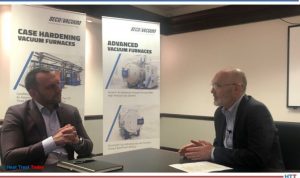
At the front of some major developments in heat treat technologies is Slawomir Wozniak, CEO of SECO/WARWICK. Join him and Heat TreatRadiohost and Heat Treat Today publisher, Doug Glenn, as he talks about the latest trends in heat treat, especially the new technologies his company is pursuing and the effect of the War in Ukraine. Read a recent press release with information about the group here.
Below, you can watch the video, listen to the podcast by clicking on the audio play button, or read an edited transcript.
The following transcript has been edited for your reading enjoyment.
Doug Glenn: The last time we spoke in an interview was in 2019. We were in Germany at Thermprocess, and you were just getting into the CEO position. We’re coming up on 4 years. How has it been? For you personally and for the company?
Sławomir Woźniak CEO SECO/WARWICK Source: secowarwick.com
Slawomir Wozniak: A good question. Yes, it was a very nice time.
Contact us with your Reader Feedback
I was not expecting so many challenges, especially since I took over in 2019, in June. We started to work on a new strategy for the company, for the group, and then Covid came. That changed everything. We had to implement a lot of changes to the company and cope with the challenges. It was a good time, absolutely. Many positive things happened to the company, and we grew up with the business.
We reorganized our companies successfully, especially in China and in the U.S. I have had a great, supportive team ever since I started with the company for more than twenty years. I know all the people very well, and they cooperate and support me every day. It was a very good time for me, and I’m looking forward to another couple of years running the business.
Doug Glenn: Compared to 2020, will this year be a normal year?
Slawomir Wozniak: It looks like it. We still feel, however, the impact of the war in Ukraine and the supply chain deterioration caused by both COVID and the war in Europe. We also reorganized the way we do things in the company.
But you’re right, the business is good today. Although we see some recession on the horizon, this year is extremely good. It’s extremely good in the U.S. but also in Asia and Europe. Pretty much all the markets are growing.
New products were implemented on the market in the last couple of years, so we see a good future.
Doug Glenn: Tell us a little about the 60th anniversary coming up.
Slawomir Wozniak: There is an anniversary coming for RETECH. The company was established in 1963, so next year (2023) we would like to celebrate the 60th anniversary in Buffalo, NY. This is something which energizes the U.S. market.
We would also like to highlight our footprint on the U.S. market because we have three companies. We have RETECH, SECO/VACUUM Technologies, and SECO/WARWICK Corporation. We like to see the companies working together, and we see a big interest from U.S. customers to get equipment made in America. RETECH produces vacuumatological equipment (vacuum melting equipment) in the United States. We would also like to build vacuum furnaces in the U.S. SECO/WARWICK Corporation has been in business for many years, and we would like to continue with production of atmospheric furnaces and aluminum process furnaces. We are also thinking about aluminum brazing equipment we build in U.S.
Doug Glenn: I want to talk about SECO/WARWICK group and strategies. I know you manufacture equipment, but the emphasis has always been on technology.
What can our readers be looking forward to in terms of technology?
Slawomir Wozniak: We are a typical technology, an engineering company which provides technological solutions for our customers. We not only provide equipment, but we provide complete solutions for our customers.
What we see on the market is a deep interest in what we call “green technologies.” These are all the technologies that are in line with reducing the carbon footprint. Our technologies can provide solutions for our customers, like low pressure carburizing (LPC), zero-flow nitriding, and all the other technologies which also reduce the time for the process and energy consumption. We see a big boom because the carbon footprint needs to be reported by our customers.
Interest in "Green Technologies" Source: Unsplash.com/ShubhamDhage
We have to provide a report of what the carbon footprint generated during production of our equipment was. We also must provide a report of what the equipment would produce during a process. We have some solutions which significantly reduce the emission of carbon dioxide. This is what our customers are looking for.
We see a big interest in conversion of heating systems from gas to electric. Customers can buy green electrical energy, but they cannot buy the “green gas” right?
Doug Glenn: Not unless you do hydrogen which isn’t quite ready yet.
Slawomir Wozniak: Right. All these technologies are very much in the interest of our customers. So, this is why we are forcing also, the new development of our solutions to replace all technologies like gas carburizing by low pressure carburizing. This is what we see on the horizon.
Car manufacturers are declaring that by 2035 they will not be producing any more combustion engines in cars. We have a great product for brazing of battery coolers for electrical vehicles, an aluminum brazing process. This equipment is produced in Europe and in China, and we provide the solutions for global OEMs. Also, we see booming technology. With the growth of immobility we also see a growth of our business.
Doug Glenn: Have you seen much of the growth in the green movement? Have you seen it as much in North America as you’re seeing in other regions of the world?
Slawomir Wozniak: We see some interest from the customers. It is not as big as it is in Europe. With the global supply chain, even our U.S. customers, when they produce certain components, they also need to be in line with the global strategy. The end-user is the user of the components which are heat treated in our equipment. The end-user will ask for the certification of the carbon footprint. This is why it is still not on the level as we see in Europe, but we see more and more customers/companies asking for green solutions because they need to also be in line with the trend.
Doug Glenn: It seems the North American market tends to be a little slow on the uptake on these green things.
What light can you shed on the plans for SECO group in North America over the next five/ten years?
Slawomir Wozniak: This is the right time because we are working on the strategy now for the entire group, particularly for the U.S. market. We have three companies in the U.S., and we would like to build more equipment. This is in line with the interest of our customers.
[blocktext align="left"]There is a trend of reshoring and moving business back to North America, particularly to the U.S., but also to Mexico, to better serve the market and provide quicker solutions. We would like to build more equipment in the U.S. A lot of businesses are moving their production from southeast Asia (particularly from China) back to the U.S.[/blocktext]
We can provide the solutions to help our customers to run the day-to-day productions in a cost-effective way with these green technologies, but also with technologies which can reduce the cost of the production, the cost of heat treatment processes, and metallurgical processes. This is why we would like to build more equipment here.
RETECH, our company which provides metallurgical vacuumatology solutions, is very busy with the new locations. We have a lot of projects which are fully made in the U.S. We are now analyzing how to cope with the challenge of the U.S. market to build vacuum furnaces in the U.S.
Today, we only import vacuum furnaces from Poland. In Europe, in general, the lead time of some components is growing. Energy and labor costs are also growing, so we’d like to build vacuum furnaces also in the U.S. to better serve our customers. This would be the main focus for the next few years — to reinforce our operation processes here in the U.S. and also to organize how to serve the U.S. market by local manufacturing.
Doug Glenn: I think it would be helpful to delineate the three companies that you’re talking about, the North American companies.
Slawomir Wozniak: RETECH. We moved from California to Buffalo, NY, roughly three years ago. We have a nice facility. We are quite busy there with production and assembly of vacuumatological equipment.
Doug Glenn: Which is, basically, vacuum melting equipment.
Slawomir Wozniak: Right. Things like plasma equipment, electron beam equipment. We would like to even look for more space because we have so many projects. We still have our office in California, because we still have some good employees who contribute to the performance of the company. We would like to maintain this office in California.
With SECO/VACUUM Technologies, LLC, we would like to start building equipment for the North American market. We have a new setup, a new office, and a new facility with some floorspace where we can assemble the furnaces. We would like to start from assembly and eventually, double up the processes and completely build the equipment here in the U.S.
SECO/WARWICK Corporation — we just hired a new managing director in June of this year, Marcus Lord. His main focus is to grow our business in the U.S. particularly for our aluminum process equipment and also for thermal equipment.
Our goal is to build equipment in the U.S., maybe not in-house fabrication, but use our subcontractors, and then to do the assembly in the facility. We are also looking forward to set up a facility in the U.S.
Doug Glenn: RETECH has moved manufacturing to Buffalo, NY. SECO/VACUUM Technologies is still located in Meadville, Pennsylvania, but not in the previous building. They do have some manufacturing capabilities, although there is not really any manufacturing going on there except for spare parts, I assume.
Slawomir Wozniak: Spare parts and retrofits.
Doug Glenn: The last company was SECO/WARWICK Corporation, which is big in aluminum and general line thermal equipment.
Slawomir Wozniak: We would like to continue with this business and build equipment in the U.S.
Sławomir Woźniak and Doug Glenn Source: Heat TreatToday
Doug Glenn: That gives us a sense of the direction over the next five years or so.
Poland (your headquarters’ location) has been in the news quite a bit because of the war between Russia and Ukraine. How has that impacted your company and maybe individuals in your company. Has it impacted your ability to manufacture in Poland?
Slawomir Wozniak: It was a big shock for everyone at the end of February of 2022 when the invasion of Russia happened to Ukraine. For our company, the main heat was linked with the supply chain of some materials, especially commodities like steel, which were supplied for many, many years from either Ukraine or Russia.
Then, the prices of energy, like gas and electricity, also increased significantly. We also had some businesses in Russia; we have a SECO/WARWICK company in Russia to provide services and sales, but we stopped, pretty much, all activities there. We have just completed all the contracts, and we are not promoting our equipment there. We are not providing any quotes to Russian customers; we stopped our activities there.
It was not a big impact on our business because the volume of the business in Russia was not so big.
However, since the war started, we have realized that a lot of customers linked Poland with Ukraine as a country which is very close and, anytime, can be in the conflict.
So, many customers were worried about the situation, and they started to ask us, “Is our project safe? Can you still deliver our project?” So, we had to guarantee and confirm, “Okay, everything is fine. We can run the projects.”
There was a time, especially in the second quarter, when the delivery time of some materials were extended because of the situation. It has improved, and today we do not see much impact on it. Obviously, from the job market perspective, it was also significant, in part, because many migrants moved from Ukraine to Poland.
Doug Glenn: I think Poland was the number one country to receive immigrants.
Slawomir Wozniak: Exactly. We organized a lot of support, as a company and as individuals, with private activity to support the Ukrainian immigrants.
From our side, we have seen some shock and some impact on our from the other side. A lot of companies also started to think differently. For them, it was the first shock three years ago that impacted the global supply chain — many, many materials and then goods. This war was a second wave of impact on the businesses. We see that some companies decided to move their businesses to change their supply chain and, I can say, we even benefited from that because we see some growing business because of the situation.
In the end, I would not say the war is a good thing, obviously, but it is also positive thing for businesses.
We also have some solutions for the defense industry. We see growing interest — not only in Europe, but globally — in investment in capital equipment for increasing the production of some defense equipment.
Doug Glenn: Over your first four years in office, as the CEO, you’ve had to deal with the pandemic and you’ve had the war breaking out. I know there are some other issues, such as labor shortages and supply chain issues.
What is keeping you up at night worrying? As you’re looking forward, what are the things you’re concerned about?
Slawomir Wozniak: One, you just mentioned, about the labor market. We know that the demographic factors are very, very bad for many, many countries, including China. Today, it’s okay, but if you look long-term, the demographic doesn’t look good. We are focusing, now, on how to replace the human factor by automation, how to simplify the processes, how to implement the solutions which don’t require a lot of labor. So, automation is one thing and simplification of some processes, standardization of some solutions. We’ve focused on vacuum equipment especially. How can we reduce the manpower required to build the furnaces?
The second area is definitely the geopolitical situation, especially the tensions on the line between the U.S. and China. We have a lot of businesses in China, today. We also export from China, and to other countries. This is something which we have to look very carefully at how to recoup and handle if there were escalation from sanctions or limitations on the business and possibly to export our equipment.
[blockquote author="" style="1"]This is why we would like to focus more, in coming years, on the Indian market. We would like to set up production capacity in India to produce more equipment. Then, particularly how we can serve the Indian market which is growing. We see a lot of potential in India, but also later to use our capacity there to export some equipment to serve other markets. This is our focus for the next few years.[/blockquote]
I think the geopolitical situation is the thing which is out of our control, for everybody. Even the job market, as I said, we can cope some. How? We can attract our employees, and we can attract potential employees to join our company. With the geopolitical situation, we can do nothing.
Doug Glenn: We’re at the mercy of the leaders, which is always a scary thing.
You’ve talked a lot about green technologies. Is it safe for us to say that SECO is still in the business of the more conventional gas-fired type equipment around the globe? Or are you moving away from that?
Slawomir Wozniak: We do less and less gas-fired equipment. Gas-fired equipment was, in general, an atmospheric type of equipment. We changed the strategy for this product line. We have just narrowed our portfolio to a few types of equipment only. For some solutions, obviously, we still offer gas-fired heating systems, but we see more and more interest in using electrical heating systems. There are some developmental projects to use the combination of hydrogen and natural gas. This is the direction which we see from supplies of heating systems partners, and our customers are looking to get solutions which we call “the green solutions.”
I would say that, in the long term, we will not provide combustion systems in the equipment, but, currently, we still have them in our portfolio. I don’t really see that this will maintain for a long time, especially, as I said, since we changed our strategy for general products and for thermal product line. We do not use many of the solutions for combustion processes.
Doug Glenn: Here in the U.S., you are going to transition many non-vacuum lines from gas to electric?
Slawomir Wozniak: Yes. But, for some solutions, you cannot. We must have combustion and we obviously offer melting equipment and also some processing products. But we are very flexible and we can offer various solutions for our customers. We always try to adjust our proposal to the customer specifications and customer expectations.
Doug Glenn: It is probably safe to say that, within the next 5–10 years, you’re still going to be doing some combustion-related stuff, especially in North America. It’s going to be demanded. As most of the rest of the world knows, we’ve got relatively cheap energy.
Slawomir Wozniak: Less definitely than Europe, especially with the current situation with the supply of natural gas.
Alan Gladish (r), Praxis Communications, Inc., and Katarzyna Sawka(c), Vice President Marketing at SECO/WARWICK, were present at the interview with Doug Glenn(l). Source: SECO/WARWICK
Doug Glenn: Alright, last question: You’re obviously enjoying your work. You enjoy your team. The company is doing well. What excites you, personally, about the next 2, 3, 4 years at SECO/WARWICK?
Slawomir Wozniak: As I said, I have a great team which supports me every day in all of the challenges that we are facing, like every company. I love my job. I’ve bonded with the company. I grew up with the company. I would like to see the company develop and grow with new technologies, with market requests and new solutions.
We have great R&D teams — one in U.S., one in Poland — and we work on new solutions. I see that we can change a lot of industries with our solutions. This keeps me really energized every day, to discuss new technologies, new solutions, and how we can impact the development of various industries like aerospace, the energy sector, and the automotive industry. I’m proud to see some cars with our components.
Doug Glenn: It keeps you energized!
It’s good to enjoy your work, and it’s good to have passion for the future. I think that trickles down to your organization; you certainly have.
About the expert: Slawomir Wozniak started his professional career at SECO/WARWICK in 1994 initially as a service engineer and then as a deputy manager of CAB. Later he was posted to SECO/WARWICK Retech in China before an appointment of managing director at SECO/WARWICK Allied in India and chief operating officer of SECO/WARWICK Group. Later he was appointed managing director (Asia) and member of the management board at SECO/WARWICK SA. In 2018 he became vice president of the SECO/WARWICK SA Management Board, chief operating officer of the SECO/WARWICK Group, and he is the current president of the SECO/WARWICK Group.
Peter Zawistowski Managing Director SECO/VACUUM TECHNOLOGIES, USA Source: secowarwick.com
An electric vehicle manufacturer will move the heat treatment of their prototype gears in-house with a vacuum furnace. The company expects new product development to accelerate.
SECO/VACUUM, a SECO/WARWICK Group company, will deliver a CaseMaster Evolution (CMe) model with a working hot zone of 16”x16”x24” and a load capacity of 440 lb. The EV maker’s R&D lab will use furnace to low-pressure carburize and oil quench prototype gears. With this expansion, the manufacturer hopes to mitigate scheduling delays encountered when sending their prototype gears out to local commercial heat treatment shops.
“We have a strong partnership together," said Peter Zawistowski, managing director of SECO/VACUUM, "having commissioned a number of highly successful heat treat furnaces that provide a wide variety of processes in their plants across the world."
Find heat treating products and services when you search on Heat Treat Buyers Guide.com
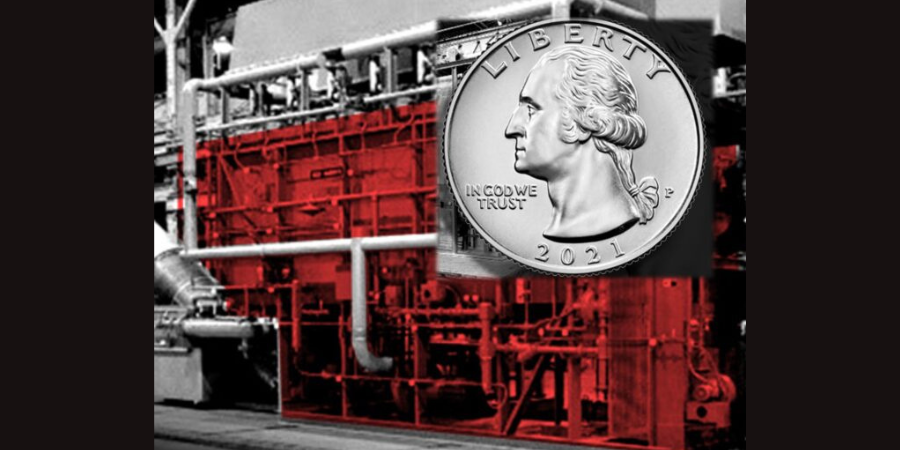
The Philadelphia Mint recently began a round of upgrades for its heat treat furnaces. Their function in the minting process is to anneal, clean, and dry the coin blanks to soften the metal prior to striking into coins, extending the service life of the striking dies.
SECO/WARWICK Group’s American subsidiary, located in Meadville, PA, recently began upgrades, a refurbishment of all five of the Philadelphia Mint’s heat-treating furnaces, one furnace per year. The heat-treating furnaces were originally installed there by SECO/WARWICK USA from 1994 through 2000.
All five furnaces are 4000 pound per hour rotary retort furnaces outfitted with a quench system, as well as a hopper feeder, a batch burnish barrel, and a batch/continuous drum drier. The furnaces are showing their age after a quartercentury, so rather than nickel and dime the maintenance, the mint opted for a comprehensive refurbishment.
“Our Partner has plenty of coin to heat-treat, but they don’t have any to burn," commented Marcus Lord, managing director at SECO/WARWICK USA. "These waste-heat recovery and combustion efficiency upgrades are going to save them a mint while cutting carbon and NOx emissions nearly in half."
The small letter at the nape of Washington’s neck in the coin image above is a mint mark. The “P” indicates that the coin was struck at the Philadelphia Mint. Source: SECO/WARWICK Group
To reduce energy consumption, the Mint is replacing insulation, roof panels, and radiant tubes as well as upgrading the loading systems. More energy efficient burners are being installed, along with recuperators to preheat the combustion air, to improve energy efficiency and use less natural gas. Mechanical improvements include replacing drive motors and two-speed gear boxes. The retort can over-heat and warp if the rotary retort unexpectedly stops before the cool-down cycle. As a failsafe, SECO/WARWICK added a pneumatic backup motor that can run the gear box off the Mint’s compressed air reservoir during a power outage.
The mint was established by the Coinage Act of 1792, when Philadelphia was the nation’s capital. It was the first public building constructed under the direction of the recently formed United States government. The machinery was powered by a horse walking circles in the basement.
Find heat treating products and services when you search on Heat Treat Buyers Guide.com
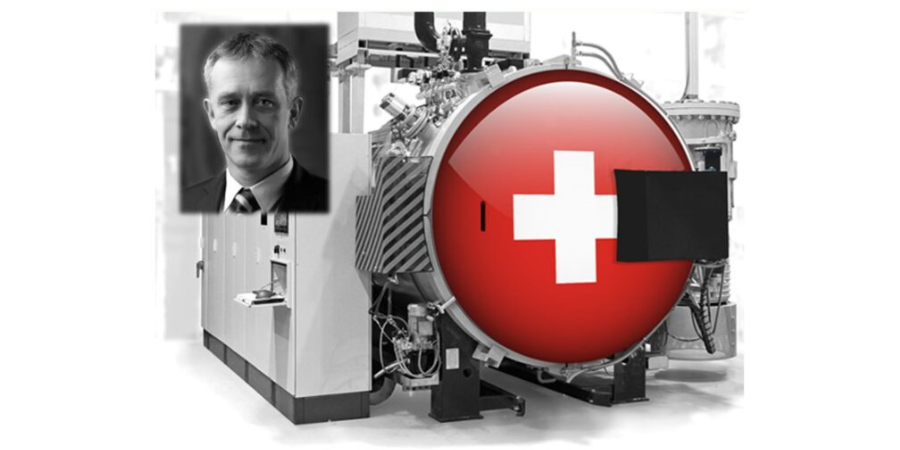
A Swiss commercial heat treater ordered a vacuum furnace. A system will increase the production capacity of their nickel and silver brazing processes.
Maciej Korecki Vice President of Business of the Vacuum Furnace Segment SECO/WARWICK
The SECO/WARWICK vacuum furnace helps with hardening larger size parts and significantly increases the efficiency of the current hardening plant. The furnace increases production. In the version ordered by the Swiss, a large working zone (36"X36"X48") with the potential to adjust to an oversized load utilizes the advantages of a round heating chamber.
“[With a] cooling capacity of 15 bar, it is possible to process parts that require very fast cooling . . . . Vector also allows the system to perform more difficult brazing processes with either nickel or silver," explains Maciej Korecki, vice president of the Vacuum Furnace Segment, at SECO/WARWICK Group. "This is our second installation with this partner. Previously, we delivered a solution from the SECO/WARWICK furnace family of a similar size, in a non-pressurized version."
Find heat treating products and services when you search on Heat Treat Buyers Guide.com
Piotr Skarbiński Vice President of Aluminum and CAB Products Segment SECOWARWICK Source: LinkedIn
Two Chinese manufacturers choose EV/CAB lines to expand their heat exchanger production to better heat treat oversized battery cooler.
The furnace supplier, SECO/WARWICK, noted that this will be the fourteenth CAB line for one of the manufacturers in the China market.
“This year, CAB lines for brazing heat exchangers have been sold to several new customers on the Chinese market," said Piotr Skarbiński, vice president of the Aluminum and CAB Products at SECO/WARWICK. “The EV/CAB line . . . [has] temperature uniformity across the belt, suitable for the strict requirements of the automotive industry, as well as its reliability and quality."
Find heat treating products and services when you search on Heat Treat Buyers Guide.com
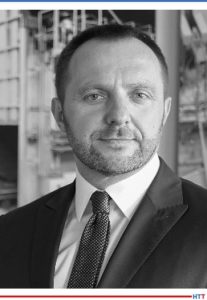
Maciej Korecki Vice President of Business of the Vacuum Furnace Segment SECO/WARWICK
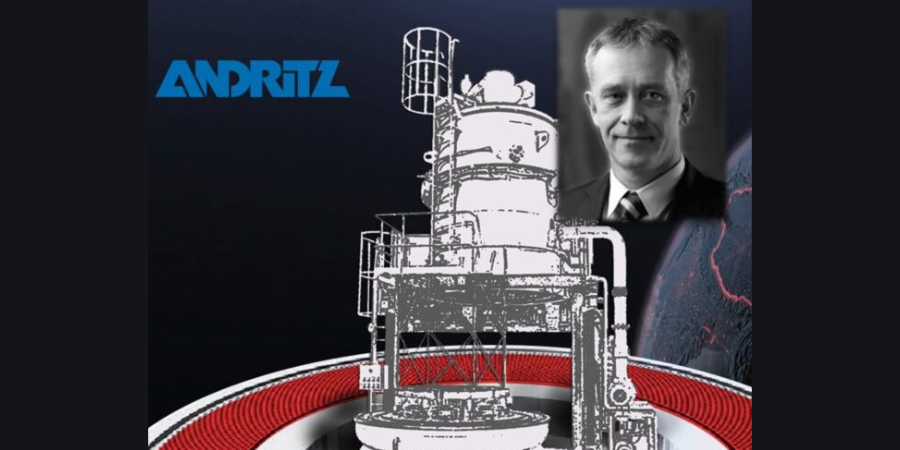
The Andritz Group, a manufacturer of complete lines for cold-rolled strip production and processing, has ordered a vertical vacuum furnace. The furnace for gas quenching processes will help produce consistent product quality.
SECO/WARWICK Group , a manufacturer with North American locations, equipped the Vector® furnace with a graphite chamber, gas cooling system, and a rotating hearth. The Andritz Group, with this system, adds to their heat treat capabilities in hydraulic power, pulp, and paper as well as metals processing industries.
This is the first vacuum furnace manufactured in the Tianjin facility of the SECO/WARWICK Group. “We have already worked with the Andritz Group, but this time it is the first contract with our Chinese branch. The Vector furnace is manufactured in our Chinese factory, which significantly shortens the solution’s delivery time to the customer," says Maciej Korecki, vice president of the Vacuum Products Segment at SECO/WARWICK Group.
Find heat treating products and services when you search on Heat Treat Buyers Guide.com
Modern industry trends and expectations pose new challenges to heat treating equipment; in addition to the expected requirements (e.g., safety, quality, economy, reliability, and efficiency), factors like availability, flexibility, energy efficiency, environmental, and the surrounding carbon neutrality are becoming increasingly important.
Maciej Korecki, vice president of Business Development and R&D at SECO/WARWICK, presents this special Technical Wednesday case study for the last day of FNA 2022 to focus on an equipment solution that meets these modern industry demands: a semi-continuous vacuum furnace for low-pressure carburizing (LPC) and high-pressure gas quenching (HPGQ).
Maciej Korecki Vice President of Business of the Vacuum Furnace Segment SECO/WARWICK
Introduction
At least 60 years ago, vacuum furnaces first appeared in the most demanding industries (i.e., space and aerospace), then spread to other industrial branches, and are now widely implemented in both mass production and service plants. Use of vacuum technology does not look like it is slowing down anytime soon.
Contact us with your Reader Feedback!
The driving forces behind this growth in vacuum technology are two-fold: first, the increasing heat treatment requirements that result from the directions of industrial development and production systems, and second, environmental protection, where the advantages of vacuum technologies are undeniable.
Traditional Atmospheric Technology
Case hardening by carburizing is one of the most widely used heat treatment technologies. It consists in carburizing (introducing carbon to the surface) followed by quenching of the carburized layer. Typically, the work is carburized in a mixture of flammable gases (CO, H2), and quenched in oil in an atmosphere furnace, using methods developed in the 1960s.
These methods have a history of development, though the question remains if the technological developments can keep up with the requirements of modern industry. Safety is an issue with this method due to the use of flammable (and poisonous) gases and flammable oil, as well as open flame, which in the absence of complete separation from the air can lead to fire, or poisoning.
In addition, they affect their environment by releasing significant amounts of heat, polluting the surroundings with quenching oil and its vapors. They require the use of washers and cleaning chemicals, emit annually tens or even hundreds of tons of CO2 (greenhouse gas, the main culprit of global warming and dynamic climate change) coming from the carburizing atmosphere, and for these reasons, they need to be installed in dedicated so-called “dirty halls” separated from other production departments.
The resulting requirement to limit the temperature of the processes to 1688-1706 oF (920-930oC) is also not without importance, as it blocks the possibility of accelerating carburization and increasing production efficiency (due to the use of metal alloys in the construction, the service life of which drops dramatically at higher temperatures) and the formation of unfavorable intergranular oxidation (IGO), which is a characteristic feature of the atmospheric carburizing method.
Quenching in oil is effective, but it does not have precise controllable, repeatable, and ecological features that heat treaters may need. Due to the multiphase nature of oil quenching (steam, bubble, and convection phase) and the associated extremely different cooling rates, it is characterized by large and unpredictable deformations within a single part and the entire load. Furthermore, there is no practical method to influence and control the quench process.
Modern Vacuum Technology with LPC and HPGQ
Vacuum carburizing appeared as early as the 1970s, but it could not break through for a long time due to the inability to control and predict the results of the process, and heavy contamination of the furnaces with reaction products.
The breakthrough came in the 1990s, when acetylene began to be used as a carbon-bearing gas and computers were employed to control and simulate the process. Since the beginning of the 21st century, there has been a rapid development of the low pressure carburizing (LPC) technology and an increase in its industrial demand, which continues today with an upturn.
Vacuum carburizing occurs with the aid of hydrocarbons (usually acetylene), which catalytically decompose at the surface, providing carbon that diffuses into the material. The process is carried out under negative pressure (hundreds of times less than atmospheric pressure) and is very precise, efficient, and uniform due to the very high velocity and penetration capacity of the gas molecules, allowing the carburizing of large and densely packed loads and hard-to-reach surfaces such as holes.
In addition, the use of non-oxygen-containing hydrocarbon atoms eliminates the qualitative problem of intergranular oxidation (IGO). The process is completely safe, there is no flammable or poisonous atmosphere in the furnace and no open flame, and the furnace can work unattended and is fully available and flexible, i.e., it can be turned on and off on demand, which does not require any preparation. Similarly, changing the carburizing parameters takes place efficiently.
Due to the design of the vacuum furnace and the use of materials with high resistance to temperature, i.e., graphite — the only limitation for the temperature of the carburizing process is the steel from which the parts are made — it is possible to carburize at higher temperatures than traditional methods allow. The result is a significantly shorter carburizing time and increased furnace efficiency versus what can be achieved in an atmosphere furnace.
Neutral gas cooling was included with the vacuum furnaces. Initially, engineers used a cooling gas (nitrogen or argon) at near ambient pressure and natural convection. Subsequent solutions introduced fan-forced gas flow in a closed circuit. The cooling efficiency under such conditions was hundreds of times lower compared to that of oil, allowing only high-alloy steels and parts with very limited cross-sections to be hardened. Over the following decades, the development of HPGQ was focused on improving cooling efficiency by increasing pressure and velocity and using different types of gas and their mixtures. Current systems have cooling efficiencies on a par with oil-based systems and enable the same types of steel and parts to be hardened, with the advantage that deformation can be greatly reduced and reproducible, and the process is completely controllable (through pressure and gas velocity) allowing any cooling curve to be executed.
Vacuum technologies have an ecological edge. Because of their design and processes, vacuum furnaces do not interfere with the immediate surroundings and are environmentally friendly, so they can be installed in clean halls, directly in the production chain (in-line). They emit negligible amounts of heat and post-process gases which are not poisonous and contain no CO 2 at all. Gas quenching eliminates harmful quenching oil and the associated risk of fire and contamination of the immediate environment, as well as the need for equipment and chemicals for its removal and neutralization. Nitrogen used for cooling is obtained from the air and returned to it in a clean state, creating an ideal environmentally friendly solution.
The presented advantages of vacuum technologies influence its dynamic development and increase the demand of modern industry, and the gradual replacement of atmospheric technologies.
Vacuum furnaces are available in virtually any configuration: horizontal, vertical, single, double, or multi-chambered, tailored to the process and production requirements. In light of recent global changes, requirements, and industrial trends, special attention should be paid to disposable, flexible, and rapidly variable production and process systems, as well as independent and autonomous systems, which include a three-chamber vacuum furnace for semi- continuous heat treatment, equipped with LPC and HPGQ.
Three-Chamber Vacuum Furnace — CaseMaster Evolution Type CMe-T6810-25
This is a compact, versatile, and flexible system designed for vacuum heat treatment processes for in-house and commercial plants, dedicated to fast-changing and demanding conditions in large-scale and individual production (Fig. 1). It enables the implementation of case hardening by LPC and HPGQ processes and quenching of typical types of oil and gas hardened steels and allows for annealing and brazing. It is characterized by the following data:
working space 610x750x1000 mm (WxHxL)
load capacity 1000 kg gross
temperature 2282oF (1250oC)
vacuum range 10-2 mbar
cooling pressure 25 bar abs
LPC acetylene gas
Installation area 8x7m
Fig. 1a. Furnace CMe-T6810-25.
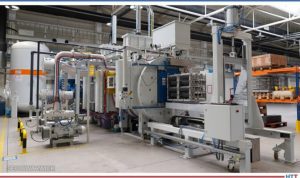
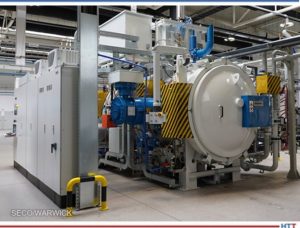
Fig. 1b. Fig. 1. Furnace CMe-T6810-25. On the right – view from the loading side (pre-heating chamber), on the left – view from the unloading side (quenching chamber).
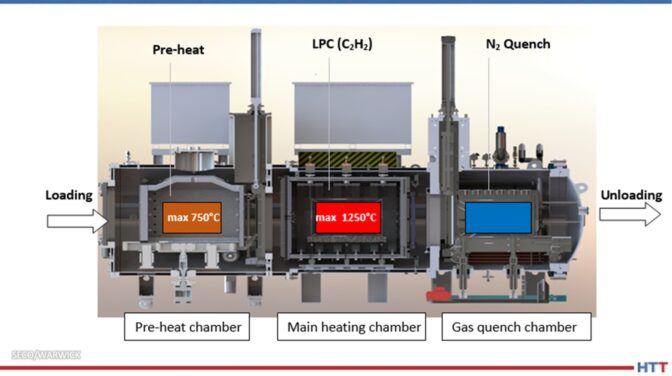
The furnace is built with three thermally and pressure-separated chambers (Fig. 2.), and operates in a pass-through mode, loaded on one side and unloaded on the other, simultaneously processing three loads, hence its high efficiency. The load is put into the pre-heating chamber, where it is pre-heated to the temperature of 1382oF (750oC), depending on the requirements: in air (pre-oxidation), nitrogen or vacuum atmosphere. It is then transferred to the main heating chamber, where it reaches process temperature and where the process is carried out (e.g., LPC).
In the next step, the charge is transported to the quenching chamber, where it is quenched in nitrogen under high pressure. All operations are automatic and synchronized without the need for operator intervention or supervision.
Fig. 2. Construction and schematic furnace cross-section CMe-T6810-25. Source: SECO/WARWICK
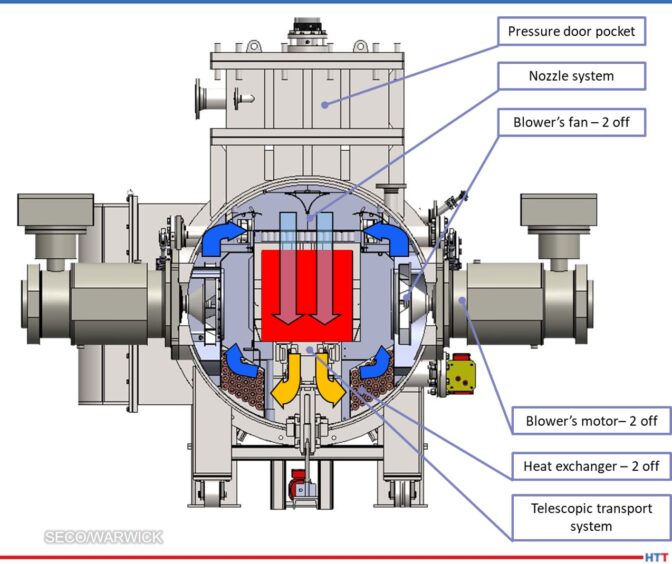
Particularly noteworthy is the gas cooling chamber, which in nitrogen (rather than helium) achieves cooling efficiencies comparable to oil (heat transfer coefficient >> 1000 W/m2K), thanks to the use of 25 bar abs pressure and hurricane gas velocities in a highly efficient closed loop system. The cooling system is based on two side-mounted fans with a capacity of 220 kW each, forcing with nozzles an intensive cooling nitrogen flow from above onto the load, then through the heat exchanger (gas-water), where the nitrogen is cooled and further sucked in by the fan (Fig. 3). The cooling process is controllable, repeatable, and programmable by gas pressure, fan speed and time. An intense and even cooling is achieved. The result is the achievement of appropriate mechanical properties of parts with minimal hardening deformations, without the use of environmentally unfriendly oil or very expensive helium.
Fig. 3. Cross-section of the furnace CMe-T6810-25 cooling chamber. Source: SECO/WARWICK
An integral part of the furnace system is the SimVaC carburizing process simulator, which enables the design of furnace recipes without conducting proof tests.
Distinctive Features of the CMe-T6810-25 Furnace
The advantages of this type of furnace — versus more traditional or past forms — can be demonstrated in a number of usability and functional aspects, the most important of which are the following:
Safety:
Safe, no flammable and poisonous atmosphere
No open fire
Production and installation:
Intended for high volume production (two to three times higher output when compared to single- and double-chamber furnaces)
Effective and efficient LPC (even five times faster than traditional carburizing)
Total process automation & integration
Clean room installation
Operator-free
Compact footprint
Quality:
High precision and repeatability of results
Uniform carburizing of densely pack loads and difficult shapes (holes)
No decarburization or oxidation
Elimination of IGO
Ideal protection and cleanliness of part surfaces
Accurate and precise LPC process simulator (SimVaC)
Quenching:
Powerful nitrogen quenching (neither oil nor helium is needed)
Reduction of distortion
Elimination of quenching oil and contamination
Elimination of washing and cleaning chemicals
Operational:
Flexible, on-demand operation
No conditioning time
No human involvement and impact
High lifespan of hot zone components — i.e., graphite
No moving components in the process chamber
Ecology:
Safe and environmentally friendly processes and equipment
No emission of harmful gases (CO, NOx, SOx)
No emission of climate-warming gas CO2
Based on the CMe-T6810-25 furnace performance, it is rational and reasonable to build heat treatment systems for high-efficiency and developmental production in a distributed system by multiplying and integrating further autonomous and independent units. The reasons for doing so are because the furnace design affords:
No risk of production total breakdown
Unlimited operational flexibility
Less initial investment cost
Unlimited multiplication
No downtime while expansion
Independent quenching chamber
Independent transportation
Independent control system
The characteristics, capabilities and functionalities of the CMe-T6810-25 furnace fit very well with the current and developmental expectations of modern industry and ecological requirements, which is confirmed by specific implementation cases.
Case Study
The three-chamber CaseMaster Evolution CMe-T6810-25 vacuum furnace was installed and implemented for production at the commercial heat treatment plant at the Polish branch of the renowned Aalberts surface technologies Group in 2020.
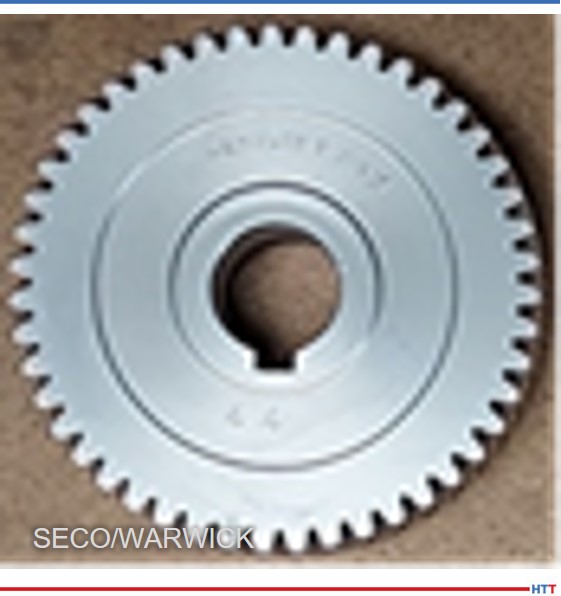
Fig. 4. Gearwheel used in the case hardening process. Source: SECO/WARWICK
The CMe furnace, together with the washer and tempering furnace, forms the core of the department's production, which is why the furnace is operated continuously. Last year, the furnace performed over 2000 processes and showed very high quality (100%) and reliability (> 99%) indicators. The very high efficiency of the furnace was also confirmed, which, with relatively low production costs, contributes to a very good economic result.
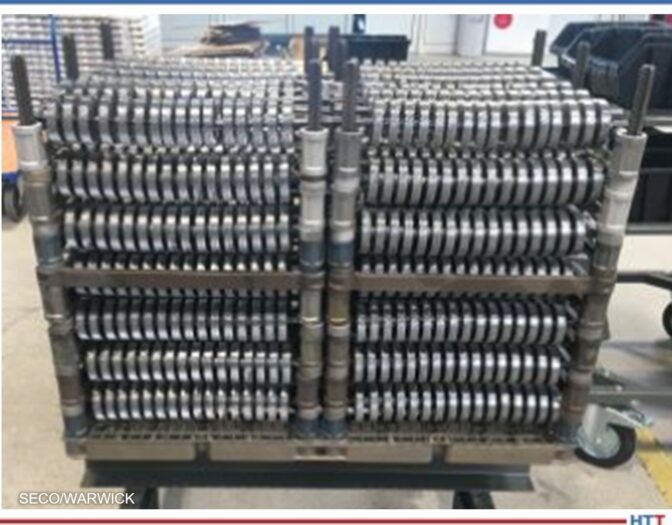
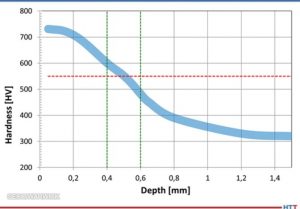
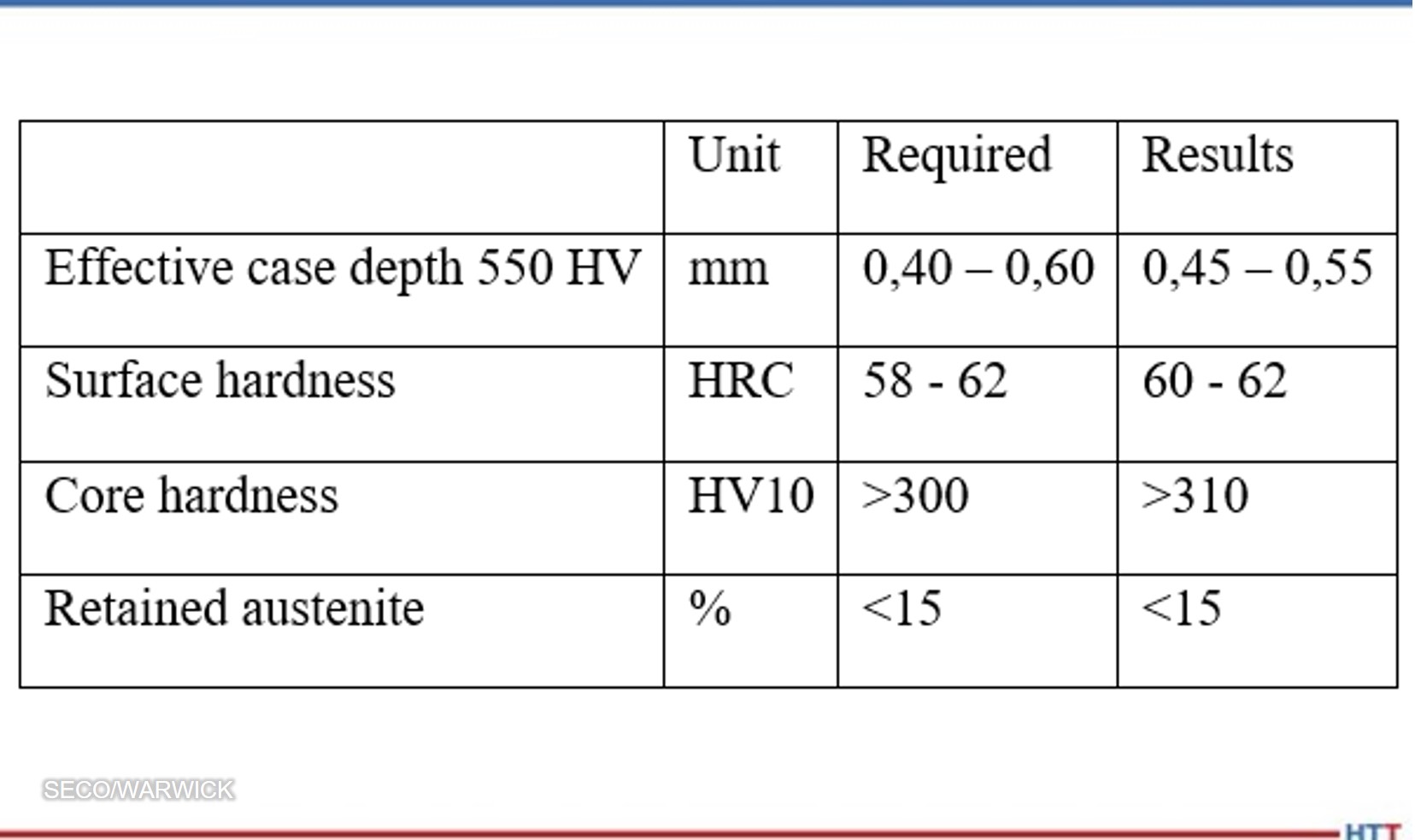
The case hardening process on gearwheels used in industrial gearboxes was taken as an example. The wheel had an outer diameter of about 80 mm and a mass of 0.52 kg (Fig. 4), and the load consisted of 1344 pieces densely packed in the working space (Fig. 5) with a total net weight of 700 kg (920 kg gross) and 25 m2 surface to be carburized. The aim of the process was to obtain an effective layer thickness from 0.4 – 0.6 mm with the criterion of 550 HV, surface hardness from 58 – 62 HRC (Rockwell Hardness C), core hardness at the gear tooth base above 300 HV10 and the correct structure with retained austenite below 15%.
Fig. 5. A photograph of the arrangement of gearwheels in the load. Source: SECO/WARWICK
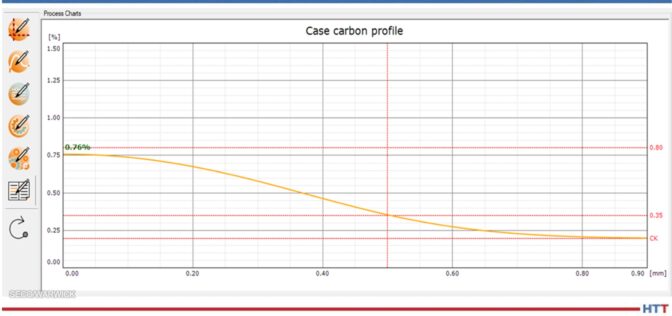
The LPC process was designed using the SimVaC® simulator at a temperature of 1724oF (940oC) and a time of 45 min, with 3 stages of introducing carburizing gas (acetylene), obtaining the appropriate profile of carbon concentration in the carburized layer, with a content of 0.76% C on the surface (Fig. 6).
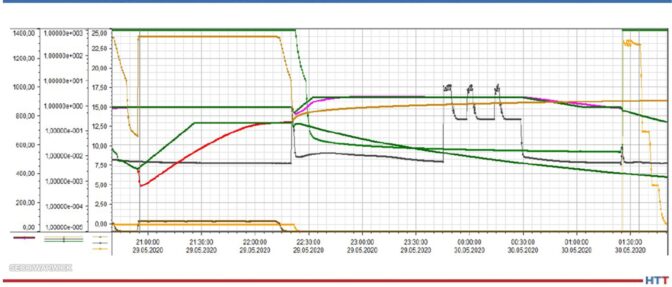
The process was carried out in the CMe-T6810-25 furnace and had the following course from the perspective of a single load (Fig. 7):
Loading into a pre-heating chamber, heating and temperature equalization in 1382oF (750oC) (100 min in total).
Reloading to the main heating chamber, heating and temperature equalization in 1724oF (940oC), LPC, lowering and equalizing the temperature before quenching in 1580oF (860oC), reloading to the cooling chamber (total 180 min).
Gradual quenching at a pressure of 24, then 12 and 5 bar, discharge of the load from a quenching chamber (total of 25 min).
Fig. 6. Carbon profile simulated by SimVaC®. Source: SECO/WARWICK
Fig. 7. Process flow in CMe® furnace parameter trends. Source: SECO/WARWICK
The load stayed the longest in the main heating chamber – for 180 minutes. This means that with the continuous operation of the furnace in this process, the cycle will be just 180 minutes, i.e., once every three hours the raw load will be loaded, and the processed load will be removed from the furnace.
In the next step, the parts underwent tempering at a temperature of 160oC.
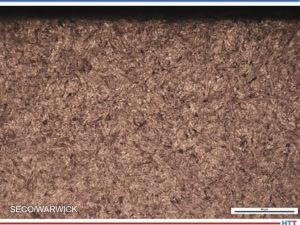
The result of the process was tested on ten parts taken from the reference corners and from the inside of the load. The correct layer structure (Fig. 8) and hardness profile (Fig. 9) were achieved, and all the requirements of the technical specification were met (Tab. 1).
Fig. 9. Hardness profile band obtained from tested gearwheels. Source: SECO/WARWICK
Tab. 1. Comparison of the parameters required and obtained in the process. Source: SECO/WARWICK
During the process, the consumption of the costliest energy factors was monitored and calculated, and the results per one load are as follows:
Electricity – 550 kWh
Liquid nitrogen – 160 kg
Acetylene – 1.5 kg
CO2 emissions – 0 kg
Cooling water and compressed air consumption have not been included as they have a negligible impact on process costs.
Summary: Efficiency and Economy
As a result of the process, all technological requirements have been met, obtaining the following indicators of efficiency and consumption of energy factors calculated for the entire load and per unit net weight of the load (700 kg):
On this basis, it is possible to estimate the total cost of energy factors in the amount of approximately EUR 100 per load or approximately EUR 0.14/kg of net load (assuming European unit costs of 2021). It is important that these costs are not burdened by CO2 emission penalties, as can happen with more traditional furnaces.
To sum up the economic aspect, based on an example process, a CMe furnace capacity of 1,500 net tons of parts per year was achieved for 6500 hours of annual furnace operation, at a cost of energy factors of about 100 EUR per load, or 0.14 EUR per kg of parts. The economic calculation is very attractive, and the return on investment (ROI) is estimated at just a few years.
Conclusion
While the advantages of this type of vacuum application are clear from this case study, the example discussed here does not represent the full capabilities of the CMe-T6810-25 furnace, even this process can be optimized and shortened, thereby increasing the furnace's efficiency, and reducing costs. It is possible to carry out carburizing processes (LPC) or hardening alone in a 1.5 h cycle, which would double the capacity of the furnace and similarly reduce the cost of energy factors and shorten the ROI time.
Alberto Martin Sales Director -- Spain Aalberts surface technologies TEY
International manufacturer Aalberts surface technologies Group will receive two vacuum furnaces to the group’s Spanish branch in País Vasco. The system on order solves the manufacturer's problem with hardening large dimension elements.
The manufacturer mainly operates in the automotive industry, as well as the machine industry and, with this order, has signed its tenth contract with international furnace supplier, SECO/WARWICK. Aalberts is ordering the heat treat furnace provider's horizontal retort furnace for high-efficiency tempering with vacuum purging and the Vector® vacuum furnace. The Vector, with a useful working space of 600mm x 600mm x 900mm will increase the efficiency of the current hardening plant, improving the economics of hardening processes. The retort furnace will significantly increase the processing capacity of the current hardening plant for tempering processes.
Once again, SECO/WARWICK equipment will contribute to increasing the efficiency of our entire Group," said Alberto Martin, director of Sales --- Spain at Aalberts surface technologies TEY. Aalberts surface technologies is a global company with over 80 years of experience, operating in over 70 countries.
Find heat treating products and services when you search on Heat Treat Buyers Guide.com
An international automotive conglomerate has selected a controlled atmosphere brazing line for their newly established factory in Mexico. The heat treat system will be used to process EV batteries.
5th CAB line for global automotive manufacturer
Piotr Skarbiński Vice President of Aluminum and CAB Products Segment SECO/WARWICK Source: LinkedIn
While this is the 5th CAB line that SECO/WARWICK has provided to the manufacturer, this specific heat treat system --- the EV/CAB line --- is designed with the electric vehicle (EV) sector in mind to braze large-size car battery coolers for the EV industry. The system includes a brazing furnace, convection preheating chamber, cooling chamber with air jacket, final cooling chamber, and control system.
"This is the customer’s first order outside the Asian market," commented Piotr Skarbiński, vice president of Aluminum and CAB Products Segment at SECO/WARWICK. He continued, saying, "We are glad [to] be involved in this project." SECO/WARWICK will commission this solution and execute the start-up on-site.
This solution is provided within the global context of increased demand for battery coolers due to the growing production of electric vehicles.
Find heat treating products and services when you search on Heat Treat Buyers Guide.com






 Find heat treating products and services when you search on Heat Treat Buyers Guide.com
 At the front of some major developments in heat treat technologies is Slawomir Wozniak, CEO of SECO/WARWICK. Join him and




 We would also like to highlight our footprint on the U.S. market because we have three companies. We have RETECH, SECO/VACUUM Technologies, and SECO/WARWICK Corporation. We like to see the companies working together, and we see a big interest from U.S. customers to get equipment made in America. RETECH produces vacuumatological equipment (vacuum melting equipment) in the United States. We would also like to build vacuum furnaces in the U.S. SECO/WARWICK Corporation has been in business for many years, and we would like to continue with production of atmospheric furnaces and aluminum process furnaces. We are also thinking about aluminum brazing equipment we build in U.S.



 Modern industry trends and expectations pose new challenges to heat treating equipment; in addition to the expected requirements (e.g., safety, quality, economy, reliability, and efficiency), factors like availability, flexibility, energy efficiency, environmental, and the surrounding carbon neutrality are becoming increasingly important.