Since February 2021, Heat Treat Today has had the privilege of publishing the Combustion Corner. In each of these columns, John Clarke, technical director at Helios ElectricCorporation, shares his expertise on all things combustion. In this Technical Tuesday, we're taking a moment to review more of the key points from John's columns. As always, we hope this review helps you to be more well informed, and to make better decisions and be happier. Enjoy these five summaries of the second half of the Combustion Corner columns. To view each installment, click the blue heading below.
Process consistency and energy savings are inextricably linked. To lower operating costs and increase process consistency, John Clarke suggests asking three questions: What temperature is my furnace or oven, really? Do I have excessive safety factors built into my process to compensate for not knowing the temperature at the core of the part being heat treated? How much fuel can I save with a shorter cycle?
Reducing natural gas consumption is not the only way heat treaters can save money. Verifying internal furnace pressure, rebuilding door jams, and taking the time to consider if excess air is reducing combustion efficiency are all as good as cashing a check. Maintaining a consistently uniform furnace temperature saves more money than the energy conserved from using less fuel.
"To not invest money on worthwhile projects makes as much sense as not depositing your paycheck."
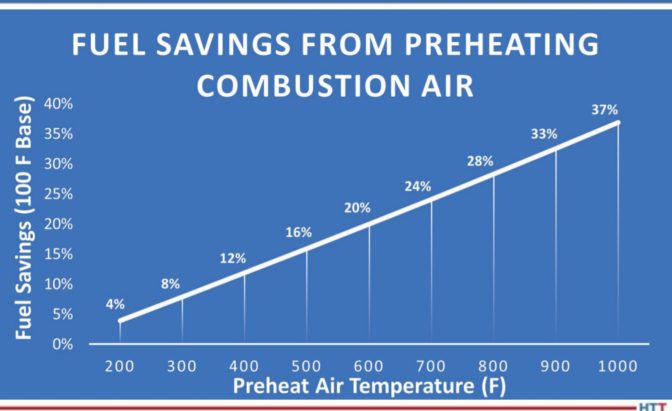
The biggest question mark in a heat treater’s mind is often, “What will natural gas prices be in the future?” Since we cannot know the answer to that question, what are some things heat treaters can do to prepare for unpredictable natural gas prices? Burner recuperation, using the waste heating exiting the furnace to preheat combustion air, is a tried-and-true method for reducing consumption. Before trying burner recuperation, the following questions need to be asked: How much will it cost? How much can be saved? Can the existing furnace accept the higher flame temperatures?
In this installment of the Combustion Corner, John Clarke takes some time to reassure the heat treating industry of two key facts about the United States' natural gas market:
40% of the electricity in the U.S. is generated using natural gas.
U.S production of natural gas was at al all-time high in 2021 and is rising. The U.S. is the largest producer of natural gas in the world.
With these two facts in mind, John postulates that the U.S. can be sure of a reliable supply of natural gas in the future, but, given the price differential between European and U.S. markets, American heat treaters are likely to see an increase in price per mmBTU.
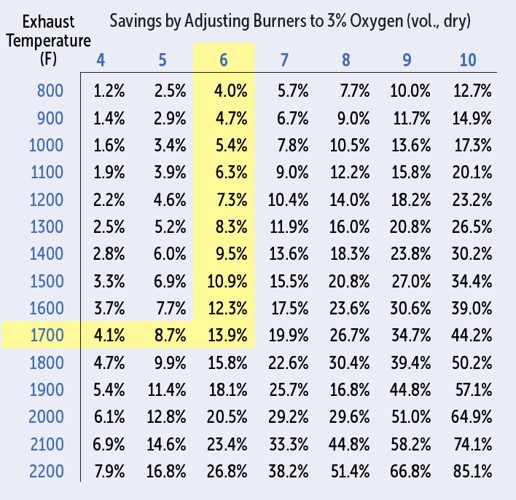
Saving money is the same as making money. Adjusting the oxygen levels of flue products measured with a handheld combustion analyzer to operate at an optimal percentage may yield more savings than you think. Reducing a non-recuperated burner from 6% oxygen to 3% oxygen garners $17,792 extra a year for the heat treater. A quick solution with a hefty payback rate.
Find heat treating products and services when you search on Heat Treat Buyers Guide.com
Since February 2021, Heat Treat Today has had the privilege of publishing the Combustion Corner. In each of these columns, John Clarke, technical director at Helios ElectricCorporation, shares his expertise on all things combustion. In this Technical Tuesday, we're taking a moment to review some of the key points from John's columns. As always, we hope this review helps you to be more well informed, and to make better decisions and be happier. Enjoy these seven summaries of the first half of the Combustion Corner columns. To view each installment, click the blue heading below.
In his inaugural column with us, John Clarke sets up the Combustion Corner column series with a look at the basics of natural gas. What do heat treaters need to know about natural gas supply and demand, availability, pricing, and consumption. Plus, the risks heat treaters should consider when making decisions about maintenance and equipment acquisition.
Excess air is the percent of total air supplied that is more than what is required for stoichiometric or perfect combustion. In heat treating systems, excess air plays many roles, both positive and negative. The perfect mixture of oxygen and gas can be elusive. When it comes to saving money and improving safety, carefully monitoring excess air in fuel-fired systems pays dividends.
Maintain regular inspection and maintenance schedules
Combustion safety is the number one priority for all heat treaters. But, what factors should be considered when all safety considerations are in place? After all, many fire protection standards are designed to protect life and property (as they should be), but not the bottom line. The next priorities for heat treaters are: reduce burner failure and therefore reduce downtime, consider component failure rates when designing or purchasing a system, and maintain regular inspection and maintenance schedules.
Downtime is costly. In order to prevent downtime, heat treaters need to “plan the fix” before the fix is necessary.
Planning the fix entails more than an annual inspection. One way to address shut-down-causing errors before they happen is to carefully examine gas pressure switches; switch contact ratings, location, pressure ratings, and protection of the switch from “bad actors” in the fuel gas are all things to consider.
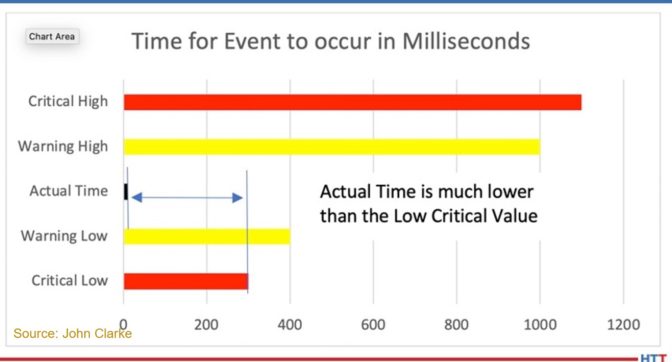
Pressure switches are either on or off. How can heat treaters use pressure switches to detect a possible failure before it occurs? The simple answer: the methods to analyzing time before shutdown is the heat treater’s crystal ball. Creating predetermined warning bands (time limits, which the pressure switch should not exceed or fall below) and monitoring switch response times within these predetermined times by PLC can give a glimpse into future shutdowns.
The NFPA allows for two arrangements of safety shutoff valves: the simple double block and the double block and vent. Both of these arrangements are appropriate as the last line of defense against a safety issue. How can heat treaters bring safety shutoff valves into compliance with NFPA 86? In this installment of the Combustion Corner, John Clarke clarifies how to comply with this common standard and lists some important considerations for choosing between a simple double block and a double block and vent arrangement.
In this column and the following columns in the series, John revisited the topic of natural gas. Reducing natural gas consumption is the best way to reduce cost. How can heat treaters do this? John suggests that we "optimize our processes, reduce unnecessary air, and contain heat within the furnace and/or capture the energy that leaves our system to preheat work or combustion air."
Find heat treating products and services when you search on Heat Treat Buyers Guide.com
Natural gas. It’s a necessity for producing energy and a staple in the heat treating industry. In this reader-friendly and thorough guide of all things natural gas, learn about its supply and demand, availability, pricing, consumption and much more.
This column will appear in Heat Treat Today’s2021 Atmosphere-Air February print edition.
Heat Treat Today is pleased to announce that John Clarke, technical director at Helios Electric Corporation, will be writing about combustion related topics throughout 2021. John has been a long-time friend of Heat Treat Today and his expertise in system efficiency analysis, burner design as well as burner management systems will be incredibly helpful as he navigates us through all things energy as it relates to heat treating equipment.
John B. Clarke Technical Director Helios Electrical Corporation
This article is the first in a series describing trends in energy use and technology used in heat treating equipment. So, it is important to first discuss the supply and demand for natural gas–the energy source on which we depend for not only combustion for heating, but also to generate a substantial share of our electricity.
Heat treaters, be they captive or commercial, are dependent on natural gas to power their operations. Its price and availability are areas deserving special attention from anyone responsible for the purchase, maintenance, and operation of heat-treating equipment.
The good news is that the sky is not falling. In fact, it is a pleasant and sunny day, figuratively speaking. The bad news is that we are increasingly dependent on this one energy source. The economic impact from rapid spikes in cost will be even more severe than they were in the 2005-2009 period, when the United State saw prices for natural gas double in just a few days.
Natural gas production in the U.S. has effectively doubled in the last 15 years (US Monthly dry natural gas production has moved approximately 1.5 trillion cubic feet in 2005 to nearly 3.0 trillion cubic feet.),1 while the average price has fallen 50%.2 (Average Citygate Price–cost as the fuel is transferred from the pipeline company to the local distribution company– has fallen from around $8.00 USD/mmBTU to less than $ 4.00/mmBTU.)2 It seems that the economics professors were right – as supply expands, prices fall. And these prices have been remarkably stable.
But wait: “Danger, Mr. Robinson” (Imagine a robot with vacuum cleaner hoses for arms shouting a warning to all of us). Is it really that simple? Can I invest my resources with confidence that the price for my energy will remain constant? Should I hedge my bets by spending more on increased efficiency? What is the impact on my return on investment? Can I count on the availability of this energy source? Critical questions all, and questions we will address in this and subsequent articles.
What is Natural Gas?
Natural gas is a mix of a number of hydrocarbons with 80 to more than 90% methane (CH4) and lesser quantities of ethane(C2H6), propane(C3H8), heavier hydrocarbons, carbon dioxide (CO2) and/or nitrogen(N2). The composition varies depending on the source, but it averages a higher heating value (HHV) of around 1,000 British thermal units (BTU) per standard cubic foot (SCF). This fuel can be used directly to heat our equipment and is being used, in increasing quantities, to generate our electricity.
Domestic Production
Advances in horizontal drilling and hydraulic fracturing (fracking) have greatly expanded our domestic production of both oil and natural gas, releasing otherwise “tight” gas and oil previously trapped in shale formations. This has made recovering these sources of natural gas economically feasible. The supply of shale natural gas grew sevenfold in the last 15 years and now represents roughly two-thirds of our total domestic production of gas. (2005 shale gas production was less than 10 billion cubic feet per day to over 70 billion by 2020.)3 Furthermore, the Energy Information Agency (EIA) — an agency within the Department of Energy charged with tracking US energy production, consumption, and project future demand and supply– projects an increase in US domestic production through at least the year 2050.
Domestic Consumption
Natural Gas Use by Sectors in the US, 2019 and Change Since 20094
Total Consumption 2019 31 Trillion Cubic Feet
Total Consumption 2009 23 Trillion Cubic Feet
Efforts to reduce CO2 emissions from electrical power generation and reduce the cost of new generating capacity have led to a rapid expansion of electricity generated using our abundant supply of domestic natural gas. Switching from coal to natural gas reduces CO2 emissions by nearly 59% per unit of electricity generated. (See table “U.S. electric utility and independent power… by fuel 2019”)5Noteworthy Trend – Electrical Power Generation
In the last 10 years, coal consumption for electricity generation has fallen 48% while natural gas’s contribution has gone up 60%.6 This investment in new natural gas fired electrical generating facilities has created a very stable demand. It is likely that this trend will continue as coal plants are shuttered in favor of the cheaper and cleaner natural gas alternative. In the long run, renewables, specifically solar and wind, may displace some of this natural gas consumption, but in the near term, coal is the most likely fuel to be displaced. The demand for electricity produced by natural gas will be buoyed further by the rapid expansion in the use of electric vehicles.
Exports – Liquified Natural Gas (LNG)
The US was a net exporter of LNG in 2017 and 2019. Our export capacity has expanded nine-fold from 2016 to 2019, growing from 0.36 trillion cubic feet per year in 2016 to 3.24 trillion cubic feet per year in 2019. As our capacity to export natural gas expands, it is likely that an increase in international demand will place upward pressure on domestic prices.
Externalities – The Unpredictable
There are factors that are, by their very nature, impossible to quantify. They remain a risk, nonetheless. As political power shifts in Washington, it is likely that politicians will pursue legislation to reduce CO2 emissions. The Biden administration, for example, could seek to reduce coal consumption by switching to natural gas as a means to generate electricity. Regulations or moratoriums on fracking might reduce our ability to expand production in the face of rising demand. The U.S. may seek to export more natural gas to reduce allies’ dependency on natural gas produced by our geopolitical rivals. On balance, the net effect of these political factors cannot be predicted and modeled with any certainty.
Other non-political factors make our future less clear. Weather remains a constant unknown and as natural gas’s share of electrical generation expands, both hot and cold weather can lead to an increase in demand. Furthermore, excessive speculation could also introduce instability to prices if not supply. Remember Enron and the effect on electrical power prices and supply in California in 2000 and 2001.
Conclusion
With any luck, we will see no national supply or demand shocks that will imperil the availability of natural gas for U..S industry. I am concerned that prices will rise and fluctuate as a result of one or more of the factors highlighted in this article. These risks should be considered when making equipment acquisition, maintenance, and operating decisions. In the upcoming articles, we will focus on technologies and practices that can help to mitigate these risks as well as save both energy and money.
[5] “FREQUENTLY ASKED QUESTIONS (FAQS): How much carbon dioxide is produced per kilowatthour of U.S. electricity generation?” Independent Statistics & Analysis U.S. Energy Information Association.https://www.eia.gov/tools/faqs/faq.php?id=74&t=11.
John Clarke, with over 30 years in the heat processing area, is currently the technical director of Helios Corporation. John’s work includes system efficiency analysis, burner design as well as burner management systems. John was a former president of the Industrial Heating Equipment Association and vice president at Maxon Corporation.






 Since February 2021, Heat Treat Today has had the privilege of publishing the Combustion Corner. In each of these columns, John Clarke, technical director at Helios Electric Corporation, shares his expertise on all things combustion. In this Technical Tuesday, we're taking a moment to review more of the key points from John's columns. As always, we hope this review helps you to be more well informed, and to make better decisions and be happier. Enjoy these five summaries of the second half of the Combustion Corner columns. To view each installment, click the blue heading below.
  Process consistency and energy savings are inextricably linked. To lower operating costs and increase process consistency, John Clarke suggests asking three questions: What temperature is my furnace or oven, really? Do I have excessive safety factors built into my process to compensate for not knowing the temperature at the core of the part being heat treated? How much fuel can I save with a shorter cycle?

 In this installment of the Combustion Corner, John Clarke takes some time to reassure the heat treating industry of two key facts about the United States' natural gas market:
 Find heat treating products and services when you search on Heat Treat Buyers Guide.com