

featured

Green-toned electric socket photo bg w/professional headshot in fg

US DOE Strategy: Ramifications for Heat Treaters

As heat treaters strive for a sustainable future, pressure mounts to make the right choices while running commercially viable operations. In this Technical Tuesday installment of a continuing series, guest columnist Michael Mouilleseaux, general manager at Erie Steel, Ltd., explores the potential ramifications of the DOE effort for industrial decarbonization in the heat treating industry. The first installment, “US DOE Strategy Affects Heat Treaters”, appeared on April 10, 2024, in Heat Treat Today, as well as in Heat Treat Today’s March 2024 Aerospace print edition.

This informative piece was first released in Heat Treat Today’s May 2024 Sustainability Heat Treat print edition.


As regulatory agencies set industrial decarbonization goals aimed at achieving net zero greenhouse gas emissions (GHGE) by 2050, heat treaters should prepare for action. But where do heat treatment technologies stand today, and what is the path going forward?  

Background

President Biden’s 2021 executive order calling for a “clean energy economy” led the U.S. Department of Energy (DOE) and the Environmental Protection Agency (EPA) to develop “The Industrial Decarbonization Roadmap,” a strategic plan for reducing industrial emissions. The plan identified five sectors — chemical, petroleum, iron and steel, cement, and food and beverage production — as targets for mitigation efforts. According to “The Roadmap,” process heating operations within these five industries represent the greatest opportunity to apply what were established as four pillar technologies:

  • Energy efficiency
  • Low carbon fuels, feedstocks, and energy sources (LCFFES)
  • Carbon capture, utilization, and storage (CCUS)
  • Industrial electrification using green electricity

In May 2023, heat treating was specifically named as a target process for reducing GHGE during the DOE’s Office of Energy Efficiency & Renewable Energy’s Low Carbon Process Heating Forum.  

A Closer Look at the Technology Pillars

To determine the path forward, it’s important to understand where heat treatment technology stands today regarding the four pillars.

Energy Efficiency: Among energy efficiency opportunities are furnace insulation, controls, and burner design. According to furnace and controls manufacturers that I have spoken with, advancements in insulation and heating system controls offer less than a 20% opportunity in efficiency improvement over

LCFFES: In the U.S., the primary hydrocarbon fuel for heat treating is natural gas, which has an average (commodity) cost of $2.57/MMBTU. Hydrogen has been endorsed as the preferred replacement. Hydrogen manufacturing and distribution issues aside, hydrogen has a 2023 (commodity) cost ranging from $14.00 to $40.00 per MMBTU, and a carbon footprint of 30–130% that of natural gas. “Green hydrogen” is “under development.”

CCUS: Carbon capture, utilization, and storage is currently relegated to natural gas production operations where the captured CO2 is injected into existing wells to “enhance” production. Although the DOE suggests development of advanced CO2 capture technologies are still underway, a 2023 Congressional Budget Office report states there are “fifteen CCS facilities . . . operating in the United States . . . [with] an additional 121 . . . in development.” It is fair to state there are no CCS (carbon capture and storage) facilities currently operating on the scale of a heat treating operation.

Electrification: For electrification to be impactful, electricity must be generated via green sources. Currently, 40% of the electricity generated in the U.S. comes from natural gas, 20% from coal, 19% from nuclear, 10% from wind, and 3% from solar. It is my opinion that, regardless of the incentives federal and state governments offer wind and solar energy operations, they will not reach the scale — and most certainly not the reliability — necessary to achieve the stated 2035 GHGE goals.

Cost also must be considered. The average U.S. cost for electricity was $0.086/KWH in 2023. In California, however, the cost for electricity generated with 40% renewables was $0.1819/KWH. In Germany, it was $0.289/KWH with 55% renewables. To put this into perspective, today the differential in (industrial) electricity (commodity) costs demonstrably increase as the percentage of that electricity is generated by “green” sources. To think that this trend is going to be reversed by federal mandate is paradoxical.  

A Realistic Look at the “Road Map”

While industrial decarbonization targets called for an 85% reduction in GHGE by 2023 and net zero by 2050, the goals seem unreachable using currently available technology. Replacing natural gas with hydrogen will result in significant cost increases as the commodity is 5–15 times more expensive, the equipment will require retrofitting to accommodate hydrogen, and the national infrastructure will need to be modified for hydrogen.

Electrification of existing gas-fired processes will result in a cost increase of four times, according to DOE estimates; however, based on today’s cost trends, 7–9 times higher is more likely. Additionally, the cost of converting equipment to electric operation must be considered. Mitigation efforts suggested by the DOE include improvements in efficiency that rely on yet-to-be-developed technologies and cost reductions in electricity facilitated by the wholesale use of renewable energy.

Overall, decarbonization efforts are noble. The timeframe and methodology, however, are unrealistic as they are based on the use of still-conceptual technologies.  

What Can Heat Treaters Do?

Following the lead of the automotive industry may be key. This sector reacted to the government mandates for GHGE reductions by going all in for electrification — with projections of 50% electric vehicles by 2030. A funny thing happened; these vehicles were not wholly accepted by the American public. The auto industry, led by the dealers, with the support of the UAW, and the car manufacturers petitioned their U.S. Representatives to “pause” these requirements. This political pressure caused the EPA to roll-back the implementation schedule.

Heat treaters must act now with a similar effort, but it must be aimed at preventing the promulgation of regulations that rely on still-conceptual technologies within an unachievable timeframe. Contact your local government leaders; let them know what we do means jobs and tax revenues. Contact your U.S. Representatives and Senators to let them know heat treaters are critical to our national security, the transportation system, and, in fact, the infrastructure of this country. What we do should not be outsourced, and we need to be given all the considerations of a critical industry.

The next column in this series will address the role of process heating in GHGE, analyze DOE assessments of GHGE for industry and process heating operations, and propose a fact sheet intended for use in our effort to set a realistic timeline for decarbonization goals In the next column, we’ll address potential ramifications of the DOE effort for industrial decarbonization in the heat treating industry to help you be better informed and prepared.    

About the Author:

Michael Mouilleseaux General Manager at Erie Steel, Ltd.

Michael Mouilleseaux is general manager at Erie Steel, Ltd. He has been at Erie Steel in Toledo, OH since 2006 with previous metallurgical experience at New Process Gear in Syracuse, NY, and as the director of Technology in Marketing at FPM Heat Treating LLC in Elk Grove, IL. Michael attended the stakeholder meetings at the May 2023 symposium hosted by the U.S. DOE’s Office of Energy Efficiency & Renewable Energy.

For more information: Contact Michael at mmouilleseaux@erie.com.  

Attend the SUMMIT to find out more about the DOE’s actions for the heat treat industry.

Find Heat Treating Products and Services When You Search on Heat Treat Buyers Guide.com

  1.  

US DOE Strategy: Ramifications for Heat Treaters Read More »

2024 06 News from Abroad June

News from Abroad: Furnace Efficiency and Climate Neutrality

Today’s News from Abroad installment brings us news of a climate-neutral metallurgical thermal process center in Germany, a twin-ladle furnace station in Brazil, and a Korean steel maker gaining furnace efficiency. 

Heat Treat Today partners with two international publications to deliver the latest news, tech tips, and cutting-edge articles that will serve our audience — manufacturers with in-house heat treat. heat processing, a Vulkan-Verlag GmbH publication, serves mostly the European and Asian heat treat markets, and Furnaces International, a Quartz Business Media publication, primarily serves the English-speaking globe.

ArcelorMittal Brasil Orders Twin-Ladle Furnace Station from Danieli

2024 06 NFA ArcelorMittal Tubarão, Serra, Espirito Santo
ArcelorMittal’s Tubarão integrated steel plant in Serra, Espirito Santo state, where Danieli will install twin-ladle furnace station.
Source: furnaces-international.com

“ArcelorMittal Brasil has chosen Danieli Centro Met technology and equipment for a twin-ladle furnace station to be installed at the Tubarão integrated steel plant in Serra, Espirito Santo state, where 7+ Mt/yr of high-quality, flat carbon steel products are produced. The new twin-ladle furnace station will be placed in the melt-shop bay between converters and continuous casting machines to complete the refining area, remove sulphur contents and make quality adjustments to the steel bath, to produce USIBOR steel for automotive applications.”

READ MORE: “Arcelor Mittal Brasil orders twin-ladle furnace station from Danieli” at furnaces.international.com

TU Bergakademie Freiberg Opens Climate-Neutral Metallurgical Thermal Processing Center

News From Abroad 2024 06 TU Bergakademie Freiberg furnace test
At TU Bergakademie Freiberg, the simulation of a torch in a test furnace is part of developing technologies that could replace the natural gas burners of the future.
Source: TU Bergakademie Freiberg

“’Our goal is emission-free thermal processes, which we optimize through a closed loop system,’ says Professor Gotthard Wolf, head of the Foundry Institute at TU Bergakademie Freiberg. In order to get closer to this goal, two technologies have already been developed at the TU Bergakademie Freiberg that could replace the natural gas burners of the future. When using green electricity, the process step of melting, for example of aluminum, becomes completely CO2-free. These are a plasma-heated hot gas flare and an inductively heated got gas flare. ‘Each of the electrically operated flares could be replaced in existing melting furnaces without the mostly medium-sized foundry companies having to invest in alternative furnaces,’ explains Professor Wolf.”

READ MORE: “TU Bergakademie Freiberg optimizes metallurgical thermal process” at heat-processing.com

Tenova’s NextGen® System Enhances Dongkuk Steel Mill Furnace Efficiency

2024 06 NFA Tenova Dongkuk Steel
The installation and commissioning of Tenova’s NextGen® will provide enhanced EAF efficiency, real-time monitoring, and control capabilities.
Source: furnaces-international.com

“Dongkuk Steel Mill Co. Ltd., a leading steelmaker in Korea, has recently contracted Tenova Goodfellow, Inc, a subsidiary of Tenova, a leading developer and provider of sustainable solutions for the green transition of the metals industry, to improve its furnace efficiency. The scope of the contract involves the supply and installation of Tenova’s NextGen® System at Dongkuk’s Incheon Plant in Dong-gu, Incheon, Republic of Korea. The Next-Gen® System, tailored for Dongkuk Steel’s 120-ton AC shaft furnace, incorporates advanced hardware and temperature sensors for off-gas measurement which include two sampling stations and a central cabinet.”

READ MORE: “Dongkuk Steel  Mill Co Ltd contracted Tenova Goodfellow Inc for a NextGen®System for improved furnace efficiency” at furnaces-international.com. 


Find Heat Treating Products And Services When You Search On Heat Treat Buyers Guide.Com

News from Abroad: Furnace Efficiency and Climate Neutrality Read More »

Allied Mineral Products Jobs

Refractory Manufacturer’s $23.5M Expansion To Create Jobs in Alabama

Thirteen new manufacturing jobs will open up with the $23.5 million expansion of an Alabama heat containment refractory production facility. The Ohio-based company supplies products used in a variety of industrial applications, including heat treating operations.

headshot Paul Jamieson
Paul Jamieson
President & CEO
Allied Mineral Products

Allied Mineral Products, an Ohio-based producer of monolithic refractory ceramics, recently broke ground on the major expansion at its Pell City, Alabama, location.  The growth project will add a 200,000-square-foot production facility on the company’s current site and expand the workforce with thirteen new manufacturing jobs added to the company’s current workforce of 81 full-time employees. The project is expected to be completed in late 2025, increasing the facility’s production capacity and improve efficiency. State and local officials joined executives and employees of Allied Mineral Products, LLC (Allied) at the groundbreaking ceremonies marking the investment.

“Our partnership with Alabama is strengthened yet again with the expansion of this plant which we originally built in 2019,” said Paul Jamieson, president and CEO of Allied Mineral Products. “Locating our facility in Alabama was part of a long-term strategy to expand our manufacturing presence in the south to be closer to our customers. Because of the quality of this workforce and the local support here, our growth in Alabama has been faster than we planned. We are excited to be expanding our facility so soon and are confident this will help us to continue that growth.”  


The press release is available in its original form here.


Find Heat Treating Products And Services When You Search On Heat Treat Buyers Guide.Com


Refractory Manufacturer’s $23.5M Expansion To Create Jobs in Alabama Read More »

Heat Treater Overhauls Aging System To Upgrade Carburizing Processes

An Italian heat treater enhanced its operations with the installation of control cabinets, allowing for real-time data analysis and more efficient management of its carburizing processes. The improvement helped minimize downtime and optimize furnace performance.

Daniel Panny
Product Manager and Head 
UPC-Marathon Europe

Despite the robustness of their three batch IQ furnaces, T.T.M. Trattamenti Termici dei Metalli Srl identified an opportunity to redefine their approach to furnace controls and automation and partnered with UPC-Marathon, a Nitrex company, to breathe new life into their aging systems. The project entailed the installation of control cabinets equipped with advanced process controllers, the integration of the controllers into a SCADA system for advanced monitoring and control capabilities. To complement T.T.M.’s technological upgrades, UPC-Marathon also installed a new gas cabinet.

“This strategic investment in modernizing the furnace controls with UPC-Marathon proved not only highly effective in resolving immediate challenges with aging controls but also more cost-effective than replacing the three furnaces,” said Daniel Panny, product manager and head of UPC-Marathon Europe.

The press release is available in its original form here.


Find heat treating products and services when you search on Heat Treat Buyers Guide.Com

Heat Treater Overhauls Aging System To Upgrade Carburizing Processes Read More »

Heat Treat Operations Modernize with 9 Hardening Furnaces

Nine heat treat furnaces are set to modernize the operations of a manufacturer’s heat treat facilities. This move is intended to create cleaner, safer, more cost-effective operations while also allowing for finer process control and a reduced carbon footprint.

The nine furnaces are being fabricated by SECO/VACUUM, a division of SECO/WARWICK Group: three Vector® vacuum furnaces and six tempering furnaces with supporting auxiliary systems. This returning heat treat client currently operates twelve SECO/VACUUM furnaces at their various locations throughout North America. They will incorporate the new furnaces as a continuation of their strategic planning to modernize all facilities from atmospheric heat treatment to vacuum processes.

Piotr Zawistowski
Managing Director
SECO/VACUUM TECHNOLOGIES, USA
Source: SECO/WARWICK

Each of the nine units are front-loading, horizontally configured furnaces with a 36″ x 36″ x 48″ working volume and a 3300 lb. capacity. The Vector® is a single-chamber gas quenching vacuum furnace using high pressure quench (2 to 25 bar) which can be applied to a variety of heat treating processes and applications. These particular Vectors will be used primarily for hardening. Tempering is a process primarily used to increase the toughness of hardened ferrous-alloy parts. The tempering process is typically applied after a hardening process.

Heat treating operations will have to shut down entirely during the modernization changeover. To minimize disruption, SECO/VACUUM will also serve as the general contractor, overseeing the installation of the new furnaces, auxiliary systems, wiring, piping, and ventilation needed prior to commissioning and operator training.

“It is a testament to our commitment to our partner’s success that they not only continue to return for more furnaces, but that they place their trust us in to manage the entire project in order to get them back to serving their customers,” said Piotr Zawistowski, managing director at SECO/VACUUM.

The press release is available in its original form here.


Find heat treating products and services when you search on Heat Treat Buyers Guide.Com


Heat Treat Operations Modernize with 9 Hardening Furnaces Read More »

Streamline Essential Nadcap Certifications

Nadcap certifications are integral to aerospace heat treating. Maintaining compliance, however, can be a headache. Learn how a new technology is streamlining Nadcap certifications.

This article by Chantel Soumis was originally published in Heat Treat Today’s March 2024 Aerospace Heat Treat print edition.


Challenges to Capture Nadcap Certifications

Contact us with your Reader Feedback!

The Nadcap certification (National Aerospace and Defense Contractors Accreditation Program) plays a critical role in maintaining the integrity of heat treating processes, especially in the aerospace and defense industries. Recognized globally, the certification sets rigorous standards for heat treatment facilities, ensuring that heat treating processes produce parts and materials with the necessary strength, durability, and reliability.

The certification addresses the data that needs to be documented concerning all aspects of the heat treat processing, such as temperature control, process documentation, and quality management. A survey from the Performance Review Institute (PRI) indicates that 80% of aerospace and defense companies consider Nadcap accreditation as a requirement when selecting suppliers, and 90% of aerospace and defense prime contractors would disqualify a supplier without Nadcap accreditation. And when such a strict standard is implemented and then subject to regular audits, a 40% reduction in nonconformance costs are likely, as was reported by companies in the aerospace and defense sector in a study by the National Center for Manufacturing Sciences (NCMS).

While compliance with Nadcap and other heat treat certifications demonstrates a commitment to quality and opens doors to lucrative contracts with aerospace, defense, and other precision industries, actually capturing the data can be tedious. The effort and cost of employing disconnected systems — capturing measured data from system A, making the certification documents in system B, and then emailing the certification results to clients from system C — can be cut by synthesizing these actions into one system.

Digitizing Certification Management for Complete Compliance Control

Many organizations facilitate the certification process via digital means. This may be through the use of digital quality management systems (QMS) or enterprise resource planning (ERP) software that includes modules designed for certification management. These tools help automate record keeping, provide alerts for upcoming certification renewals, and streamline the overall certification tracking process, ensuring that heat treating operations remain compliant and efficient.

Nadcap Scanner tracking a process via QR code

But more should be done.

Veterans Metal, a metal finishing plant in Clearwater, Florida, was driving manual processes: everything was written down and data was being entered into spreadsheets for tracking purposes. Like many heat treaters, each step the company took to process a part required manual intervention to write down 20+ line items of information and then incorporate the associated data entry into spreadsheets.

The company was looking to modernize their plant.

After careful evaluation of Veterans Metal’s processes and needs, Steelhead Technologies developed and deployed the Steelhead Certification Scanner (or Nadcap Scanner) line that includes a handheld scanner and a system of QR codes to facilitate an easier user experience, including an interface that allows for swift operator proficiency, typically within minutes. This digital interface allows users to measure data, create certifications, and email this from the one system.

Smart Scanning in Action

The metal processing company received a 15-minute walk-through of the Nadcap Scanner, how to process parts, and where to find the data within the system. Using the handheld device, operators scanned QR codes (specifically created by Steelhead Technologies) that were placed on processing stations. As parts were moved from one process station to the next manually, a user would scan the accompanying QR code on the next current station, locking in data from the previous process and automatically reflecting that the next step was in process.

When operators scanned a process station, the device showed the remaining time in the process and displayed all parts being processed, custom instructions, and key data collection, such as oven temperature. This timer automatically starts when a process station QR code is scanned, gives a one minute warning when the process is nearing completion, and stops automatically when the next process station QR code is scanned.

Chet Halonen, a plant optimization expert for Steelhead Technologies, presented the “Powered by Steelhead” certification to the Veterans Metal team.

With the intuitive layout and guided steps, operators were easily able to navigate the accreditation process, significantly reducing time spent on extensive training. More importantly, the Nadcap Scanner line eliminated handwritten data entry, margin of error, and additional time needed to develop certifications since the scanner automatically generates them from the data and sends them to clients. The scanner has since been adopted by many other Nadcap-compliant operations across the United States.

Take Nadcap Digital

Achieving Nadcap accreditation is crucial for showcasing a commitment to quality, aligning with industry benchmarks, and accessing lucrative business opportunities. With the advent of digitized solutions like the Nadcap Scanner implemented within a comprehensive manufacturing ERP, companies will streamline the accreditation process, enhance operational efficiency, and bolster compliance with a system that’s “literally just button clicking,” as one manufacturer observed.

Embracing innovative tools not only saves time and resources, but also strengthens market positioning and client relationships. By merging the prestige of Nadcap accreditation with digital advancements, heat treaters can elevate their operations to reach new heights of excellence.

About the Author

Chantel Soumis, Head of Marketing, Steelhead Technologies

Chantel Soumis is serving as the head of Marketing at Steelhead Technologies. With a robust background in manufacturing technology and strategic partnerships, she leverages over 15 years of experience to shape the company’s marketing landscape.

For more information: Contact Chantel at chantel@gosteelhead.com.


Find Heat Treating Products And Services When You Search On Heat Treat Buyers Guide.Com


Streamline Essential Nadcap Certifications Read More »

Heat Treat Economic Indicators: June 2024 Results

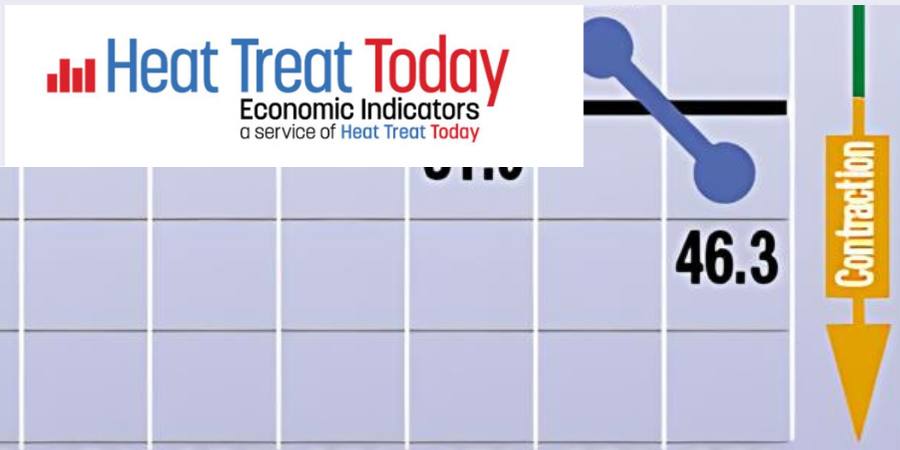
The four heat treat industry-specific economic indicators have been gathered by Heat Treat Today each month since June 2023. Thus far in 2024, the economic indicators have shown that suppliers to the heat treat industry have expected growth across all four indicators. However this month, suppliers are reporting that they expect one indicator to contract in June, as compared to May.

The numbers, which were compiled in the first week of June, show that responding parties strongly anticipate number of inquiries, value of bookings, and health of manufacturing economy — to grow as compared to the previous month (May). This expectation for growth continues to be rather limited with positive expectations falling just above the “neutral” x-axis, indicated by the number “50.” The size of backlog indicator stands out this month as being the first indicator suppliers anticipate contraction since the December 2023 indicators report.

The results from this month’s survey (June) are as follows; numbers above 50 indicate growth, numbers below 50 indicate contraction, and the number 50 indicates no change:

  • Anticipated change in the Number of Inquiries from May to June: 57.7
  • Anticipated change in Value of Bookings from May to June: 54.0
  • Anticipated change in Backlog Size from May to June: 46.3
  • Anticipated change in the Health of the Manufacturing Economy from May to June: 52.9

Data for June 2024

The four index numbers are reported monthly by Heat Treat Today and made available on the website. 

Heat Treat Today’s Economic Indicators measure and report on four, heat treat industry indices. Each month, approximately 800 individuals who classify themselves as suppliers to the North American heat treat industry receive the survey. Above are the results. Data started being collected in June 2023. If you would like to participate in the monthly survey, please click here to subscribe.


Find heat treating products and services when you search on Heat Treat Buyers Guide.com


Heat Treat Economic Indicators: June 2024 Results Read More »

Fringe Friday: From Mars to Venus with GaN

We’re celebrating getting to the “fringe” of the weekend with a Heat Treat Fringe Friday covering news about the promise gallium nitride (GaN) for the future of missions to Venus. Specifically, how this high-temperature-defying material may be used to form semiconductors that won’t melt on the near 900°F surface of Venus.

While not exactly heat treat, “Fringe Friday” deals with interesting developments in one of our key markets: aerospace, automotive, medical, energy, or general manufacturing.


Gallium nitride is a material that researchers at the Massachusetts Institute of Technology (MIT) have been studying how it performs when exposed to high temperatures. They have recently announced that their research has shown successful performance results at 500°C for 48 hours.

The surface of Venus can reach temperatures of up to 480°C. With silicon-based electronics incapable of operating at these high temperatures or a long duration of time, finding a material that can take the heat becomes critical to prospect of sending a rover to the planet’s surface.

John Niroula, an electrical engineering and computer science (EECS) graduate student and lead author of the paper, commented, “Transistors are the heart of most modern electronics, but we didn’t want to jump straight to making a gallium nitride transistor because so much could go wrong. We first wanted to make sure the material and contacts could survive, and figure out how much they change as you increase the temperature. We’ll design our transistor from these basic material building blocks.”

Funding of this research has come from numerous interested parties, including the U.S. Air Force Office of Scientific Research, Lockheed Martin Corporation, the Semiconductor Research Corporation through the U.S. Defense Advanced Research Projects Agency, the U.S. Department of Energy, Intel Corporation, and the Bangladesh University of Engineering and Technology.

Read more about this news here.


Find heat treating products and services when you search on Heat Treat Buyers Guide.Com


Fringe Friday: From Mars to Venus with GaN Read More »

Near Net Shape, Meet HIP

Source: Quintus Technologies

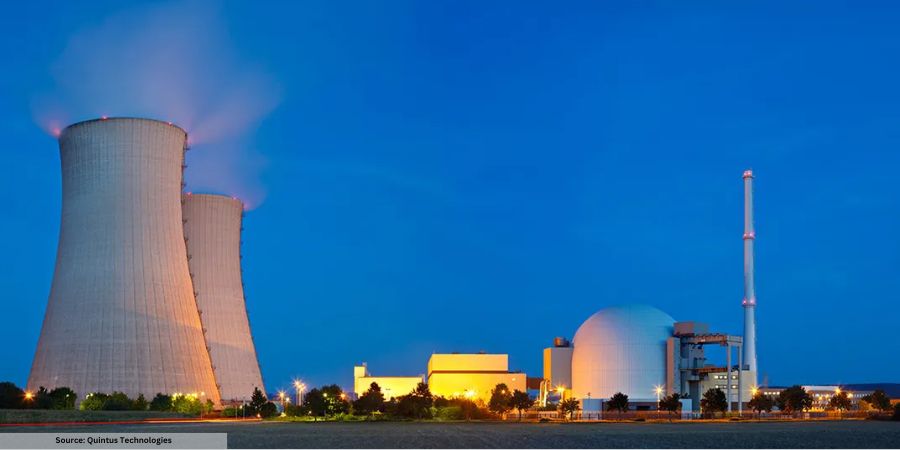
A major concern with cast products is fatigue resistance and getting the right mechanical properties. Of course, thermal processing plays a role, and for years, hot isostatic pressing has been solving this very problem.

Today’s best of the web article details out how the process can remove shrinkage porosity and internal defect, ultimately leading to a more resistant part for some of the most critical applications: nuclear power.

An Excerpt:

“The production of specially designed canisters can lead to predictive final shapes with extremely complex geometries, which are a viable option to forging, casting and additive manufacturing. The processing is referred to as Powder Metallurgy Near-Net-Shape (PM NNS), or Powder Metallurgy HIP (PM HIP).”

Read the entire article from Quintus Technologies by clicking here: Manufacturing of Nuclear components using Powder Metallurgy Near Net Shape production and Hot Isostatic Pressing


Find Heat Treating Products And Services When You Search On Heat Treat Buyers Guide.Com


Near Net Shape, Meet HIP Read More »

Heat Treater To Receive 2 Furnaces

François Studer SA, a Swiss commercial heat treater with 45 years of experience, will advance their hardening capabilities with the order of two furnaces: a vacuum furnace with 15 bar abs high-pressure gas hardening and a furnace for tempering with vacuum purging.

The new solutions from SECO/WARWICK will help increase processing capacity while maintaining the processed element’s high precision and quality. This is important to the heat treater, a hardening plant that processes two truckloads of charges every day.

“We are constantly developing,” commented Francois Studer, CEO of Francois Studer S.A. “We needed to add the capacity to utilize vacuum carburizing, pre-nitriding for carburizing technology and low-pressure carbonitriding, and the new Vector fits these needs perfectly. The retort furnace, on the other hand, significantly increases the hardening plant’s processing capacity in terms of time-consuming tempering and nitriding processes using ZeroFlow technology.”

The vacuum furnace on order by the hardening plant enables efficient processes to be carried out at a vacuum level in both medium and high ranges. The round heating chamber allows for oversized loads. Combined with dedicated LPC, HPGQ technology and a high vacuum system, the furnace will meet the heat treater’s requirements for hardening and carburizing a wide range of various parts.

Maciej Korecki
Vice President of Business of the Vacuum Furnace Segment
SECO/WARWICK

The partial pressure system used helps to prevent evaporation and sublimation of alloying elements from the load surface during the vacuum heat treatment or vacuum brazing process. Partial pressure control is important when processing many materials to prevent the heating chamber evaporation and contamination. Isothermal quenching provides control of the cooling process by automatically managing the load temperature and the gas blower motor control using a frequency converter. The carburizing and low pressure carbonitriding (LPCN) options, which the furnace for François Studer SA is equipped with, enables precision processing to increase the steel surface hardness during the entire thermal process.

“The Vector furnace will streamline and increase the hardening process capacity and improve process efficiency. The advantage of this product is a large working space which can be adjusted to an oversized load, using the round heating chamber’s advantages. This is the so-called golden mean for many commercial heat treaters, also because it can be equipped with numerous additional options. With limited production areas, multifunctional, failure-free furnaces are worth their weight in gold for commercial heat treatment,” added Maciej Korecki, VP of the Vacuum Furnaces Team at SECO/WARWICK.

The second furnace on order is a horizontal retort furnace for gas nitriding using ZeroFlow technology and for high tempering with vacuum purging.

The press release is available in its original form here.


Find heat treating products and services when you search on Heat Treat Buyers Guide.Com


Heat Treater To Receive 2 Furnaces Read More »