A Canadian steel hardening firm recently relocated its operations to a 54,000-sq ft complex as part of a business relaunch that includes hiring new staff and the startup of active manufacturing.
Northern Heat Treat Ltd , based in Sudbury, Ontario, is in the early stages of full operational capacity since the upgrade and moving of equipment, which will include the purchase of larger heat treating furnaces.
A Lansing, Michigan-based heat treating provider recently announced that it is increasing oil quench and temper capacity at its Atmosphere Annealing Mt. Hope Facility in Lansing, Michigan. Through the enhancement of an existing roller hearth tray furnace, the facility will double its oil quench capacity.
Sara McMurray, Director of Sales and Marketing, Premier Thermal Solutions
Premier Thermal Solutions, which operates through its wholly-owned subsidiaries, Atmosphere Annealing and NitroSteel, reported that the additional capacity will allow Atmosphere Annealing to better serve its client industries, including automotive, energy, heavy equipment, heavy truck, and rail. The furnace will be online in Q1 of 2019.
“This is a really exciting time for our organization. With the conversion of this furnace, we will be able to react quickly to market needs, expand into new markets, and provide faster turnaround for our customers,” said Sara McMurray, Director of Sales and Marketing.
Steve Wyatt, president, Premier Thermal Solutions
“The expansion not only provides us with additional capacity to meet our customers growing demand, it also provides additional backup processing capabilities to further protect our customers’ critical supply chain,” said Steve Wyatt, President.
Premier Thermal Solutions operates plants in Lansing, Michigan, Canton, Ohio, North Vernon, Indiana, and Pleasant Prairie, Wisconsin.
A global aerospace and defense corporation recently announced an agreement to purchase a developer of small-satellite systems for military and national security projects.
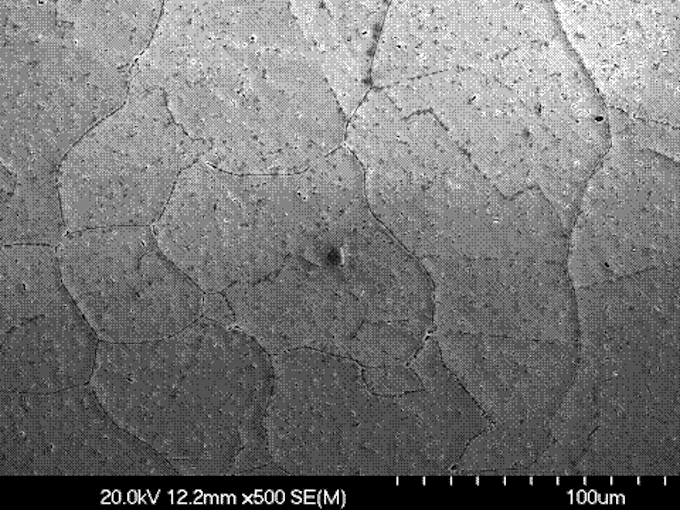
Titanium nitride precipitates in a precipitation hardened HSLA steel. Image copyright: University of Nevada, Reno via The Balance
Source: Multiple (see below)
You may know it by one name — Precipitation Hardening, or by another — Age Hardening, or Particle Hardening. Whatever term you use, if you are employing this process to strengthen aluminum, titanium, or forms of alloys, the right balance between material and application will bring you the right results.
Precipitation hardening is a heat treating method used to strengthen metal components through the utilization of controlled release of solid impurities — or precipitates — to form precipitate clusters.
“The formation of these precipitates is accomplished by using a solution treatment at high temperatures prior to a rapid cooling process. The solution heat treatment results in a single-phase solution while the rapid cooling results in a stable material by preventing the creation and propagation of lattice defects. This greatly strengthens the metal matrix.
Precipitation hardening is typically performed in a vacuum, inert atmosphere at temperatures ranging from between 900º and 1150° F. The process ranges in time from one to four hours, depending on the exact material and the characteristics specified.” ~ The Balance
The process generally follows three steps (per AZO Materials):
Solution treatment at high temperatures
Rapid cooling
Heat treatment to induce precipitation
According to Bodycote’s website, where more information is given regarding the process details, the outcome varies depending upon whether a solution treating-only method is used or a combination of solution treating and precipitation age hardening.
Read more about the types of metals treated by precipitation hardening, techniques, industrial applications, and more:
A Swedish developer and manufacturer of advanced stainless steels and special alloys recently acquired a privately owned producer of original equipment and replacement heating elements.
Sandvik Materials Technology purchased Custom Electric Manufacturing Co., headquartered in Wixom, Michigan, as part of the Product Area Kanthal.
“Through this acquisition, we add further strength to our leading position in industrial heating systems. I am pleased to welcome the Custom Electric Manufacturing team into Kanthal and Sandvik Materials Technology,” said Göran Björkman, president, Sandvik Materials Technology.
An Israel-based manufacturer of all-electric air mobility solutions recently announced it has selected Prescott, Arizona, for its U.S. headquarters, which will include the manufacture of the aircraft’s ultra-light all-composite frames.
EViation Aircraft will establish operations for its electric commuter aircraft, Alice, at a site located adjacent to the Prescott Municipal Airport. The facility will serve as EViation’s base of operations for its expansion from Israel into the U.S. market. EViation selected Prescott as an optimal location for its U.S. headquarters given the area’s skilled workforce and high-density altitude, an ideal environment for test flights.
Omer Bar-Yohay, CEO of EViation
With the goal of making clean regional air travel accessible for all, EViation is tackling one of the world’s dirtiest industries — aviation. Its zero-emission, 100% electric solution, the Alice Commuter, which will be test flown at the 53rd Paris Air Show in June 2019, leverages an IP portfolio that includes thermal management and autonomous landing, as well as distributed electric propulsion, industry-leading battery technology, and cutting-edge composite body frames capable of carrying up to nine passengers on a single charge for 650 miles. EViation will certify and commercialize the Alice aircraft while partnering with leading industry suppliers to bring its prototypes to scale and to the global market.
“As we develop our regional electric aircraft, the U.S. represents a high-growth, near-term target market for us, given its many regional transit corridors and abundance of approved airstrips,” said Omer Bar-Yohay, CEO of EViation.
Welcome to another episode of Heat Treat Radio, a periodic podcast where Heat Treat Radiohost, Doug Glenn, discusses cutting-edge topics with industry-leading personalities. Below, you can either listen to the podcast by clicking on the audio play button, or you can read an edited version of the transcript. To see a complete list of other Heat Treat Radio episodes, click here.
Audio: Heat Treat Radio: Laser Heat Treating with Laser Hard
In this conversation, Heat Treat Radio host, Doug Glenn, interviews two families who have been at their manufacturing game for multiple generations. Not long ago they joined forces to establish a new company — Laser Hard, Inc. — and to introduce one of the most cutting edge-heat treat technologies around today: laser heat treating. For many of you who have difficult-to-heat treat parts, whether it’s because of blind holes, or the fact that the part is too big to move, or perhaps you’d like to significantly reduce, if not eliminate, post-heat treat hard machining, you’re going to find today’s Heat Treat Radio episode on laser heat treating especially interesting.
Click the play button below to listen.
Transcript: Heat Treat Radio: Laser Heat Treating with Laser Hard
The following transcript has been edited for your reading enjoyment.
Click the image to connect to Heat Treat Radio
In this episode of Heat Treat Radio, let’s talk about one of the most cutting-edge heat treat technologies around today — laser heat treating.
Thanks for joining us. My name is Doug Glenn and I’m your Heat Treat Radio host and publisher of Heat Treat Today. You can find us on the web at www.heattreattoday.com or simply by Googling Heat Treat Radio. And here’s something new, Heat Treat Radio is now on iTunes! On the website, we update our heat treat content daily, and if you’re a manufacturer with an in-house heat treat department, you’re going to love our site.
Although it sounds Star Treky, laser heat treating is a pretty well-established technology, especially in Europe, but not so much in the United States. The applications are intriguing to say the least – as is the way it is being introduced into the United States – and as are the two families introducing it. One family – long time heat treaters. The other family – long time laser welders and laser cladders. Both minding their own businesses – literally – both thinking about ways to better serve their customers. These two businessmen were from the same small town in Pennsylvania, and they paired up to create a new company called Laser Hard.
And that’s where our story begins.
Introducing Doug Peters of Peters’ Heat Treating and Blair Learn of Phoenix Laser Solutions
Doug Glenn (DG): First, let me introduce you to the two patriarchs: Doug Peters of Peters’ Heat Treating, and Blair Learn of Phoenix Laser Solutions.
Both Doug and Blair are seasoned veterans in their respective industries, and both have children involved in their family businesses in Meadville, Pennsylvania – a mid-sized city about 40 minutes south of Lake Erie and 20 miles from the Ohio state border. These two patriarchs have known each other for years – primarily because Phoenix Laser had been sending heat treating to Peters’ Heat Treating.
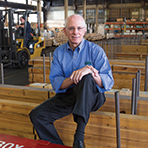
Doug Peters, Peters’ Heat Treating Inc.
Peters’ Heat Treating started in 1979, and here’s Doug Peters with a short history of Peters’ Heat Treating.
Doug Peters (DP): We basically started because there was a need in the area for a commercial heat treater. I heard about it from clients of mine. I was in the insurance business and I finally got tired of listening to everybody saying that the place needed a good heat treater so we started one. That expanded to Erie in ’82, then opened the production plant on 13 acres up here in 2013.
Doug and his wife Jackie have three kids involved in their business: Christopher, who helps with IT and other special projects at the heat treat company, and then husband and wife team Diana Peters Wilkosz and her husband Andy Wilkosz who are both heavily involved in Laser Hard as well as the heat treat company.
The other patriarch in this picture is Blair Learn, father of three boys, Chris, Dave, and Mike, all of whom are owners of Phoenix Laser Solutions. Here’s Blair with a brief history of his family business.
Blair Learn, Phoenix Laser Solutions
Blair Learn (BL): So we started here in 2008, but we’ve been laser welding for 25 years. We used to have a design and build plastic injection mold hut. We would build high cavitation molds, and we needed a laser there to fix the day-to-day bumps and dings — you know, DCRs and stuff.
Besides the laser heat treating technology, which we’ll get to in just a minute, the thing that excites these two seasoned entrepreneurs is seeing their 20- and 30-something kids run with a new business. Doug Peters says it well.
DP: I think one of the things that’s most interesting to me is that the two patriarchs have stepped back and this company truly belongs to our sons and daughters.
DG: And who are these sons and daughters? Well, there are more than we have time to put in this podcast, but let me introduce them all to you now and then we’ll hear from just two of them.
Introducing Chris Learn and Andy Wilkosz of LaserHard, Inc.
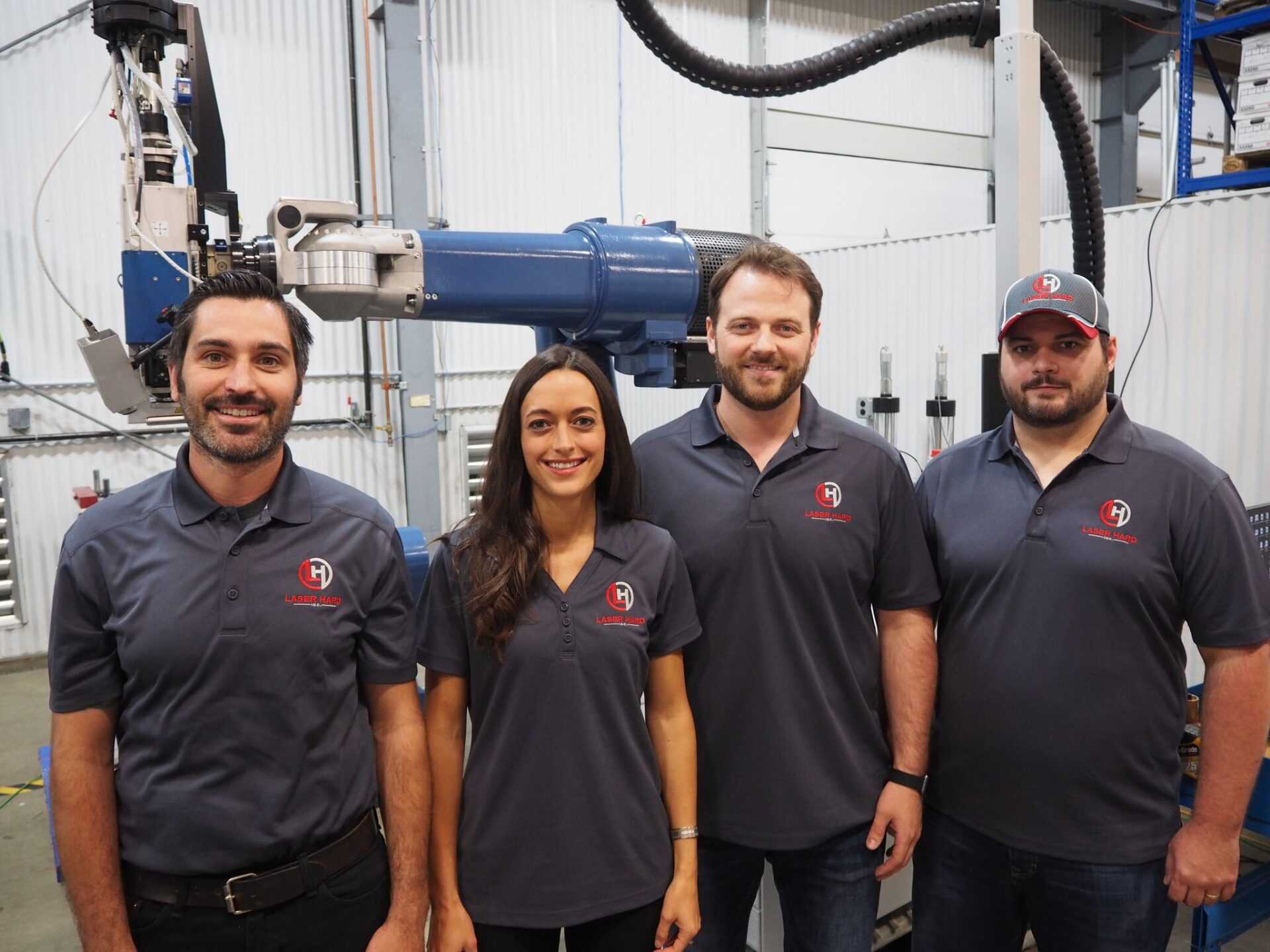
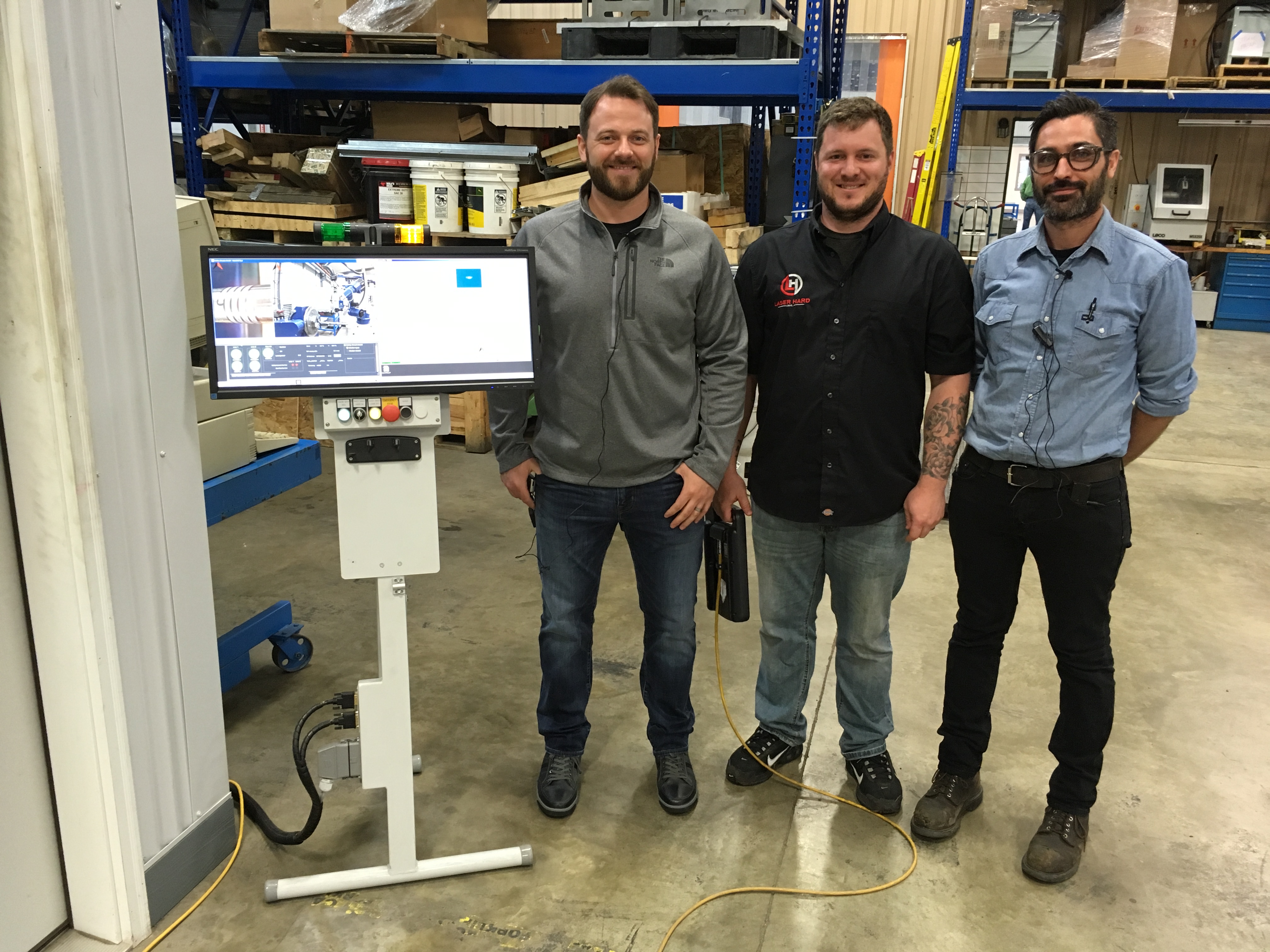
Laser Hard, Inc:: Andy Wilkosz, Diana Wilkosz, Chris Learn, David Learn
On the Peters’ Heat Treating side of the business is, as I mentioned before, Diana Wilkosz, maiden name, Peters. Diana is the marketing brains behind Laser Hard and oversees marketing, HR, and finance for Peters’ Heat Treating. This is a good time to mention that Laser Hard can be found on the web at www.laserhard.com, a website undoubtedly put together by Diana and her team.
We’ll hear from Diana’s husband, Andy Wilkosz, in just a few minutes.
From the Phoenix Laser Solutions side of the business is two of the three brothers, Chris and Dave Learn. Dave is treasurer and Chris is president. Both of the patriarchs, Doug Peters and Blair Learn, are heavily involved in sales and oversight of the new company.
Now, let’s hear from Chris Learn.
Chris Learn (CL): Yeah, my name is Chris Learn. I’m the owner of Phoenix Laser. And I pretty much oversee the shop floor. Mainly on the laser welding side.
DG: And now, as promised, let’s hear from the spokesperson from the Peters’ Heat Treating side of the business – Andy Wilkosz.
Andy Wilkosz (AW): I’m Andy Wilkosz, vice president of Laser Hard. I also work for Peters’ Heat Treat.
DG: So these are the players. But what about the technology – laser heat treating. Pretty fascinating stuff. Listen as we go back to Andy as he discusses cutting-edge robotics and real-time, feedback-loop pyrometry that makes this laser heat treating system so much different AND BETTER than other laser heat treating systems.
AW: So, I was part of the team that worked on initial startup and all the initial projects associated with the robot and the laser system. Some of the things that set it apart from the traditional lasers and systems that are out in the marketplace now is this has the Fonhoffer Control System so there is onboard optical pyrometry which is a very strong tool for this. A traditional laser is almost like a guess-and-check type of method where you adjust the wattage, see if you achieved the hardness, and in this system, we have the optical pyrometry that has a feedback loop that reads the temperature of the part and then it can control which is really important as a part’s geometry changes. We are going to be able to have better repeatability and control for our customers’ parts. Now, obviously it’s always best if you get one set up part but if the customer just has one part, we are much more likely to get it right and not hurt their part with some of the hazards that could be associated with laser-like melting.
DG: Doug Peters expounded as well on some of the advantages of the Laser Hard heat treating system.
DP: You can locally heat treat parting lines. You can locally heat treat shear areas in a cut off die. You can, instead of having to heat treat the whole part — basically the strength, Doug, is that you can finish a part, we can locally heat treat and then you can put it to work. So the precise heat of a laser enables us to not have to temper everything. In Europe, as they employ this technology, they don’t temper much, if anything because they don’t need to, because of the way this works. Right now I can tell you that the main strength I see in this thing is the precise placement of the treatment, whether it be cladding or heat treating, and the areas that we can direct the beam that you cannot get at with any other technology or method of heating. So, in other words, if you have a blind hole that is two inches deep, I can put a beam into the bottom of the hole and I can harden just the bottom of the hole, and you can’t do that with induction or flame. And with traditional heat treating you are going to have the hard finish cost associated with the distortion as part of the base heat treating cycle.
DG: With laser, you can get in the hole, do the job, and be done with no additional post treatments.
DP: Exactly. And no post hard finish time either — which is huge. The majority of time in building a tool is generally in hard finish time.
DG: And finally, Chris Learn also had something to say about the advantages and application of laser hardening. Chris Learn…
CL: It’s heavily being used in the automotive industry for very large plastic injection tools. So they got this very large plastic injection cavity or core and they are just locally heat treating the parting line and the shut offs. Where before they would have to buy a more expensive material and you know, rough machine it, then heat treat the entire huge block and then finish machine it, you know, with hard milling or eem processes that are very expensive, where now they can just buy a cheaper material, finish machine it and then laser harden just the part you need.
Portability
One of the other benefits of this new laser heat treating service being offered by Laser Hard is its portability.
One of the other benefits of this new laser heat treating service being offered by Laser Hard is its portability. Andy Wilkosz commented on the unit’s portability and its potential application in the gear market.
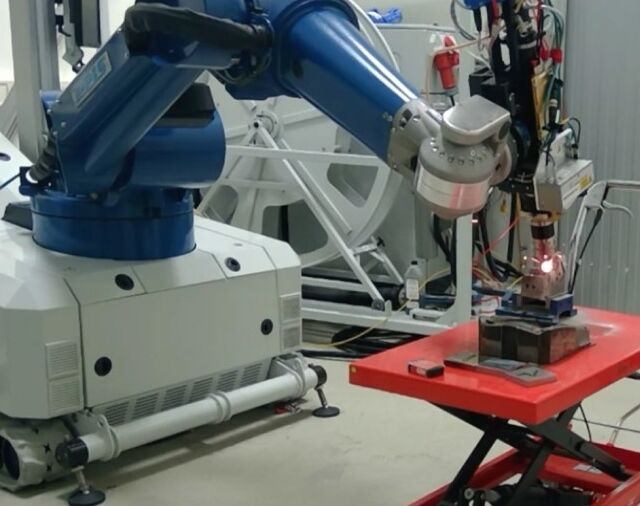
AW: Another powerful aspect of this is we are hoping to really serve the gear market as well. Where in traditional heat treating, what you run is going to be limited on your furnace size. With this robot having the ability to move around — it’s on tank treads — and the range that it can articulate to, you are only limited by what you can get to. So we have the ability to do very, very large parts.
DG: I don’t know if you caught what Andy said. He said that the laser heat treating unit was on “tank treads.” Those tank treads along with a robotic laser heat treating or cladding arm allow the unit to move on-site to where the part is located and once there to move around the part as needed to do whatever process needs done whether it be heat treating or cladding.
As we left the Laser Hard offices and went into the shop to see the unit in action, I asked Chris Learn about the unit’s mobility as well – the ability to take that machine on-site.
CL: So I think the biggest reason for taking this piece of equipment mobile is if the workpiece is too large to transport. Or if it’s too expensive and too risky to transport. So, it’s a very high-cost situation that instead of taking the part here and having us manipulate it here at our shop, even though we have a ten-ton crane, some parts that we deal with are twenty tons, thirty tons. So, it’s a size restriction. Sometimes it’s going to make sense to take this on site.
DG: I next asked Andy to give us a brief explanation of how the unit works. Here’s Andy, and again, please pardon the background noise from the laser welding shop.
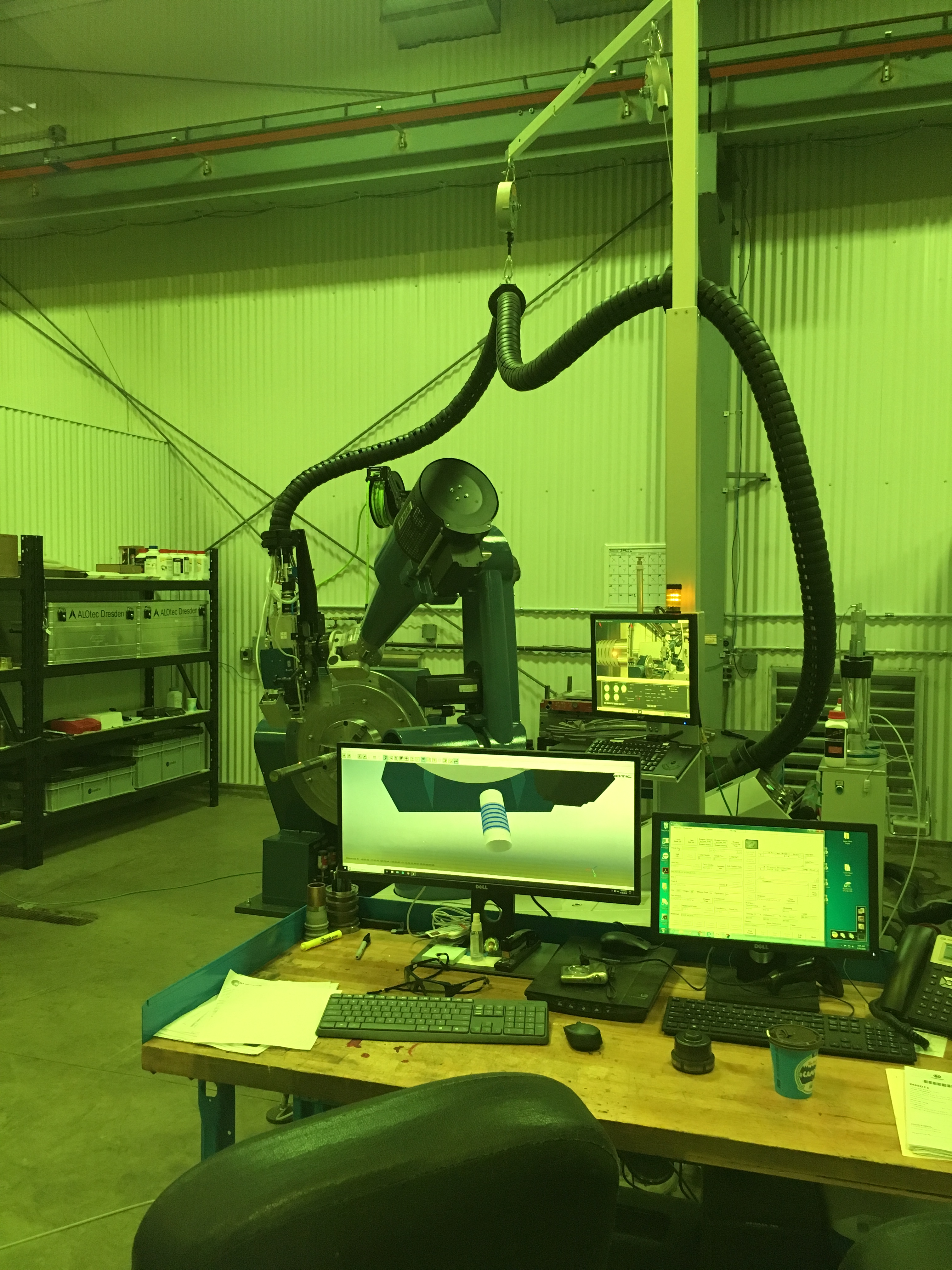
AW: Right now, we have a part chucked up in the rotary axis and with the laser scan technology that we have on the laser, it interfaces with the software on the computer and what Mason can do is, we’ll rotate the part, as he rotates the part, it requires image information through the scan and it will actually build a 3D model of the part and its geometry on the computer. Then once we have that on the computer, we can use the computer to draw and program the path of the heat treat or the laser hardening pattern – whether it be a spot or in this case it’s a round bar and what we are going to do is we are going to traverse the bar in a spiral candy cane/barber pole pattern so that you can harden the entire surface. The beam size is about, the max width is, we’ll say 850,000, it’s a little bit more than that but we’ll use round numbers. So if you want to harden an area larger than that, what you end up doing is making multiple overlapping passes.
DG: To actually see the equipment in action, you’ll have to link over to Heat Treat Today’s website and search for Laser Hard. We’ll have an article there with photos of the players and a brief video of the laser heat treating system in action.
This laser heat treating and cladding system has a real-time feedback loop that makes it possible to not guess at whether the heat treating process being run is being run correctly.
This laser heat treating and cladding system is portable and can go on-site to perform any process needed.
For large parts or for specialty parts where shipping is problematic, this laser heat treating system may be just the ticket you’ve been looking for.
The young team at Laser Hard, backed by the two industry veterans, are bringing an innovative new heat treating technology to the United States.
If you’re interested in knowing more about Laser Hard and the services they provide, feel free to visit their website at www.laserhard.com or contact me directly and I’ll put you in touch with one of the key players. More information, including photos of the Laser Hard team and the equipment, as well as a short video of the equipment in use, can be seen by visiting Heat Treat Today’s website and searching for Laser Hard.
Stop back at Heat Treat Today’s site frequently. We update the site daily with information pertinent to heat treaters with in-house heat treating departments, especially those in the aerospace, automotive, medical, and energy sectors, as well as general manufacturing.
If you’d like to hear more Heat Treat Radio, you can do that in one of three ways:
You can Google “heat treat radio” – we’re the first thing that pops up,
You can visit www.heattreattoday.com and find “Heat Treat Radio” under the Resources tab,
Or, as I mentioned at the beginning of the podcast, you can find “Heat Treat Radio” on iTunes or on SoundCloud.
If you have a specific topic you’d like covered on Heat Treat Radio, please feel free to contact me directly with your suggestion. My email is doug@heattreattoday.com.
Heat Treat Radio podcasts are the sole property of Heat Treat Today and cannot be reproduced without permission and appropriate attribution.
This episode of Heat Treat Radio was produced and mixed by Jonathan Lloyd, Butler, Pennsylvania.
My name is Doug Glenn. Thanks for joining us.
Doug Glenn, Heat Treat Today publisher and Heat Treat Radio host.
To find other Heat Treat Radio episodes, go to www.heattreattoday.com/radio and look in the list of Heat Treat Radio episodes listed.
Welcome to another episode of Heat Treat Radio, a periodic podcast where Heat Treat Radio host, Doug Glenn, discusses cutting-edge topics with industry-leading personalities. Below, you can either listen to the podcast by clicking on the audio play button, or you can read an edited version of the transcript. To see a complete list of other Heat Treat Radio episodes, click here.
Audio: Heat Treat Radio: Laser Heat Treating with Laser Hard
In this conversation, Heat Treat Radio host, Doug Glenn, interviews two families who have been at their manufacturing game for multiple generations. Not long ago they joined forces to establish a new company — Laser Hard, Inc. — and to introduce one of the most cutting edge-heat treat technologies around today: laser heat treating. For many of you who have difficult-to-heat treat parts, whether it’s because of blind holes, or the fact that the part is too big to move, or perhaps you’d like to significantly reduce, if not eliminate, post-heat treat hard machining, you’re going to find today’s Heat Treat Radio episode on laser heat treating especially interesting.
Click The Play Button Below To Listen.
Transcript: Heat Treat Radio: Laser Heat Treating with Laser Hard
The following transcript has been edited for your reading enjoyment.
Click the image to connect to Heat Treat Radio
In this episode of Heat Treat Radio, let’s talk about one of the most cutting-edge heat treat technologies around today — laser heat treating.
Thanks for joining us. My name is Doug Glenn and I’m your Heat Treat Radio host and publisher of Heat Treat Today. You can find us on the web at www.heattreattoday.com or simply by Googling Heat Treat Radio. And here’s something new, Heat Treat Radio is now on iTunes! On the website, we update our heat treat content daily, and if you’re a manufacturer with an in-house heat treat department, you’re going to love our site.
Although it sounds Star Treky, laser heat treating is a pretty well-established technology, especially in Europe, but not so much in the United States. The applications are intriguing to say the least – as is the way it is being introduced into the United States – and as are the two families introducing it. One family – long time heat treaters. The other family – long time laser welders and laser cladders. Both minding their own businesses – literally – both thinking about ways to better serve their customers. These two businessmen were from the same small town in Pennsylvania, and they paired up to create a new company called Laser Hard.
And that’s where our story begins.
Introducing Doug Peters Of Peters’ Heat Treating And Blair Learn Of Phoenix Laser Solutions
Doug Glenn (DG): First, let me introduce you to the two patriarchs: Doug Peters of Peters’ Heat Treating, and Blair Learn of Phoenix Laser Solutions.
Both Doug and Blair are seasoned veterans in their respective industries, and both have children involved in their family businesses in Meadville, Pennsylvania – a mid-sized city about 40 minutes south of Lake Erie and 20 miles from the Ohio state border. These two patriarchs have known each other for years – primarily because Phoenix Laser had been sending heat treating to Peters’ Heat Treating.
Doug Peters, Peters’ Heat Treating Inc.
Peters’ Heat Treating started in 1979, and here’s Doug Peters with a short history of Peters’ Heat Treating.
Doug Peters (DP): We basically started because there was a need in the area for a commercial heat treater. I heard about it from clients of mine. I was in the insurance business and I finally got tired of listening to everybody saying that the place needed a good heat treater so we started one. That expanded to Erie in ’82, then opened the production plant on 13 acres up here in 2013.
Doug and his wife Jackie have three kids involved in their business: Christopher, who helps with IT and other special projects at the heat treat company, and then husband and wife team Diana Peters Wilkosz and her husband Andy Wilkosz who are both heavily involved in Laser Hard as well as the heat treat company.
The other patriarch in this picture is Blair Learn, father of three boys, Chris, Dave, and Mike, all of whom are owners of Phoenix Laser Solutions. Here’s Blair with a brief history of his family business.
Blair Learn, Phoenix Laser Solutions
Blair Learn (BL): So we started here in 2008, but we’ve been laser welding for 25 years. We used to have a design and build plastic injection mold hut. We would build high cavitation molds, and we needed a laser there to fix the day-to-day bumps and dings — you know, DCRs and stuff.
Besides the laser heat treating technology, which we’ll get to in just a minute, the thing that excites these two seasoned entrepreneurs is seeing their 20- and 30-something kids run with a new business. Doug Peters says it well.
DP: I think one of the things that’s most interesting to me is that the two patriarchs have stepped back and this company truly belongs to our sons and daughters.
DG: And who are these sons and daughters? Well, there are more than we have time to put in this podcast, but let me introduce them all to you now and then we’ll hear from just two of them.
Introducing Chris Learn And Andy Wilkosz Of LaserHard, Inc.
Laser Hard, Inc:: Andy Wilkosz, Diana Wilkosz, Chris Learn, David Learn
On the Peters’ Heat Treating side of the business is, as I mentioned before, Diana Wilkosz, maiden name, Peters. Diana is the marketing brains behind Laser Hard and oversees marketing, HR, and finance for Peters’ Heat Treating. This is a good time to mention that Laser Hard can be found on the web at www.laserhard.com, a website undoubtedly put together by Diana and her team.
We’ll hear from Diana’s husband, Andy Wilkosz, in just a few minutes.
From the Phoenix Laser Solutions side of the business is two of the three brothers, Chris and Dave Learn. Dave is treasurer and Chris is president. Both of the patriarchs, Doug Peters and Blair Learn, are heavily involved in sales and oversight of the new company.
Now, let’s hear from Chris Learn.
Chris Learn (CL): Yeah, my name is Chris Learn. I’m the owner of Phoenix Laser. And I pretty much oversee the shop floor. Mainly on the laser welding side.
DG: And now, as promised, let’s hear from the spokesperson from the Peters’ Heat Treating side of the business – Andy Wilkosz.
Andy Wilkosz (AW): I’m Andy Wilkosz, vice president of Laser Hard. I also work for Peters’ Heat Treat.
DG: So these are the players. But what about the technology – laser heat treating. Pretty fascinating stuff. Listen as we go back to Andy as he discusses cutting-edge robotics and real-time, feedback-loop pyrometry that makes this laser heat treating system so much different AND BETTER than other laser heat treating systems.
AW: So, I was part of the team that worked on initial startup and all the initial projects associated with the robot and the laser system. Some of the things that set it apart from the traditional lasers and systems that are out in the marketplace now is this has the Fonhoffer Control System so there is onboard optical pyrometry which is a very strong tool for this. A traditional laser is almost like a guess-and-check type of method where you adjust the wattage, see if you achieved the hardness, and in this system, we have the optical pyrometry that has a feedback loop that reads the temperature of the part and then it can control which is really important as a part’s geometry changes. We are going to be able to have better repeatability and control for our customers’ parts. Now, obviously it’s always best if you get one set up part but if the customer just has one part, we are much more likely to get it right and not hurt their part with some of the hazards that could be associated with laser-like melting.
DG: Doug Peters expounded as well on some of the advantages of the Laser Hard heat treating system.
DP: You can locally heat treat parting lines. You can locally heat treat shear areas in a cut off die. You can, instead of having to heat treat the whole part — basically the strength, Doug, is that you can finish a part, we can locally heat treat and then you can put it to work. So the precise heat of a laser enables us to not have to temper everything. In Europe, as they employ this technology, they don’t temper much, if anything because they don’t need to, because of the way this works. Right now I can tell you that the main strength I see in this thing is the precise placement of the treatment, whether it be cladding or heat treating, and the areas that we can direct the beam that you cannot get at with any other technology or method of heating. So, in other words, if you have a blind hole that is two inches deep, I can put a beam into the bottom of the hole and I can harden just the bottom of the hole, and you can’t do that with induction or flame. And with traditional heat treating you are going to have the hard finish cost associated with the distortion as part of the base heat treating cycle.
DG: With laser, you can get in the hole, do the job, and be done with no additional post treatments.
DP: Exactly. And no post hard finish time either — which is huge. The majority of time in building a tool is generally in hard finish time.
DG: And finally, Chris Learn also had something to say about the advantages and application of laser hardening. Chris Learn…
CL: It’s heavily being used in the automotive industry for very large plastic injection tools. So they got this very large plastic injection cavity or core and they are just locally heat treating the parting line and the shut offs. Where before they would have to buy a more expensive material and you know, rough machine it, then heat treat the entire huge block and then finish machine it, you know, with hard milling or eem processes that are very expensive, where now they can just buy a cheaper material, finish machine it and then laser harden just the part you need.
Portability
One of the other benefits of this new laser heat treating service being offered by Laser Hard is its portability.
One of the other benefits of this new laser heat treating service being offered by Laser Hard is its portability. Andy Wilkosz commented on the unit’s portability and its potential application in the gear market.
AW: Another powerful aspect of this is we are hoping to really serve the gear market as well. Where in traditional heat treating, what you run is going to be limited on your furnace size. With this robot having the ability to move around — it’s on tank treads — and the range that it can articulate to, you are only limited by what you can get to. So we have the ability to do very, very large parts.
DG: I don’t know if you caught what Andy said. He said that the laser heat treating unit was on “tank treads.” Those tank treads along with a robotic laser heat treating or cladding arm allow the unit to move on-site to where the part is located and once there to move around the part as needed to do whatever process needs done whether it be heat treating or cladding.
As we left the Laser Hard offices and went into the shop to see the unit in action, I asked Chris Learn about the unit’s mobility as well – the ability to take that machine on-site.
CL: So I think the biggest reason for taking this piece of equipment mobile is if the workpiece is too large to transport. Or if it’s too expensive and too risky to transport. So, it’s a very high-cost situation that instead of taking the part here and having us manipulate it here at our shop, even though we have a ten-ton crane, some parts that we deal with are twenty tons, thirty tons. So, it’s a size restriction. Sometimes it’s going to make sense to take this on site.
DG: I next asked Andy to give us a brief explanation of how the unit works. Here’s Andy, and again, please pardon the background noise from the laser welding shop.
AW: Right now, we have a part chucked up in the rotary axis and with the laser scan technology that we have on the laser, it interfaces with the software on the computer and what Mason can do is, we’ll rotate the part, as he rotates the part, it requires image information through the scan and it will actually build a 3D model of the part and its geometry on the computer. Then once we have that on the computer, we can use the computer to draw and program the path of the heat treat or the laser hardening pattern – whether it be a spot or in this case it’s a round bar and what we are going to do is we are going to traverse the bar in a spiral candy cane/barber pole pattern so that you can harden the entire surface. The beam size is about, the max width is, we’ll say 850,000, it’s a little bit more than that but we’ll use round numbers. So if you want to harden an area larger than that, what you end up doing is making multiple overlapping passes.
DG: To actually see the equipment in action, you’ll have to link over to Heat Treat Today’s website and search for Laser Hard. We’ll have an article there with photos of the players and a brief video of the laser heat treating system in action.
This laser heat treating and cladding system has a real-time feedback loop that makes it possible to not guess at whether the heat treating process being run is being run correctly.
This laser heat treating and cladding system is portable and can go on-site to perform any process needed.
For large parts or for specialty parts where shipping is problematic, this laser heat treating system may be just the ticket you’ve been looking for.
The young team at Laser Hard, backed by the two industry veterans, are bringing an innovative new heat treating technology to the United States.
If you’re interested in knowing more about Laser Hard and the services they provide, feel free to visit their website at www.laserhard.com or contact me directly and I’ll put you in touch with one of the key players. More information, including photos of the Laser Hard team and the equipment, as well as a short video of the equipment in use, can be seen by visiting Heat Treat Today’s website and searching for Laser Hard.
Stop back at Heat Treat Today’s site frequently. We update the site daily with information pertinent to heat treaters with in-house heat treating departments, especially those in the aerospace, automotive, medical, and energy sectors, as well as general manufacturing.
If you’d like to hear more Heat Treat Radio, you can do that in one of three ways:
You can Google “heat treat radio” – we’re the first thing that pops up,
You can visit www.heattreattoday.com and find “Heat Treat Radio” under the Resources tab,
Or, as I mentioned at the beginning of the podcast, you can find “Heat Treat Radio” on iTunes or on SoundCloud.
If you have a specific topic you’d like covered on Heat Treat Radio, please feel free to contact me directly with your suggestion. My email is doug@heattreattoday.com.
Heat Treat Radio podcasts are the sole property of Heat Treat Today and cannot be reproduced without permission and appropriate attribution.
This episode of Heat Treat Radio was produced and mixed by Jonathan Lloyd, Butler, Pennsylvania.
My name is Doug Glenn. Thanks for joining us.
Doug Glenn, Heat Treat Today publisher and Heat Treat Radio host.
To find other Heat Treat Radio episodes, go to www.heattreattoday.com/radio and look in the list of Heat Treat Radio episodes listed.
An international technology group recently signed a contract to acquire a Pittsburgh-area family-owned company that manufactures a wide range of shear knives, blades, liners, wear plates, and accessories for the metals producing, processing, and recycling industries.
Bill Rackoff, president of ASKO (Photo credit: Pittsburgh Magazine)
ANDRITZ, headquartered in Graz, Austria, views the acquisition of ASKO as a complement to its ongoing service offerings for the metals industry.
“The combination of ASKO’s broad line of industrial knives and wear parts, and Andritz’s global position and engineering leadership, reinforces the partners’ strategies to provide advanced technology services and maintenance products to the global metals industry,” said Bill Rackoff, president of ASKO. “Both companies’ business strategies are based on delivering technical solutions that enhance customer value. The result of coordinating with Andritz’s global resources and talented metals team creates expanded opportunities for ASKO’s customers and associates.”
ASKO, headquartered in Homestead, Pennsylvania, and founded in 1933, serves practically all renowned international metals production companies and delivers its products from four locations: Homestead, PA; Rock Hill, SC; South Holland, IL, and Amsterdam, Netherlands. The company’s announcement states that ASKO will continue to operate as a separate legal entity and the present ASKO management team all remain. Bill Rackoff will continue to serve as President of ASKO and Peter Rackoff as Chief Operating Officer. There are no changes to ASKO operations, channels of sale and distribution, or the employment status of ASKO associates.
Among other offerings, ANDRITZ is a globally leading supplier of services to the metalworking and steel industries.
A Dozen Quick Heat Treat News Items to Keep You Current
Heat Treat Today offers News Chatter, a feature highlighting representative moves, transactions, and kudos from around the industry.
Personnel and Company Chatter
Italy-based ICMI Forni Industriali has installed and launched its third heat treatment chamber furnace. The company specializes in the design and construction of plants for heat treatment and heating. The furnace has an internal dimension of approximately 7 ft 10 in x 7 ft 10 in x 7 ft 3 in (2,400 x 2,400 x 2.220 m), and can load a weight up to 3 tonnes.
A Southbridge, Massachusetts, heat treating company recently received approval of a tax deal from the town council for the expansion of space and equipment of its facility. Hardline Heat Treating Inc. manufactures thermal processing units and lines for the automotive and firearms industries and hopes this expansion will open up the aerospace market.
US Representative Mike Kelly (PA District 3) recently toured Solar Atmospheres of Western PA. The congressman, a leading supporter to small business, was able to observe and hear firsthand how tax reform has influenced Solar’s future and was extremely pleased to hear how the tax reform bills that he supported have spurred tremendous private investment and job creation within the Hermitage PA facility. Congressman Kelly stated, “I thoroughly enjoyed my visit to Solar Atmospheres in Hermitage last week. It is truly a world-class facility that I’m proud to represent right here in the Shenango Valley. It was fascinating to learn more about what they are producing, and just as importantly, how they are producing it. I was particularly glad to speak with Solar’s dedicated professionals about the specific policies I can support to help them thrive in our community, including tax reform and the revival of the Export Import Bank.”
Robert S. Wetherbee has been appointed by the Board of Directors of Allegheny Technologies Incorporated to become ATI’s President and Chief Executive Officer effective January 1, 2019, succeeding Richard J. Harshman as ATI’s President and Chief Executive Officer. Harshman will remain Chairman, President, and Chief Executive Officer until January 1, 2019, following which he will continue to serve as Executive Chairman of the Board until his retirement in conjunction with ATI’s May 9, 2019, Annual Meeting. The Board has elected Diane C. Creel, who has served as ATI’s Lead Independent Director since 2011, to become Board Chair effective immediately following Mr. Harshman’s May 2019 retirement. Wetherbee will also join the ATI Board.
Thomas Kubera has been named to the position of Chief Financial Officer with SIFCO Industries, Inc., effective August 7, 2018. Kubera has been with the Company since May 2014.
Jennifer Howe was recently hired by Michigan-based Premier Thermal Solutions as Regional Sales Manager, responsible for all aspects of sales within her territory of Michigan, Illinois, Wisconsin, and Canada.
ICMI expands with new chamber furnace
Congressman Mike Kelly visits Solar Atmospheres of Western PA.
Robert Wetherbee, ATI
Jennifer Howe, Premier Thermal Solutions
Equipment Chatter
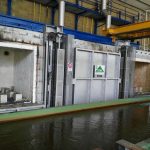
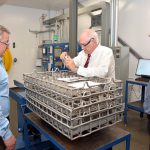
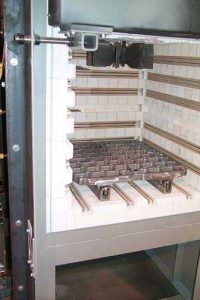
A Midwestern engine manufacturer recently received an electric box furnace for the purpose of heat treating larger structures and running batches of multiple parts. The furnace is in use for hardening and annealing of many varieties of components. L&L Special Furnace Co, Inc., supplied the 22″W x by 18″H x 22″D unit, which has an alloy fan that provides uniformity (±10°F) from 300°F to 1,800°F. The alloy roller hearth and movable load table allow for larger heavy parts to be easily moved in and out of the furnace manually.
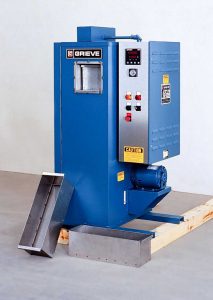
A 250°F (121°C), special electrically heated oven (No. 861), sold by Grieve Corporation, has been installed for drying small parts in a tray at an unnamed customer’s facility.
L&L Special Furnaces delivers a electric box furnace.
Grieve installs the No. 861
Kudos Chatter
ASM International recently announced a new entity, the ASM Materials Solutions Network, “to serve as an extension of [ASM]’s R&D capacity by leveraging the ASM network to provide collaborative and scalable solutions.” Announced at the AeroMat Conference in May 2018, the network serves multiple industries including Aerospace, Automotive, Oil & Gas, Materials Processes, and Medical Devices. Founding Provider Members have been announced: Battelle, ESi, Granta, IMR Test Labs, NSL Analytic Services Inc., QuesTek Innovations, Solar Atmospheres. In addition, Parker Hannifin Corporation officially became the Founding Client Member of ASM’s Materials Solutions Network.
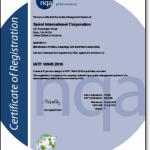
A global manufacturer of engineered fasteners, shims and installation equipment has announced that two of its manufacturing facilities have recently been certified to IATF 16949:2016: SPIROL Industries in Windsor, Ontario, Canada, which manufactures roll formed tubular products including dowel bushings, spring dowels, ground hollow dowels, compression limiters and spacers; and SPIROL International Corp. in Stow, Ohio, which manufactures disc springs, precision shims, custom washers and spacers. In addition to IATF 16949, SPIROL Ohio also holds AS9100 Rev D (aerospace) and NADCAP (aerospace and defense) quality system certifications.
Twelve teachers from across North America, including one from Canada, and three Temple University students were hosted by Solar Atmospheres Inc. at its Souderton, Pennsylvania, facility as part of their participation in the ASM International Teachers’ Camp. The camp was sponsored by the ASM Philadelphia Liberty Bell Chapter and was located at Temple University’s Ambler campus where participants spent a week learning the basics of Materials Science Technology (MST) as taught at the high school level. For its part, Solar Atmospheres gave a brief overview of vacuum heat treating furnaces, processes, and metallurgy pertinent to the teachers’ curriculum, followed by a tour of the facility.
ASM International\’s Materials Solutions Network
Two SPIROL facilities attain IATF certification.
Solar Atmospheres hosts teachers from ASMI\’s teacher camp.
In Memoriam . . .
Professor Hans Tensi, formerly of the Technical University of Munich, recently died following a lengthy illness. As related by George Totten of GE Totten and Associates, “As all of you know, Professor Tensi made vital, influential and lasting contributions to the fundamental understanding of quenching technology as we understand it today. Much of his work and that of his contemporaries has been memorialized in Theory and Technology of Quenching, an authoritative handbook co-edited by B. Liscic, H.M. Tensi, and W. Luty. . . . Prof. Tensi was recognized for his numerous contributions by his election as a Fellow of ASM International and the International Federation for Heat Treatment and Surface Engineering (IFHTSE). Professor Tensi is survived by his wife Ingrid, his son Thomas, and his three grandchildren Elina, Nelia and Jannis.”
Heat Treat Today is pleased to join in the announcements of growth and achievement throughout the industry by highlighting them here on our News Chatter page. Please send any information you feel may be of interest to manufacturers with in-house heat treat departments especially in the aerospace, automotive, medical, and energy sectors to the editor at editor@heattreattoday.com.