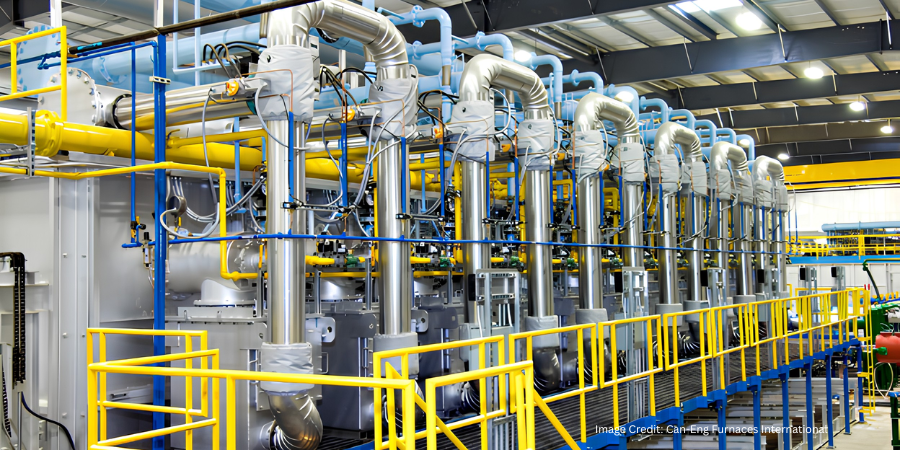
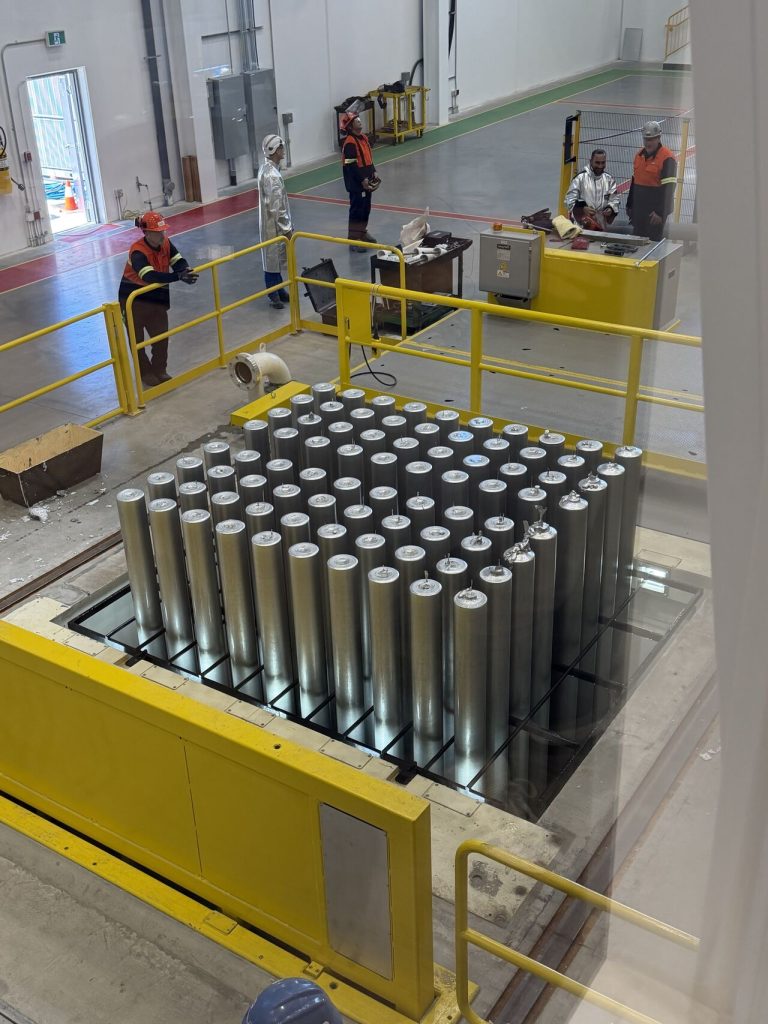
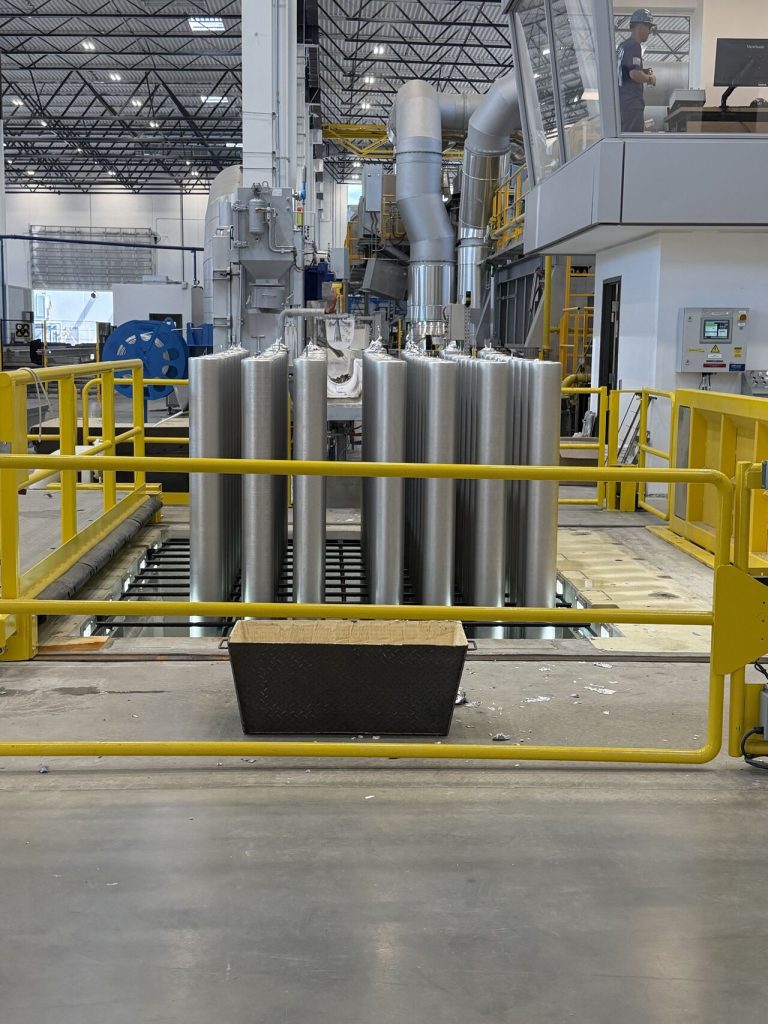
A new high-temperature austenitizing furnace system will support the production of large, heavy wear components used in ground-engaging equipment. Designed for consistent metallurgical performance and high production throughput, the system will provide controlled thermal processing for components operating in demanding service environments.
Can-Eng Furnaces International Ltd., an Ontario-based supplier of thermal processing systems, has been awarded the contract to design and supply the plate-processing furnace system.
The furnace uses an air-cooled walking-beam design and can accommodate plates up to 8 feet (2.44 meters) wide. The configuration is designed to minimize product distortion while providing material handling throughout the heat treatment cycle. Waste heat recovered from the furnace can also be used as part of the building’s heating system.
Thermal input is supplied through direct-fired auto-recuperative burners, providing heat transfer while reducing fuel consumption. Furnace combustion, process control, and walking-beam motion are integrated through a Siemens S7-1500F programmable logic controller (PLC).
The project builds on Can-Eng’s more than 60 years of experience designing and manufacturing walking-beam furnace systems for applications requiring consistent metallurgical performance and long-term operating reliability.
Press release is available in its original form here.
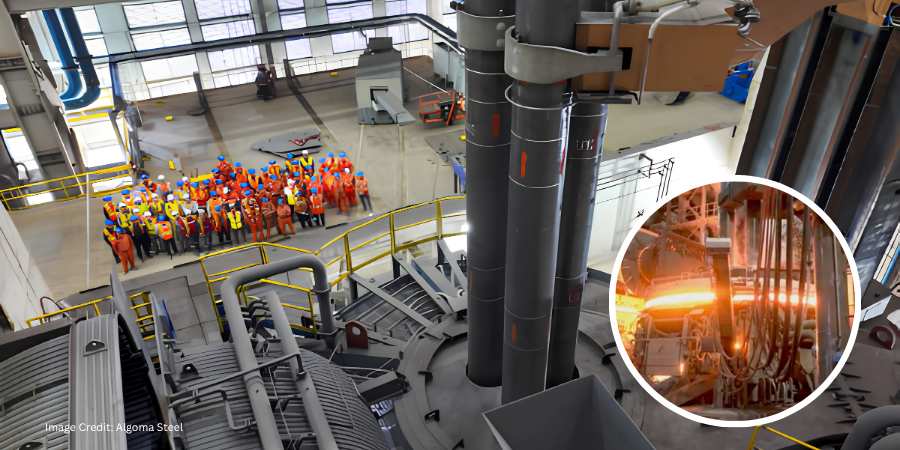
Electric arc furnace (EAF) steel production has resumed at Algoma Steel following a temporary suspension caused by an unplanned power generation outage. The restart restores steelmaking operations at a facility that transitioned fully to EAF production earlier this year.
The company resumed electric arc furnace (EAF) steel production at its Sault Ste. Marie, Ontario, facility on August 29 after working with the Independent Electricity System Operator (IESO) to establish interim operating arrangements. Algoma Steel reported that it is sustaining production and shipping steel under those arrangements while an affected turbine at its Lake Superior Power (LSP) generating facility remains unavailable.
The outage was first reported on August 17. Because LSP supplies electricity to Algoma’s steelmaking operations, the company temporarily suspended EAF production while downstream finishing and shipping activities continued. Algoma had initially estimated that the EAF outage would last no more than 21 days while it pursued options for restoring power.
Algoma is pursuing multiple options to restore full generating capacity at LSP, including repairing and returning the affected turbine to service or securing a replacement turbine. The steelmaker is working with GE and other parties to advance the alternatives in parallel and determine the most effective and timely path to restoring full generating capacity.
The EAF restart is significant for Algoma following its transition away from traditional integrated steelmaking. The company permanently ceased production at its blast furnace and associated coke batteries in January 2026, making its EAF facility the sole source of liquid steel for its plate and hot-rolled coil operations.
Construction of a second EAF unit is nearing completion, with first steel production expected in the third quarter of 2026. Once the EAF transformation is complete, the facility is expected to have approximately 3.7 million tons of annual raw steel production capacity.
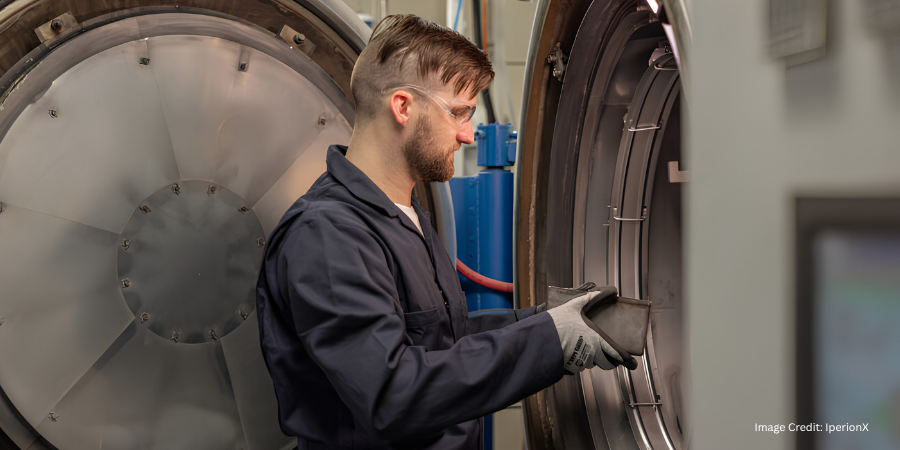
IperionX has received a second U.S. Army task order to expand domestic titanium component manufacturing through hydrogen sintering and phase transformation (HSPT) and dehydrogenation. The program will increase component-processing capability and bring critical manufacturing steps in-house, supporting shorter lead times and potentially lower production costs for defense applications.
The award falls under the company’s existing $99 million Small Business Innovation Research Phase III contract. Task Order 2 has a stated base value of $18.5 million, with $11.5 million currently funded and obligated. Unexercised and unfunded options could increase its maximum value to $25.4 million. The performance period runs from August 28, 2026 to August 27, 2030.
IperionX’s manufacturing platform integrates two proprietary technologies: HAMR, which converts titanium scrap or mineral feedstocks into low-oxygen titanium powder, and HSPT, which consolidates that powder into near-net-shape components with wrought-like microstructure. Continuous HSPT processing complements GenX, the company’s next-generation continuous HAMR development platform.
Three fully funded work packages cover $3.4 million for continuous HSPT furnace development, $1 million for in-house fastener manufacturing equipment, and $7.1 million for industrial-scale continuous HSPT and dehydrogenation furnaces. IperionX will procure, install, and commission the furnaces to demonstrate processing of titanium components, including track pins and bolts for Army applications. Inspection and acceptance for the industrial-scale continuous furnace work package are planned at Detroit Arsenal, Michigan.
A centerless grinder and thread-rolling equipment will bring titanium fastener finishing fully in-house at the company’s Virginia manufacturing facility. The equipment will convert fastener blanks into completed bolts and other threaded fasteners, reducing reliance on external finishing providers.
A separate $7.1 million work package for industrial-scale bath HSPT and dehydrogenation furnaces has an initial $100,000 allotment. Further execution remains subject to additional government funding and authorization.
Four unfunded options totaling $6.9 million would support a binder-jet printing and HSPT demonstration for an aerospace-grade titanium component; C103 alloy scrap recycling; and niobium reduction, powder spheroidization, and scaled spherical niobium and C103 powder production with Global Advanced Metals. C103 is a niobium-hafnium-titanium refractory alloy used in high-temperature space and defense propulsion applications.
Press release is available in its original form here.
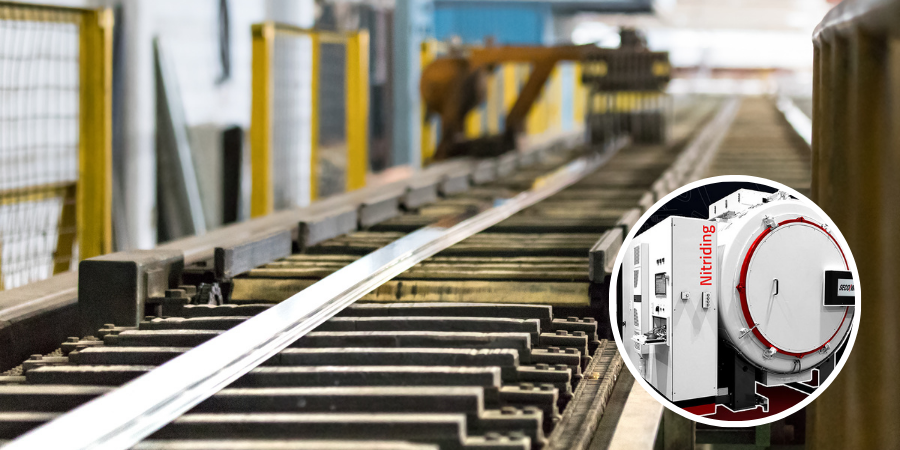
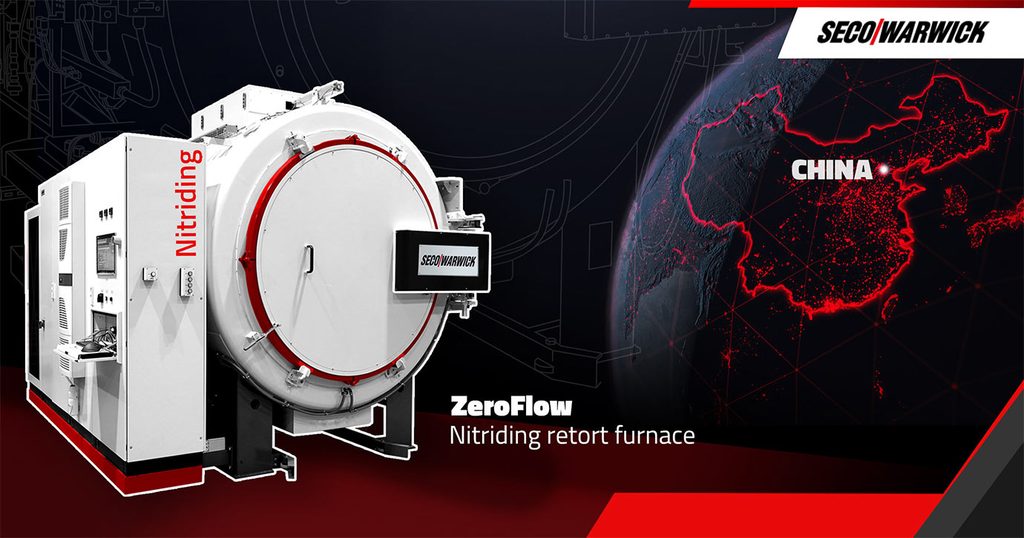
An aluminum profile manufacturer has ordered a gas nitriding furnace to treat extrusion dies, improving their wear resistance and extending service life. The investment will support production stability and finished profile quality.
SECO/WARWICK, a global supplier of heat treating equipment with operations in North America, will supply the furnace, equipped with its ZeroFlow controlled gas nitriding technology.
Image Credit: SECO/WARWICK
The furnace will measure approximately 40 x 40 x 60 in (1,000 x 1,000 x 1,500 mm), accommodate a maximum gross load of approximately 5,500 lb (2,500 kg), and provide temperature uniformity of ±9°F (±5°C). The technology controls the structure and properties of the nitrided layer while reducing process gas consumption and post-cycle emissions.
The purchase supports the development of a new production site in Shenyang, Liaoning Province, China. The manufacturer selected the supplier after comparing available equipment and evaluating ten years of performance from its existing SECO/WARWICK furnace.
The equipment will be the largest nitriding furnace of this type delivered by SECO/WARWICK China. The project combines local manufacturing with support from the group’s European headquarters, with both teams responsible for design, manufacturing, commissioning, and operational support.
Press release is available in its original form here.
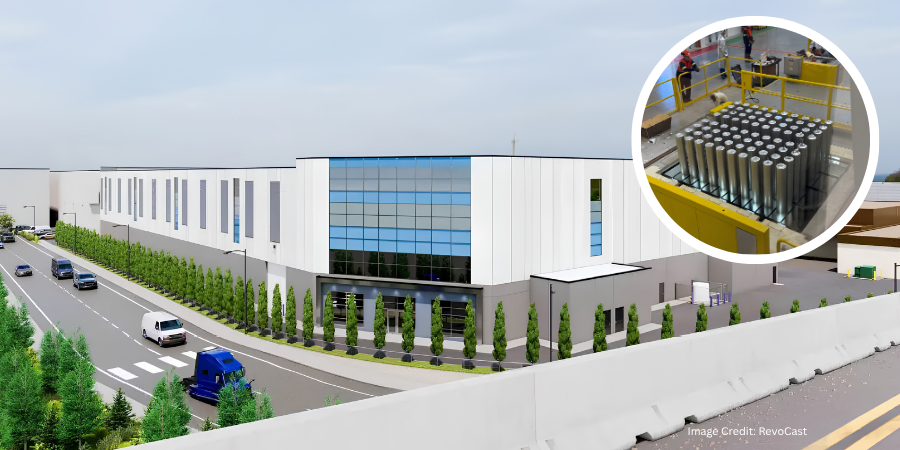
RevoCast Aluminum Billets Ltd., a manufacturer of recycled aluminum billets, has begun production at a new aluminum remelting facility in British Columbia, adding more than 80,000 tons of annual billet capacity to serve the North American extrusion market.
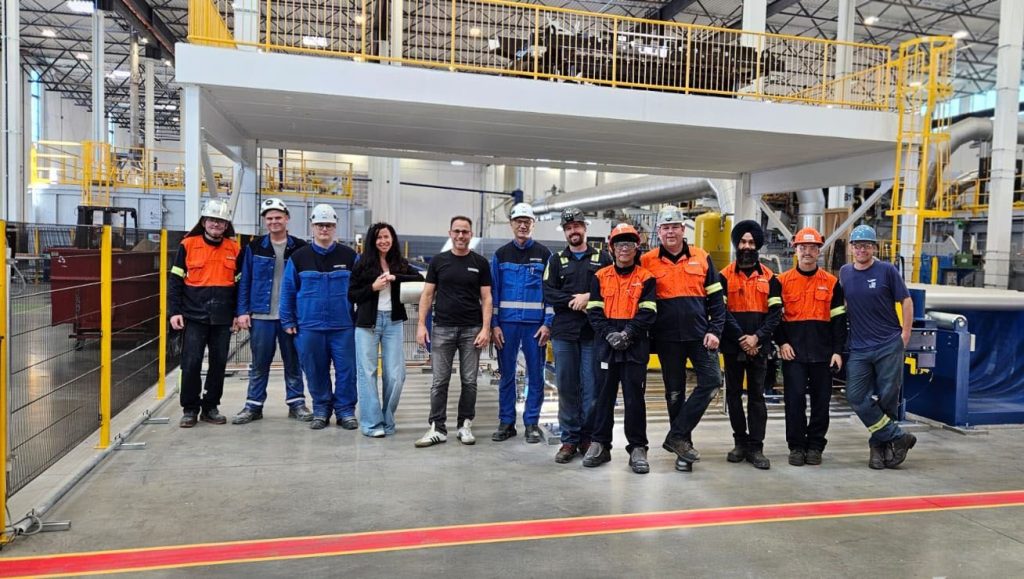
The company has successfully cast its first aluminum billet at its new remelting facility in Langley, British Columbia, marking the start of operations at the Canadian plant.
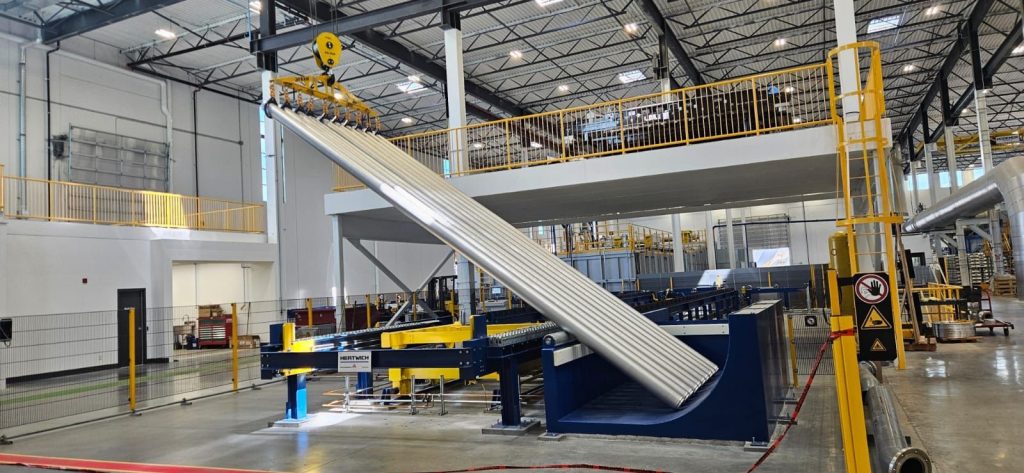
The first billet was cast on August 1, 2026, following the completion of the new facility. RevoCast said the milestone resulted from planning and collaboration among its employees, partners, and suppliers, including Wagstaff, Inc., a manufacturer of aluminum direct-chill casting equipment, and HERTWICH Engineering GmbH, a supplier of aluminum casthouse equipment and technology.
The aluminum remelting facility has an annual production capacity of more than 80,000 tons (176.4 million pounds) of aluminum billets and is designed to serve extrusion markets on the West Coast and in the Pacific Northwest.
RevoCast produces remelt billets in the 6xxx aluminum alloy series. The billets are available in diameters of 178 mm (7 in) and 203 mm (8 in), with maximum sellable lengths of 7.3 m (288 in). The facility incorporates energy-efficient equipment and is designed to use high levels of recycled content while reducing carbon emissions associated with billet production.
The company aims to deliver high-quality aluminum billets while strengthening the North American aluminum supply chain.
Press release is available in its original form here. Additional information provided by RevoCast on their website.
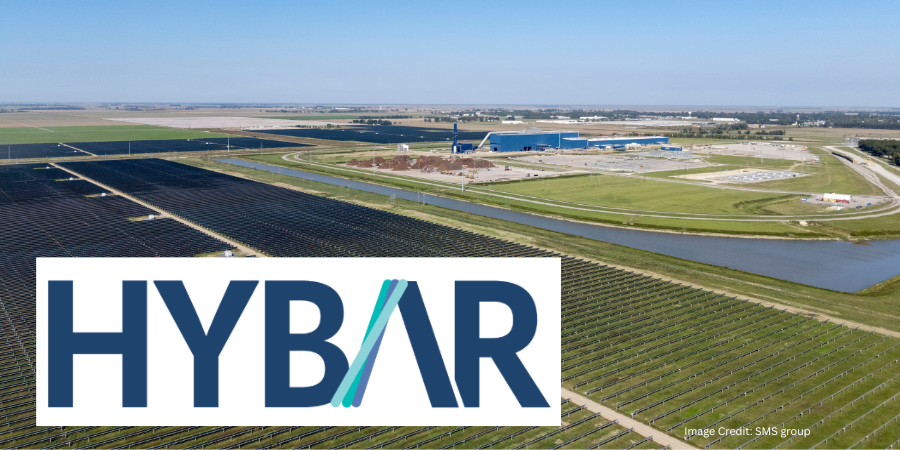
Hybar LLC, a U.S. steel producer, is adding a second continuous minimill at its Osceola, Arkansas, operation that will integrate electric arc furnace (EAF) melting, ladle refining, continuous casting, induction equalization, and rolling to increase reinforcing bar production by 630,000 short tons annually.
SMS group will supply the CMT® 550 mill, which will be installed alongside Hybar’s existing CMT® 550 operation, creating a twin-mill configuration that will share existing site infrastructure. Groundbreaking is expected in late 2026, with startup scheduled approximately 24 months later.
The meltshop will feature an EAF based on SMS group’s EDGE DC design platform and a twin ladle furnace station. An X-Pact AURA electrical power system will supply the melting unit, which is designed for production rates exceeding 80 tons per hour.
The mill will connect steelmaking, casting, and rolling in a continuous production process. A high-speed, single-strand endless caster will connect the meltshop to the rolling mill through an induction equalization furnace, reducing the need for conventional fossil-fuel-fired reheating between casting and rolling.
The new facility will produce reinforcing bars ranging from 12.4 to 35 millimeters and will include provisions for future installation of vertical compact coiling technology. The rolling mill will include 14 housing-less stands and a six-pass high-speed finishing block, as well as laser measurement equipment for dimensional verification and process control.
The project will also incorporate plant-wide acquisition of real-time production data. The information will feed a digital platform designed to support equipment monitoring, operational analysis, and machine-learning models.
The second mill will use infrastructure associated with Hybar’s existing operation, including access to the site’s 105-megawatt solar installation and 160-megawatt-hour battery storage system. The configuration is intended to reduce energy us and emissions compared with conventional minimill production.
“Building on the success of our first CMT® 550 mill at Hybar’s Osceola site to produce long products, we see huge potential to expand our capacities here at Osceola by combining logistics and labor expertise already on-site with this CMT® twin solution,” said David Stickler, CEO of Hybar. “This enables us to effectively respond to the increasing demand for green long production by taking advantage of shared utility costs.”
Press release is available in its original form here.
An acquisition is expanding an industrial combustion technology portfolio to include complete burner systems for thermal processing applications, bringing combustion controls, fuel management, and burner technologies together under one supplier.
DUNGS, a combustion technology supplier with U.S. operations in Blaine, Minnesota, has acquired IBS Industrie-Brenner-Systeme GmbH, a German manufacturer of industrial burner systems headquartered in Hagen, Germany. The addition expands DUNGS’ offering beyond combustion controls, gas trains, and safety components to include complete industrial burner systems for high- and low-temperature process applications.
IBS brings more than five decades of experience developing, manufacturing, and servicing industrial burners used in thermal processing applications across a range of industries. The acquisition combines that burner design and application experience with DUNGS’ existing combustion controls and fuel management capabilities.
Daniel Dungs Chief Sales Officer DUNGS
“Our aim is to accompany our [clients] on the journey from component to system, from the individual valve to the complete burner system,” said Daniel Dungs, chief sales officer of DUNGS. “In this way, we take the complexity off our [clients’] hands and deliver engineered solutions so that they can focus on their process rather than the technology behind it.”
IBS will continue operating in its current form following the acquisition, with the IBS brand, product names, and existing points of contact remaining in place. Beginning the third quarter of 2026, IBS burner solutions will be offered through DUNGS’ global sales network.
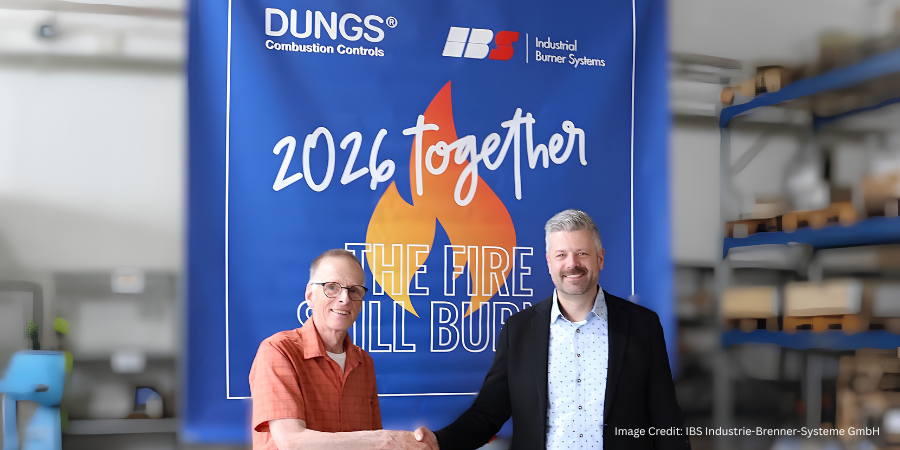
Press release is available in its original form here. Additional information provided by Industrial Burner Systems here. Main image shows Bernard Machovsy of IBS (left) and Daniel Dungs of DUNGS (right). Image Credit: IBS Industrie-Brenner-Systeme GmbH
A new industry task force will provide heat treating companies with educational resources and peer guidance as they evaluate enterprise resource planning (ERP) systems amid recent consolidation among software providers serving the industry. The initiative is intended to help companies assess shop management systems based on their individual operational requirements rather than recommend a particular software platform.
The Metal Treating Institute (MTI) announced the formation of its ERP Task Force as its Summer Board Meeting on July 21. The member-led group was established following Steelhead Technologies’ acquisitions of Cornerstone Systems, Inc., provider of Visual Shop by CSI, and Throughput Consulting, Inc., provider of Bluestreak and Bright AM. MTI said the acquisitions have prompted heat treaters to evaluate their long-term ERP strategies and better understand their options within the changing software landscape.
ERP systems can support production scheduling, inventory, client orders, quality documentation, accounting, compliance, and reporting across heat treating operations. Selecting, implementing, or transitioning between systems can affect productivity, operational efficiency, customer service, and profitability. The task force will include member companies with ERP implementation experience and heat treating industry expertise.
“Technology is transforming every aspect of our industry, and ERP systems are becoming increasingly critical to operating efficient, data-driven businesses,” said Deidra Minerd, operations manager at Euclid Heat Treating and 2026 president of MTI. “The recent acquisition of Visual Shop and Bluestreak has created understandable questions throughout our membership.”
“Rather than allowing companies to navigate these decisions alone, MTI is bringing Members together to learn from one another, share experiences, access options and make better-informed decisions,” Minerd added.
Tom Morrison, CEO of MTI, emphasized that the task force will remain vendor-neutral.
“The ERP Task Force is not intended to recommend one software platform over another,” Morrison said. “Instead, its mission is to provide unbiased education and practical guidance so Members can evaluate the solutions that best align with their individual business needs, growth objectives, and operational requirements.”
The task force will begin providing educational resources, peer discussions, and additional programming over the coming months. MTI said it will communicate additional details to its membership as the initiative develops.
Press release is available in its original form here.
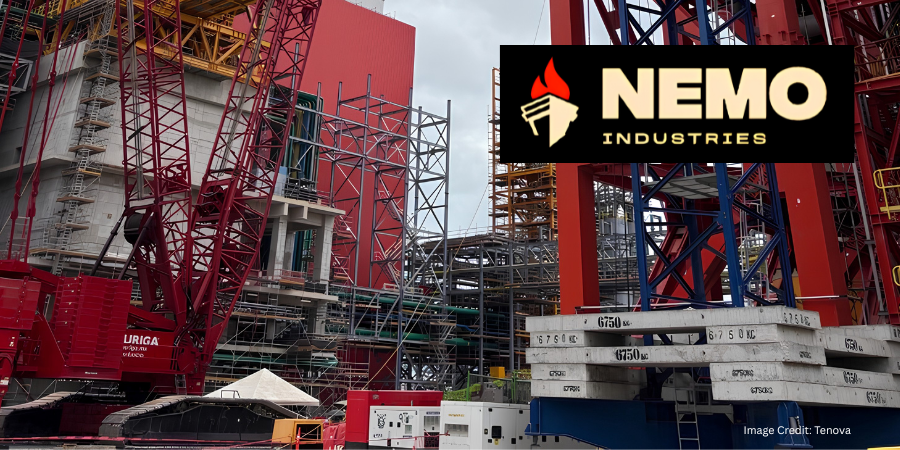
NEMO Industries is planning a new direct reduction iron (DRI) plant in Louisiana to strengthen domestic pig iron production by supplying high-carbon DRI for electric smelting. The project will support both U.S. and international markets while incorporating technologies designed to improve process efficiency and provide flexibility for future lower-carbon ironmaking.
NEMO Industries has selected Tenova, a global metals technology company with North American operations, to provide the ENERGIRON direct reduction technology for its proposed Ironworks I facility. Located in Louisiana, the plant will produce up to 2.5 million metric tons per year of hot and cold DRI. Tenova will begin front-end engineering design (FEED) as the project advances toward a final investment decision, currently expected in December 2027.
The facility will use the ENERGIRON Zero Reformer configuration, a direct reduction technology jointly developed by Tenova and Danieli. The plant will also incorporate the HYTEMP hot DRI transport system and be designed to accommodate future carbon caption integration. In addition, the facility includes provisions for future hydrogen use as Gulf Coast hydrogen infrastructure develops, providing flexibility for evolving feedstock and decarbonization strategies.
Michael DuBose Co-Founder and President NEMO IndustriesStefano Maggiolino President and CEO Tenova HYL
Michael DuBose, co-founder and president of NEMO Industries said recent market disruptions have underscored the need for a more resilient domestic pig iron supply chain. “Recent market disruptions including war, tariffs, and weather have reinforced the national security case for a resilient American pig iron supply,” DuBose said. “ENERGIRON DRI technology positions us to develop a pig iron facility that will strengthen the American steel supply chain and reduce our reliance on imported steel inputs.”
Stefano Maggiolino, president and CEO of Tenova HYL, said the project highlights how direct reduction technology can help manufacturers balance operational efficiency and sustainability goals. “It gives NEMO Industries the technical foundation in terms of capital and operating expenditures, carbon content, and sustainability to prove its DRI-based pig iron model,” he said.
Press release is available in its original form here.
Steelhead Technologies, a software provider serving the heat treating and metal finishing industries, has acquired Visual Shop and Bluestreak, bringing together three providers of manufacturing execution, quality management, and job shop management software for North American heat treaters and metal finishers. The acquisition expands its software offering while retaining the industry expertise developed by each organization.
Visual Shop, developed by Cornerstone Systems, and Bluestreak have both provided software for heat treating and metal finishing job shops for decades. Steelhead said clients of all three companies will have access to a unified platform combining manufacturing execution, quality management, enterprise resource planning, and shop floor management capabilities.
Steelhead plans to continue investing in software capabilities for heat treating operations, including support for furnace calibrations, operator certifications, sample testing, sensor integration, and cybersecurity initiatives related to CMMC compliance. The company said the combined organization will continue drawing on the technical expertise of Visual Shop and Bluestreak teams.
Jeff Halonen CEO and Co-Founder Steelhead Technologies
“Heat treating job shops have been under decades of competitive pressure from offshoring, workforce challenges, and volatility in costs,” said Jeff Halonen, CEO and co-founder of Steelhead Technologies. “With demographic changes and AI completely changing the operational landscape, the challenges remain as steep as ever. At the same time, top government officials and contractors are urgently bringing back work by reshoring and scaling production. Job shops must leverage technology to rapidly increase capacity and capability without adding head count to solve every challenge.”
“To stay competitive in the long term, we would need to build a new product on a modern platform. Steelhead has a great product and shares our philosophy of providing outstanding customer service,” said Kevin Pluedeman, president of Cornerstone Systems (Visual Shop). Todd Wenzel, president and founder of Bluestreak adds, “By joining forces with Steelhead, we are bringing the institutional knowledge and specialized features of Bluestreak together with Steelhead’s modern infrastructure.”
The announcement also included comments from Exactatherm, a commercial heat treater in Mississauga, Ontario, which has implemented Steelhead’s software. Vraj Shah, quality manager at Exactatherm, said the company has used the platform to simplify employee training, improve access to Nadcap audit records, reduce lead times to approximately 10 days, and shorten inventory hold times.
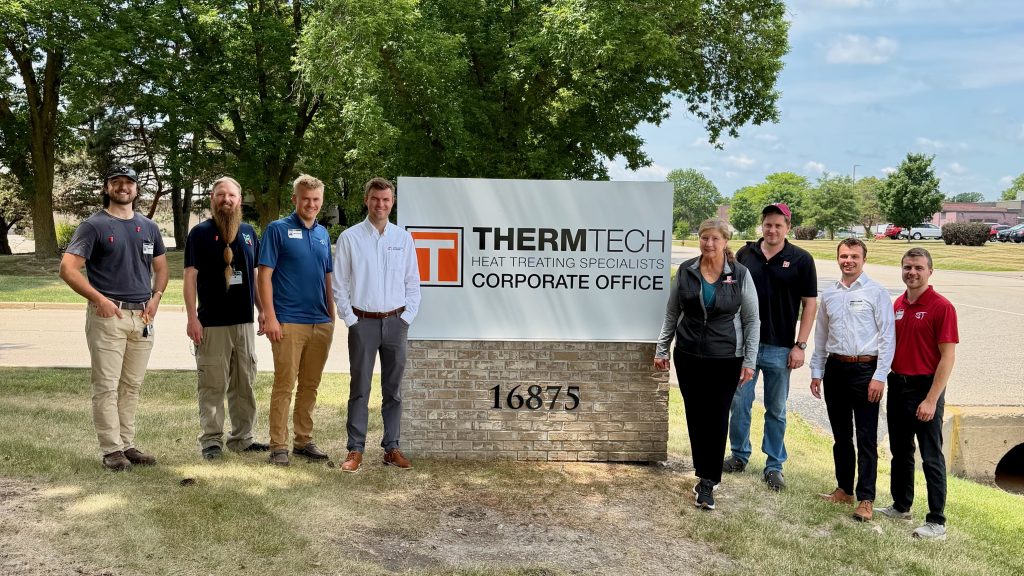
ThermTech partners with Steelhead to implement their AI-powered platform. | Image Credit: Steelhead Technologies
As part of the announcement, commercial heat treater ThermTech said it is partnering with Steelhead as it implements the company’s software platform. The system combines manufacturing execution, quality management, ERP, financial, and customer service functions into a single platform. The company also said its engineering team will work with Steelhead to further develop heat treating-specific capabilities.
Press release is available in its original form here. Stay tuned for more: Heat Treat Today’sDoug Glenn recently sat down with Steelhead Technologies CEO Jeff Halonen for a deeper dive into the acquisition and its implications for the heat treating industry. The full interview will be published soon.