

Rio Tinto has begun commissioning a major expansion of its AP60 aluminum smelter technology in Quebec, increasing primary aluminum production capacity and supporting North American supply for transportation, construction, electrical, and consumer goods markets. The project centers on aluminum smelting, a high-temperature thermal processing operation that converts alumina into primary aluminum through electrolytic reduction.
The USD$1.5 billion expansion at the Complexe Arvida facility adds 96 new AP60 smelting pots and is expected to be fully operational by the end of 2026. Once complete, the project will increase production capacity by approximately 160,00 metric tons annually, bringing total AP60 output to 220,000 metric tons of primary aluminum per year. The startup process began in March.
The AP60 technology was developed by the company’s research and development teams and, when combined with hydropower used at its Canadian operations, generates one-sixth of the greenhouse gas emissions per ton of aluminum compared with the industry average. The expansion also supports the transition to carbon-free aluminum electrolysis technology being developed through the ELYSIS partnership.

Chief Executive
Rio Tinto Aluminium & Lithium
“For 100 years, Quebec has been at the heart of the aluminum industry, and with AP60, Rio Tinto is now strongly positioned for decades to come,” said Jérôme Pécresse, chief executive of Rio Tinto Aluminium & Lithium. He added that the expanded smelter is expected to reduce carbon emissions by up to 90% in fine particulate matter compared with the older Arvida smelter.
Rio Tinto said the AP60 expansion, together with a planned aluminum recycling center at Arvida, will more than offset production losses associated with the closure of older potrooms at the site. The project supported more than 1,500 jobs during peak construction and is expected to directly support approximately 100 permanent positions.
Press release is available in its original form here.
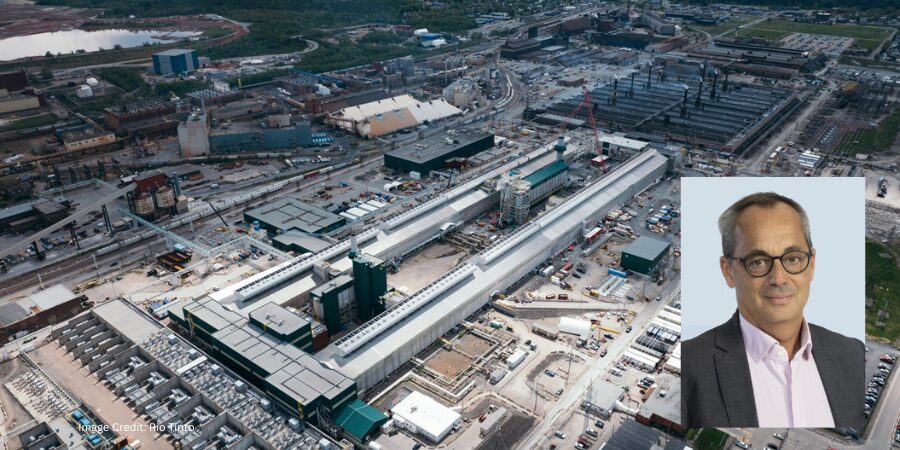
Main image shows Rio Tinto’s AP60 smelter in Saguenay — Lac-Saint-Jean, Quebec Canada. Image Credit: Rio Tinto