New strip casting systems for rare-earth magnet manufacturing are expected to support thermal processing operations tied to neodymium-iron-boron (NdFeB) magnet production in the U.S., serving industries including energy, electronics, automotive, and defense. The systems are designed for vacuum metallurgy applications involving high-temperature melting and casting processes used in advanced materials manufacturing.
Strip is a critical upstream step in the production of NdFeB magnets and other high-performance permanent magnets. The process rapidly solidifies molten alloy into thin strips, forming feedstock that is further processed into high-performance magnets used in electric motors, precision actuators, and other advanced technologies. The equipment, intended for strip casting operations used in the production of rare-earth magnetic materials, is being supplied by Retech, a division of SECO/WARWICK Group focused on vacuum metallurgy and metal processing technologies.
In high-performance magnet applications, precise system atmospheric control, casting cooling rate, and thermal control during solidification directly impact downstream magnetic properties. For this reason, Retech strip casters are designed to provide stable, repeating operating conditions over sustained production cycles.

President
Retech
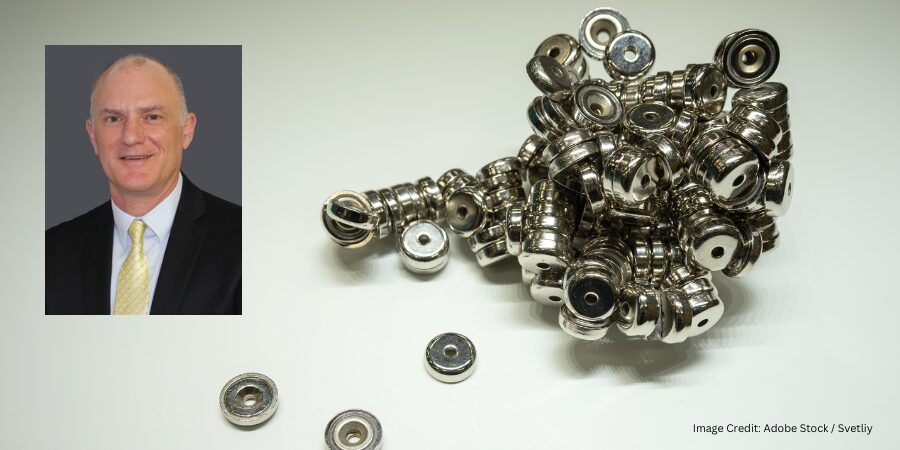
“Advanced magnet manufacturing depends on precision at every stage of the process,” said Earl Good, president of Retech. “Our strip casting systems are built to provide the rapid cooling rates that achieve the grain structure necessary for producing magnets that maintain superior magnetic properties, even at high temperatures. These systems will support long-term domestic supply growth.”
Retech’s strip casting platforms can be integrated into larger melt and materials handling systems, supporting continuous industrial workflows rather than isolated batch processing. The equipment supplied in this case reflects ongoing investment in domestic magnet production capacity, as manufacturers work to strengthen U.S.-based supply chains for critical materials.
Press release is available in its original form here.