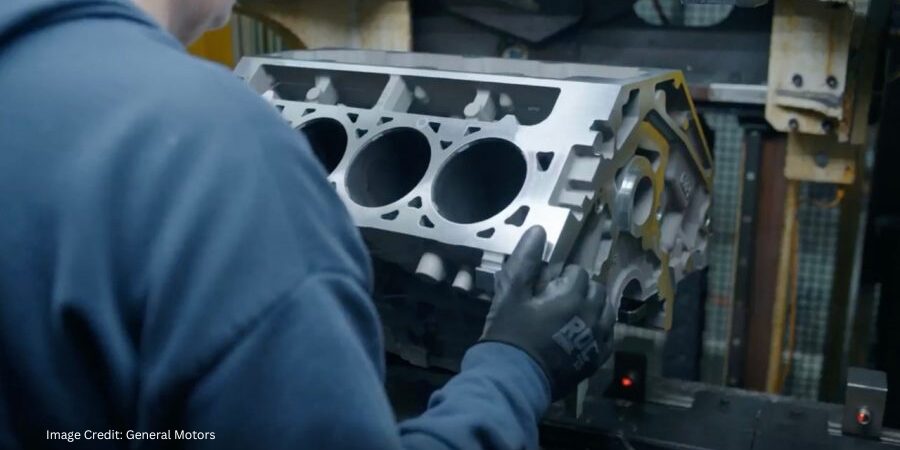
General Motors announced plans to invest more than $150 million in its Saginaw Metal Casting Operations facility in Michigan to support production of V8 engine blocks and cylinder heads used in full-size trucks and SUVs. The project includes new and upgraded equipment for casting and machining operations, enabling the facility to increase production capacity and maintain output for current engine programs. The Saginaw site has supplied engine components for multiple generations of GM vehicles.
This new commitment builds on the approximately $5.5 billion in investments GM made in 2025, underscoring GM’s support for U.S. manufacturing, while securing the future of this facility and its employees.
“By enabling the production of next-generation engine blocks and cylinder heads for full-size trucks, the plant is well-positioned for the future. This not only secures existing jobs but also strengthens the local economy, and ensures the plant continues to be an integral part of the automotive supply chain,” said John Lancaster, plant director.
Press release is available in its original form here, where readers can also watch an embedded video providing additional context on the investment.
Bodycote announced plans to open a new heat treatment facility in Apodaca, Mexico, expanding regional capacity for case hardening and nitriding processes used in automotive, industrial, and medical components. The additional capacity is expected to support growing manufacturing activity by improving supply chain responsiveness and access to localized thermal processing services.
Extending its network to better support clients across Mexico and the southern United States, the site is intended to reduce logistical complexity and strengthen supply chain resilience while supporting ongoing near-shoring efforts. The new facility will complement existing operations in Silao, San Luis Potosí, and Guaymas, providing additional flexibility for clients requiring regional heat treating services. Scheduled to open in 2026, the site will support both new and existing programs as demand grows across key manufacturing sectors.
Operations at the facility will include a range of precision heat treatment capabilities, including carburizing, carbonitriding, and nitrocarburizing. These processes are used to improve surface hardness, wear resistance, and fatigue performance while maintaining core strength in critical components.
Bodycote is engaging with clients early to support future capacity planning and qualification activities, with site tours planned for Q2 2026. The facility is expected to ramp up operations in phases as demand increases.
Press release is available in its original form here.
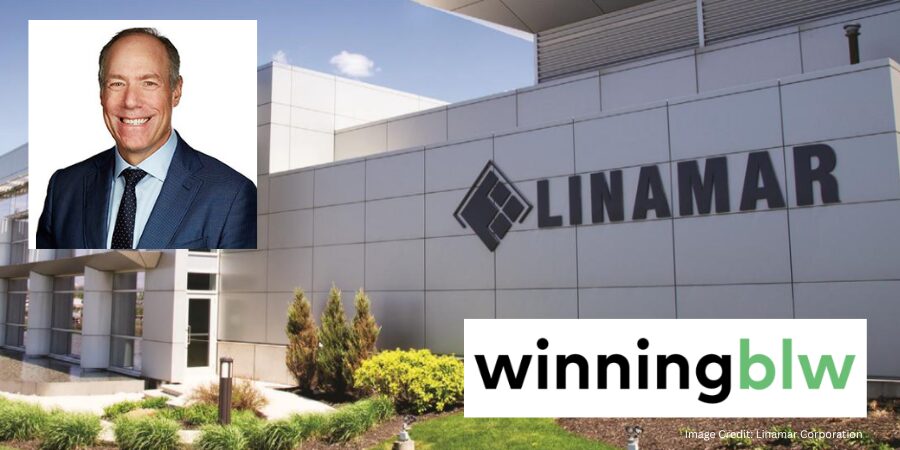
Linamar Corporation, a North American manufacturer with in-house heat treating capabilities, has acquired select assets of Winning BLW, strengthening its capabilities in warm forging and precision gear manufacturing for automotive and industrial applications. The acquisition supports production of bevel and helical gears, components that typically require controlled heat treating to achieve the hardness, wear resistance, and fatigue strength needed for drivetrain systems.
The facilities included in the transaction are located in Remscheid and Penzberg, Germany, bringing established expertise in forging and gear production into Linamar’s global manufacturing network. The Remscheid facility handles mass production of high-performance precision bevel and intermediate gears for light vehicle market, while the Penzberg facility specializes in helical gears and high-precision components serving the commercial and off-highway sectors. Through these acquisitions, Linamar expands its offering of precision bevel and helical gears, as well as small- to medium-sized drivetrain and transmission components.
Jim Jarrell CEO and President Linamar Corporation
“These acquisitions are a great strategic fit for Linamar. They strengthen our technology and manufacturing capabilities in products where we are already strong, deepen relationships with key global [clients], and position us for continued growth by increasing our content per vehicle across multiple markets,” said Jim Jarrell, CEO and president of Linamar.
The additions strengthen Linamar’s position in designed and machined gears, deepen its forging capabilities, and support its vertically integrated manufacturing approach.
Press release is available in its original form here.
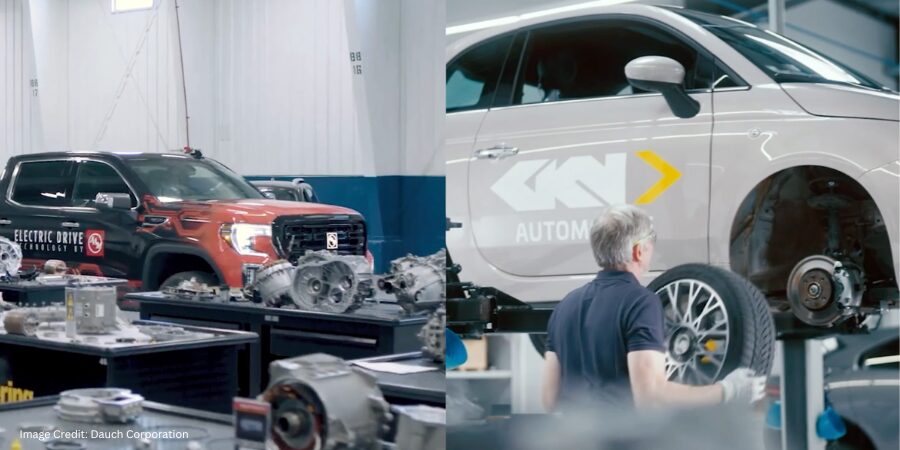
Dauch Corporation has completed its acquisition of Dowlais Group plc, combining two global automotive manufacturers in a move that expands driveline, metal forming, and powder metallurgy operations worldwide. The transaction broadens manufacturing capabilities and strengthens support for internal combustion, hybrid, and electric vehicle platforms across global markets.
David C. Dauch Chairman and CEO Dauch Corporation Image Credit: Detroit Regional Chamber
Dauch Corporation finalized its previously announce acquisition of Dowlais Group plc, including subsidiaries GKN Automotive and GKN Powder Metallurgy. David C. Dauch, chairman and chief executive officer, said the closing marks an important step in bringing together complementary engineering and manufacturing capabilities under one organization.
The combined business will operate under the Dauch Corporation name and remain headquartered in Detroit. The board of directors will expand to include Simon Mackenzie Smith and Fiona MacAulay as independent directors, effective February 5, 2026.
The leadership structure includes Michael J. Lynch as president of driveline and Markus Bannert as president of metal forming, along with executives overseeing finance, strategy, human resources, communications, and legal functions. Business unit leadership includes Tolga Oal as president of axle systems; Mark Gabriel as president of sideshafts, propshafts, and ePowertrain; Jake Stiteler leading forging operations; and Jean-Marc Durbuis leading powder metallurgy operations.
Dauch Corporation supplies driveline and metal forming products to the global automotive industry and reports operations in 24 countries with more than 175 locations worldwide.
Press release is available in its original form here.
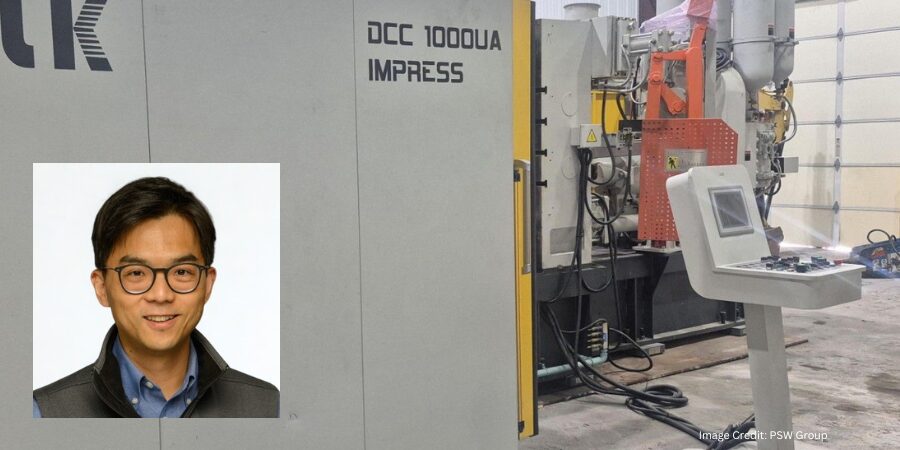
PSW Group announced the launch of its High Integrity Diecasting Center (HIDC) at the Magretech plant in Bellevue, Ohio, a new semi-solid casting center that enables clients to trial and optimize aluminum and magnesium castings with improved quality and structural integrity. The facility uses semi-solid and high-pressure die-casting technologies to support prototyping, process development, new product introduction, and pilot-to-production scaling for clients evaluating liquid and semi-solid casting processes. The investment places semi-solid casting R&D and engineering at the core of PSW’s strategy to accelerate low-carbon, high-integrity light metal innovation.
The new center features semi-solid casting technologies, including Comptech and Rheo-Structural Systems (RSS) for aluminum and Thixotropic Piston Injection (TPI) for magnesium. Notably, HIDC is one of the few semi-solid casting centers in North America offering both aluminum and magnesium semi-solid casting alongside conventional and structural high-pressure die-casting (HPDC).
Dr. Tao Wang Global Head of Products and Sustainability PSW Group
“As clients demand lighter, stronger, and lower-carbon components, HIDC’s semi-solid platform unlocks quality, efficiency, and speed to market,” said Dr. Tao Wang, global head of Products and Sustainability at PSW Group. “By integrating advanced semi-solid technologies with our global R&D, we accelerate alloy development while reducing production emissions.” The HIDC gives original equipment manufacturers (OEMs), Tier 1 suppliers, and die casters the ability to trial, develop, test, and optimize new aluminum and magnesium alloys and evaluate casting technologies to determine the best combination for their specific products and applications.
“The HIDC enhances our U.S. manufacturing footprint and shortens time-to-market for next-generation components,” added Dr. Wang. It’s a pivotal step in our roadmap to low-carbon, high-integrity light metal systems.”
Press release is available in its original form here.
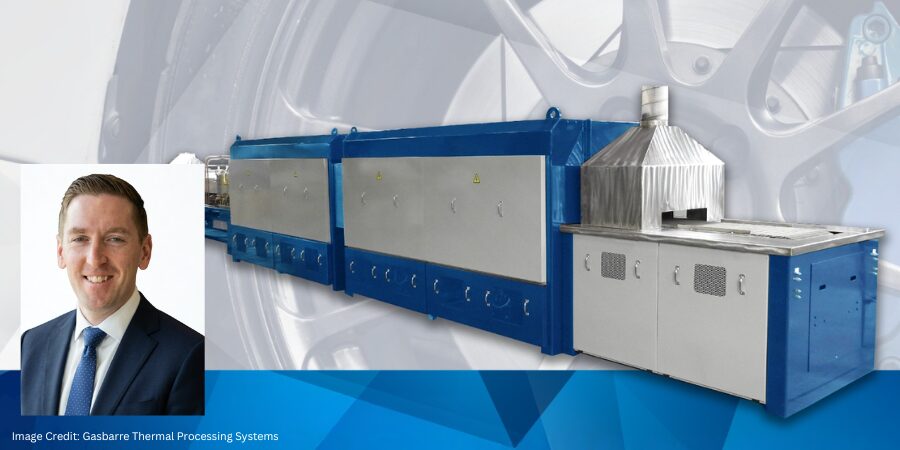
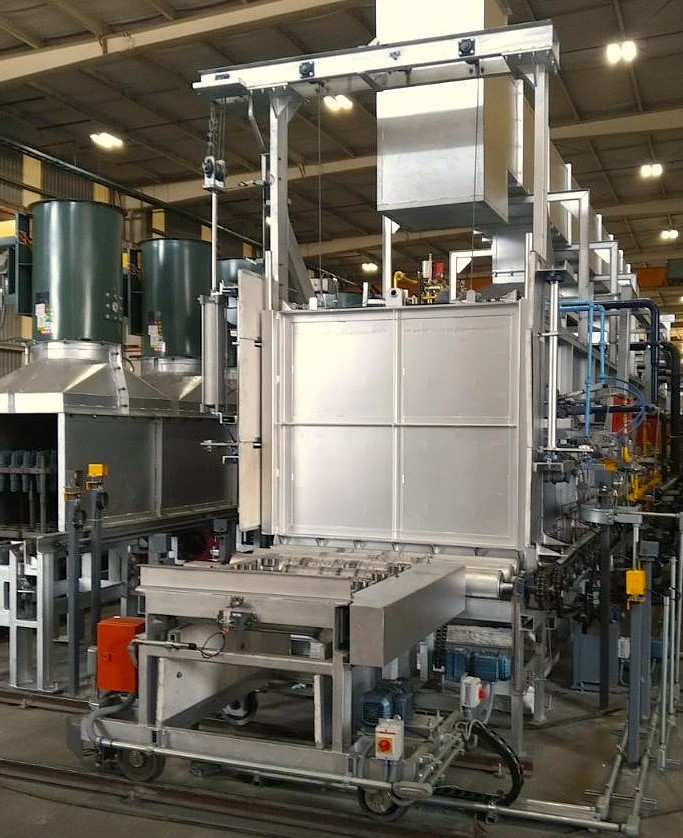
An automotive manufacturer is expanding stainless steel brazing capacity at its Midwest manufacturing facility, adding a new 24-inch belt, four-zone brazing furnace. The system will support increased production of automotive components, including braking and fluid line parts, where consistent thermal processing and atmosphere control are essential to quality and reliability.
Designed for controlled-atmosphere processing, the furnace will operate in a nitrogen/hydrogen environment and is engineered to deliver repeatable results, stable production flow, and operator-friendly performance.
Ben Gasbarre Executive Vice President, Sales & Marketing Gasbarre Thermal Processing Systems
The order marks the company’s third brazing furnace supplied by Gasbarre Thermal Processing Systems, building on two existing installations currently supporting day-to-day operations. The equipment was selected based on the design and performance of prior systems, which have delivered dependable uptime with minimal issues while maintaining a clean, accessible layout that operators find easy to use — a key factor in a high-output environment.
“This order reflects the trust we work to earn through durable equipment, repeatable processing, and responsive support,” said Ben Gasbarre, executive vice president of sales and marketing at Gasbarre Thermal Processing Systems.
Press release is available in its original form here.
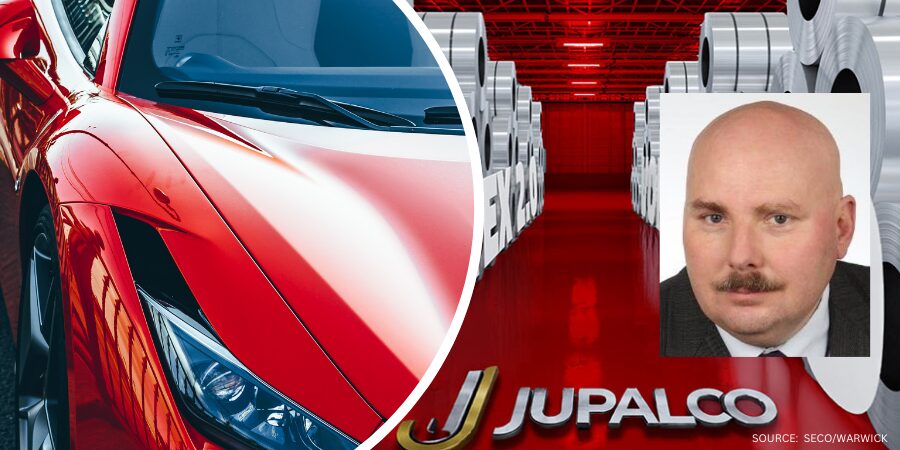
Jupiter Aluminum Industries (JUPALCO), part of the Jupiter Group, has ordered two aluminum coil annealing furnaces to support production at its rolling mill operations, strengthening capacity and consistency for flat-rolled aluminum products serving automotive, construction, and packaging markets. The investment reflects continued global demand for advanced aluminum heat treating capacity.
The furnaces, slated for installation at JUPALCO’s rolling mill operations in India, are designed to handle large aluminum coils, with a maximum outside diameter of 2,600mm, widths up to 2,300mm, and a total gross load capacity of 93.6 metric tons. Multi-zone chamber configurations and advanced control systems are engineered to deliver precise temperature uniformity and repeatable annealing results across high-volume production runs.
Piotr Skarbiński Vice President of Aluminum and CAB Products Segment SECO/WARWICK
The equipment will be supplied by SECO/WARWICK, a furnace supplier with North American locations, and incorporates the company’s Vortex 2.0 aluminum coil annealing technology, which uses high-velocity airflow to improve heat transfer, shorten cycle times, and reduce the risk of localized overheating. The design also supports energy-efficient operation while maintaining tight temperature tolerances throughout the annealing process.
According to Piotr Skarbiński, vice president of the CAB and Aluminum Products Segment at the SECO/WARWICK Group, the Vortex 2.0 is designed with a system of appropriately directed nozzles that support consistent aluminum processing while reducing cycle times and energy consumption.
The Indian market for flat-rolled aluminum products is growing rapidly, with its value expected to rise from USD 4.5 billion in 2025 to USD 12 billion by 2035. Investments by manufacturers like JUPALCO in new rolling mills highlight both the domestic growth potential and the wider demand for advanced annealing technologies in global markets.
Press release is available in its original form here.
A Tier 1 automotive supplier maintained uninterrupted production during a planned maintenance shutdown by leveraging outsourced burst heat treating capacity from Bluewater Thermal Solutions, supporting continued deliveries to OEM clients during an extended holiday production period. The temporary capacity expansion helped limit supply chain disruption while highlighting the role of flexible heat treating resources in automotive manufacturing.
Bluewater Thermal Solutions’ St. Marys, Pennsylvania, facility, provided the support, which rapidly scaled production to meet the client’s stringent automotive requirements while the supplier’s in-house heat treating operations were offline. The effort allowed production schedules to remain intact during the shutdown.
“Our ability to scale quickly while meeting stringent automotive requirements highlights the strength of our operating model and our commitment to customer success,” said Jason Hanes, general manager at Bluewater Thermal Solutions. “We’re proud to serve as a reliable partner when customers need flexible capacity without compromising quality.”
Press release is available in its original form here.
ArcelorMittal is advancing a major expansion in electrical steel production that includes a preparation line, a continuous annealing and varnishing line, and a slitting line — developments that reflect ongoing job growth and investment in industrial heat treating processes worldwide. The project has already mobilized more than 300 external contractors, with 175 employees now dedicated to the new lines and staffing expected to reach approximately 200 as the next phase of work progresses. Phase 2, currently underway, includes construction of an annealing-pickling line and a reversible rolling mill, with all five planned production lines scheduled to be operational by 2027.
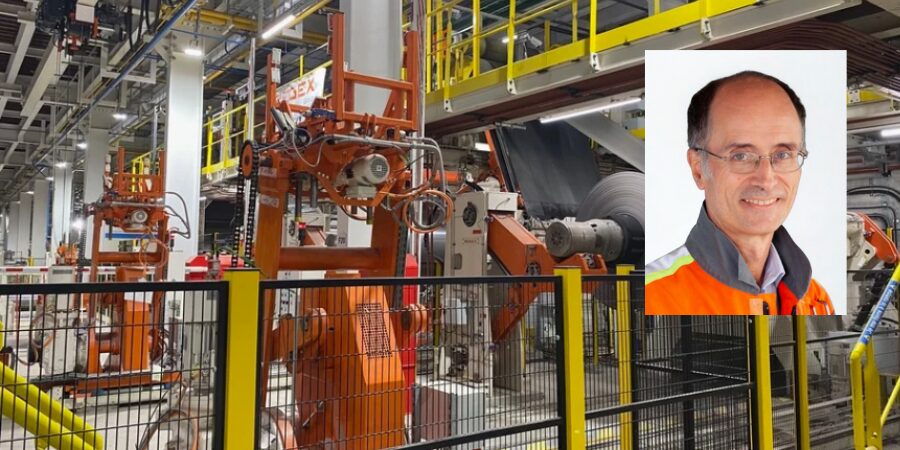
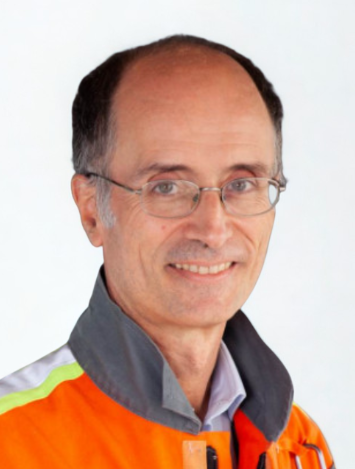
Entry zone of the continuous annealing and varnishing line Source: ArcelorMittal FranceBruno Ribo Managing Director ArcelorMittal France
ArcelorMittal France announced that the first three lines of its new electrical steel production unit at the Mardyck industrial site will enter into operation by the end of 2025. The project, representing a €500 million investment and described as the largest undertaken by the Group in Europe over the past decade, marks a significant expansion in the production of electrical steels, complementing the company’s existing output at Saint-Chély-d’Apcher and bringing the company’s total European output to approximately 295,000 metric tons annually.
Bruno Ribo, managing director of ArcelorMittal France, emphasized the significance of the development for both the site’s workforce and the broader market. “Creating new production lines is an exceptional experience in the life of an industrial site. It is just as exceptional for our employees who have been involved in the development of the lines, from the project phase to the operational phase. I, like them, will be very moved to see the first of the 155,000 tons of electrical steel that we will eventually deliver annually roll off the lines,” he said.
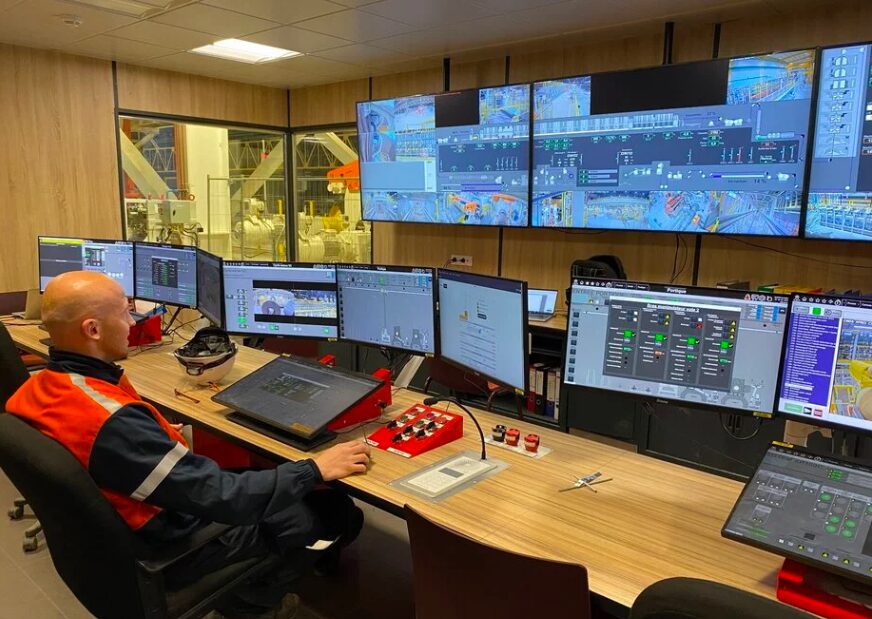
Annealing and varnishing line control cabin Source: ArcelorMittal France
The electrical steels produced at Mardyck — ultra-thin rolled steels engineered for specific magnetic and mechanical properties — are used in all types of electric motors. ArcelorMittal notes that the new unit will support the electrification of applications in both industrial and automotive sectors. As global demand grows for these specialty steels, capacity developments of this scale create benchmarks for manufacturers across regions, including North America, as companies assess long-term sourcing strategies and material availability for high-efficiency motor components and transformer systems.
The project is supported in part by a €25 million contribution from the French State under the France 2030 program.
Press release is available in its original form here.
An international, multi-billion-dollar corporation at the forefront of drivetrain technologies has commissioned a complete isothermal annealing line, due to be delivered in Q1 2026. The furnaces are designed to be in compliance with CQI-9, the comprehensive audit covering the most common heat treat processes employed by the automotive industry. This investment underscores the automotive industry’s commitment to delivering higher-quality components while meeting stringent manufacturing standards.
Arturo Arechavaleta Vice President, Metal Furnaces, NUTEC Bickley
The system has been designed in close collaboration with NUTEC Bickley to ensure everything meets the company’s specific operational needs. The contract comprises both high-temperature and low-temperature furnaces, as well as an isothermal cooling chamber and blast cooling tunnel, together with all the ancillary equipment and full material handling and conveying system.
Arturo Arechavaleta, VP Metal Furnaces at NUTEC Bickley, said: “Our client for this multifaceted project is an auto component world leader that supplies nearly every major vehicle manufacturer. It has an established reputation in delivering high quality parts and promoting sustainability in the supply chain. I am delighted the NUTEC Bickley was chosen to partner in the design and manufacture of this isothermal annealing line.”
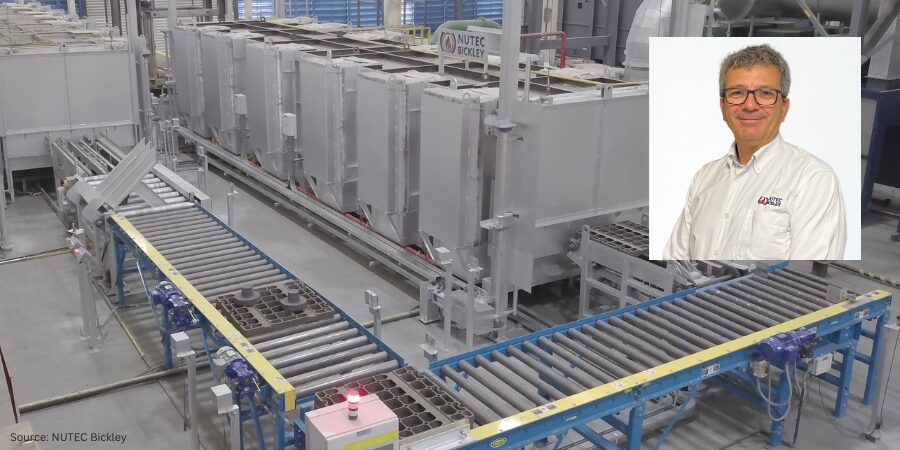
At the heart of the new facility will be a double pusher tray high-temperature furnace (HTF) designed specifically for processing carbon steel automotive parts. The system incorporates a fully automatic electrical double pusher system with steel trays sliding over rails with idle rolls. Processing two trays across the width helps reduce the line’s footprint while maximizing throughput.
Example of a customized isothermal annealing furnace by NUTEC Bickley, engineered for the auto manufacturing industry
The natural gas unit features four automatic temperature zones, each with two high-velocity nozzle-mix burners that provide excellent turbulence and outstanding recirculation within the furnace chamber. Operating temperatures range between 850°C and 950°C (1560°F-1740°F), with temperature uniformity targets of ±5°C (±40°F) for processes below 680°C (1260°F) and ±10°C (±18°F) at or above 680°C (1260°F).
The isothermal annealing process involves multiple stages that work in seamless coordination.
First, forged carbon steel parts move into an isothermal cooling chamber (ICC) after initial heat treating where the load temperature is rapidly reduced from 950°C (1740°F) to 660°C (1220°F) within five to 10 minutes, bringing parts to their transformation point. This rapid cooling uses ambient air supplied from an external cooling fan.
Then, parts proceed to a low-temperature furnace (LTF) operating at between 630°C and 700°C (1170°F-1290°F), which uses a fuel-only control system for enhanced temperature uniformity. The furnace relies on three automatic temperature control zones and six burners.
Finally, tray loads pass through a blast cooling tunnel (BCT) where forced convection cooling with ambient air brings parts down to approximately 400°C (750°F) before exit.
The complete line includes comprehensive material handling and conveying systems that operate fully automatically. It features entrance and transfer cars with movement systems, transfer car tracks, exit transfer cars with tray dumper units, integrated air cooling units, return conveyors with electrical dolly systems, and automated loading stations. The entire parts handling system is linked to the process via Master PLC and HMI for seamless operation.
Press release is available in its original form here.