Aalberts Surface Technologies Group will expand their Dzierżoniów, Poland hardening plant with a new AFT process line. The line, based on two-chamber atmosphere furnaces, will boost the plant's manufacturing of transmission components and specialized hardening processes including carburizing, nitrocarburizing, and annealing.
SECO/WARWICK, parent company of North American furnace supplier SECO/VACUUM Technologies, will provide a main furnace, a tempering furnace, and an endothermic atmosphere generator, loading/unloading devices, and auxiliary infrastructure. The line offers both conventional load arrangements with modular accessories and hardening baskets.
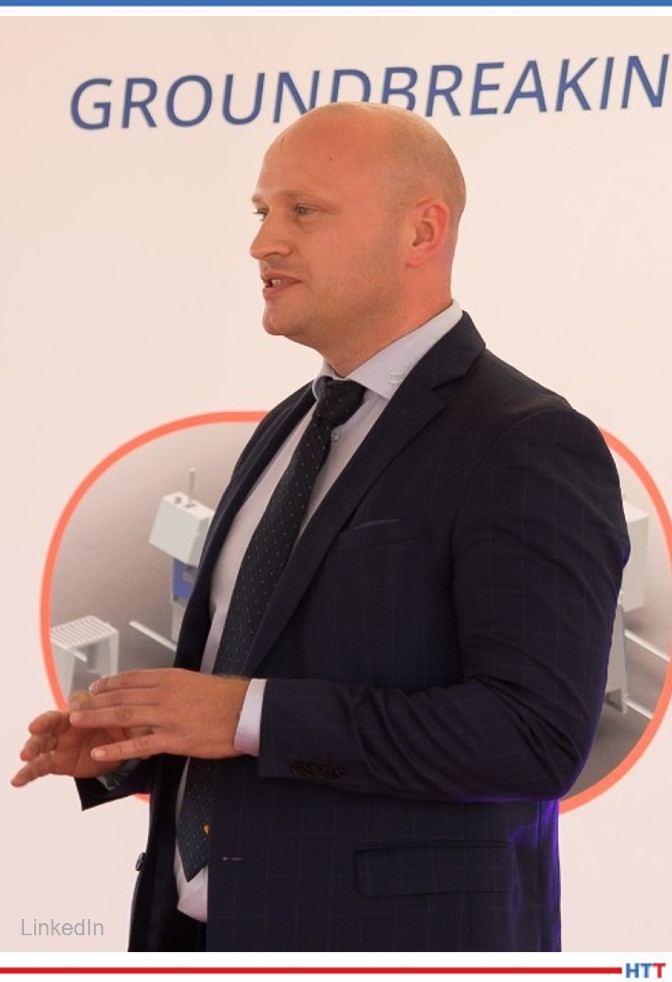
"The new line will significantly increase our capacity and will allow us to expand our business to other Eastern European countries,” said Bartłomiej Olejnik, managing director, Aalberts Surface Technologies Heat Sp. z o.o.
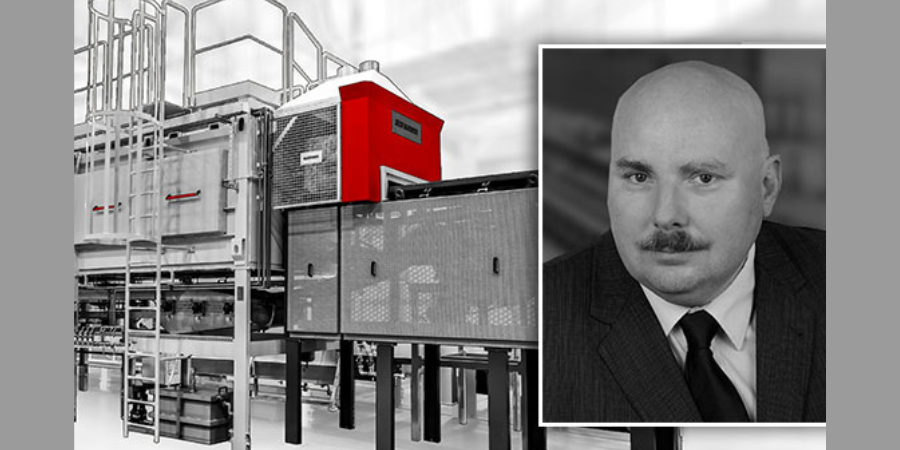
A European machinery group will receive a vacuum furnace for hardening and tempering processes, and its design has been customized in order to meet the group’s need to harden aviation steel used as landing gear. The heat treatment solution will improve the process economy in European plants and is characterized, in part, by low energy consumption.
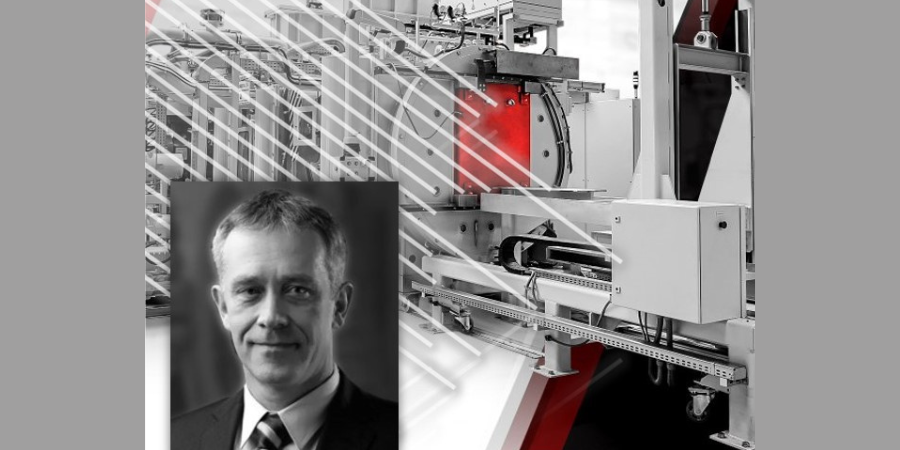
Maciej Korecki Vice President of Business for the Vacuum Furnace Segment SECO/WARWICK
To meet this particular application, SECO/WARWICK engineers fitted the Vector® vacuum furnace with a non-standard system for subquenching with liquid nitrogen that enables the required quick cooling down of landing gear components. The solution has also been expanded with a vacuum system designed with a diffusion pump and is equipped with a directional cooling option and convection heating system with a specially designed fan.
“This is already the fourth purchase order for a furnace from this product segment from this customer,” commented Maciej Korecki, VP of Business Segment for Vacuum Heat Treatment Furnaces at SECO/WARWICK, the sister company to North American heat treat supplier SECO/VACUUM. He also added that “The product solves the customer’s problem with the hardening of special aviation steel, significantly increases the capacity of the existing production line of this component, and also improves process parameters, since the current devices used by the customer are not fitted with a subquenching system using liquid nitrogen. It will certainly be one of the unique solutions completed this year.”
Global bolt manufacturer Solvera Gawel Technology S.A. (SGT) is expanding their heat treat process line with a contract to purchase an electrical belt conveyor unit (ATE) comprising an electrical mesh belt PTE furnace. The new line will be intended mostly for carbonitriding and hardening processes (under endothermic atmosphere enriched with methane and ammonia) and for washing and tempering of high-quality screws and other hardware manufactured near Rzeszów.
SECO/WARWICK, the parent company of a North American based furnace manufacturer received the order. This ATE is almost identical to the first line they delivered in 2017. An electrical belt conveyor unit is a device that is well-suited for the manufacture of small hardware that requires perfect repeatability, therefore, this is one most often selected by manufacturers of bolts and hardware, and by commercial hardening plants.
Piotr Skarbiński Vice President of the Aluminum Process and CAB Products Segment SECO/WARWICK Group (Source: SECO/WARWICK)
The dynamic growth of this manufacturer of hardware items such as wood, metal and plastic screws and their pursuit of expansion in the Western markets led SGT to expand operations.
“I am very glad about the very dynamic growth of Solvera Gawel Technology and that the company again selected SECO/WARWICK," expressed Piotr Skarbiński, vice president, the Aluminum Process and CAB products segment.
The ATE process line which will be delivered in 2022 to the Solvera Gawel Technology S.A. plant will be adapted for operating with endothermic atmosphere supplied from an external endothermic generator.
Global commercial heat treater with 17 locations in North America, Aalberts Surface Technologies Heat in Kalisz (Poland), will receive a vacuum furnace with nitrogen quenching and an atmosphere furnace at their specialized commercial hardening plant. This expansion of its production line builds on their acquisition of a high vacuum furnace at their Dutch branch in Eindhoven last year.
The new SECO/WARWICK furnaces, added to the furnace that they had supplied last year, will create a production line that will be used for successive vacuum carburizing (LPC) and gas quenching (with the new CaseMaster Evolution-T vacuum furnace, or CMe-T furnace), followed by annealing (with the new BREW atmosphere furnace) to reduce the internal stress of the treated metals. Performing so many processes is possible thanks to the combination of vacuum technology with atmosphere technology.
The commercial heat treater believes that this expansion in capabilities will progress their mission. "According to our mission statement," said Wojciech Matczak, plant manager at Aalberts Surface Technologies Heat Kalisz, "‘Best-in-class’ is not about our core technologies but about our commitment to do everything we can to make our clients successful."
Maciej Korecki Vice President of the Vacuum Furnace Segment SECO/WARWICK (source: SECO/WARWICK)
The three-chamber CaseMaster Evolution-T furnace has 1 ton per batch capacity and an annual output of up to 2,000 tons of parts. It can replace 3 conventional atmosphere furnaces. Additionally, it has fast cooling nitrogen chamber, achieving results similar to helium and oil cooling, creating an environmentally friendly system. Using the nitrogen taken from and discharged to the air eliminates both the use of expensive and difficult to obtain helium and harmful quenching oil. This makes it possible to reduce CO2 emissions by 300 tons annually, which is the amount generated by three standard atmosphere furnaces.
“Aalberts Surface Technologies Heat had special requirements," explained Maciej Korecki, VP, of the Vacuum Business Segment at SECO/WARWICK, "regarding the components and solutions used, and thus [the vacuum furnace] will replace the existing semi-continuous processes under protective atmosphere followed by oil quenching with complete vacuum heat treatment with low pressure carburizing and nitrogen quenching (25 bar!), delivering process precision and repeatability. . ."
The second furnace, the BREW 6810 solution, will make it possible to perform the annealing process immediately after vacuum carburizing. It can operate between 572 and 1382°F (300 and 750°C) and is equipped with a system to enable treatment under nitrogen atmosphere, preventing oxidation on the heat-treated workpieces.
Between science and business, the evolution of heat treatment is taking large strides. A global heat treat solutions manufacturer and a Polish laboratory hardening plant are developing modern solutions to metal treatment needs.
For the past decade, SECO/WARWICK, the global manufacturer and parent of North America SECO/VACUUM Technologies of metal heat treatment equipment and technologies, and HART-TECH, a hardening plant with scholarly shareholders — professors, doctors of science, process engineers — have been working together to engage in the evolving science of modern metal heat treatment solutions.
Together with professor Piotr Kula’s team from the faculty of Mechanical Engineering at the Łódź University of Technology, the company implemented projects and research, and collaborated on the technical capabilities of the equipment in terms of the latest research and innovations in the discipline. As this work progressed, the cooperation started to involve product development through equipment testing in practical business applications.
Robert Pietrasik, Sc.D. Eng Management Board CEO and a Technological Department Head Director HART-TECH Sp. z o. o.
In 2009, the initiative of three researchers from the Institute of Materials Science and Engineering of the Łódź University of Technology — professor Piotr Kula, professor Antoni Rzepkowski, and Robert Pietrasik, Sc.D. Eng. — brought to life the HART-TECH hardening plant, which currently holds 11 specialized devices for vacuum metal treatment, equipment provided by the global heat treat manufacturer.
The hardening plant specializes in: hardening, carburizing, nitriding, sulfonitriding, steel tempering processes, and more. They apply the latest technologies to modify, change, and improve products. In turn, SECO/WARWICK modifies their equipment designs to meet the exact needs of the customer.
“Our experience and process facilities enable us to perform very demanding and difficult processes,” explained Robert Pietrasik, Sc.D. Eng, president of the board of HART-TECH. “We are renowned to be experts in the impossible since we have vast scientific knowledge and expertise as well as reliable technological back-up from SECO/WARWICK. This cooperation enables us to specialize in highly demanding and difficult jobs requiring the best quality.”
The companies seek new implementations with technologies and processes/modifications that will make the heat treatment process more efficient, allow optimizations, or even defining new technologies. SECO/WARWICK equipment is for trials, experiments and tests. The devices allow for the control and monitoring of a given process, and their design provides for additional safety margins that make it impossible to exceed temperature, power and speed limits. The furnaces are enable many processes with the use of one device. Commercial hardening plants especially value the versatility when serving many different customers from various industries and sectors.
Sławomir Woźniak CEO SECO/WARWICK Source: secowarwick.com
“On the one hand,” said Sławomir Woźniak, CEO of SECO/WARWICK Group, “HART-TECH is a particular partner with whom we have very close cooperation in terms of the technologies and processes. On the other hand, this customer is something of an extreme. They quickly switch from what the device was intended for to what more can be done with it.”
“Our [partner’s] curiosity of the world motivates us to develop new innovations,” added Maciej Korecki, vice president of the Vacuum Business Segment at SECO/WARWICK Group. “We attentively listen to the feedback from our customers. This enables us to create tailor made solutions that always respond to the needs 100%. With HART-TECH, we share the passion and a huge, constant drive for excellence.”
After the hardening plant’s growth in their heat treating capacities over several years, they found themselves, like others confronting hardening deformations. Therefore, HART-TECH was in need of a device enabling gas quenching to minimize the problem. The company selected a single-chamber Vector® furnace for high-pressure gas quenching (10 bar) with nitrogen cooling.
The dynamic expansion of HART-TECH motivated them to place an order for another Vector® furnace for high-pressure gas quenching (15 bar).
The last device ordered summarizes the 10-year cooperation between the two companies: another CaseMaster Evolution® (CMe) unit — a two-chamber, third-generation furnace for batch processing with oil cooling. It offers a significant advantage in shortening the production process and improving the quality targets.
“Certainly, the expansion of our hardening plant has not been a conventional one,” says Pietrasik. “We need to remember that the developing market needs were a significant factor affecting the purchase of new devices by HART-TECH[…] We started with one customer and furnaces rented from Łódź University of Technology on an hourly basis. Now, all our vacuum furnaces come from SECO/WARWICK[..] More than 1300 customers and a technology partner are probably the best recommendation for us and for this partnership.”
“We are not interested in the intended purpose of the device,” Sylwester Pawęta, Sc.D., Eng, operations director and shareholder of HART-TECH, “but in what it can really do, what are its technological limits.”
“Continuous feedback from trials of equipment operated under the maximum load, used in an intensive way, shows us what we need to reinforce and improve to maintain the highest treatment parameters for the entire lifetime of the device, and also how we can upgrade them to work even better. Sometimes, this is a real trial by fire, or a test bench,” summarised M. Korecki.
Maciej Korecki Vice President Vacuum Furnace Segment SECO/WARWICK (source: SECO/WARWICK)
A tool manufacturer has ordered a retort furnace with vacuum purging for oxidation. While oxidation is primarily used in demanding industries such as automotive and aviation, the technology is increasingly widespread among tool manufacturers.
The retort furnace for the oxidation process operates under a nitrogen and hydrogen mix, then under steam. This furnace can be adjusted to the individual needs of the client, providing the appropriate final hardness and color of the workpieces. According to the supplier, the solution will also enable tempering after vacuum purging.
“Innovations originate . . . also from using the knowledge of our partners and listening to what they want to say,” said Maciej Korecki, vice president of the vacuum segment business at SECO/WARWICK. “We are glad that we can deliver another furnace and increase the production capacity of our partner.”
Winfried Schaller, Lincotek Group CEO (photo source: Lincotek.com)
An additive manufacturing (AM) solutions provider continued its global expansion. Initially, they had invested in an AM facility at their Memphis, Tennessee plant to support US medical customers. Then, they opened an Additive Innovation Center in Switzerland to focus on the IGT and aviation market.
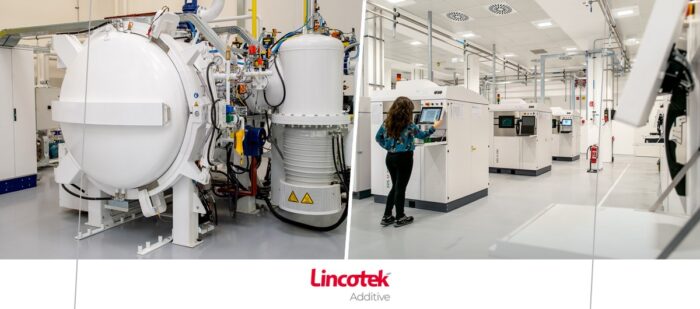
Now, Lincotek Additive in Trento, Italy reports that it has completed development of its Additive Production Center for medical devices. The center was completed with the addition of a high-vacuum furnace and validated heat treatment process designed specifically for the post-processing of titanium additively manufactured parts, and is expected to triple the capacity for thermal treatment at the site.
“We’re delighted that so many OEMs are now taking advantage of our complete additive service offer,” stated Winfried Schaller, Lincotek Group CEO. “Our outstanding performance is based on a profound technical mastery of the AM process, building on R&D and validation capability, led by additive experts who support the OEMs in their serial AM needs...We are already working on the next step of growth, looking at expanding our AM capability in China too.”
Solar Atmospheres of Western PA is currently installing a new rapid quenching vacuum furnace that will ultimately eliminate the need for costly helium while increasing production throughput. In helium's place, the new furnace will use nitrogen only in the hardening process.
Solar Manufacturing Rapid Quench Furnace for Solar Atmospheres of Western PA (photo source: Solar Atmospheres)
The new 48” x 48” x 96” deep 10 bar vacuum furnace is produced by Solar Manufacturing. The important difference in this furnace from its older model is the cooling design, which is equipped with a 600 HP blower designed motor. This will allow the new furnace to outperform its older model by processing larger and heavier workloads with the use of nitrogen only.
Bob Hill, President, Solar Atmospheres of Western PA
“The difference in operating costs is a no brainer,” states president of Solar Atmospheres, Bob Hill. “To marginally harden one 2000-pound high-speed tool steel roll die in our older 2 bar vacuum furnace, the use of light helium gas was a necessity. The prohibitive cost of a two atmosphere helium backfill was $1,065. Our new furnace will enable us to fully harden three 2000-pound roll dies at once using the more cost-effective process gas of nitrogen. In contrast the cost of a 10 atmosphere backfill of nitrogen will be only $89.” Hill predicts that with these increased efficiencies and savings, his normal ROI on a new piece of equipment will be significantly advanced.
Once operational, Hill will author a technical paper with the actual cooling data derived from these similarly sized vacuum furnaces.
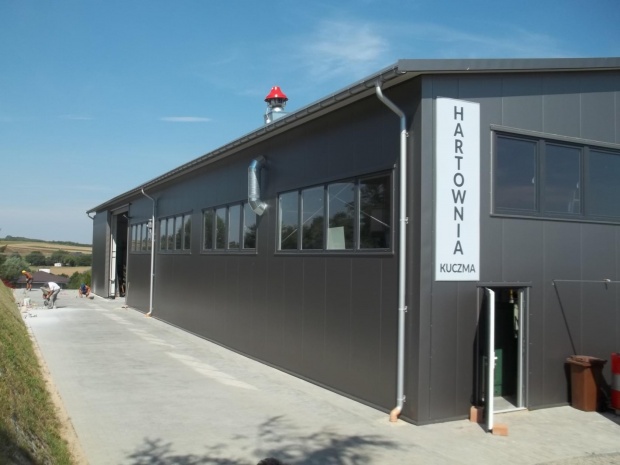
A family-run, commercial heat treating plant in Rzeszów, Poland, Kuczma Hardening Plant, will expand its heat treating capabilities with a new single-chamber vacuum furnace. A particular addition to this furnace is the directional cooling, which will allow the plant to perform quenching from both the sides and the top and bottom in order to precisely adjust the gas cooling system to the batch configuration.
The Vector® vacuum furnace from SECO/WARWICK is equipped with 1.5 bar gas quenching pressure. It will increase the capacity of the Kuczma Hardening Plant and will enable the plant to process parts with dimensions up to 600x600x900 mm. This furnace model specializes in heat treating many types of materials and metal alloys; additionally, its functionality includes gas hardening and tempering, annealing, brazing and degassing.
"Kuczma Hardening Plant," said Jerzy Kuczma, Kuczma Hardening Plant owner, "specializes mostly in vacuum quenching in gas, oil and gas nitriding of injection mould components and dies... On one hand, the SECO/WARWICK furnace will enable us to process larger components and increase our output for smaller ones on the other it will enable directional cooling sideways or top/bottom."
The hardening plant also performs carburizing, quenching, and tempering under protective endothermic atmosphere as well as clean stress relieving under nitrogen atmosphere.
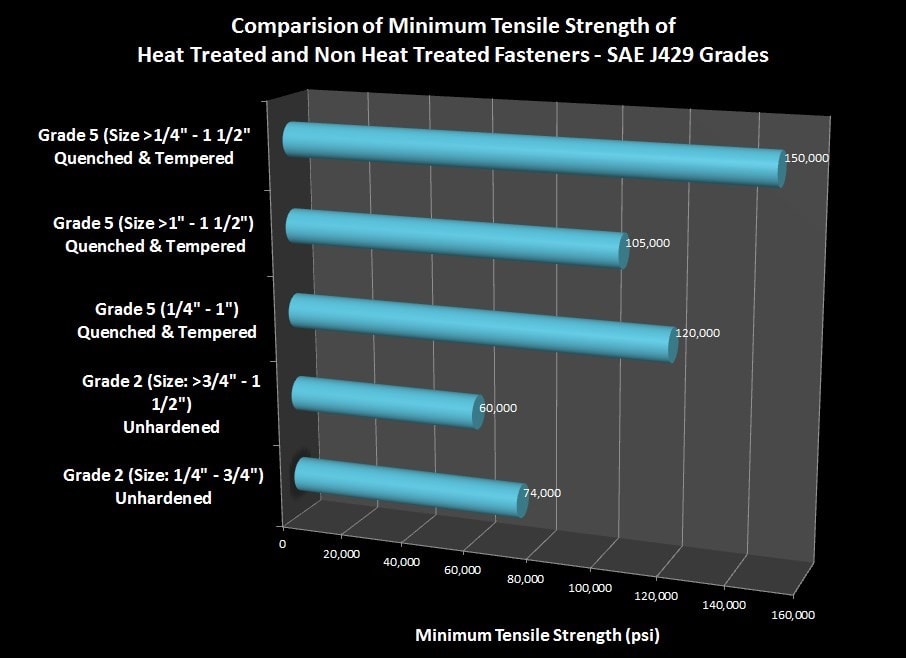
A comparison of minimum tensile strength of heat-treated and non-heat-treated fasteners
One would be hard-pressed to find an industry that isn’t served by high-strength or heat-treated bolts and fasteners. They are required in the automotive, construction, transportation, marine, aerospace, oil & gas, petrochemical, and presses and molds manufacturing fields. In oil & gas and petrochemical manufacturing, for example, high-strength bolts and fasteners are necessary in order to achieve seal closure on flanged joints, fittings, and closures; withstand tensile stresses within the bolts; and provide the strength needed for bolts and pins to withstand forces from high horsepower equipment. You name the industry sector, and the manufacturing process will be just as dependent upon bolts and fasteners to answer the demands of the equipment, the process, and/or the application.
In this overview of the importance of heat treating in fastener and bolt production, Bayou City Bolt provides:
an explanation of the heat treating processes used depending upon the material and the application,
a comparison of the minimum tensile strength of heat-treated and non-heat-treated fasteners (see image to the right),
grade steels best used for heat treating fasteners and bolts,
the case hardening process, and
the proper use of hardened steel fasteners.
An excerpt:
“About 90 percent of fasteners are steel based and the required strength level is usually developed in steel fasteners using quenching and tempering processes. Accordingly, the terms “high strength” with “heat treated” or “hardened” are often equivocated with the fastener world. However, heat treatment includes a wide range of processes. Some heat treatments like annealing soften a metal, while others harden and strengthen.”




 Aalberts Surface Technologies Group will expand their Dzierżoniów, Poland hardening plant with a new AFT process line. The line, based on two-chamber atmosphere furnaces, will boost the plant's manufacturing of transmission components and specialized hardening processes including carburizing, nitrocarburizing, and annealing.