FEATURED NEWS

Heat Treatment of Medical Device Fasteners

BOTW-50w  Source:  Fastener-World.com

Fasteners are used extensively throughout the medical device industry (e.g., dental & orthopedic implants,
instruments), utilizing literally hundreds of different shapes and styles to keep the assemblies intact. Even though the components in the medical devices are small or even tiny, when a fastener fails, the device will almost always fail as well. The correct fastener ensures that the device goes together andstays together for the intended life of the assembly, and that the device performs as desired. The right fastener can reduce the
overall cost of a medical device and improve the quality of the entire assembly. Medical devices fall into two broad categories, surgical/non-implant devices and implantable devices.

Heat Treatment of Medical Device Fasteners Read More »

Scunthorpe United’s New Stadium Will be Built Using Homemade Steel

Scunthorpe United’s new state-of-the-art stadium will be built using homemade steel after the Iron forged a new partnership with British Steel.

The agreement will also see British Steel’s new brand appear on the League One club’s kit for the 2016-2017 season.

British Steel’s Commercial Director Peter Hogg said: “We’re delighted steel made in Scunthorpe will be used in The Iron’s new stadium. It promises to be one of the finest grounds in the Football League and it makes perfect sense that we join forces on this project.

“Scunthorpe steel has already been used in many top class sporting venues, including the Olympic Stadium that West Ham United are moving into and Manchester City’s Etihad Stadium. And while we are a global company, support from the communities we operate in is crucial – so this is a huge show of confidence in British Steel and the quality of steel we produce.”

Peter Hogg said: “British Steel’s core values are pride, passion and performance – values I know we share with Scunthorpe United

The agreement between British Steel and Scunthorpe United will also see the two organisations work together on a series of community projects, with a particular focus on schools, education and training.

Scunthorpe United chairman Peter Swann said: “British Steel and Scunthorpe United are both at the heart of the community and we are proud to be working together.

“Everyone in the town was delighted when British Steel was launched on June 1 as we all know how vital the business is to our local economy. Thousands of our supporters either work at British Steel, have done so in the past or have friends and relatives with close links to the industry so it is only right that we should support an organisation that means so much to this area.

“However, our decision to use British Steel from Scunthorpe in our new stadium is not based on sentiment alone. British Steel has a global reputation for producing the highest quality steel and you can find it in some of the most famous buildings and stadiums in the world. We want the best for our club, and that’s what British Steel provides.”

The steel for the new stadium will be made in Scunthorpe and rolled at British Steel’s Teesside Beam Mill.

Scunthorpe Site Multi-Union Chairman Paul McBean said: “Together British Steel and Scunthorpe United will make a great team. I’m sure that the many Scunthorpe United fans who work at British Steel in Scunthorpe will be delighted to know that when they cheer the Iron on in their new stadium, they will do so proud in the knowledge that they helped build it.”

Scunthorpe United’s new 12,000 seat stadium is being built as part of the Lincolnshire Lakes housing development to the west of the town.

Scunthorpe United’s New Stadium Will be Built Using Homemade Steel Read More »

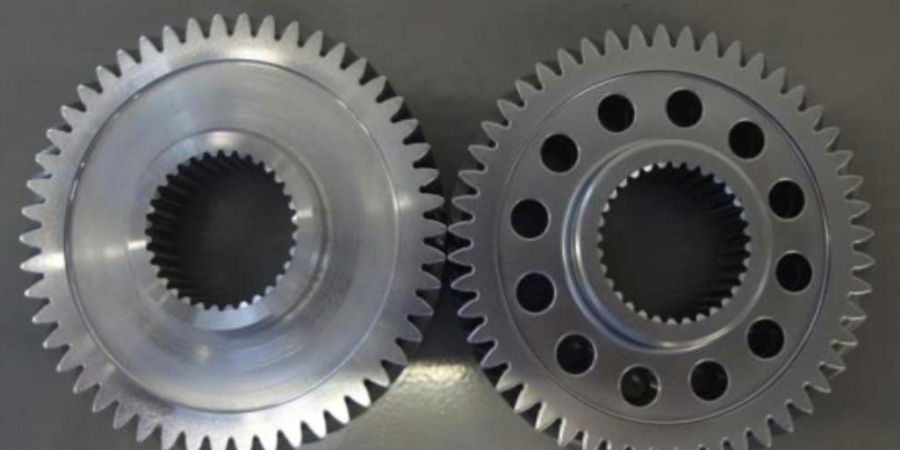
Powder Metal Gear Technology: A Review of the State of the Art

BOTW-50w  Source:  Power Transmission Engineering

“During the past 10 years, the PM industry has put a lot of focus on how to make powder metal gears for automotive transmissions a reality. To reach this goal, several hurdles had to be overcome, such as fatigue data generation on gears, verification of calculation methods, production technology, materials development, heat treatment recipes, design development, and cost studies. All of these advancements will be discussed, and a number of vehicles with powder metal gears in their transmissions will be presented. How the transmissions have been redesigned in order to achieve the required stress levels while minimizing weight and inertia, thus increasing efficiency, will also be discussed.”

Read More:  Powder Metal Gear Technology:  A Review of the State of the Art by Anders Flodin

Powder Metal Gear Technology: A Review of the State of the Art Read More »

Heat Treat Basics: Metallurgy for Non-Metallurgists from MetallurgyData.com #1

Guest post by www.MetallurgyData.com

This is the first in a series of blogs titled Metallurgy for the Non-Metallurgist, in this first blog we will look at materials.

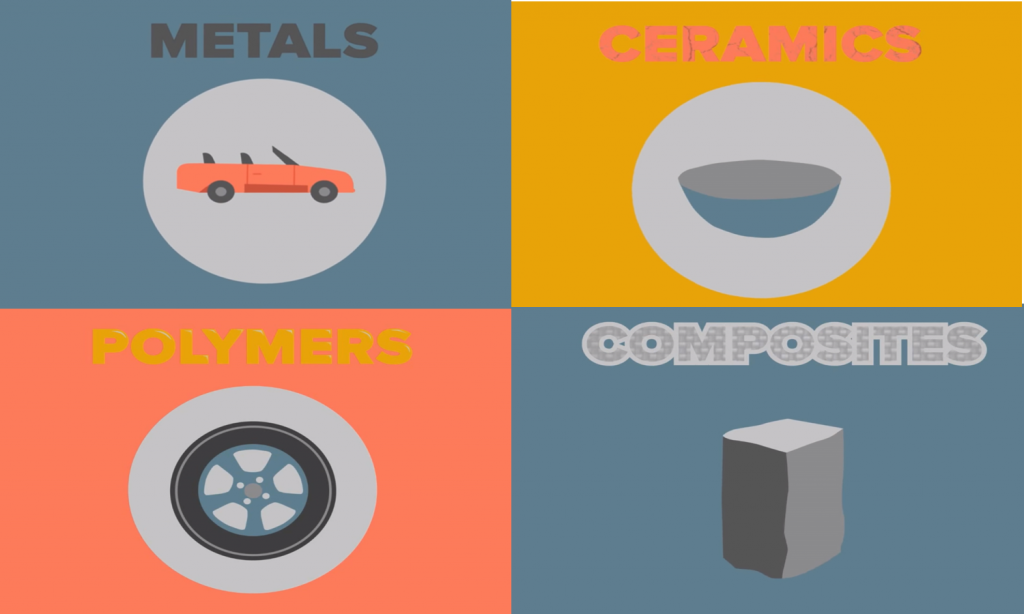
Engineering materials can be divided in to 4 key areas, Metals, Polymers, Composites and Ceramics.

Metals – Metals are the widest used of the four materials. Even if a material is not made of metal, metal will have been used at some point during its manufacture.

Metals can be divided into two sub groups; ferrous and non-ferrous. In ferrous metals the main constituent is iron and this group consists of steels and cast irons. Considering the amount of strength that is achievable in steel and cast irons, it is a cheap material. This is because iron is one of the most plentiful elements in the earth’s crust.

Non-ferrous metals include any other metals, some examples include aluminum, copper, zinc, titanium, and nickel.

Metals can be strengthened by adding more than one metal together such as copper and tin to make bronze. In this example the two combined have far greater strength than each of the individual metals (the sum is greater than the parts). We can also change the properties of metals by adding non-metallic elements like carbon.

When we produce steel we use the same principle as bronze, we take one element iron, which is the bulk of all steels and add another chemical element (alloying addition), these could include carbon, manganese, nickel, copper, molybdenum, boron, chromium, niobium, titanium, vanadium. In this way we can tailor a steel to a specific application.

When we add alloying additions to the metal it distorts the atomic structure, this makes it more difficult for the atoms to move around and makes the metal stronger. Depending on the type and amount of an alloying element we can make a metal much stronger.

Polymers – Polymers are widely used in many different industries and can be natural (wool, silk, natural rubber) or synthetic (synthetic rubber, nylon, polystyrene).

Plastics are probably the most used polymer and are made up from hydrogen and carbon (hydrocarbons). These are a by-product from the petroleum industry and due to this they are an abundant, and therefore a cheap material.

The carbon and hydrogen which make up the plastics are the key to how they work, because these can form together to produce long chains, this enables plastics to be versatile and easily processed.

Composites – A composite is a combination of two or more materials and consists of a binder and a reinforcement. They have been used for centuries in the form of concrete, and in Roman text from 25BC different aggregates are discussed for use in lime mortars. In 1853 steel bars were first added to concrete making one of our widest used composites: reinforced concrete. In concrete, cement is the matrix and the stone or aggregate is the reinforcement.  The other main composites are fibre glass and carbon fibre.

Ceramics – Ceramics have been used for thousands of years and the most common two are glass and clay. Clay was the first material that we learnt to transform into another state using fire. This was done about 29000 years ago when clay was formed into decorative figures. Much later clay was used to form items like jugs and bowls.

Glass which is mainly made from sand, was mastered by the Romans who unlocked the secret of blown glass by mixing it with minerals. The Romans were the first people to use glass for windows.

MetallurgyData.com have produced an ‘Introduction to materials’ Video – to view this free video visit – http://www.metallurgydata.com/index.php/metallurgy-for-non-metallurgists-2/introduction-to-materials/

The next series in this blog will be ‘Steel metallurgy’.

Heat Treat Basics: Metallurgy for Non-Metallurgists from MetallurgyData.com #1 Read More »

Heat Treater Adds Federal Firearms Licenses

The Burton Ave., Waterloo, Iowa and Monroe, Michigan locations of Advanced Heat Treat Corp. applied for and received federal firearms licenses (FFL). The company’s two other locations, Waterloo, Iowa, and Cullman, Alabama, already have FFL. Company officials indicated the driving force behind seeking the additional licenses was based on the fact that the processes conducted at each location vary and that requests were being received for more traditional heat treat methods like carburizing and carbonitriding. All four facilities now have FFL.

Heat Treater Adds Federal Firearms Licenses Read More »

An Iron Giant’s Big Plans

BOTW-50w  Source:  Global Casting Magazine

With annual sales approaching $2 billion, Waupaca Foundry is one of the largest metalcasting groups in the world. Focused on the automotive, commercial vehicle, off-highway and other industrial markets, the Wisconsin-based company produces millions of components that keep cars and trucks of all sizes on the road.

Read More:  An Iron Giant’s Big Plans

An Iron Giant’s Big Plans Read More »

How to Keep Process Cooling Systems Running

BOTW-50w  Source:  Dry Coolers

“Just like your plant electrical system, telecommunications equipment, or data network infrastructure, a process cooling water failure can shut down a facility and may even involve safety issues. Let’s outline some of the steps you can take to minimize downtime.”

Read More:  How to Keep Process Cooling Systems Running by Brian Russell

How to Keep Process Cooling Systems Running Read More »

Solar Manufacturing Business Agreement with Graphite Machining, Inc.

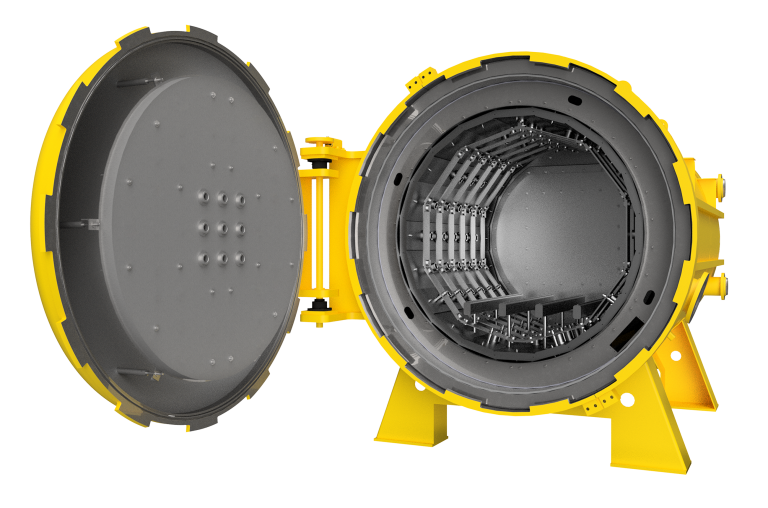
Graphite Machining, Inc. (GMI) of Topton, PA and Solar Manufacturing of Souderton, PA have been cooperating for the past year on the development and testing of a new graphite board material and its application for vacuum furnace hot zones. This new graphite board material has undergone extensive thermal and vacuum testing to prove its improved thermal efficiency and excellent vacuum performance compared to prior or present graphite board designs.

GMI intends to market this new graphite board under the name of HEATGUARD insulation while Solar Manufacturing will incorporate this new material into its vacuum furnace hot zones under the trade name of HEFVAC™ (High Efficiency Vacuum).

Frank C. Schoch president of GMI states “After extensive testing against our existing and competitive insulating materials, Solar Manufacturing and Graphite Machining combined our respective experience and created this new thermally efficient graphite board insulation material.”

Incorporating this new HEFVAC™ board insulation, Solar Manufacturing has now developed a proven more thermally efficient vacuum furnace hot zone design that is capable of achieving faster and better vacuum levels because of the HEFVAC™ sealed and low moisture absorption structure.

Solar Manufacturing Business Agreement with Graphite Machining, Inc. Read More »

Nucor to Acquire Plate Mill in Texas

Nucor Corporation (NYSE: NUE) announced today that it has agreed to acquire Joy Global’s steel plate mill in Longview, Texas, for approximately $29 million. The mill produces carbon and alloy plate products with heat-treating capabilities and has an annual capacity of 180,000 tons.

“This acquisition builds on our strategy to capture a growing share of higher value-added plate products and complements the capabilities of our two existing plate mills,” said John Ferriola, Chairman, CEO and President of Nucor. “The Longview mill will serve as a valuable addition to Nucor’s plate product offerings, which we believe can be further leveraged by our Nucor commercial team.”

The mill produces specialty plate products with the capability of producing plate that can range from 1 to 12 inches thick and up to 138 inches wide.  Approximately 140 non-unionized teammates work at the Longview mill.

Nucor’s existing plate mills are in North Carolina and Alabama and have a combined capacity of 2.9 million tons per year.   Nucor’s existing mills produce plate for manufacturers of barges, bridges, heavy equipment, rail cars, refinery tanks, ships, wind towers, armor and other markets. Nucor plate products are also used in the pipe and tube, pressure vessel, transportation and construction industries.

Nucor and its affiliates are manufacturers of steel products, with operating facilities primarily in the U.S. and Canada.  Products produced include: carbon and alloy steel — in bars, beams, sheet and plate; steel piling; steel joists and joist girders; steel deck; fabricated concrete reinforcing steel; cold finished steel; steel fasteners; metal building systems; steel grating; and wire and wire mesh.  Nucor, through The David J. Joseph Company, also brokers ferrous and nonferrous metals, pig iron and HBI/DRI; supplies ferro-alloys; and processes ferrous and nonferrous scrap. Nucor is North America’s largest recycler.

Nucor to Acquire Plate Mill in Texas Read More »

Industry 4.0 + IIoT = Smart Industrial Ovens & Furnaces

BOTW-50w  Source:  Eurotherm by Schneider Electric

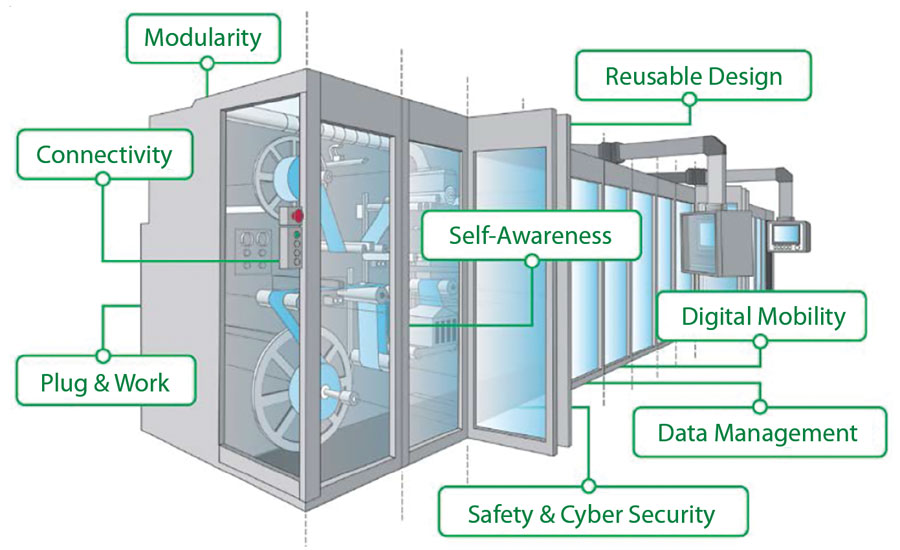
“Effective process control and automation technologies link thermal processing equipment such as ovens and furnaces with the operator and the supply-and-delivery chain — in a seamless network of information exchange.”

Read More:  Industry 4.0 + IIoT=Smart Industrial Ovens & Furnaces by Perter Sherwin

Industry 4.0 + IIoT = Smart Industrial Ovens & Furnaces Read More »