FEATURED NEWS

UPC Energizes Aging Carburizing Cell for Axle Gears Manufacturer

A U.S.-based axle gears manufacturer recently commissioned hardware and software enhancements to add to their existing heat treat cell and automation.

Migration of legacy controls was not economically feasible, and after investigating options to boost equipment functionality, the customer opted to integrate a new PLC that bridges the gap between the heat treat cell and new robotic loading cell. The new control system installed by United Process Controls, Inc., (UPC) provides operators with a quick display of the furnace status, functions, and operational data of three AFC Holcroft carburizing pusher furnaces. Furnaces were similarly adjusted to liaise with the new robotic loader. In addition, material handling data from the registers of the old PLCs was transferred to the new robot cell to help increase the factory information system. UPC was also retained to program and connect the updated furnace controls, including the new conveyor line, and charge cars to the factory information system.

UPC Energizes Aging Carburizing Cell for Axle Gears Manufacturer Read More »

Precision Tubing Manufacturer Awarded Nadcap Accreditation

Fine Tubes technical team with 4th Nadcap Certificate: Valerie Hart, Technical Manager; Dr. Abdul Saeid, Process Engineer; Wayne Taylor-Vicary, Deputy Cell Leader; David Killoran, Welding Process Engineer; Rob Eatwell, Quality Manager

A precision tubing manufacturer has been awarded a Nadcap accreditation for chemical processing. This is the fourth Nadcap approval awarded to Fine Tubes; its first accreditation was for heat treating in 2004, followed by nondestructive testing (ultrasonic testing) in 2005 and fusion welding in 2013. In addition, the Plymouth (UK)-based manufacturer anticipates receiving another accreditation for fluid distribution systems shortly.

Nadcap is an internationally recognised accreditation system that covers the key manufacturing and production processes used within the aerospace industry.

Very few companies hold four Nadcap accreditations simultaneously.

Chemical processing is a critical part of the Fine Tubes production process. Tubes must be chemically milled after the cold-working and heat-treating manufacturing processes, by being etched to ensure they meet the customer specification requirements.

“The tubing we manufacture is designed to withstand in-process fatigue loading, and failure is not an option.  When aircraft manufacturers need tubing, they inevitably look for suppliers who can demonstrate the most-stringent quality standards. Nadcap accreditation is widely viewed as confirmation of that, and, so with every Nadcap accreditation that we earn, we further enhance our ability to win new contracts,” comments David Killoran, representing the Fine Tubes’ technical team.

To achieve its latest accreditation, Fine Tubes undertook an intensive on-site inspection and investigation by a Nadcap auditor. This audit covers all aspects of the process – the machinery, consumables, and methods employed, as well as the qualifications and experience of the staff involved in the process.

“The auditor found no failures to comply with the Nadcap criteria, and that is a major credit to the Fine Tubes production team involved in the audit,” said Dr. Abdul Saeid, Process Engineer at Fine Tubes.

Fine Tubes and its US-based sister company, Superior Tube, are units of AMETEK Specialty Metal Products and both have supplied the aerospace industry with high-performance tubes for more than fifty years. Their precision tubes are used in airframes, aircraft engines and aerospace instrumentation, where they are relied upon to withstand the most-critical operating conditions.


Precision Tubing Manufacturer Awarded Nadcap Accreditation Read More »

Heat Treating Keeps Costs Down for German Tool Manufacturer


Source:  ETMM

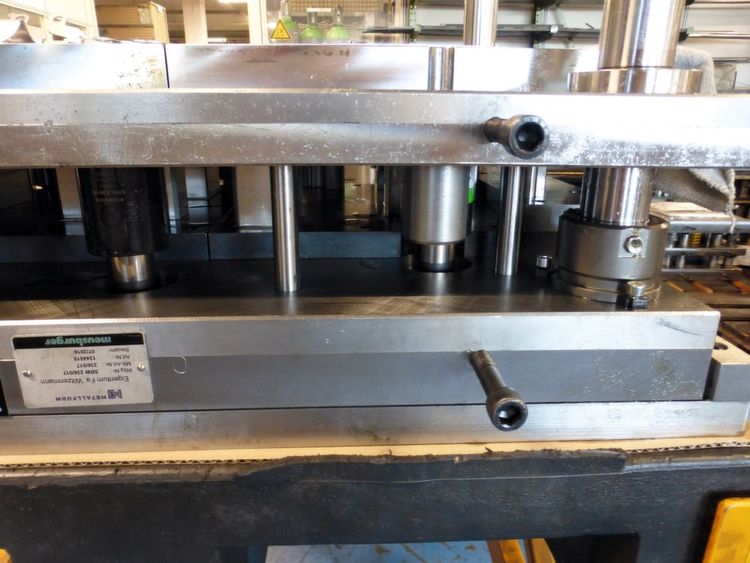
The Meusburger alignment process is shown here.

Heat treatment of standard parts allows a Bamberg-based contract manufacturer to provide in-house die and tool making that keeps costs low for customers. Metallform Bamberg GmbH, which specializes in the production of stamping and bending parts from the coil, dies, and welded and mounted assemblies, turns to Austrian stamping and machine company Meusburger for customized parts.

“[O]ur standard parts are heat treated for stress relief by default, which results in low warping and good subsequent machining properties,” notes Sebastian König, area sales manager for the central Germany sales region at Meusburger.


Read more: “Good Die Making Makes the Difference – Standard Parts Help in Doing So”

Photo credit: ETMM/Finus

Heat Treating Keeps Costs Down for German Tool Manufacturer Read More »

No Cal Heat Treat Services Supplier Adds Austempering, Marquenching Capabilities

A brazing and heat treating services supplier based in Northern California has announced the expansion of process services to their heat treating line. ThermoFusion now offers marquenching and austempering, in addition to their annealing, hardening, vacuum, and hydrogen services, for clients in the aerospace, automotive, medical, energy and general manufacturing industries.

Marquenching and austempering use a less aggressive quenchant, reducing the cooling rate slightly, and reducing distortion caused by rapid temperature change (thermal shock).  In high carbon material, these alternative processes allow for the formation of bainite instead of martensite, which allows spring steels to remain “springy” as they get hard.


No Cal Heat Treat Services Supplier Adds Austempering, Marquenching Capabilities Read More »

European Drilling Tools Manufacturer Commissions Furnace System

A European manufacturer of hard rock drilling tools recently contracted to purchase a gas nitro carburizing turnkey installation, complete with furnace, control system, and technology.

The selected technology and customized process recipes provided by Nitrex Metals Inc meet the customer’s technological requirements.

European Drilling Tools Manufacturer Commissions Furnace System Read More »

Aluminum Aging Oven Shipped to Aerospace Parts Manufacturer

An aerospace parts manufacturer recently acquired an electrically heated aluminum aging oven as part of an upgrade of its line. The SWH series batch oven was ordered to replace antiquated equipment in order to facilitate compliance with AMS 2750E Class 2 specifications. Wisconsin Ovens, a Thermal Product Solutions (“TPS”) brand, completed the shipment in August 2017.


Aluminum Aging Oven Shipped to Aerospace Parts Manufacturer Read More »

Heat Treat Company Gets Go-Ahead for Technology to Improve Hip and Knee Replacements

A coating system that enables light and strong titanium alloy to replace steel based bearings in landing gear on the Airbus 350 and 380 passenger jets could soon be used in human hip and knee replacements. An advanced hard coatings specialist has been awarded funding from Innovate UK, the government backed sponsor of breakthrough technologies, to research the medical application of this process. The development has promise as an enabling technology that may lead to customised implants made by additive manufacturing leading to light, strong, safer and longer-lasting joint replacements with potentially huge savings for the National Health Service (UK).

Titanium is already widely used in orthopaedic surgery as bone splints, plates and other devices. The material has high strength, fatigue resistance, lightness and good biocompatibility, though long term use can cause staining to skin tissue. Unfortunately, it performs poorly in load-bearing situations due to its relative softness. When used in aircraft bearings, the company, Wallwork Cambridge, overcomes this with a duplex coating process where deep nitrided cases are created in the metal surface to make it more resilient. This is then followed by the application of a hard micro-thin and highly lubricious coating by physical vapour deposition (PVD). The company is one of the largest PVD processors in Europe.

Knee and hip replacements are usually made from an alloy of cobalt, chrome and molybdenum (CoCrMo) or from ceramics. These materials are sometimes used in hybrid structures in combination with high-density polymers. Issues have arisen of metal-ion leakage from CoCrMo devices, plastic degradation and breakage or chipping of the ceramic implants in active individuals. This can cause pain and discomfort to patients and be highly damaging to surrounding tissues.

A patented coating, Agilliant, is under development at Wallwork that will provide an effective barrier against the release of metal ions and which also includes a small proportion of silver to give active protection from postoperative infection. The material is super smooth, permitting the easy passage of tendons so that they do not become inflamed. The barrier is also effective against bio-tribo corrosion by the synovial fluid that still acts as a natural joint lubricant in artificial implants.

Head of research and development at Wallwork, Dr Jonathan Housden, explained, “The duplex coating process, incorporating Agilliant as the final coating, opens the way for the introduction of a new generation of durable titanium implants. These will be lighter and more comfortable for the patient with fewer complications caused by postoperative infection and mechanical wear. Early trials to simulate many years of use suggest that the joints will, in many cases, outlive the patient, leading to a £300 million annual saving for the NHS by allowing more efficient use of orthopaedic resources as rework of failed or compromised treatments are reduced.”

Wallwork anticipates the first patient trials for the new devices could commence in as little as four years, after completion of intensive laboratory simulations.

Source: Ainsworth Maguire PR

Heat Treat Company Gets Go-Ahead for Technology to Improve Hip and Knee Replacements Read More »

India-Based Pipe Plant Expands with Heat Treatment Furnace

International Heat Treat News

India-based Srikalahasti Pipes Ltd., formerly Lanco Industries Ltd., announces expansion plans that include the installation of a third annealing furnace, investing ₹45 crore ($7,307,000 US) to meet this and other expansion goals.

G.S Rathi, whole-time director of Srikalahasti Pipes Ltd., noted that the annealing furnace will be installed exclusively to produce ductile pipes of from 100 mm diameter to 400 mm diameter in order to reduce oil and gas consumption. It calls for an investment of ₹20 crore ($3,124,756 US) and it will be ready by September 2018.

“With the enhanced production of [a third] blast furnace, full utilization of ductile iron pipe plant capacity, and benefits from cost reduction measures, we will be able to bring down the impact of higher input costs. Right now, we have orders book for eight months,” G.S. Rathi, whole-time director, Srikalahasti Pipes Ltd., said. In addition, the first quarter of 2018-2019 should see the expansion of a coke oven battery and boiler and captive power plant.

India-Based Pipe Plant Expands with Heat Treatment Furnace Read More »

Heat Treatment Furnace Maker Announces Organizational Changes

Heat treatment furnace manufacturer Ipsen recently initiated several organizational changes to the company’s structure.

Patrick McKenna was recently promoted to Ipsen USA President and CEO

Geoffrey Somary, who started at Ipsen in 2005 and for the past four years has held the dual responsibilities of Ipsen USA CEO and Ipsen Group COO, will leave his USA position and focus fully on his Group responsibilities with CEOs at all entities (Europe, USA, China, Japan and India) continuing to report directly to him.  Jake Hamid, who has been with Ipsen since 2007, will also leave his position as Ipsen USA COO and move into the position of Ipsen Group Director of Global Product Development and Manufacturing.

Ipsen USA also announced that Patrick McKenna is promoted to Ipsen USA President and CEO, responsible for all entity functions including Sales, Engineering, Operations, Service, Finance and Human Resources. McKenna states, “My focus from day one will be on delivering the highest quality products and services to our customers and ensuring that the established Ipsen performance culture continues far into the future.” McKenna has both undergraduate and graduate degrees in engineering and has served on the Metal Treating Institute Board of Directors for ten years (2016 president). He worked at Ipsen as a mechanical engineer for four years before leaving to co-found a successful commercial heat treating and brazing company. He divested his interest in that company in 2015 and returned to Ipsen as Vice President of Sales.

Other promotions include Pete Kerbel to Ipsen USA Vice President of Sales, who takes on responsibility for sales of new equipment, retrofits, and parts. Kerbel started at Ipsen in 2008 and most recently was the Director of Aftermarket Sales.

Heat Treatment Furnace Maker Announces Organizational Changes Read More »

Bearing Manufacturer Commissions Electrically Heated Furnace Line

An electrically heated furnace line has recently been commissioned by a leading bearing manufacturer for its existing production line. Responsible for producing planet shafts and pump vane products, the line, supplied by Can-Eng Furnaces International, Ltd., features a compact 1,000 lb/hr atmosphere temper and soluble oil system for rust prevention.

Bearing Manufacturer Commissions Electrically Heated Furnace Line Read More »

Skip to content