FEATURED NEWS

Growth for Iowa Heat Treater Means New Addition, New Equipment

An Iowa-based heat treat company providing thermal processing and metallurgical solutions for multiple industries, including aerospace, energy, and automotive, recently announced breaking ground on a 15,000 sq ft new addition, which will include two new heat treating equipment installations.

This is the first expansion at the corporate headquarters at Advanced Heat Treat Corp. (AHT) since 1998. The new addition will allow AHT to segregate its trademark processes, UltraGlow® (ion nitriding/nitrocarburizing) and UltraOx® (gaseous ferritic nitriding/nitrocarburizing and oxidation treatments) and maintain its state of the art manufacturing feel and presence.

The new expansion will bring with it two new gaseous ferritic nitriding/nitrocarburzing units w/sizes up to 13’ tall and 5’ wide. The new additions will be twofold:

  • the larger unit (13’ x 5’) will allow AHT to grow its longer-like product line, for processing long plastic injection screws for the plastics industry, hydraulic cylinder rods for the agriculture and/or construction industry lines and various pump, motor, shaft components for the oil and energy industries, and
  • the smaller unit (4’ x 5’) will be designed to capture more of the aerospace product line market; this unit will be targeted to be Nadcap approved by late 2018 to early 2019. By doing so, AHT will then have two Nadcap-approved processes inside its walls: Ion Nitriding and Gaseous Nitriding.

“This expansion will allow us better control of product flow, inventory control and process capacity,” said William Cowell, vice president of Ion Nitriding and plant manager. “We’ll be nearly doubling our gaseous nitriding capacity  with these additional units, and with the floor space, we’ll be able to better accommodate our customer demands.”

Mikel Woods, president of AHT

AHT currently has 55 ion/gaseous nitriding units across its four locations in Waterloo, Iowa; Monroe, Michigan; and Cullman, Alabama.

“I’m excited on many counts. One, we’re adding capacity/backup to an already growing agriculture/construction market. Two, we’re targeting to add a new Nadcap process in order to expand further into the aerospace market and meet more of our aerospace customer demands and requests. And three, we’re gearing up to go even bigger in 2019: with the expansion, we’ve planned to build/design a gaseous unit that will process parts up to twenty feet. This unit will allow us to enter various markets for growth,” said Mikel Woods, president of AHT.

Growth for Iowa Heat Treater Means New Addition, New Equipment Read More »

Galvanizing Line Plans Approved at Arkansas Sheet Mill

A North Carolina-based steel producer with operations primarily in the U.S. and Canada recently announced plans to expand heat treating capabilities at its Arkansas facility with a galvanizing line to support the company’s strategy to grow its automotive market share.

John Ferriola, chairman, CEO and president of Nucor

Nucor Corporation’s Board of Directors approved the construction plans at the sheet mill in Hickman of a galvanizing line at the company’s sheet mill with a target date for operations to begin in the first half of 20121. The $240 million investment with an annual capacity of approximately 500,000 tons complements the company’s $230 million investment currently underway to construct a specialty cold mill complex at Nucor Steel Arkansas.

“At Nucor Steel Arkansas, we are building one of the most modern and efficient steel mills in the world,” said John Ferriola, chairman, CEO and president of Nucor. “This new galvanizing line, coupled with our new specialty cold mill complex, will allow us to efficiently produce products beyond the capability of any North American mill, and to have the flexibility to meet current and future demand for advanced high-strength steel products.”

The company is also evaluating building additional galvanizing lines at its other sheet mills as part of Nucor’s initiative to further expand its sheet business.

MaryEmily Slate, vice president and general manager, Nucor Steel Arkansas

“Building this galvanizing line will diversify the product mix at Nucor Steel Arkansas and allow us to better serve our automotive and value-added customers,” said MaryEmily Slate, vice president and general manager, Nucor Steel Arkansas. “We are positioning ourselves to become a major supplier to the growing galvanized market in the U.S.”

Nucor and its affiliates are manufacturers of steel products, with operating facilities primarily in the U.S. and Canada.  Products produced include: carbon and alloy steel — in bars, beams, sheet and plate; hollow structural section tubing; electrical conduit; steel piling; steel joists and joist girders; steel deck; fabricated concrete reinforcing steel; cold finished steel; steel fasteners; metal building systems; steel grating; and wire and wire mesh.

Galvanizing Line Plans Approved at Arkansas Sheet Mill Read More »

Aluminum Caster Expands Facility, Technology Capabilities, Including Heat Treatment

An aluminum casting producer in New Hampton, Iowa, announced ongoing plans to expand its plant and technical capabilities, including space to house expanded heat treatment operations, to keep up with growing demand. ATEK Metal Technologies ships thousands of aluminum castings each day and has recently completed a significant expansion of its metal casting, heat treatment and finished machining capabilities. The major building expansion is expected to be completed in December of 2018.

“We need additional plant space to support growth,” said Tom Christie, president of ATEK Metal Technologies. “The new building will allow us to consolidate our warehousing and shipping areas and make room on the plant floor for ongoing expansion of operations.”

On the technical side, the new robotic de-gating and deburring of castings operations will be operational in July 2018.

Tom Christie, president of ATEK Metal Technologies

“We added 40 percent to our low-pressure permanent mold casting capacity to keep up with our accelerating growth,” said Christie. “We also have added state-of-the-art precision machining capabilities to be able to provide our customers with cast and machined finished components.”

ATEK Metal Technologies supplies aluminum castings that meet specifications for motorsports, recreation, transportation and industrial markets industries. The entire plant expansion is scheduled to be complete by the end of 2018.

Aluminum Caster Expands Facility, Technology Capabilities, Including Heat Treatment Read More »

Binder Removal in Vacuum Sintering


Source: TAV: The Vacuum Furnaces Blog


Andrea Alborghetti, Technical Manager of TAV Vacuum Furnaces

Heat Treat Today previously posted Parts 1 and 2 of this series on vacuum sintering. Part 1 focused on the two processing steps of debinding and sintering. Part 2 addressed primarily the vacuum sintering furnace itself. This installment analyzes the process and variables involved with binder removal.

Andrea Alborghetti, technical manager of TAV Vacuum Furnaces and contributor to the company’s blog, provides an analysis of burning vs capturing binders, addressing advantages as well as problems that may arise and how to execute control in the process, as in this example:

“One thing that is worth clarifying is that the flames usually seen on the outlet of kilns that use combustible gases (hydrogen, for example) as the process gas, were not originally designed to burn the binder disassociation residues to reduce emissions to the legal limits. Rather, it is solely for disposing of the emitted hydrogen safely, thus avoiding hazardous, potentially explosive atmospheric concentrations being created outside of the kiln.”

Read more for further analysis of binder removal, including discerning the type of residue found with your process: “Perfect Vacuum Sintering Step by Step #3”

Binder Removal in Vacuum Sintering Read More »

Aircraft Gearbox Manufacturer Expansion Includes Heat Treatment

A commercial and military aircraft gearbox manufacturer recently completed a 24,000 sq.ft. expansion at its site in Windsor, Connecticut, including vacuum carburized and hardened heat treatment capabilities, super finishing, balancing, and non-destructive testing.

Aero Gear, a global leader in the design, engineering, and manufacturing of gears and gearbox assemblies for the aerospace industry, specializes in fixed and rotary wing aircraft, utilizing a proprietary Flow Line concept based on providing the best quality, shortest lead time, and reasonable cost by eliminating waste. The majority of the Lean Flow processing is conducted within a modern, climate controlled 69,000 sq.ft. facility; the new space will have a total of 100,000 sq.ft. with 175 employees, plus provide a lobby, conference room, offices, and manufacturing space for several new programs.

Doug Rose, founder of Aero Gear. (Photo Credit: Jim Michaud / Journal Inquirer)
“In trying to meet the increased orders from our customers, it became obvious that additional people and machines were necessary, and the only way to accommodate this was through enlarging our physical space,” said Doug Rose, founder of Aero Gear. “Although we have clients around the world, the expansion demonstrates that we are committed to the long-haul in Connecticut.”

Rose points to the simultaneous growth of the commercial and military defense industries and their need for assembled gearboxes as an impetus for increased production. The power drive gear systems that Aero Gear makes for fixed and rotary wing aircraft require the highest quality precision engineering and manufacturing.

Aero Gear also is creating skilled employees through its training program. The company actively works with state community colleges to customize a curriculum to put graduates in the field immediately after graduation.

“Our goal is to utilize knowledge-based expertise to practical benefit so as masters of our trade, we are able to offer superior product development and support service whether for gearbox assemblies or individual gears,” said Rose. “This is an unprecedented era of growth for our industry and we are incredibly proud to be a key contributor.”

Aircraft Gearbox Manufacturer Expansion Includes Heat Treatment Read More »

15 Quick Heat Treat News Items to Keep You Current

15 Quick Heat Treat News Items to Keep You Current

Heat Treat Today offers News Chatter, a feature highlighting representative moves, transactions, and kudos from around the industry.

Personnel and Company Chatter

  • D. Scott MacKenzie, PhD., Senior Research Scientist–Metallurgy at Houghton International, was elected by the International Federation of Heat Treating and Surface Engineering (IFHTSE) to serve as president for a two-year term. Dr. MacKenzie has been the ASM representative to IFHTSE Executive Committee since 2015 and was awarded ASM Fellow in 2007; he has also published over 150 publications and books, mainly in the field of heat treating and quenching.
  • A new generation of leadership takes over at Michigan-based, flat-rolled steel distributor Grand Steel Products Inc. Jim Barnett, retiring as president and COO, announced that his son, Michael Barnett, has assumed those roles, having started with the company in 2006 and overseeing growth through the purchase of an operations building in 2008, purchase and installation of a slitting line in 2011, and office renovations and additions in 2014. Michael also assisted in the formation of Barnett Industrial Properties and Grand Steel Transport, where he is a Partner. This year, Jim and Michael also added a new company within the same property of Grand Steel Products’ by adding Steel Testing Laboratory (STL).
  • ASM International recently announced that member John Storm, president and CEO of Contour Hardening Inc. (CHI), passed away on May 13, 2018, at the age of 63. "John helped pioneer work with dual frequency induction hardening to strengthen gears and shafts by creating a uniform hardened case pattern. In 1986 . . . he ventured out to co-found CHI with the goal of supplying the industry with innovative induction hardening systems. . . He holds over 200 U.S. and International patents on a variety of processes and applications."
  • The Aluminum Extruders Council (AEC) announced that R. Scott Kelley, president and CEO of Service Center Metals in Prince George, Virginia, was elected to serve as chairman of the Aluminum Extruders Council.  Mr. Kelley has been a member of the AEC Board of Directors since 2013 when he served as an Independent Extruder Director until he was elected to the Executive Committee in 2016 as Vice Chairman of the Council.
  • Gervais Jacques, Managing Director--Atlantic at Rio Tinto Aluminum, has been appointed Chair of the International Aluminium Institute (IAI). As IAI Chair he succeeds Hilde Merete Aasheim, executive vice president of Hydro's Aluminum Metal business, at the end of her two-year tenure.
  • Mary Pernacciaro has been named Director of Quality Management Systems at Illinois-baesd ADVANCED Heat Treating Inc, overseeing maintenance and improvements within the company’s quality systems.
  • Gerdau S.A. recently announced that Chia Yuan Wang, currently the Supply Chain Vice-President in North America, was appointed as the new president for its North American Long Steel Operation, succeeding the CEO of Gerdau, Gustavo Werneck, who was temporarily serving in the position during the last three months. Wang has almost 30 years of experience at Gerdau and held several positions in Brazil, Canada, China, and the United States.
  • Germany’s leading engine manufacturer, MTU Aero Engines AG, recently announced the formation of a separate department, Additive Manufacturing, to explore conceptual designs of applications and constructions from a bionics viewpoint, push the development of the production technology forward, and industrialize the entire process chain. Dr. Jürgen Kraus has assembled a team of around 30 professionals from various technical disciplines: design engineers, structural mechanics engineers, process specialists, and operations scheduling experts.
  • GE Additive recently released an update to its Concept Laser M2 cusing and M2 cusing Multilaser machines to provide aerospace, automotive, medical customers with an increased level of productivity and reliability. The upgrades include a new gas flow system and a higher build chamber with a z-axis of 350 mm and newly designed heating.

Equipment Chatter

  • A two-zone walk-in temperature humidity cycling room was recently shipped by Tenney Environmental announced the shipment of a two- zone walk-in temperature humidity cycling room to replicate negative pressure housing conditions to test door locks during the design phase. In addition, Tenney announced shipment of a vacuum temperature space simulation system for the manufacturer of laser guidance modules for satellites and other space equipment that is used to assure precise locations of equipment while they are docking together.
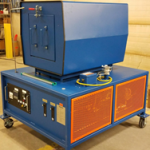
  • A manufacturer of recreational vehicles recently received shipment of a gas-fired aluminum stack melting and holding furnace from Lindberg/MPH to provide additional melting capacity and efficiency for a new die casting machine installation. Lindbergh/MPH also recently announced shipment of a box furnace with retort to a laboratory in Canada to be used to test parts in a hydrogen atmosphere. The temperature range is 212°F to approximately 2200°F and the customer will run it at a maximum temperature of 1922°F.
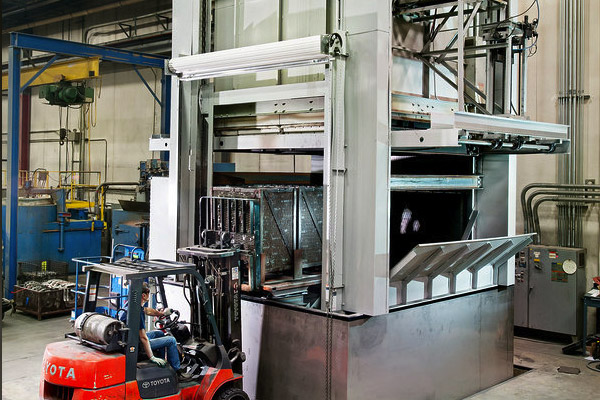
  • A natural gas-fired enhanced duty walk-in furnace was recently manufactured for a transportation technology company by Wisconsin Oven Company to be used for heat treating baskets of aluminum parts. The heat-treating equipment has a maximum temperature rating of 600°F (315°C) and has sufficient capacity to heat 1,312 pounds (5,952 kg) of aluminum from 70°F (21°C) to 482°F (250°C) within 120 minutes when loaded into an ambient oven. Wisconsin Oven Company also manufactured a custom electrically heated enhanced duty walk-in oven for an aerospace parts manufacturer to be used for curing composites. The maximum operating temperature of this composite curing oven is 500°F.
  • An order for advanced tubes has been received by Sandvik Materials Technology from a company related to the energy segment.

Kudos Chatter

  • The Buehler Wilson® Reference Block Laboratory in Binghamton, New York, has achieved accreditation to ISO/IEC 17025 by A2LA (American Association for Laboratory Accreditation) for Rockwell, Knoop, Vickers, and Brinell hardness test blocks and indenters. A2LA is in full conformance with the standards of the International Organization for Standardization (ISO) and the International Electro-Technical Commission (IEC), including ISO/IEC 17025. Buehler markets the reference blocks along with the Wilson hardness testers and DiaMet software globally.
  • The world’s largest independent Pratt & Whitney Canada authorized PT6A Designated Overhaul Facility (DOF) with distribution rights on certain engine models, StandardAero, is celebrating its second anniversary as a chosen supplier of PT6A engine maintenance to business aircraft manufacturers Textron Aviation.


Heat Treat Today is pleased to join in the announcements of growth and achievement throughout the industry by highlighting them here on our News Chatter page. Please send any information you feel may be of interest to manufacturers with in-house heat treat departments especially in the aerospace, automotive, medical, and energy sectors to the editor at editor@heattreattoday.com.

15 Quick Heat Treat News Items to Keep You Current Read More »

Indiana Steel Operations Changing Hands, Includes Galvanizing Line

An Indiana steelmaker recently acquired the flat roll operations of steel producer of hot roll coils, located in Terre Haute, Indiana, including the company’s continuous pickle line, a cold mill, and a galvanizing line.

Mark D. Millett, Steel Dynamics’ chief executive officer

Steel Dynamics, based in Fort Wayne, entered into a definitive agreement to purchase Companhia Siderurgica Nacional, LLC (“Heartland”) from CSN Steel, S.L.U., a whole owned subsidiary of Companhia Siderurgica Nacional (CSN), which expands Steel Dynamics’ annual flat roll steel shipping capacity to 8.4 million tons. Future plans are to utilize the full capacity of the facility, providing high-quality cold roll, pickle and oil, and galvanized products.  The geographic proximity to Steel Dynamics’ other flat-roll operations and certain fabrication locations provide opportunities related to logistics and production efficiencies throughout the supply chain and customer network.

“In combination with our current operations, Heartland brings a tremendous amount of operating flexibility and optionality,” said Mark D. Millett, Steel Dynamics’ chief executive officer. “We look forward to welcoming the Heartland employees and customers into the Steel Dynamics family and working with them to drive future growth and success.”

Steel Dynamics produces steel products, including hot roll, cold roll, and coated sheet steel, structural steel beams and shapes, rail, engineered special-bar-quality steel, cold finished steel, merchant bar products, specialty steel sections and steel joists and deck.  In addition, the company produces liquid pig iron and processes and sells ferrous and nonferrous scrap.

Indiana Steel Operations Changing Hands, Includes Galvanizing Line Read More »

Nevada Heat Treater Adds Aerospace Accredited Aluminum Capabilities

A full-service heat treating company serving a broad range of industries recently announced the capability to offer aerospace accredited aluminum heat treating.

Nevada Heat Treating (NHT), baesd in Carson City, Nevada, added a drop bottom furnace to its thermal processing lines to treat aerospace and commercial jobs to the latest AMS aluminum heat treating specifications. The aluminum drop bottom furnace is certified as a Class 2 furnace, meeting AMS2750 standards, and is equipped with multiple state-of-the-art quenching systems for the needs of a broad range of industries including aerospace, semiconductor, military, nuclear, and machine shops.

Nevada Heat Treater Adds Aerospace Accredited Aluminum Capabilities Read More »

Seven Types of Annealing, and Why Bearing Manufacturers Should Turn to Spheroidization

Sources: Machine Manufacturing; Knergize.com

Heat treating more often than not includes the process of annealing in order to induce precise softness; to alter ductility, strength, or properties; or to produce a definite microstructure. Because of the wide variety of steels and metal alloys, it is important for heat treaters to match the correct annealing process with the steel grade and to the application of the parts being treated.

Machine Manufacturing has provided a summary of the annealing process and listed seven types of annealing, describing the process and the objectives for each. Included in the list are:

  1. Complete Annealing
  2. Isothermal Annealing
  3. Incomplete Annealing
  4. Spherification Annealing
  5. Diffusion, or Uniform, Annealing
  6. Stress Relief Annealing
  7. Recrystalization Annealing

Read more: "What Is Annealing and 7 Types of Annealing Process"


Dr. S.B. Sarkar

And to take the analysis into more specific types of annealing, over at Knergize.com, Dr. S.B. Sarkar discusses Spheroidized Annealing and its benefit to bearing manufacturers, describing the metallurgical science behind the process, noting the need to adhere to international standards and specifications, and addressing equipment management and quality control of the process.

Read more: "Why Spheroidised Annealing of Bearing Steel Is Important for Manufacturing Good Quality Bearings"


Photo credit

Seven Types of Annealing, and Why Bearing Manufacturers Should Turn to Spheroidization Read More »

IHEA Monthly Economic Indices: 8 Up; 4 Down

Steel consumption, somewhat counter-intuitively, took a significant jump in April despite rising prices.

The rising price of steel along with three other negative moving indices were the only four downward-moving indices in May according to the authoritative monthly report issued by North America’s leading thermal processing equipment manufacturing association, the Industrial Heating Equipment Association (www.ihea.org).

Another negative indicator was the metal price index which reports on aluminum (up slightly), copper (steady), nickel (up slightly), and gold (steady). Given the anticipated and now-imposed steel and aluminum tariffs, it is uncertain what will happen to aluminum and steel prices although the report suggests that steel consumption was up not so much due to demand, but in anticipation of future shortages resulting from tariffs.

The PMI saw its fourth straight monthly decline.

Positive indices included industrial capacity utilization, new home starts, capital expenditures, and durable goods shipments.

Each month, the report details the movements and rationale behind 11-14 metal industry-specific indices. The full report is available to IHEA member companies.

To inquire about the full report, please contact Anne Goyer, Executive Director of IHEA by clicking here.

Ann Goyer, Executive Director of IHEA


IHEA Monthly Economic Indices: 8 Up; 4 Down Read More »