

An Ohio manufacturer of processing equipment recently received heat treating upgrades to its facility from a heat treat controls system manufacturer, also in Ohio.
Milacron LLC partnered with Super Systems, Inc., based in Cincinnati, Ohio, to make major upgrades to the heat treating assets at its plastics machinery facility in Mt. Orab, Ohio.
Included in the scope of work were new control cabinets, atmosphere flow panels, SCADA software, and a new ammonia dissociator. The work has been completed for this project.
“We are very happy we chose Super Systems… The quality and workmanship set them apart from others in the industry,” said Jeff Bissantz, project engineer, who led the Milacron team.
A supplier of refractory products and services in North America recently celebrated the completion of its phase one facility expansion plan.
HarbisonWalker International (HWI) hosted a ribbon-cutting event at its manufacturing operations in White Cloud, Michigan, to celebrate completion of the first phase of an expansion that increases the floor space of the facility by 35%. The project is part of a $9 million investment being made this year to significantly increase warehousing space along with the addition of new, advanced manufacturing and hydraulic press technologies.
Carol Jackson President & CEO HarbisonWalker International
“White Cloud is an extremely important facility that has been vital to our company and the community for more than four decades,” said Carol Jackson, chairman and CEO at HWI. “Historically, and especially in the past two years, the team at White Cloud has helped fuel our steel industry customers’ success by consistently delivering on their tremendous demand for the refractory products we produce here. We’re so proud of the great work our White Cloud employees do every day for our company and our customers.”
HWI’s White Cloud operations primarily produces refractory products that are utilized by the steel industry.
An international automotive corporation that designs, develops, and manufactures metal automotive components recently received a hot stamping furnace from a manufacturer of standard and custom industrial heat treat furnaces.
The Gestamp Research and Development facility, located in Auburn Hills, Michigan, added an electrically heated, four chamber hot stamping furnace built by Lindberg/MPH, an industrial thermal processor.
Bill St. Thomas Business Development Manager Lindberg/MPH
“This Lindberg/MPH hot stamping furnace provides uniform heating for a wide variety of high-strength steels or aluminum materials prior to hot stamping or hydro-forming applications. The team at Gestamp has been incredible to work with on this project and we are proud to be their supplier,” said Bill St. Thomas, Business Development Manager.
The furnace is integrated at the Gestamp facility with a robotic transfer system and hydraulic hot stamping press. The four chambers operate independently with the top chamber designated for aluminum treatment. This type of hot stamping system allows the customer the flexibility to treat different steels simultaneously and takes up a much smaller footprint than a continuous system.
A domestic steel producer and metals recycler chose Sinton, Texas, as the site for the company’s new electric-arc-furnace (EAF) flat roll steel mill.
Steel Dynamics, Inc., a carbon steel producer which also owns Vulcan Steel Products that services the heat treat industry, recently announced its preferred choice as the Sinton location, 30 miles northwest of the port of Corpus Christi, Texas, because it is strategically located within the targeted Southwest U.S. and Mexico market regions; it’s central to the largest domestic consumption of flat roll Galvalume® and construction painted products; and it provides sufficient acreage to allow customers to locate on-site, providing steel mill volume base-loading opportunities.
Mark D. Millett President and CEO Steel Dynamics, Inc.
“We have been developing a flat roll steel business strategy for this region and Mexico for several years,” said Mark. D. Millett, President and Chief Executive Officer, “and the team is ready to execute. We have extensive experience and a proven track record for successfully constructing and operating EAF steel mills and downstream value-add finishing lines. Our planned new EAF flat roll steel mill will be the most technologically advanced facility existing today.”
Dan Szynal, VP of Engineering & Technical Services, Plibrico
Installing new refractory materials is a necessary furnace maintenance practice which needs to be done periodically. But extended downtime and installation errors can be a major financial and operational headache. In this article, Dan Szynal, VP of Engineering & Technical Services, Plibrico, gives 12 factors which will ensure that the refractory installation is successful.
At 700°F, steam can exert 3,000 psi pressure.
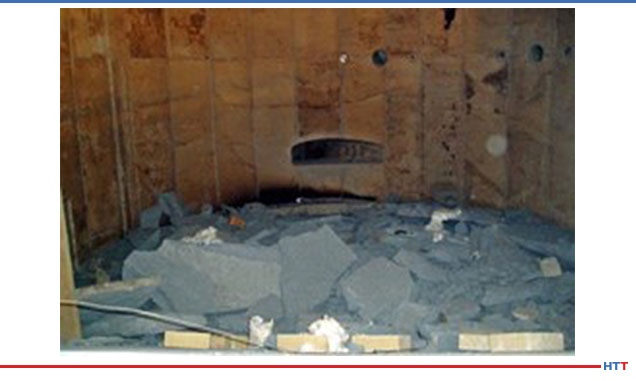
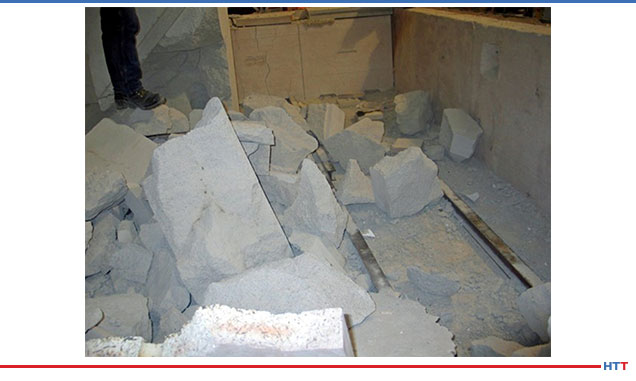
During an initial dry-out, the powerful effects of superheated steam can cause explosive, devastating consequences to freshly cured refractory material. To that end, removing moisture from castable and precast shapes is a serious pursuit. The production pressures to minimize downtime can lead to shortcuts and rushed dry-out procedures. Usually, these sidesteps have the opposite effect, quickly compounding delays and costs by causing thermal damage to the linings and potentially incurring personal injury.
Dry-outs fail due to imprecise management of water extraction from refractories. At the boiling point of water, the pressure of steam is less than 1 psi. However, at 700°F, saturated steam reaches 3,000 psi, and possesses enough energy to disintegrate the most resilient refractories. Too much heat, rapid ramp-ups, vapor lock, poor curing, and surplus water can contribute to potentially hazardous situations.
Here are the 12 preventive factors to manage for dry-out safety and success:
1. Hot spots and flame impingement. Ensure that your burner flame is centered accurately. The direction of flame in the vessel must promote equal heating of all the refractory surfaces. A flame that impinges on a single area of the surface will quickly create a hot spot, forcing an unequal expansion of water vapor in that area and resulting in thermal spalling.
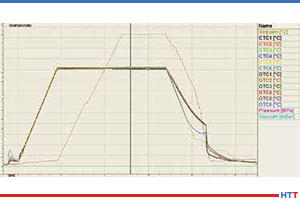
Thermocouples need to be monitored at both hot and cold areas to measure temperature consistency.
2. Temperature spikes. Insulation is ill-advised. Attempting to cover green castable with an insulating blanket can lead to destructive temperature spiking when the blanket is removed, breaks, or falls off. At a wall surface temperature of only 550°F, the removal of insulation exposes the surface to an extreme temperature shift which will activate unequal steam expansion and pressure.
3. Thermocouple placement and monitoring. Pay attention to the locations and readings of your TCs. Watching only the coldest location will allow the hottest area of your vessel to heat too quickly in the dry-out schedule. Conversely, monitoring only the hottest area will allow the colder area to retain more water than specified. This will lead to failure later in the schedule or during hold periods. At 700°F, steam can exert 3,000 psi pressure.
4. Air temperature vs. surface temperature. Thermocouples should report surface temperature. Air temperatures are typically 50°F to 100°F hotter, thus misreporting schedule impact. The initial hold period is typically designed to melt burn-out fibers. That creates important permeability. If the actual load temperature is lower than specified, permeability is not created, leading to failure in the next ramp-up period.
Pre-cast refractory requires longer bake-out schedules to release all water vapor.
5. Field vs. precast dry-out schedule. A field dry-out schedule is specified for single-sided heating. It precipitates a dual water migration, first (stage 1) towards the heat as the path of least resistance, but then reversing course (stage 2) and moving away from the heat, escaping towards the furnace shell. Field dry-outs are faster schedules than precast, where the pieces are heated from all sides simultaneously. The precast water migrates to the center of the piece, and that takes longer to escape. By misapplying the faster field dry-out to precast, there is a greater risk of water retention, which will ultimately lead to spalling, even at temperatures of 550°F or less.
6. Venting and air circulation. Proper venting is required to rid the furnace of water vapor during dry-out. Without vents and free air circulation, the steam is forced to exit via the furnace shell, which takes longer than the schedule would provide. Water will be retained closer to the shell side, increasing the likelihood for disintegration as temperature and steam pressure rise.
7. Surface coating. An impermeable coating on the refractory surface will prevent the stage 1 escape of water. Slowly, this water will be forced to move to its second exit, the furnace shell. This delay prepares the still-saturated refractory for failure at the next heat ramp-up.
8. Clear obstruction from weep holes. As stage 2 water migration occurs, it will escape to the furnace shell. There should be adequate weep hole capacity, cleared of obstructions which will allow the water to exit the furnace shell. These provide a release valve for buildup of steam pressure. Thermocouples need to be monitored at both hot and cold areas to measure temperature consistency. Pre-cast refractory requires longer bake-out schedules to release all water vapor.
9. Cold weather curing. In the curing process, simple hydrates form needle-like morphology. These structures promote permeability, and water/steam can more easily migrate through the refractory to escape. Curing in below-freezing temperatures alters the hydrates to be less permeable, thus trapping the water, even during dry-out and creating an inherent risk. As well, cold weather curing slows the required strengthening process, leading to a weaker refractory and likely spall. We have had a thermal operator tell us about a below-freezing cure that went badly: The water in the castable actually froze in place. When the dry-out was initiated, the castable melted and fell to the floor, where it subsequently cured and dried.
10. Cutting short cure time. Recommended dry-out schedules always assume a 24-hour equivalent curing time at moderate temperatures. By cutting short the cure time, water is retained, and strength is reduced. For example, a conventional castable requires 24 hours cure time; high cement/low moisture castable needs at least 16 hours. Adherence to product cure time specifications ensures optimum strength and a successful dry-out.
11. Free water removal without consideration. The goal of curing and dry-out is to create permeability in the refractory at lower temperatures (300°F) to enable water to escape. By quickly ramping up dry-out temperatures for the sake of time, permeability is diminished. At higher temperatures, (+500°F) steam pressure rises aggressively. Again, refractory composition drives curing and dry-out schedules, and as a rule, the faster temperatures rise beyond specification, the higher the risk of failure.
Pre-cast shapes spall at 550°F.
12. Refractory strength as a function of water content. A simple 1% excess of water will reduce refractory strength by as much as 20%. Overwatering by 1.5% cuts strength 25% to 40%. The implications are profound: the refractory will not withstand the steam pressures in dry-out, and worse yet, there is more water that must be extracted. A successful dry-out can be jeopardized by the slightest variance in water composition.
Conclusion
Meticulous care in refractory installation is the foundation to successful furnace operation. While no one looks forward to non-productive downtime, close adherence to product specifications, cure times, and dry-out schedules will ensure a more profitable return to operations. Managing the water issues in refractory composition is job one.
A high-temperature vacuum and controlled atmosphere furnace manufacturer recently invested in new equipment for advanced firing capabilities.
Centorr Vacuum Industries recently announced it has added new furnace capabilities to its Applied Technology Center for customer use for process proofing, toll work, and process development runs.
The new furnace is based on Centorr’s successful Super VII platform and will join two smaller System VII furnaces, an induction melting furnace, and a continuous belt furnace already in use.
This newly updated 2nd Generation Super VII design comes with several innovative features to allow the processing of a wide variety of metals, hard metals, ceramics, and carbon/graphite composites. The furnace can be used for low temperature degassing, heat treating, annealing, brazing, and sintering of a variety of materials.
A Dozen Quick Heat TreatNewsItems to Keep You Current
Heat TreatTodayoffers News Chatter, a feature highlighting representative moves, transactions, and kudos from around the industry.
Personnel and Company Chatter
Patrick J. DeCourcy, who has served as Allegheny Technologies Incorporated’s Senior Vice President, Finance and Chief Financial Officer since 2013, recently announced plans to retire. To ensure a smooth leadership transition, he will remain in his current role until his successor is appointed and will retire from ATI on March 31, 2020.
A leading manufacturer of products used in the transmission, distribution, and measurement of water in North America, Mueller Water Products, recently announced plans to build a new, state-of-the-art foundry in Decatur, Illinois. According to Mueller, this facility is expected to be one of the largest finished goods brass foundries in the world.
Jerry Bunch has recently joined Pelican Wire as a Design Engineer II, and Larry Brindise has been hired as IT Development Leader. Bunch will be reviewing production processes, ensuring technical oversight to manufacturing steps and working to support the company-wide ‘continuous improvement’ program. Brindise comes to Pelican Wire with some knowledge of the company, as he has previously served Pelican Wire as a professional software consultant. He comes on-board full-time to lead an ongoing ERP project and will continue to develop and implement software solutions to improve the entire customer lifecycle process.
It has been announced that Opti-Tech Scientific, a leading Canadian supplier of scientific equipment, will represent Buehler, an ITW Company, in Canada. Opti-Tech Scientific specializes in optical/digital microscopy, metallography, and hardness testing.
Allegheny Technologies Incorporated announced it completed the sale of its Cast Products business unit to Consolidated Precision Products Corp. (CPP) of Cleveland, OH.
A partnership has been launched between leading Enterprise Artificial Intelligence® provider Noodle.ai and SMS group, which digitalizes plant and equipment used in steel and nonferrous-metals production and processing, to jointly further optimize the world’s first learning steel mill for Arkansas-based Big River Steel. To help Big River Steel conserve resources and control energy output, the joint solution was created by implementing Noodle.ai’s learning algorithms into SMS group’s X-Pact® MES 4.0. Noodle.ai was able to seamlessly leverage the fact that SMS group’s X-Pact® MES 4.0 was engrained into the steel mill’s IT environment and into their SaaS (Software as a Service) applications. The new end solutions digitize applications throughout every stage of the steelmaking process – starting at the liquid phase all the way to strip finishing.
Equipment Chatter
Centorr Vacuum Industries announced it has shipped its new Sintervac AM™ furnace for the debind and sintering of additively manufactured parts for a leading 3D/Additive Manufacturing company.
A customer needed the lower sidewalls of its forge furnace shotcreted with 90,000 lbs of material. Onex Inc posted a video of the job on Twitter.
The Slovakian company U.S. Steel Košice – one of the largest integrated steel producers in Central Europe – placed a major order for the supply of an annealing and coating line (ACL) for dynamo steel strips to Tenova LOI Thermprocess, a worldwide leader in heat treatment lines and furnaces located in Essen, Germany.
Kudos Chatter
The Chemical Coaters Association International (CCAI) recently announced the second annual Women in Finishing FORUM will be held at the Embassy Suites South Bend at Notre Dame from May 6-8, 2020.
Metal heat treater Exactatherm, based in Mississaugua, Ontario, has been awarded Nadcap Merit status for heat treatment.
The International Titanium Association (ITA), Denver, Colo., announces that metallurgist George L. Durfee has been named the recipient of the ITA’s 2019 Lifetime Achievement Award. A member of ASM International, Mr. Durfee is a metallurgist who built his career around pioneering applied research projects for the titanium industry at forging company Wyman-Gordon Co.
Heat TreatTodayis pleased to join in the announcements of growth and achievement throughout the industry by highlighting them here on our News Chatter page. Please send any information you feel may be of interest to manufacturers with in-house heat treat departments especially in the aerospace, automotive, medical, and energy sectors to the editor at editor@heattreattoday.com
A US provider of fuel and control systems for aircraft engines recently had its furnace control improved by a company who services the thermal processing industry, helping both furnace OEMs and equipment end users.
Woodward Inc., which develops and delivers motion control and integrated propulsion systems, recently had its vacuum furnace controls and automation platform upgraded by United Process Controls (UPC). The new generation controls provide streamlined reporting for NADCAP compliance as well as seamless integration with the company’s enterprise planning (ERP) system.
In addition to complying with NADCAP, the enhanced controls also meet AMS 2750E specification for thermocouple tracking. Now, the Protherm 710 controller tracks the thermocouple, its serial number, and usage history; identifies when a thermocouple needs to be replaced based on running hours, days in service, and temperatures reached; and alerts the operator when it’s time to change the thermocouple.
“The workplace at Woodward is top notch. Their commitment to ongoing improvements is an excellent example of a manufacturer understanding the potential of new technology to drive better overall equipment effectiveness, to maximize furnace availability, and to deliver well-engineered, quality products. UPC process controls and control systems add more automation and real-time visibility of production, which will ensure that furnaces continue to operate at maximum efficiency for years to come and at the same time uphold Woodward’s high quality standards of its operations and products,” said Jason Walls, UPC engineer responsible for the Woodward project preparations and start up.
Future upgrades of furnace controls and automation are planned at Woodward, and UPC will participate by supplying Protherm series and Atmosphere Engineering series process controllers and connecting them into the SCADA platform.
The heat treating of constant tension bands used by automakers is a complex process, and the challenge posed to a leading heat treating company by a supplier of these bands was to determine how to reduce the risk of failure due to stress corrosion cracking.
“Improving the physical characteristics of metal components often requires fine-tuned treatments that bring them to the brink of destruction. It’s a quirk of metallurgy heat treaters contend with constantly.”
Solving the problem involved, as noted in this case study from Paulo, breaking “a few cardinal rules en route.”
Building upon their collaboration begun last year, two aerospace titanium and alloy component suppliers recently concluded successful testing for optimizing alloy for performance.
Norsk Titanium (Norsk), which supplies aerospace-grade, additive manufactured, structural titanium components to Tier 1 client such as Boeing, partnered with QuesTek Innovations LLC and printed the additive manufacturer’s custom titanium wire in support of initial material properties testing.
Norsk’s patented Rapid Plasma Deposition™ (RPD™) process, which transforms titanium wire into complex components suitable for structural and safety-critical applications, is used in the aerospace industry. QuesTek, utilizing Integrated Computational Materials Engineering (ICME), has been involved in projects to resolve materials issues across various alloy systems in additive manufacturing (Al, Mg, Cu, Fe, Co, Ni and Ti) to improve component performance by modifying chemical compositions and optimizing the heat treatments, or designing entirely new alloys.
Carl Johnson, Norsk Titanium, Chief Technology Officer
“QuesTek’s high-performance titanium alloy provides an opportunity for Norsk’s customers to optimize components printed with Norsk Titanium’s RPD™ process and opens doors for new applications,” said Norsk Chief Technology Officer Carl Johnson.
Norsk and QuesTek plan to perform additional testing, while working with aircraft and propulsion manufacturers on the improved business case the new alloy affords.