We’re celebrating getting to the “fringe” of the weekend with a Heat TreatFringe Friday installment: a project that revolutionizes domestic steel making. Learn more about this green steel tech that plans to turn into a 500,000-tonne per year production micro-mill!
While not exactly heat treat, “Fringe Friday” deals with interesting developments in one of our key markets: aerospace, automotive, medical, energy, or general manufacturing.
Hertha Metals has founded a technology with the potential to transform domestic steelmaking. The company’s proprietary technology is powered by natural gas, hydrogen, and electricity, enabling steel production from any grade of iron ore or waste oxide, in any format, including fines and lumps. Hertha’s process has been demonstrated at a continuous 1 tonne-per-day scale at their Conroe, TX facility, with plans to scale up to 9,000-tonnes, before launching a 500,000-tonne per year micro-mill.
This semi-continuous, single-step process delivers tunable iron and steelmaking. With Flex-HERS™, the proprietary technology, Hertha Metals can tap into domestic iron ore resources and produce low-emission steel using abundant natural gas. As clean hydrogen becomes more available and affordable, they plan to switch fuels — without changing the furnace, to remove the loss of stranded assets, and future-proof a path for steel production.
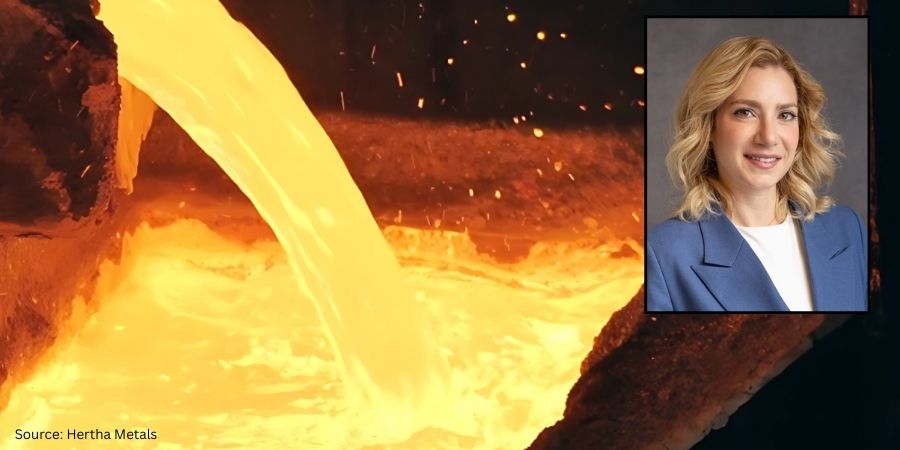
Hertha Metals steel production Source: Hertha Metals
The new technology:
Enables iron and steel production from low-grade ore, fines and waste oxides
Single-step production using abundant natural gas or clean hydrogen
Scalable technology to serve multiple markets
High-performance steel alloys under development
Laureen Meroueh CEO & Founder Hertha Metals Source:Linkedin
“After three short years of heads-down building, Hertha Metals is ready to show the world what we have achieved. After more than 300 years of coal-based primary steelmaking, Hertha Metals is introducing a process that is more energy efficient, more cost competitive, and more flexible with feedstock quality.
“The team at Hertha has been hard at work, developing and scaling our single-step ore-to-steelmaking technology. We have demonstrated our technology with various ore qualities and format (including fines) at a scale of 1 tonne per day of continuous clean steel production. This is the largest novel steelmaking pilot plant demonstration in the US and I am so proud of the speed at which we got here,” said CEO and founder, Laureen Meroueh.
Heat Treat Today original press release, last updated on 09/05/2025 at 5:15am.
Heat Treat Today publishes twelve print magazines annually and included in each is a letter from the publisher, Doug Glenn. This letter is from theJuly 2025 Heat Treat Super Brands print edition.
The Good Book, the Bible, upon which our nation was founded, is chock full of wisdom. Here’s one: A good name is to be more desired than great wealth; favor is better than silver and gold. That’s from Proverbs 22:1, and the first part of that verse hits at the heart of what the Heat Treat Today team is trying to accomplish this month with the inaugural edition of “Heat Treat Super Brands.” We are taking a moment to recognize the brand names that are prevalent in the North American heat treat and thermal processing market — giving a voice to the many companies in this industry who have invested endless hours building and maintaining the good name and good reputation that they’ve so diligently worked to establish.
Building a Good Name
Building a reputable brand is a long, painstaking process that is not easily accomplished but can be undone in seconds. Building and maintaining that good name is a huge investment of both time and money, and companies have a right to insist that their brand names be respected and used correctly.
Our publication tries to do that very thing, but sometimes we have slip ups for which we feel bad and do all we can to correct. I recall an instance years ago when we used the phrase “trident tube” when referring to a radiant tube. Either BJ or Ben Bernard from Surface Combustion called us and very politely reminded us that Trident™ is a trademark of Surface Combustion. We apologized and quickly corrected ourselves. Their defense of their brand name was well founded.
Countless other companies in the North American heat treat and thermal processing market have also invested blood, sweat, and tears establishing reputable brand names, trade names, and patents, all of which deserve protecting.
Spreading the Word
In the Letter from the Publisher of the April 2025 publication, I wrote, “You Can’t Sell If You Don’t Tell.” The point of that column was to remind our industry suppliers that they can have the best product, technology, or service in the industry, but if they don’t make it known, if they don’t “tell,” it will be nearly impossible to sell. The same is true when it comes to brand names. ere are hundreds of brand names in the North American heat treat market, but not all of them are well known. The only way for these names to become well known is for them to be publicized widely and frequently. The goal, of course, is to become a household name like Kleenex or Coke. In an industrial setting like ours, it is essentially impossible to become a household name, but we can shoot to become well known within the industry.
Heat Treat Today has become a relatively well-known brand in the industry. Why is that? The answer is rather straightforward — Heat Treat Today is consistently in front of thousands of in-house heat treat department personnel, as well as in commercial heat treat shops. We’re there every month with a hardcopy print magazine. We’re there every weekday with our Heat Treat Daily e-newsletter. We’re there 24/7, 365 days a year with the industry’s leading heat treating and thermal processing website, as well as industry e-newsletters and our monthly podcast, Heat Treat Radio. We’re not exactly a household name, but thanks to all of you, people have become comfortable with us because we are seen widely and frequently. That’s what it takes to be a super brand, and we’re here to help the suppliers in our industry reach that status.
This edition of Heat Treat Today that you hold in your hands is our attempt to help those industry suppliers build awareness of their brand names. Please take a minute to flip through this edition and read about some of the Super Brands included. If you are a supplier and are not included in this edition, you can be included in next year’s July edition, which we anticipate will have the same Super Brand focus.
Contact Michelle Ritenour (michelle@heattreattoday.com) if you’d like to be included.
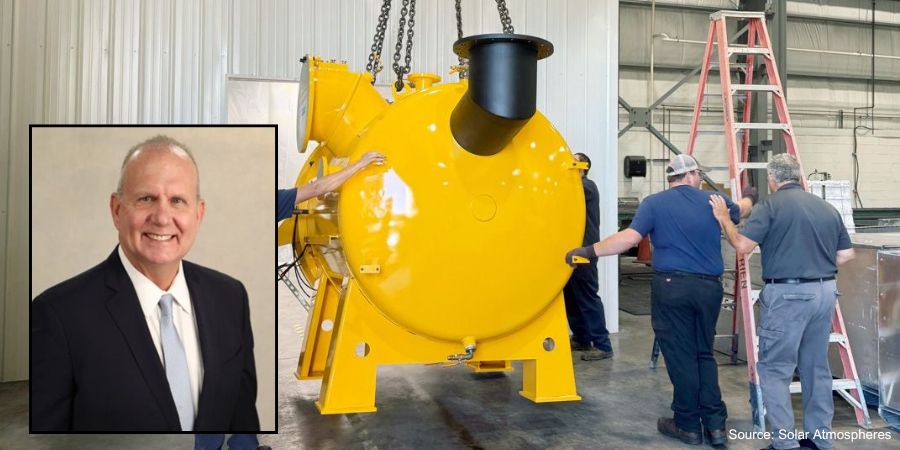
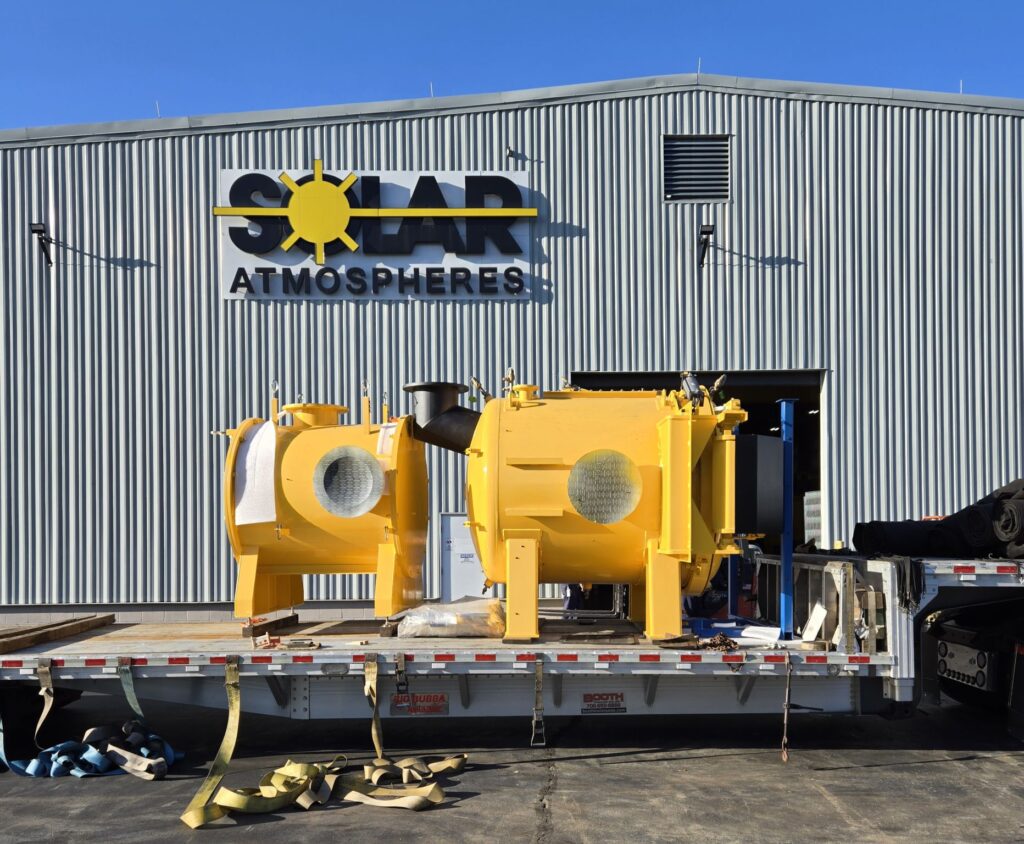
Solar Atmospheres of Western PA is expanding with the addition of a brand-new all-metal hot zone vacuum furnace. The furnace is engineered specifically for the high-vacuum processing of critical medical components.
Solar Atmospheres’ new vacuum furnace Source: Solar AtmospheresSolar Atmospheres’ new vacuum furnace Source: Solar AtmospheresRobert Hill, FASM President Solar Atmospheres of Western PA
“This new furnace is equipped with an all-molybdenum hot zone and a finely polished stainless steel cold wall. Critical vacuum pumping will be conducted on the vacuum chamber only with the integration of two (2) isolation valves. This design has proven to produce bright clean work on the critical medical device materials that we are processing. We now have identical furnaces in our clean room working 24/7,” commented Bob Hill, president of Solar Atmospheres of Western PA.
The furnace is 24” x 24” x 36” deep with an all-metal hot zone.
Solar Atmospheres supported this expansion by doubling the size of their existing medical clean room.
Heat Treat Today original press release, last updated on 09/04/2025 at 5:09am.
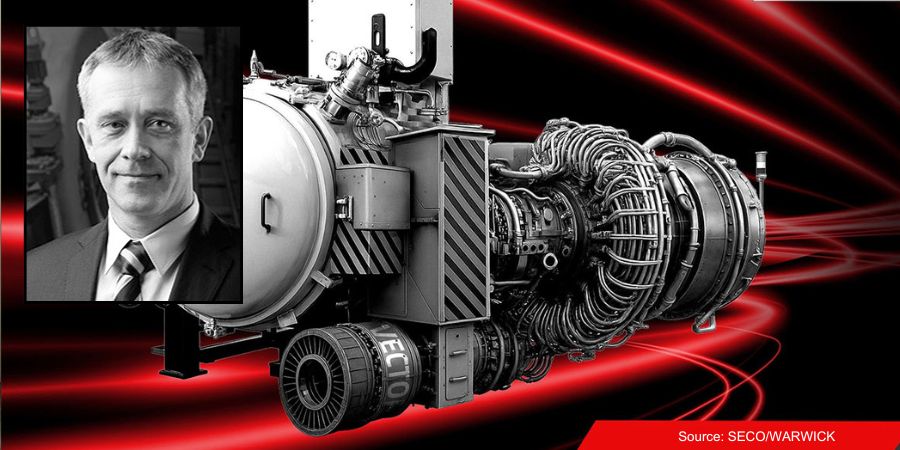
A vacuum furnace was commissioned for the global energy industry. The furnace is equipped with a large working space (900 x 900 x 1200 mm) and a rapid cooling system at pressures up to 6 bar for the production of gas turbine components.
Maciej Korecki Vice President of Vacuum Segment SECO/WARWICK Kamil Siedlecki Sales Manager SECO/WARWICK Source: LinkedIn
“This Partner is responsible for generating about 30% of the world’s electricity today, and their activities play a key role in the energy transition,” said Maciej Korecki, vice president of the Vacuum Segment of the SECO/WARWICK Group, which will provide the furnace.
The furnace is the ninth device delivered to this partner. It provides a high level of vacuum, convective heating up to 850°C, improved efficiency in lower temperature ranges, the capability of using three process gases (argon, nitrogen, hydrogen), precise partial pressure control to minimize alloy losses and ensure process purity, and consistent temperature distribution.
“This furnace is a response to the growing production needs of the client and the requirements related to the processing of a new type of gas turbine component. Our solution will increase process efficiency while maintaining the highest quality and process purity,” says Kamil Siedlecki, sales manager of SECO/WARWICK.
It is predicted that the value of the global gas turbine market for power generation will grow at an average growth rate (CAGR) of 5.7% from 2025–2034. This is driven by the energy transition and demand for efficient, environmentally friendly energy solutions.
Press release is available in its original form here.
This Technical Tuesday installment is part of the Maintenance Message column series. In today’s edition Nate Sroka, quality assurance engineer for Ipsen, provides a complete maintenance guide to rebricking and relining atmospheric furnaces.Keep this one bookmarked for a quick reference to components, the rebricking process, expectations, and project timeline questions!
This informative piece was first released in Heat TreatToday’sAugust 2025 Automotive Heat Treating print edition.
Introduction
The interior brick walls of an atmosphere furnace endure extreme temperatures — sometimes reaching 2200°F — every hour of every day. Over time, the bricks become brittle, crack, and experience thermal expansion, which can open seams in the mortar.
After years of continuous operation, users may notice exterior walls becoming hot enough to melt insulated cables or components attached to the furnace. When bricks start falling out of place or insulation begins to sag, it’s time to shut down the furnace, assess damage, and plan for repairs. Typically, furnaces operating for five to ten years since installation or their last major overhaul require rebricking or relining.
Understanding the Components: Bricks and Boards
Knowing the key components used in the rebricking and relining process prepares you for discussions about repairs.
Insulated Fire Bricks (IFB) come in various temperature ratings. A 2300°F brick is less efficient and durable under extreme heat than a 2600°F brick but is often more cost-effective. High-rated bricks typically line the interior, while lower-rated bricks provide an additional insulation layer.
Insulating boards made from calcium silicate form the thermal barrier between the heating chamber and external components. They can withstand temperatures from 1000°F to 1800°F and are commonly used in lower-temperature furnaces.
Mineral wool is a fibrous insulating material used to fill gaps around furnace entry points and seams. Made from volcanic rock, ceramic, or slag, it allows for expansion and contraction due to temperature changes.
One key thing to know about atmosphere furnaces is that they are almost always “on.” In a vacuum furnace, recipes use electric elements that shut off after every cycle, and quenching often happens within the same chamber. However, in an atmosphere furnace, turning off the burners and then restarting the furnace from room temperature the next day is much less energy efficient than running the burners and holding a consistent temperature, even when the furnace is empty. Parts from an atmosphere furnace are typically quenched in an oil or salt bath, separate from the heating chamber.
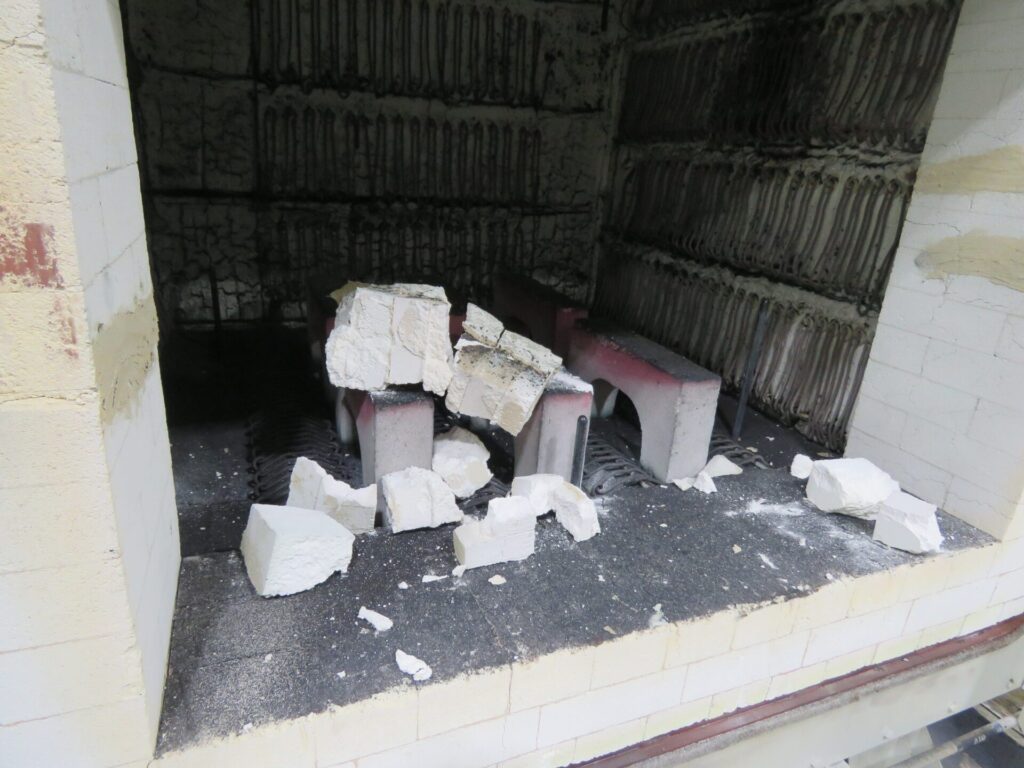
Figure 1. Debris from a damaged atmosphere furnace that collapsed on a hearth Source: Ipsen
Starting the Rebricking Process: What You Need to Know
Prepare for a Quote
First, review the pre-quote checklist to make sure you have the right information to get an accurate quote.
Pre-Quote Checklist: Important information to have on hand when getting a quote for rebricking or relining your atmosphere furnace
Furnace model number and serial number
Heating chamber dimensions (w/d/h)
Archway dimensions from base to top
Door dimensions and condition
Drawings or engineering plans outlining any aftermarket modifications
Typical operating temperatures
Any additional materials installed to prevent heat penetration
Photos from as many angles of the furnace as possible
A list of any consumable or heavy-wear components that also need to be replaced
Build a Timeline
Start collecting quotes at least a year in advance and place a purchase order no less than six months before the planned shutdown.
Consider Scheduling Factors
Many furnace operators are looking to have work like this completed during a summer or winter holiday shutdown period. Advanced planning improves scheduling flexibility.
Site Preparations
Before the service team arrives, ensure the workspace is ready:
Clear space for staging new materials and removing old bricks.
Provide access to a forklift, a durable waste collection container, a dumpster, and other required tools and resources.
Confirm power connections near the site for welding and other power tools.
Review lockout/tagout procedures with maintenance and operations teams.
Determine the required furnace cool-down time before disassembly and plan furnace shutdown accordingly.
Identify and disconnect any electrical, process gas, or water-cooling lines as outlined prior to service.
Rebricking Day: What You Should Expect
During disassembly, consider performing additional maintenance, such as:
Inspecting and rotating or replacing burner tubes
Inspecting and replacing pusher chains and skid hearth section
Checking doors, door hoods, and fan bungs
Conducting leak tests and changing the quench oil
Coordinate these tasks with the service team to avoid disruptions. The rebricking process spans several days, allowing time for concurrent inspections and repairs.
Final Inspection and Testing
Upon project completion:
Figure 2. A newly installed furnace, bricks properly installed, before furnace ignition Source: Ipsen
Inspect the furnace with the installation team to ensure all work aligns with project specifications.
Document any changes as a reference for future maintenance.
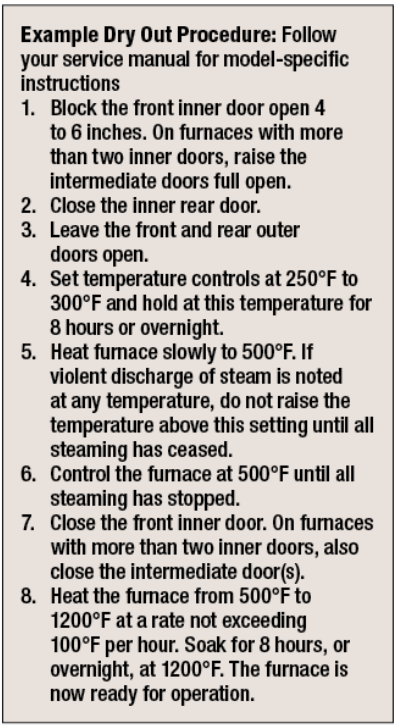
Perform a “dry out” procedure and clean the quench tank before refilling the tank. See “Example Dry Out Procedure” break-out box.
Run the furnace without parts to test for temperature uniformity.
Carburizing furnaces may need extra burn-in time to “season” the bricks:
Fresh bricks absorb free carbon until fully saturated.
When bricks are properly saturated, furnace atmospheres stabilize.
Time of burn-in is dependent on the percentage of carbon-level the system needs to achieve.
Identify potential hot or cold spots that may require further insulation adjustments.
Post-Installation Best Practices
A rebrick or reline of a furnace is a significant investment. To get the most from your furnace, make the time to take a proactive approach:
Establish a daily maintenance inspection for the first week, followed by weekly checks for the first month.
Resume regular maintenance schedules if no issues arise.
Schedule independent inspections with a field service engineer at three, five, seven, and nine years to proactively assess furnace condition and secure preferred maintenance dates.
By following these steps, atmosphere furnace operators can maximize uptime, streamline service quoting, optimize downtime usage, and ensure efficient future rebuilds.
This article was originally published on ipsenusa.com.
About The Author:
Nate Sroka Quality Assurance Engineer Ipsen
Nate Sroka has been with Ipsen since March 2014. He holds a bachelor’s degree in mechanical engineering and a master’s degree in engineering and industrial management from Northern Illinois University. Nate oversees the Quality/Documentation/Warranty (QDW) department, ensuring that Ipsen maintains ISO 9001 and ISO/IEC 17025 standards. He is also responsible for documentation related to installation and operations manuals, regulatory certificates, and managing warranty programs.
For more information: Contact Nate Sroka at nate.sroka@ipsenusa.com.
Heat Treat Today offices will be closed today in honor of Labor Day and will reopen on Tuesday, September 2. We hope you enjoy the long weekend with friends and family!
IperionX Limited will receive $12.5 million from the U.S. Department of Defense (DoD) to accelerate the scale-up of a resilient, low-cost, and fully-integrated U.S. mineral-to-metal titanium supply chain. The project will include scaling up to over 1,000 metric tons per year at the Virgnia Titanium Manufacturing Campus.
The $12.5 million will be applied to purchase orders for long-lead, major capital equipment required for the scale-up. Major incremental capacity categories include titanium deoxygenation, sintering and powder metallurgy consolidation systems; near-net-shape component manufacturing and ancillary infrastructure upgrades.
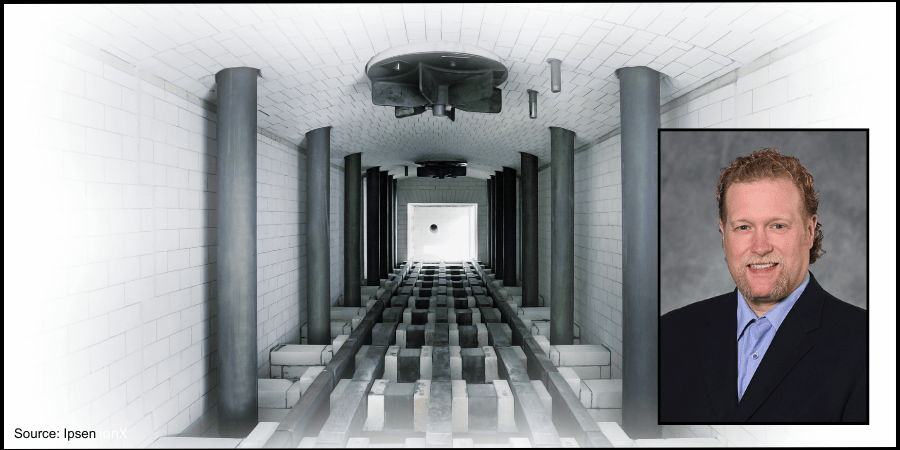
Anastasios (Taso) Arima CEO IperionX Source: IperionX
“This new U.S. Government obligation allows IperionX to move immediately to secure long-lead capital equipment and lock in manufacturing slots with key suppliers. It accelerates our imminent Virginia expansion beyond 1,000 tpa of high-performance titanium manufactured products, and advances a fully integrated, low-cost and traceable American titanium supply chain for defense and commercial customers. This commitment from the DoD is a strong endorsement of our technology, our team, and our mission to reshore a resilient titanium production supply chain in the United States,” said Anastasios (Taso) Arima, IperionXCEO.
In response to the strategic need for increased production capacity of domestic primary titanium metal and manufactured titanium metal components, the project scope under the Industrial Base Analysis and Sustainment (IBAS) program has been revised to prioritize accelerated expansion of IperionX’s titanium metal and manufacturing production capacity at IperionX’s Virginia Titanium Manufacturing Campus.
This project is part of a previously announced $47.1 million award to strengthen the U.S. Defense Industrial Base by accelerating the scale-up of a resilient, low-cost, and fully-integrated U.S. mineral-to-metal titanium supply chain.
Press release is available in its original form here.
Heat Treat Today offices will be closed Monday, September 1 in honor of Labor Day and will reopen on Tuesday, September 2. We hope you enjoy the long weekend with friends and family!
Heat treatment is a hands-on science and it can be easy to forget about continuing education. In today’s edition of Combustion Corner, Jim Roberts, president of U.S. Ignition, encourages readers to continue cultivating their own heat treat learning and offers specific and practical educational resources to do just that.
This informative piece was first released in Heat TreatToday’sJune 2025 Buyers Guide print edition.
So, a furnace guy walks into a heat treating facility and says, “What’s that?”
The Flame and Man
Since the invention of fire, we as upright, walking, opposing-thumb-equipped critters have been learning to control it. We have learned at the elemental level that we can change the properties of just about anything on the planet simply by exposing that item or material to the flames. Certainly, we hold fire as one of our most fascinating benefits of our existence.
Yet, in the grand scheme of things, we are just now really learning to control at levels that our Neanderthal cousins would never have conceived, and they didn’t! Conceive the possibilities, that is. I mean, for the first 400,000 years of our human existence, (that’s a mindblower, isn’t it?), fire had four basic purposes: warmth, light to see in the dark, protection from predators/enemies, and to cook our food. Later, we discovered that by heating up the tip of certain sticks, you could make the stick useful over a longer time. It didn’t wear out as fast. And from there we figured out ways to change other materials at our behest by using the flame. Weapons and tools followed.
In the bigger picture, we only have figured out the really cool uses in the last 5,000 years — and the really, really cool stuff in the last 300 years. So, the learning curve for us has been relatively late when it comes to the heat and the flame and the ability to understand it — to really control it.
Furthering the Science of Heat
How did we get to this stage of significant control over temperatures and systems that would melt a Cro-Magnon’s noodle right there in his big ol’ skull? We used our ever-developing brains. We used intelligence to advance the art of using the flame. Others before us thought their way into our present-day future. Shouldn’t we keep the ball rolling? Isn’t this ever-evolving commitment to responsible use of the flame what we need to do? We accept the gift of those before us and strive to improve on it for the upcoming iterations of humankind. Idealistic? I think not.
The premise of temperature is basically fixed. We can put it in a furnace, we can put it in a vacuum, we can melt the very rocks our planet is made from. So, let’s use the very latest available knowledge to further the science of heat. Let’s improve the situation, both at work and personally, by using our brains and by learning about what is going on with the furnaces, the parts, the fuels, and all the methods of heating. Let’s keep learning about the latest technologies. Let’s actually control this wondrous element.
To do that, we must embrace the knowledge, we have to know what we are looking at. We need to know the history and have a vision for the future. We need to teach and be taught.
Learning the Industry
If you or your reports need to get up to speed with our industry, indeed our very science — GO TO SCHOOL! The fact you are even reading this publication shows that you are open to learning. Let’s ace the test!
Heat Treat Today runs a drink-from-the-firehose learning experience calledHeat Treat Boot Camp. You can learn the latest and greatest technologies and new technologies on the horizon in heat treating. Send yourself, send your people.
The Metal Treating Institute (MTI) runs an online certification school that teaches the ins and outs of the heat treating industry. The Industrial Heating Equipment Association (IHEA) runs an annual Combustion Seminar. Almost all the major furnace and equipment suppliers offer seminars on their specialty niche.
SECO/WARWICK produces a Global Training Seminar on continuous improvement and heat treating
Can-Eng offers analysis of specific inquiries
Ajax Tocco will come to your facility to conduct the latest schooling on your equipment
All you must do is decide that you are going to continue to learn more. How can you not with these kinds of services around you?
Don’t forget Safety. National Fire Protection Agency (NFPA) seminars are available from NFPA themselves. Industry experts who have certified trainers, like Rockford Combustion, also offer multi-day seminars on equipment safety.
I can attest to the effectiveness of these kinds of learning commitments. I have been both a student and a teacher at some of the aforementioned seminars. The scope of learning can be broad or focused. It’s up to us to keep mentally expanding, so that the lessons learned don’t get lost, and the future technologies get a fair review.
I have been watching with interest how over the last 25 or so years precise control over combustion has been evolving. The major controls and process monitoring companies have been striving to gain precise control and safety on furnace equipment for years. I might add, they have been successful in varying degrees, and safety and maintenance have improved greatly.
I just spoke recently with a company in Erie, Pennsylvania. They have developed a program that monitors each individual burner. Not only does it tell if the burner is running, but if there has been a component failure, if the burner is out of tune, it can self-correct, and if there is a failure, they shut it off. Oh, and they do that for you, from THEIR office. The technology just grows and grows, doesn’t it?
So, I know some of you were wondering where I was going with the Caveman intro, and some of you probably would have preferred that I kept going up to the point where we were cooking mammoth steaks on sizzling rocks with our Cro-Magnon buddy. But we are better than him, and we need to keep proving that. Don’t you think?
Besides, this is the final month before school is out for the summer. Let’s give education a nod here.
I am sorry if I did not mention your company, no slight intended. If so, contact your customer base to alert them to any learning experiences that may be available.
Keep learning. Until next time…
About the Author
Jim Roberts President US Ignition
For More Information: Contact Jim Roberts at jim@usignition.com.
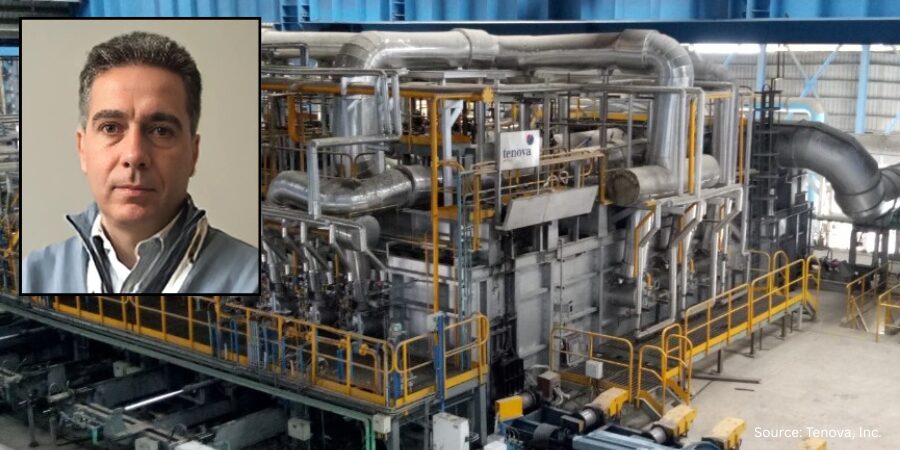
Vinton Steel, headquartered in Vinton, Texas, has commissioned a new walking hearth reheating furnace. The furnace will be engineered for high-carbon steel billets used to manufacture large-diameter grinding media, a high demand product for the mining sector.
This addition is intended to operate alongside a new initiative to increase Vinton Steel’s rebar production capacity up to 400,000 tons per year. The initiative is called Green CityMill™ Flex, which represents an efficient and sustainable long products production platform.
Francesco Memoli
President & CEO
Tenova Inc.
“This project is part of the strategic expansion of Kyoei Steel in the vital North American market and a clear demonstration of our long-term commitment to the State of Texas,” said Masahiro Kitada, board director & executive managing officer for Kyoei Steel Group and chairman of Vinton Steel. “With this additional project, we contribute even more to the continued growth of the El Paso region.”
Francesco Memoli, president and CEO of Tenova Inc., added: “We are honored that Vinton Steel continues to place its trust in Tenova’s technologies. This new reheating furnace will be the most advanced of its kind, equipped with sophisticated control systems and our proprietary low-NOx burners.”
The reheating furnace is scheduled for commissioning in parallel with the Green CityMill™ Flex startup in the first half of 2027.
Press release is available in its original form here.