Leone

Coronavirus Impact on Auto, Aerospace Industries Uncertain

The Hubei province of China has now been shut down for three weeks due to the Coronavirus outbreak, and industries around the world–including automotive and aerospace–face continued uncertainty about the future while an industrial powerhouse roughly the size of Sweden sits quiet. Despite more than 900 lives having been claimed by the virus in China thus far, some companies, including Tesla and Airbus, have cautiously reopened and gone back to work with the government’s blessing while others remain shut.

Airbus’ Chinese division has been given permission by Beijing to “gradually increase production, whilst implementing all required health and safety measures for Airbus employees, which remains the top priority.” Their final assembly line in Tianjin has restarted operations. In response to the Chinese government’s statement, the company stated, “[We are] constantly evaluating the situation and monitoring any potential knock-on effects to production and deliveries and will try to mitigate via alternative plans where necessary.”

Meanwhile, the automotive industry continues to be plagued by shutdowns that are starting to impact global manufacturing. Hyundai Motor, General Motors, Volkswagen, Renault, and Toyota Motor have extended their suspension of operations. Factories in the Hubei province expected to open on February 13 have had that deadline extended, and some provinces and districts have instructed companies not to reopen until March 1. The province of Hubei accounts for 9% of all Chinese automotive production.

Razat Gaurav, CEO
Llamasoft

The impact of the shutdown is expected to extend beyond auto companies to manufacturers of auto parts as well. According to Razat Gaurav, CEO of Llamasoft, an AI-driven software development company that works with several automakers including Ford and General Motors, “Most OEMs single source components for new vehicles and China is a large supplier of those. Thus, there is exposed risk. The automotive industry has been going through a ‘regionalization’ trend for the last 5 to 8 years . . . Even so, there is a ripple effect in other parts of the world. For example, Hyundai is one of the first automotive companies announcing closures outside of China, at its South Korean factories; France’s Renault also announced a shutdown in its South Korea facilities. Fiat Chrysler warned it may need to halt production in one of its European plants due to a shortage of parts. While we have talked a lot about the manufacturers themselves, the impact on the supplier base is significant as well.”

Photo Credit: Business Insider/Getty Images

Coronavirus Impact on Auto, Aerospace Industries Uncertain Read More »

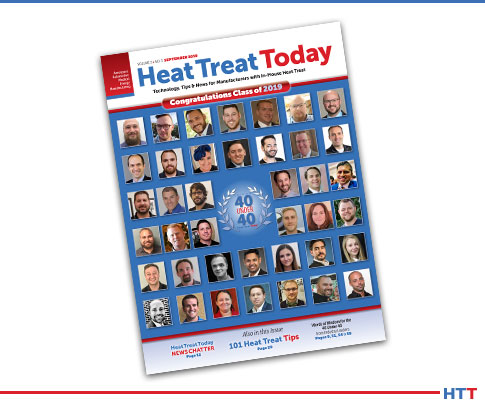
The Class of 2019 40 Under 40: Ben Gasbarre & Brinson White

Heat Treat Today is privileged to oversee the 40 Under 40 recognition awards highlighting a group of young, up-and-coming talent in the North American heat treat industry every year. This year’s Class of 2019 is no disappointment–a group of industry elite, significant contributors to the heat treat market.

Every couple of weeks we highlight two of the current class of recipients. This week we introduce Ben Gasbarre of Gasbarre Thermal Processing Systems and Brinson White of Pelican Wire.


Name: Ben Gasbarre
Company: Gasbarre Thermal Processing Systems
Position: President

Ben has worked his way up through his family’s company which was founded by his grandfather and father. He earned a Bachelor of Science in Operational Management and Supervision from Penn State University and is currently working toward an MBA from the University of Michigan which he expects to finish by the end of this year. Ben is currently on the Industrial Heating Executive Committee and is a graduate of MTI’s YES Management Training Program. His roles at the company included Manufacturing Manager at Sinterite and C. I. Hayes. Soon after the acquisition of J. L. Becker, he moved to Plymouth, Michigan, where he was initially Manufacturing Manager, promoted to General Manager, and is currently the President of what is now Industrial Furnace Systems, a Division of Gasbarre Thermal Processing Systems, which continues to service and support J. L. Becker brand equipment. Ben has been instrumental in hiring personnel, managing the company (sales, engineering, manufacturing and service), improving project management, and enabling product development including IFS’s new vacuum purge nitriding furnace.

Nominated by: Gasbarre Thermal Processing Systems


Name: Brinson White
Company: Pelican Wire
Position: Director of Engineering

Brinson is responsible for the custom design and development and installation of custom manufacturing equipment, processes, and software which benefit the entire heat treat industry through improved products and performance. Brinson’s expertise in developing the tools necessary for these fine-gauge, high-temp solutions has served over 250 customers and end-users with improved products and technical expertise.

Nominated by: Pelican Wire


Read more about the feature at Heat Treat Today’s 40 Under 40 resource page and find out more about each of this year’s winners by clicking on their image. To nominate someone for the Class of 2020 40 Under 40, please click here.

The Class of 2019 40 Under 40: Ben Gasbarre & Brinson White Read More »

OSU Scientists Develop Shape Shifting Material for Medical Applications

A small magnetic rose sitting between two copper coils in an Ohio State laboratory gives a demonstration of a new shape-shifting magnetic material developed by Ohio State researchers that will be used in biomedical devices, antennas, artificial muscles and robotics. The material can squeeze and grab objects and change its shape and temperature when electromagnetic fields are applied, according to the research paper published in December in the journal Advanced Materials.

Ruike Zhao, an author of the paper and assistant professor in the mechanical and aerospace engineering department, said the researchers embedded two types of magnetic particles into a soft material called a shape-memory polymer. At room temperature, the soft material is rigid, like acrylic. But when it comes within a magnetic field, the iron oxide particles heat up, softening the material so it’s like rubber, through a process called induction heating — the same technology used in some home cooktops.

Riuke Zhao, Assistant Professor in Dept. of Mechanical and Aerospace Engineering, The Ohio State University

Previous generations of soft materials needed a constant supply of energy, Zhao said.

“Once we deformed the [earlier] material, if we wanted to lock its deformed shape, we have to keep the external stimulation, which is not energy efficient.” She added that Ohio State’s new material is more efficient and can lift an object 1,000 times its own weight.

Liang Guo, Assistant Professor in the Electrical and Computer Engineering Department, The Ohio State University

According to Liang Guo, an assistant professor in the electrical and computer engineering department, soft materials have existed for several decades. However, this new type of soft material with embedded magnetic particles is the first to be controlled wirelessly by magnetic fields. Guo stated that soft devices cause less stress on the surrounding skin and muscle tissues than similar mechanical devices. They also require less energy than similar mechanical devices.

Guo and Zhao previously worked together to create an insulin pump using soft materials that is one-third the size of current battery-powered pumps. The Ohio State team worked with researchers at the Georgia Institute of Technology to develop the polymer material.

OSU Scientists Develop Shape Shifting Material for Medical Applications Read More »

Efficient Sample Preparation of Titanium Grade 2

Source: Buehler

Titanium is a crucial component in aerospace and defense applications as well as in the biomedical field. The high ratio of strength to density of titanium and its alloys mean that it is as strong as some steels, but with a fraction of the density. However, titanium is more difficult than steel to prepare as a metallographic sample due to its ductile nature that renders it easily susceptible to damage.

In this HTT Best of the Web Technical Tuesday feature, Buehler’s Tech Notes explores efficient preparation of titanium grade 2 samples.

An excerpt: “Titanium and its alloys’ high strength to density ratio and good corrosion resistance make them invaluable in aerospace, defense, and marine applications. Good biocompatibility also makes it quite useful in biomedical applications. It is as strong as some steels but a fraction of steel’s density. When preparing metallographic samples, one quickly learns, titanium is more difficult to prepare than steel as it ductile and readily damaged, but also has a relatively slow material removal or recovery rate, which poses a challenge to sample preparation.”

Buehler takes readers through the methods of sectioning, mounting, grinding and polishing, and etching when preparing grade 2 titanium for a sample.

Read More: Efficient Sample Preparation of Titanium Grade 2

Efficient Sample Preparation of Titanium Grade 2 Read More »

Heat Treat Tips: Shop Safety

One of the great benefits of a community of heat treaters is the opportunity to challenge old habits and look at new ways of doing things. Heat Treat Today’s 101 Heat Treat Tips is another opportunity to learn the tips, tricks, and hacks shared by some of the industry’s foremost experts.

For Heat Treat Today’s latest round of 101 Heat Treat Tipsclick here for the digital edition of the 2019 Heat Treat Today fall issue (also featuring the popular 40 Under 40).

Today’s tips come to us from Safety Consultant Rick Kaletsky, covering Shop Safety. These include advice on accurately labeling containers to match what is listed on safety data sheets, equipping eye fountains and deluge showers with audio and visual alarms, and updating missing or damaged bezels on gauges.

If you have a heat treat-related tip that would benefit your industry colleagues, you can submit your tip(s) to anastasia@heattreattoday.com  or editor@heattreattoday.com.


Heat Treat Tip #3

Unclear labeling of chemical materials creates a hazardous situation.

Container Clarity Counts!

Assure that container label wording (specifically for identifying chemical contents) matches the corresponding safety data sheets (SDS). Obvious? I have seen situations where the label wording was legible and accurate and there was a matching safety data sheet for the contents, but there was still a problem. The SDS could not be readily located, as it was filed under a chemical synonym, or it was filed under a chemical name, whereas the container displayed a brand name. A few companies label each container with (for instance) a bold number that is set within a large, colored dot. The number refers to the exact corresponding SDS.


Heat Treat Tip #60

Emergency eye fountains are critical, but human assistance goes far.

Alarm Your Eye Fountains & Deluge Showers

For emergency eye fountains and deluge showers, I recommend that each plumbed unit be equipped with an audio and visual alarm on a spring-loaded bypass. The purpose of the alarm is to alert others of the emergency. It is important that employees promptly respond to assist the employee who has been sprayed, splashed, or otherwise contacted by the dangerous substances. The bypass allows employees to easily test the units without setting off the alarm. If there is no bypass, employees might be reluctant to conduct the test, feeling it takes too much effort to alert all relevant persons that there is a test. As a result, an inadequacy of the flushing system could go undetected. With the bypass on a spring-loaded system, the person who conducts the test cannot fail to reset the alarm; it is reset automatically.


Heat Treat Tip #81

Gauge Those Gauges

It is quite common, in my experience during inspections, to find gauges that are missing bezels or have severely broken bezels. This can be a hazard if the stylus or general mechanism is damaged. I have found stuck styluses. A false reading may be given. Such a reading may result (for example) in an employee boosting air pressure, or the level of liquid in a tank or a temperature, far beyond the safe limit. I have also noted gauges where the stylus had been broken-off, and an employee merely made an assumption of what the proper “numbers” were. When conducting preventive maintenance tasks, check those gauges and replace missing or damaged bezels.


Heat Treat Tips: Shop Safety Read More »

Boeing and NASA Glenn Develop Airplane Winglets from Shape Memory Alloys

NASA Glenn Research Laboratory in Cleveland, Ohio, has partnered with Boeing to test how shape-memory alloys can be used in deployable vortex generators (VGs), the tiny fins on airplane wings that help control airflow during flight. Currently most VGs on airplanes are static. They are fixed devices always present to improve performance during takeoff, landing, and irregular conditions.

Materials Research Engineer and ASM International’s SMST Society President Dr. Othmane Benafan is part of the team at Glenn developing the shape-memory alloy parts. The alloy pieces are small metal rods that are inserted along the hinge line of a VG where it connects to the aircraft wing. The shape-memory alloy twists as it cools off, which pulls the fin down to lie flat against the wing. Then as the aircraft moves into warmer conditions, the alloy retracts to its original shape, lifting the fin into an upright position.

Dr. Othmane Benafan,
Materials Research Engineer, Glenn Research Team

“There are no heaters, no coolers,” says Dr. Benafan. “The alloys are tuned exactly to environmental temperatures. They sense, and then they do their thing.”

Innovations with shape-memory alloys allow development of VGs that move when they sense a change in the environment, which will make future airplanes capable of adjusting in response to changes in temperature, altitude, and airspeed, just like birds.

Photo Credit for Dr. Benafan’s picture: the Moroccan Times

Boeing and NASA Glenn Develop Airplane Winglets from Shape Memory Alloys Read More »

Airbus Introduces a Whale of a Transport Aircraft

The Airbus BelugaXL transport aircraft has entered swimmingly into service. The manufacturer noted the new jet is the first of six planned BelugaXL aircraft providing 30% more transport capacity. This whale-like transport is 63 meters long and 8 meters wide and claims to have the largest cargo bay cross-section of any existing cargo aircraft in the world.

The new aircraft has a maximum payload of 51 metric tons, and a range of 4,000 km (2200 nautical miles) and made its first flight in mid-January. It is based on an A330-200 freighter and is powered by two Rolls-Royce Trent 700 engines. This internal aircraft program was awarded Type Certification by the European Aviation Safety Agency (EASA) in November 2019, following an intensive flight-test campaign.

Airbus plans to introduce five additional BelugaXL aircraft between 2020 and 2023.

Airbus Introduces a Whale of a Transport Aircraft Read More »

Lockheed Martin Agrees to Provide NASA Subsystems to Produce Orion Spacecraft

An aerospace company has made a contract with Lockheed Martin to provide critical components of NASA’s spacecraft. Collins Aerospace Systems, a unit of United Technologies Corp., has obtained a contract with Lockheed Martin to provide critical subsystems to produce NASA’s Orion spacecraft fleet for Artemis missions III through VIII. The systems Collins Aerospace is providing will play an important role in enabling NASA’s goal of boots on the moon by 2024 and establish a sustained presence on and around the moon to prepare for missions to Mars.

Kevin Raftery, VP and general manager of ISR and Space Solutions, Collins Aerospace.

“We’ve been providing life-sustaining solutions for space for 50 years, and we’re proud to be working with Lockheed Martin and NASA to enable decades of future exploration to the moon, Mars, and beyond,” said Kevin Raftery, vice president and general manager, ISR and Space Solutions for Collins Aerospace.

Work for the Orion systems will be performed at Collins Aerospace facilities in Connecticut, Texas, Illinois, and California.

Photo Credit: Lockheed Martin

Lockheed Martin Agrees to Provide NASA Subsystems to Produce Orion Spacecraft Read More »

Hauck Heat Treatment Receives High Vacuum Furnace from Parent Company of North American Furnace Manufacturer

A Hauck HT plant located in the Netherlands recently received a unique high vacuum furnace. The all-metal high vacuum furnace from SECO/WARWICK with the working chamber size of 47.2″ x 47.2″ x 78.7″ was delivered to Hauck’s newly expanded plant in Eindhoven. At the same time, it is the largest furnace of that type currently in operation in that region.

According to Marcus Wendel, Hauck Heat Treatment Executive Director, “The all-metal vacuum furnace with diffusion pump was designed to achieve high vacuum conditions and ensure the highest possible purity of the heat treated parts. Accordingly, we had some special requirements regarding used components and solutions. All have been implemented by SECO/WARWICK.”

Sławomir Woźniak CEO SECO/WARWICK

Sławomir Woźniak, SECO/WARWICK Group CEO, also commented, “From the very beginning, our company philosophy has been based on meeting the highest expectations of product and technology development for our customers, including first class organizations such as Hauck Heat Treatment Group. This partnership proves that knowledge and experience are not just empty marketing slogans, but valuable features in business.”

This was the third furnace delivered there, and the two companies are discussing next steps together.

Hauck Heat Treatment Receives High Vacuum Furnace from Parent Company of North American Furnace Manufacturer Read More »

Supplier to Fiat, Scania Purchases Nitriding Furnace for European Gas Spring Market

A Polish leader in automobile parts manufacturing recently completed the installation of a nitriding system at the manufacturing facility in its namesake city in southeastern Poland. FA Krosno is one of the largest players in the European gas springs market, supplying manufacturers of commercial vehicles and agricultural equipment such as Fiat SpA, Scania AB, MAN SE, and AGCO.

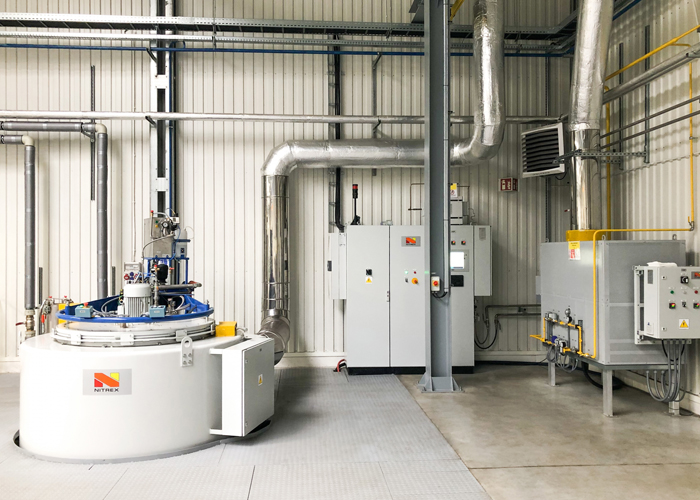
FA Krosno’s new Nitrex nitriding system

Nitrex Metal completed the installation of the nitriding system. Marcin Stoklosa, Special Projects Manager of Nitrex Metal, stated “Where collaborating suppliers are concerned, FA Krosno places strict technical, quality, process, and environmental demands on suppliers. We are extremely proud to count ourselves among the company’s preferred suppliers. Nitrex nitriding technologies were recognized as the best performing and best suited to the application’s requirements. Results from various metallurgical and mechanical tests conducted on the nitrided piston rods confirmed that the desired thickness of the white layer, the oxide thickness of the white layer, corrosion resistance, as well as the appropriate roughness were consistently obtained after Nitreg® nitriding and was maintained even after subsequent finishing operations.”

Over the last several years, FA Krosno and Nitrex have collaborated in an attempt to improve the durability of piston rods in gas spring assemblies of passenger vehicles. Production with the new system started in December 2019.

Photo Credits: Nitrex


This photo of a large size gas nitriding/nitrocarburizing furnace from Nitrex was not included in the original realease of this purchase by by FA Krosno.


Supplier to Fiat, Scania Purchases Nitriding Furnace for European Gas Spring Market Read More »

Skip to content