

Manufacturing Heat Treat News

Gyro Stabilizer Finished with Heat Treating at Texas Forge

Seakeeper Gyro Stabilizer

A closed die forging company, headquartered in Ellwood City, Pennsylvania, recently launched a new marine product line for a gyro stabilizer designed to improve the boating experience by eliminating boat roll, the rocking motion that causes seasickness, fatigue, and anxiety.

The Ellwood Closed Die Group introduced the line for the gyro stabilizer developed by Maryland-based Seakeeper, which also includes several finish-machined flywheels that are assembled into the gyro stabilizers. From start to finish, Ellwood Texas Forge Navasota (ETFN), located in southeast Texas near its sister company, Ellwood Texas Forge (Houston), utilizes the entire Ellwood Group supply chain to manufacture the flywheels. Raw material melted at Ellwood Quality Steel (EQS) and procured from Ellwood City Forge (ECF) is heated and forged on various pieces of equipment within the ETFN facility to produce the near net shaped forgings. After heat treatment and processing, the forging is then rough machined, non-destructively tested for part quality and finish machined to extremely tight tolerances.

Both Texas-based forge facilities provide in-house heat treatment, along with die sinking, cutting, testing and machining capabilities to serve the aerospace, construction, defense, general industrial, marine, mining, oil & gas, and power generation markets.

Seakeeper is based in California, Maryland, with locations in Europe and Asia.

Photo caption: “How It Works: Inside a vacuum encapsulation, a flywheel spins at speeds of up to 9,700 rpm. When the boat rolls, the gyro tilts fore and aft (processes), producing a powerful gyroscopic torque to port and starboard that counteracts the boat roll.”

Gyro Stabilizer Finished with Heat Treating at Texas Forge Read More »

The Pros and Cons of Gas and Ion (Plasma) Nitriding


Source: AHTcorp.com


The compound zone acts as a ceramic skin protecting the metal underneath from corrosion. (Photo credit: Advanced Heat Treat Corp)

Engineers considering the advantages and disadvantages of surface treatments typically have a usable lifespan, surface hardness, and fatigue strength in mind. As a process, both gas and ion (plasma) nitriding avoid the issues involved with coatings and achieve similar metallurgical properties, and the compound zone increases corrosion resistance. But what are other areas in which the two processes can be compared, and what are their differences? It’s good to know, particularly since the latter could significantly make a direct impact on the end product.

Jacob McCann, a process metallurgist with AHT Corp., provides a specific list of pros and cons of gas nitriding and ion (plasma) nitriding in our Technical Tuesday feature for today.


Read more: “Gas and Ion (Plasma) Nitriding: What’s the Difference?”

Photo credit: Advanced Heat Treat Corp


The Pros and Cons of Gas and Ion (Plasma) Nitriding Read More »

PA Heat Treater Expands Production Capability with UBQ, UBT Furnaces

A precision parts heat treating company based in western Pennsylvania recently invested in a universal batch quench (UBQ) integral quench furnace and two 1400°F gas fired UBT temper furnaces for their headquarters facility.

Peters’ Heat Treating, Inc., located in Meadville, Pennsylvania, announced that the new furnace equipment, purchased from industrial furnace manufacturer AFC-Holcroft, will be integrated into an existing complete UBQ furnace line purchased previously from the Michigan-based Aichelin Group company. This equipment acquisition increases the gross load capacity of the existing line by an additional 3,500 pounds and will expand the company’s ability to service the aerospace, automotive, medical and energy sectors. Peters’ Heat Treating has also invested in a new 1400°F gas fired UBT temper furnace for one of their three locations in the tristate region, in McKean, Pennsylvania.

Historically known for their specialization in vacuum heat treating, the company has made significant investments in furnace technology to expand their production capability and gain entry into new markets. This latest UBQ furnace will interface with existing tempering furnaces, spray-dunk washer, automated transfer car and an EZ™ Series endothermic gas generator and other companion equipment. With the AFC-Holcroft equipment expansion, Peters’ has dramatically increased their capacity for oil hardening and carburizing. Processing capabilities include vacuum processing, neutral hardening, carburizing, gas nitriding, cryogenics, annealing, stress relieving, black oxide coating, induction processing, sandblasting, integrated straightening, and metallurgical testing.


PA Heat Treater Expands Production Capability with UBQ, UBT Furnaces Read More »

World’s First Carbon-free Aluminum Smelting Process Developed in Joint Venture

An Australian-British metals and mining corporation based in London in conjunction with a Pittsburgh-based aluminum producer recently announced an innovative process to make aluminum that produces oxygen and eliminates all direct greenhouse gas emissions from the traditional smelting process.

The new venture between Rio Tinto and Alcoa Corporation, known as Elysis, to develop the process and license the technology so that it can be used to retrofit existing smelters or build new facilities. Elysis will be headquartered in Montreal with a research facility in Quebec’s Saguenay–Lac-Saint-Jean region.

Rio Tinto chief executive J-S Jacques

When fully developed and implemented, it will eliminate direct greenhouse gas emissions from the smelting process and strengthen the closely integrated Canada-United States aluminum and manufacturing industry. The patent-protected technology, developed by Alcoa, is currently producing metal at the Alcoa Technical Center, near Pittsburgh, Pennsylvania, where the process has been operating at different scales since 2009.

“This is a revolutionary smelting process that can deliver a significant reduction in carbon emissions. It builds on the key role aluminum has to play in driving human progress, by making products infinitely recyclable, stronger, lighter and more fuel efficient,” said Rio Tinto chief executive J-S Jacques.

Vincent Christ, who brings more than 30 years’ experience at Rio Tinto Aluminium, has been named Chief Executive Officer of Elysis.


Photo credit and caption: Rio Tinto; employee at the Saguenay–Lac-Saint-Jean works

World’s First Carbon-free Aluminum Smelting Process Developed in Joint Venture Read More »

A Heat Treater’s Primer on Getter Materials


Source: VAC AERO International


A common dilemma for operators of vacuum systems is to protect the integrity and maintain the life expectancy of components when the presence of unwanted gaseous contaminates threatens to destroy the sensitive materials in the processing environment. Getter materials are the MVPs that step up to the plate to protect work in a low-pressure vacuum environment.

Table 1 [1] Getter Capacity of Common Materials
The folks at VAC AERO International have provided a primer on getter materials which answers the heat treater’s questions, such as:

  • What is a getter?
  • What are the properties of getter materials?
  • What materials are best as getters for most heat-treating applications? What about for more sophisticated applications?
  • What are non-evaporative getters, and what role do they play?

“For heat treaters, getters are often considered a last resort to help keep parts ‘bright and clean’. In point of fact, they play an important role in successful vacuum processing of many highly sophisticated products and materials. As a result, we need to do a better job of understanding their role; how and where they can help.”


Photo Credit and caption: Titanium Discs used as a Getter Material in Brazing of Oxidation Sensitive Components – (Photograph Courtesy of California Brazing, Newark, CA)

A Heat Treater’s Primer on Getter Materials Read More »

Heat Treatment Included in JV to Inaugurate Swiss Precision & Assembly Plant in India


Source: Udaipurkiran


Our “Best of the Web” feature today brings you a story about an initiative in India to inaugurate a “Swiss Precision & Assembly” unit in Jaipur, Rajasthan, in a joint venture with a Switzerland-based company.

Swiss scientist Dr. Rajendra Joshi and his wife Mrs. Ursula Joshi (RUJ Group) and SRM Technologies AG will join forces under the name RUJ & SRM Mechanics (or RS India) to provide solutions for precision metal parts processed with metal anodizing, painting, and heat treatment to the a wide range of manufacturing sectors such as medical, automotive, and aerospace, as well as polymechanical, machine automation, and laboratory technology.


Read more: “India’s RUJ Group Inaugurates Swiss Precision & Assembly Plant in JV with Switzerland-based SRM Technologies AG”

Heat Treatment Included in JV to Inaugurate Swiss Precision & Assembly Plant in India Read More »

Metals Manufacturer Marks Growth with Second Micro Mill in Oklahoma

A steel and metals manufacturer based in Irving, Texas, which processes materials and services through a network of facilities that includes electric arc furnace (EAF) mini-mills and micro mills, recently dedicated a new micro mill in Durant, Oklahoma.

Barbara Smith, chairman, president, and CEO of CMC.

This is Commercial Metal Company’s second micro mill in Durant, supporting CMC’s processing and supply of steel and metals to a wide range of industries, including energy, construction, refractory, and transportation. The new technologically advanced facility will use a continuous manufacturing process which melts, casts, and rolls steel from a single uninterrupted strand, resulting in higher yields and lower energy consumption.

“We look forward to providing our customers with high-quality product combined with CMC’s outstanding service,” said Barbara Smith, chairman, president, and CEO of CMC.


Metals Manufacturer Marks Growth with Second Micro Mill in Oklahoma Read More »

Buffalo-based Heat Treatment Provider Building Multiple Carbon Fiber Production Lines

Dr. Bill Stry, senior process technology engineer at Harper International

A global leader in complete thermal processing solutions recently extended the carbon fiber production capabilities of several cutting-edge material industries across multiple sectors by building and installing oxidations ovens.

Harper International, based in Buffalo, New York, offers thermal and velocity uniformity through the design and manufacture of carbonization technology and equipment for carbon fiber production. The company’s 3-meter wide, center-to-end parallel flow production oxidation ovens include integrated tow guidance and energy recovery, integrated roll stands with precision tow tracking, and low energy consumption per kilo of fiber.

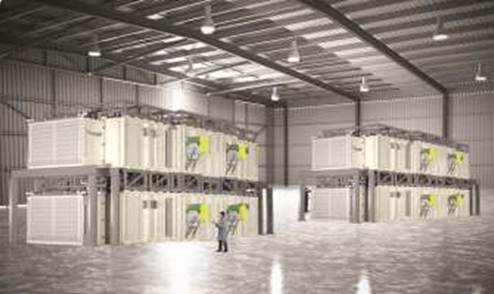
Artist drawing of the thermal processing line of oxidation ovens being built by Harper International

“Our technology advancements provide rapid startup and stable oxidation, improved air velocity and thermal uniformity at a variety of flow rates, and optimal control of the reaction ultimately enhancing fiber quality,” said Dr. Bill Stry, senior process technology engineer at Harper International.


Buffalo-based Heat Treatment Provider Building Multiple Carbon Fiber Production Lines Read More »

Sintering Si3N4 Powder-to-Part Process Launched


Source: Superior Technical Ceramics


A Vermont-based ceramics solutions specialist and manufacturer recently announced in a white paper the introduction of a new direct-pressure, sintered silicon nitride powder-to-part component manufacturing process to be applied in a wide variety of industries.

Superior Technical Ceramics released the results of the heat treating process that provides a high-performance, cost-effective material solution as an alternative to both reaction-bonded silicon nitride and hot-pressed silicon nitride, and which the company expects to meet the demand from manufacturers looking for a material with a high strength-to-weight ratio, which compares favorably even with metallic nickel-based “superalloys”.

An excerpt: 

“Silicon nitride (Si3N4) is a strong, lightweight, and commercially important non-oxide ceramic material. . . . Raw silicon nitride powder has a gray color and is typically fabricated by exposing pure metallic silicon powder to high-temperature nitrogen gas under pressure, although naturally occurring deposits have also been found as small inclusions in certain meteorites. Fully sintered (dense) silicon nitride has a dark gray to black coloration and component surfaces can be ground to a smooth polish. It is often utilized in demanding applications in which strength, wear resistance, fracture toughness, and dimensional stability are all required at high temperatures and/or in corrosive environments.”


Read more: “Direct Pressure Sintered Silicon Nitride (Si3N4): Balancing High Performance with Cost Effectiveness”

Sintering Si3N4 Powder-to-Part Process Launched Read More »

Steel Producer Implements HD Spray Technology

A new HD (high definition) spray technology was implemented and successfully commissioned in the two-strand slab caster of a global steel producer in the last quarter of 2017.

SMS group retrofitted the two strands of the vertical bending caster at ArcelorMittal Bremen one after the other and put them back into operation within one month of one another. The goal of the retrofit was to improve secondary cooling and slab quality.

At ArcelorMittal Bremen, 220-millimeter-thick steel slabs are cast with a maximum width of 2,670 millimeters.

“We are very satisfied with the HD spray technology,” said Kai Küstner, project manager for the caster retrofit at ArcelorMittal Bremen. “The SMS group team was very committed and supported our trusting cooperation. This enabled smooth commissioning.”

The HD spray system developed by SMS group is a scalable water distribution and control system. Compact HD spray boxes fitted close to the spray nozzles, and not in the water distribution room, take over the function of control valves, reducing the required interconnecting pipework. Pneumatically operated pressure control valves and the related automation system form the centerpiece of the HD spray system. The secondary cooling water is distributed and controlled only just before the cooling nozzles.

ArcelorMittal Bremen produces over 3.5 million tons of flat steel every year.

Steel Producer Implements HD Spray Technology Read More »

Skip to content