

energy

Manufacturer Adds Endo Generators for Wind Turbine Gearboxes

NGC Gears, a manufacturer of wind power gearboxes, has completed the installation of two additional Endothermic generators from a manufacturer with North American locations. 

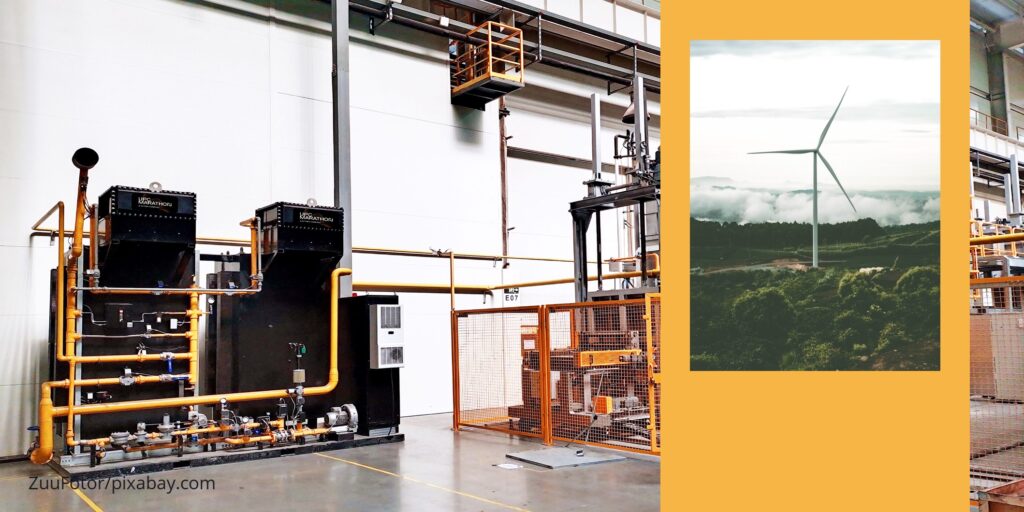
UPC-Marathon, a Nitrex company, installed the Endo generators at NGC Gears‘ its new facility in Jinhu, China. This acquisition brings the total of generator sets to five since 2022, collectively generating an impressive 800 m³/h (22,252 ft3/h) capacity of Endothermic gas supplied to carburizing and hardening furnaces used for processing various gear components. The latest installations in February and March of 2024 support the heat treating operations of the company’s wind energy gearbox production.

NGC’s decision to expand capacity is in response to the growing demand for wind power solutions in China and globally. The new Endothermic gas generating systems will significantly enhance the company’s production capabilities, enabling NGC to meet increasing market needs with greater efficiency and reliability.

EndoFlex generators from UPC-Marathon (Source: Nitrex)

EndoFlex offers precise control of production media to the carburizing and hardening environments, leading to higher quality gear production with improved longevity and performance. The result is improved carburizing and hardening processes, higher-quality hardened gears, reduced operating costs, and increased efficiency, as well as immediate cost savings through reduced electricity and gas consumption and minimized waste.

Johnny Xu, general manager at UPC-Marathon China, shared, “The latest EndoFlex investments align with NGC’s development of low-consumption, high-efficiency gearbox products for large-scale onshore and offshore wind turbines.”

This press release is available in its original form here.


Find Heat Treating Products And Services When You Search On Heat Treat Buyers Guide.Com

Manufacturer Adds Endo Generators for Wind Turbine Gearboxes Read More »

Fusion and Our Future

op-ed

Current energy developments turn our thoughts to the possibility of future innovations. For example, is there a way to generate energy, usable energy, from fusion? Is there hope that this energy can be created and made available to the heat treat industry and other sectors? There seem to be many, many questions that have yet to be answered in the production and utilization of fusion energy.

John Clarke, technical director at Helios Electric Corporation, holds out confidence in the future by standing on the foundation of the past. Comparing the current position of science and research on fusion energy to the early days of aviation exploration, he thinks the sky is the limit for what can be accomplished.


John B. Clarke
Technical Director
Helios Electric Corporation
Source: Helios Electric Corporation

Contact us with your Reader Feedback!

On December 5, 2022, scientists at Lawrence Livermore National Laboratory conducted the first controlled fusion experiment in history. This experiment produced more energy from fusion than the laser energy used to drive it. In this test, the nuclei of two lighter elements were combined to form one new, heavier nucleus. During the process, some of the mass of the lighter elements was converted to energy.

How will this incredible breakthrough affect our lives? Will the promise of limitless, clean, and cheap energy be realized, and if so, when?

I don’t think we can know the answers to the above questions with certainty.  It has always been difficult to foresee the final results of any technological leap forward, and even more difficult to provide a timeframe that encompasses the change.

Think about a time before jumbo jets and commuter flights. That was a time when not a single person had been carried by airplane through the skies. History shows that scientists and thinkers were able to come up with ideas and machines that flew through the air while carrying many. Look at a brief overview of how quickly the aircraft improved.

On December 17, 1903, at Kill Devil Hills, near Kitty Hawk, NC, Orville Wright completed the first powered flight of a heavier-than-air aircraft known as the Wright Flyer. The flight lasted just 12 seconds, traveled 120 feet, and reached a top speed of 6.8 miles per hour. 15 years later, we saw the first airmail and scheduled commercial service. 24 years later, Lindberg flew across the Atlantic. 36 years later, we witnessed the introduction of jet engines, and Chuck Yeager broke the speed of sound just 44 years after the first flight in North Carolina.

Example from early advances in aviation: the Wright Flyer
Source: unsplash.com/historyhd

Obviously, Orville and Wilber Wright would have had difficulty foreseeing the aircraft's advancements and would never have predicted a time frame. Why is timing the rate of advancement so difficult?  Airplane development benefited from the convergence of multiple independent and unrelated technology, and there was the will to develop more advanced aircraft for both military and civilian use.

So, back to the first question posed – will the promise of limitless, clean, and cheap energy from fusion be realized? I am going to say yes. Not that I know much about fusion, it is simply that history teaches us not to bet against technology. As for when, well that is a known unknown.

About the Author:

John Clarke, with over 30 years in the heat processing field, is currently the technical director of Helios Corporation. John’s work includes system efficiency analysis, burner design as well as burner management systems. John was a former president of the Industrial Heating Equipment Association and vice president at Maxon Corporation.


Find heat treating products and services when you search on Heat Treat Buyers Guide.com


Fusion and Our Future Read More »

Heat Treat Radio Snapshots

OC

Twice a month, Heat Treat Today publishes an episode of Heat Treat Radio, a unique-to-the-industry podcast. Hear some good news about the future of the energy industry, learn about the benefits of salt quenching, and discover some surprising ways to increase cost to part ratio in this snapshot of three episodes. Enjoy this original content, and happy listening!


Heat Treat Radio: The Greenness and Goodness of Salt Quenching with Bill Disler

Bill Disler
President, CEO
AFC-Holcroft
Source: AFC-Holcroft

What comes to mind when you think of salt quenching? Do the words "green technology" or "environmentally friendly"? Bill Disler, president and CEO of AFC-Holcroft, thinks they should. Quenching is a critical step in most heat treating processes, and, as most heat treaters know, boiling oil on part surfaces and contaminated washers can make quenching a nasty business.

Quenching with sodium nitrate/sodium nitrite salts gets rid of all the "nasties." It is green and it is good, because salt does not boil at temperatures used for quenching, and heat treaters can recycle 99% of quenching salt. No more rinsing oil down the drain.

To learn more about how salt quenching compares to gas quenching, oil quenching, and polymer water quenching, listen to this episode of Heat Treat Radio.

Heat Treat Radio: Energy’s Bright Future with Mark Mills, Senior Fellow at the Manhattan Institute

Mark Mills
Senior Fellow
Manhattan Institute
Source: Manhattan Institute

After the COVID-19 pandemic and the outbreak of the war in the Ukraine, the world is badly in need of some good news. In this episode of Heat Treat Radio, Mark Mills, host of the podcast The Last Optimist and author of the book The Cloud Revolution: How the Convergence of New Technologies Will Unleash the New Economic Boom and A Roaring 2020s, provides some much-needed good news. According to Mark, energy's future is bright. "There is essentially," Mark says, "an infinite supply of energy. Energy is all around us in all kinds of forms. It is always a question of what technologies are available to tap into nature's energy forms[. . .]."

In this optimistic episode, Doug Glenn and Mark Mills discuss how new technologies emerge at just the right time throughout history to solve the energy crisis of the day.

Interested? To hear Mark's thoughts on energy's future, Russia's role in the natural gas industry, and renewables' feasibility in the heat treating industry, listen to this episode of Heat Treat Radio.

Heat Treat Radio: High-Temperature Material Selection with Marc Glasser, Rolled Alloys

Marc Glasser
Director of Metallurgical Services
Rolled Alloys
Source: Rolled Alloys

"Expensive is cheaper." Not convinced? In this episode of Heat Treat RadioMarc Glasser of Rolled Alloys sits down with Doug Glenn to change the way the heat treat industry thinks about increasing profit per part. Selecting the cheapest part or component does not make economic sense in the long-run. And when it comes to cost savings, the long-run is what really matters.

Glasser asks crucial questions like: Will the weight of a fixture create a heat sink when a lighter (and possibly more expensive) fixture would solve this problem? How many times will the cheaper part need to be replaced compared to the more expensive part? How much will downtime for multiple replacements cost?

To hear the discussion of these questions, as well as practical tips on logging the lifetime of components, listen to this episode of Heat Treat Radio.


.

Search for heat treat solution providers and suppliers on Heat Treat Buyers Guide.com


Heat Treat Radio Snapshots Read More »

Sandvik Increases its Presence in Offshore Egypt

Sandvik, a developer and producer of advanced stainless steels, special alloys, titanium and other high-performance materials, has extensively increased its presence in offshore Egypt in 2016, booking several large orders. The total contract values from the orders in 2016 across the scope of supply are in excess of 100 million Euros (107 million USD), which represents a milestone development for Sandvik in the region. This means that Sandvik will provide a comprehensive scope of oil and gas solutions for the ongoing giant gas field developments in the region.

Sandvik has seen double-digit growth in the region over the past three years, and recently established its EMEA Oil and Gas headquarters in Dubai, United Arab Emirates to service major projects happening in the region and to remain in close proximity to regional customers.

The East Mediterranean is brimming with opportunity. For example the recently discovered Zohr offshore field near Egypt, the largest natural gas discovery in the Mediterranean in the last decade, will greatly boost the country’s energy potential. The “super giant” field potentially boasts an estimated 30 trillion cubic feet of natural gas.

Phil Cherrie, Regional Sales and Marketing Manager, Oil & Gas, EMEA, Sandvik, said, “Operating in an offshore environment such as the Mediterranean Sea requires materials that are able to withstand the harsh conditions that these operations present. Having been chosen by the operators as well as equipment manufacturers and service providers to provide these solutions serves as testament to the quality of Sandvik’s products and solutions.”

As part of the contracts Sandvik will be providing: Super Duplex steel umbilical tubing; SANICRO 28, a high-alloy, high strength austenitic stainless steel for OCTG downhole production tubing together with alliance partner Tenaris; seamless alloy 625 control line and chemical injection lines encapsulated with tubing encased conductor (TEC lines).

Deliveries of these solutions have already begun in 2016 and will continue on throughout 2017.

According to Phil Cherrie, Egypt and the region continues to be an important market for the company. The company has been active in the region for more than 30 years now and continues to invest actively in people and partnerships to support the wide customer base.

Sandvik Increases its Presence in Offshore Egypt Read More »

Ipsen Ships Seven Vacuum Furnaces

Ipsen recently shipped seven furnaces around the globe, which will be used to support the Aerospace, Automotive and Power industries. This selection of shipments included both custom-built furnaces and standard TITAN® furnaces that were sent to customers in Alabama, California, Missouri and Texas, as well as China and Japan.

The equipment shipped ranged from a vertical, bottom-loading MetalMaster® with an 84″ x 84″ (2,134 mm x 2,134 mm) molybdenum hot zone traveling to California to a TITAN® H2 vacuum furnace that was sent to Japan. Other furnaces shipped included horizontal MetalMaster furnaces, H2- and H4-sized furnaces from Ipsen’s TITAN line and a Global Vertical furnace from Ipsen’s TurboTreater® line. Overall, these shipments represent Ipsen’s ability to provide sophisticated and intuitive heat-treating solutions through an all-inclusive product line that supports various applications and processes.

Ipsen Ships Seven Vacuum Furnaces Read More »

New Metallurgical Department in Czech Republic

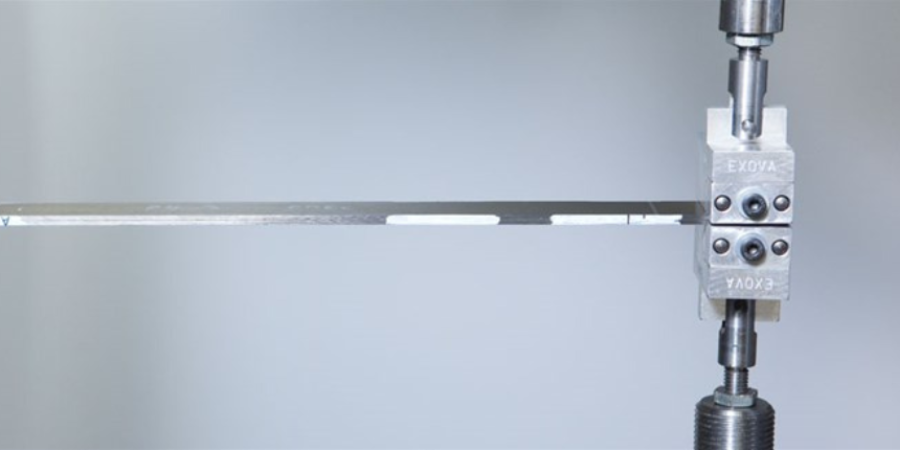
Global testing group Exova has made a series of investments at its laboratory in Plzeň, Czech Republic to extend its range of capabilities for customers within the global aerospace market, and further grow its presence in Mainland Europe.

Central to the laboratory’s investment is a new metallurgical department with increased capacity. This includes modifications to the facility and the acquisition of new state of the art equipment such as optical microscopy and precision cutting machinery to meet the growing demand from the aerospace industry. In addition to the new equipment, the lab has invested in its computer-based operating systems to increase efficiency at each stage of testing, improving both operations and reporting.

As well as a broad scope of mechanical testing, the Plzeň laboratory provides metallurgical assessment, including macro assessment and mapping and a range of micro examinations, along with corrosion resistance testing. Its customers work predominantly in the aerospace sector, but the laboratory conducts testing on forgings and welding, so can work across the automotive, power generation and general engineering sectors as well.

Jiri Fidransky, general manager of the Plzeň laboratory, said: “These upgrades have streamlined our day-to-day operations and reflect the growth we are seeing in the aerospace sector. Exova’s continued strong growth in the sector is driven by our highly technical and efficient service provision, and through these investments our customers will benefit from improved turnaround times and increased capacity, as well as advances in testing capabilities.”

New Metallurgical Department in Czech Republic Read More »

Skip to content