


Dan Kay

Induction and Sustainability Tips Part 1: Cleaning and Maintenance

OC

Discover expert tips, tricks, and resources for sustainable heat treating methods Heat Treat Today's recent series.  And, if you're looking for tips on combustion, controls systems, or induction in general, you'll find that too! Part 1, today's tips, digs into cleaning and maintenance

This Technical Tuesday article is compiled from tips in Heat Treat Today's May Focus on Sustainable Heat Treat Technologies print edition. If you have any tips of your own about induction and sustainability, our editors would be interested in sharing them online at www.heattreattoday.com. Email Bethany Leone at bethany@heattreattoday.com with your own ideas!


1. Maintenance of Induction Coils Used in Hardening Applications

Contact us with your Reader Feedback!

Soap and hot water will remove sticky quench and debris.
Source: Induction Tooling, Inc.

How should you maintain induction coils used in hardening applications? Elbow grease — a little goes a long way. After each use, a simple solution of soap and hot water will remove sticky quench and debris. Scrub hardened dirt with a Scotch-Brite pad. Check for pitting, arcing, and insulator damage. If all is good, use a hot water rinse, and it’s ready for use. If the inductor is to remain on the machine for an extended period, it is advised to wash it and the associated bus daily. Check for damage. Following this simple procedure will reduce business waste.

Source: William Stuehr, President/CEO, Induction Tooling, Inc.

#partscleaning #inductorcoil #hardening

2. Maintaining Tooling Fixtures for Induction Hardening

Tooling fixtures are usually maintained simply by storing them inside a mandrel and a box. This system will prevent coils from getting distorted.

Most tooling should be rinsed in hot water to wash off the polymer and then dried and stored away for future use.

It is a good practice to use deionized water for cooling the power supplies.

Source: Madhu Chatterjee, President, AAT Metallurgical Services LLC

#partscleaning #toolingfixtures

3. Switch to Aqueous

As industry tries to become more “green,” a number of companies are switching from lubricants that are petroleum or mineral oil-based to water-based (“aqueous”) lubricants instead. However, some of these companies then make the mistake of not changing their degreasing fluids that they use to remove these lubricants prior to their next processing operations, and stay with their standard degreasing fluids, such as acetone or alcohol, which are not effective at fully removing water-based lubricants. Instead, they need to run tests to find an appropriate alkaline-based degreasing fluid for such water-based lubricants, since alkaline-based degreasers will be effective at removing such lubricants. Commonly available dish-detergents (alkaline-based) have been shown to be highly effective for such use.

Source: Dan Kay, Owner, Kay & Associates

#aqueouscleaner #gogreen #lubricants


Find heat treating products and services when you search on Heat Treat Buyers Guide.com


Induction and Sustainability Tips Part 1: Cleaning and Maintenance Read More »

Don’t Vacuum-Braze Metals Containing Zinc

Source: Kay & Associates Brazing Consultants 

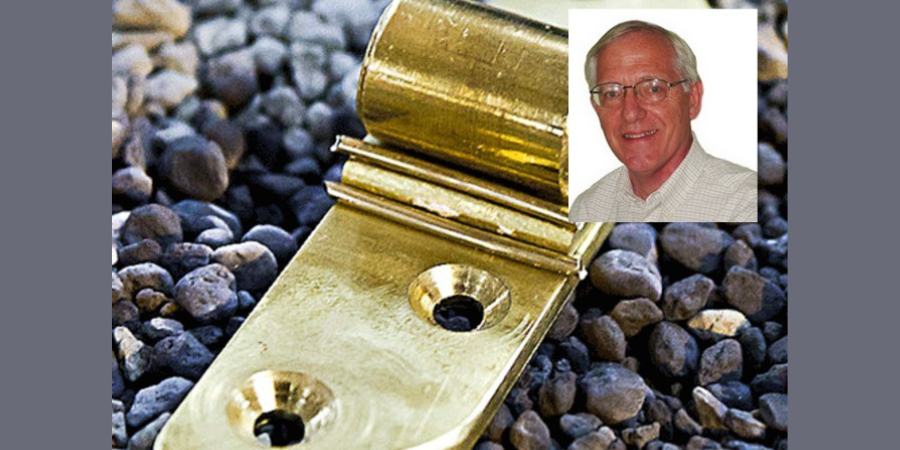
Are you sure you should vacuum braze that? As the title of this best of the web article suggests, vacuum brazing materials containing zinc is not a good idea. Volatized zinc can contaminate, and maybe even ruin, your vacuum furnace. But what about cadmium, lead, chromium, and magnesium? Is vacuum brazing safe for those materials?

In this article by Dan Kay, examine the vapor pressure curves of common metallic elements to be sure you know exactly when you need to worry about vaporization. And remember, operating your furnace at partial pressure does not offset the effects of vaporization.

An excerpt: 

Many people braze stainless steels (which contains chromium) at vacuum levels approaching 10-5 Torr [. . . ] You can readily see that at 10-5 Torr the temperature at which Cr volatilizes has dropped down to only about 1800F (950°C). Since nickel-brazing of stainless typically takes place at about 2000-2100°F (1095-1150°C), please understand that you will indeed be volatilizing chromium during this brazing operation, which will condense on the furnace walls, giving them a greenish/bluish coloration.

Read more: Don't Vacuum-Braze Metals Containing Zinc

Don’t Vacuum-Braze Metals Containing Zinc Read More »

High-Temp Differential-Expansion Problem and How to Solve It


Source: Vac Aero International Inc.


If you’ve ever tried to braze together materials that have widely different Coefficients of Thermal Expansion (COE’s), you know that the material with the higher expansion rate will grow faster than the other when heated and contract faster when cooled down. You also know that once the two different materials have been brazed together and cooling begins, the shrinkage-rate differences between those two materials can produce significant shear stresses at the brazed interface between them and be so strong that the thin brazed joint may be torn apart at either interface. Other similar weaknesses and damage can result as well.

In this HTT Best of the Web Technical Tuesday feature, Dan Kay of Kay and Associates, a vacuum and atmosphere brazing consultant, explains the details of this problem and the solution.

Dan Kay
Brazing Engineer
Kay and Associates

An excerpt: “Today’s brazing technology is based on a strong foundation of the brazing experiences of many people around the world over a period of many decades (even centuries). I’ve now been very active in the brazing world for almost 50 years and, like my predecessors in the world of brazing, I’ve learned a lot about this fascinating joining process (and I’m still learning). In the article, I’d like to share with you one of my brazing experiences from many years back, one that involved high-temperature differential-expansion between an 18″ (45 cm) diameter tool steel die and a thin carbide plate (round disc) that needed to be brazed to the die’s front surface for wear-protection.”

In this article, Dan, who is also a HTT consultant, helps readers understand the high-temp differential-expansion problem, explore what steps can be taken to prevent it, and ties it all together so that readers can clearly understand what to do.

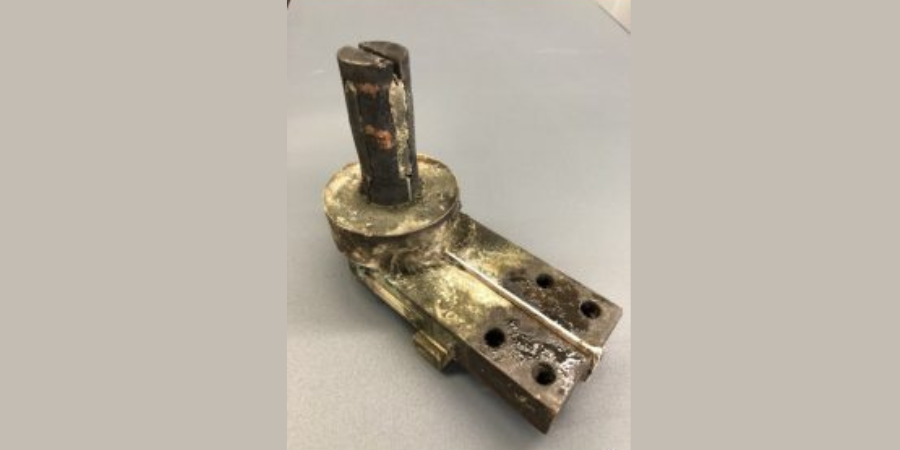
Read the entire article from Vac Aero International,  An Old High-Temp Differential-Expansion Problem

Image source: Vac Aero International Inc.

High-Temp Differential-Expansion Problem and How to Solve It Read More »

Dan Kay on Brazing Stop-Off Materials

Heat Treat Today will soon be launching Heat Treat Consultants, a resource that offers the most comprehensive listing of heat treat industry consultants. An example of the type of exchange we anticipate will result from this resource is provided below.  Click the link above for a sneak peek at our inaugural list of consultants and more information about contacting one of the experts listed. 
 [spacer color=”848484″ icon=”Select a Icon”]

Mike Dascoli, general manager of County Heat Treat in Millbury, Massachusetts, asked our publisher, Doug Glenn, about a product the company had used previously, “an alumina oxide powder to coat graphite fixturing plates . . . in our vacuum furnaces to stop off against braze alloy run off and eutectic melting.” Doug queried whether it was aluminum brazing or more conventional brazing of stainless or other metals and Mike specified, “No aluminum brazing . . .  used to be gold/nickel, silver alloys. Here at County, I am just looking to introduce some options. I remember we would mix the powder with the acetone and paint it on the carbon plates. Acetone evaporated quick and the powder was left behind. For us now, it’s more about a layer against eutectics when heat treating.”

Dan Kay, Kay & Associates Brazing Consulting &Training Services

Doug brought in one of Heat Treat Today‘s consultants, Dan Kay of Kay & Associates Brazing Consulting & Training Services, to assist in hunting down the answer to Mike’s question.

Dan Kay:

Hi Mike —

Yes, there are a number of brazing filler metal (BFM) manufacturers who also produce and supply brazing stop-off materials that can be painted onto graphite surfaces such as you mention in your note to Doug Glenn.  Here are just a few:  Surface Flow Technologies (Div. of LSN Diffusion Int’l) in Michigan, Wall Colmonoy Corp in Michigan, Vitta Corp in Connecticut, and Wesgo Metals (Div. of Morgan Advanced Materials) in California are some of the primary ones.  

Stop-off materials come in different colors, the coloring of them being merely to identify its manufacturer, since all stop-off materials use metallic oxide materials to create their “stop-off” capabilities, and all these oxide powders are essentially white, to begin with.  Thus, to differentiate the various stop-offs they began to color them so that people would learn to associate green stop-off with company A, pink stop-off with company B, red stop-off with company C, etc.

White stop-off products are essentially the weakest of all the colored stop-offs out there and are primarily aluminum-oxide products in a paint-like consistency.  The binders/gels used to make the stop-offs vary considerably from manufacturer to manufacturer are proprietary, and you’ll not get any of them to actually tell you about all the ingredients in them.  People are often surprised to hear that a product such as Phillips Milk of Magnesia, available in lots of stores or pharmacies, is actually a decent stop off (magnesium oxide) for a number of applications.

But you are correct to say that you can make your own in many different ways by merely mixing some aluminum-oxide powder, or titanium-oxide powder, etc., in with a variety of quick-drying solvents, perhaps also with a thin acrylic type cement to give it adherence, paint it onto graphite surfaces, and after evaporation you would be left with an adherent layer of that protective oxide barrier, so that it prevents direct contact of a metal (especially any iron-containing metals) with the graphite, since an iron-carbon reaction is to be avoided.  

I’d be happy to assist you further with this, if you have additional questions, since I’ve had much direct manufacturing experience over my 45+years in the brazing world, a lot of it involved in making BFMs, brazing stop-offs and cements, etc., and am pretty much aware of the companies today who make and supply such materials.

On my website at http://www.kaybrazing.com, you will see a tab on the homepage that shows “Brazing Suppliers”. By clicking on that tab you can see a listing of the different companies who produce these materials, and in that tabular section the name of each company (such as those I mentioned above) is a hotlink that will bring you directly to that company’s website so that you can search it for a specific type of product that you might desire.  It part’s of the service that I want to provide to users of my website.  I hope you will find it useful.

Let me know how I can help you further.

Best regards,
Dan

Daniel Kay
Kay & Associates
Brazing Consulting &Training Services
4 Lawton Drive
Simsbury, CT  06070
Phone:  860-651-5595

E-mail:  dan.kay@kaybrazing.com
Website:  http://www.kaybrazing.com


Heat Treat Consultants is a unique opportunity for personnel in the field to engage some of the industry’s knowledge powerhouses with questions about equipment, processes, management, troubleshooting — just about anything having to do with heat treating. We invite you to take a look at our inaugural crew of Heat Treat Consultants by clicking on the provided links, and we would be happy to help you make any connections. Just email Doug Glenn at doug@heattreattoday.com. You can also submit any questions or comments on Heat Treat Today articles to editor@heattreattoday.com.

Dan Kay on Brazing Stop-Off Materials Read More »

Brazing Seminars Announced for Fall 2018

Three-day brazing training seminars have been announced for the fall of 2018, one taking place in Spartanburg, South Carolina, September 25-27, and the other in Simsbury, Connecticut, November 13-15.

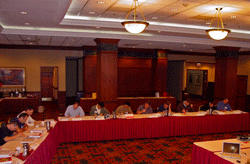
A Dan Kay Brazing Seminar in Maryland

These identical hands-on 3-day brazing-training programs sponsored by Kay & Associates and taught by Dan Kay will provide intensive training for both the novice and the veteran in all aspects of brazing, including correct brazing of aluminum, titanium, steels, super-alloys, as well as metals-to-ceramics, and will cover furnace, torch, induction, and dip brazing, and all BFMs (nickel, gold, silver, aluminum, titanium, and copper-based).

The 8 a.m. to 5 p.m. programs provide over twenty hours of intensive training and the opportunity for one-on-one applications support. Many samples are investigated in the hands-on training seminar, actual brazing demos are done in which each person can participate, and case-studies are presented and solved via group-interaction.

The seminars are targeted for anyone who impacts brazing operations, such as designers, owners and managers, engineers and supervisors, and production personnel.

Dan Kay (BMetEng, MBA), operates his own brazing consulting/training company and has been involved full-time in brazing for 45-years. He regularly consults in areas of vacuum and atmosphere brazing, as well as in torch (flame) and induction brazing.

To read more or to register, go here: www.kaybrazing.com.

Brazing Seminars Announced for Fall 2018 Read More »

Skip to content