The heat treat industry is rich with knowledgeable leaders, resourceful problem solvers, and innovative teams. One of our favorite things to do here atHeat Treat Today is to draw attention to the wealth of expertise in the field, so we are pleased to launch the Voices in Heat Treat series, pointing readers to a treasure house of recorded interviews and discussions diving into the fundamentals of thermal processing.
In this and coming articles drawn from the audio library at Solar Atmospheres, we will summarize topics on everything from basic heat treating how-tos, preventative maintenance, and troubleshooting to the history of hot zone designs, temperature uniformity surveys, and the distinctions to take into consideration when processing different kinds of metals and alloys. In today’s installment, our industry experts focus on vacuum brazing and the uniqueness of heat treating titanium.
In the premiere article of this series, Bill Jones, founder and CEO of Solar Atmospheres and Solar Manufacturing, interviews industry leaders about the advantages of vacuum furnace brazing. Read the highlights of their discussion about the process, in particular when used with stainless steel and titanium. The summary of a fourth episode recorded earlier has been added, expanding on the topic of the advantages of processing titanium in a vacuum furnace. The experts are Calvin Amenheuser, vice president of the Hatfield plant, and Mike Paponetti, sales manager of the southeast. Jim Nagy, senior vice president of Solar Manufacturing, hosts the episodes. A summary of each conversation is below, followed by links that will take you directly to that podcast episode.
Bill Jones and the Team Speak on Vacuum Brazing, a 3-Part Series
“Advantages of Vacuum Furnace Brazing”
December 2015
Brazing to form strong metallurgical bond where the brazed joint becomes a sandwich of different layers, each linked at the grain level
This episode is the first in a series on vacuum furnace brazing, with an overview of different types of brazing processes and why vacuum furnace brazing is superior to other joining methods, particularly torch brazing and welding.
The conversation explores various reasons why a vacuum furnace is well-suited to perform brazing because it provides:
a controlled, consistent atmosphere cycle after cycle
uniform heating throughout the hot zone
a controlled rate of heating
the elimination of air to prevent the formation of oxidation of the metal
Vacuum Furnace Brazing vs. Alternative Methods
Both Cal Amenheuser and Mike Paponetti speak about vacuum brazing being a superior process to alternative methods. Mike noted that torch brazing is effective for low volume loads, but the process risks flux entrapment and could produce messy, overheated and possibly carburized parts. In contrast, vacuum furnace brazing allows for higher volume loads, providing a repeatable process, precise temperature measurements, and versatility.
Brazing applications from parts to rockets
Calvin added that while welding melts the materials and produces a strong joint, the surrounding material is weaker. With vacuum furnace brazing, the brazed joint is just as strong or stronger afterward as before.
Finally, the panelists compared how batch vacuum furnace brazing eliminates distortion that is typical with torch brazing and welding because of hot zone uniformity. A batch furnace operator can modify the process to meet the demand of the load, and furnace charts provide proof of reveal what exactly happened during the run so that successful recipes can be repeated.
In this episode, second in the series on the vacuum furnace brazing, the Solar team reconvened to discuss advantages of and concerns with nickel-based and copper-based brazing alloys.
All agree that nickel-based alloy offers a cleaner braze but emphasize precautions must be put in place to avoid metal erosion and cracking. While readily available and a good match for low carbon steel, copper flashes during the braze. Inert gas is recommended to decrease evaporation of the copper-based alloy.
“Processing Titanium in Vacuum Furnaces: Active Brazing of Titanium in a Vacuum Furnace”
April 2016
In this third and final episode on the topic of vacuum furnace brazing, Bill Jones, Calvin Amenheuser, and Mike Paponetti consider significant challenges to brazing titanium, which is the need to reduce surface oxide to allow the process to take place and why active brazing is suggested as a means to meet that challenge. What follows is an informative discussion on composites that allow producing companies add to the material, like hydrated titanium, zirconium, and indium, to help overcome oxides, which are effective at wedding to the surface.
“Processing Titanium in Vacuum Furnaces: Advantages”
February 2013
175,000 pounds of 6Al-4V titanium in Solar’s 48-foot-long vacuum furnace
Although recorded earlier than and thus separately from the series on vacuum furnace brazing, this summary of an episode is included in this article to provide context about the advantages of processing titanium in a vacuum furnace. This is a solo Bill Jones episode.
Bill Jones highlights how vacuum furnaces provide a pure atmosphere for processing titanium compared to an argon atmosphere, saving machining costs and time. Additionally, vacuum processing uses forced inert gas quenching to cool titanium as opposed to water quenching which results in a more uniform result and eliminates part distortion. Finally, fixturing parts properly in a vacuum furnace with graphite allows heat treaters to preserve the part shape and avoid movement.
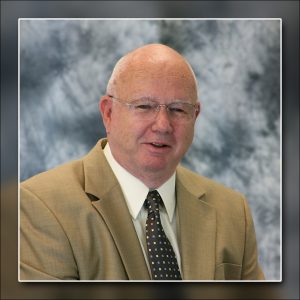
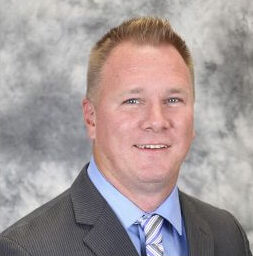
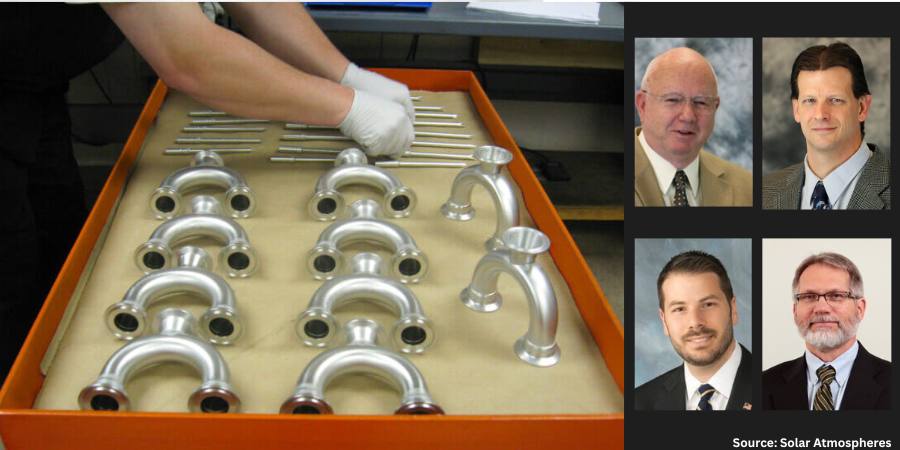
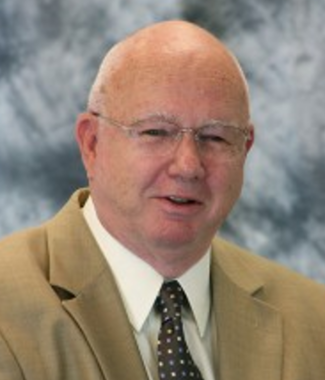
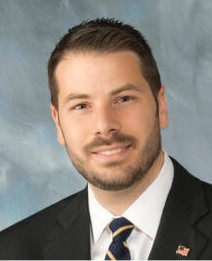
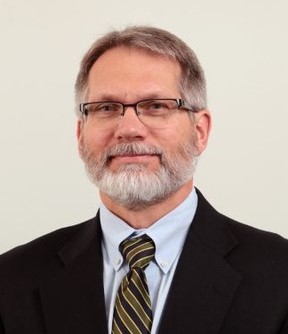
Bill Jones Founder & CEO Solar Atmospheres, Solar Manufacturing Source: Solar AtmospheresCalvin Amenheuser Vice President of Operations, Souderton plant Solar Atmospheres Source: Solar AtmospheresMichael Paponetti Sales Manager of the Southeast Solar Atmospheres, Inc. Source: Solar AtmospheresJim Nagy Senior Vice President Solar Manufacturing, Inc. Source: LinkedIn
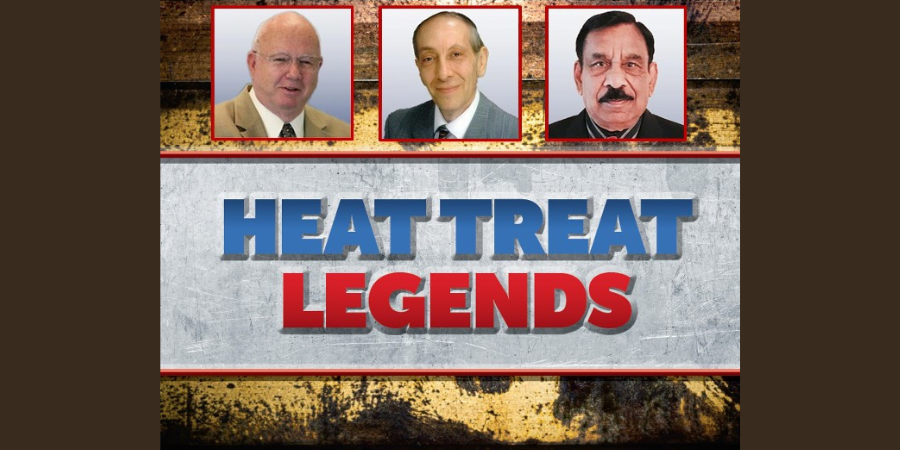
What makes the North American heat treat industry of 2022 what it is? As with any industry, the heat treating world is made up of the people who now inhabit it and the people who paved the way for them. Let’s take a moment to think about the past and what we owe to the industry giants, those trailblazers who have guided so many. In that spirit, enjoy the life stories of these three Heat TreatLegendsfromHeat TreatToday'sSeptember 2022print edition. After all, the industry is only as good as the people in it.
To listen to the life stories onHeat TreatRadio, click the section headings below.
Lost patents, risking a million dollars, and unleashing an entrepreneurial spirit he didn’t know he had. These are just a few things that characterized Bill Jones’ life.
Contact us with your Reader Feedback!
“First, you want to do something that you’re happy doing . . . Then, you must be properly prepared for it. You must have enough education to go forward.” So says Bill Jones, CEO of Solar Atmospheres Group of Companies. A self-proclaimed “technocrat,” Bill remembers being interested in technology from an early age. Technology was the “something” Bill was happy doing.
Throughout Bill’s career, his love of technology often led his peers to complain, “You know, Bill, you’re always interested in technology, and you’re not interested in whether you’re making money or losing money.” The complainers may have been right about Bill’s interests, but they were wrong about how much his love of technology would hinder his ability to make money. Today, Bill and his wife Myrt are the sole owners of four successful, family-owned heat treat companies based in North America: Solar Atmospheres, Solar Manufacturing, Magnetic Specialties, and Vacuum Furnace Systems.
"There is nothing that beats hard work and dedication to what you are trying to do." - William Jones
How did Bill go from being simply a technocrat to the owner of multiple businesses? Bill’s answer: work ethic and education. There is no substitute for being willing to put in more than 40 hours a week and to dedicate yourself to your work. But, Bill says, education is also a must: “We, as practical people in the heat treat industry, tend to pooh-pooh education,” and “[the] basis of what we do comes from chemistry. Metallurgy grew out of chemistry. If you don’t have a decent educational background, then you don’t know the basis of where we came from because that’s the basis of where we’re going.”
Armed with his education and his work ethic, Bill began his journey into the world of technology by working with dew point analyzers. At the time, there was no way to continuously monitor dew point or moisture, and Bill’s first project was to produce a dew point analyzer that could measure one to two parts per million. From measuring dew point, Bill moved on to measuring temperature, and this was his introduction into the furnace industry. In 1963, Bill began a career at Abar, where he used his experience designing optical pyrometers to produce thermocouples that could be used at above 4000°F.
At Abar, Bill worked as the equivalent of a chief engineer on a project that he would later characterize as one of the greatest accomplishments of his life: designing a vacuum furnace with a horizontal ring hot zone. When the new furnace started up for the first time, Bill saw what a ring hot zone could do. Bill still remembers the experience: “When I tested that first round hot zone, I did it by myself at night in a plant where I was the only one there. We had a big sight glass in the front of the furnace, and I could see the entire hot zone, the heating element, the heat shield, the ring and so forth, and I was able to measure the temperature and it was [like] ‘WOW. This thing works!’”
True to his technocrat identity, Bill views this furnace as his greatest accomplishment, not the success of starting his own companies. Along with the development of this furnace, Bill helped to develop the graphite hot zone, which later replaced the metal hot zones at Abar. With graphite hot zones, riveting was unnecessary, and the elements could be bolted together with graphite screws and nuts. One of Bill’s greatest regrets in life was not patenting the horizontal ring furnace. “We should have,” Bill says, “but we didn’t know what we had, honestly, and then it got out into the fi eld anyway and we couldn’t patent it.”
Lost patents, however, did not get in Bill’s way. Bill is also proud of the car bottom furnaces built at Solar’s Hermitage location in Western Pennsylvania. Bill remembers the weekly design meetings and running the furnace for the first time. The car bottom furnace was designed to process heavy titanium coils, and Bill was so confident in his work that he insisted on running the furnace for the first time with a million dollars of titanium coils inside. A coworker, Bob Hill, said, “Bill, you’re not going to run the final product first. I think we should make a run with just some scrap steel that we have around.” Bill replied, “No, Bob. I am thoroughly convinced this furnace is going to work and work right.”
Today, Bill and his wife Myrt are the sole owners of three successful, family-owned companies based in North America: Solar Atmospheres, Solar Manufacturing, and Magnetic Specialties.
Bill’s confidence paid off ; the car bottom furnace worked correctly the first time.
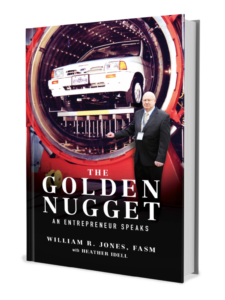
Chronicling his experiences, Bill wrote The Golden Nugget: An Entrepreneur Speaks. Bill’s identity as an entrepreneur was a surprise to him. Bill credits Dr. George Bentley with inspiring his entrepreneurial spirit: “Bill, I want to tell you something,” Dr. Bentley said, “I have observed you over the years and I can tell you, you are never going to be happy until you run your own business.” At the time, Bill did not realize the wisdom of the advice, he did not see himself as an entrepreneur. But now, Bill realizes, “Until you’re sitting in the top chair and until you’re making the decisions of winning and losing, you don’t know what it’s all about.”
Entrepreneurship (no matter how unplanned), innovation, valuing education, worth ethic, and above all else, a love of technology all helped Bill Jones along the road to success. And the main motivation? “Well, it’s very simple: Money is not a driving factor in my life or in my wife’s life. Money is not it. You know, the old saying is, when you go to the grave, there’s not going to be a U-Haul behind you.”
What’s the job of a good doctor? First, do no harm. This mantra, combined with Dan Herring’s love of doing good by solving critical problems, made him what he is today: The Heat Treat Doctor®.
The Heat Treat Doctor® has worn many, many hats throughout his more than 50 years in the heat treating industry. He was a metallurgist, a corporate trainee, an international marketing worker, an applications engineer, a technical director, a research and development director, a product manager, a chief engineer, and finally: an entrepreneur, the owner of his own consultancy, The HERRING GROUP, Inc. In Dan’s own words: “You might say that I’ve been chief cook and bottle washer of the industry, if you will.” These various jobs, and the multitude of different responsibilities that went along with them, taught Dan everything he knows today, developed him into The Heat Treat Doctor®, and made him worthy of being a Heat TreatLegend.
Looking back on his success, Dan points first to his parents for helping him to become the best version of himself. Dan grew up with one parent that gave him a love of technology and equipment and with one parent that give him a love for language and writing. Dan’s father, a machinist, was a hands-on worker and “one of the most inventive people that I ever met.” Later, Dan combined the technical skills he learned from his father with his education as an undergraduate in engineering and a graduate student at the Illinois Institute of Technology.
Dan’s mother, a registered nurse, was “an English teacher in disguise.” She gave Dan a love of writing. For over 10 years, Dan authored a monthly column for Industrial Heating. Columns, however, are not the extent of Dan’s writing expertise. He has also authored: Vacuum Heat Treating, Volumes I & II, and Atmosphere Heat Treating, Volumes I & II. These four books are excellent resources for heat treaters, both novices and experienced industry professionals. Dan has written 10 books in total, six of which deal with the heat treating field. Dan is proud of these books because he can share what he knows with others forever, just as others passed knowledge to him.
“I think it’s interesting,” Dan says, “I have had the extremely good fortune of working for two or three people that actually fell in the genius category. These people were absolutely, positively of genius intellects and they worked within the heat treating industry.” During Dan’s time at Lindberg, he met Hobart Wentworth. Wentworth taught Dan the discipline of engineering, taking Dan’s university knowledge into the real world. Also at Lindberg, Dan was introduced to Russ Novy, chief metallurgist. Dan commends Novy for his “infinite patience . . . to tell you what he had learned and explain things and talk about the root cause of things.” When Dan worked at C.I. Hayes, he met Herb Western, a man who holds over 300 patents in the state of Rhode Island. Western showed Dan how to be creative and inventive within the heat treating industry.
Vacuum Heat Treating, Volumes I & II Atmosphere Heat Treating, Volumes I & II (For more information: www.heatreattoday.com/industryresources/books/herring-books)
One of Dan’s greatest accomplishments was establishing The Heat Treat Doctor® brand. “The brand,” Dan says, “has brought heat treating into the forefront of manufacturing, into the forefront of the industry, into the forefront of engineering, that yes, there is something called heat treating and it is a solution to your needs. So, I view the brand as not so much a personal accomplishment but as an industry accomplishment.”
Dan’s love of words gives him a unique skill set. Not only does he understand metallurgy and engineering, but he is also patient enough to explain it and has the communication skills to explain it well.
When it comes to business, Dan’s main rule is: “Be honest . . . be ethical, be fair, try hard, communicate well and have infinite patience. In other words, not everyone understands what you’re saying. You must take the time to explain what you mean to the people you’re dealing with. Although that’s a strange answer on the business side, I think it’s most impactful.” Dan takes pride not only in doing good throughout the industry, but also, like a good doctor, doing as little harm as possible. Helping others with critical problems, getting companies back in operation, and preventing layoffs are events that stand out the most to Dan.
When it comes to life, Dan’s mantra is: Enjoy the moment. “I remember the first day I started to work at Lindberg,” Dan says, “I took the train to work, it was right across the street from the train station, I was walking across the street, I was 21 years old, and I said to myself, ‘Only 44 years to go.’ And I turn around and the 44 years have disappeared like it was yesterday. So, you must enjoy what you do, and you’ll never work a day in your life.”
Dan attributes his success in the industry to the people around him. He points not only to his parents for his success, but also to the “geniuses” he has worked with along the way, and to the industry at large. Speaking of his entry into Heat Treat Legend status, Dan says, “I just want to say that I consider this a distinct privilege to be considered one the Heat TreatLegends. But I’d also like to point out to everyone . . . that no one individual can do it by themselves. So, I’m accepting this accolade, if you will, on behalf of the many men and women who toiled in, what I’m going to call, relative obscurity and who made this industry what it is today. On their behalf, I’m more than willing to be considered one of the Heat TreatLegends.” Spoken like a true legend.
“Happy, happy, happy.” In Suresh Jhawar’s experience, the best way to run a business is to focus on happy employees, happy customers, and happy bottom lines.
What happens when a young man comes to the United States against his parents’ wishes to earn a bachelor’s degree in Engineering? He becomes the sole owner of G-M Enterprises and gets the title of Heat TreatLegend. At least, that is what happened for Suresh Jhawar, a self-proclaimed “average student in India.”
Without the support of his parents, Suresh weighed the odds of coming to America versus studying in Germany or the U.K. and applied for his visa and passport in a library, away from his parents. When Suresh discovered he could earn his degree in half the time with his advanced credit, he chose the United States and boarded a plane, arriving in the States in 1962. At Marquette University in Milwaukee, Suresh went on to earn a master’s degree in Mechanical Engineering and an MBA in Marketing.
Before taking ownership of G-M Enterprises, the two heat treating companies that were most influential for Suresh were Abar and Ipsen. Suresh began his time with Ipsen in 1970 as a project engineer for vacuum furnaces. Suresh was in the top five at Ipsen, and, looking back, he sees himself driving the company in cost savings, product improvement, and customer relationships.
As the assistant to the president at Ipsen, Suresh traveled extensively to Poland to visit a facility for steel milling and annealing silicon steel coils for transformer steel. During this time of heavy travelling both at Ipsen and later at Abar Furnaces — Suresh visited Poland ten times in less than two years — he remembers the difficulty of keeping a healthy work/life balance. But he succeeded most of the time: “[W]hen Andy [Suresh’s son] was getting an award at his high school, I was coming from Europe . . . I missed my connection. Now it became difficult as to how to get to Philadelphia to attend that awards ceremony for my son . . . I went from one airline to another. I got on a plane, reached Philadelphia airport at the time when the program started, but I was at the school at the right moment when Andy’s name was called. I was there!”
Difficult though it may have been, Suresh often succeeded in keeping work and life in balance. At Ipsen, work consisted of many projects, one of which involved helping Ipsen book an order for 10 large car bottom furnaces. While Ipsen’s president handled the commercial aspect of the order, Suresh handled the technical side of things. He had to make sure the company had the right product and the right solution. And the 10 car bottom furnaces — 84 inches wide by 45 inches high by 32 feet long, made in four bolted sections — were indeed the right solution.
“What I believe is ‘happy, happy, happy’: happy employee, happy customer, happy bottom line.” - Suresh Jhawar
It was at the same time as this project that Suresh was also working on Ipsen’s license agreement with Elterma, which later became SECO/WARWICK. Suresh’s work at Ipsen lasts to this day. Without Suresh, Ipsen would have no manufacturing base in India. Suresh enlisted Wessman Engineering as a sales agent for Ipsen, which began Ipsen’s history in India.
Abar was Suresh’s act two. Suresh wanted to run the entire operation, and Abar gave him the opportunity to do this. Under Suresh’s leadership, Abar increased its profit significantly, and Suresh was asked to write a justification for the merger between Ipsen and Abar. At G-M Enterprises, Suresh’s skills were on full display. Suresh entered G-M Enterprises as a partner holding 15% interest. Within a year, Suresh bought out one of the other partners, and later, in 2005, Suresh took full ownership of the company. He changed the official name of the company to Jhawar Industries and continued to do business as G-M Enterprises. When Suresh joined G-M Enterprises, it was a break-even company. By the time he retired, it was doing business all over the world. “I’m pretty sure,” Suresh says, “that we had the highest bottom line in the industry.” In 2005, Suresh hired his wife, Veena Jhawar, as the director of supply chain, enabling him to focus entirely on developing customers and innovating vacuum furnaces. Suresh’s innovation did not stop there as he was also instrumental in developing the MIM furnace. By 2018, G-M Enterprises was a leading supplier to GE from Singapore to Japan and Brazil.
How did he do it?
“What I believe is ‘happy, happy, happy’: happy employee, happy customer, happy bottom line.” When it comes to happy employees, Suresh says, “The most important thing is to treat your employees like you treat yourself. When I worked at G-M, out of any of the other places, I didn’t work as being ‘the boss’ or on a high platform; I worked shoulder to shoulder with them.” In order to be successful, Suresh believes you must respect your employees and reward them for their contribution, and hopefully, they will be loyal to the company.
Loyal employees make for happy customers. Happy customers, in Suresh’s thinking, have to feel they are a critical part of the solution. This was one of G-M Enterprises’ best qualities. If a customer had a problem, someone from G-M would jump on a plane and fix it, attending to the problem first and worrying about the terms later. Listening to what customers actually wanted, rather than simply giving them what the company already had, was a crucial part of building customer loyalty. With these two principles in place — happy employee and happy customer — the bottom line grew happier and happier.
With these two principles in place — happy employee and happy customer — the bottom line grew happier and happier.
Along the way to a happy bottom line, Suresh discovered the importance of meeting deadlines. Suresh remembers showing up to a production control meeting with no drawings in hand and the others in the room laughing at him. Suresh could tell they were thinking, “He puts pressure on us, but he doesn’t do his own job.” And so, Suresh never went home that day, but instead worked through the night. In the morning, he put all the drawings into the hands of the engineering crew. “Meeting deadlines and commitment, to me, is always number one. No excuses . . . That helps you to expect [the same] from other people, [because] when they see you — that you do that — they follow.”
Reminiscing, Suresh remarks, “We always treated our employees as family members and gave them due respect for their contribution.” For Suresh Jhawar, success in business is all about happiness.
Find heat treating products and services when you search on Heat TreatBuyers Guide.com
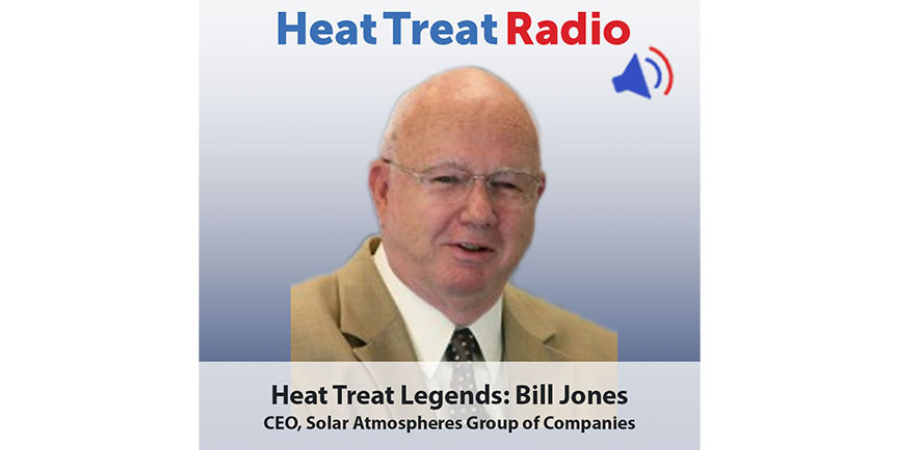
Heat Treat Today publisher and Heat Treat Radio host, Doug Glenn, sits down with Bill Jones, CEO of the Solar Atmosphere Group of Companies, to launch this new periodic feature called Heat Treat Legends where senior individuals in the North American heat treat market share their expertise and experience with those less senior.
Below, you can watch the video, listen to the podcast by clicking on the audio play button, or read an edited transcript.
The following transcript has been edited for your reading enjoyment.
Doug Glenn (DG): Welcome, everyone, to our inaugural episode of Heat TreatLegends. We're going to start with a true heat treat legend, a gentleman by the name of William Jones from Solar Atmospheres and Solar Manufacturing. We're going to talk to him about his life experiences and some of the things that we'd like to get his perspective on. So, Bill, first off, I just wanted to thank you for joining us. I appreciate you joining us for this episode of Heat TreatRadio.
Bill Jones (BJ): Thank you, very much, Doug, I appreciate the opportunity. As you know, I've had a long life, and to be a legend is something I never really expected. Most of us don't.
DG: Let's just talk a brief introduction — who you are, where you are right now, and what your role is in the companies that you own.
BJ: I've been a technocrat all my life. It started when I was very young, when I was about 7 or 8 years old. I've always been very technically oriented and technically driven. As a matter of fact, the various people that I have worked for have always complained about that, and they said, "You know, Bill, you're always interested in technology, and you're not interested in whether you're making or losing money. We don't want to hear about the technology, we want to see what's on the bottom line." That's sort of where I came from.
"I've been a technocrat all my life. It started when I was very young, when I was about 7 or 8 years old. I've always been very technically oriented and technically driven." - William Jones, CEO, Solar Atmospheres Group of Companies
After I graduated from college, I went to work for a small company, and we were involved in electromechanical things. A lot of our work was development work out of the DuPont company from their experimental station in Wilmington, Delaware, which was one of the premiere development centers in the country at the time. I don't think it's that way so much anymore, but, at the time, it really was a pyramid sort of place.
In my early days, I was introduced particularly into dew point analyzers. They had developed, what they called, a trace moisture analyzer which would measure down to about one or two parts per million. It was right out of the development laboratory and our company built it, and my boss, at that time, worked out to have a license to build the instrument. I ended up being the engineer in charge of putting the thing into production.
Like I say, at the time, (and we're talking about in the late 1950s or ‘60s), there was no real continuous recording of moisture or dew point. I'm talking about low, like down around -100 degrees Fahrenheit, a few parts/million. That was, sort of, a breakthrough. It was an interesting instrument. The instrument is still being built. So, I was very instrumental in that instrument.
That was my introduction into the technology, so to speak. Then, I went on and I became involved in optical pyrometers. As a matter of fact, I was going to bring with me, and I didn't, one of the early temperature optical pyrometers which was built by Leeds and Northrup. That was developed in the 1930s and it is still used today. It was the standard in the industry for many, many years. Anyway, that introduced me into the furnace industry, measuring temperatures with that instrument and then with an electronic optical pyrometer that was developed by another company. I learned all the problems with optical pyrometers respect to emissivity and all that sort of thing.
Those were my early years. I went to work, really, then, in about 1963 for Abar; I was the eighth employee with the company. That put me into the furnace business. Now, the Abar furnaces, at that time, were very high tech. They were designed to operate at temperatures of 4000 degrees Fahrenheit and up, above temperatures where you could really use thermocouples. That fit with my optical pyrometer experience; it was one of the reasons I went there. So, we were building these furnaces. We built them for the electronics industry, particularly for sintering of tantalum anodes, and so I had a very wide experience with that particular product. Then, it graduated into, and we got involved in, other technology. Particularly, we got involved with more normal, what I'll call, industrial processing, because this high temperature technology was either solid-state related, like with the tantalum capacitor or, at that time, with the development of the space launching and all that sort of thing.
With the changes in administration, we went away from space technology, to some extent, in the middle 60s, so it meant that we had this furnace technology and we had to put it to use. So then, we looked at industrial processes. We started to look at things like jet engine processing- processing parts for jet engines and all that sort of thing.
Those were my early years to get into this business. I went into the production aspect of the furnaces. And, of significant note, we built a number of furnaces for, what was, the atomic energy people, particularly at Oak Ridge, Tennessee. There was a bid that came out for a horizontal vacuum furnace, and it had a one-line drawing of a hot zone with a ring. (I shouldn't say a ring, we made it into a ring.) But it was this line drawing of a round hot zone with this part sitting in the center of it, which I really can't say too much about. But anyway, I didn't design that, but we had a couple of engineers that designed the hot zone
At that time, Abar was owned by a man by the name of Charlie Hill, and he overlooked the whole project. At the end of the day, after the thing was built, (but not turned on), they handed it over to me. I was like the equivalent of chief engineer for the company, so I had the task of starting that furnace up. It was a very interesting experience. It was, for the first time, when I really saw what that ring hot zone could do. I didn't really recognize all its advantages when we first put it online and started to test it, but we realized that we had something different. But, whenever you have something different, you don't always know what to do with it. That's about where we were. In a year or year and a half, we started to see the advantages of that hot zone.
I was instrumental in the development of the gas cooling system. The original system did not have any recirculation abilities, in other words, it would not quench; it was just static cooling. That whole thing of how to do that, I worked on, and after a lot of failures, I might say, we got it to work satisfactorily, and it has grown and grown and grown ever since.
There are other things about the furnace technology that I've had my fingers on and it's been a very pleasant experience, Doug. I could go on for the rest of our time talking about this, but I won't!
DG: That's good, that's good. At least it gives our listeners some sense of your background. And, I might mention Bill, besides being a technocrat, is also an author. He's authored a book called The Golden Nugget which came out in 2017. It goes into a lot of detail, mentioning a lot of the things you've mentioned here, and much, much more. If anybody is interested in getting a copy of that book, we'll put some information up at the end where people can either contact myself or you directly, Bill, and they can get a copy of that book.
BJ: Thanks, Doug, for the plug. Let me say this: Anyone who wants a copy of that book, I will be happy to send it to them at no charge, postage paid.
DG: Very good! You're being much more generous than I was going to be. I was going to say, feel free to call me, I'm going to charge you $50 for this book and you have to pay postage. ~chuckle~
Let's move on. Let me ask you a couple questions because people are going to be interested in knowing some of the life lessons that you've learned and things of that sort. When you look back on your career, which has been a good 50 years, I'm guessing, what would be the top one, two, even three accomplishments? When you're taking that 30,000-foot view and looking back, what do you see as far as major accomplishments?
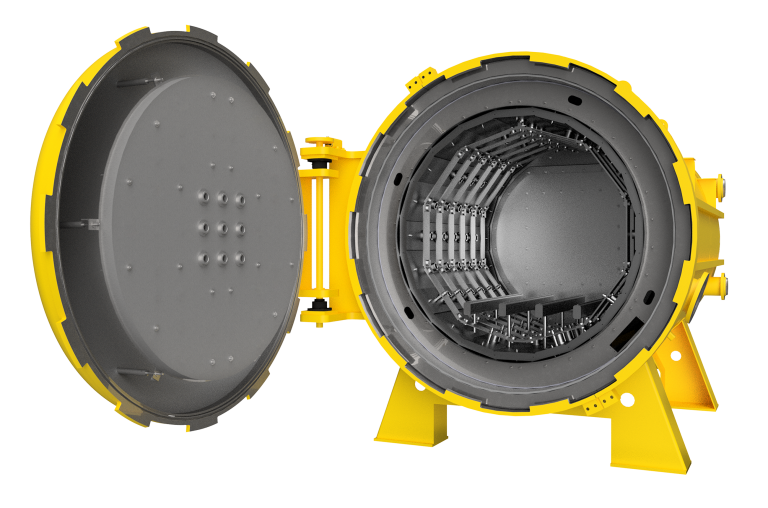
BJ: The major accomplishment, obviously, is the development of the vacuum furnace, and that particular horizontal ring furnace. We didn't patent it at Abar, unfortunately. We should have, but we didn't know what we had, honestly, and then it got out into the field anyway and we couldn't patent it. Aside from that, that particular approach — that round furnace approach — has been duplicated by all our competitors around the world. That is a major accomplishment and it, really, has my name on it, which nobody will tell you, but that's okay.
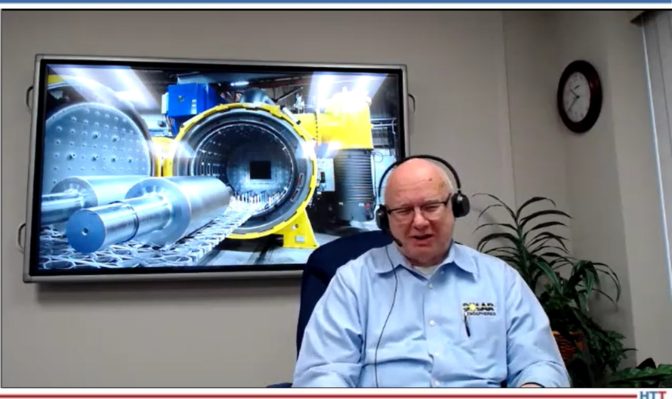
DG: That's why we do these interviews. Just so people know, if you look behind you, Bill, on your screen, you've got a round cylinder furnace there. I think that's the type of thing you're talking about, there, with the flat band heating element.
"That was almost unheard of back then. Now it's been adopted all over the place, today. That's some of the major accomplishments."
BJ: Yes, round elements. It's a graphite hot zone which we developed. Our original hot zones at Abar were all metal. They were molybdenum and the elements were molybdenum, and the elements were all riveted together. Now, the advantage of graphite is that you don't have to rivet anything and, actually, part of my development was to be able to design the furnace, the elements anyway, so that they could be bolted together. Originally, the graphite heating elements, particularly the ones that were in the Ipsen furnace, and even predecessors before that, they were all tubular. They were put together not with threads, but they were put together, not like an erector set, but where you have pins and . . .
DG: Yes, couplers of some sort.
BJ: Yes, I'm not thinking of it right. But anyway, they were just pushed together, really, literally. They were troublesome; the joints loosened up. They were difficult. Cheap, yes. The graphite tube was very, very inexpensive. That was done at VFS (Vacuum Furnace Systems) when I established that company. We developed the round, and flat, thin, graphite heating elements which were bolted together with graphite screws and nuts. That was almost unheard of back then. Now it's been adopted all over the place, today. That's some of the major accomplishments.
DG: That is a major one.
BJ: Before you get off this, Doug, I selected the picture, that you noticed, on purpose. To heat treat something of that size and to bring it to full metallurgical properties, which they are (they are actually H-11 or H-13, I'm not sure which), but that's not exactly a forgiving alloy to heat treat and bring to full hardness of that size and weight. That's the advantage of our vacuum gas quenching over pressure. That furnace, or almost any one of ours, if you design it right, will do that job. I can tell you, in my early days getting into the heat-treating business, I tried to do big rolls like that and fell right on my nose.
This work was done out at our Hermitage plant which Bob Hill runs and it's an everyday thing, rolls like this and otherwise. That's why I put it up there.
William Jones, CEO of Solar Atmospheres Group of Companies, shares pinnacle moments from his life and lessons learned along the way.
DG: Right. That Hermitage plant is in western Pennsylvania and, yes, I've been in there and it's a great plant. You've got a lot of furnaces and much bigger furnaces than that, even.
I want to get to the human side of things. You've had a significant impact on a lot of people in the heat treat industry, me being one of them, to be quite frank. But I'm curious: When you were a young man getting involved in the industry, who were a couple of people who had a significant impact on you? Who helped you along?
BJ: I worked for a company up in Attleboro, Massachusetts for two years or so and they had developed a two-color optical pyrometer, and that's why I went to work for them. It had all sorts of problems because of emissivity — that’s a technical thing I don't want to get into — but the two-color pyrometer has not been well accepted because of that stumbling block.
Anyway, the owner of the company was Dr. George Bentley. I was with him for 2 years and I decided I wanted to leave the company. I was a field engineer for them in the mid-Atlantic operating out of Philadelphia. That company is in Boston. George called me on the phone, and he said, "Bill, I'd like to talk to you. I know you're leaving the company, but I want to have a time with you." I said, “ok.” This was back in the day when travel was not particularly great, so it took me most of the day to get up there. The next day I went in to see him about 9 or 9:30 in the morning.
I sat down with George and we both chitchatted for 15 or 20 minutes. The most important thing he said to me, at the end of the conversation, was, "Bill, I want to tell you something. I have observed you over the years and I can tell you, you are never going to be happy until you run and own your own business." I looked at him and that went right over the top of my head. That was never a thought, ever, in my mind. It didn't really have any impact for several years, but later I realized he was right. Until you're sitting in the top chair and until you're making the decisions of winning and losing, you don't know what it's all about. That was a prime moving event.
"[George said,] "Bill, I want to tell you something. I have observed you over the years and I can tell you, you are never going to be happy until you run and own your own business." I looked at him and that went right over the top of my head. That was never a thought, ever, in my mind. It didn't really have any impact for several years, but later I realized he was right." - William Jones, CEO, Solar Atmosphere Group of Companies
There were two people that were quite influential, and in a negative way: One was George Bodine from Lindberg, and the other was Sam Whalen from Aerobraze. Back towards the end of my Abar career, I had decided I wanted to go into the heat-treating business here in Philadelphia. My wife, Myrt, and I, independently, met with each one of them and their wives and we had dinner. And they said, "Ugh, Bill, you do not want to go into the Philadelphia area in the heat-treating business. It will never be successful." They both poured ice water down my back about going to business in the greater Philadelphia area in the heat-treating business. I cataloged that and, later, did it anyway. In a negative way, those two were very influential.
There were a lot of other people, too. Abe Willan at Pratt & Whitney. I had some people at General Electric that were very influential. There is a whole litany of people that I could thank for what they've done in my life and for what they've added to my career.
DG: Let's advance on here to the next question. I think this is always interesting to find out from somebody: One of those things if you knew at the beginning of your career, something you know now, what would it have been? Given your experience, what are the top two or three lessons that you've learned during your career that you think have been most helpful to you.
BJ: There are a lot of lessons learned. We, as practical people in the heat treat industry, tend to pooh-pooh education, not always, of course; I have metallurgists and PhD's working for us in the company. Anyway, my point is, those of us who are practical engineers and others who have come up through the ranks, like my son Roger and others, we tend to look at the practical aspects of heat treating.
What is the lesson learned from that? Well, education is really part of it. The basis of what we do comes from the field of chemistry. Metallurgy grew out of chemistry. If you don't have a decent educational background, then you don't know the basis of where we came from because that's the basis of where we're going. What I'm trying to say is: What is the lesson learned? The lesson learned is don't reinvent the wheel because the wheel does not have to be reinvented.
I think those of us in our younger years tend not to look over things like that. We tend to say, "Well, we're going to develop this and we're going to do it" come hell or high water and we end up falling on our nose. That's the point: take the time and effort to study what's been done and then go from there.
I would say, also, the other thing is to listen to what people in the field want and what their comments are about what you're trying to do. I think that's the most important lesson to share.
DG: Listen and learn, learn, and listen. Those are good, Bill. I appreciate that.
Are there any disciplines that you've developed, your work disciplines, your workday, or your work week? Are there any disciplines that you've developed over the years that have been helpful?
BJ: As I said, part of your discipline is your educational background. I don't want to emphasize that too much, but that's an important base to start from. My life has been a very workaday place. I have put all kinds of hours into my career and my work. I didn't do it to make money: I did it because, as I said in my early comments, I'm a technocrat. If I see something that needs to be developed, I work on it and I get to it.
I think work ethic, in our business, is very important. People who are successful, certainly in the heat-treating business and in almost any engineering discipline, have to put work into what they're doing. I'm talking about more than 40 hours a week; you're going to work 40-60 hours a week in order to accomplish. I know, Doug, you're doing that in what you do because I see the development of your magazine and all the things that you do; you're putting endless hours into the development of that thing.
The development of a business is like pushing a big cart up a hill. You're going to push, push, push, and get that cart up onto the top of the hill and you never stop pushing. You get to the top of the hill, and you think you're just going to relax and go from there, but you can't. There is always another mountain.
DG: Yes, another hill or portion of the hill. Let me ask you this, because it addresses the next question I wanted to ask you, and that was about work life balance. Have you had to struggle with that and how have you dealt with it?
BJ: Well, that's a very interesting comment. If my wife were here, she would tell you that I've dedicated my life to my work and I've abandoned her. That's not really quite true, except. . . . My wife, Myrt, and I have been married for more than 60 years and she is a wonderful helpmate. She has run the household since our early marriage and raised our children. I did too, but she was principal. The mother is the core of the family; the father is just a procreator, I guess. Getting your life in balance with work is always a challenge. I have been involved in church things for many years and one of our pastors once came to me with something he wanted me to do. His name was John Clark, and I said, "John, don't you realize how busy I am? To take this on is more than I really want to do." And he said to me, "Bill, don't you know, if you want something done, you go to a busy person?" So, I did it.
DG: I've got a two-part question for you, now. I'm sure over your career, you've had many ups and many downs. I want to start with one of the downs. What was one of the most difficult, trying times of your career? Then, after that, I want to know what was a highlight? What do you think was one of the pinnacles of your career?
"There is nothing that beats hard work and dedication . . . ." - William Jones
BJ: I would have to say the most trying time in my career is that I've been involved in three lawsuits. If you get involved with lawyers and with the court, believe me, that is a trial. I was successful in each one of these and not being litigated to the point where I had to either pay or go to jail or what have you. But when you get involved with the law and with attorneys, number one, it becomes expensive, and number two, you're going to have a lot of sleepless nights over it. That's just bad.
Now, I have learned to avoid that, at all costs, if I can. Look, when you're in the business world, there are going to be challenging things — something doesn't work or whatever, and somebody is going to come back at you if they can. We live in a very litigious world, that's the problem.
People don't always live up to their obligations. I've learned it's best to do that. I'll give you an example: Just within the last two years, this was not a legal problem, but we had a furnace that was in the field. It had a deficiency in the furnace, and it was not easy to fix. So, I made the decision to completely bring that furnace back here to our main plant and to give the customer a brand-new furnace. By the way, we're talking about something that is $600,000. It's better to do that than it is to suffer the consequences.
Now, we brought that furnace back and I, personally, went over that with a fine-tooth comb to find out what in the world was wrong with it. We located the problems (it was in the chamber) and I had the chamber remachined on the front flange and that meant tearing the whole furnace apart and putting it back together again. It was only 2 years old. We completely fixed the problem, put it back online and then we resold it. We, obviously, lost money in the whole process, but our customer ended up happy with a new furnace, we satisfied him, and we went on from there. There is just a highlight of some of the issues that you can get into.
There are personal issues that sometimes hurt, but there is also a lot of gratification, too. A lot of people have appreciated the things that we've done, and I've appreciated more what they've done!
DG: Right: lawsuits and things of that sort are, obviously, kind of the low point. Can you nail down one, when you look back? What was the most enjoyable highlight of your career so far?
BJ: When I tested that first round hot zone, I did it by myself at night in a plant where I was the only one there. We had a big sight glass in the front of the furnace, and I could see the entire hot zone, the heating element, the heat shield, the ring and so forth, and I was able to measure the temperature and it was a WOW. This thing works! That was a highlight.
DG: If I had answered this question for you, I would have thought you would have said something like starting your company and building two furnace manufacturing companies. You've got four successful commercial heat treat companies, as well. I would have thought that a lot of the accomplishments along those lines would have been highlights for you.
BJ: You're right. And, along those lines, the car bottom furnaces that we've built, particularly the ones that are at Hermitage in western Pennsylvania, are a highlight. The very first one is a chapter on how that furnace came to be.
Anyway, it was designed and built by a group of engineers. I was on top of that. We met weekly during the design phase. We didn't put it together completely here at Souderton, we put it together to know that it was vacuum tight and so forth, then we took the furnace all apart, shipped it to Hermitage, put it all back together again and we ran test cycles on that furnace, empty. It did everything that we wanted it to empty, but that's not putting a workload in it.
One of the reasons for building that furnace was to process these big titanium coils that were very heavy. So, we put six of them into the furnace. I said, "I want to process six of these coils," and we had like a 20-25 thousand-pound workload of titanium in the furnace worth a lot of money, we're talking about probably a million dollars of work in the furnace. At the time, Bob Hill said, "Bill, you're not going to run the final product first. I think we should make a run with just some scrap steel that we have around." I said, "No, Bob. I am thoroughly convinced this furnace is going to work and work right. Let's put the coils in there and run it." And we did. You know what? It was 100% right. It worked. It was a big success. There have been other things, too, but that was one of the highlights.
DG: Let me ask a couple final questions. Based on what you're seeing going on today in the world, in the industry, wherever you want to take this one, Bill, is there any advice or wisdom that you'd give to today's up-and-coming heat treat industry people?
"I think, from my prior comments you'll get this. There is nothing that beats hard work and dedication to what you're trying to do." - William Jones, CEO, Solar Atmospheres Group of Companies
BJ: Yes, I would say this and I think, from my prior comments, you'll get this: There is nothing that beats hard work and dedication to what you're trying to do. So, what would I say to a young person, let's say, somebody that is in college, and they want to think about their career?
First, you want to do something that you're happy doing. You don't want to work at something that you're unhappy at. If you're unhappy, get out of it and do something else. You want to be happy at your job. That's number one.
Then, you must be properly prepared for it. You must have enough education to go forward. If you're going to be a writer or something involved in marketing, you must have some experience and training in that field. I have a marketing person sitting in the room with me, so I have to say that. She's a young person, so I can talk to her. That's the kind of advice I would give to a young person. You want to be dedicated, you want to be happy, and you want to work at it. You have to work at it. You're not going to have it handed to you. At least here, in our economy, in the United States, which we have a wonderful opportunity, the only opportunity in the world is, really, here in the United States.
DG: Last question. This is a question that I'm curious about. The group of companies that you've established — Solar Manufacturing, Magnetic Specialties, all the Solar Atmosphere companies — are all US-based, family-owned and a single business, separate entities but all owned by you and Myrt.
BJ: That's right. I can tell you that 100% of our companies are owned by Myrt and I. We have no other shareholders or stockholders. Originally, at VFS, I did. That long story is in my book, but no, today, 100% Myrt and I own the businesses.
Of course, this is a two-edged sword. If all these businesses were up and running and they are all successful, like they are today, and if I were 40 years old, I would have another, possibly, 40 years to look forward to and to operate these businesses. Now, at my age, I'm over 80 years old, so how many years do I have ahead of me? You can count them on one hand if that. We don't know.
DG: I was going to say, let's not put a limit on that, the Lord knows.
BJ: That's right, exactly. That's exactly what I was going to say. You and I understand that all too well. It's all in the Lord's hands. Myrt and I both feel that we've got a few years ahead of us, but we just don't know. Someone else commented to me, they said, "Well, your other competitors, and so forth, have been bought and sold by other businesses and you have not." I've looked at these companies that have been bought. Somebody made some money when they were sold, but I can tell you the employees certainly didn't make out on that. Any employee that's involved, particularly if you're at the higher end of the company, your life is in jeopardy because you don't know what the new owners are going to do. Half the time, within two years, you're going to be out on the street and all the hard work that you've put into the company is going to go down the drain.
DG: Right. This is getting to the core of the question that I wanted to ask, and that was that you've got successful companies going on, their family owned, they're going into a third generation of Jones, who is going to be helping to run the business and things of that sort. So many of your competitors, whether they be furnace manufacturers or actual commercial heat treaters, have either been sold, consolidated into bigger companies or, on the furnace side of things, many of them are now owned by international companies, companies outside of the United States.
My question to you, specifically, is why do you think it is that Solar has been one of the few companies that has been successful in maintaining a privately-owned, family-owned business where others haven't?
Jamie Jones President Solar Atmospheres
Trevor Jones is the CEO of Solar Manufacturing and Magnetic Specialties
BJ: We are a family-owned company and the fact that we have not been bought or sold, (and we’ve had the opportunity, but I didn't want any part of it), what's the bottom line? Why? Well, it's very simple: Money is not a driving factor in my life or in my wife's life. Money is not it. You know, the old saying is, when you go to the grave, there's not going to be a U-Haul behind you. You're going there with what you came with, which is nothing. My father once said, "Money doesn't really mean anything except that you can live a little more comfortably," and he was right about that. But, at this point in our lives, my wife and I are comfortable enough, and we certainly don't need to add on and on and on to our personal wealth.
I guess, to put it in simple terms, there is no reason for us to sell the company. If we can turn it over to our operating people who now are running it, and if they can do it successfully, God bless them, and what I and my wife, Myrt, have started can continue. And, you're right – in the room with me is Trevor, my grandson, and he is the third generation. Behind him is another Jones, his name is Cole, who is now 14 years old. He's not working for the company; I don't know what he's going to do. Trevor worked in this company since he was 16 years old, maybe a little bit earlier. He's saying, “Yes, I think you're right” His whole life, like mine, has been dedicated to this business. I don't know if that answers your question.
EDITOR’S NOTE: Jamie Jones, a grandson of Bill Jones, brother of Trevor Jones, and the father of Cole Jones, is also one of the key third generation leaders. Jamie is president of Solar Atmospheres in Souderton and Trevor leads Solar Manufacturing in Sellersville.
DG: Yes, I think it does. I think your quick answer- you're not a money driven person says a lot.
Well, Bill, that's it. I really appreciate the time you've taken to spend with us. I want to encourage people in the industry to make sure that they pick up a copy of your book, The Golden Nugget - An Entrepreneur Speaks, by William Jones and Heather Idell. It's worth reading. Bill, thank you very much. I really appreciate the time you spent with us, today, and congratulations on being a heat treat legend.
BJ: Thank you very much. The Lord's blessed us in that respect, Doug, and you.
DG: Yes. Thank you very much.
BJ: You're welcome. Bye-bye.
Doug Glenn
Publisher Heat TreatToday
To find other Heat Treat Radio episodes, go to www.heattreattoday.com/radio and look in the list of Heat Treat Radio episodes listed.
The new facility of an eastern Pennsylvania vacuum furnace manufacturing company is beginning to take shape as the next building phase is launched.
Construction at Solar Manufacturing’s new facility in Sellersville, Pennsylvania, advances toward completion with the exterior of the building now fully enclosed, including the nearly 20,000 square foot two-story office building situated in the front of the manufacturing area. The plant is expected to be operational by late summer or early fall 2019.
“This plant will be one of the most advanced facilities in the United States for the assembly of vacuum furnaces,” said Bill Jones. Jones and his wife Myrtle own the Solar Atmospheres family of companies, which includes:
Solar Manufacturing, Sellersville, PA
Solar Atmospheres of Souderton, PA
Solar Atmospheres of Hermitage, PA
Solar Atmospheres of Greenville, SC
Solar Atmospheres of Fontana, CA
Vacuum Pump Services Corp., Hatfield, PA
Magnetic Specialties, Telford, PA
Photo caption: Bill and Myrtle Jones, owners of the Solar Atmospheres family of companies, stand in the center of the 40,000 square foot manufacturing area during the most recent site inspection.
Here is what readers are saying about recent posts on Heat Treat Today. As is our policy, we allowed the original author to preview and respond to this reader feedback. See Greg Odenthal’s response at the bottom of this post.
William (Bill) Jones of Solar Atmospheres Inc. on the Heat Treat Radio podcast interview with Greg Odenthal of ITC Coatings. Click here for the podcast (transcript here):
William R. Jones, FASM, Solar Atmospheres Inc.
Re: Heat Treat Radio: ITC Coatings
This would be a poor selection for a vacuum furnace as it is well known that ceramic coatings and the like are hydroscopic and will absorb water from the atmosphere when opening the furnace to air for work unloading and reloading, with adverse effects on following vacuum pump down, i.e., to pump out the absorbed water vapor.
With respect to ceramic lined refractory insulated atmospheric furnaces: I can respect the coating for sealing an older furnace lining for porosity and lining leaks to the outer furnace wall and for improving re-radiation to the work load with well-known surface emissivity improvement. This is not an easy coating to apply and will require maintenance “man-hours”. So one has to balance the coating time and coating cost compared to furnace out of production cost. Furnaces are like airplanes, when sitting on the ground for any purpose, they lose money.
Now, when looking at furnace hot zone efficiency, one has to review power losses both before and after changes such as coatings. With an electric furnace a totalizing wattmeter or with a gas totalizing gas meter similar to our utility company meters. Such data needs to be presented for both furnace before and after coatings on an exact furnace and production cycle.
William R. Jones, FASM
Solar Atmospheres Inc.
We offered Greg Odenthal of ITC Coatings the opportunity to respond:
Greg Odenthal, Director of Engineering & Technical Operations, ITC| International Technical Ceramics, LLC
Mr. Jones,
I cannot agree or disagree with you regarding your opinion that ITC Coatings are a poor selection for vacuum furnaces as we have never tested in nor targeted this industry. It is true that ceramic coatings are hydroscopic; however, I’m not sure just how much water/moisture a layer of ceramic coating only 1 to 2 mils thick will absorb. With that being said, any moisture absorbed would wick away in a very short period of time. Whether or not they are good for the vacuum heat treating industry is still up for discussion.
As for your comment regarding that this is not an easy coating to apply, I must tell you that you are wrong. I have been onsite on just about every installation that we have done and our crew size can be very small. For an average size heat treat or forge furnace — for example, 32’ L x 16’ H x 15’ W with a new ceramic fiber lining — a crew of two men can and have coated the entire square foot surface area in an eight (8) hour shift. The cost of the coatings and labor to install is pennies on the dollar compared to the cost of regularly scheduled downturns every 3 to 4 months to pack joints and cracks with new fiber, trying to prevent heat loss and increasing fuel consumption. We have current customers that have not done any refractory maintenance in four to five years and now only have one outage per year for their yearly furnace inspection. Once installed, the ITC Coatings increase a furnace’s efficiency by reducing refractory maintenance, reducing fuel consumption, improving temperature uniformity, improving product quality, improving turnaround times, along with a host of additional benefits, thus preventing the furnace from costing the customer money, unlike your grounded airplane analogy.
In regard to hot zone efficiency and gas/power reduction, we have been working with the gas supply companies in Canada who are currently monitoring our customers’ fuel usage and see the reductions. They are now beginning to give current and potential customers money for this type of upgrade, upwards of 50% of the cost to install ITC Coatings. We do not just sell ceramic coatings, we provide the customer with a complete engineered solution along with a total Btu savings analysis for each furnace we quote. Each Btu savings analysis is unique to that furnace and based on operational data supplied by the customer. We have also provided before and after thermal imaging of the furnace as proof that the heat transfer/loss through the refractory and to the shell is less, so you do not necessarily need totalizing meters to prove energy savings.
If you would like to learn more about ITC Coatings and our technology, I encourage you to contact me and discuss this topic in greater detail.
Regards,
Greg Odenthal
Director of Engineering & Technical Operations
ITC| International Technical Ceramics, LLC
We welcome your inquiries to and feedback on Heat Treat Today articles. Submit your questions/comments to editor@heattreattoday.com.
With the recent groundbreaking at a site in Sellersville, Pennsylvania, a leading vacuum furnace manufacturer launched its plans to reunite its manufacturing operations under one roof in order to combine its staffing and production efforts into an expanded space.
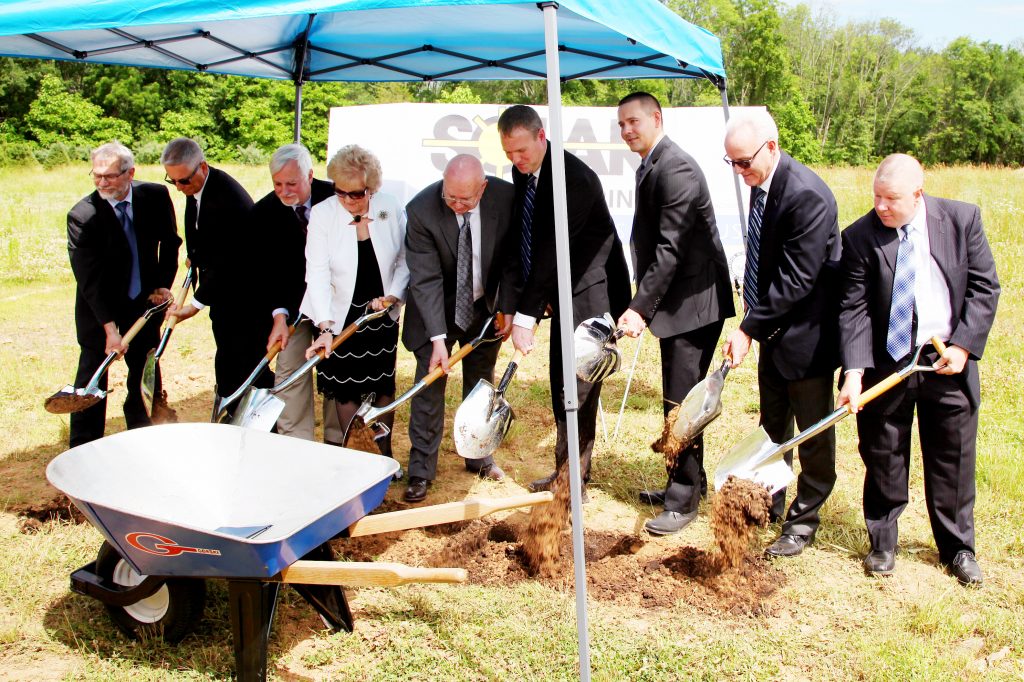
Solar Manufacturing Inc. celebrated this new chapter in its history with a groundbreaking ceremony for a new manufacturing facility at the Sellersville Business Campus in Bucks County, Pennsylvania. Due to substantial growth in recent years, Solar Manufacturing has been operating out of two separate manufacturing facilities located a few miles apart. The nearly 60,000 square-foot building will be built on 8.55 acres and is expected to be completed in early 2019. The new building will contain a two-story office space of nearly 20,000 square feet and 40,000 square feet of crane-served, manufacturing space.
"Solar Manufacturing has been very fortunate to experience steady growth over the past 15 years," said Bill Jones, CEO. "We needed more manufacturing space to expand and grow our business. Bucks County and Sellersville Borough have been very supportive and welcoming. It is an ideal location for us."
Solar Manufacturing is a member of the Solar Atmospheres family of companies, which is based with headquarters in Souderton, Pennsylvania, has four US commercial heat treating facilities with over 60 vacuum furnaces in operation, and services the aerospace, medical, automotive, defense, and other industries with heat treating equipment. This move to the Sellersville location will free up space for Solar Atmospheres' growing operations.
Pictured left to right: Jim Nagy, President; Bob Wilson, VP of Engineering; Scott Jacoby, Corporate Controller; Myrtle Jones, Owner; Bill Jones, CEO/Owner; Trevor Jones, CEO; Nick Cordisco, Service Manager; Pete Reh, VP of Sales; Rick Jones, International Sales Manager
Main image photo credit: Madeleine Cook, The Morning Call. Caption: CEO of Solar Manufacturing Inc., Trevor Jones, receives a certificate from his grandfather, owner William Jones, during the groundbreaking ceremony for a new manufacturing facility on June 21, 2018, in Upper Bucks County.
Graphite Machining, Inc. (GMI) of Topton, PA and Solar Manufacturing of Souderton, PA have been cooperating for the past year on the development and testing of a new graphite board material and its application for vacuum furnace hot zones. This new graphite board material has undergone extensive thermal and vacuum testing to prove its improved thermal efficiency and excellent vacuum performance compared to prior or present graphite board designs.
GMI intends to market this new graphite board under the name of HEATGUARD insulation while Solar Manufacturing will incorporate this new material into its vacuum furnace hot zones under the trade name of HEFVAC™ (High Efficiency Vacuum).
Frank C. Schoch president of GMI states “After extensive testing against our existing and competitive insulating materials, Solar Manufacturing and Graphite Machining combined our respective experience and created this new thermally efficient graphite board insulation material.”
Incorporating this new HEFVAC™ board insulation, Solar Manufacturing has now developed a proven more thermally efficient vacuum furnace hot zone design that is capable of achieving faster and better vacuum levels because of the HEFVAC™ sealed and low moisture absorption structure.









 What makes the North American heat treat industry of 2022 what it is? As with any industry, the heat treating world is made up of the people who now inhabit it and the people who paved the way for them. Let’s take a moment to think about the past and what we owe to the industry giants, those trailblazers who have guided so many. In that spirit, enjoy the life stories of these three




 Find heat treating products and services