

Advanced Heat Treat Corp.

22 News Chatter to Keep You Current

Heat Treat Today offers News Chatter, a feature highlighting representative moves, transactions, and kudos from around the industry. Enjoy these 22 news items, including Advanced Heat Treat Corp.’s expansion of induction hardening and gas nitriding capacity in Alabama, Dauch Corporation’s acquisition of Dowlais Group, CAN-ENG Furnaces International’s new certification as a FANUC Authorized System Integrator, and more!


Equipment

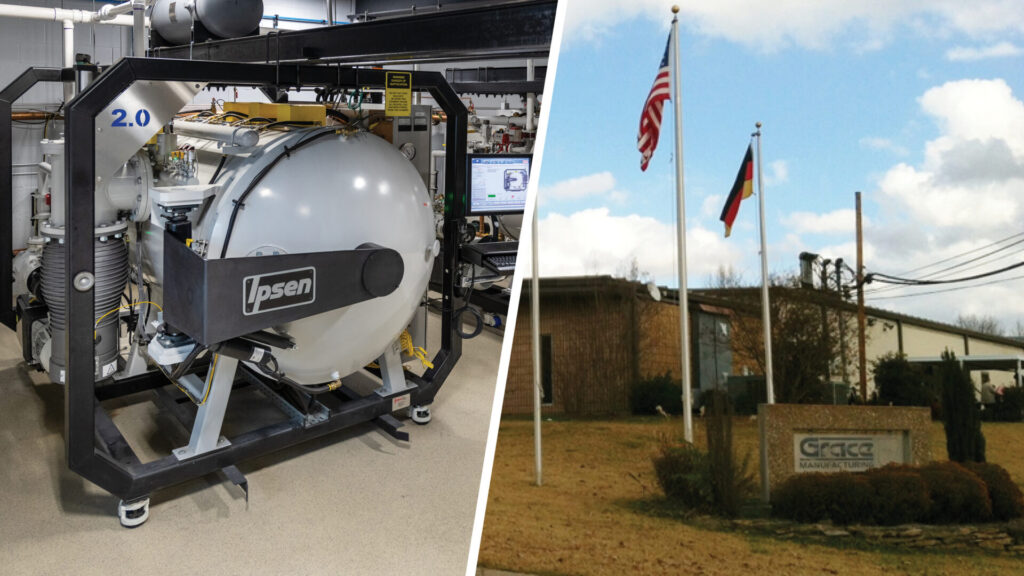
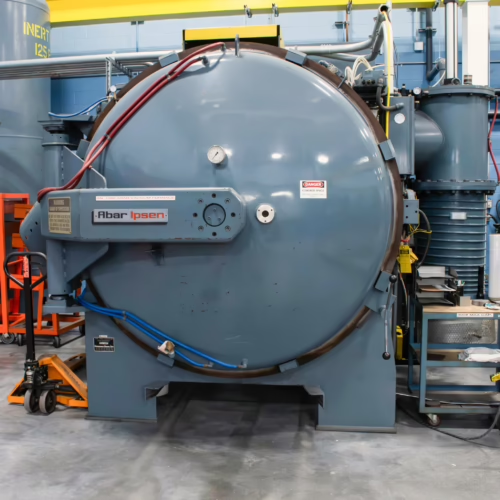
1. Urschel Laboratories, a manufacturer of precision food-cutting equipment, has ordered a new MetalMaster HR vacuum furnace from Ipsen USA to support in-house heat treating of stainless steel components used in its machines. The system will replace a furnace that has been operating since 1986 and marks Urschel’s sixth furnace purchase from Ipsen, reflecting a decades-long partnership. The upgrade is expected to strengthen Urschel’s manufacturing efficiency and product reliability, reinforcing equipment performance across the global food processing industry it serves.

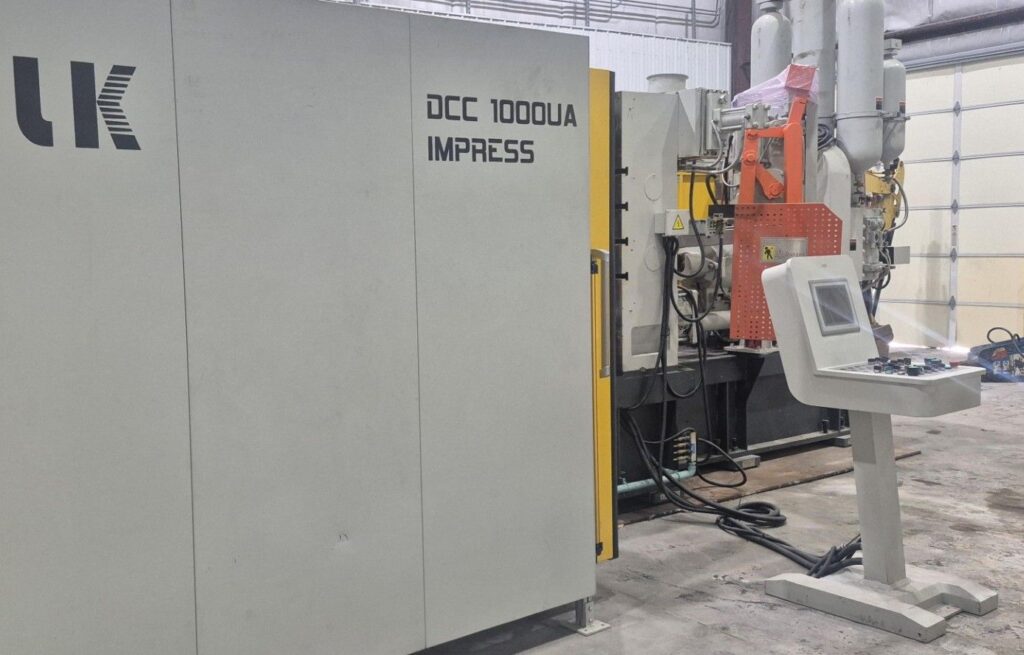
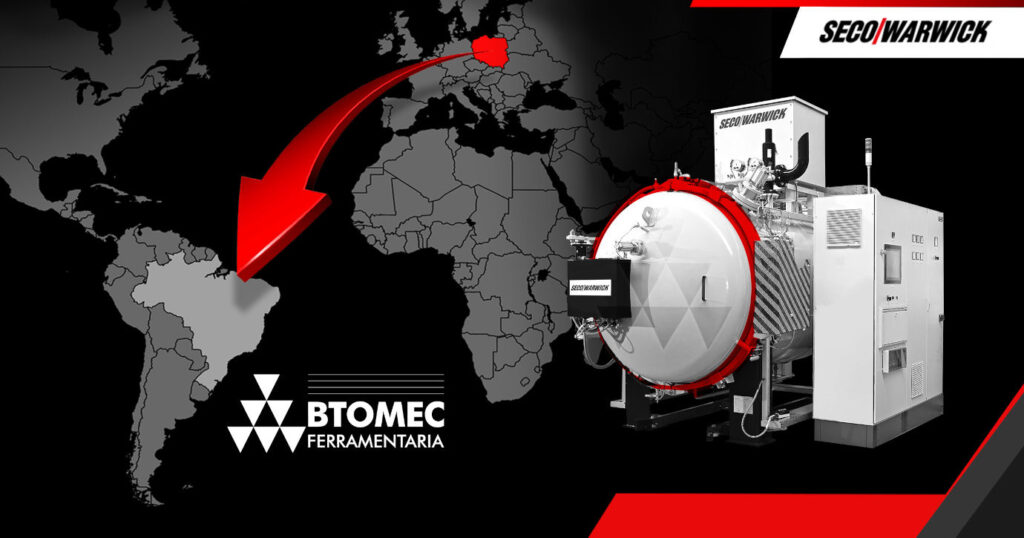
2. BTOMEC Ferramentaria e Usinagem de Precisão Ltda., a manufacturer of multi-cavity injection molds, has invested in a Vector vacuum furnace from SECO/WARWICK to bring die and tooling hardening in-house. The move enables the company to reduce reliance on external heat treaters while gaining greater control over production timelines, costs, and quality. The investment reflects a broader industry trend of manufacturers establishing internal heat treat capabilities as production volumes grow.

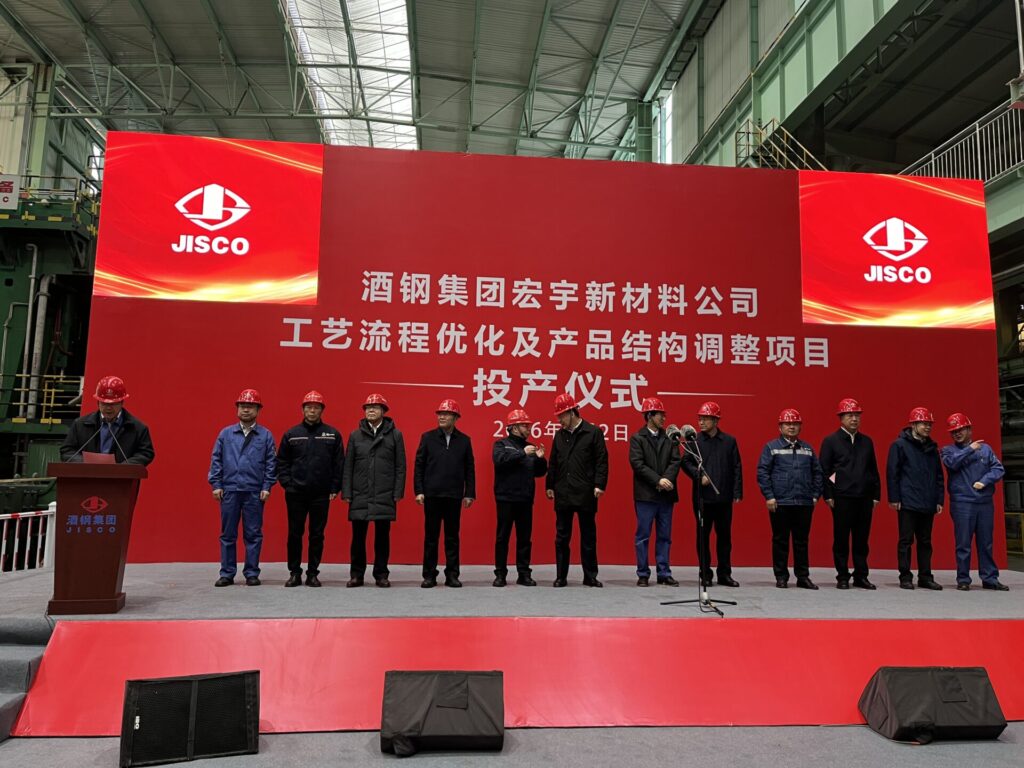
3. JISCO Carbon Steel has commissioned a new integrated CSP®-HSM production line at its Jiayuguan facility, combining Compact Strip Production casting with a hot strip mill in a fully automated system supplied by SMS Group. The upgrade doubles the plant’s annual production capacity from about 2 million to 4.5 million tons while improving operational flexibility and process integration between casting and rolling. The project strengthens JISCO’s ability to deliver consistent flat-steel products for global manufacturing markets.

4. Grace Manufacturing has installed a new TITAN H2 vacuum furnace from Ipsen at its Russellville, Arkansas facility to expand heat treating capabilities for thin martensitic stainless steel components used in medical devices. The system replaces an aging furnace and was selected after third-party testing confirmed it met the company’s processing requirements. The upgrade strengthens production reliability and metallurgical control for precision medical manufacturing.

5. An international aircraft motion-control manufacturer has ordered an additional low-temperature vacuum tempering furnace from SECO/WARWICK’s U.S. subsidiary to expand its heat treat capacity for precision aerospace components. The system will support tempering, aging, and other sub-critical heat treat processes while meeting stringent aerospace thermal-processing standards.

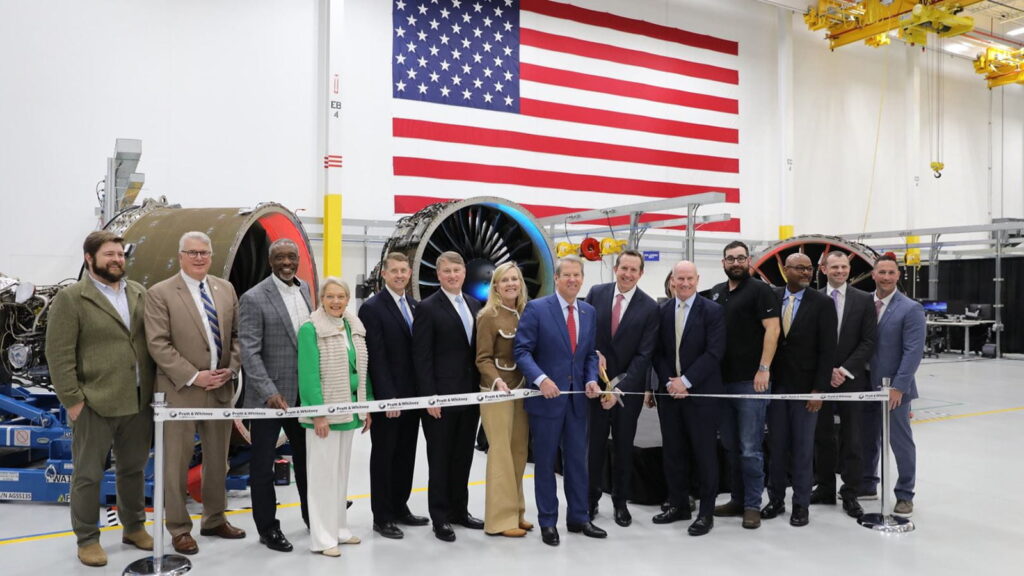
6. Pratt & Whitney, an RTX business, is investing $200 million to expand its Columbus, Georgia, manufacturing site with a seventh isothermal forging press to produce rotating compressor and turbine disks for commercial and military jet engines. The new equipment is expected to increase output of these critical engine components by about 30% and is scheduled to be operational in 2028. The expansion strengthens production capacity for next-generation aerospace engine programs and supports growing global demand for aircraft propulsion systems.

7. A defense-sector firearm manufacturer has selected a vacuum furnace system from SECO/WARWICK to support carburizing and heat treatment of steel components used in firearm production. The new equipment will enhance control over case hardening processes, helping improve durability and performance of critical firearm parts. The investment strengthens thermal processing capacity within the defense manufacturing supply chain.

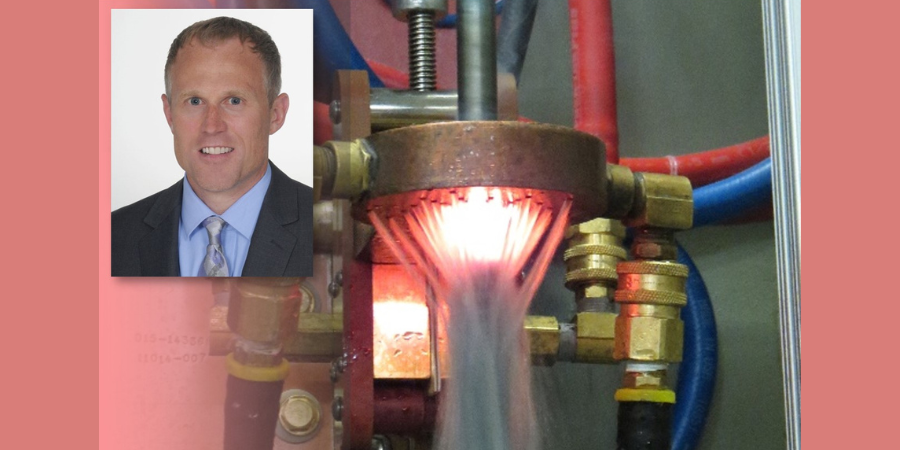
8. Advanced Heat Treat Corp. (AHT) has expanded induction hardening and gas nitriding capacity at its Cullman, Alabama facility, adding a larger induction system and an additional nitriding unit. The upgrade enables the processing of larger and more complex components while supporting higher production volumes. The investment strengthens surface hardening capabilities for manufacturers by improving throughput and maintaining fast turnaround times for industrial parts.

9. Bodycote has installed a new diffusion hardening treatment vessel at its Mooresville, North Carolina facility, expanding stainless steel processing capabilities in North America. The system enables the company to surface-harden larger components using its ADM® low-temperature diffusion hardening process. The investment broadens capacity for industries such as oil and gas, food and beverage, and medical technology by improving durability of stainless steel parts while maintaining corrosion resistance.

10. Gasbarre Thermal Processing Systems will supply a custom-engineered box furnace and loading system to a U.S. government manufacturing facility to expand a previously validated high-temperature thermal process. The system, designed to meet strict space and operational constraints, will operate up to 2100°F in an air atmosphere and represents the largest configuration the facility can accommodate. The installation enables the government manufacturer to scale production while maintaining specialized thermal processing capabilities.

11. A China-based manufacturer of vacuum circuit breakers has ordered two vacuum furnaces from SECO/WARWICK to add vacuum brazing capability for producing vacuum interrupter components used in power distribution systems. The installation expands the manufacturer’s ability to produce brazed, hermetically sealed interrupter assemblies used in circuit breakers that interrupt electrical current in industrial and utility power networks.

12. PSW Group has opened a new High Integrity Diecasting Center at its Magretech plant in Bellevue, Ohio, focused on semi-solid casting technologies for aluminum and magnesium components. Led by Dr. Tao Wang, the facility allows OEMs, Tier 1 suppliers, and die casters to trial, develop, and scale advanced casting processes using semi-solid and high-pressure die-casting methods. The center aims to accelerate development of lighter, stronger, and lower-carbon metal components, supporting innovation and faster time-to-market across the automotive and light-metal manufacturing sectors.
Company & Personnel

13. Dauch Corporation has completed its acquisition of Dowlais Group plc, bringing together major automotive manufacturing operations including GKN Automotive and GKN Powder Metallurgy. The combined company expands global capabilities in driveline systems, metal forming, and powder metallurgy under the leadership of CEO David C. Dauch. The move strengthens supply and engineering capacity for internal combustion, hybrid, and electric vehicle platforms across the global automotive industry.

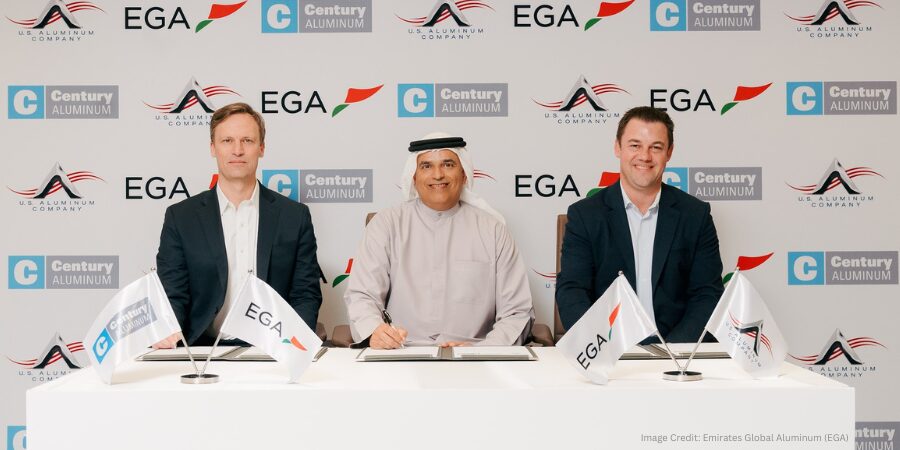
14. U.S. Aluminum Company has signed an agreement with Emirates Global Aluminum (EGA) and Century Aluminum to explore building a downstream aluminum fabrication facility in Inola, Oklahoma, near a planned primary aluminum smelter. The proposed plant would convert molten aluminum into value-added products for sectors such as electrical, defense, aerospace, automotive, and machinery manufacturing. The project aims to strengthen U.S. aluminum supply chains and help expand domestic primary aluminum production capacity.

15. The AICHELIN Group has appointed Daniel Panny as head of United Process Controls (UPC) in Göppingen and Mike Löpke as head of QMULUS in Düsseldorf as part of organizational changes following the integration of NITREX. The leadership updates strengthen the group’s focus on automation, plant control, and IIoT-driven digital solutions for heat treatment operations. The move supports closer integration of furnace technology, process expertise, and data-driven optimization across the global heat treat industry.

16. SECO/WARWICK has appointed Pan Gaojun as managing director of SECO/WARWICK China, following a succession process within the company. Gaojun, who joined the group in 2010, will lead operational development and strengthen the company’s presence in key technologies such as CAB lines and vacuum furnaces in the Asian market. The leadership change is intended to support continued growth and strengthen SECO/WARWICK’s position in China’s expanding heat treat and thermal-processing sector.

17. Vienna-based refractory manufacturer RATH AG has appointed Christian Morawetz as chief operating officer, bringing the experienced operations executive onto its Executive Board to oversee production, purchasing, R&D, quality management, and IT across the company’s global manufacturing operations. Morawetz’s leadership and industrial management experience are expected to strengthen operational efficiency and innovation as the company undertakes a broader transformation of its product portfolio and production structures to better serve high-temperature industries such as steel, glass, and ceramics.

Kudos

18. The U.S. Department of War (formerly Department of Defense) has awarded contracts through the Defense Logistics Agency to 24 manufacturers to supply additively manufactured metal and polymer parts under the Joint Additive Manufacturing Acceptability (JAMA) IV pilot program. The firm-fixed-price IDIQ contract, valued at up to $9.8 million with a base period through Feb. 2027, allows the Pentagon to issue task orders for 3D-printed components supporting U.S. military programs.

19. CAN-ENG Furnaces International Ltd. has been certified as a FANUC Authorized System Integrator, expanding its capabilities in robotic automation for industrial furnace and thermal-processing systems. The certification allows CAN-ENG to design and integrate FANUC robots into heat treat operations, including material handling and high-volume furnace automation. The partnership strengthens automation options for manufacturers seeking greater efficiency, reliability, and safety in heat treat and thermal processing environments.

20. Burloak Technologies Inc., based in Oakville, Ontario, has completed its latest Nadcap audit, enabling its heat treatment capabilities to support demanding industries. The certification reinforces the company’s thermal processing services — including hot isostatic pressing (HIP), vacuum heat treatment, and alloy heat treat cycles — used in sectors such as aerospace, defense, automotive, and medical manufacturing.

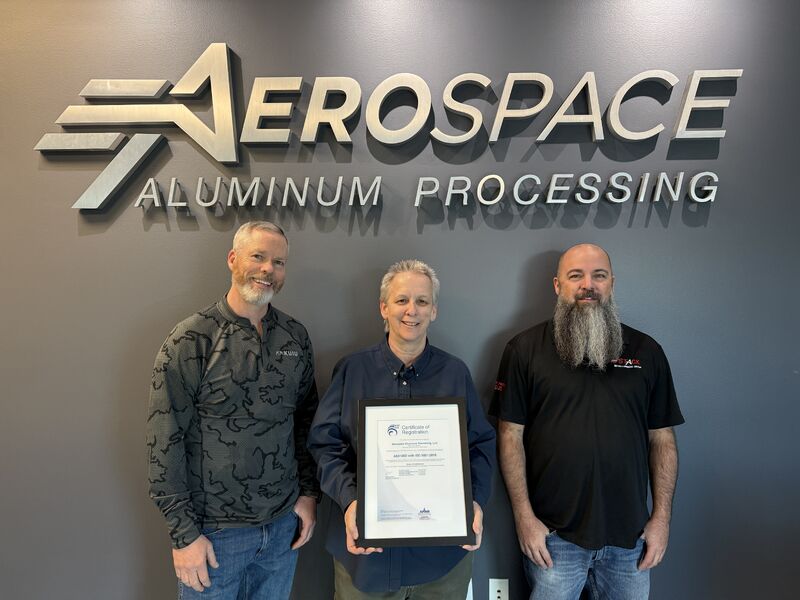
21. Stack Metallurgical Group announced that its Salt Lake City facility, Aerospace Aluminum Processing (ASAP), has achieved AS9100D certification following an audit completed with zero findings. The accreditation strengthens the facility’s quality credentials for aerospace aluminum heat treating and related processing, reinforcing its role in supporting high-spec aerospace manufacturing and positioning other Stack facilities to pursue similar approvals.

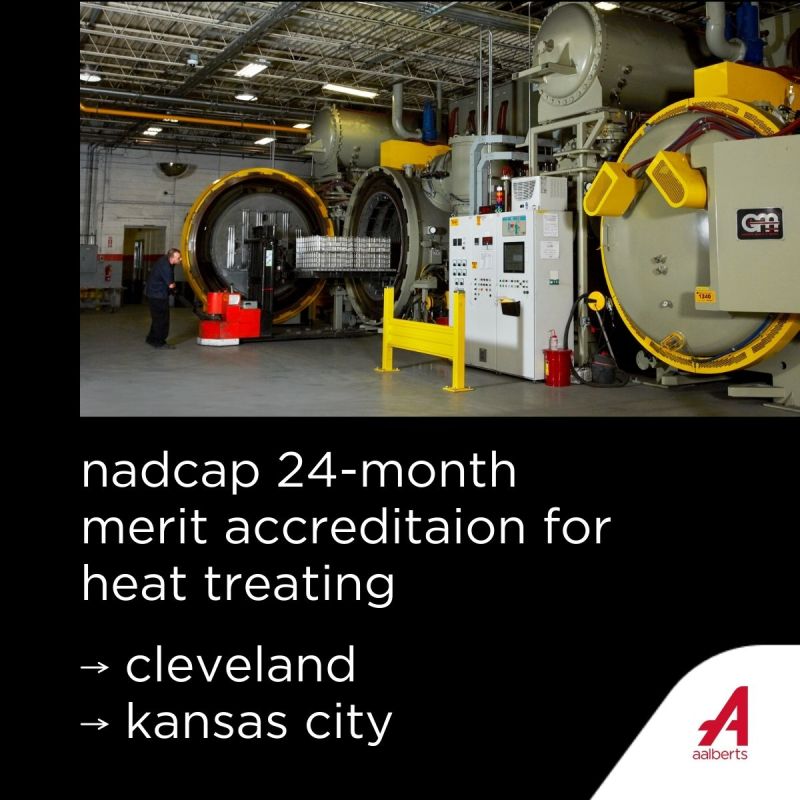
22. Aalberts surface technologies announced that its Cleveland, Ohio, and Kansas City facilities have earned Nadcap 24-Month Merit Accreditation for heat treating, effective February 10, 2026. The designation — achieved after years of near-zero audit findings and strict AMS2750 pyrometry compliance — signals strong process discipline and quality systems for aerospace heat treat operations, helping reduce supplier risk and strengthen reliability across the aerospace manufacturing supply chain.
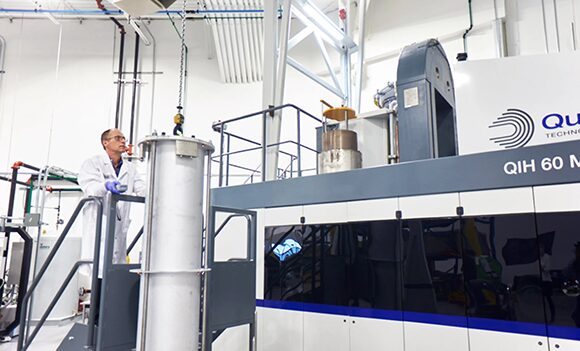
22 News Chatter to Keep You Current Read More »
Induction Hardening and Gas Nitriding Capacity Added at Alabama Plant

Advanced Heat Treat Corp. (AHT) has expanded induction hardening and gas nitriding capacity at its Cullman, Alabama facility, increasing throughput and enabling the processing of larger and more complex parts for manufacturers. The investment supports growing demand for surface hardening technologies used to improve wear resistance, fatigue strength, and durability across industrial applications.

Tim Garner
Plant Manager
Advanced Heat Treat Corp. (AHT)

The expansion includes two additional systems: a larger induction hardening unit capable of processing parts up to 60 inches in diameter and an additional gas nitriding unit to support high-volume nitriding programs while maintaining quick lead times and consistent processing quality. Earlier systems primarily handled cylindrical components such as shafts, gears, and pins. The new system can now accommodate more complex geometries, broadening the range of parts the plan can process.

“These investments allow us to scale with our [clients],” said Tim Garner, plant manager at AHT. “We are well-positioned to handle a wide range of part sizes, geometries, and production volumes without compromising turnaround times.”

Press release is available in its original form here.
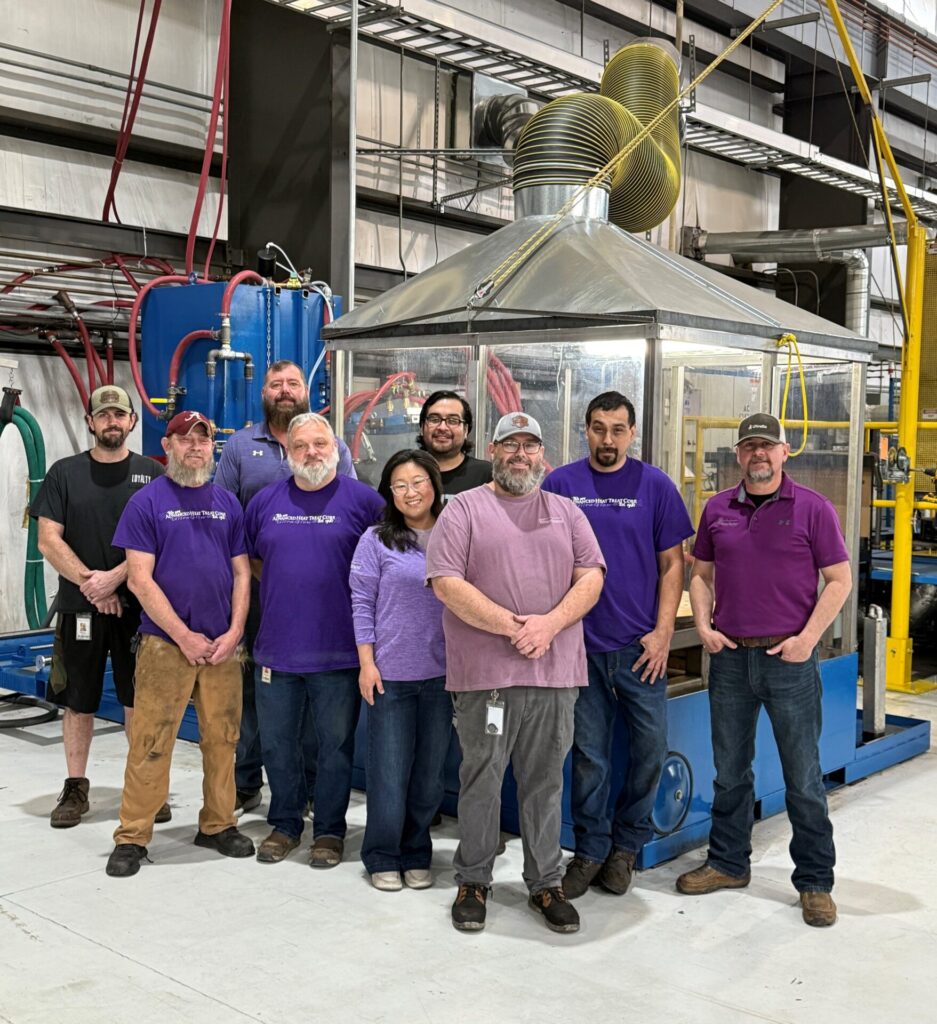
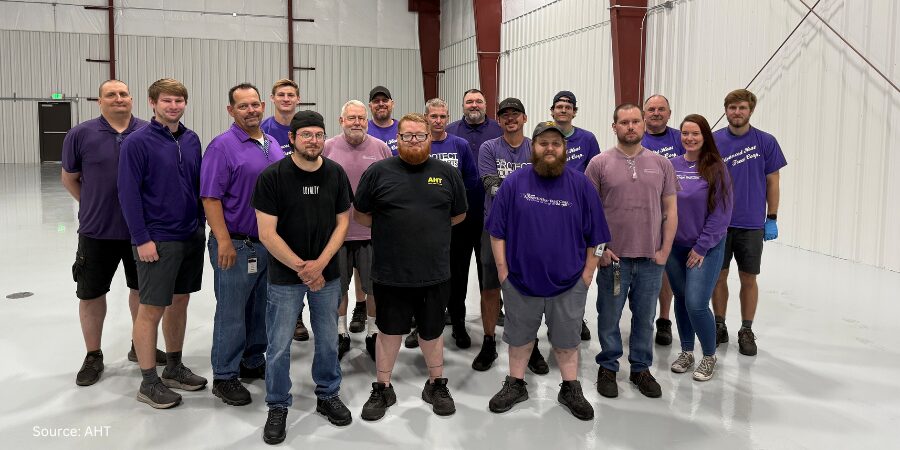
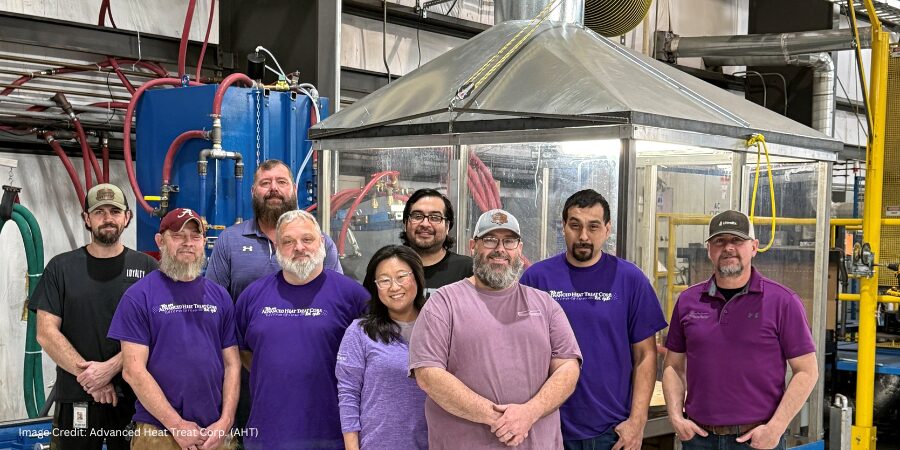
Main image shows AHT employees standing in front of the new induction hardening unit in Cullman, Alabama. Image Credit: Advanced Heat Treat Corp. (AHT)

Induction Hardening and Gas Nitriding Capacity Added at Alabama Plant Read More »

Michigan Heat Treater Completes Building Expansion

Advanced Heat Treat Corp. (AHT) has completed a building expansion at their Monroe, Michigan facility. The new 6,000 sq. ft. addition increases production capacity and enhances operational efficiency.

The climate-controlled addition will provide an area for additional equipment and services for Advanced Heat Treat Corp. (AHT), free of existing production space, and provide a new office and modern breakroom.

Chad Clark
Plant Manager
Advanced Heat Treat Corp.

Groundbreaking for the project took place on November 27, 2024 and their certificate of occupancy was awarded on July 29, 2025.

“Seeing this expansion completed is incredibly rewarding—it reflects the hard work and dedication of our entire team,” said Chad Clark, Plant Manager. “The additional space allows us to streamline operations, support more equipment, and enhance service to our customers. We’re excited to begin the transition and fully integrate the new area into our daily workflow.”

Heat Treat Today reported on a new gas nitriding unit at the Monroe facility last month. The new unit will be utilized in heat treatment for industries such as automotive, government and defense, plastics, power generation, and others. It will utilize UltraGlow® Gas Nitriding, which is a case-hardening process whereby nitrogen is diffused into the surface of a solid ferrous alloy by holding the metal at a suitable temperature in contact with a nitrogenous gas, usually ammonia.

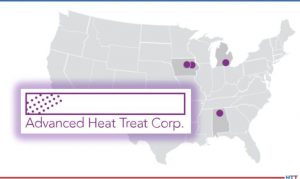
AHT has four locations: one in Monroe, Michigan; two in Waterloo, Iowa; and a fourth in Cullman, Alabama. AHT Michigan has the unique capability to nitride parts up to 31-feet in length.

Press release is available in its original form here.


Michigan Heat Treater Completes Building Expansion Read More »

Happy Independence Day!

Happy Independence Day from Heat Treat Today. Our team will be enjoying a long weekend of festivities, celebrating our nation’s 248th birthday with fireworks, community events, picnics, parades, and time spent with family. We have much to be thankful for; first and foremost are the freedoms we treasure articulated in that timeless Declaration of Independence and encoded in the Constitution of the United States.

We here at Heat Treat Today love to see how others in the industry honor our heritage and flag, and we thought you’d appreciate the heat treating work done by Advanced Heat Treat Corp. and shared on their LinkedIn page:

Posted to mark Flag Day, June 14, 2024, this is an ideal item for Heat Treat Today’sThis Week in Heat Treat Social Media,” but we didn’t want to wait. Here’s what the original post at LinkedIn said, “June 14th is Flag Day. We thought sharing these unique heat treated metal flags would be fun. Nitriding the flag makes it stronger and last longer outdoors.” You can see that post here.

Heat Treat Today’s offices will be closed July 4 and 5. There will be no e-newsletter either of those days. See you on Monday!


Find heat treating products and services when you search on Heat Treat Buyers Guide.Com


Happy Independence Day! Read More »

Nitriding and Surface Condition of Parts

Best of the WebSource: Advanced Heat Treat Corp.

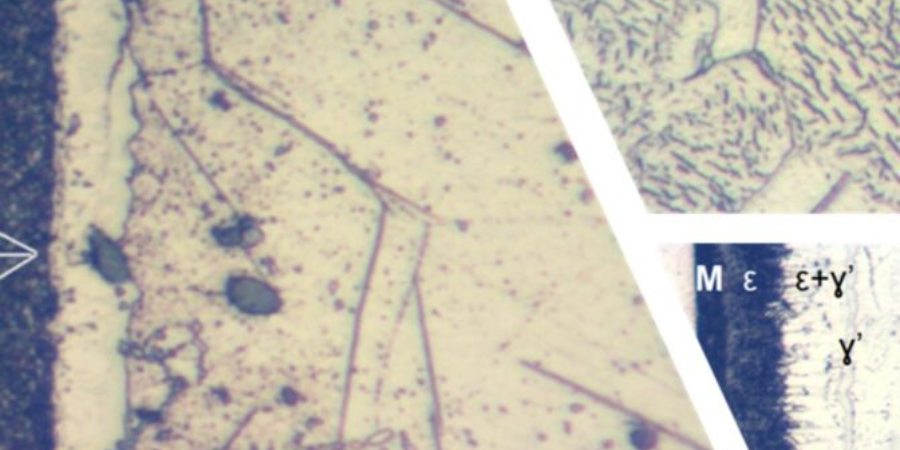
Metallography and nitriding, while two separate things, actually have a relationship. Do you know what it is? Would you be surprised to know that one enhances the other? Read this best of the web article to clearly see how metallography results help the nitriding of ferrous alloys be the best that it can be.

Find out how metallography is an essential tool in the nitriding process. Take a look at some basic definitions and peruse some microscope images that help explain what nitriding does to different materials. Dig even deeper with discussion of problems such as not enough stress relief and the presence of sulfides. Metallography helps explain, in this article, what nitriding can do for many different applications.

An excerpt:

Producing the best nitrided layers for the given application requires a good cooperation between designers of the product and the manufacturing companies making it . . . . Metallography of the parts, or samples which run together with them, is extremely important for verifying results of this thermochemical treatment and assessing the properties of the layer formed during, the data are also used for maintaining a good predictability of the process.

Read more: "Controlling the Nitriding Layers and Process with Metallography."


Find heat treating products and services when you search on Heat Treat Buyers Guide.com


Nitriding and Surface Condition of Parts Read More »

This Week in Heat Treat Social Media


Welcome to Heat Treat Today's This Week in Heat Treat Social Media. You know and we know that there is too much content available on the web, so it’s next to impossible to sift through all of the articles and posts that flood our inboxes and notifications on a daily basis. Today, Heat Treat Today brings you another hot take of the latest compelling, inspiring, and entertaining heat treat chatter from the world of social media.

We're looking at microscopic images, some in-depth heat treat content, a recap of networking opportunities, plus much more!

If you have content that everyone has to see, please send the link to editor@heattreattoday.com.


1. Art or Science?

Through heat treatment, austempered ductile iron (ADI) becomes incredibly strong. For ADI, the material has been austempered such that the matrix is transformed into ausferrite, or a mixture of acicular ferrite and austenite. The image below has been elevated to art-gallery quality with the use of selective color etching.

Images of weld metal, microstructure of coarse-grain zone, microstructure of fine-grain zone, and base material. See how the crystal orientation changes in different zones.


2. All That Chatter

Check out some of the chatter that everyone has been posting on heat treat topics over the last few months.


May the 4th


Congratulation on the New Role!

Time Will Tell
________________________________________________________
You Will Be Missed!

3.  Bumping Shoulders with Heat Treaters

It's great to connect with other folks in the industry. This past week has been an amazing opportunity to forge new relationships and strengthen old ones at trade shows and expos.


Rapid + TCT


Ceramics Expo


ACT Expo


SAMPE 2023


4. The Reading (and Podcast) Corner

Time to take your afternoon coffee and read a few technical articles from around the industry. Got too many things to do? Put on an episode of Heat Treat Radio to enjoy on your commute. Maybe you'll find some "continuing education" time this weekend!

Is there room for creativity in the heat treat shop?

Listen to an interview with Gary Sharp about ion nitriding. Topics include the history of and applications for this particular kind of nitriding.
Dig in a little deeper. Read more about ion nitriding. Hone in on TMS 80 micro alloyed steel with Dr. Rolinski.

Review of quench basics. Click to watch the video below!


5. Sleep Deprived

The excitement of nitriding keeping you awake at night?!


Have a great weekend!


.

Search for heat treat solution providers and suppliers on Heat Treat Buyers Guide.com


This Week in Heat Treat Social Media Read More »

Heat Treat Radio #93: Why Ion Nitride? An Exploration with Gary Sharp

Today’s Heat Treat Radio episode illuminates how Gary Sharp, founder and CEO of Advanced Heat Treat Corp, began the company. Heat Treat Radio host and Heat Treat Today publisher, Doug Glenn, will hear from Gary about the technical highlights and capabilities of ion nitriding, including: common applications, real-world benefits, and true limitations.

Below, you can watch the video, listen to the podcast by clicking on the audio play button, or read an edited transcript.


The following transcript has been edited for your reading enjoyment.

Contact us with your Reader Feedback

Advanced Heat Treat Corp.’s Beginnings with Ion Nitriding (01:20)

Doug Glenn: We’re going to be talking about nitriding, specifically, ion nitriding. Gary Sharp has a long history with the technical aspects of ion nitriding.

Tell us a little bit about yourself and Advanced Heat Treat.

Gary Sharp:  I started with John Deere in the Chemistry department. I have a degree in Science Chemistry. Then I went into various other areas: production support and different management positions before I ended up ultimately leaving to start Advanced Heat Treat.

The way I became oriented and introduced to ion nitriding was a company who we had done work with wanted to sell John Deere some new technology. They came in for some meetings, and we had several meetings with top management. But in 1979/80, that was one of the first real downturns in the ag market. So, Deere wasn’t really interested in taking on a new technology at that time. While I was still interested, I talked to various management people. Ultimately, I got permission to invest and investigate, on my own, the ion nitriding process.

Doug Glenn: Even while you were still at Deere?

Doug Glenn (l) and Gary Sharp (r)
Source: Heat Treat Today

Gary Sharp:  While I was still at Deere, but I had to do it on my own. All of my vacations, my holidays, and things were spent doing market surveys, talking to various potential users and so forth, in the marketplace, to see if it had a “fit.” Because, obviously, when an equipment supplier comes in, everything is nice and rosy and so forth and the equipment works for everything. That’s not always the case, of course.

After discussion with the management, they gave us permission to continue our investigation. From 1979 to 1981, we did a lot of research. I took vacations and went and did market surveys with different potential customers and found out that ion nitriding still seemed to have a lot of the glitz and the shine from the company that came in to talk to us.

We went ahead and, after a period of time and evaluation, put together an investor base. We put together a building, equipment was purchased, and then we began to do ion nitriding. We started with a 25 KW lab unit and a 160 kW unit that we would transfer from development into production-sized lots.

Doug Glenn:  You say “we,” so this was not Deere though — these were the people outside of Deere — yourself and some others, right?

Gary Sharp:  Yes, myself and several others, at the time. Unfortunately, some things happened and partnerships are not always the easiest. That dissolved, and it was pretty much me and my wife and our employee base. That was the start anyway.

The trouble is, early on, the small lab unit worked fine, and we could do out development; but it didn’t transfer over to the larger production unit. We kept having power supply issues. This went on for months and months and months. Ultimately, I had to get legal involved. That churned around for over a year, probably. Here we’re trying to have a startup business and, at the same time, we’re fighting with everything else. The building came together, the lab we put in worked well, but we just had issues.

We weren’t aware of how many pieces of equipment had been sold in the marketplace by this company until we got into legal, and then we started having more serious discussions. They replaced the power supplies with a new source and solved the arc suppression problems and some of the things that were taking place. Basically, we would get into the range of an unstable arc discharge; and instead of heat treating we were melting the parts. Unfortunately, we couldn’t keep many customers doing that! That got resolved, we got additional equipment in the settlement, and then we took off.

Doug Glenn:  When did you actually start the company?

Gary Sharp:  1981/82 timeframe.

From the market surveys, we knew there was considerable interest. Obviously, we went back to some of those folks and started doing some development work with them, particularly on applications where ion nitriding was a significant advantage over some other treatments. Where I was in Iowa, they were doing gas nitriding on cylinder liners. Again, with the market going south for a while, they weren’t interested in any new technologies; and they just continued to do the gas nitriding.

Doug Glenn:  So, you ran through a little bit of legal issues. When would you say was the first time you felt you were up and running?

Gary Sharp:  I think last week, maybe! It took a while.

In our investigation, we found out they had sold quite a few pieces of equipment; and they’d all been mothballed and put on the shelf. In a way, it was a bad deal, but it was good for us because we had the solutions to fix them.

I went around and purchased equipment, 10 cents on the dollar, and bought additional capacity. We would get up to around 70–80% capacity on one vessel, and then I’d go buy another. I’d get that up and established in our plant. It worked out quite well for us, being dumb and stupid, I guess.

Gary Sharp:  It kind of evolved over time. We’ve got 50+ units now — ion nitriding as well as gas nitriding. The nitriding field has been our baby for many, many years. We’ve done a lot of development with other suppliers to make sure the applications they run are using the right process.

What Is Nitriding? (09:03)

Doug Glenn:  Let’s talk a little bit about nitriding. Then I want to hone in a little bit more into ion nitriding. What is nitriding? How is it different from ion nitriding? What are we doing, and why do we do it?

Gary Sharp:  Nitriding is a case hardening process. It is used on a variety of components to improve wear, abrasion resistance, fatigue strength, etc. It’s generally a lower temperature process (than, say, carburizing or anything like that), so you don’t have the resultant distortion and post machining requirements that you do with some of the existing treatments that are out there.

Nitriding is a case hardening process. It is used on a variety of components to improve wear, abrasion resistance, fatigue strength, etc.

As you mentioned, there is ion nitriding, there is gas nitriding, there is salt bath nitriding. All three do similar things, they just have different requirements. Obviously, there are materials and chemistry that are involved with each of those materials, but you can nitride almost anything, at least putting a compound zone or an outer layer on that’s very abrasion resistant. Where the process gets developed is when you have alloy (Chromalloy, malatium, aluminum); these are nitride formers which, combined with the nitrogen at and below the surface, give you a diffusion zone that has longevity and a very high hardness.

Doug Glenn:  In the simplest terms, nitriding is in one sense hardening the surface of a metal by infusing nitrogen, basically. It’s done in a variety of ways, and that’s what I wanted to ask you a question about.

If the total universe of nitriding is 100%, what percent of that, do you think, is gas nitriding, salt nitriding and ion nitriding? Your best guess.

Gary Sharp:  I’ve heard different numbers. Ion nitriding has grown significantly over the years. Up until that point, gas nitriding and salt bath nitriding were probably 70/80%, I would guess. Ion nitriding is quite visual — it has a purple glow. That’s why I’ve got this purple tie on.

Doug Glenn:  I was going to ask why you have the purple tie on. I wondered why www.ahtcorp.com is purple.

The purple glow
Source: Advanced Heat Treat Corp.

We won’t go into the details of gas nitriding or salt nitriding; that can be a topic for another day. Let’s talk a little bit about how ion nitriding gets the nitrogen into the surface of the metal. How does that happen? How does that differ from, if you will, gas and/or salt?

Ion Nitriding (13:40)

Gary Sharp:  It’s a diffusion process. If you look at a piece of equipment, a hearth plate is a cathode in a DC circuit. The vessel wall is the anode, and the gas is your carrier.

Through the transfer of energy, you bombard the part with ions and neutral atoms. They transfer their kinetic energy, and that is what actually heats up the parts. In the early years, that was the only way you could heat the parts. Later came more developed equipment.

Now, you have auxiliary heating in the walls which adds some advantage, but it also adds a little more complexity in terms of keeping and maintaining a current density on the part adequate to diffuse into the metal itself. Sometimes you put it in a vessel, and you turn on the power supply. All the energy is coming from somewhere else, and you don’t actually diffuse or harden the part itself. It’s been solved, obviously, over the years.

Doug Glenn:  Are you making a positively and negatively charged item?

Gary Sharp:  The ions bombard the surface.

Doug Glenn:  Right. The ions bombard it because they’re attracted magnetically?

Gary Sharp:  Yep. And they transfer the kinetic energy. That’s what heated the workpiece up in the early equipment. Like I said, in later equipment, they had auxiliary heating, as well, in the chambers.

Applications of Ion Nitriding (15:17)

Doug Glenn:  Typically, what are some of the more common applications? Is it mostly agriculture, like John Deere?

Gary Sharp:  By no means. When I was still at Deere and left Deere, we made sure we didn’t have conflict of interest. I didn’t even solicit any Deere parts, and that went on for quite a few years. Since, we’ve done parts for them and so forth.

Anything that has high wear and abrasion. One of the advantages that we haven’t talked about is the ability to selectively harden and the ease of masking. “Ease of masking” means instead of using copper paints or stop-off materials, you can just interrupt the plasma from touching that surface. If you have some threads, you just put a nut on there. It blocks the plasma from touching the threads, and they won’t get hard. It is a physical block. And you have maybe an 8–10 thousandths/8–15 thousandths gap and you still don’t diffuse beyond the masking itself.

There are a lot of ways of masking parts with ion nitriding. Those are generally done on customers’ parts that are repeating, so you don’t have to paint them every time they come in. You let the copper paint dry and all of that. We would just use mechanical masking and just use them over and over. They basically last forever.

Doug Glenn:  I’ve heard one of the other real advantages of ion nitriding is blind holes and areas like that where gas flow wouldn’t necessarily get. Even salt might have a little of bit of difficulty getting in there.

Gary Sharp:  It is an advantage. There is an L/B ratio we must be aware of. You conform that plasma to go down in the hole, if it intersects itself with the other side (it’s called hollow cathoding). That is extremely hot and can melt the parts.

That’s what we learned early on, before we got some of the equipment issues resolved, is that we would get in that unstable arc discharge range. We’d basically melt the work piece. And the customers weren’t happy with that!

Doug Glenn:  It’s a bad day when you open the furnace to a pool of metal. That is not a good day!

We’ve got certain benefits there. Any industry, you’re saying, can do it, anywhere where there’s high resistance. So, automotive parts, yes?

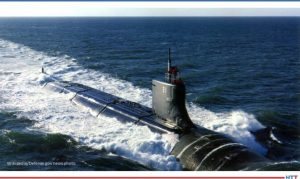
Gary Sharp:  Automotive, aerospace. We did the submarine gear for the Seawolf-class submarine, 35,000 pounds, 160 inch diameter. That ran, probably, 400+ hours. Not because it was big, but because they had an extremely deep case requirement. The diffusion took longer, particularly at the lower temperatures that you run, versus other kinds of treatments.

Sea-wolf class submarine
Source: Wikipedia.com/Defense.com News photo

Doug Glenn: With ion nitriding, you are typically below the temperature where distortion could occur, I believe. So, you shouldn’t have to do post hardening processes.

Gary Sharp:  Yes. That is one of the big advantages, for sure. We found that one of the reasons a lot of our customers transition out of one process into ours was because we eliminated some subsequent operations which they typically had to have and reduced their cost. Even though it wasn’t a direct cost in nitriding, it definitely affected that.

Challenges with Ion Nitriding (

Doug Glenn:  What are some possible challenges with ion nitriding?

Gary Sharp:  Loading a chamber and the part spacing you need, depending on what level of backing they’re going to run at, will determine how wide the plasma is. That, in turn, affects then how close you can put parts together or close to each other so that you still get treatment on both products or both pieces. And it does allow you to do mixed loads of different types of things, depending on the level of vacuum and how wide the plasma that you’re conducting surrounds that part.

This is a concern, and that’s why we review all those. Generally, we even run some test samples for the customer. We let them compare our metallurgy with theirs before they commit even further production loads.

We had a steering torsion bar we probably ran 10,000 pieces in a load. We masked the bottom portion of that because it got cross-drilled in the assembly and, of course, they didn’t want to have to drill through a hardened piece of material. Consequently, it worked out really well for us; and we did that for 15/20 years.

Special Consideration: Parts Cleaning (22:17)

Doug Glenn:  I have heard that when you’re ion nitriding, part cleanliness is a critical part. Can you address that?

Parts cleaning
Source: Advanced Heat Treat Corp.

Gary Sharp:  Yes. Of course, we clean everything before it goes in the chamber. Typically, it has been either with an alkaline wash or vapor degrease to get rid of any contaminants off the surface. The early part of the cycle, when you turn the DC power supply on, you begin to sputter. So, any oxides and things like that on the surface get sputtered away before you actually ramp up and start the diffusion phase of the cycle.

Cleaning is important. If you have plating, that often blocks out. If you have dirty parts, that will prevent nitriding. Or, an even worse case, it will sputter off and onto other parts and then you contaminate those as well.  Cleaning is an important part of the equation.

Doug Glenn:  Are there any other common misperceptions about ion nitriding that you would like to address?

Gary Sharp:  I don’t know any more. Back then, when we first started, that’s how we learned some of the things we did, of course. The spacing is important, the gaps are important so that you don’t hollow cathode. And, as you touched on a little bit ago, the cleanliness; if it’s really dirty and contaminated, you’re going to have a void in that area and it won’t nitride. Even a fingerprint could cause an issue.

Cleaning parts it’s getting more difficult, right now, with the push to restrict the use of vapor degreasing and things like that. We have to come up with other cleaning methods that are suitable and still meet the end-product requirements.

Wear and abrasion are big benefits. Treating parts at a low enough temperature that you don’t have distortion. You don’t have to set up and post heat treat machine. Those are all key benefits from the process itself.

It’s repeatable. Over and over, we do thousands and thousands of parts and loads at our different locations. It’s been quite successful for us.

Ion Nitriding and FNC (26:07)

Doug Glenn:  Can you put ion nitriding (or nitriding, generally) in perspective with things like ferritic nitrocarburizing, maybe carbonitriding? Where does it fall on the scale? What are the differences between those processes?

Gary Sharp:  Ion nitriding is most effective when you have Chromalloy, malatium, aluminum, and those types of elements in your product. Of course, with carburizing, that’s not a requirement. With carbonitriding, typically, it isn’t a requirement. Both of those processes are done at considerably higher temperatures which then gets you back into the questions: Is the part going to distort, do we have to post heat machine?

Doug Glenn:  I have one last question for you about people who, potentially, could use your services, but I want to dive a little bit deeper into your company before we wrap up. You’ve got three locations, now, correct?

Gary Sharp:  We have four.

Doug Glenn:  Four locations? Where are they?

Gary Sharp:  Three of them do ion nitriding and the nitriding process. Here, in Waterloo, we have the corporate headquarters where we have the largest ion nitriders. As a matter of fact, we are installing one right now that will do parts upwards of about 30 feet. We have Waterloo, Iowa, and we have the two facilities here in essence where we started. It was risky enough, leaving John Deere, without going somewhere else.

Here, in Waterloo, we have the corporate headquarters where we have the largest ion nitriders. As a matter of fact, we are installing one right now that will do parts upwards of about 30 feet.

Then we added Michigan. Dr. Ed Rolinski was our key “go-to” guy up in Michigan. He lived with me for a year and half. Meanwhile, we were building the facility in Michigan; so he could go back to it.

Then we started a plant in Cullman, Alabama. We’ve got the central Midwest pretty well covered with all types of applications. We’re starting to add some other types of treatments: the black oxide treatment® to kind of subsidize the ion nitriding, if you will.

Doug Glenn:  Let me wrap up with this question:  Let’s say there is a company out there, a manufacturer, who currently is doing some sort of a case hardening process. They’re thinking, “I wonder if I should look into nitriding/ion nitriding.” What would be your guidance for them? What questions should they be asking themselves?

Gary Sharp:  Companies have to go through the some of the same steps we did early on —  testing, making sure the parts/the treatment they select is repeatable, and it fits their end-use.

It’s rather expensive equipment. Some equipment is in excess of $600,000–$700,000 apiece. Depending on the size, they can get even more expensive than that.

We do make some of our equipment, now. We have in the past, particularly, when there were things that weren’t available.

If you’re looking to outsource ion nitriding, you’d start first with the material chemistry and see what materials are used. It has to fit the requirements of the end application, as well. That’s probably the biggest thing.

Then, if it’s got alloy in it and you figure out your case steps and your diffusion requirements, next you would do some development testing on parts and see how it worked in the application and go from there.

Doug Glenn:  And it’s probably best just to ask an expert! At least call and check it out.

Is there any part (or maybe there is more than one) that if you have this part, you shouldn’t even consider ion nitriding — it’s just not going to work?

Gary Sharp: In ion nitriding, a key thing to be cautious of — assuming the material is compatible with the nitriding reaction — is wide holes, or holes we can’t conform the plasma tight enough to reach. In those cases, you’d have hollow cathode and then you’d have a melting issue or damage to the parts.

Parts that have to be nitrided all over can also be problematic. Oftentimes, in those cases, you would nitride for half cycles and then flip them because where it’s sitting is actually getting masked, where it’s sitting on the hearth plate or on your fixture plate or something similar. So, those are the kinds of applications that you have to give more thought to.

Doug Glenn:  We appreciate your time, Gary. You folks have been around a long time, and your reputation is one for doing great work. I hope people will get in touch with you.


About the expert: Gary Sharp founded Advanced Heat Treat Corp., “AHT” for short, in 1981. The company initially went to market with its UltraGlow® ion nitriding & ion nitrocarburizing services, but since then, has expanded its offerings to also include gas nitriding, gas nitrocarburizing and UltraOx® as well as more traditional heat treatments such as carburizing, induction hardening, carbonitriding, through hardening and more.

For more information: Contact with Gary or learn more about Advanced Heat Treat Corp. at www.ahtcorp.com, or call 319-232-5221.


To find other Heat Treat Radio episodes, go to www.heattreattoday.com/radio .


Search heat treat equipment and service providers on Heat Treat Buyers Guide.com


Heat Treat Radio #93: Why Ion Nitride? An Exploration with Gary Sharp Read More »

Induction Hardening Service at Alabama Heat Treat Facility

HTD Size-PR Logo

Mikel Woods
President
Advanced Heat Treat, Corp.
(Source: www.ahtcorp.com)

Advanced Heat Treat Corp. (AHT), a heat treat services and metallurgical solutions provider, has expanded their induction hardening capabilities at its location in Cullman, AL.

While the heat treatment --- UltraGlow® Induction Hardening --- will be a new service offering at this AHT facility, this will be the sixth new induction unit at the Alabama location added in the last couple of years.

"We are pleased to offer induction hardening at a second AHT location," commented Mikel Woods, president of AHT. "After talking with many of our customers, we know this will be a welcomed service and we’ll be able to provide better turnaround times than the area is currently experiencing."


Find heat treating products and services when you search on Heat Treat Buyers Guide.com


Induction Hardening Service at Alabama Heat Treat Facility Read More »

The Properties of Titans vs. Poor Tribological Performance

Source: Advanced Heat Treat, Corp.

There seems to be no limit to what heat treated titanium alloy products can do -- just listen to the name: "titans." However, its poor tribological performance means that a surface treatment is necessary in most applications.

This best of the web article shares a quick technical run-down of all you need to know about plasma/ion nitriding of titanium alloy products with guidelines and graphs to show you the way.

An excerpt:

At the moment, nitriding is the most common and rational diffusion treatment which can be used for all-over surface hardening of titanium products. Nitrided titanium has a gold/yellow color of the TiN nitride enhancing attractiveness of the treatment in many applications.

Read more at "Plasma / Ion Nitriding of Titanium Alloy Products for Enhancing Their Tribological and Anticorrosion Properties"


Find heat treating products and services when you search on Heat Treat Buyers Guide.com


The Properties of Titans vs. Poor Tribological Performance Read More »

19th Century Guns vs. 21st Century Corrosion Resistance

Source: Advanced Heat Treat Corp.

Let's talk about guns.

To create a durable and corrosion resistant barrel, guns in the 19th century were made with blackening, a process related to heat treat. This application also increased the general look, reduced light reflection, and increased wear resistance in general.

This best of the web will cover general blackening of ferrous metals and summarize key points about nitriding and nitrocarburizing with blackening.

An excerpt:

"There are three types of blackening in common use: Caustic Black Oxidizing, Room Temperature Blackening and Low-temperature Black Oxide."

Read more at "Decorative and Technical Aspects of Ferrous Metals Blackening"


Find heat treating products and services when you search on Heat Treat Buyers Guide.com


19th Century Guns vs. 21st Century Corrosion Resistance Read More »

Skip to content