


Intel Exec Addresses Heat Treat Industry on Factories of the Future

Doug Glenn, Publisher, Heat Treat Today

A Special Report from Heat Treat Today Publisher, Doug Glenn

Nearly 100 top level heat treat and finishing professionals have gathered in Atlanta to discuss future trends in the heat treating industry. The event kicked off last night with an opening reception at the Intercontinental Hotel in Buckhead, Georgia (see photographs at the bottom of this post). Representatives from Mexico, Europe, and the United States are present to hear what an excellent panel of speakers has to say about the future of heat treat as well as share ideas with each other. (Listen to Heat Treat Radio’s interview with heat treat consultant Thomas Wingens as he discusses future MegaTrends in the heat treat industry. Click here.)

Of note in today’s sessions is an opening keynote address by Dr. Irene Petrick from Intel Corporation on “Factories of the Future: What Does the Future Workforce Look Like?” Based on anecdotes from the attendees, the recruitment of skilled help is becoming a significant issue.

Dr. Irene Petrick, Intel Corp., speaking on Factories of the Future: What Does the Future Workforce Look Like?
Dr. Irene Petrick, Intel Corporation, speaking on Factories of the Future: What Does the Future Workforce Look Like?
The "tape rule" test has eliminated more potential employees than a drug test!
The “tape rule” test has eliminated more potential employees than a drug test!

And not only recruitment but retaining good workers. Since heat treating is not considered a cutting-edge industry, it is difficult to recruit and retain. Passing a drug test is one obstacle, but one high-ranking executive suggested that there is an even more significant hurdle for new employees to pass, what he referred to as the “tape rule” test — being able to read and accurately add measurements from a tape rule. Doesn’t seem like a monumental test to pass, but according to this source, it has eliminated more candidates from employment than the drug test. There’s something to be said for listening in 3rd- and 4th-grade math class when the concept of common denominators is taught.

Another industry consultant commented on the increased demand for experienced and knowledgeable individuals to advise when it comes to owning and operating heat treat equipment. The need for hands-on training as well process education is widespread as a vast amount of knowledge is leaving the industry through retirement. Fortunately, for this consultant, business is very good due to this fact. More companies are needing his services.

To help locate a qualified heat treat consultant, Heat Treat Today has launched a new Heat Treat Consultants resource. The “official” launch will be in a few weeks, but you can get a sneak peak by clicking here.

Todd Grimm, T.A. Grimm & Associates speaking on Trends in Additive Manufacturing

Additive manufacturing will also be one of the topics covered today by Todd Grimm of T.A. Grimm & Associates. As one of the more disruptive manufacturing technologies in the last decade, additive manufacturing is a topic often covered within the webpages of Heat Treat Today. For a glimpse at some of the articles published in the recent past, click here.

For a complete list of ITPS presentations, click here.

ITPS is produced by the Industrial Heating Equipment Association. Both Industrial Heating magazine and Heat Treat Today are media co-sponsors of the event.


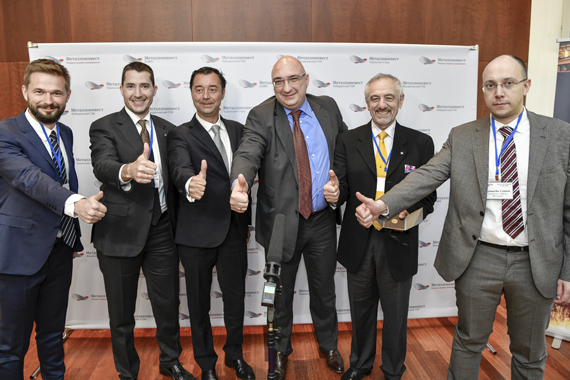
Below are photos from the July 30th Opening Reception. Click on an image to enlarge.

Intel Exec Addresses Heat Treat Industry on Factories of the Future Read More »

Before Normalizing, Pause to Assess Materials


Source: BluewaterThermal.com


When there is a need to provide a uniform, pearlitic structure at a microscopic level, many heat treaters turn to normalizing to increase or restore metal strength, but experts at Bluewater Thermal Solutions note the need to assess all aspects of the material before choosing this process.

“It is possible with given alloys and metals that the process may also cause a decrease in overall strength.” 

Read more: “The Advantages of Normalizing Heat Treatment of Parts” as well as “Normalizing Services for Metal and Metal Components”


Before Normalizing, Pause to Assess Materials Read More »

ThermProcess Summit Starts Tomorrow in Atlanta — You Should Be There

Doug Glenn, Publisher, Heat Treat Today

A Special Message from Heat Treat Today publisher, Doug Glenn.


There are heat treat trade shows; then there is ITPS — the International ThermProcess Summit — being held this year, for only the second time in the USA, in Atlanta, Georgia, at the Intercontinental Hotel in Buckhead. This event is the premiere event for forward-thinking heat treat executives whether they be from manufacturers with in-house heat treat, from a contract heat treat shop, or from a supplier to the heat treat industry. This event is not so much an equipment and process event as it is a strategic planning event for high-level heat treat department heads or C-suite dwellers.

It would be good to register today and get to Atlanta ASAP if you have not done so already. Click here to register or go to www.itps-ifcs.com. Or you can just show up on-site. I’m sure they’ll let you in!

High-level, strategic planning is what this mostly-conference-with-some-table-top-exhibit event is all about.

Covey talks about taking time to “sharpen the saw” — this event is a saw-sharpening moment. You might run into some other like-minded people in organizations that would be advantageous for you to know — customers, competitors, vendors.

The event is organized by the Industrial Heating Equipment Association (www.ihea.org), and they are responsible for the high-level talks. Take a look at some of the excellent presentations.

These are just six of the more than 20 speakers who will be presenting at this event — ALL worth hearing.

To see the entire event brochure, click here, or visit the event’s website at www.itps-ifcs.com.

Both Industrial Heating magazine and Heat Treat Today are media sponsors.

It’s time to invest in some strategic planning time with your top executives. If you haven’t done so already, consider taking time to make a visit to Buckhead.

Hope to see you there.


ThermProcess Summit Starts Tomorrow in Atlanta — You Should Be There Read More »

IHEA Monthly Economic Report — Stability or Confusion?

We begins this month’s economic report with a special request: Please register and attend the International ThermProcess Summit (ITPS) in Atlanta next week, July 30-August 1. This event, sponsored by IHEA, is meant for high-level executives in the heat treating industry including manufacturers with in-house heat treat as well as industry suppliers and contract heat treaters. Click here for more information. Thank you. Now on to our report…

IHEA Transportation Index June 2018
Transportation was up strongly in June. Source: IHEA Monthly Economic Report

This month’s Industrial Heating Equipment Association (www.ihea.org) economic summary report shows sustained growth in nearly all sectors. The report, issued monthly to key executives whose companies are members of IHEA, summarizes approximately 12 indicators determined to be important to the thermal processing market. These indices include metal prices, housing starts, durable goods orders, purchasing managers index, credit managers index, a transportation index, new car & light truck sales, as well as others. The 12-13 page report, provided to IHEA by The Armada Group, IHEA’s exclusive economic advisor, provides not just a summary of the index movements, but an in depth explanation of the factors affecting each index. The report has been a valuable tool for key executives in IHEA member companies.

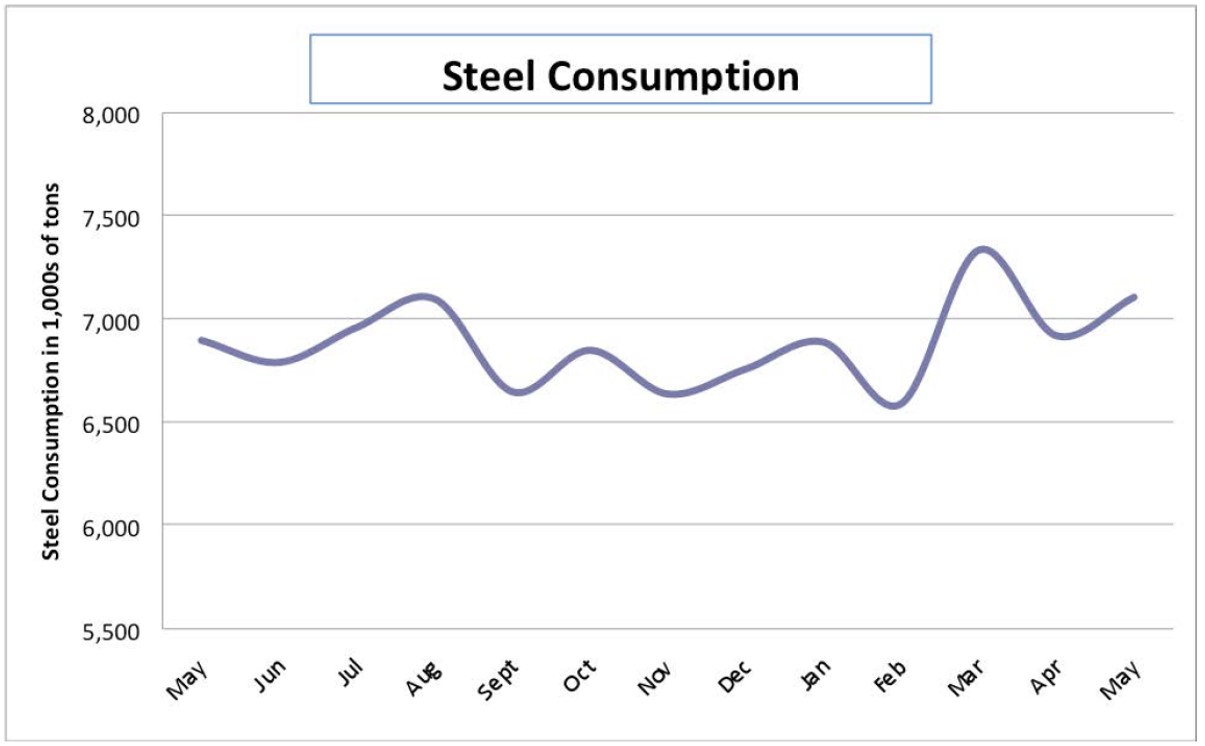
IHEA Steel Consumption Index
Steel consumption was up significantly in June. Source: IHEA Economic Survey

This month’s report showed an increase in the transportation index, steel consumption, and housing starts. Flat this month were factory orders, durable goods, and capital expenditures, as well as the PMI and industrial capacity utilization. Tariffs, or the threat of tariffs, continue to loom large over the direction of the economy. It is speculated that steel consumption is up strongly due to preemptive purchases, purchases made by many manufactures in advance of what they consider will be significant tariff price hikes.

For a complete copy of the monthly report, please email Anne Goyer.

Ann Goyer, Executive Director of IHEA

IHEA Monthly Economic Report — Stability or Confusion? Read More »

Startup Alum Anodizing Company Launches in Indiana


A startup aluminum anodizing company has announced plans to build its premier location in Fort Wayne, Indiana, to serve the automotive, construction, boating, and industrial markets in the Midwest region. The facility will house 32 ft tanks to accommodate aluminum parts up to 30 ft in length.

Northern Indiana Anodize will invest nearly $7 million to build the facility with construction beginning on the 47,000-square-foot facility in August and be complete in March 2019.

“With the economy growing, we’re seeing companies changing from steel parts to aluminum for weight and performance purposes,” said Bruce Fogler, chief financial officer at NIA. “We know there’s a high demand for anodizing providers and a shortage of large-tank anodizing facilities, so we’re starting this company to provide high-quality services in a growing industry.”


Photo credit: Stock photo

Startup Alum Anodizing Company Launches in Indiana Read More »

HIP Complements High-Performance Auto, Aerospace, and Energy Applications in Austria, Mexico


A leader in high pressure technology headquartered in Västerås, Sweden, recently commissioned hot isostatic presses for development and production of high-performance AM components in high-performance car and aviation applications as well as demanding applications within the aerospace, automotive, and energy sectors.

Stefan Seidel, CTO of Pankl Racing Systems

Quintus Technologies, which specializes in the design, manufacture, installation, and support of high pressure systems for sheet metal forming and densification of advanced materials and critical industrial components, supplied a Quintus HIP to Pankl Racing Systems in their new Pankl Additive Manufacturing Competence Center (PAMCC) in Kapfenberg, Austria.

The QIH48 will complement Pankl’s heat treatment facilities for HIP post-treatment. The PAMCC is an initiative of Pankl Racing Systems in collaboration with Voestalpine/Böhler Edelstahl, EOS and Quintus Technologies.

“As market leaders in our industry, we need the best equipment and best partners for our advanced AM production,” said Stefan Seidel, CTO of Pankl Racing Systems.

Jan Söderström, CEO of Quintus Technologies

“High-speed, high-tech, high-quality–we are impressed with this commitment of Pankl to their customers and their own objectives and happy to become part of their effort to broaden the application fields for AM in the racing car industry,” said Jan Söderström, CEO of Quintus Technologies.

“Quintus’ capability to deliver an easy-to-install, compact HIP system in a very fast time is very important for rolling out our AM strategy and business plan. We are looking forward to adding the Quintus HIP to our production portfolio,” said Wolfgang Plasser, CEO of Pankl Racing Systems.

Wolfgang Plasser, CEO of Pankl Racing Systems

Pankl Racing Systems specializes in developing and manufacturing engine and drivetrain components for racing cars, high-performance vehicles, and the aerospace industry.

In addition, the Center for Engineering and Industrial Development (CIDESI) in Querétaro, Mexico, has purchased and installed a HIP system from Quintus Technologies®, the QIH-15L. CIDESI is one of Mexico’s top research and innovation organizations, playing a key role in helping the country’s industry generate technological breakthroughs as well as educate the next generation of engineers for future challenges. The Quintus HIP system installed at CIDESI features a work zone of 7.32 inches (186 mm) in diameter and 19.69 inches (500 mm) in height; an operating temperature of 2552° F (1400° C); and pressure of 207 MPa (30,000 psi).

“Quintus Technologies has for several years worked with universities and research institutes in the development of education in many research areas, in North America and globally. We are honored to have been selected by CIDESI to deliver this HIP system. It proves our commitment to deliver reliable HIP systems to this educational and specialized technological sector,” said Söderström.


HIP Complements High-Performance Auto, Aerospace, and Energy Applications in Austria, Mexico Read More »

High-tech Heat Treatment Facility Launched in Russia

A leading global iron ore and HBI producer and supplier, as well as a producer of high-quality steel, recently launched heat treatment systems with advanced technology for a Russian steelmaking and metal rolling company.

Andrey Varichev, CEO, Management Company Metalloinvest

Metalloinvest, based in Moscow, installed the Roller Hearth Heat Treatment Furnace #1 and Rolling Quenching Machine #1 at Ural Steel. Mosgipromez provided the design and engineering work for the new facility, while Tenova LOI Thermprocess was responsible for equipment delivery.

The installation of Roller Hearth Heat Treatment Furnace #1 and Rolling Quenching Machine #1 at Sheet Rolling Facility #1 enables Ural Steel to increase the production capacity of the heat treatment furnace from 28.6 to 30.7 tonnes per hour. Over the next 10 years, between 2019-2028, Ural Steel will be able to increase the production of heat-treated heavy plate by three times, and the output of steel for bridge construction by 39%. Production volumes will increase due to the introduction of a new product variety, which will be developed at the heat treatment facility.

Roller Hearth Heat Treatment Furnace #1 and Rolling Quenching Machine #1 will also help to improve the characteristics of the heavy plate, ensuring the physical uniformity of the rolled steel products following heat treatment, by improving heating and cooling conditions.

“The project has been completed as part of Metalloinvest’s comprehensive investment programme to reorganize production processes at Ural Steel, which will boost the operational and management efficiency of the enterprise,” said Andrey Varichev, CEO, Management Company Metalloinvest. “This new high-tech facility will strengthen the Company’s position in the market for heat-treated rolled products.”

Andrea Lovato, CEO, Tenova

“Metalloinvest is a special client for Tenova, to whom we supply our full range of products and technological solutions,” said Andrea Lovato, CEO, Tenova. “Taking part in the reorganization and modernization of Ural Steel’s production processes is a great opportunity for us, and we are confident that our partnership with Metalloinvest will help the enterprise to progress its development even further.”

This project follows Metalloinvest’s recent agreement to build a heat treatment facility for hot-rolled steel at the OEMK’s finishing plant #2, which will include the construction of a building for the heat-treatment facility and two thermal furnaces, and the creation of heavy-lifting and transmission equipment, as well as associated infrastructure. The first furnace is planned to be launched in 2019, and the second will begin operations in 2020.

The new facility will enable OEMK to carry out various kinds of heat treatment from 750-1800°F (400-980°C), a wide range of temperatures, in order to produce high-quality rolled steel products with a specific microstructure. Heat treatment is required in the production of various kinds of steel for springs, ball and roller bearings and construction, as well as for high-strength metal.

Varichev said: “We are seeing a high level of demand among customers for high-quality bars, which require heat treatment. Creating this new production facility will enable Metalloinvest to increase sales volume of this premium product and reinforce its position on the SBQ market.”


Metalloinvest expands steel heat treatment capacity as part of SBQ client-orientation and quality development.

High-tech Heat Treatment Facility Launched in Russia Read More »

Grant Awarded for “Super Finishing” 3D Lab, Builds on Existing Thermal Processing Technology Research

Grant Awarded for “Super Finishing” 3D Lab, Builds on Existing Thermal Processing Technology Research Read More »

Troubleshooting Thermocouples: Detecting Small Issues Before They Become Big Problems


Source: GeoCorp, Inc.


Heat treating thermocouples are thermal processing sensors that allow equipment operators to accurately measure and maintain the right temperatures for softening, hardening, and material modification. A faulty thermocouple can result in inaccurate measurements, so it’s critical for quality management personnel to determine when and why thermocouple failure has occurred. GeoCorp, Inc., has provided a series of short articles that walk operators through assessment and troubleshooting of thermocouples that go bad.

Sometimes the smallest issues can lead to big problems. When your business relies on crucial temperature readings from your thermocouples, it can pay to pay identify individual factors that may have cause part failure. ~ James LaFollette, GeoCorp, Inc.

When troubleshooting thermocouple failure, the authors, James LaFollette and John Ochenas, recommend reviewing three key issues: system wiring, probes, and wire and junction. In addition, the following could cause misreadings:

  • metal fatigue
  • oxidation
  • contamination
  • poor installation
Read more:

Troubleshooting Thermocouples: Detecting Small Issues Before They Become Big Problems Read More »

PA Stainless Steel Pipe and Galvanized Tube Operation Changes Hands

Craig C. Bram, president and CEO of Synalloy Corporation

A metal pipe manufacturer recently completed the acquisition of the U.S. stainless steel pipe and galvanized tube operations of an Italian steel processing group, making the combined business the largest domestic producer of welded stainless steel pipe and mechanical tube in North America.

Bristol Metals, LLC, a subsidiary of Synalloy Corporation, purchased the galvanized tube manufacturing equipment and inventory assets of Marcegaglia USA, which includes the company’s facility in Munhall, Pennsylvania. The new business will operate under the name of Bristol Metals.

“We expect the addition of this business to be as incrementally positive to Bristol Metals’ financial results as was our initial transaction with Marcegaglia,” said Craig C. Bram, president and CEO of Synalloy Corporation.

Kyle Pennington, President of Synalloy Metals

“Our sales team is very familiar with the end markets and customers for these product lines and they look forward to taking this business to the next level,” said Kyle Pennington, President of Synalloy Metals. “This is a natural product line extension for Bristol Metals.”

PA Stainless Steel Pipe and Galvanized Tube Operation Changes Hands Read More »