



Heat Treat Control Panel: Best Practices in Digital Data Collection, Storage, Validation

When processing critical components, heat treaters value and demand precision in every step of the process — from the recipe to data collection — for the sake of accurate performance of the furnace, life expectancy of all equipment, as well as satisfactory delivery of a reliable part for the customer.

So what’s the obstacle to achieving those goals? Gunther Braus of dibalog GmbH/dibalog USA Inc. says, “The general problem is the human.” Indeed, the need to remove the variable of human fallibility plays a significant role in the search and development of equipment that could sense, read, and record data separate from any input from the operator. “As long there is a manual record of values there is the potential failure,” adds Braus.

Now, as part of the quest for precision, particularly in the automotive and aerospace industries, many control system requirements are driven by the need to prove process compliance to specified industry standards like CQI-9 and AMS 2750. These standards allow for and frequently require digital data records and digital proof of instrumentation precision.

With this in mind, Heat Treat Today asked six heat treat industry experts a controls-related question. Heat Treat Control Panel will be a periodic feature so if you have a control-related question you’d like addressed, please email it to Editor@HeatTreatToday.com and we’ll put your question to our control panel.

Q: As a heat treat industry control expert, what do you see as some of the best practices when it comes to digital data collection and storage and/or validation of instrumentation precision?

We thank those who responded: Andrew Bassett of Aerospace Testing & Pyrometry, Inc.; Gunther Braus, dibalog GmbH/dibalog USA Inc; Jim Oakes of Super Systems, Inc; Jason Schulze, Conrad Kascik Instrument Systems, Inc.; Peter Sherwin, Eurotherm by Schneider Electric; and Nathan Wright of C3Data.

Calibration and Collection

Jim Oakes (Super Systems Inc.) starts us off with an overview of the equipment review process, the crucial component of instrument calibration, and digital data collection:

“Industry best practices are driven by standards defined by the company and customers they serve. Both the automotive and aerospace industries have a set of standards which are driven through self-assessments and periodic audits. Instrument precision is defined by the equipment’s use and is required to be checked during calibrations. The frequency of these calibration depends on the instrument and what kind of parts and processes it is responsible for.

The equipment used for these processes can be defined as field test instrumentation, controllers, and recording equipment. Calibration is required with a NIST-traceable instrument that has specific accuracy and error requirements. Before- and post-calibration readings are required (commonly identified as “as found” and “as left” recordings). During calibration, a sensitivity check is required on equipment and is recorded as pass/fail. The periodic calibration procedure is carried out not only on test equipment but also on control and recording equipment, to ensure instrument precision.

Digital data collection is a broad term with many approaches in heat treatment. As mentioned, requirements are driven by industry standards such as CQI-9 and AMS 2750. Specifically when it comes to digital data collection, electronic data must be validated for precision; checked; and calibrated periodically as defined by internal procedures or customer standards. Data must be protected from alteration, and have specific accuracy and precision. Best practice tends to be plant wide systems that cover the electronic datalogging that promotes ease of access to current and historical data allowing use for quality, operational, and maintenance personnel. Best practices in many cases are defined by the standards within each company, but the hard requirements are often the AMS 2750 and CQI-9 requirements for digital data storage.”

Industry Guidelines and Requirements

Andrew Bassett (Aerospace Testing & Pyrometry) has provided us with a reminder of the industry guidelines for aerospace manufacturing (via AMS-2750E, paragraph 3.2.7.1 – 3.2.7.1.5)

  1. The system must create electronic records that cannot be altered without detection.
  2. The system software and playback utilities shall provide a means of examining and/or compiling the record data, but shall not provide any means for altering the source data.
  3. The system shall provide the ability to generate accurate and complete copies of records in both human readable and electronic form suitable for inspection, review, and copying.
  4. The system shall be capable of providing evidence the record was reviewed – such as by recording an electronic review, or a method of printing the record for a physical marking indicating review.
  5. The system shall support protection, retention, and retrieval of accurate records throughout the record retention period. Ensure that the hardware and or software shall operate throughout the retention period as specified in paragraph 3.7.
  6. The system shall provide methods (e.g., passwords) to limit system access to only individuals whose authorization is documented.

“One of the biggest issues I see with one of these requirements will be point 5,” says Bassett. “The requirement is to be able to review these records throughout the retention period, which in some instances is indefinite. I always recommend to clients who may be upgrading or purchasing new digital systems that they should consider keeping a spare system in place to be able to satisfy this requirement. Who knows — today we are working on Windows 10, but in 50 years, will our successor be able to go back and review heat treat data when everything is run on Windows 28?”

Jason Schulze, Aerospace Heat Treating“This is a topic that yields great discussions,” adds Jason Schulze (Conrad Kascik). He directs us to a challenge he sees from time to time.

Within the Nadcap AC7102/8 checklist, there is this question: “Do recorder printing and chart speeds meet the requirements of AMS 2750E Table 5 or more stringent customer requirements?” This correlates with AMS2750E, page 12, paragraph 3.2.1.1.2 “Process Recorder Print and Chart Speeds shall be in accordance with Table 5”.

“To ensure the proper use of an electronic data acquisition unit used on furnaces and ovens, these requirements must be understood,” continues Schulze. “Because this system is electronic, it should be designated a digital instrument and not an analog instrument. In doing so, this helps determine what requirements apply in Table 5. The only remaining requirement in Table 5 for digital instruments is ‘Print intervals shall be a minimum of 6 times during each time at temperature cycle. Print intervals shall not exceed 15 minutes.’

With this in mind, it is important to realize that, if your time at temperature cycles are short cycles (such as vacuum braze cycles), the sample rate of data collection may need to be adjusted to ensure it is recorded 6 times during the cycle.

As an example, if the shortest cycle processed is 4 minutes at temperature, a sample rate of every 60 seconds would not conform to AMS2750E because, in theory, the maximum amount of recordings would be 4 times during the time at soak. Now, if the sample rate was modified to every 30 seconds, this would allow ~8 recordings during the time at soak, which then would be conforming to AMS2750E.

Within the realm of electronic data acquisition on furnaces/ovens, this seems to be a frequent challenge for suppliers.”

A Critical Variable: Process Temperature

Nathan Wright (C3Data) agrees and zeroes in on process temperature as a critical variable to be measured:

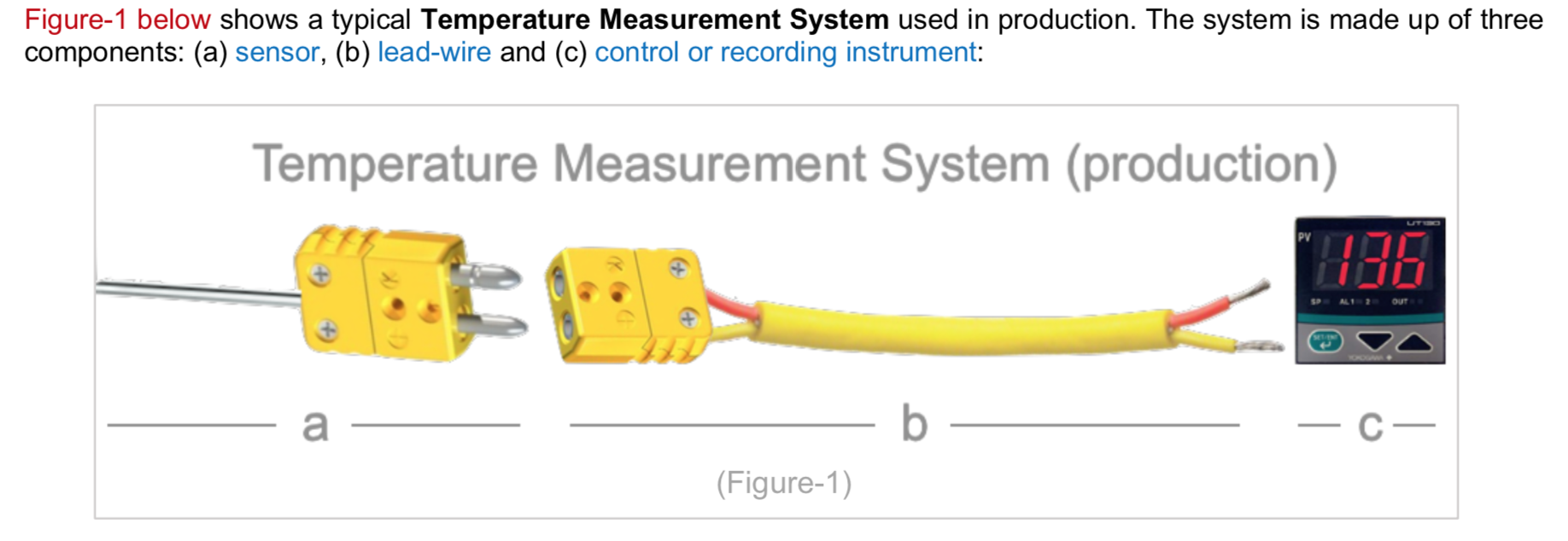
“No matter the heat-treating process being carried out, complying with AMS-2750 and/or CQI-9 requires that the heat treater measure, record, and control several different variables. One of the more common variables that must be measured, recorded, and controlled is process temperature.

Measuring process temperatures requires the use of a precise measurement system (Figure-1 below), and the accuracy of said measurement system must be periodically validated to ensure its ongoing compliance.”
“The validation process is carried out through a series of pyrometric tests (Instrument Calibration and SAT), and historically these validation processes are highly error-prone.

In order to help ensure process instrumentation, process temperatures, and any other variable that impacts quality is properly validated it is good practice to begin automating compliance processes whenever and wherever possible. C3 Data helps automate all furnace compliance processes using software.”

A “Standard” Mindset

Gunther Braus (dibalog) chimes back in with some pertinent wisdom: “It is not sufficient only to record, you must live the standards like CQI-9, AMS, Nadcap or even your own standard you have set up, so you must survey the data. However, in the old times, there was a phrase: the one who measures, measures crap. In the end, it is all about surveillance of the captured data.

Where you store the data is a question of philosophy: personally, I prefer local storage in-house. Yes, we all talk about IOT, etc., and I do not want to start a discussion about security; it is more about accessing the data. No internet, no data. So simple. We are overly dependent upon cloud usage on the internet.

The automation of the instrumentation precision is so much effort in terms of automated communication between testing device and controller, from my point of view we are not there yet.”

A Look at the Standards In and Outside the Industry

Interesting question! writes Peter Sherwin (Eurotherm by Schneider Electric).

The aim is to record the true process temperature seen by the components being treated. However, there are many practical factors that can alter the accuracy of the reading. From the position of the thermocouple (TC), the TC accuracy (over time), suitability of the lead or extension wire, issues with CJC errors and instrument accuracy as well as electrical noise impacting the stability of the reading.

The standards do a good job to help by prescribing the location of TC, accuracies required for both TC and instrument, and frequent checks over time through TUS and SAT checks but note the specification requirements are maximum “errors”. And if you truly want to reach world-class levels of process control and reap the inherent benefits of better productivity and quality, you should aim to be well inside those tolerances allowed.

With 30yrs+ of data required to be stored (in certain cases, particularly aerospace), there should be some thought as to how and what form this should be stored in. There are many more options of storage when the data is in digital format.

  • Paper is very costly to store and protect.
  • The virgin data file should be secure and tamper-resistant and identical copies made for backup purposes held offsite.
  • The use of FTP is becoming more common to move files automatically from the instrument to a local server (with its own backup procedures to ensure redundant records in case of disaster).
  • Regular checks should be made to examine the availability and integrity of these electronic records.
  • Control and Data Instrument suppliers should ideally have many years of supplying instrument digital records with systems that can access even the earliest of data record formats.

We also look outside of the heat treat standards for truly best practices. The FDA regulation 21CFRPart11 and associated GAMP Good Automated Manufacturing Practice have been extended with the new document “Data Integrity and Compliance with Drug cGMP, Questions and Answers, Guidance for Industry”. These updates leverage A.L.C.O.A to describe the key principles around electronic records (see below). This industry is also leading the requirement for sFTP a more secure format of the FTP protocol.


Heat Treat Today will run this column regularly featuring questions posed to and answered by industry experts about controls. If you have a question about controls and/or data as it pertains to heat treating, please submit it to doug@heattreattoday.com or editor@heattreattoday.com.

Heat Treat Control Panel: Best Practices in Digital Data Collection, Storage, Validation Read More »

First Nadcap Accreditation Awarded for Aero Structure Assembly to Kansas Facility

The first ever Nadcap accreditation for Aero Structure Assembly has been awarded to an aerospace company based in Wichita, Kansas.

Lee Aerospace Inc., which designs, manufactures, installs, and repairs aerospace parts and assemblies for the aerospace industry, recently received the accreditation following a 2018 pilot audit that validated the audit criteria developed by the Nadcap Aero Structure Assembly Task Group and rigorously assessed the company’s compliance to the applicable industry standards and customer requirements.

Christopher Lowe of Spirit AeroSystems, Nadcap Aero Structure Assembly Task Group Chair

“There are more companies than ever involved in aerostructure assembly as activity is delegated through the supply chain by the airframers,” explained Christopher Lowe of Spirit AeroSystems, Nadcap Aero Structure Assembly Task Group Chair. “As a result, the need for supply chain oversight in this area was recognized as being of growing importance. Nonconforming assembly practices can cause serious escapes such as unseen product defects, delivery delays and rectification costs.

“Congratulations to Lee Aerospace Inc. for their notable achievement in being the first in the world to gain this prestigious accreditation. I am pleased to have had the opportunity, through Nadcap, to work with my peers at Airbus, Airbus Defense and Space, Arconic, BAE Systems, Helicomb International, Lee Aerospace Inc., Leonardo, Lockheed Martin, Northrop Grumman and Spirit AeroSystems to address this issue and I encourage others in the industry to get involved in this activity.”

Technologies covered in the Aero Structure Assembly audit criteria currently extend to fastening, electrical bonding, bushing and bearing installation, and sealant application.

Tommy Howland, Director of Quality for Lee Aerospace

Issuing the first accreditation is a significant step in the maturation of the newest Nadcap Task Group, whose members have been working towards this point since 2015 when the Nadcap Management Council approved Aero Structure Assembly as one of the specialized technologies that Nadcap accredits. Aero Structure Assembly now joins both long-standing practices such as heat treating, welding, and non-destructive testing, as well as newer activities such as composites and electronics in the Nadcap program.

“As an active member of Nadcap, when the opportunity to be the first company for accreditation in a pilot program presented itself, we literally jumped at the chance,” said Tommy Howland, Director of Quality for Lee Aerospace. “At Lee Aerospace, we strive to be the best in all aspects of our manufacturing processes, including transparencies, composites, and aerostructure assembly.”


Photo credit: Business Journals

First Nadcap Accreditation Awarded for Aero Structure Assembly to Kansas Facility Read More »

Heat Treat Today’s Aerospace Digital Edition Goes Live

Heat Treat Today has launched Aerospace Heat Treating special edition in print and digital form, the second print magazine and the first in a series of industry-specific quarterlies.

The print edition of Aerospace Heat Treating entered the mail stream on March 27 and landed in the mailboxes of 6,000 aerospace manufacturing suppliers and OEMs. The digital edition is available by clicking here or on the image to the right.

In this special magazine, Heat Treat Today delivers quality content both new and original as well as a round up of past aerospace-related news, technical articles, and tips, including:

  • “Airplanes Don’t Fly Without Heat Treating” / An introduction to vacuum heating, the unsung hero of commercial and military aviation.
  • “Not Your Grandfather’s Heat Treat Shop” / What has changed in the heat treat industry over the last few decades?
  • “The Heat Treatment of Aerospace Fasteners” / The critical issue of strength-to-weight in fastener applications and materials.
  • “What To Do With All the Data?” / Data capture and management are the topic of this abridged transcription of a recent Heat Treat Radio interview.
  • “Diffusion Bonding in Vacuum Furnaces” / In aerospace heat treating, one application many manufacturers turn to is diffusion bonding.
  • A whirlwind tour of a heat treat shop from the perspective of an industry safety consultant.
  • “How Much Does Poor Quality Cost?” / There’s good quality cost and poor quality cost – and one will cost your bottom line more than the other.
  • “In-Situ Hardness Testing of Large Aerospace Structures: A Case Study” / How a custom-designed fixture and hardness testing unit solved a major aerospace engine manufacturer’s hardness testing dilemma.

In June, Heat Treat Today will be publishing another special edition, this time focusing on the automotive industry. It will be sent to 6,000+ automotive industry contacts. If you have automotive-related editorial content or if you would like to have your promotional message in this issue, please email doug@heattreattoday.com or editor@heattreattoday.com as soon as possible.

If you haven’t done so already, you might want to join Heat Treat Today’s “Leaders in Aerospace Heat Treat” LinkedIn Group. Click here or on the image to the left to be taken there. You’ll need to sign in to LinkedIn before you can join the group.


Heat Treat Today’s Aerospace Digital Edition Goes Live Read More »

Where’s the Heat Treat Economy Headed: Up, Down, Flat?

Finding the right metric to measure the ubiquitous heat treat economy is like trying to take the temperature of the ocean. It can be hot in some spots, cold in others, and an average temperature really doesn’t help anyone. Finding economic data that can help suppliers to the heat treat industry plan future business fluctuations is all but impossible. Industrial Heating magazine has been publishing its Economic Indicators for well over a decade. This is one of the best sources for heat treat-specific economic data freely available to the public. Click here for the latest numbers from Industrial Heating.

Durable Good Orders for December 2018

The Industrial Heating Equipment Association (IHEA) provides a monthly Executive Economic Summary to their members as well. According to the most recent report from IHEA, the signals are mixed as to where the heat treat economy is headed. Below are a few highlights. To access the full report, please contact Anne Goyer, Executive Director of IHEA by clicking here.

  • Factory Orders — headed up.
  • Durable Goods — headed up.
  • Transportation Index — headed up.
  • Steel Consumption — headed up.

All of the above indices are headed north, but exactly what impact does each have on the heat treat industry?

  • Industrial Capacity Utilization — headed down.
  • Metal Prices — softening.
  • Purchasing Managers Index — down.
  • Capital Expenditures — down.
Steel Consumption for February 2019

Likewise, these four indices headed south but their impact on the heat treat industry is not easily discernible.

A more complete understanding of the direct impact of the above eight (8) indices plus three (3) others on the heat treat industry can be gained by the analysis provided in the IHEA Executive Economic Summary report. The monthly report dedicates one page to each of eleven (11) heat treat-related indices with in-depth analysis by IHEA’s contracted economist.

In my eyes, the data and analysis provided by IHEA is one of the most valuable pieces of economic heat treat data a heat treat industry supplier can have.

Contact Anne Goyer for more information on this report.

Ann Goyer, Executive Director of IHEA


Where’s the Heat Treat Economy Headed: Up, Down, Flat? Read More »

Automaker Announces Electric Car Production Based at Tennessee Facility

A major automaker recently announced that it will base its manufacturing of electric vehicles in Chattanooga, Tennesee.

Volkswagen AG, headquartered in Wolfsburg, Germany, will invest $800 million into the facility, which will be the company’s North American base for manufacturing electric vehicles.

Chattanooga will be the first dedicated location in North America for production of a vehicle using Volkswagen’s modular electric toolkit chassis, or MEB. In addition to Chattanooga, Volkswagen is building the first dedicated EV production facility in Zwickau, Germany, starting MEB production by the end of 2019. Volkswagen will also add EV-production at facilities in Anting and Foshan, in China, in 2020, and in the German cities of Emden and Hanover by 2022.

"The US is one of the most important locations for us and producing electric cars in Chattanooga is a key part of our growth strategy in North America," said Dr. Herbert Diess, CEO of Volkswagen AG.

Volkswagen of America will offer the first EV based on the MEB platform to customers in 2020. This vehicle will be a series-production version of the ID. CROZZ SUV concept, first shown at the North American International Auto Show last year. This vehicle will have the interior space of a midsize SUV in the footprint of a compact SUV. Volkswagen of America will also offer a multi-purpose EV based on the ID. BUZZ concept.

Volkswagen currently builds the midsize Atlas SUV and the Passat sedan at the Chattanooga factory, which opened in 2011. A five-seat version of the Atlas, the Atlas Cross Sport, will begin production in Chattanooga later this year.

Scott Keogh, CEO and president of Volkswagen Group of America

"We could not be prouder to build the future of mobility here in the U.S.," said Scott Keogh, CEO and president of Volkswagen Group of America. "We’re known as ‘the people’s car' for a reason, and our EVs will build on that tradition."

Globally, Volkswagen Group plans to commit almost $50 billion (44 billion euros) through 2023 toward the development and production of electric vehicles and digital services.

EV production at the site will begin in 2022.


Automaker Announces Electric Car Production Based at Tennessee Facility Read More »

A Braze New World: Sending Non-precious Braze Alloys into Space

The space industry is growing fast and is predicted to be worth over a trillion dollars by 2040.

Keith Ferguson, Senior Business Development Manager at Morgan Advanced Materials’ Braze Alloys Business, explains how braze alloys play their part in safe, reliable and sustainable space exploration. 


A Braze New World

The saying goes, “one small step for man, one giant leap for mankind.” This famous phrase uttered by Neil Armstrong is the perfect advertisement for space exploration and its importance to the future.

Less than a century old, space exploration has come on leaps and bounds since the first artificial satellite, Sputnik 1, was propelled into space in 1957. Since then, the world has witnessed marvels such as landing on the moon, the space shuttle program of the 1970s, and the launch of the International Space Station.

The importance of these missions and their subsequent value is immeasurable. Many might not realize on a day-to-day basis how space exploration has improved lives and the global economy to no end. This includes simple weather forecasting, broadcasting TV and radio, predicting natural disasters, monitoring for fertile land, forecasting sea level patterns, and even aiding research in muscular atrophy.

It’s little wonder then that this industry has significant value. The space industry was reportedly worth $384 million USD in 2017, growing at a rate of 7.4 percent. According to Morgan Stanley, it sees the industry growing to be worth $1.1 trillion USD by 2040.

However, there are challenges. Many believe that the millions of dollars and resources used to explore space could be better used on immediate threats to society like clean water, famine, poverty and more. Outside of external opinion though, there are internal operational challenges. Namely, space exploration needs to become safer and more sustainable.

A huge part of solving this challenge is in brazing alloys.

A Brief History on Brazing in Space

In simple terms, brazing joins two metals by heating and melting a filler (alloy) that bonds to the two pieces of metal and joins them. The filler must have a melting temperature below that of the metal pieces.

The use of braze alloys in space equipment is mission critical, as they allow sensors to be mounted as close as possible to engines to measure and monitor output and feed data back to operators. Indeed, they’ve already aided successful missions. Two of Morgan Advanced Materials’ braze alloys, RI-46 and RI-49, were specifically engineered and used by NASA on the Space Shuttle Main Engine, also known as the RS25.

Braze Alloys (Morgan in Space)

RI-46 specifically was developed as a replacement for the existing Nioro braze alloy, which is comprised of 82/18 Au/Ni (gold/nickel). RI-46 contains much less gold, adding in copper and manganese instead. This helped make the braze alloy significantly less dense and provided crucial weight savings, but also still operable from a wide range of temperatures, between -400°F to 1292°F (-240°C to 700°C).

These alloys have not only been critical for past space missions, but also for future missions. RI-46 and RI-49 have been adopted for NASA’s Space Launch System (SLS), a vehicle that is planned to take a crewed mission to Mars.

As alluded to already, developing new braze alloys is as much about performance as well as sustainability.

The Need for Non-Precious Alloys

It needs no mention that space exploration is a costly exercise. According to NASA, the average cost to launch a Space Shuttle is $450 million per mission. The Space Shuttle Endeavour, the orbiter built to replace the Space Shuttle Challenger, cost an eye-watering $1.7 billion USD.

Wire Form Braze Alloys (Morgan in Space)

Bringing costs down is clearly required to keep space missions feasible. One key part of cost reduction is in reducing the use of precious metal braze alloys.

Precious metals like gold and palladium are becoming increasingly scarce. Of course, the cost of producing alloys from these precious metals is also increasing as a result.

However, there can be a reluctance to come away from using precious metal alloys. Years of research, development, and data mean these alloys are tested and reliable. When dealing with missions and equipment that run into the hundreds of millions of dollars and, more importantly, the lives of crew members, reliability becomes an overarching objective, and failures must be prevented.

To solve this issue, Morgan’s Braze Alloys business has been researching and developing non-precious metal alloys over many years. As seen from the RI-46 and RI-49 alloys, these solutions are just as strong as their equivalent high precious-metal counterparts, but at a fraction of the cost.

Non-precious metal alloys can be made from metals like nickel, chromium, and cobalt. Their success has already been seen in the aerospace sector, and now research is being pioneered into making them fit for going into orbit and beyond.

Space, for All to Enjoy

Space travel is not just for highly trained astronauts and public benefit; there is also a growing commercial aspect. Satellite TV and radio have already been mentioned, but billionaire entrepreneurs such as Richard Branson and Elon Musk have also been pioneering private space travel. The hope is that civilians might one day be able to enjoy outer space as well, albeit at potentially high prices.

Achieving this dream is of course hinged on safety and reliability, given that lives will be at stake. The key to improving these factors is being able to place sensors as close as possible to the spacecraft’s engine.

By enabling sensors to be placed near the spacecraft’s engine, mission control and crew can then accurately read and measure data and output. This includes fuel efficiency, temperature, gas flow and monitoring for fire detection or abnormalities. If these sensors are placed too far away from the engines, then data readings become inaccurate and missions can be compromised.

Recent news highlights why sensor technologies are critical, as a two-man space crew had to abort their flight to the ISS after a post-rocket launch failure. The Soyuz spacecraft started to experience failure 119 seconds into the flight, and seemingly, problems were reported by the crew first, not by mission control. The crew described feelings of weightlessness, an indication of a problem during that stage of the flight. Luckily, they aborted, ejected their capsule from the rocket, and returned safely to Earth.

While the cause of the failure is still to be identified at the time of writing, clearly, such a situation should not be happening. Any problems should be picked up by mission control, and not be reliant on crew judgment.

Active Alloys join ceramic sensors to engines. (Morgan in Space)

The challenge though is that some sensors are made from ceramic due to the need to resist corrosion and high temperatures, typically up to 1742°F (950°C ). However, these ceramic sensors then need to be joined to metallic parts of the engine.

This is where “active alloys” come in. Unlike regular braze alloys that join metal to metal, these alloys can join metal to ceramic, or even ceramic to ceramic. Industry standard active alloys like Incusil®-ABA and Ticusil® from Morgan’s range were developed up to 40 years ago but are still in use today. New alloys are also currently in development to withstand much higher temperatures.

A Never-Ending Journey

Morgan Metals and Joining Center of Excellence in Hayward, California (Morgan in Space)

Much like how there is still so much to learn and explore about space, so too is Morgan’s journey with braze alloys. Morgan Advanced Materials is not just committed to making the space industry more sustainable and safer, but it is helping with applications across all industries.

A key pillar of this is through Morgan’s highly specialized Metals and Joining Centre of Excellence (CoE), based in Hayward, California, as well as Morgan’s Brazing Department.

With highly trained researchers and scientists, Morgan’s Braze Alloys business can custom cater alloys to specific applications, run trials to test materials, braze cycles and fixturing. The whole operation, from powder atomization, to preform fabrication and brazing trials, can be looked after from start to finish.

Flexicore® (Morgan in Space)

One of the latest developments being pioneered at the Metals and Joining CoE is Flexicore®. This new technology transforms traditionally brittle alloys (such as AMS4777) into a flexible wire form. In many cases, this will be far superior to pastes in terms of repeatability and ease of use. Along with the operational benefits, Flexicore® will also allow for the use of nickel-based alloys to replace precious-metal alloys. Again, this will help to bring costs down for operators and manufacturers.

Watch This Space

Space travel, as Richard Branson predicts for his own Virgin Galactic programme, is only two or three flights away. We’re truly not far away from entering a new world, and brazing alloys will have their say on how the space industry turns out.

Morgan’s Braze Alloy solutions, like RI-46 and RI-49, as well as others like Palniro-1 and Palniro-7, can already be found across the various programmes and spacecraft. Through more research and development, who knows where this important industry could lead us to.


Morgan Advanced Materials plc is a global engineering company headquartered in Windsor, UK , and is a world leader in advanced materials science and engineering of ceramics, carbon, and composites, engineering high-specification materials, components, and sub-assembly parts to solve challenging technical problems. Markets that Morgan work in include healthcare, petrochemicals, transport, electronics, energy, defense, security and industrial.

A Braze New World: Sending Non-precious Braze Alloys into Space Read More »

Canadian Investments Energize Steel Production, Include New Heat Treat Line

A Chicago-based producer of engineered steel products for rail, energy and industrial end markets recently received funding for equipment upgrades and plant expansions—including the company’s planned installation of a state-of-the-art heat treat line—as part of the Government of Canada’s steel and aluminum fund program created to energize the Canadian steel industry.

EVRAZ North America will receive C$40 million from Innovation, Science and Economic Development Canada’s Strategic Innovation Fund (SIF) steel and aluminum program, which was created last year to help bolster the competitiveness of the industry in Canada.

The $40 million in Strategic Innovation Funds will be part of a $112 million investment over the next three years in EVRAZ North America facilities in Regina and Red Deer, Alberta, focusing on upgrades to steelmaking infrastructure that will improve quality, boost efficiency, reduce emissions and increase capacity, including:

  • Red Deer Heat Treat Expansion: EVRAZ North America is installing a state-of-the-art heat treat line that will greatly increase the company’s capability to provide premium alloy grade quality in the OCTG product range meeting the evolving needs of our customers.
  • Electric Arc Furnace Power Increase: Regina’s electric arc furnace is used to melt scrap metal that is recycled into steel. The project will replace electrical transformers and associated power distribution equipment, including building a new substation feeding the facility’s 138kV SaskPower hydro line.
  • Reheat Furnace Throughput Increase: The reheat furnace at the Regina rolling mill is used to heat steel slab to temperatures of more than 2,200°C for production into coil and plate. The investment in upgraded burner equipment will increase and expand the production capability of the reheat furnace while reducing NOx emissions.

Conrad Winkler, EVRAZ President and CEO

Investments at these facilities will be made between 2019 and 2021.

At a ceremony in Regina, Saskatchewan, EVRAZ President and Chief Executive Officer Conrad Winkler praised the Government of Canada’s actions.

“This government recognizes the challenges facing Canadian steel producers and the thousands of employees working in steel mills across the county, including 1,200 right here in Regina,” said Winkler. “Partnerships such as the Strategic Innovation Fund are crucial to our job-creating, long-term investments.”

The SIF contribution is part of EVRAZ’s North America’s planned, multi-year C$112 million investment into equipment upgrades and expansion at the company’s mills in Regina and Red Deer, Alberta. When completed, the improvements will further boost EVRAZ North America’s steelmaking capacity, reduce emissions, and improve efficiency. The company previously invested more than C$200 million in expansion and upgrades in Regina between 2015 and 2017.

“With this SIF partnership, we can move forward with these investments that will allow EVRAZ North America to maintain and grow its position as an industry-leading supplier for our valued customers in Canada’s energy economy,” said Winkler.


Photo credit and caption: EVRAZ North America on Twitter

Canadian Investments Energize Steel Production, Include New Heat Treat Line Read More »

Heat Treat Tips: How to Install an Ammonia System

During the day-to-day operation of heat treat departments, many habits are formed and procedures followed that sometimes are done simply because that’s the way they’ve always been done. One of the great benefits of having a community of heat treaters is to challenge those habits and look at new ways of doing things. Heat Treat Today101 Heat Treat Tips, tips and tricks that come from some of the industry’s foremost experts, were initially published in the FNA 2018 Special Print Edition, as a way to make the benefits of that community available to as many people as possible. This special edition is available in a digital format here.

In today’s Technical Tuesday, we continue an intermittent series of posts drawn from the 101 tips. The category for this post is Industrial Gases, and today’s tip #39 comes from Dan Herring, “The Heat Treat Doctor®”, of The Herring Group. 


Heat Treat Tip #39

How to Install an Ammonia System

Dan Herring,  “The Heat Treat Doctor®”, of The Herring Group

One of the keys to any successful ammonia system installation in the heat treat shop is to find a supplier who is capable of providing premium grade (also known as metallurgical grade) anhydrous ammonia. This product has little or no water, which could contaminate your process. Look for a specification of 99.995% ammonia.

Once you have picked a supplier, there are several choices when it comes to ammonia storage. For the lowest product price, you should consider a tank of at least 10,000 gallons (43,000 pounds of ammonia.) This allows you to purchase full 38,000-pound tanker trucks of ammonia to reduce your supply costs. One pound of ammonia yields 22.5 cubic feet of vapor or 45 cubic feet of dissociated ammonia (75% H2, 25% N2).

In most states, you must comply with these standards if you have more than 10,000 pounds of anhydrous ammonia on site. So, you need to make sure you comply with OSHA’s Process Safety Management (PSM) and EPA’s Risk Management Plan (RMP).

The second option is to keep below the 10,000-pound threshold by installing a 1,000 gallon (4,400-pound capacity) or a 2,000 gallon (8,800-pound capacity) storage tank. Pricing for ammonia into these tanks runs about 50% higher in the smaller quantities. Even with the lower inventory, you will need to comply with OSHA 1910.111 and any applicable state, city, or county laws. It is critical to check with local agencies to make sure you are in full compliance with these regulations.

Another option for smaller usages are ammonia cylinders, but if stored inside the factory, special containment cabinets are required. Check with your ammonia supplier for the details.

With regard to the installation, in most cases, you need to pour a foundation for the tank, provide electricity to the tank for a sidearm vaporizer (used to maintain pressure in the tank since you will be withdrawing ammonia vapor to the process) and provide piping from the tank to your process. Most suppliers can lease the tank and valves/attachments for a nominal monthly fee depending on your ammonia consumption. You can also add a telemetry unit that allows your supplier to monitor your tank level via an Internet site. You will need to install a water shower near the tank and have gas masks close to the tank. It is a good idea to provide a fence around the tank if your company does not have security. Your supplier should provide hazardous awareness training for ammonia.

You can expect relatively trouble-free operation from a properly installed and well-maintained ammonia supply. Maintenance problems, other than an occasional paint job, are usually minimal but good inspection (including all valving) and frequent leak checks are mandatory. The tank should be visually inspected yearly, probably by your supplier, and the pressure relief valves should be changed every five years.

Submitted by The Herring Group

Photo credit: Video Stock Footage from QuickStock.com


If you have any questions, feel free to contact the expert who submitted the Tip or contact Heat Treat Today directly. If you have a heat treat tip that you’d like to share, please send to the editor, and we’ll put it in the queue for our next Heat Treat Tips issue. 

Heat Treat Tips: How to Install an Ammonia System Read More »

Auto Fasteners Manufacturer That Heat Treats for Strength, Hardness Breaks Ground on Indiana Expansion


Source: BusinessFacilities.com


A manufacturer of automotive fasteners recently broke ground on an expansion in Columbus, Indiana, that will increase the company’s manufacturing operations, which include heat treat capabilities for improved strength and hardness, and allow it to produce a broader range of metal fasteners.

OSR Inc. is a joint venture between Nagoya, Japan-based Owari Precise Products Co. Ltd and Columbus-based Rightway Fasteners Inc. (RFI). Under the plan, OSR will construct and equip a new 82,395-square-foot manufacturing facility.


Photo credit/caption: Kenny Canfield, from left, vice president of sales and marketing for OSR Inc., Tom Dowd, executive vice president of Dunlap General and Mechanical Contractors, Jason Hester, president of the Greater Columbus Economic Development Corp., Koji Hyodo, president of OSR Inc. parent company Owari Precise Products Co. Ltd., Columbus Mayor Jim Lienhoop, Jim Staton, vice president of business development for the Indiana Economic Development Corp., and OSR Inc. President Makoto Inagaki take part in a groundbreaking ceremony for a new multi-million dollar OSR Inc. facility in Columbus, Ind., Tuesday, March 5, 2019. / Mike Wolanin | The Republic

Auto Fasteners Manufacturer That Heat Treats for Strength, Hardness Breaks Ground on Indiana Expansion Read More »

UBQ Furnace Installation Expands Production Capacity

Several universal batch quench (UBQ) furnaces were purchased and installed over the course of 2018 to support the growth in business of a commercial heat treating operation located in Richland Hills, Texas.

Modern Heat Treat, which provides services such as alloy quench and temper flame hardening and carburizing to the metalworking industry, added the UBQ furnaces along with companion equipment to its installed base, increasing capacity of the equipment already in operation at the facility. AFC-Holcroft , a member of the Aichelin Group, fulfilled the orders for Modern Heat Treat, which has benefitted from the modular, flexible UBQ design with the ability to add new equipment to their facility incrementally.

Tracy Dougherty, VP Sales, AFC-Holcroft

“These large capacity UBQ furnaces provide Modern Heat Treat with a distinct advantage in the market since the equipment is scalable to meet their need for flexibility,” said Tracy Dougherty, Vice President of Sales at AFC-Holcroft. “AFC-Holcroft is proud to be a part of the continued expansion and growth of Modern Heat Treat.”

Modern Heat Treat operates a 25,000 sq ft facility with 57 employees and over 40 pieces of furnace equipment.

UBQ Furnace Installation Expands Production Capacity Read More »