An independent metal additive manufacturer for the aerospace and defense industry recently added a dual-chamber aerospace heat treating system to its vertically integrated, end-to-end production process.
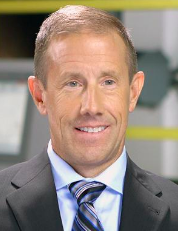
Doug Hedges, president of Sintavia
Sintavia, based in Hollywood, Florida, purchased the DCAHT™ system from DELTA H TECHNOLOGIES. In addition to aerospace and defense, the company provides advanced manufacturing for critical industries such as oil and natural gas and industrial gas turbomachinery.
“The DCAHT™ is a great addition to our machine fleet in our new facility,” said Doug Hedges, president of Sintavia. “We are impressed with its performance and complex capabilities such as quenching to our customer specifications. We look forward to meeting the furnacing needs of our customers with this advanced system.”
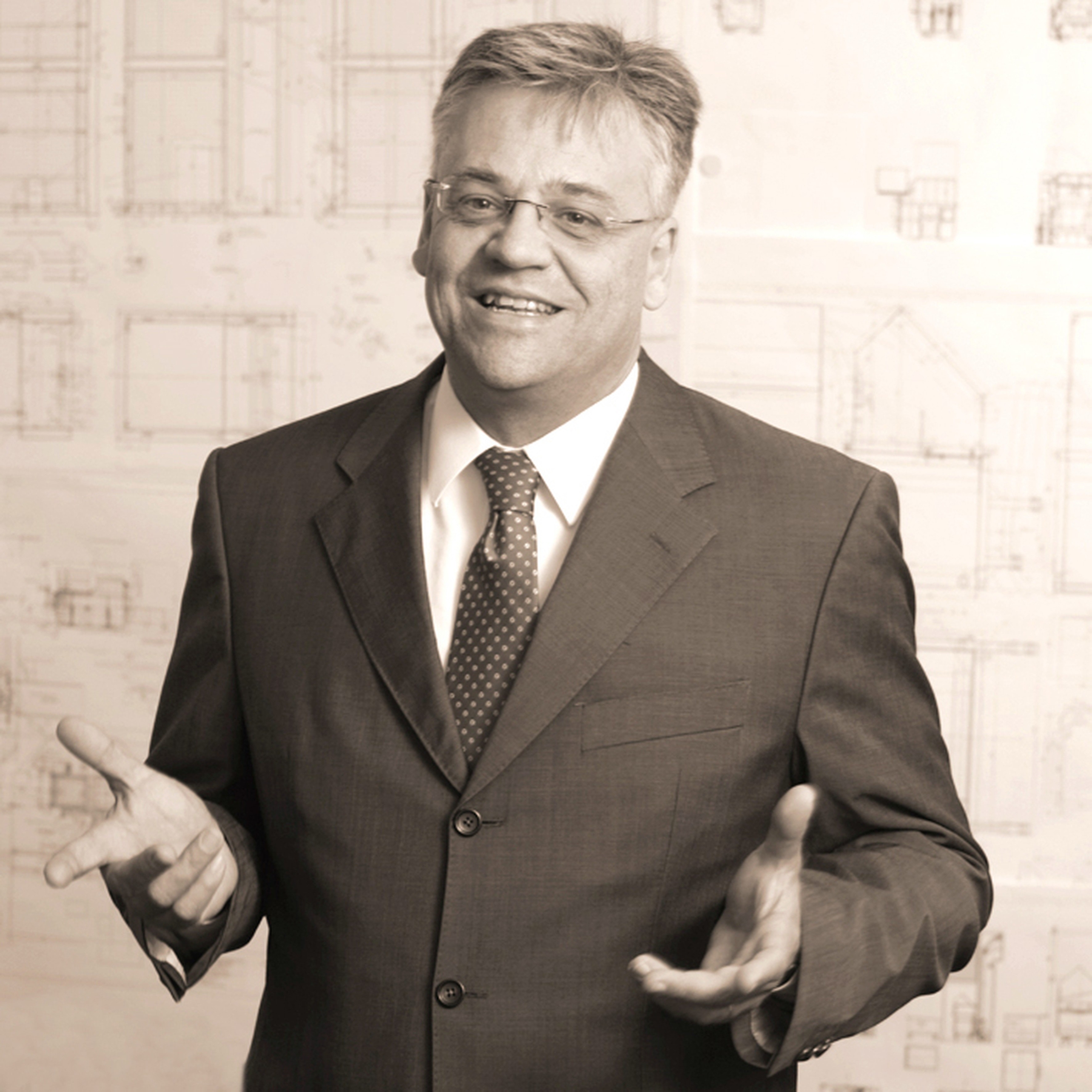
Ellen Conway Merrill, DELTA H vice president
“The collaboration with the Sintavia team has been an exciting experience as they have proven themselves as a leader in the industrialization of Additive Manufacturing production,” said Ellen Conway Merrill, DELTA H vice president. “The DELTA H DCAHT™ furnace was a perfect fit as it has enabled them to immediately process aluminum-based AM parts, as well as other alloys requiring heat treatment. We look forward to being a part of their continued success.”
The DELTA H DCAHT™ furnace features dual chambers operable to 1200°F and 500°F with precision control and temperature uniformity, qualifying as Class 2 (+/-10°F) per AMS2750E and in full compliance with all aerospace pyrometry standards and Nadcap.
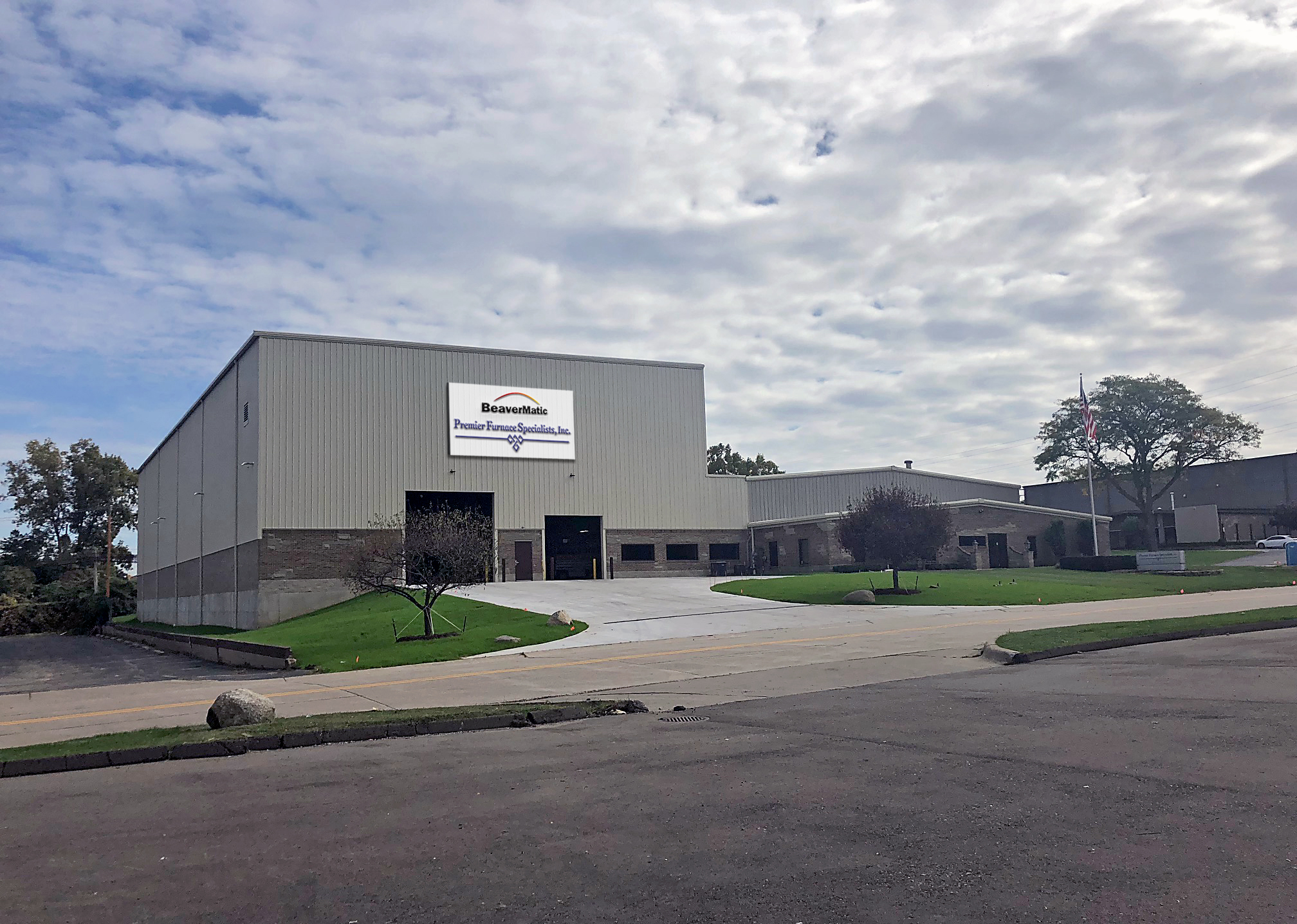
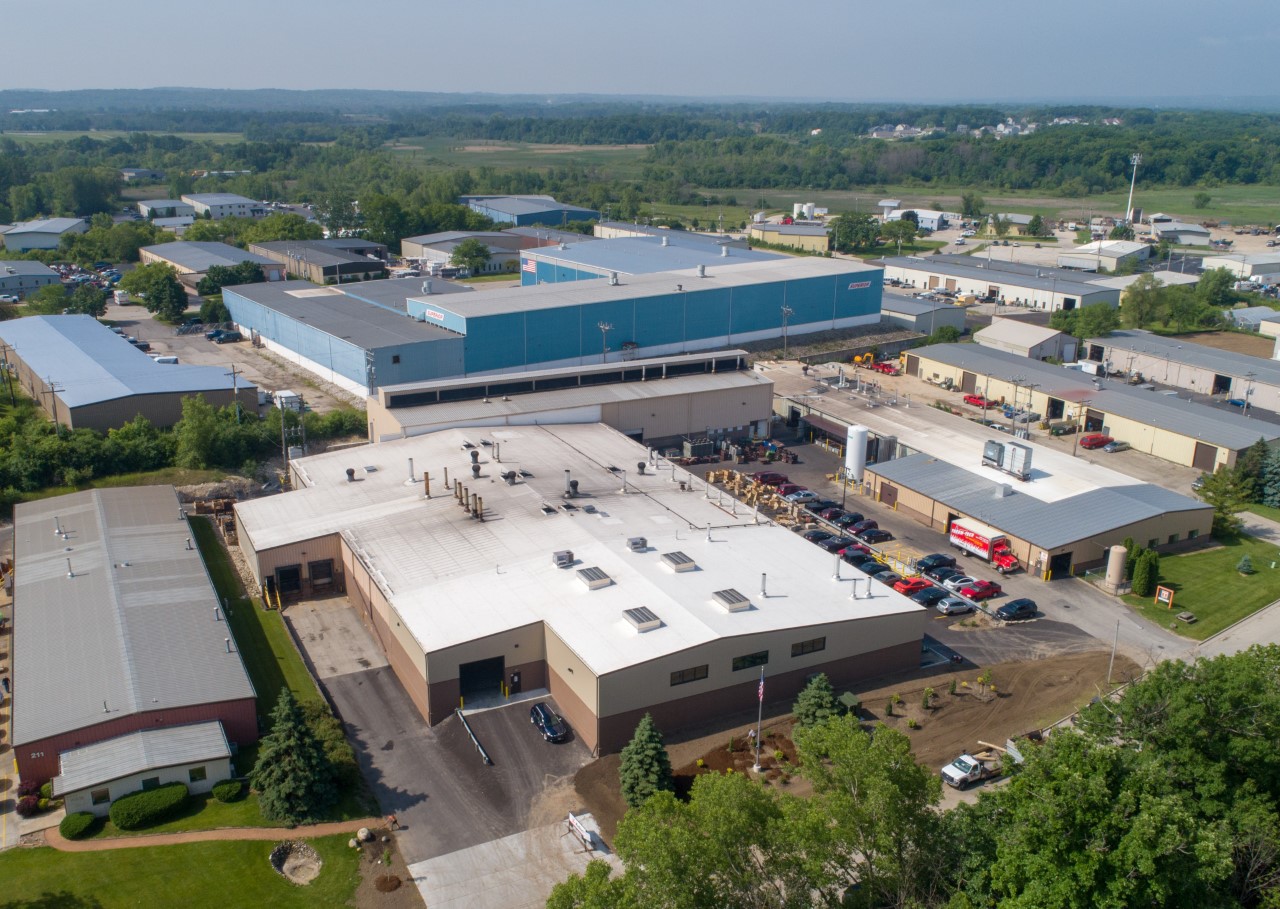
Premier Furnaces new 40,000 sq. ft. facility in Farmington Hills, MI.
A Michigan-based heat treat equipment manufacturer recently announced a major building expansion that will provide more space for building larger furnaces.
Premier Furnace Specialists and BeaverMatic have completed the expansion at one of their Farmington Hills facilities, which includes a new plant for administration and manufacturing, as well as a new plant for engineering and manufacturing. This expansion provides 45’ high ceilings with two large (25 ton and 10 ton) overhead cranes to complement the existing two (10 ton) overhead cranes. The total square feet under one roof is now 40,000. The $2.5 million expansion was needed for the continued growth of both companies, the magnitude of the atmosphere furnaces being built, and to employ additional employees.
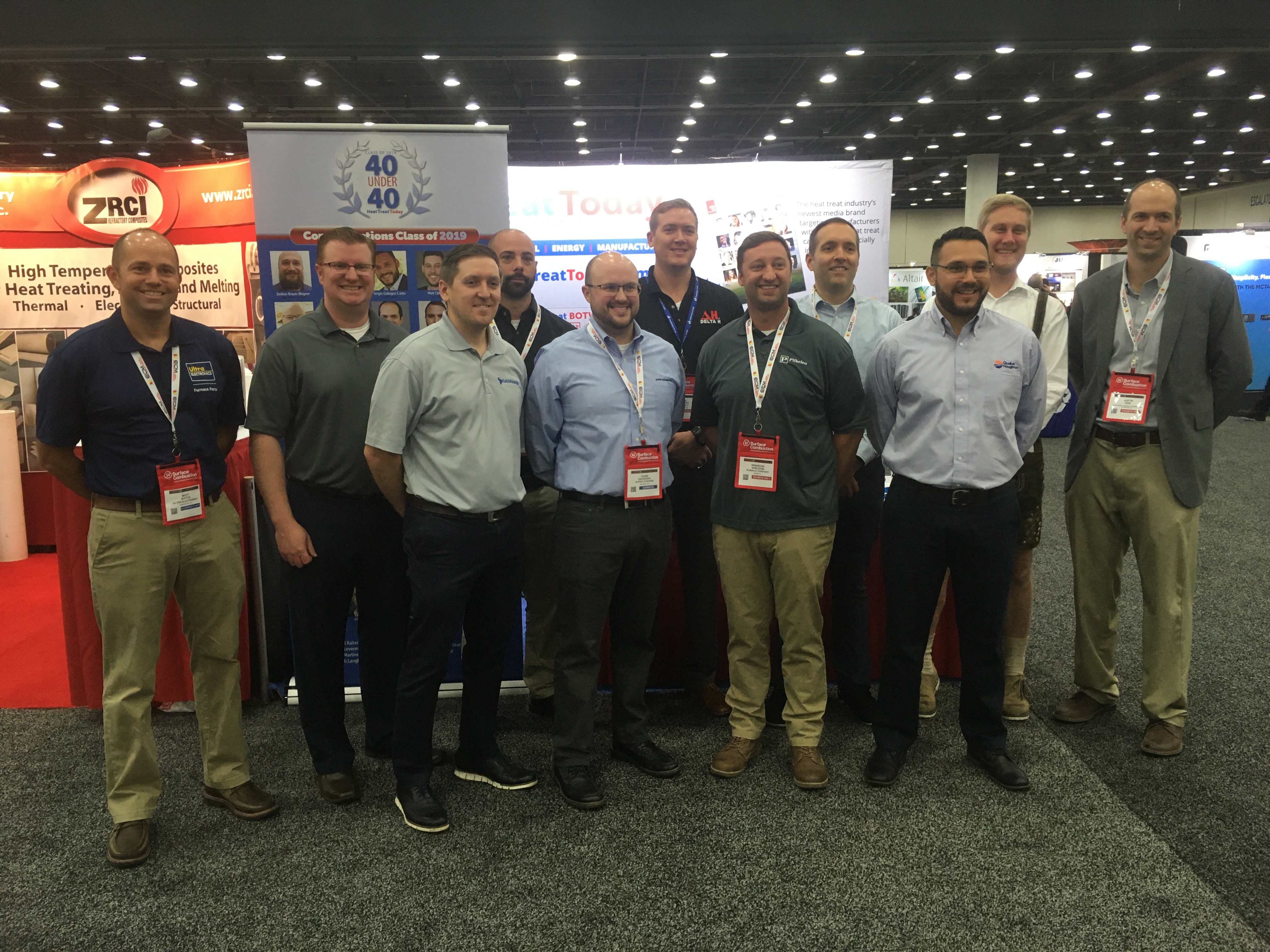
The Class of 2019 40 Under 40, revealed online on October 4, was featured at the Heat TreatTodaybooth at the Heat Treat Show in Detroit, Michigan. Here is a group photo of most of those still present on the last day:
Matt Watts (Ultra Electronics Energy), Mike Harrison (Gasbarre), Ben Gasbarre (Gasbarre), Tom Zimmerman (ATP), Chris Davidson (SSi), Neal Conway (Delta H), Brandon Sheldon (Plibrico), Kyle Hummel (Contour), Sergio Cantu (Quaker Houghton), Uwe Rahn (Rubig), Justin Dzik (Fives)
Diagnostic guide wires, minuscule screws for implants, complex surgical tools operated robotically—these are standard devices and equipment in the innovative and technology-rich medical arena, and sophisticated metals and alloys are regularly being used in their development, thanks to continuing advancements in medical technology.
“Titanium has been a consistent performer for a number of years, tantalum is emerging, and copper is re-emerging, while advancements in technology are creating a worldwide demand for a variety of other metals along with new versions of long-established standards. Niobium and nitinol are ideal for use in both internal and external medical applications.”
In this Best of the Web feature, author John Schmidt summarizes the metals industry’s “long history of innovation, development, and processing metals and alloys, in step with medical devices development,” including a quick guide on how these sophisticated materials are giving hope and life through their use in medical treatment.
Sven-Olaf Sauke, head of R&D at ZPF GmbH, is responsible for research and development at ZPF GmbH and works on innovative solutions for flame-resistant materials, intelligent sensor technology and control systems in melting furnaces. (Source: ZPF GmbH)
The future is moving inexorably towards smart factories, but many smelting plants are still stuck with assembly line production in Industry 2.0 without IT support. Central elements of a modern factory of the 21st century—such as the interface to a central database server or intelligent, heat-resistant automation including sensor technology enabling all facilities to communicate with each other—are frequently not available. Although there are numerous protocols in existence for this purpose, the possibility of retrofitting these protocols standards does not exist in many older facilities. A lack of expenditure resources and the absence of vision for the future have often led to missed opportunities.
Therefore, research strategies that build on each other are always recommended in order to keep up with the times. Only in this way can a smelting plant face the numerous challenges of the future in the long term. In this article, Sven-Olaf Sauke, head of R&D at ZPF GmbH, lays out the steps taken by ZPF to invest in the future in order to meet the current requirements of the industry and create a basis for innovative products, serving as a case study for U.S.-based Heat Treat Today readers standing on the cusp of Industry 4.0 readiness with uncertainty about how climate policies will affect U.S. manufacturing.
Melting Furnace 4.0: Thinking Ahead, Developing Further, Moving On
A current challenge in Industry 4.0 is the automation of so-called predictive maintenance. In this process, the system is monitored on an ongoing basis and throughout the entire process (continuous system monitoring) to perform condition-based maintenance work. In a smart factory with a melting furnace, for example, cleaning could be carried out by a robot that knows all the parameters of a furnace and can take action in good time before a critical degree of contamination is reached. Consequently, the robot automatically prevents a later complete breakdown of the system and a standstill of the entire shop in just a few minutes.
However, as long as there is no suitable and, at the same time, safe sensor technology that can withstand extremely high temperatures, these essential parameters cannot be recorded, even though they are the basis for Industry 4.0. In order to master these complex automation tasks, the entire factory needs extensive knowledge of all important plant data—from the filling level of the furnace to the degree of contamination in the bath area. For this reason, ZPF GmbH, for example, has already laid the foundations for solutions for intelligently networked melting furnaces through various research projects in the past.
Enoptal—from refractory materials to burner technology
At this point, the ZPF project "Enoptal" serves as an example for the beginning of such a research chain. In Germany, as a result of climate policy (surrounding Directive 2009/29/EC), aluminum producers and processors with a total rated thermal input of 20 MW had to limit their CO2 emissions from 2013 and purchase new certificates if necessary. This puts pressure on companies in the aluminum industry to find timely solutions for lower CO2 emissions. Following this, more investment was made in the development of efficient burner technology to reduce energy costs and reduce the impact of greenhouse gases on the environment. The charging methods and cleaning intervals of the furnaces as well as the melting losses were examined and the influence these parameters have on the critical emission values were reviewed.
In order to determine the energy-saving potential in aluminum melting processes, researchers have developed a system for monitoring and controlling the melting process in a joint project between industry and science.
The research project "Enoptal" was funded by the German Federal Ministry for Economic Affairs and Energy, supervised by the Project Administrator Jülich, conducted together with the Technical University Bergakademie Freiberg and successfully completed in 2011. With the help of various field tests, the essential parameters of a melting and holding furnace with a melting capacity of 300 kg/h and a holding capacity of 700 kg were determined, and optimization potential was identified for the refractory material and the burner arrangement resulting in energy savings of up to 10 percent. These fundamental results formed the basis for the next major research project.
Edusal-I + II—from burner technology to sensor technology
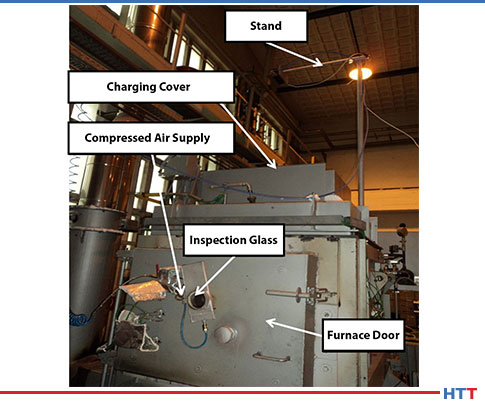
The camera system selected at the IFUM in Hannover for measuring height changes inside the aluminum furnace was tested in the scope of trials at the Technical University in Freiberg. As a first step, the optimal camera position above the charging cover of the furnace was determined, and the camera was then firmly positioned there. (Source: ZPF GmbH + IFUM)
As the next step in this research chain, the melting plant together with other plant components was at the center of the task in order to optimize the entire furnace system. The aim was to search for further energy saving potentials in melting processes with aluminum to minimize melting loss, to improve process monitoring, and to create the basis for a modern and efficient heat recovery system.
Since the field of "measurement technology" in particular has large gaps, the possibilities for a system for monitoring and control were examined in cooperation with the Federal Ministry for Economic Affairs and Energy, the Technical University Bergakademie Freiberg, and the Leibniz University of Hanover. The focus in the projects "Edusal-I and II" was mainly on the development of a measuring technique for the sensory detection of the furnace chamber.
In some areas, water-cooled, optical systems are used for furnace interior monitoring—for example, after the repair of glass troughs.
Although these provide an insight into the condition of the refractory lining and other process parameters, for safety reasons they cannot be used in rough everyday operation or must not be used by operators of aluminum melting plants. If such a system is damaged and the water is unintentionally heated from 68°F (20°C) to 1652°F (900°C), the sudden change in volume of the water can lead to explosions and thus to serious damage to property and persons. For the first time, the measurement method developed with the associated software made it possible to precisely determine the amount and position of material on the melting bridge during melting operation. In this context, a dynamic burner system was developed that can be regularly aligned to the melting charge via the recorded measurement data and thus increases the efficiency of the overall system.
In addition, the plant was equipped with a heat exchanger system. With the help of the exhaust gas, the required burner air is heated in the heat exchanger and directed to the burners. This heating results in a higher temperature level during the combustion process and leads to significant gas savings. The research project ended successfully in 2016 and enabled a further increase in energy efficiency of up to 15 percent in the melting plant. On this basis, assemblies were revised for series use. Today there are plants ready for trial operation which have been successfully tested. The measured values from the research project are confirmed at these plants in the rough melting operation.
AlSO 4.0—from sensor technology to automation
(Above figures: In further cooperation with the Federal Ministry for Economic Affairs and Energy and the Bergakademie Freiberg, the possibilities for a system for monitoring and control were examined. The main focus was placed on the development of a measuring technique for the sensor detection of the furnace chamber. In this context, ZPF has developed a dynamic burner system that can be continuously aligned to the melting charge via the recorded measurement data and thus increases the efficiency of the overall system. (Source: ZPF GmbH)
Thanks to the findings from the Edusal II project on sensor technology, a non-contact optical test method was developed which detects a change in the state of the aluminum block.
This is a camera system with a special evaluation logic that is able to detect non-molten aluminum on the bridge during the melting process. This new sensor technology enables an objective evaluation of the melting process in the aluminum furnace, and the user can automatically determine the current quantities of the material to be molten. In this way, characteristic values can be derived for objective evaluation of the melting performance guaranteeing continuous monitoring throughout the entire melting process. It also opens up further possibilities for automatic control processes within a smart factory.
All results of these research projects serve as a basis for the current project called AlSO 4.0 (aluminum melting furnace 4.0).
Research on control and evaluation options for automation, required for further steps in the process chain, is conducted in close cooperation with the Technical University Bergakademie Freiberg, the University of Bremen, and the Leibniz University of Hanover as well as aluminum melting furnace operator and is funded by the Federal Ministry for Economic Affairs and Energy. In this process, the areas to be examined are extended to the entire furnace system and the first prerequisites are created for integrating adjacent peripherals and achieving the desired increase in efficiency. The frequently described scarcity of resources will be the driver for further technical development, which cannot be achieved without research work. Long-term and systematic research pays off.
Founder and President of DANTE Solutions, Inc., started in 1982 as Deformation Control Technology, Inc., Lynn has contributed nearly half a lifetime to the broad field of mechanical metallurgy. Lynn began his journey in professional metallurgy as a principal engineer for TRW, Inc. and Republic Steel Corporation after completing his B.S., M.S., Ph.D. in Materials Engineering at Drexel University.
During the past three decades, Lynn has been extensively involved in the simulation of mechanical and thermal processes using computer-based tools, such as the finite element analysis. He shares his passion and expertise by participating in local and national education seminars and courses and co-authoring and authoring more than 70 technical papers and one book.
Lynn currently serves as an active member of the Cleveland Chapter of ASMI and on national ASMI committees. He is a Fellow of ASMI, the materials engineering honorary society Alpha Sigma Mu, and the International Federation for Heat Treatment and Surface Engineering (IFHTSE).
Co-authored Powder Forging with Howard A. Kuhn, published in print 1990.
Collaborated on two research projects and over 30 conference papers for multiple annual heat treatment and metallurgic engineering conferences, including the Heat Treating Conference and Exposition American Society for Metals, Conference Proceedings of the Thermal Processing in Motion, IFHTSE World Congress Conference, ASM Heat Treat Show, International Conference on Distortion Engineering:
Advanced Heat Treatment Modeling Using Phase Transformation Kinetics with Tianyu Yu, Justin Sims, and Zhichao (Charlie) Li:
Authored and co-authored over 40 articles in various industry magazines and journals, including Heat Treat Today, Industrial Heating, Thermal Processing for Gear Solutions, Journal of Materials Engineering and Performance, Journal of Metals, Journal of ASTM International, and the International Heat Treatment & Surface Engineering. Select articles include:
Coupling CFD and Oil Quench Hardening Analysis of Gear Component, Heat Treat Today as Best of the Web feature; originally published in Thermal Processing for Gear Solutions. Co-authored with Zhichao (Charlie) Li, David Greif, Rok Kopun, Simon Urbas, and Zlatko Kovacic.
A Pittsburgh-based steel and aluminum producer for multiple industries, including oil and gas, sold its Canadian specialty steel subsidiary to a global manufacturer of stainless steel and nickel alloys bars and wires.
Valbruna Canada Ltd., a subsidiary of Acciaierie Valbruna S.p.A., of Vicenza, Italy, purchased ASW Steel Inc, a steel fabricator in Welland, Ontario, from Ampco-Pittsburgh, which operates through its operating subsidiary Union Electric Steel which produces forged and cast rolls for the worldwide steel and aluminum industries.
The new company will now be known as Valbruna ASW.
Brett McBrayer, Ampco-Pittsburgh’s CEO
In a related transaction, Ampco-Pittsburgh, which also manufactures ingot and open die forged products, air and liquid processing equipment, primarily custom-engineered finned tube heat exchange coils, large custom air handling systems, and centrifugal pumps, announced it completed the sale of its Avonmore, Pennsylvania, cast roll manufacturing facility, Akers National Roll, to an affiliate of WHEMCO, Inc., also located in Pittsburgh, which uses heat treating and other metal-forming capabilities in the manufacture of heavy industrial components for the metals, power generation, mining, and shipbuilding industries.
“As previously discussed, excess capacity and high operating costs in our cast roll system have made the operation of the Avonmore facility unsustainable,” said Brett McBrayer, Ampco-Pittsburgh’s CEO. “With the closing of this transaction, the divestiture of our Canadian specialty steel operations, as announced yesterday, and further improvement initiatives being implemented in our businesses, we expect a significant impact on our future financial results moving forward. The Corporation remains focused and committed to building a sustainable and profitable future for our core businesses.”
Heat TreatToday offers News Chatter, a feature highlighting representative moves, transactions, and kudos from around the industry.
Personnel and Company Chatter
TimkenSteel has announced that Ward J. “Tim” Timken, Jr. has stepped down as CEO and president and as chairman of the TimkenSteel board of directors. Effective immediately, the Board of Directors has appointed Terry L. Dunlap as the company’s interim CEO and president. John P. Reilly, the current lead director of the TimkenSteel board of directors, will immediately assume the role of chairman of the board.
Rick Merluzzi has been promoted to the position of CEO at Metal Exchange Corporation. Mike Lefton, current chairman and CEO, will assume the title of executive chairman. Merluzzi oversees all their businesses, including Metal Exchange Trading, Pennex Aluminum Company, Continental Aluminum and Electro Cycle, Inc.
Platte River Equity has sold its portfolio company PRV Metals to Tinicum LP. PRV Metals, a leading supplier of specialty forged titanium and high-performance steel products to aerospace, defense, medical, energy, and industrial sectors, operates through two subsidiaries Sierra Alloys and TSI Titanium.
US aviation group Collins Aerospace has extended the contracts for the supply of thrust reverser housings for the engine gondolas of the Airbus A350 XWB and Boeing 787 aircraft. The order includes the delivery of the engine cowlings into the next decade. This contract renewal is a major contribution to strengthening FACC’s position as an international partner in the Engines & Nacelles segment.
Bodycote Thermal Processing Inc has announced it will spend $15.3 million to renovate and equip a dilapidated, 58,000-square-foot building in Geddes, New York, to replace the company’s facility that burned down in Van Buren, New York, in 2018. Equipment will be purchased that will allow the company to perform heat treatment processes not currently available in the United States.
Element Materials Technology has announced that its new aerospace materials testing laboratory in Shanghai, China, is now open for business. Element confirmed it has completed a number of accreditations including ISO/IEC 17025:2017 and Nadcap, with OEM audits underway. The new laboratory specializes in a comprehensive range of services that include: chemical analysis; fatigue testing; failure investigation; mechanical testing; metallurgical analysis, and on-site testing at client sites. Customers will also benefit from pre-testing services, including a full machine shop and heat treatment furnaces for the treatment of materials prior to testing.
Construction is moving forward at a brisk pace at Stack Metallurgical Group‘s new Albany, Oregon site, where the company will offer both Hot Isostatic Pressing (HIP) and vacuum heat-treating services.
Equipment Chatter
Three intelligent waste heat recovery systems have been awarded by Tangshan Zhengfeng Iron & Steel Co., LTD, in Hebei Province, China, to Tenova, a Techint Group company specializing in innovative solutions for the metals and mining industries.
A contract to supply on-site nitrogen to Samwha Capacitor’s new multi-layer ceramic capacitor (MLCC) plant being built adjacent to its existing plant in Yongin, South Korea, has been awarded to Air Products. Under the new contract, Air Products will expand its nitrogen capacity to support the increasing demand from Samwha Capacitor’s existing and new plants.
Advanced soft magnetic expertise and ultra-efficient electrical components will be provided by Carpenter Technology to multiple OEMs to progress their electric aircraft aspirations. Carpenter Technology will provide advanced soft magnetic expertise and ultra-efficient electrical components to be used in R&D and demonstrator motors and engines, leading to construction of lighter-weight, longer-lasting electric propulsion systems.
Two reheating furnaces to reheat blooms and billets have been delivered to Shijiazhuang Iron & Steel Company within China’s HBIS Group by Fives.
Kudos Chatter
Element Materials Technology has been awarded the 2018 Gold Boeing Performance Excellence Award (BPEA) for its Huntington Beach, California, laboratory, while the Element Los Angeles laboratory won Silver. The annual award recognizes superior performance in the highest tiers of Boeing’s supply chain. This is the second year Element Huntington Beach has achieved the Gold award and the first year that Element Los Angeles has achieved Silver status.
Plibrico Corporation has awarded employees Joe Feldhacker, a project manager from Plibrico’s Omaha, Nebraska location, and Lou Calderon, refractory CAD designer in the company’s engineering department in Northbrook, Illinois, API 936 Refractory Personnel Certification. Both demonstrated advanced knowledge of installation, inspection, testing and repair of monolithic refractory linings, passing the rigorous API 936 exam administered by the American Petroleum Institute (API), a national trade association representing all facets of the natural gas and oil industry.
Spirit AeroSystems was recognised at the Composites and Advanced Materials Expo (CAMX) with the Award for Composite Excellence (ACE) in Manufacturing: Material and Process Innovation. Spirit received the award for its development of the Advanced Structures Technology and Revolutionary Architecture (ASTRA) demonstrator aircraft panel, which was displayed at the CAMX conference in Anaheim, California.
The 100th nacelle system for Airbus’ A330neo wide-body jetliner has been delivered by Safran Nacelles.
Heat TreatTodayis pleased to join in the announcements of growth and achievement throughout the industry by highlighting them here on our News Chatter page. Please send any information you feel may be of interest to manufacturers with in-house heat treat departments especially in the aerospace, automotive, medical, and energy sectors to the editor at editor@heattreattoday.com
An industrial gases company that supplies applications to heat treating facilities recently broke ground on its new global headquarters in Pennsylvania’s Lehigh Valley.
Seifi Ghasemi, chairman, president, and CEO, Air Products
Air Products, which provides industrial gases and related equipment to dozens of industries and is a leading supplier of liquefied natural gas process technology and equipment, hosted a celebration for Air Products colleagues and state and local elected officials and dignitaries. The company offers applications for annealing, brazing, hardening, and sintering to multiple industries, including medical, refining, chemical, metals, and manufacturing.
“We need a headquarters that represents who we are as a world-leading company,” said Seifi Ghasemi, chairman, president, and CEO. “We want to create modern office and R&D facilities that are energizing, collaborative and inclusive. When you see the new global headquarters renderings, without any doubt, the new office space and world-class R&D facility will be representative of who we are and what we stand for. This new headquarters will exemplify our ‘4S’ culture and reflect the safety, speed, simplicity, and self-confidence that have driven our success and will continue to do so.”
“We will also emphasize a fifth ‘S’ with these new facilities – Sustainability,” added Ghasemi. “Sustainability is at the heart of what we do as a business, every day around the world. That’s important to our customers, our partners, and our talented and committed employees. . . . I believe very strongly that every company has a foundational culture, and there is value in preserving that, even as you move that culture forward. Air Products has a nearly 80-year history – most of it right here in the Lehigh Valley. There are certain values instilled in people because of where we are today, because of the people who live in this area, who contribute to its success, and who call it home. There is a lot of value in preserving that. So, it became clear this location worked best for us, and we have never wavered from the decision to stay.”
The address of the new headquarters is 1940 Air Products Boulevard, signifying the year Air Products was founded.
Main photo credit/caption: Air Products / (L to R) PA Senator Pat Browne, PA Representative Gary Day, Air Products CEO Seifi Ghasemi, DCED Executive Deputy Secretary Neil Weaver, Air Products Strategic Projects VP Pat Garay and Senior VP and Chief Human Resources Officer Victoria Brifo participate in the ceremonial groundbreaking for the company’s new global headquarters located in Lehigh Valley, Pennsylvania.
New building opens for ThermTech of Waukesha, Wisconsin.
A heat treating services provider based in Waukesha, Wisconsin, recently completed an 11,000 square foot addition, increasing its capacity to serve tooling, defense, oil & gas, mining, construction, medical, and general metal manufacturing companies in the Midwest.
ThermTech of Waukesha is celebrating Manufacturing Month with the grand opening of the new facility and will welcome customers and associates to an Open House on October 25th from 10 am to 3 pm.
Mary Wiberg Springer, vice president of ThermTech
“At ThermTech, people make the difference,” said Mary Wiberg Springer, vice president of ThermTech. “From our customer service reps to process metallurgists and expert heat treaters, you have a skilled and experienced team serving you. We invite customers and associates to come and tour our new, expanded facilities and renovated shop floor to understand our capabilities and the advantages we bring to the table. For over three decades, we have stood firm in our commitment to meeting customer needs through continuous innovation, modernization, and advancements in heat treating skills. Bringing on the latest technology and equipment in a bigger, better facility allows us to serve more customers across the country, in a wide variety of industries. We couldn’t think of a better way to celebrate Manufacturing Month than by opening the doors to this new facility.”
ThermTech recently added an IQ furnace to its equipment capabilities, performing carburizing or hardening with operating dimensions of 54″ wide x 72″ long x 36″ high or parts up to 10,000 pounds.