


SINTERING POWDER METAL NEWS

Powder Metallurgy Leader to Receive Lifetime Achievement Award

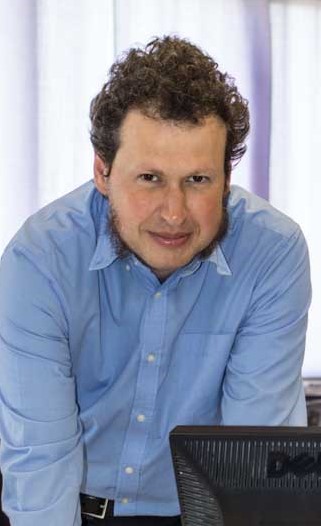
Dr. Randall (Rand) German, FAPMI, founder of German Materials Technology, will receive the Kempton H. Roll Powder Metallurgy (PM) Lifetime Achievement Award by the Metal Powder Industries Federation (MPIF). The award will be presented during WorldPM2020, World Congress on Powder Metallurgy & Particulate Materials, in Montreal, Canada, on June 28.

German has distinguished himself through his research and teaching of the net-shape fabrication of engineering materials via sintering techniques as used in PM, cemented carbides, and ceramics. He has promoted the growth of PM technology during his 50-year career through his involvement in 12 start-up companies, supervising well over a hundred graduate and post-doctoral students, and prolific PM industry publications. German has also been an active member in APMI International, the American Society for Metals, and the American Ceramics Society.

After completing his bachelor’s degree in material science and engineering at San José State University, German began his PM industry career at Battelle Lab, Columbus, Ohio, prior to joining Sandia National Labs (SNL). He obtained his master’s degree in metallurgical engineering from The Ohio State University and his PhD in engineering at the University of California—Davis before taking a director of research position at Mott Corporation, Farmington, Connecticut.

Dr. Randall German
Founder,
German Materials Technology

German’s nearly 40-year academic career began in 1980 at Rensselaer Polytechnic Institute (RPI), where he earned the HuntChair while teaching and conducting research. In 1991, he accepted a position at The Pennsylvania State University where he became the Brush Chair Professor in Materials and the director of the Center for Innovative Sintered Products (CISP) before retiring as an emeritus professor. In 2005, German became the inaugural director for the Center for Advanced Vehicular Systems (CAVS) at Mississippi State University prior to joining San Diego State University in 2008 as associate dean for engineering research until 2013.

German has published 20 books and has 25 patents. He has shared his expertise at powder injection molding tutorials since 1990, and co-chaired over 30 conferences.

Photo Credit: materialstoday.com


Powder Metallurgy Leader to Receive Lifetime Achievement Award Read More »
Inside GKN Powder Metallurgy’s Acquisition of Forecast 3D

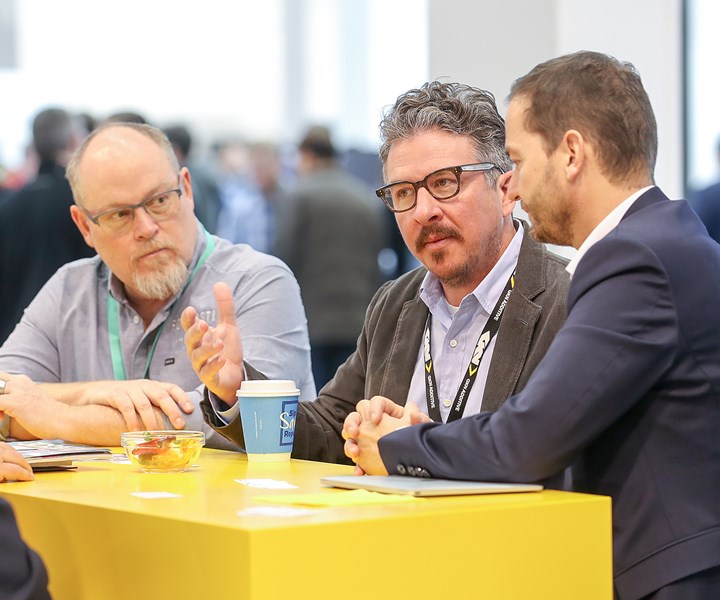
Picture two men sitting at a bar table watching a video on a smartphone. As they enthuse about how much they love it, a bystander might be tempted to think they’re just killing time goofing off. “It’s fantastic technology,” the man with the phone, Forecast 3D founder and CEO Corey Weber, says of the Multi Jet Fusion (MJF) process featured in the time-lapse video that shows a Californian facility in the dead of night illuminated only by the passing of a dozen lights flashing over a dozen powder beds through until the morning. As he pulls back his smartphone, he and Guido Degen, GKN Powder Metallurgy’s President of Additive Manufacturing, look pleased with both the technology and themselves.

Corey and Donovan Weber, Forecast 3D, and Guido Degen, GKN

GKN Powder Metallurgy’s acquisition of Forecast 3D appears to be natural synergy. Much of Forecast 3D’s expertise exists in polymer 3D printing, serving the aerospace and medical markets on the West Coast. GKN’s focus is metal parts, the bulk of which is for the automotive market in Central Europe and the Midwest of the United States. When GKN highlighted the contrasting technological expertise that exists in both companies, the figureheads at Forecast were on the same wavelength.

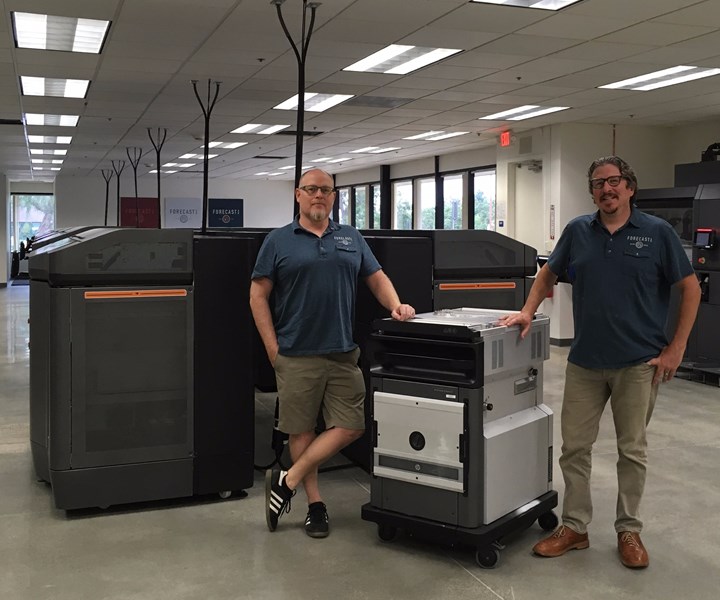
Corey and Donovan Weber, the two brothers who founded Forecast 3D, shown in 2017 at their 3D Manufacturing Facility in Carlsbad, California.

“We knew that the opportunity is much bigger than the size of our pockets,” Weber acknowledges. “We needed resources and our goal was to get someone that shared our vision. We found those with GKN. . . . And, honestly, it’s kind of a relief because now we can really focus on polymers and let them handle metals.”

To read more from the original article, click here: https://www.tctmagazine.com/3d-printing-news/gkn-powder-metallurgy-forecast-acquisition-deal/


Inside GKN Powder Metallurgy’s Acquisition of Forecast 3D Read More »

Powder Metal Company Serving Automotive Industry to Add Sintering Furnace

A company specializing in manufacturing high volume, ferrous-based powder metal components in the automotive market has placed an order with Abbott Furnace Company for an electrically heated continuous belt sintering furnace to be delivered in the 2nd quarter of 2020. The furnace is rated at 2,150° F and also includes the unique Abbott Varicool Cooling System.

Additionally, Abbott is also fulfilling an order for an electrically heated continuous belt soft magnetic alloy processing furnace from a manufacturer in the powder metal industry providing components to the metals and mining market. Their furnace will also ship in the 2nd quarter of 2020. The furnace has a maximum temperature of 1850° F in an air, nitrogen, or steam atmosphere and includes a Delube chamber, oxidation chamber, water-jacketed cooling chamber, and a Thermostack thermal oxidizer.  The furnace will be controlled through an Allen Bradley Micrologix PLC. This furnace design will help the P/M industry to grow in the electrification segment of the market.


Powder Metal Company Serving Automotive Industry to Add Sintering Furnace Read More »

U.S. Army Research Lab Invests to Develop Powerful Metal Powder 3D Printer

The Combat Capabilities Development Command Army Research Laboratory, also known as ARL, recently awarded a 3D engineering and manufacturing company a $15 million contract to create a metal 3D printer that it intends to be the world’s largest, fastest, and most precise.

3D Systems and the National Center for Manufacturing Sciences (NCMS) were awarded funding to create this printer and will partner with ARL and the Advanced Manufacturing, Materials, and Processes (AMMP) Program to advance the leadership and innovation. This printer will impact key supply chains associated with long-range munitions, next-generation combat vehicles, helicopters, and air and missile defense capabilities.

“The Army is increasing readiness by strengthening its relationships and interoperability with business partners, like 3D Systems, who advance warfighter requirements at the best value to the taxpayer,” said Dr. Joseph South, ARL’s program manager for Science of Additive Manufacturing for Next Generation Munitions. “Up until now, powder bed laser 3D printers have been too small, too slow, and too imprecise to produce major ground combat subsystems at scale. Our goal is to tackle this issue head-on with the support of allies and partners who aid the Army in executing security cooperation activities in support of common national interests, and who help enable new capabilities for critical national security supply chains.”

According to the U.S. Army Additive Manufacturing Implementation Plan, the Army has been using additive manufacturing (AM) for two decades to refurbish worn parts and create custom tools. Once developed, the Army will leverage its manufacturing experience by placing the new large-scale systems in its depots and labs. Subsequently, 3D Systems and its partners plan to make the new 3D printer technology available to leading aerospace and defense suppliers for development of futuristic Army platforms.


U.S. Army Research Lab Invests to Develop Powerful Metal Powder 3D Printer Read More »

Powder Metal Alloys Facility Expansion to Support A.M. Demand

A North American manufacturer of powder metal products recently announced plans to expand its Pennsylvania facility, adding new production capabilities to support additive manufacturing and other technologies.

Photo: Daily American
North American Höganäs High Alloys, founded in 1896 in Johnstown, Pennsylvania, will construct a 24,000-square-foot building this location and purchase new machinery to support the global demand for high alloy products, which include stainless steel powders, iron alloy powders, nickel alloy powders, electrolytic iron powders and chips, manganese and silicon powders, and the proprietary GLIDCOP dispersion strengthened copper products.
Linda R. Thomson, president and CEO of the non-profit economic development organization JARI

“Pennsylvania’s powder metals industry is a major contributor to our manufacturing sector,” said Pennsylvania Governor Tom Wolf. “Höganäs’ decision to expand here is great news for Pennsylvania manufacturing, and will provide at least 25 reliable, family-sustaining jobs for Cambria County workers.”

“JARI is pleased to provide support to Höganäs as the company expands their operations in the City of Johnstown,” said Linda R. Thomson, president and CEO of the non-profit economic development organization JARI. “Höganäs is a world-class, internationally recognized company with state-of-the-art products that is meeting the demands of the new manufacturing age. We appreciate the continuation of the proud Cambria County tradition of leading the way for innovation and we thank the Wolf Administration for their continuous support.”

“This exciting investment, with the greatly appreciated support from the Governor’s Action Team and JARI, will help Höganäs continue to grow in Pennsylvania and provide innovative products for our customers in several quickly developing market areas,” said Dean Howard, President Americas Continent.

Photo credit: Höganäs


Powder Metal Alloys Facility Expansion to Support A.M. Demand Read More »

Specialty Alloys Firm Enhances AM Capabilities with Powder Lifecycle Technology Acquisition

A Pennsylvania producer and distributor of premium specialty alloys recently announced it has acquired a leader in the development and supply of advanced metal powders and powder lifecycle management solutions.

Carpenter Technology Corporation, based in Philadelphia, Pennsylvania, broadens its role as a leader in solutions provider in additive manufacturing with the approximately $81 million purchase of LPW Technology Ltd (LPW), based in Widnes, Chesire, United Kingdom, with additional processing operations near Pittsburgh, Pennsylvania. The acquisition incorporates metal powder lifecycle management technology with quality control and traceability.

Tony R. Thene, Carpenter’s president and CEO

Carpenter’s alloy production includes titanium alloys, nickel- and cobalt-based superalloys, stainless steels, alloy steels, and tool steels and is used in applications within the aerospace, transportation, medical, and energy sectors.

“Our aggressive development in key aspects of Additive Manufacturing (AM) demonstrates our commitment to build on our industry-leading position in this space,” said Tony R. Thene, Carpenter’s president and CEO. “The acquisition combines LPW’s metal powder lifecycle management technology and processes with our technical expertise in producing highly engineered metal powders and additively manufactured components.”

Phil Carroll, LPW’s founder

Lifecycle management technology is becoming increasingly important to understanding how materials behave before, during, and after production in the powder-bed fusion process.  Understanding powder behavior is critical as AM becomes more widely adopted and implemented across various industries.

“LPW’s innovative platforms and enabling technology further solidify Carpenter’s position as a preferred provider of end-to-end next generation Additive Manufacturing solutions,” said Phil Carroll, LPW’s founder. “I’m extremely proud of the accomplishments we’ve achieved at LPW and I’m excited to be part of Carpenter’s continued growth and leadership in AM.”


Photo credit: Additive Manufacturing Magazine


Specialty Alloys Firm Enhances AM Capabilities with Powder Lifecycle Technology Acquisition Read More »

Industrial-Scale Metal Alloy Powder Plant Launched in U.K.

A U.K.-headquartered company with a solid-state alloy powder technology recently announced its launch of the world’s first industrial-scale metal alloy powder production facility based on the company’s process.

Metalysis will produce valuable alloy powders at the new plant, located in the company’s Materials Manufacturing Centre in Wath upon Dearne, South Yorkshire, U.K.

The Generation 4 (“Gen4”) project was mechanically completed on time in Q4 2017. It has since undergone hot commissioning, trial runs, optimization and handover to Operations, signaling Metalysis’ transition into commercial production following more than a decade of phased technology development.

Dr. Dion Vaughan, Chief Executive Officer, Metalysis

Gen4 is the first facility to take Metalysis’ solid-state, modular, electrochemical process to industrial scale and can produce tens-to-hundreds of tonnes per annum of high value, niche and master alloys. It creates a new U.K. source of supply for global end-users in advanced manufacturing disciplines including aerospace, automotive, batteries, light-weighting, magnets, mining and 3D printing consumables.

A standout benefit of Metalysis’ technology is its multi-metal capability, which enables it to produce alloy “recipes” that comparable processing routes cannot. Where conventional technologies are unable to elegantly combine elements with melting and density differentials, this technology can because it is a solid-state process. Gen4 enables Metalysis to commercially produce a demand-driven product mix of titanium alloys; master alloys including Scandium-Aluminide, which continues to pose excellent launch product potential as announced on 11 June 2018; compositionally complex alloys including High Entropy Alloys; magnet materials; high-temperature materials; and Platinum Group Metal alloys.

“In powering up and operating our industrial plant, Metalysis is poised to achieve its target to generate significant profits from our new South Yorkshire production facility,” said Dr. Dion Vaughan, Chief Executive Officer. “Ours is a true British success story with international implications. Metalysis has grown from the ‘lightbulb moment’ at Cambridge University in the late-1990s, relocated to South Yorkshire to benefit from regional excellence in operational skillsets in the early-2000s, and now onwards towards a bright commercial future.”


Industrial-Scale Metal Alloy Powder Plant Launched in U.K. Read More »

Binder Removal in Vacuum Sintering


Source: TAV: The Vacuum Furnaces Blog


Andrea Alborghetti, Technical Manager of TAV Vacuum Furnaces

Heat Treat Today previously posted Parts 1 and 2 of this series on vacuum sintering. Part 1 focused on the two processing steps of debinding and sintering. Part 2 addressed primarily the vacuum sintering furnace itself. This installment analyzes the process and variables involved with binder removal.

Andrea Alborghetti, technical manager of TAV Vacuum Furnaces and contributor to the company’s blog, provides an analysis of burning vs capturing binders, addressing advantages as well as problems that may arise and how to execute control in the process, as in this example:

“One thing that is worth clarifying is that the flames usually seen on the outlet of kilns that use combustible gases (hydrogen, for example) as the process gas, were not originally designed to burn the binder disassociation residues to reduce emissions to the legal limits. Rather, it is solely for disposing of the emitted hydrogen safely, thus avoiding hazardous, potentially explosive atmospheric concentrations being created outside of the kiln.”

Read more for further analysis of binder removal, including discerning the type of residue found with your process: “Perfect Vacuum Sintering Step by Step #3”

Binder Removal in Vacuum Sintering Read More »

The Vacuum Sintering Furnace Examined

Andrea Alborghetti, Technical Manager of TAV Vacuum Furnaces


Source: TAV: The Vacuum Furnaces Blog

Following up on the first installment of his series on “perfect vacuum sintering” (linked here), Andrea Alborghetti, technical manager of TAV Vacuum Furnaces and contributor to the company’s blog, provides an overview of the right insulation for a vacuum sintering furnace, an examination of hot zone design, the distribution of gas-flow, and the box for loading and unloading.

Read more: “Perfect Vacuum Sintering Step by Step #2”

The Vacuum Sintering Furnace Examined Read More »

Swedish Group Invests in Titanium, Nickel-Based Metal Powders Production

Annika Roos, head of product area powder at Sandvik Materials Technology

A Swedish engineering group in metal-cutting and materials technology recently announced that it will invest about $24.5 million in a new plant for manufacturing of titanium and nickel fine metal powders near its raw material supply and additive manufacturing center in Sandviken, Sweden.

The group’s investment within Sandvik’s Materials Technology will complement its manufacture of broad stainless steel, nickel-based, and cobalt-chromium alloys in the United Kingdom and Sweden. Sandvik powders reach sectors throughout Europe, North America, and Asia through the Osprey™ brand.

The demand for metal powder for additive manufacturing is expected to increase significantly in the coming years. Titanium and nickel-based alloys are key growth areas in the field of additive manufacturing, accounting for a significant portion of the metal powder market.

“This investment is an enabler for future growth and means that we are expanding our metal powder offering to include virtually all alloy groups of relevance today. In addition, it will also support the overall additive manufacturing business at Sandvik,” said Annika Roos, head of product area powder at Sandvik Materials Technology.

The facility is expected to be operational during 2020.


Swedish Group Invests in Titanium, Nickel-Based Metal Powders Production Read More »

Skip to content