FEATURED NEWS

Voestalpine Invests Millions in Aerospace

Aerospace is a key strategic growth area for Voestalpine, and is therefore a high priority in the coming years. Over the medium term the company expects to increase Group revenue in this technologically challenging customer segment from its current level of EUR 300 million to around EUR 500 million. In the next two years Voestalpine will invest over EUR 40 million in a new high-tech, high-speed forging line at Group company Böhler Edelstahl GmbH & Co KG in Kapfenberg in order to literally give additional thrust to this growth. The state-of-the-art facility is scheduled to go into operation as early as in 2018, and will primarily be used to manufacture forgings as pre-materials for extremely high load-bearing aircraft components, such as engine parts, or as workpieces for sophisticated products used in the oil & gas industry.

Over the next one and a half decades global demand for almost 40,000 new aircraft is forecast. The major investment in a new, state-of-the-art forging line demonstrates that Voestalpine is again staying abreast of the dynamic developments in the aerospace sector.

The aerospace industry is one of the key drivers of our international growth strategy in the future market of mobility. All most important aircraft manufacturers already rely on technologies and products from Voestalpine. By intensifying our innovation and investment activities we aim to further expand our position as a leading provider also in this sophisticated customer segment-

Wolfgang Eder, Chairman of the Management Board of voestalpine AG Wolfgang Eder, Chairman of the Management Board of Voestalpine AG

Fully automated facility sets new standards

The Special Steel Division of the Voestalpine Group is one of the leading global suppliers of high-performance materials and special forgings for the aerospace industry. Its highly stress-resistant products include structural parts, engine components and mounts, landing gear parts, and door segments that are used in the aircraft programs of manufacturers including Airbus, Boeing, Bombardier, and Embraer.

The new high-tech forging line will not only play a key role in increasing volumes in the aerospace business segment, but it will also set new standards in product quality, process automation, and digitalization. As a result, this investment significantly strengthens the technological leadership enjoyed by our Styrian production companies. Investment in a new special steel plant is also in planning as a means of opening up new dimensions in materials production. This is in addition to, and independent of, the current project. A final decision on the location of the special steel plant is expected for the second half of 2017.

Franz Rotter, Member of the Management Board of voestalpine AG and Head of the Special Steel Division Franz Rotter, Member of the Management Board of Voestalpine AG and Head of the Special Steel Division

Moreover, the new facility will produce forged components for oil and gas exploration which are required to withstand extreme conditions both on land and at sea. The high-tech forging line will process the material with a pressing force of 4,400 tonnes and a speed of up to 120 strokes per minute, or 2 strokes per second.

Voestalpine Invests Millions in Aerospace Read More »

Aerospace Supplier Purchases from Wisconsin Oven

Wisconsin Oven Corporation announced the shipment of an electrically heated horizontal quench system to a supplier of the Aerospace industry. The system will be used to solution heat treat and rapidly quench a variety of aluminum parts.

The horizontal quench furnace has a maximum temperature rating of 1,250°F, a work chamber of 6’W x 2’H x 4’L. It is electrically heated with 144kW of heat input and SCR power control. The recirculation system utilizes a 15,000 CFM blower with combination air flow design to maximize temperature uniformity. This horizontal quench system features guaranteed temperature uniformity (+/-5°F at 870° F and 1,000° F) and meets the requirements of AMS 2750E Class 1.

The quench tank is a 12 gauge 304 stainless steel construction, and utilizes a pneumatically actuated quench elevator to lower and raise the load into the tank. The system provides a seven (7) second maximum quench time. The quench tank has a 1,600 gallon capacity and agitation pump rated for 250 gallons per minute. The tank is designed for a 20°F maximum water temperature rise (when load is quenched).

“A Horizontal Quench System is a cost effective option for our customers that perform solution heat treating processes. It offers many of the typical drop bottom capabilities and features with a smaller footprint, saving on the customer’s valuable floor space.”  Jim Lucas, Senior Sales Engineer

Unique features of this horizontal quench furnace include:

  • Seven (7) second maximum quench time
  • Non-heated stainless steel rinse tank with agitation
  • Powered load/unload table
  • Meets AMS 2750E Class 1 specifications
  • Pusher/extractor (load pusher) system for automatic loading and quenching
  • Oven relay and sequence control performed by an Allen Bradley PLC
  • Operator interface control (for oven/quench/pusher) with 10” color touch screen HMI

Aerospace Supplier Purchases from Wisconsin Oven Read More »

Heat Treat Basics: Metal Urgency – Carburizing

BOTW-50w  Source:  Thermal Processing Magazine

“While some heat treatments are used to soften the material or improve its machinability, most are processed to obtain strengthened or hardened properties. The majority of heat treatments apply to metallic materials and, typically, the techniques include annealing, normalizing, quenching, tempering, precipitation strengthening, surface hardening, and case hardening. Heat treatment is so critically important that we can safely say a part undergoing extensive manufacturing processes such as melting, rolling, forging, and other related machining is of little or no value without the necessary and appropriate heat treatment.”

Read More:  Metal Urgency –  Carburizing by March Li, Metallurgist

March Li Metallurgist, Manufacturing Heat Treating, Thermal Processing Magazine, CarburizingMarch Li – Metallurgist

Heat Treat Basics: Metal Urgency – Carburizing Read More »

Titanium + Gold = New Gold Standard for Artificial Joints

BOTW-50w  Source:  Rice University News and Media

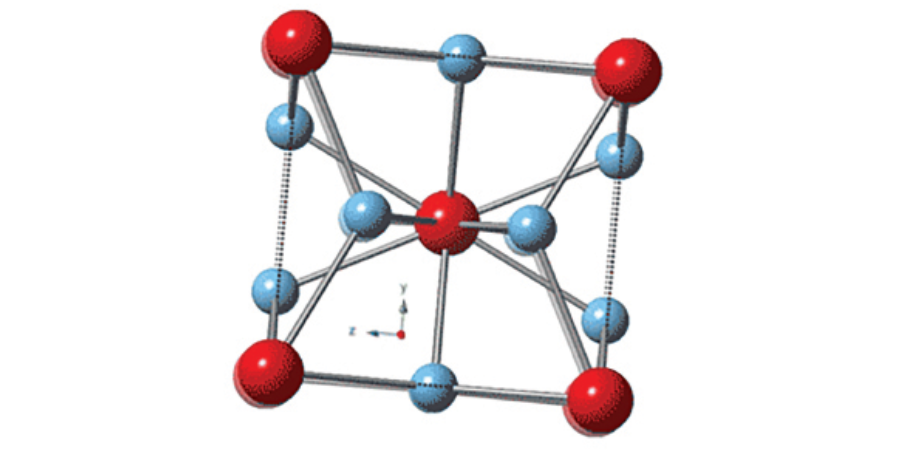
“Titanium is the leading material for artificial knee and hip joints because it’s strong, wear-resistant, and nontoxic, but an unexpected discovery by Rice University physicists shows that the gold standard for artificial joints can be improved with the addition of some actual gold.”

Read More:  Titanium + Gold = New Gold Standard for Artificial Joints by Jade Boyd and Co-Authors Pulickel Ajayan, Sruthi Radhakrishnan and Chandra Sekhar Tiwary, all of Rice; Tiglet Besara, Yan Xin, Ke Han and Theo Siegrist, all of Florida State; Fevzi Ozaydin and Hong Liang, both of Texas A&M; and Sendurai Mani of MD Anderson

Titanium + Gold = New Gold Standard for Artificial Joints Read More »

Inauguration Day For Siemens’ Newest Turbine Blade Factory

Siemens has officially inaugurated the new rotor blade factory for offshore wind turbines in Hull, UK, in an event attended by the Secretary of State for Business, Energy and Industrial Strategy Greg Clark and representatives of the local community. The site at Alexandra Docks has been transformed in under two years from a derelict industrial wasteland to a busy high-tech manufacturing hub. Now, the state-of-the-art factory has completed the first 75-meter-long blades which are currently stored on racks on site. Shipping to the first offshore wind project Race Bank is expected in early 2017.

“Our new factory in Hull which we are today officially inaugurating is located in one of the most significant markets for offshore wind power and will produce rotor blades for our 7 and 8-megawatt wind turbines,” said Michael Hannibal, CEO Offshore of Siemens Wind Power. “The new manufacturing plant is part of our efforts to establish offshore wind power as a key pillar of a sustainable energy mix in Europe. At the same time we are creating 1,000 attractive jobs here and thereby supporting sustainable regeneration in the Humber region.”

With its partner Associated British Ports (ABP), Siemens is investing £310 million in Hull to create a world-class center for offshore wind manufacturing, assembly and logistics. The centerpiece of the investment, the wind turbine blade factory, is now fully operational. The full Alexandra Dock site, including a new harbor for pre-assembly and load-out of wind turbine components, will be fully on stream in 2017. Siemens had employed almost 700 people in Hull so far. A further 100 permanent staff are employed at Alexandra Dock working for Siemens’ suppliers and additional recruitment up to a total of 1,000 people will continue into 2017 as the site becomes fully operational. Hundreds more jobs have been created during construction and in the supply chain.

The new production site has an area of 540,000 square meters, including an area reclaimed from a wet dock. The new factory itself covers 40,000 square meters and has an optimized material flow based on the Siemens Production System (SPS). Storage, supply chain and assembly work are interconnected with modern database systems to produce 75–meter-long rotor blades for offshore wind turbines of the seven and eight-megawatt class.

Offshore wind manufacturing sites such as Hull in the UK or Cuxhaven in Germany are efficiently linked by new transport vessels and embedded in Siemens’ logistics concept with the goal to leverage innovation and industrialization on the way to lowering the costs of offshore wind energy. A key element of the concept is an improved transport solution, utilizing dual-purpose transport vessels to avoid both heavy component lifting through innovative Ro/Ro handling and cost intensive shipping of heavy components.

There is a growing market for wind turbines designed for erection off shore. Offshore wind power plants are currently being built primarily in the North Sea and Baltic Sea off Europe’s northern coastline. However, wind power projects are being developed in other regions as well, such as along the East Coast of the United States and in Asia off the coast of China and Taiwan.

Inauguration Day For Siemens’ Newest Turbine Blade Factory Read More »

Rolls-Royce to Invest $30 Million in New CMC R&D Facility

Rolls-Royce recently announced that it is growing its presence in Southern California with a $30 million expansion into a new 62,000-sq-ft facility that will be dedicated to the research and development of ceramic matrix composite (CMC) materials and processes for use in next-generation aerospace engine components. Rolls-Royce held a dedication ceremony with federal, state, and local officials; customers; and employees at the new facility. Rolls-Royce purchased Hyper-Therm High-Temperature Composites (HTC) in May 2013 and continues to grow and invest with this new “CMC technology hub” located in Cypress, Calif.

“The development of lighter, stronger, composite fiber components is just part of our commitment to continuously improve the performance of our products by focusing on lowering fuel consumption, emissions and noise,” said Marion Blakey, Rolls-Royce president and CEO of North America. “The team here in Cypress will be dedicated to seeing the commercial application of these technologies that will soon be adopted into advanced manufacturing production methods for gas turbine components.”

“I want to welcome Rolls-Royce to its new location in Cypress, and I applaud their commitment to bring jobs and grow their innovative R&D facility here in Southern California,” said Rep. Alan Lowenthal (D-Calif.). “Today’s official opening highlights yet again that Southern California has the tools, the skills, and the talent to grow our already established aerospace industry here.”

“The turbine sits at the heart of the engine. I am very excited about several technologies we are developing across Rolls-Royce that will contribute to a significant reduction in fuel consumption,” said Andy Greasley, executive vice president of turbines, civil aerospace. “Our HTC team in California is part of a global team working on high-temperature composites. This dedication ceremony represents the completion of another major milestone and the creation of a state-of-the art facility specifically purposed for the development of our next-generation turbine materials.”

The facility reportedly will develop production-ready manufacturing processes and produce components that will be used for engine test programs. From there, manufacturing processes refined in the Cypress facility will be applied to a future dedicated production facility for manufacturing of engine components. Since Rolls-Royce acquired Hyper-Therm in 2013, it has grown from 15 employees to nearly 50. The company expects to hire at least 10 more people this year, with the potential for 40 more positions as the production and product testing increase.

Rolls-Royce to Invest $30 Million in New CMC R&D Facility Read More »

Orthodontic Industry Purchases Blue M Convection Oven from TPS

Thermal Product Solutions (TPS), a global manufacturer of thermal-processing equipment, announced the shipment of a Blue M Ultra-Temp Standard Convection Oven to the Orthodontics industry. The convection oven will be used for a metal injection molding debind process at temperatures of 390°F and 1050°F.

The Blue M oven work chamber is 48” W x 24” D x 36” H and has a maximum temperature rating of 1300°F. The customer’s parts will be placed on ceramic trays then run through the debind cycle that usually lasts 14 to 16-hour cycle. The process off gasses some non-hazardous fumes that condense into a form of wax. The parts are loaded into the oven via a lift truck.

The oven has a powered exhaust with VFD for pulling out non-hazardous fumes coming from the products during the de-binding process. The VFD will enable the customer to adjust the exhaust motor speed to reduce or increase the exhaust flow rate.

Unique features of these Blue M ovens include:

  • Powered exhaust
  • Reinforced chamber floor to hold up to 500-lbs distributed load
  • 6-inch high angle iron floor stand to raise the oven and allow customer to insert their lift truck under the oven to load their product into the oven work space

Orthodontic Industry Purchases Blue M Convection Oven from TPS Read More »

Sapa Showcases Revolutionary Aluminium Brake Line for Cars

Sapa has developed the first-ever automotive aluminium brake line using a high-strength aluminium alloy.

“The entire industry is on a mission to reduce weight in cars as a key to lowering emissions. In Sapa, we are using our knowledge to identify new parts where we can use aluminium to make cars lighter, safer and more efficient. The brake line development is one such innovation that can reduce the weight with over 50 percent compared to steel,” says innovation and technology manager Jens Sandahl Sørensen. 

Fourteen meters of weight savings
The normal volume of a brake line in a light vehicle is around 12-14 meters. By replacing steel with aluminium in this component, car manufacturers can shed around 600 grams of the approximately 1 kilogram of weight.

“Aluminium is a material that gives enormous flexibility in both design and workability, and this opens up for new developments. The automotive market is one of Sapa’s main markets, and we are dedicated to investing in research and development to help car manufacturers develop lighter and safer cars,” says business development manager Klaus J. Sandfeld.

The full potential of extruded aluminium in cars and trucks is far from realized. Aluminium is often viewed only as an alternative material, but aluminium is not lightweight steel. “You can design components that simply cannot be manufactured in steel, with different properties and added functionality,” says Sandfeld.

Sapa supplies the automotive industry with a broad range of solutions based on aluminium profiles, from semi-finished to fully fabricated and value-adding components.

Facts about the brake line

– The high-strength alloy in combination with a proprietary designed production process and line-connection design brings optimized mechanical properties toward brake lines requirements.

– The new solution has passed tests toward OEM specifications, including vibration, burst, torque, leak, coating adhesion and corrosion.

Sapa Showcases Revolutionary Aluminium Brake Line for Cars Read More »

Titanium Success

BOTW-50w  Source:  Russian Aviation Insider

Russia’s VSMPO-AVISMA Corporation, the world’s largest titanium producer, is successfully increasing the share of machining in its output both within its own projects and jointly with partners. The company’s close ties with the international aerospace industry allow it to plan further production growth.

Read More:  Titanium Success

Titanium Success Read More »