FEATURED NEWS

U.S.-Produced Aluminum Cladding Adorns Façade of South African Mall


Source: AlCircle


To achieve a distinctive look that can be seen from a distance, a shopping mall in the economically developing township of Waterfall City, located between Johannesburg and Pretoria in South Africa, has turned to a U.S. manufacturer of flat-rolled aluminum products to cover the cladding of its parking garage with a façade made of sheets of aluminum measuring 1,437 x 3,880 mm (4.7 x 12.7 ft.), each treated with weather-resistant coating and classified for fire protection. The unique wave-look of the façade was achieved by laying aluminum plates horizontally.

Read more: “Novelis Does Cladding for South Africa Mall with Its ff2 Pre-Painted Aluminum Facade”

U.S.-Produced Aluminum Cladding Adorns Façade of South African Mall Read More »

Novelis-Kobe South Korean Joint Venture Includes Pusher & Annealing Furnaces

Arial mage of the mill in Ulsan, South Korea

A new aluminum rolling entity located in the industrial hub of Ulsan, South Korea, is the result of a global joint venture project designed to support the increasing demand for high-strength and lightweight aluminum for automotive and specialty products including electronics and building materials in Asia.  This comes four years after a major expansion at the site that included a new three-stand hot finishing mill, as well as a pusher furnace and annealing furnaces.

Ulsan Aluminum Ltd. was formed by Novelis, the world leader in aluminum rolling and recycling, selling to Kobe Steel, a producer of aluminum rolled products in Japan, its ownership interest in its Ulsan, South Korea, facility for $315 million. Novelis and Kobe Steel together own the Ulsan Aluminum Ltd. facility, with each company remaining responsible for its own metal supply and commercial relationships.

All 600 employees at the plant are now employed by Ulsan Aluminum. Novelis’ interest in Ulsan Aluminum will remain a key part of its Asian manufacturing interests, which also includes the Yeongju facility in South Korea and the Changzhou facility in China.

“This strategic partnership further supports Novelis’ continued commitment to growth in the Asian automotive industry and creates new capabilities to meet the increasing demand for aluminum sheet,” said Sachin Satpute, President of Novelis Asia. “Through an increase in operational efficiencies and process enhancements, this partnership will provide our global customers greater access to the numerous benefits of aluminum.”

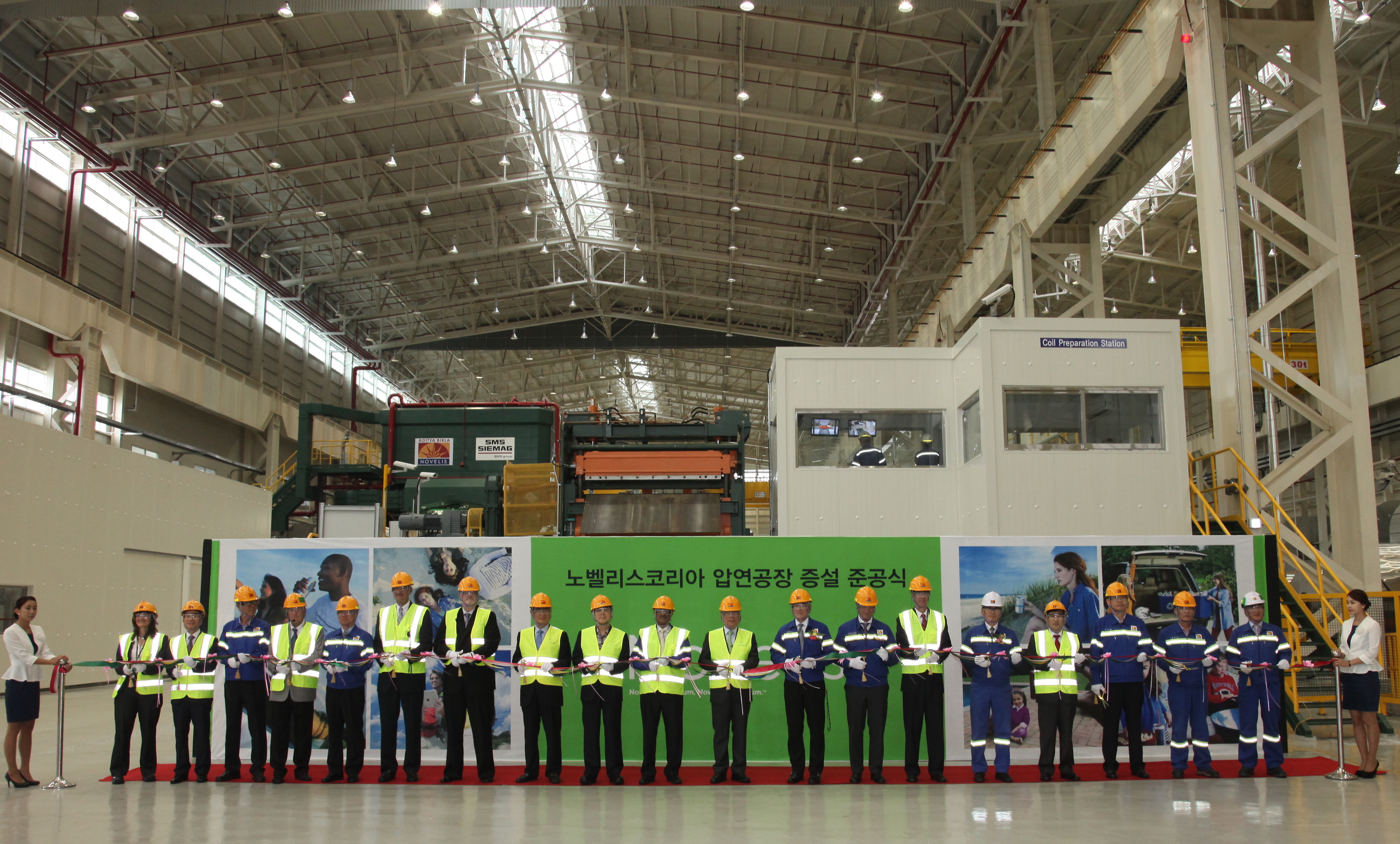
Ulsan facility officials at groundbreaking of furnace expansion, 2013.


“Ulsan Aluminum is committed to providing first-class rolled aluminum products and services to benefit our customers in the region. We will continue to operate with a high-quality and safety-first mentality, and will support the local market with innovative aluminum products,” said Jerry Quick, President and CEO of Ulsan Aluminum Ltd.


Novelis-Kobe South Korean Joint Venture Includes Pusher & Annealing Furnaces Read More »

Jason Schulze on AMS2750E: “Flow Down”

______________________________________________________

A reader whose company offers sintering and heat treating of medical devices recently submitted an inquiry regarding AMS2750 specifications and sintering.

READER QUESTION: “Does insipient melting of metal particles fall under these guidelines?  Our temperatures go as high as 2650°F and finding cost-effective ways to utilize thermalcouples to verify TUS temperatures seems a difficult task in itself.” Heat Treat Today‘s resident AMS2750 expert Jason Schulze (Conrad Kacsik) provided the following response.  Submit your AMS2750 questions to Jason at editor@heattreattoday.com.

______________________________________________________

Introduction

Understanding whether AMS2750E should be implemented within your process can be confusing. In this post, we will focus on understanding when AMS2750E is applicable to a supplier and when this should be verified.

What is “Flow-Down”?

Within most industries, there exists some type of flow down with regards to specific requirements. When we purchase a car, there are loan terms which flow down to a purchaser via a loan contract, such as interest rates, the number of months included in the loan, the ratio at which payments are distributed to interest and principal, as well as the requirement to carry full coverage car insurance for the life of a vehicle loan. These details are requirements which flow down to the purchaser via a contract.

The same can be said of a manufacturer or processor in the aerospace, commercial, or automotive industry. Certain requirements flow down from a purchaser (PO holder) to the supplier (entity receiving the purchase order).

Order of Precedence

In the aerospace and automotive industry, the flow down of requirements typically will encompass three documents in a specific order of precedence: 1) purchase order, 2) part print, and 3) process specifications. This is considered the order of precedence with regards to specific requirements.

Let’s look at an example:

ABC Aerospace issues a purchase order for turbine blades to be manufactured at Ajax Machine. Ajax Machine has several multi-axis grinding machines as well as captive heat treating. ABC Aerospace issues a purchase order to Ajax Machine that states the following:

“Part Number 30925-96 – 1,050 pc. Due January 1st, 2050 per Rev B 30925-96 Print”

Ajax Machine obtains the PO as stated above, along with the part print stated on the purchase order. The part print states multiple dimensional requirements for the turbine blades, but it also states a heat treat requirement to an industry heat treat specification. This heat treat specification would identify multiple variables such as time, temperature, and atmosphere for heat treatment; it may also specify that all furnaces used for heat treatment shall conform to AMS2750E, if the PO holder (customer) does, in fact, require this.

For a supplier attempting to understand if AMS2750E applies to their specific process, flow down from the PO holder is where this requirement is established.

Establishing Flow Down via Contract Review

To become ISO certified, a company must have a contract review procedure. Contract review is typically used to establish flow down requirements to ensure that a supplier is able to meet the requirements a purchaser has requested. Utilizing the contract review process to establish flow down requirements ensures that the supplier will document, establish, and verify all flow down requirements stated on the PO, part print, and process specification prior to manufacturing.

Conclusion

Flow down, as it relates to AMS2750 as well as other variables, is an important step in successful manufacture and processing of aerospace, commercial, and automotive hardware.

Submit Your Questions

Please feel free to submit your questions and I will answer appropriately in future articles. Send your questions to editor@heattreattoday.com.


Jason Schulze on AMS2750E: “Flow Down” Read More »

Japanese-Swedish Joint Venture Brings Heat Exchangers to U.S.

A Japanese aluminum manufacturer and a rolled aluminum supplier for heat exchangers headquartered in Stockholm, Sweden, have recently signed a letter of intent as the first step in forming the joint establishment of a new production facility for sheet materials of automotive heat exchangers in North America.

Mitsubishi Aluminum Co, based in Tokyo, and Granges are negotiating the final terms of an agreement in response to a growing demand for advanced aluminum materials for brazed automotive heat exchangers in North America. Lighter-weight aluminum is becoming more popular for automotive body structures, particularly in the U.S., in order to meet stricter emissions standards. In addition, there is a demand by manufacturers of automotive heat exchangers in North America for a local supply of clad materials, i.e., composites of two or more dissimilar metal materials.

Gränges operates facilities in the U.S., China, and Sweden and holds the world’s top market share in sheet materials for automotive heat exchangers (estimated at 20%). In addition to co-founding the base in North America with Gränges, the Japanese group will consider establishing an extensive range of business partner relationships with Gränges.

“The agreement with Mitsubishi Aluminum marks a start for a long-term partnership in North America. We will leverage our strengths and together capture opportunities in the market for advanced aluminum products to mainly the automotive industry, for brazed heat exchangers but also for other products,” said Gränges CEO Johan Menckel.

“We remain focused on growing our presence in automotive heat exchanger materials in North America.  We see many synergies with Gränges, most importantly, absolute focus on research and innovation to meet the growing demands of our automotive customers. We are excited and look forward to a long-term partnership with Gränges,” said Akio Hamaji, President and CEO of Mitsubishi Aluminum Co.


Japanese-Swedish Joint Venture Brings Heat Exchangers to U.S. Read More »

Automakers Investing Billions in U.S. Manufacturing


Source: Automotive News


Despite falling sales and mounting vehicle inventories, several automakers have recently announced plans to invest heavily in U.S. manufacturing.

Read here to learn which automotive corporations are expanding or modernizing and where they have made their investments: “New Factory Investments? Now? With Shift to Electric and SUVs, ‘There is Opportunity Out There'”

Automakers Investing Billions in U.S. Manufacturing Read More »

New Projects and Expansions to Include Steel Bar Micro Mill Project, Merchant Bar Operations

Nucor Corporation has approved a steel bar micro mill project and announced the company is considering five states in the Midwest and Southeast for the project. The states being considered include Nebraska, Kansas, Missouri, South Carolina and Florida. Nucor’s board of directors also approved the expansion of its existing merchant bar operations in either Illinois or Ohio.

New Projects and Expansions to Include Steel Bar Micro Mill Project, Merchant Bar Operations Read More »

Automotive Supplier Expands in Alabama with Aluminum Casting Facility

A global automotive supplier recently announced an expansion of its operations at its Kamtek facility in Birmingham, Alabama.

Magna International reported that its new facility will feature a manufacturing process–high-pressure aluminum casting–that further enables the supplier to provide vehicle lightweighting and part-reduction solutions for customers. The new capabilities improve upon traditional steel multi-piece welded assemblies, which can take upwards of 12 stampings to produce one structural component. High-pressure aluminum casting allows production of full structures in one piece, reducing vehicle mass without compromising performance, structural integrity or safety.

Magna invested approximately $60 million to add the 150,000-square-foot facility. The Kamtek facility employs approximately 850 people and produces structural components for various customers including Mercedes-Benz, Volkswagen and Nissan. The new facility will initially produce lightweight aluminum front shock towers for a major global automaker, with additional customers and programs expected in the future. At full capacity, the expansion has the potential to generate more than 100 jobs.


Automotive Supplier Expands in Alabama with Aluminum Casting Facility Read More »

Heat Treat Equipment Purchases — Recent Activity

Lindberg/MPH ships immersion lead melting furnace

Among the many transactions involving the contracting, purchasing, selling, shipment and delivery of heat treat systems, equipment or services over the past few weeks, we thought the following would be of interest to our readers.

  1. (Manufacturing Heat Treat News) A commercial heat treater recently purchased a TITAN H6 to expand production capacity and meet customer demands. Ipsen USA supplied the vacuum furnace to Rockford Heat Treaters (RHT) where it will join a complete atmosphere line of seven integral quench furnaces with ancillary washers and tempers, more than a dozen draw furnaces, a VFS(r) vacuum furnace and four other vacuum furnaces.
  2. (Automotive Heat Treat News) A gas-fired immersion lead melting furnace has been delivered to expand the operations of a manufacturer in the battery industry. The melting and holding furnace will be used in the production of lead plates for automotive batteries. Lindberg/MPH was the supplier of the furnace. In addition, Lindberg/MPH announced the shipment of a Temperite box furnace and a Treet-All box furnace to the maritime industry. The box furnaces are designed to be used in a stacked configuration or stand alone.
  3. (Manufacturing Heat Treat News) A compact remote transformer and low profile heating inductor were recently shipped to a foresty products manufacturer. Ajax TOCCO Magnethermic®, a subsidiary of ParkOhio Holdings Corp.®, supplied the equipment to be used for preheating prior to GMAW. The customer had a need to be able to he

    Wisconsin Oven ships sand core drying ovens

    at a rotating weldment with limited space between welds. Existing weld preheat inductors that roll on top of the weldment would not fit between the weldments, forcing the customer to rely on combustion heating technology (torches). In this kit, the heating inductor floats above the weldment without making contact.

  4. (Manufacturing Heat Treat News) Two natural gas-fired batch ovens have been delivered to the foundry industry. The batch ovens, supplied by Wisconsin Oven Corporation, will be used for drying sand cores used in the casting process of a variety of parts. The sand core dryers have the capability to dry water and resin from 6,000 pounds of sand cores and a 600-pound steel load car from 70°F to 450°F within 2 hours.

Heat Treat Today finds the robust activity of heat treatment equipment sales and acquisitions an exciting topic to report on and would be interested in your supplier news tips. Please send any information you feel may be of interest to readers of Heat Treat Today to the editor at editor@heattreattoday.com.


Heat Treat Equipment Purchases — Recent Activity Read More »

State of the Art Furnace Designed, Delivered for Aerospace Supplier

A global aerospace supplier is the recipient of a newly designed, state of the art furnacethe first of its type in the worldboasting an entire side-on opening, with a door running the full eight-meter width, while maintaining an exceptionally high level of temperature uniformity.

At 1.75m high, the furnace enables two components to be loaded at one time by way of a trolley, with a gap of half a meter between the external tracks and the internal fixturing. This gap was required to enable the doors to close. The trolley then cantilevers across the gap, thanks in part to the unique design of its axels.

An additional challenge was the temperature conformity and accuracy needed by the customer. The maximum temperature difference across the part was specified to be no greater than +/- 2.5°C, to a maximum temperature of 175°C to be maintained for a number of hours to facilitate the heat treatment of highly specialized, CNC-machined aluminum components.

The furnace was designed, delivered and installed by U.K.-based AeroThermal, which designs and manufactures thermal processing equipment for clients in the aerospace, motorsport, military, electronics and tobacco sectors. Accuracy of better than +/- 2°C was achieved by using a multizone heating system on the top and bottom, with four different banks of heater cassettes and four fans, to ensure temperature uniformity. The cassettes were sheathed electrical heaters and produce 240kW.

The furnace is made of a steel structural frame and steel paneling. It is also highly insulated, to the extent that it is possible to touch the vast majority of the oven wall at a temperature marginally above that of ambient whilst the furnace is in operation, minimizing energy usage.

Aerothermal also designed and built in-house a plc control system with two controllers: one for the air temperature, one for the parts’ temperatures. When the manufacturing process is complete, the oven’s temperature is reduced by using a power-assisted ambient cooling system, through external ducts.

State of the Art Furnace Designed, Delivered for Aerospace Supplier Read More »

Tool and Die Failure, Heat Treatment Causes and Corrections

George Vander Voort has a background in physical, process and mechanical metallurgy and has been performing metallographic studies for nearly 50 years. He is a long-time member of ASTM Committee E-4 on metallography and has published extensively in metallography and failure analysis. He regularly teaches MEI courses for ASM International and is now doing webinars. He is a consultant for Struers Inc. and will be teaching courses soon for them.  His website, www.georgevandervoort.com, not only details his consulting services but also houses over one hundred articles, studies, or instructional graphics on topics related to physical, process and mechanical metallurgy. The following is an overview and an excerpt of failure factors from “Identifying the Cause of Tool and Die Failure”, published in 2016. There are particular elements to this study which relate to the heat treat industry.

Steels used for tools and dies differ from most other steels in several aspects. First, they are used in the manufacture of other products by a variety of forming processes. Second, tools and dies are generally used at a higher hardness than most other steel products; 58 to 68 Rockwell C is a typical range. Dies for plastic molding or hot working are usually used at a lower hardness, typically from 30 to 55 Rockwell C.

These high hardness values are required to resist anticipated service stresses and to provide wear resistance. However, the steels must also be tough enough to accommodate service stresses and strains without cracking. Premature failure caused by cracking must be avoided, or at least minimized, to maintain minimum manufacturing costs. Unexpected tool and die failure can shut down a manufacturing line and disrupt production scheduling. Tools and dies must also be produced with the proper size and shape after hardening so that excessive finishing work is not required. Heat-treatment distortion must be controlled, and surface chemistries must not be altered. Because of the careful balance that must be maintained in heat treatment, control of the heat-treatment process is one of the most critical steps in producing successful tools and dies. In addition to controlling the heat-treatment process, tool and die design and steel selection are integral factors in achieving tool and die integrity.

The following list is excerpted and abridged to highlight phases or processes related to heat-treat. The explanation behind each factor is available at the original post.

A number of factors can be responsible for tool and die failures. They include:

1. Mechanical design. The design must be compatible with the steel grade selected, the procedures required to manufacture the tool or die, and the use of the tool or die. . . .

The importance of good design cannot be overemphasized. Poor design can cause or promote heat-treatment failures before any service life is obtained, or it may reduce service life dramatically.

In designing a tool or die, a host of factors must be considered. In practice, separating the design stage from grade selection is difficult because the two steps are interdependent. The choice of a certain grade of steel, such as one that must be brine- or water-quenched, will have a substantial bearing on all aspects of design and manufacture. In general, any steel grade that requires liquid quenching demands very conservative, careful design.

Air-hardening grades tolerate some design and manufacturing considerations that could never be endured by a liquid quenching grade. The design must also be compatible with the equipment available–heat-treatment furnaces and surface-finishing devices, for example. . . .

2. Grade selection. The grade of steel selected must be compatible with the design chosen, the manufacturing processes used to produce the tool or die, and the intended service conditions and desired life. . . .

3. Steel quality. The material must be macrostructurally sound, free of harmful inclusions to the degree required for the application, and free of harmful surface defects.

Despite the care taken in the manufacture and inspection of tool steels, faulty materials occasionally cause tool and die failures. However, such problems are rare. The most common of these defects are voids from secondary pipe, hydrogen flakes, surface cracks, porosity or microvoids, cooling cracks, segregation, and poor carbide distributions. Improper control of annealing may also produce non-uniform carbide distribution or carbide networks that may influence heat-treatment uniformity, lower ductility, or impair machinability.

4. Machining processes. The machining processes used to produce the tool or die must not alter the surface microstructure or surface finish and must not produce excessive residual stresses that will promote heat-treatment problems or service failures.

Machining problems are a common cause of tool and die failures. It is generally best to avoid machining directly to the finish size unless pre-hardened die steels are used. Obtaining perfect control of surface chemistry and size during heat treatment is difficult. Thus, some final grinding is usually needed after heat treatment. The presence of decarburization is generally quite detrimental. Also, because stresses are high in heat treatment and in service, rough machining marks must be avoided. Identification stamp marks are another common source of failures in heat treatment and in service; they should be avoided.

5. Heat-treatment operation. Heat treatment of tools and dies must produce the desired microstructure, hardness, toughness, and hardness at the surface and in the interior.

Improper heat-treatment procedures are the single largest source of failures during heat treatment, in subsequent processing steps, or in service. Each tool steel grade has a recommended austenitizing temperature range, which is generally rather narrow; a recommended quench medium; and recommended tempering temperatures and times for optimum properties. Some grades are more forgiving than others.

6. Grinding and finishing operations. Grinding and finishing operations must not impair the surface integrity of the component.

7. Tool and die setup. Alignment of tools and dies must be precise to prevent irregular, excessive stresses that will accelerate wear or cause cracking.

8. Tool and die operation.


Read the full study and report, including images of tool steel failure examples, at “Identifying the Cause of Tool and Die Failure”.


Tool and Die Failure, Heat Treatment Causes and Corrections Read More »

Skip to content