

FEATURED NEWS

A Dozen Quick Heat Treat News Items to Keep You Current

A Dozen Quick Heat Treat News Items to Keep You Current

Heat Treat Today offers News Chatter, a feature highlighting representative moves, transactions, and kudos from around the industry.

Personnel and Company Chatter

  • Lars Jonsson has been appointed new employee representative to the Bulten AB board for a term of office of three years. Lars has been employed at Bulten’s plant in Hallstahammar since 1984 where he has worked as a machine operator until two years ago when he switched to tool maker. Bulten is a supplier of fasteners to the international automotive industry.
  • Paulo’s Cleveland division is expanding to add 50,000 sq ft, allow for the installation of more vacuum heat treatment furnaces, and provide optimized flow of work through the facility. The Cleveland plant primarily serves the aerospace, power generation, and agriculture industries and specializes in precise high-temperature vacuum heat treatment and brazing of nickel-based superalloys.
  • James R. Darsey, executive vice president of raw materials for Nucor Corporation announced his upcoming retirement after more than 39 years of service with Nucor.  Effective June 10, 2018, Craig A. Feldman will be promoted to the role of executive vice president of raw materials.  Mr. Feldman began his career with the David J. Joseph Company (DJJ) in 1986 and stayed with the company, becoming president of DJJ in 2013. When DJJ was acquired by Nucor in 2008, Feldman became a vice president and general manager of Nucor Corporation.  Upon his promotion to EVP, Mr. Feldman will retain his role as president of DJJ.
  • Dr. Steve Offley recently joined Phoenix Temperature Measurement as Product Marketing Manager, bringing over 21 years of experience in the industrial process temperature monitoring industry. Besides promoting and marketing PhoenixTM’s temperature monitoring productions, Dr. Offley will focus on development of new and innovative processes temperature-monitoring solutions.
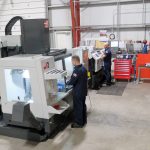
  • Solar Atmospheres of Western PA recently installed a second machining center to support its newest service for customers – tensile testing. By adding a brand new fully programmable 8100 RPM Haas VF2 milling center, Solar is now able to support the machining of flat tensile specimens. This machining ability fully complements the function of the 10,000 PSI hydraulic jaw that is an integral component of the Tinius Olsen 300SL tensile machine. These massive hydraulic jaws can grip either threaded round or flat specimens.

Equipment Chatter

  • A 750°F (399°C), gas-fired cabinet oven was recently supplied by Grieve Corporation to be used for baking radiator cores at the customer’s facility. The workspace dimensions of this oven, the No. 1046, measure 80″ W x 88″ D x 18″ H, with a 76″ wide x 76″ long, 750 lb. capacity pneumatic operated rollout shelf with an insulated plug to seal doorway opening.
  • An intermediate-sized front-loading box furnace was recently delivered to the Canadian Government Forestry Division. L&L Special Furnace Co., Inc., equipped the furnace, which meets Canadian electrical standards, with an atmosphere-sealed case for use with inert gas to displace oxygen and minimize surface de-carb. It is purged with inert gas prior to loading and the parts are then heated under a controlled atmosphere. There is a 1″ NPT survey port located on the right side of the furnace employed for calibration and uniformity surveys.
  • An aerospace and defense company recently purchased a rotary hearth furnace to heat treat state-of-the-art equipment, specifically to process specialized gears for helicopters. Ipsen plans to deliver the rotary hearth furnace early next year.

Kudos Chatter

  • Advanced Heat Treat Corp. recently reported that its Iowa (MidPort-Corporate Office and Burton Ave, Waterloo) and Michigan locations have successfully transitioned from ISO/TS 16949:2009 to ISO 9001:2015 / IATF 16949:2016.
  • Stock Drive Products/Sterling Instrument (SDP/SI) has also announced that it meets all certification requirements of the new ISO 9001:2015 + AS9100D standard, maintaining processes that provide superior components and assemblies with detailed quality reporting.
  • Harbison Walker International (HWI), based in western Pennsylvania, adds its announcement to the mix, reporting that its Thomasville, Georgia, monolithic/precast facility recently became the first of the company’s North American locations to earn ISO 9001:2015 certification, followed by HWI’s South Shore, Kentucky, plant becoming the first refractory brick manufacturing plant in North America to achieve the same status. Both plants achieved this quality system recognition based on the recommendation of SRI Quality System Registrar.
  • Rio Tinto celebrates the distinction of being the first company in the world to receive certification under the Aluminium Stewardship Initiative (ASI), the highest internationally recognized standard for robust environmental, social and governance practices across the aluminum lifecycle of production, use, and recycling. The certification follows an independent third party audit and covers a range of operations, from bauxite mining to alumina refining, aluminum smelting, the creation of value-added products, transformation and recycling, and associated activities. Rio Tinto’s five aluminum smelters, the Vaudreuil refinery, casting and spent potlining treatment centers, and associated infrastructure such as power, port and railway facilities in Quebec, Canada, have been certified, along with the Gove bauxite mine in Australia.

Heat Treat Today is pleased to join in the announcements of growth and achievement throughout the industry by highlighting them here on our News Chatter page. Please send any information you feel may be of interest to manufacturers with in-house heat treat departments especially in the aerospace, automotive, medical, and energy sectors to the editor at editor@heattreattoday.com.

A Dozen Quick Heat Treat News Items to Keep You Current Read More »
Aerospace Giant Secures 15-year Agreement for Heat Treating Services

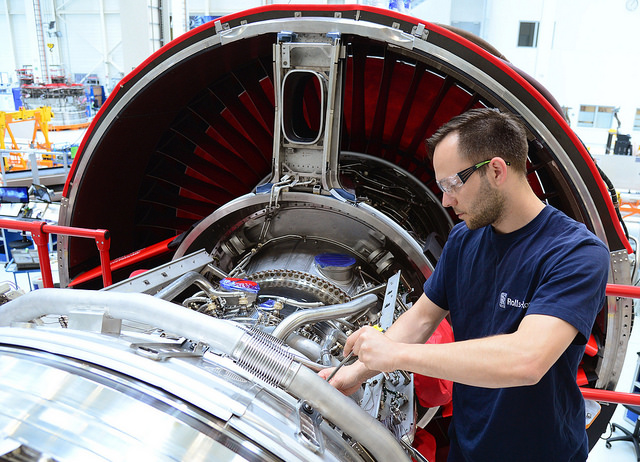
Engineering giant Rolls-Royce has entered into a 15-year contract with a UK-based thermal processing services specialist to secure specialized vacuum heat treatment and hot isostatic pressing (HIP) to support its civil aerospace production.

Bodycote, which provides heat treatment services that protect and improve the properties of metals and alloys, extending their operational life and making them safer, will work with Rolls-Royce’s turbine blade casting facilities in Derby and Rotherham.

The agreement, which is expected to be worth over £160 million ($227.3 million US) in incremental revenues over the 15-year period, ensures the provision of specialist thermal processing capacity utilizing Bodycote’s high performance, quality-focused approach to support the growth of Rolls-Royce’s large civil engine programs, including the Trent XWB, Trent 1000, Trent 7000, Trent 700 and Trent 900.

Aerospace Giant Secures 15-year Agreement for Heat Treating Services Read More »

HBI Facility Launch to Benefit Steel in Great Lakes Region

A Cleveland-based iron ore mining company recently broke ground on its first hot-briquetted iron (HBI) production facility in the Toledo area.

Lourenco Goncalves, chairman, president, and CEO of Cleveland-Cliffs

Cleveland-Cliffs hosted company officials and state and local representatives to launch construction on the plant, which is expected to produce 1.6 million metric tons per year of customized, high-quality HBI. This will make Cleveland-Cliffs the sole producer of high-quality customized feedstock for the domestic electric arc furnace (EAF) steelmakers located in the Great Lakes region.

“Today we are launching a new era for the iron and steel industry in the United States,” said Lourenco Goncalves, chairman, president, and CEO of Cleveland-Cliffs of the $700 million investment. “As Cleveland-Cliffs begins the construction of the first hot-briquetted iron (HBI) production plant in the Great Lakes region, we are taking the initial steps to enable EAF steelmakers to produce the specs associated with high margin steels for sophisticated end markets, such as automotive and others.”

“For several decades, Cleveland-Cliffs has been supplying the American steelmakers in the Great Lakes with customized pellets to feed their blast furnaces,” Goncalves added. “With the growth in participation of EAFs, it was just a matter of time for Cliffs to become a supplier of these important steelmakers. Our HBI will be for the EAFs the same great feedstock our taconite pellets are, and will continue to be, for our blast furnace clients.”

“This facility is an important step for economic development in heavy industry right here in the heart of America,” said Ohio congresswoman Marcy Kaptur.

Founded in 1847, Cleveland-Cliffs Inc. is the largest and oldest independent iron ore mining company in the United States, supplying iron ore pellets to the North American steel industry from mines and pellet plants located in Michigan and Minnesota. Additionally, Cleveland-Cliffs operates an iron ore mining complex in Western Australia.


Pictured L-R: Clifford Smith, Executive Vice President, Business Development, Cleveland-Cliffs Inc.; Dean Monske, President and CEO, Regional Growth Partnership; Paul Toth, President and CEO, Toledo-Lucas County Port Authority; Congresswoman Marcy Kaptur, U.S. House of Representatives (OH-09); Lourenco Goncalves, Chairman, President & CEO, Cleveland-Cliffs Inc.; Mayor Wade Kapszukiewicz – City of Toledo; Peter Ujvagi, Toledo City Councilman; and Alex Johnson, CEO & President, Midwest Terminals. (Photo: Business Wire)


HBI Facility Launch to Benefit Steel in Great Lakes Region Read More »

Heat Treating Mold Base Materials for Optimal Conditions


Source: ETMM-online


Heat treating plays a critical role in the making of a mold base, notes an Austrian manufacturer of standard parts for mould bases and die sets in a recent process prHigh-precision mould bases from stress relieved high-grade steel.ofile in ETMM-online.

An excerpt:

"Heat-treat[ing] all steel plates for stress relief . . . at approximately 580°C [1076°F] for 24 hours . . . creates optimal conditions for low-deformation processing of parts. . . . With stress-relieving heat treatment, the tension in the material is minimized without changes to the microstructure or strength. This is a great advantage during subsequent machining. If there was still tension in the material, it would, for example, cause deformation during sawing or milling. During stress-relieving, it is important to heat the plates slowly and consistently and then maintain this temperature for six hours."

Read more: "Producing the Ideal Material for Making a Mould Base"


Heat Treating Mold Base Materials for Optimal Conditions Read More »

Steelmaker Increases Heat Treatment Capacity for Auto UHSS

Kobe Steel Kakogawa works

A new continuous annealing line for steel sheet will be installed at a major Japanese steel manufacturer, the direct result of the growing demand from the automotive industry for ultra high-strength sheet (UHSS), according to the company.

Kobe Steel Ltd, headquartered in Chūō-ku, Kobe, recently reported that it will invest close to $470 million (50 billion Yen) in the installation of heat treatment facilities and cutting-edge equipment at its Kakogawa works, with an estimated production capacity of 240,000 metric tons per year, in response to automakers’ efforts to meet stricter regulations for fuel efficiency and collision safety by producing lighter car bodies with higher strength.

A new facility will combine a continuous annealing line with hot-dipped galvanizing and galvannealing equipment. The new production line and associated equipment will produce both cold rolled steel and hot-dipped galvanized/galvannealed steel, enabling the production of UHSS with high formability to meet customer needs. The passing process changes depending on the type of product being produced, either cold rolled steel or hot-dipped galvanized/galvannealed steel. When cold rolled steel is made, the steel undergoes heat treatment at the continuous annealing line. When hot-dipped galvanized/galvannealed steel is made, the steel first undergoes annealing and then galvanizing treatment by the galvanizing equipment.

Ultra high-strength steel (UHSS) has a tensile strength of 780 MPa or higher.

Together with the construction of the new line, which is expected to start up in February 2021, Kobe Steel will also increase the production capacity of its existing pickling and tandem cold mill and material handling equipment.


Photo credit: Automotive Engineering HQ

Steelmaker Increases Heat Treatment Capacity for Auto UHSS Read More »

Aerospace Heat Treating Could Be Disrupted by Additive Manufacturing


Source: Aviation Week


Mark Meyer of GEAdditive

Henry Canady of Aviation Week interviews Mark Meyer of GEAdditive to gain insight on how additive metal manufacturing will disrupt the manufacturing landscape, particularly the aerospace sector, as techniques are refined for metal additive. Meyer speculates that additive will compete with metal forging and further enhance forging processes.

An excerpt:

“Just as taxi service often improves when Uber and Lyft move into town, metal casting is being enhanced as additive competes with casting.”


Read more: “Additive Manufacturing Could Disrupt A Lot of Aerospace Markets”

Aerospace Heat Treating Could Be Disrupted by Additive Manufacturing Read More »

Heating Capacity Increased with Reopening of Swedish Mill

With the recent reopening of its drawing mill in Hallstahammar, Sweden, a leading supplier of industrial heating technology and resistance materials expects to meet an increased global demand for heating, resistance and thermocouple wire.

Nicklas Nilsson, president at Kanthal

Kanthal, which is part of the Sandvik Group, recently expanded its capacity by reopening its drawing mill, which includes a new production line designed in a flexible way to secure a sustainable and cost-effective wire drawing.

“We want to support our customers to grow and stay competitive. To be able to do this, we must ramp up our production of Kanthal® wire to secure short and reliable lead times,” said Christoffer Saarnio, global supply chain manager (shown above). “With the new production line, we will be able to meet increased demand for many years to come.”

“We have produced Kanthal wire in Hallstahammar since 1931, except for the past five years,” said Nicklas Nilsson, president at Kanthal. “It’s great to close the circle and once again see the drawing mill up and running.”

Heating Capacity Increased with Reopening of Swedish Mill Read More »

Qatar Extrusion Supplier Switches to Gas Nitriding System

A gas nitriding system configured for treating various sized flat and hollow dies used in the production of aluminum extruded profiles for the construction and transportation markets was installed in January 2018 for a Qatar-based company that manufactures and supplies mill finished and powder coated aluminum extruded products.

Qatar Aluminum Extrusion Company (Qalex) awarded a contract to Nitrex Metals, a nitrding/nitrocarburizing technologies and solutions supplier based in Québec, for the supply and installation of an NX-1015 potential-controlled gas nitriding system which Qalex sought to adopt new technological innovations in nitriding when equipment and die quality requirements could not be met with the existing fluidized bed nitrider.

The NX-1015 furnace has a load capacity of 4400 lbs (2000 kg), and while this is slightly larger than current production needs, the additional capacity will accommodate future growth, when Qalex adds a second extrusion press. The precise interaction between the furnace and advanced control system allows the atmosphere to be adjusted automatically, according to the recipe and parameters entered. Integral to the system operation, Nitreg® technology is customized and pre-tested for extrusion dies to ensure optimum results of the nitrided layer, as well as to obtain repeatable results and higher throughput per die.

Qatar Extrusion Supplier Switches to Gas Nitriding System Read More »

Good Design Practices Lengthen Induction Tooling Life


Source: Fluxtrol.com


Induction heat treaters know that proper coil design is crucial to increasing longevity, improving production quality, and cutting costs. The authors of this paper on Coil Design Techniques (C. Yakey, V. Nemkov, R. Goldstein, J. Jackowski) draw on an extensive library of published case histories in induction coil design and performance evaluations and provide their own case study of an automotive CVJ stem hardening coil in order to demonstrate how the elimination of failure points and application of improved design guidelines can result in increased coil lifetimes, even in an inductor that in some circumstances can have a short lifetime.

An excerpt:

 “The quality of an induction coil is a major determinant of the cost to produce induction heat treated components. Oftentimes, the difference between a well designed and manufactured inductor and a poor performing inductor is not readily apparent. However, a high-quality induction coil can lead to substantially lower component manufacturing costs and higher profitability for the induction heat treater.”

Read more: “Best Practice for Design and Manufacturing of Heat Treating Inductors”

Good Design Practices Lengthen Induction Tooling Life Read More »

Midwest Heat Treat Expansion to Meet Nadcap and Medical Industry Requirements

A commercial heat treater specializing in low-pressure vacuum carburizing recently expanded its processing capacity with a 12-bar gas quenching vacuum furnace.

Midwest Thermal-Vac (MTV), based in Kenosha, Wisconsin, which provides conventional heat treating, as well as solution, isothermal, spherodized or full annealing, homogenizing, normalizing, austenitizing, tool steel tempering and cryogenic treatments for the aerospace, defense, and general commercial industries, purchased the furnace to facilitate processing for companies needing to meet Nadcap and medical industry requirements such as MedAccred.

MTV’s capabilities will expand with a TITAN® vacuum furnace with 12-bar gas quenching from Ipsen USA. This furnace features a diffusion pump for high-vacuum levels and an all-metal hot zone to ensure part cleanliness, and an all-metal hot zone measuring 18″ x 24″ x 18″ (455 mm x 610 mm x 455 mm), with a 1,000-pound (450 kg) load capacity. It is capable of operating at temperatures ranging from 900 °F to 2,400 °F (482 °C to 1,316 °C) with ± 10 °F (±6 °C) temperature uniformity.

Midwest Heat Treat Expansion to Meet Nadcap and Medical Industry Requirements Read More »