Finding the right metric to measure the ubiquitous heat treat economy is like trying to take the temperature of the ocean. It can be hot in some spots, cold in others, and an average temperature really doesn’t help anyone. Finding economic data that can help suppliers to the heat treat industry plan future business fluctuations is all but impossible. Industrial Heating magazine has been publishing its Economic Indicators for well over a decade. This is one of the best sources for heat treat-specific economic data freely available to the public. Click here for the latest numbers from Industrial Heating.
Durable Good Orders for December 2018
The Industrial Heating Equipment Association (IHEA) provides a monthly Executive Economic Summary to their members as well. According to the most recent report from IHEA, the signals are mixed as to where the heat treat economy is headed. Below are a few highlights. To access the full report, please contact Anne Goyer, Executive Director of IHEA by clicking here.
Factory Orders — headed up.
Durable Goods — headed up.
Transportation Index — headed up.
Steel Consumption — headed up.
All of the above indices are headed north, but exactly what impact does each have on the heat treat industry?
Industrial Capacity Utilization — headed down.
Metal Prices — softening.
Purchasing Managers Index — down.
Capital Expenditures — down.
Steel Consumption for February 2019
Likewise, these four indices headed south but their impact on the heat treat industry is not easily discernible.
A more complete understanding of the direct impact of the above eight (8) indices plus three (3) others on the heat treat industry can be gained by the analysis provided in the IHEA Executive Economic Summary report. The monthly report dedicates one page to each of eleven (11) heat treat-related indices with in-depth analysis by IHEA’s contracted economist.
In my eyes, the data and analysis provided by IHEA is one of the most valuable pieces of economic heat treat data a heat treat industry supplier can have.
Contact Anne Goyer for more information on this report.
The space industry is growing fast and is predicted to be worth over a trillion dollars by 2040.
Keith Ferguson, Senior Business Development Manager at Morgan Advanced Materials’ Braze Alloys Business, explains how braze alloys play their part in safe, reliable and sustainable space exploration.
A Braze New World
The saying goes, “one small step for man, one giant leap for mankind.” This famous phrase uttered by Neil Armstrong is the perfect advertisement for space exploration and its importance to the future.
Less than a century old, space exploration has come on leaps and bounds since the first artificial satellite, Sputnik 1, was propelled into space in 1957. Since then, the world has witnessed marvels such as landing on the moon, the space shuttle program of the 1970s, and the launch of the International Space Station.
The importance of these missions and their subsequent value is immeasurable. Many might not realize on a day-to-day basis how space exploration has improved lives and the global economy to no end. This includes simple weather forecasting, broadcasting TV and radio, predicting natural disasters, monitoring for fertile land, forecasting sea level patterns, and even aiding research in muscular atrophy.
It’s little wonder then that this industry has significant value. The space industry was reportedly worth $384 million USD in 2017, growing at a rate of 7.4 percent. According to Morgan Stanley, it sees the industry growing to be worth $1.1 trillion USD by 2040.
However, there are challenges. Many believe that the millions of dollars and resources used to explore space could be better used on immediate threats to society like clean water, famine, poverty and more. Outside of external opinion though, there are internal operational challenges. Namely, space exploration needs to become safer and more sustainable.
A huge part of solving this challenge is in brazing alloys.
A Brief History on Brazing in Space
In simple terms, brazing joins two metals by heating and melting a filler (alloy) that bonds to the two pieces of metal and joins them. The filler must have a melting temperature below that of the metal pieces.
The use of braze alloys in space equipment is mission critical, as they allow sensors to be mounted as close as possible to engines to measure and monitor output and feed data back to operators. Indeed, they’ve already aided successful missions. Two of Morgan Advanced Materials’ braze alloys, RI-46 and RI-49, were specifically engineered and used by NASA on the Space Shuttle Main Engine, also known as the RS25.
Braze Alloys (Morgan in Space)
RI-46 specifically was developed as a replacement for the existing Nioro braze alloy, which is comprised of 82/18 Au/Ni (gold/nickel). RI-46 contains much less gold, adding in copper and manganese instead. This helped make the braze alloy significantly less dense and provided crucial weight savings, but also still operable from a wide range of temperatures, between -400°F to 1292°F (-240°C to 700°C).
These alloys have not only been critical for past space missions, but also for future missions. RI-46 and RI-49 have been adopted for NASA’s Space Launch System (SLS), a vehicle that is planned to take a crewed mission to Mars.
As alluded to already, developing new braze alloys is as much about performance as well as sustainability.
The Need for Non-Precious Alloys
It needs no mention that space exploration is a costly exercise. According to NASA, the average cost to launch a Space Shuttle is $450 million per mission. The Space Shuttle Endeavour, the orbiter built to replace the Space Shuttle Challenger, cost an eye-watering $1.7 billion USD.
Wire Form Braze Alloys (Morgan in Space)
Bringing costs down is clearly required to keep space missions feasible. One key part of cost reduction is in reducing the use of precious metal braze alloys.
Precious metals like gold and palladium are becoming increasingly scarce. Of course, the cost of producing alloys from these precious metals is also increasing as a result.
However, there can be a reluctance to come away from using precious metal alloys. Years of research, development, and data mean these alloys are tested and reliable. When dealing with missions and equipment that run into the hundreds of millions of dollars and, more importantly, the lives of crew members, reliability becomes an overarching objective, and failures must be prevented.
To solve this issue, Morgan’s Braze Alloys business has been researching and developing non-precious metal alloys over many years. As seen from the RI-46 and RI-49 alloys, these solutions are just as strong as their equivalent high precious-metal counterparts, but at a fraction of the cost.
Non-precious metal alloys can be made from metals like nickel, chromium, and cobalt. Their success has already been seen in the aerospace sector, and now research is being pioneered into making them fit for going into orbit and beyond.
Space, for All to Enjoy
Space travel is not just for highly trained astronauts and public benefit; there is also a growing commercial aspect. Satellite TV and radio have already been mentioned, but billionaire entrepreneurs such as Richard Branson and Elon Musk have also been pioneering private space travel. The hope is that civilians might one day be able to enjoy outer space as well, albeit at potentially high prices.
Achieving this dream is of course hinged on safety and reliability, given that lives will be at stake. The key to improving these factors is being able to place sensors as close as possible to the spacecraft’s engine.
By enabling sensors to be placed near the spacecraft’s engine, mission control and crew can then accurately read and measure data and output. This includes fuel efficiency, temperature, gas flow and monitoring for fire detection or abnormalities. If these sensors are placed too far away from the engines, then data readings become inaccurate and missions can be compromised.
Recent news highlights why sensor technologies are critical, as a two-man space crew had to abort their flight to the ISS after a post-rocket launch failure. The Soyuz spacecraft started to experience failure 119 seconds into the flight, and seemingly, problems were reported by the crew first, not by mission control. The crew described feelings of weightlessness, an indication of a problem during that stage of the flight. Luckily, they aborted, ejected their capsule from the rocket, and returned safely to Earth.
While the cause of the failure is still to be identified at the time of writing, clearly, such a situation should not be happening. Any problems should be picked up by mission control, and not be reliant on crew judgment.
Active Alloys join ceramic sensors to engines. (Morgan in Space)
The challenge though is that some sensors are made from ceramic due to the need to resist corrosion and high temperatures, typically up to 1742°F (950°C ). However, these ceramic sensors then need to be joined to metallic parts of the engine.
This is where “active alloys” come in. Unlike regular braze alloys that join metal to metal, these alloys can join metal to ceramic, or even ceramic to ceramic. Industry standard active alloys like Incusil®-ABA and Ticusil® from Morgan’s range were developed up to 40 years ago but are still in use today. New alloys are also currently in development to withstand much higher temperatures.
A Never-Ending Journey
Morgan Metals and Joining Center of Excellence in Hayward, California (Morgan in Space)
Much like how there is still so much to learn and explore about space, so too is Morgan’s journey with braze alloys. Morgan Advanced Materials is not just committed to making the space industry more sustainable and safer, but it is helping with applications across all industries.
A key pillar of this is through Morgan’s highly specialized Metals and Joining Centre of Excellence (CoE), based in Hayward, California, as well as Morgan’s Brazing Department.
With highly trained researchers and scientists, Morgan’s Braze Alloys business can custom cater alloys to specific applications, run trials to test materials, braze cycles and fixturing. The whole operation, from powder atomization, to preform fabrication and brazing trials, can be looked after from start to finish.
Flexicore® (Morgan in Space)
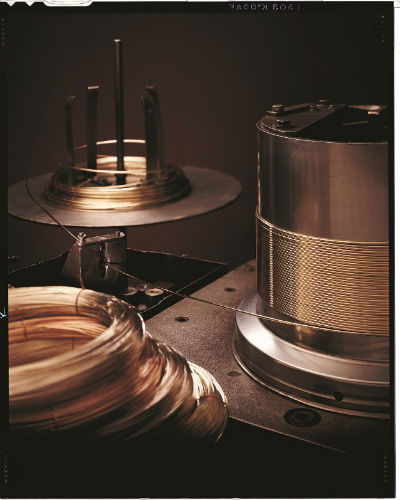
One of the latest developments being pioneered at the Metals and Joining CoE is Flexicore®. This new technology transforms traditionally brittle alloys (such as AMS4777) into a flexible wire form. In many cases, this will be far superior to pastes in terms of repeatability and ease of use. Along with the operational benefits, Flexicore® will also allow for the use of nickel-based alloys to replace precious-metal alloys. Again, this will help to bring costs down for operators and manufacturers.
Watch This Space
Space travel, as Richard Branson predicts for his own Virgin Galactic programme, is only two or three flights away. We’re truly not far away from entering a new world, and brazing alloys will have their say on how the space industry turns out.
Morgan’s Braze Alloy solutions, like RI-46 and RI-49, as well as others like Palniro-1 and Palniro-7, can already be found across the various programmes and spacecraft. Through more research and development, who knows where this important industry could lead us to.
Morgan Advanced Materials plc is a global engineering company headquartered in Windsor, UK , and is a world leader in advanced materials science and engineering of ceramics, carbon, and composites, engineering high-specification materials, components, and sub-assembly parts to solve challenging technical problems. Markets that Morgan work in include healthcare, petrochemicals, transport, electronics, energy, defense, security and industrial.
A Chicago-based producer of engineered steel products for rail, energy and industrial end markets recently received funding for equipment upgrades and plant expansions—including the company’s planned installation of a state-of-the-art heat treat line—as part of the Government of Canada’s steel and aluminum fund program created to energize the Canadian steel industry.
EVRAZ North America will receive C$40 million from Innovation, Science and Economic Development Canada’s Strategic Innovation Fund (SIF) steel and aluminum program, which was created last year to help bolster the competitiveness of the industry in Canada.
The $40 million in Strategic Innovation Funds will be part of a $112 million investment over the next three years in EVRAZ North America facilities in Regina and Red Deer, Alberta, focusing on upgrades to steelmaking infrastructure that will improve quality, boost efficiency, reduce emissions and increase capacity, including:
Red Deer Heat Treat Expansion: EVRAZ North America is installing a state-of-the-art heat treat line that will greatly increase the company’s capability to provide premium alloy grade quality in the OCTG product range meeting the evolving needs of our customers.
Electric Arc Furnace Power Increase: Regina’s electric arc furnace is used to melt scrap metal that is recycled into steel. The project will replace electrical transformers and associated power distribution equipment, including building a new substation feeding the facility’s 138kV SaskPower hydro line.
Reheat Furnace Throughput Increase: The reheat furnace at the Regina rolling mill is used to heat steel slab to temperatures of more than 2,200°C for production into coil and plate. The investment in upgraded burner equipment will increase and expand the production capability of the reheat furnace while reducing NOx emissions.
Conrad Winkler, EVRAZ President and CEO
Investments at these facilities will be made between 2019 and 2021.
At a ceremony in Regina, Saskatchewan, EVRAZ President and Chief Executive Officer Conrad Winkler praised the Government of Canada’s actions.
“This government recognizes the challenges facing Canadian steel producers and the thousands of employees working in steel mills across the county, including 1,200 right here in Regina,” said Winkler. “Partnerships such as the Strategic Innovation Fund are crucial to our job-creating, long-term investments.”
The SIF contribution is part of EVRAZ’s North America’s planned, multi-year C$112 million investment into equipment upgrades and expansion at the company’s mills in Regina and Red Deer, Alberta. When completed, the improvements will further boost EVRAZ North America’s steelmaking capacity, reduce emissions, and improve efficiency. The company previously invested more than C$200 million in expansion and upgrades in Regina between 2015 and 2017.
“With this SIF partnership, we can move forward with these investments that will allow EVRAZ North America to maintain and grow its position as an industry-leading supplier for our valued customers in Canada’s energy economy,” said Winkler.
During the day-to-day operation of heat treat departments, many habits are formed and procedures followed that sometimes are done simply because that’s the way they’ve always been done. One of the great benefits of having a community of heat treaters is to challenge those habits and look at new ways of doing things. Heat TreatToday‘s 101 Heat TreatTips, tips and tricks that come from some of the industry’s foremost experts, were initially published in the FNA 2018 Special Print Edition, as a way to make the benefits of that community available to as many people as possible. This special edition is available in a digital format here.
In today’s Technical Tuesday, we continue an intermittent series of posts drawn from the 101 tips. The category for this post is Industrial Gases, and today’s tip #39 comes from Dan Herring, “The Heat Treat Doctor®”, of The Herring Group.
Heat TreatTip #39
How to Install an Ammonia System
Dan Herring, “The Heat Treat Doctor®”, of The Herring Group
One of the keys to any successful ammonia system installation in the heat treat shop is to find a supplier who is capable of providing premium grade (also known as metallurgical grade) anhydrous ammonia. This product has little or no water, which could contaminate your process. Look for a specification of 99.995% ammonia.
Once you have picked a supplier, there are several choices when it comes to ammonia storage. For the lowest product price, you should consider a tank of at least 10,000 gallons (43,000 pounds of ammonia.) This allows you to purchase full 38,000-pound tanker trucks of ammonia to reduce your supply costs. One pound of ammonia yields 22.5 cubic feet of vapor or 45 cubic feet of dissociated ammonia (75% H2, 25% N2).
In most states, you must comply with these standards if you have more than 10,000 pounds of anhydrous ammonia on site. So, you need to make sure you comply with OSHA’s Process Safety Management (PSM) and EPA’s Risk Management Plan (RMP).
The second option is to keep below the 10,000-pound threshold by installing a 1,000 gallon (4,400-pound capacity) or a 2,000 gallon (8,800-pound capacity) storage tank. Pricing for ammonia into these tanks runs about 50% higher in the smaller quantities. Even with the lower inventory, you will need to comply with OSHA 1910.111 and any applicable state, city, or county laws. It is critical to check with local agencies to make sure you are in full compliance with these regulations.
Another option for smaller usages are ammonia cylinders, but if stored inside the factory, special containment cabinets are required. Check with your ammonia supplier for the details.
With regard to the installation, in most cases, you need to pour a foundation for the tank, provide electricity to the tank for a sidearm vaporizer (used to maintain pressure in the tank since you will be withdrawing ammonia vapor to the process) and provide piping from the tank to your process. Most suppliers can lease the tank and valves/attachments for a nominal monthly fee depending on your ammonia consumption. You can also add a telemetry unit that allows your supplier to monitor your tank level via an Internet site. You will need to install a water shower near the tank and have gas masks close to the tank. It is a good idea to provide a fence around the tank if your company does not have security. Your supplier should provide hazardous awareness training for ammonia.
You can expect relatively trouble-free operation from a properly installed and well-maintained ammonia supply. Maintenance problems, other than an occasional paint job, are usually minimal but good inspection (including all valving) and frequent leak checks are mandatory. The tank should be visually inspected yearly, probably by your supplier, and the pressure relief valves should be changed every five years.
If you have any questions, feel free to contact the expert who submitted the Tip or contact Heat TreatToday directly. If you have a heat treat tip that you’d like to share, please send to the editor, and we’ll put it in the queue for our next Heat TreatTipsissue.
A manufacturer of automotive fasteners recently broke ground on an expansion in Columbus, Indiana, that will increase the company’s manufacturing operations, which include heat treat capabilities for improved strength and hardness, and allow it to produce a broader range of metal fasteners.
OSR Inc. is a joint venture between Nagoya, Japan-based Owari Precise Products Co. Ltd and Columbus-based Rightway Fasteners Inc. (RFI). Under the plan, OSR will construct and equip a new 82,395-square-foot manufacturing facility.
Photo credit/caption: Kenny Canfield, from left, vice president of sales and marketing for OSR Inc., Tom Dowd, executive vice president of Dunlap General and Mechanical Contractors, Jason Hester, president of the Greater Columbus Economic Development Corp., Koji Hyodo, president of OSR Inc. parent company Owari Precise Products Co. Ltd., Columbus Mayor Jim Lienhoop, Jim Staton, vice president of business development for the Indiana Economic Development Corp., and OSR Inc. President Makoto Inagaki take part in a groundbreaking ceremony for a new multi-million dollar OSR Inc. facility in Columbus, Ind., Tuesday, March 5, 2019. / Mike Wolanin | The Republic
Several universal batch quench (UBQ) furnaces were purchased and installed over the course of 2018 to support the growth in business of a commercial heat treating operation located in Richland Hills, Texas.
Modern Heat Treat, which provides services such as alloy quench and temper flame hardening and carburizing to the metalworking industry, added the UBQ furnaces along with companion equipment to its installed base, increasing capacity of the equipment already in operation at the facility. AFC-Holcroft , a member of the Aichelin Group, fulfilled the orders for Modern Heat Treat, which has benefitted from the modular, flexible UBQ design with the ability to add new equipment to their facility incrementally.
Tracy Dougherty, VP Sales, AFC-Holcroft
“These large capacity UBQ furnaces provide Modern Heat Treat with a distinct advantage in the market since the equipment is scalable to meet their need for flexibility,” said Tracy Dougherty, Vice President of Sales at AFC-Holcroft. “AFC-Holcroft is proud to be a part of the continued expansion and growth of Modern Heat Treat.”
Modern Heat Treat operates a 25,000 sq ft facility with 57 employees and over 40 pieces of furnace equipment.
A U.S. automaker recently announced plans to expand production capacity in Michigan which will include electrifying key brands.
Fiat Chrysler Automobiles (FCA) confirmed plans to invest a total of $4.5 billion in five of its existing Michigan plants and to work with the city of Detroit and state of Michigan on building a new assembly plant within city limits.
FCA has committed to invest in expanding Jeep® and Ram brands, enabling electrification of new Jeep models, converting the Mack Avenue Engine Complex into manufacturing site for next-generation Jeep Grand Cherokee and a new full-size Jeep SUV. In addition, FCA looks to retool and modernize the Jefferson North plant for continued production of Dodge Durango and next-generation Jeep Grand Cherokee and increase production of all-new Jeep Wagoneer and Grand Wagoneer as well as continued assembly of Ram 1500 Classic. All three assembly sites would also produce plug-in hybrid versions of their respective Jeep models with flexibility to build fully battery electric models in the future.
Other than plans for vehicle production, FCA will support additional operations at Sterling Stamping and Warren Stamping plants and relocate Pentastar engine production currently at Mack I to the Dundee Engine Plant.
Mike Manley, Chief Executive Officer, FCA N.V.
The plant actions detailed in the announcement represent the next steps in a U.S. manufacturing realignment FCA began in 2016. In response to a shift in consumer demand toward SUVs and trucks, the company discontinued compact car production.
“Three years ago, FCA set a course to grow our profitability based on the strength of the Jeep and Ram brands by realigning our U.S. manufacturing operations,” said Mike Manley, Chief Executive Officer, FCA N.V. “[This] announcement represents the next step in that strategy. It allows Jeep to enter two white space segments that offer significant margin opportunities and will enable new electrified Jeep products, including at least four plug-in hybrid vehicles and the flexibility to produce fully battery electric vehicles.”
A company that specializes in the design, manufacture, installation, and support of high-pressure solutions recently supplied a Hot Isostatic Press (HIP) to a leading heat treating equipment manufacturer.
Scott Herzing, Paulo Vice President Engineering
Paulo will add hot isostatic pressing to its thermal processing services with the HIP acquisition from Quintus Technologies, which is headquartered in Västerås, Sweden. The press, model QIH 122 M URC®, is equipped with Quintus’ proprietary uniform rapid cooling (URC), a feature that improves material properties in additive manufacturing and investment casting.
“We see the market for HIP expanding, with a large part attributed to additive manufacturing,” said Scott Herzing, Paulo Vice President Engineering. “We have the leading material knowledge and process expertise to help our customers in this area. The ability to combine HIP and heat treatment will allow us to offer one-stop-shop thermal processing solutions, with faster turnaround times.”
The HIP, which operates at a maximum temperature of 2,552°F (1,400°C) and a maximum pressure of 30,000 psi (2,070 bar), will be installed in Paulo’s recently expanded Cleveland Division in Willoughby, Ohio, which provides brazing and vacuum heat treatment services.
Jan Söderström, CEO of Quintus Technologies
Paulo and Quintus Technologies have also entered into a marketing agreement where the two companies will partner in educating the industry on the use of the HPHT process.
“Paulo was very intrigued by our ability to offer a complete partnership: the system itself, the Quintus Care program including application support, and the marketing agreement,” said Jan Söderström, CEO of Quintus Technologies. “With this partnership, they see the possibility to enter the market in the best possible way.”
“Working with a market-leading company like Quintus is a good fit for Paulo,” says Herzing. “This partnership will allow us to continue to do what we have always done, help our customers succeed.”
One of the rules in metallurgy is: “As strength increases, ductility decreases.”
What if it were possible to combine both strength and ductility in the same material? This is the challenge that a team of metallurgists took on at a leading heat treating company located in Willoughby, Ohio, starting with tests that compared enhanced property 4140 steel to vacuum arc re-melted (VAR) 4340 steel.
When all was said and done, Paulo Heat Treating, Brazing and Metal Finishing “developed a family of enhanced property processes that allow manufacturers to replace costly high-performance materials with much more cost effective 4140 steel.”
“Manufacturers could save time and money if lower-cost materials like 4140 exhibited the enhanced mechanical properties of VAR 4340 or other similar alloys.
It motivated us to develop a family of processes that would overcome one of metallurgy’s general rules: As strength increases, ductility decreases. Our goal was to enhance both strength and ductility, and we developed treatments featuring both gas and oil quenches to do it.” ~ Paulo
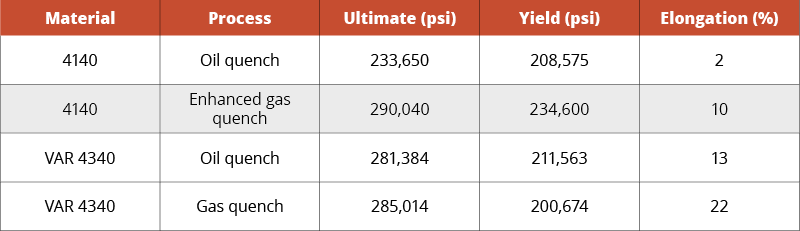
Here is just a peek at the results:
The chart above compares a sample 4140 part treated this way versus a conventionally heat treated 4140 part and a VAR 4340 part.
A heat treating equipment manufacturer based in Carroll, Ohio, recently announced plans to expand its facility and broaden its capability to produce furnaces for aerospace manufacturers equipping in-house heat treat operations.
Delta H Technologies LLC’s investments will cover the purchase of machinery and equipment for the design and production of furnaces for aerospace components. The expansion confirms the company’s nearly 30-year commitment to providing state-of-the-art heat treat equipment manufacturing to keep pace with the growth in aerospace technology and production.
“Richard Conway, director and chief technology officer, started the company in 1990 while attending Ohio State University to get his bachelors of science in industrial engineering. He did maintenance and tuning work for industrial furnaces and ovens. . . . Richard’s wife, Mary Conway, is a retired teacher who taught honors chemistry and physics at Pickerington North High School. And she was the one who came up with the name Delta H as it is a math symbol for change of heat.” ~ Lancaster Eagle-Gazette