

ATMOSPHERE AIR FURNACES NEWS

Walking Hearth Furnace for Vinton Steel

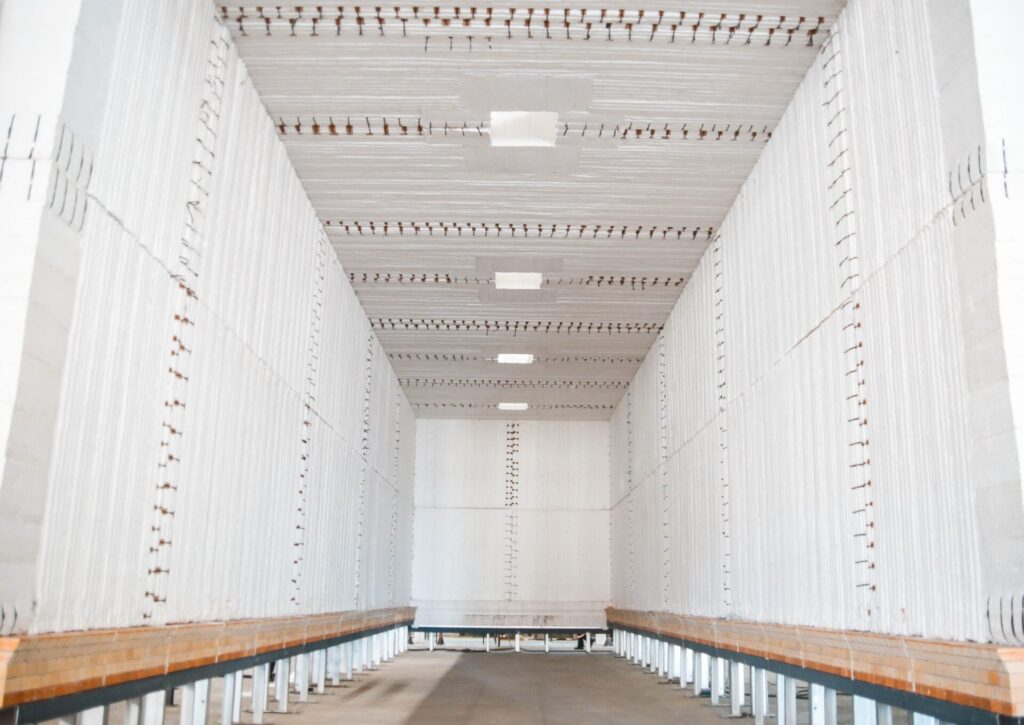
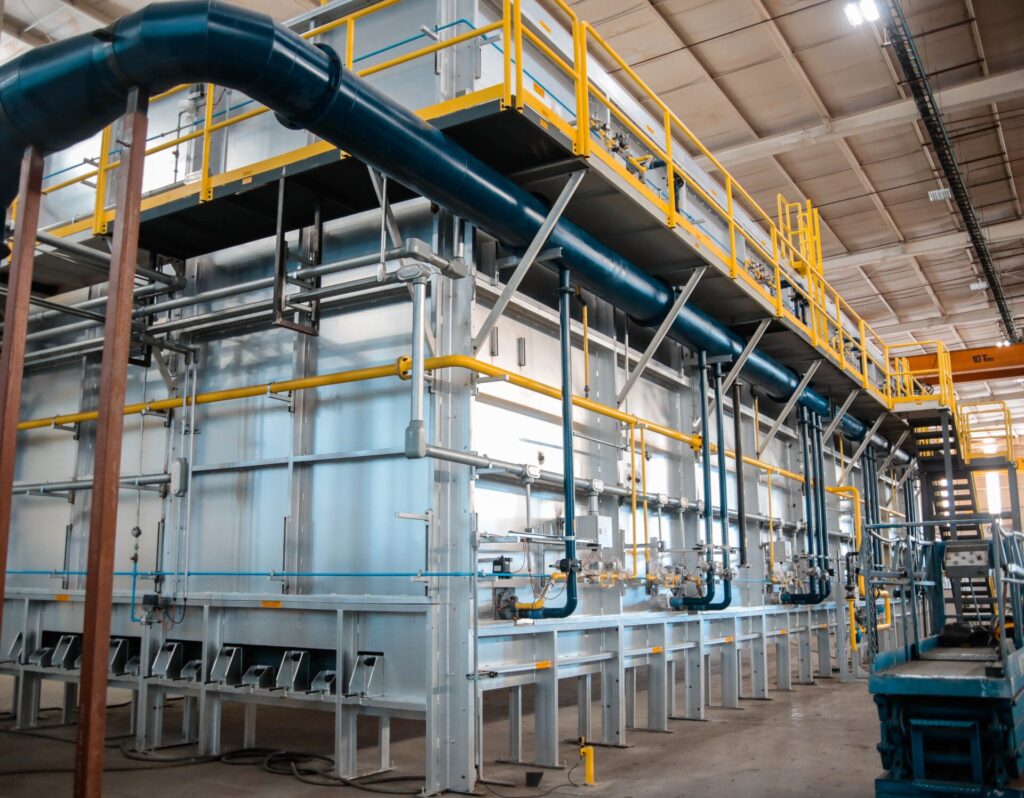
Vinton Steel, headquartered in Vinton, Texas, has commissioned a new walking hearth reheating furnace. The furnace will be engineered for high-carbon steel billets used to manufacture large-diameter grinding media, a high demand product for the mining sector.

This addition is intended to operate alongside a new initiative to increase Vinton Steel’s rebar production capacity up to 400,000 tons per year. The initiative is called Green CityMill™ Flex, which represents an efficient and sustainable long products production platform.

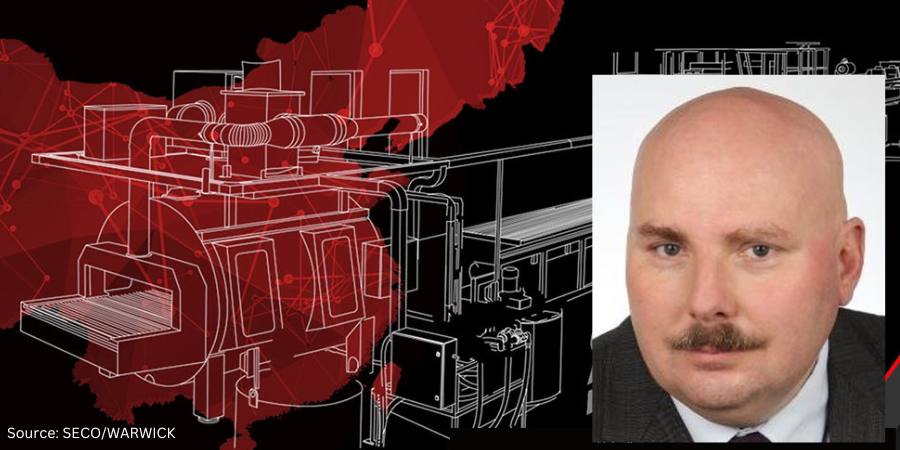
Francesco Memoli President & CEO Tenova Inc.

“This project is part of the strategic expansion of Kyoei Steel in the vital North American market and a clear demonstration of our long-term commitment to the State of Texas,” said Masahiro Kitada, board director & executive managing officer for Kyoei Steel Group and chairman of Vinton Steel. “With this additional project, we contribute even more to the continued growth of the El Paso region.”

Francesco Memoli, president and CEO of Tenova Inc., added: “We are honored that Vinton Steel continues to place its trust in Tenova’s technologies. This new reheating furnace will be the most advanced of its kind, equipped with sophisticated control systems and our proprietary low-NOx burners.”

The reheating furnace is scheduled for commissioning in parallel with the Green CityMill™ Flex startup in the first half of 2027.

Press release is available in its original form here.


Walking Hearth Furnace for Vinton Steel Read More »
Gas-Fired Car Bottom Furnace for Heat Treatment

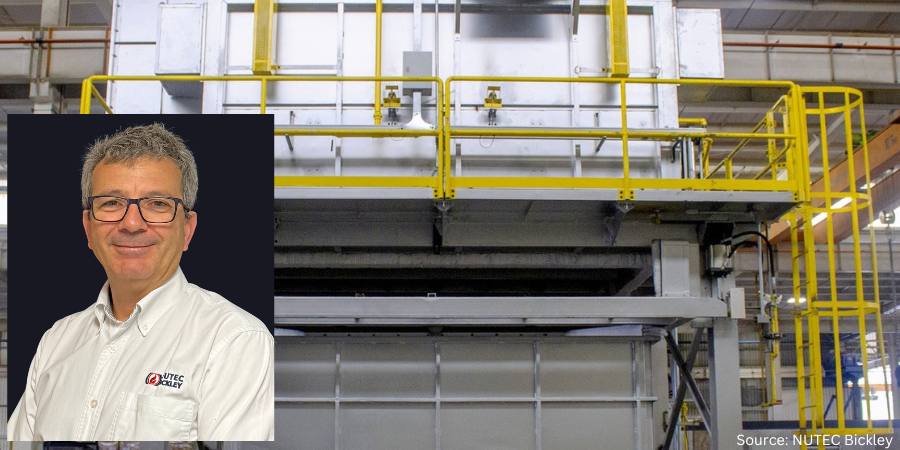
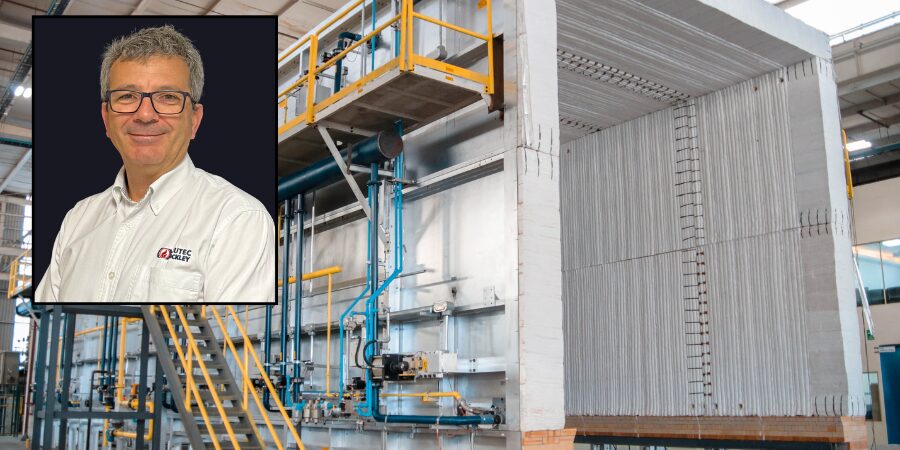
A heat treater in the U.S. Midwest anticipates greater heat treat abilities of ingots with a new gas-fired car bottom furnace. The furnace will be capable of handling both steel and aluminum ingots, with loads up to 150,000lb per cycle.

Arturo Arechavaleta
Vice President, Metal Furnaces
NUTEC Bickley
Source: NUTEC Bickley

NUTEC Bickley designed the furnace to operate across a wide temperature range. The high levels of temperature uniformity to be delivered by the combustion system mean that this furnace will be qualified to undertake AMS2750 compliant surveys.

Arturo Arechavaleta, NUTEC Bickley’s vice president of Metal Furnaces, said: “Our customer for this important project has been serving the industry with a dedicated heat treat facility for many decades, and is a widely recognized and trusted name in steel and aluminum circles.”

The working dimensions of the furnace are 12ft w. by 35ft l. by 14ft 6in h. Normal operational temperatures range between 300°F (150°C) and 1650°F (900°C), with a maximum of 2000°F (1095°C). With burners firing above and below the load, there are 11 automatic control zones (five top, six bottom). The optimum approach to heat treat these heavy loads is pulse firing with variable excess air.

The furnace uses high-velocity nozzle-mix burners in a staggered configuration to fire above and below the load, maximizing heat transfer and providing optimum temperature uniformity. One of the IMPS® (Integrated Multizone Pulsing System) modes is Excess Air Firing. Among other things, it allows control over very low temperature while high turbulence is maintained to achieve temperature distribution.

In the Ratio Firing mode, the air and gas valves pulse in a synchronized pattern, from low to high fire in stoichiometric ratio, to ensure optimal fuel efficiency. This is made possible by using the kinetic energy generated by the flame speed and the rapid transition from low to high fire which increases entrainment and turbulence, thus promoting a better temperature distribution without the need for a high level of excess air.

Press release is available in its original form here.


Gas-Fired Car Bottom Furnace for Heat Treatment Read More »

Wieland Grows In-House Heat Treat With New Furnace

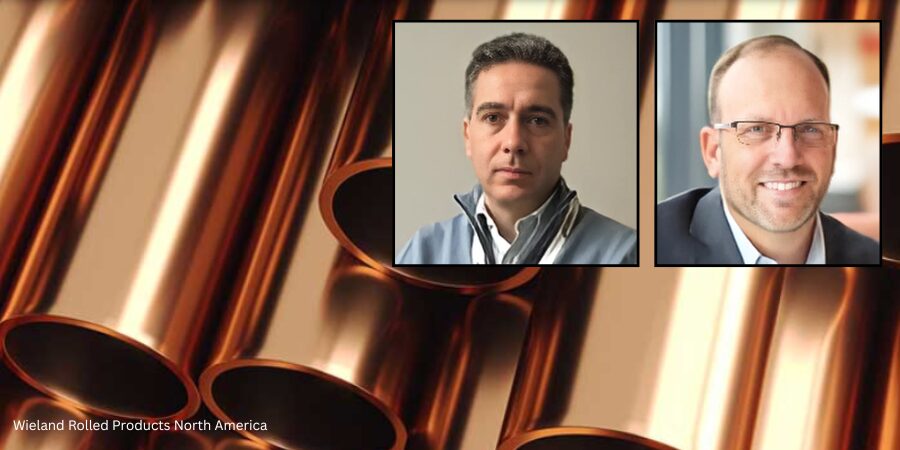
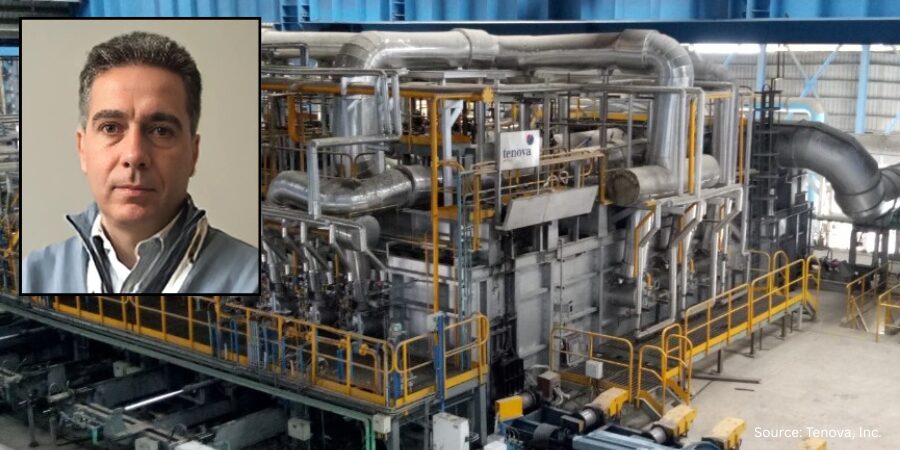
A new reheating walking hearth furnace has been commissioned for Wieland Rolled Products North America. The new furnace has a processing capacity of up to 110 metric tons per hour and will support Wieland’s expansion plans in the production of high-grade copper products.

Greg Keown President Wieland Rolling & Recycling
Source: Tenova

Wieland Rolled Products North America was delivered the furnace by Tenova, which is integrated with a selective catalytic reduction (SCR) deNOx emissions control system. The equipment will enable Wieland to expand the production of high-grade copper products, essential for several key industrial sectors. This installation is a key element of Wieland’s broader investment to upgrade and expand its East Alton, Illinois facility.

“We are pleased to continue our collaboration with Tenova as we enter the next phases of this expansion project. Their technology and project management expertise are expected to support our production goals and sustainability efforts,” said Greg Keown, president of Wieland Rolling & Recycling.

Francesco Memoli remarked, “This project is particularly meaningful for us because it integrates advanced combustion and fume treatment technologies to meet both performance and environmental targets. It’s a clear example of how we tailor heat treatment solutions to the unique requirements of non-ferrous production.”

Francesco Memoli President & CEO Tenova Inc.
Source: Tenova

The furnace, engineered by Tenova Italimpianti, has a processing capacity of up to 110 metric tons per hour. Powered by a natural gas combustion system, it features Tenova’s proprietary TR Flat Flame Roof burners equipped with integrated recuperators and post-combustors. The configuration ensures a substantial 90% reduction in NOx emissions. This technology has already delivered positive environmental performance in both reheating and heat treatment applications.

Wieland’s expansion project includes a new hot rolling mill designed to increase production capacity for copper and copper alloy components used in electric vehicles (EVs), EV charging networks, and renewable energy systems.

Press release is available in its original form here.


Wieland Grows In-House Heat Treat With New Furnace Read More »

Furnace Expansion for Portland Heat Treater

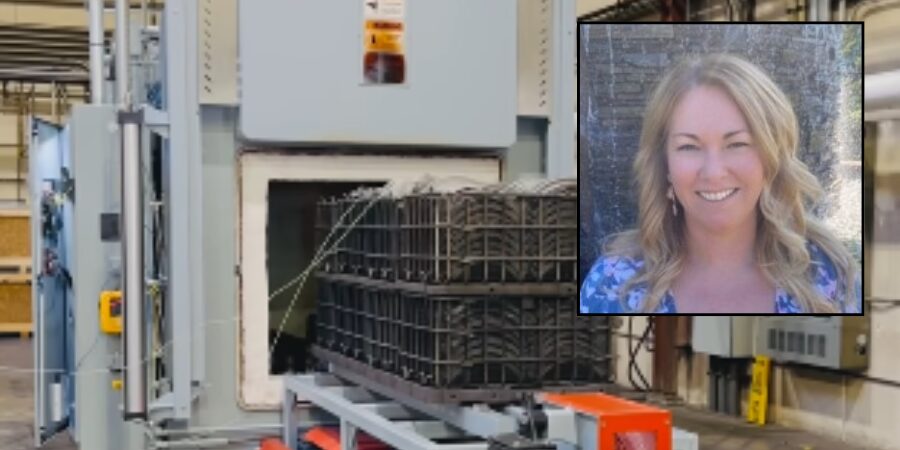
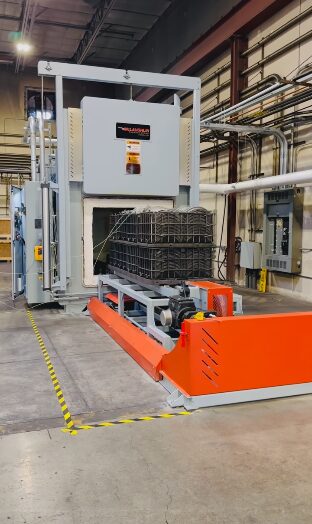
Stack Metallurgical Services has added a new furnace to their Portland facility. The furnace adds significant capacity for stress relieving, sub-annealing, and high-temperature annealing, under protective atmosphere.

Source: Stack Metallurgical Services

The furnace has a working zone of 48″ W x 96″ L x 36″ H, it can handle up to 12,000 lbs, and is certified for temperatures up to 1650°F.

Jeff McLaughlin, owner of McLaughlin Furnace Group, was on-site to help commission the new equipment. Stack also partnered with Super Systems, Inc for charting, testing, and running simulated loads.

Kimberly Chaussee
General Manager
Stack Metallurgical Group

“We are very happy to partner with McLaughlin Furnaces to add this new equipment to Stack’s Portland facility. We’ve always taken a proactive approach to expanding our capabilities and capacity to stay ahead of our clients’ evolving needs. I want to thank Jeff McLaughlin and his team for designing, building, and commissioning this equipment on schedule — it’s been a seamless collaboration,” shared Kimberly Chaussee, general manager at Stack Metallurgical Group.

Stack plans for other significant short-term and long-term investments in both equipment and facilities. They are anticipating additional major announcements later this year. These ongoing investments reflect their commitment to meeting the needs of their clients.


Furnace Expansion for Portland Heat Treater Read More »

Cleveland-Cliffs Commissions Stainless Bright Anneal Line

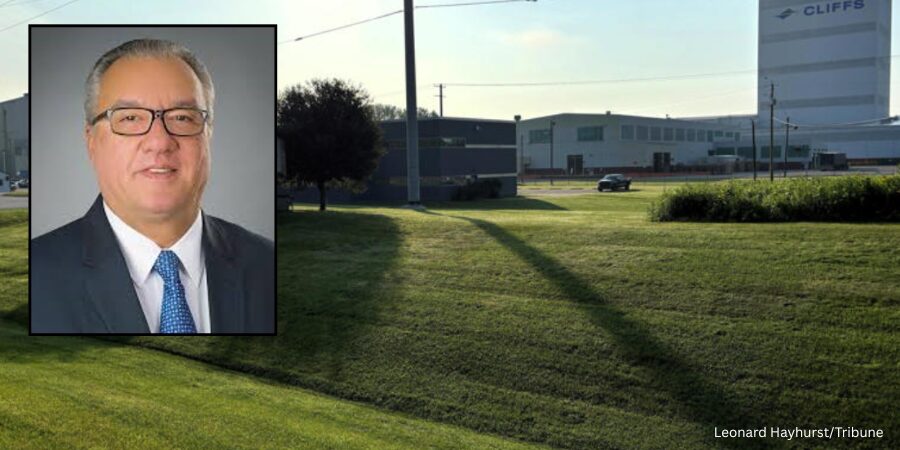
Cleveland-Cliffs has announced the commissioning of its new vertical stainless bright anneal line at its Coshocton Works facility in Coshocton, Ohio. This $150 million investment is now completed and will supply premium stainless steel for high-end automotive and critical appliance applications.

Lourenco Goncalves
Chairman, President & CEO
Cleveland-Cliffs

The new annealing line uses a 100% hydrogen atmosphere, replacing the conventional acid-based processing, and includes a hydrogen recovery unit to recycle hydrogen and use a 50/50 mix of new and used hydrogen in the process.

Lourenco Goncalves, chairman, president and CEO of Cliffs said: “By using hydrogen and advanced automation, we’re dramatically improving the quality and productivity of this critical product that our customers rely upon Cleveland-Cliffs for.”

To mark the opening, a ribbon cutting ceremony was held on Wednesday, July 2 at 11:00 a.m. ET at Cliffs’ Coshocton Works facility. The event was attended by key elected officials along with Cleveland-Cliffs’ executives, employees, and key customers.

Cleveland-Cliffs is a leading North America-based steel producer with focus on value-added sheet products, particularly for the automotive industry. 

Press release is available in its original form here.


Cleveland-Cliffs Commissions Stainless Bright Anneal Line Read More »

U.S. Air Force Provided In-House Heat Treating Furnace

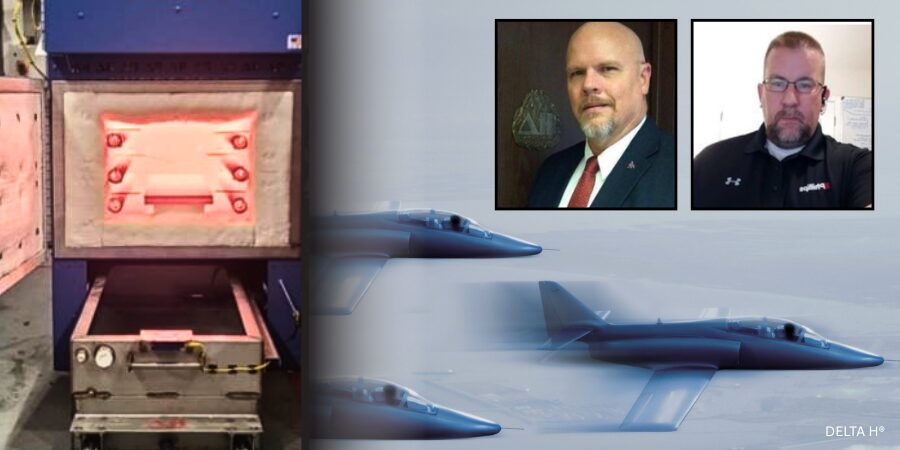
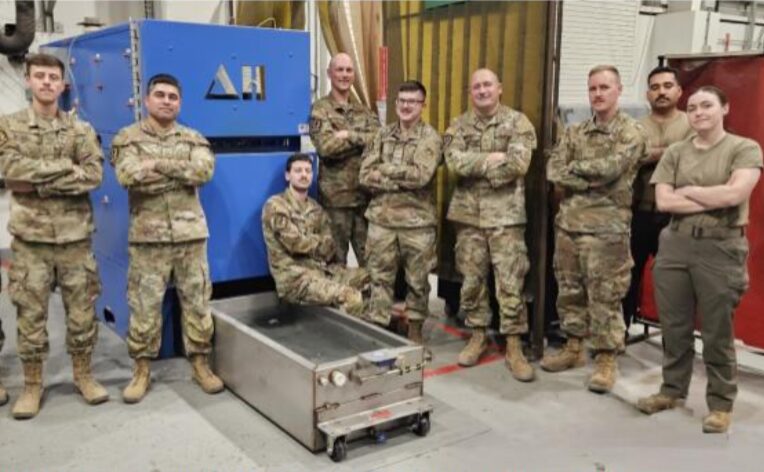
A Defender Series furnace has been provided for Al Udeid Air Base, providing the U.S. Air Force with mission-critical capability to heat treat all aviation-grade metals used in aircraft maintenance.

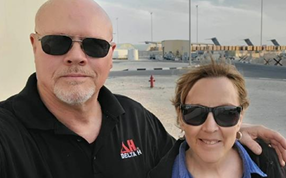
SAF Metals Technology Technicians – Al Udeid Air Base, Qatar Qualified Heat Treaters for Military Aircraft
Source: DELTA H®

DELTA H® and Phillips Federal commissioned the dual-chamber system which features a radiant heat lower chamber (1,000°F–2,000°F, 12”W x 12”H x 48”D TUS volume) with inert atmosphere. A convection heat upper chamber (200°F–1,200°F, 18”W x 12”H x 48”D) is capable of rapid cooling from 1,000°F to below 200°F in under 30 minutes, allowing solution heat treating and aging (T6) in the same chamber before part freezing is required.

Al Udeid Air Base – Doha Qatar
Source: DELTA H®
Richard & Mary Conway DELTA H® TECHNOLOGIES, LLC
Source: DELTA H®

Commissioning included hands-on training and qualification of USAF Metals Tech personnel in system operation, AMS2750 compliance, TUS/SAT execution (via SuperSystems SDS 8120), pyrometry recordkeeping management, and heat treating fundamentals for aviation grade metals.

Director and CTO of DELTA H, Richard Conway, shares: “Mary and I were honored to work directly with the outstanding Airmen at Al Udeid true professionals whose determination to master heat treating reflected their deep commitment to the mission. It was humbling to see our furnace system play a small part in supporting their readiness. In a time of growing uncertainty, DELTA H is proud to stand with our Warfighters on the front lines, providing the tools they need to defend freedom.”

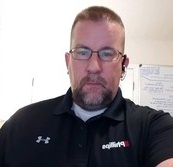
Retired, SMSgt, John (JD) Murray
Product Manager
Phillips Federal
Source: Linkedin

Product manager at Phillips Federal, USAF Retired, SMSgt, John (JD) Murray shares: “As a Retired USAF Aircraft Metals Technician with multiple deployments to my credit, I am overjoyed to see the deployed location receive the best equipment possible. DELTA H furnaces are essential to keep our aircraft flying, fighting, and winning.”

The furnace is equipped with a dual-bath quench tank supporting both water and oil quenching, and final testing confirmed AMS2750 compliance with the convection chamber achieving Class 1 (±5°F) and the radiant chamber Class 3 (±15°F) uniformity. PMEL completed all calibrations, certifying the system for immediate aircraft parts processing.


Press release is available in its original form here.


U.S. Air Force Provided In-House Heat Treating Furnace Read More »

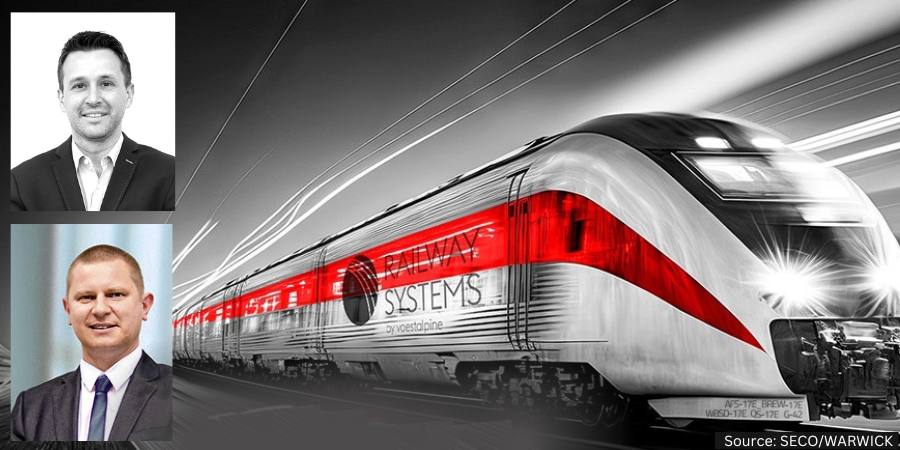
Railway Supplier voestalpine To Expand with Hardening Line

voestalpine Fastening Systems, a supplier to the railway industry, is bolstering its hardening processes of steel parts with a technological line consisting of multiple furnaces and washers. The process will be carried out in a protected nitrogen atmosphere with temperatures up to 1742°F (950°C) on parts to be used in railway rolling stock.

Mariusz Raszewski
Deputy Director of Aluminum Process and CAB Furnaces
SECO/WARWICK

The technological line on order from SECO/WARWICK consists of two CaseMaster furnaces, three tempering furnaces, and two washers. In addition, the railway supplier will have an electric chamber, a cooling station, and an endothermic atmosphere generator delivered.

“[T]he result of technological tests carried out in a service hardening plant that the customer was acquainted with … convinced voestalpine Fastening Systems that we would meet the high requirements of the contract. The line is configured in such a way that if the volume of the company products decreases, the customer can also offer commercial processing due to the wide technological spectrum of this main furnace unit,” said Mariusz Raszewski, deputy director of the Aluminum Process and CAB Furnaces Team at SECO/WARWICK.

The technological line will include a loader operating in automatic mode, a set of roller tables, and a closed-loop water system. The number of the supplied technological line units is selected to ensure the quality of manufactured components. The whole process will be supervised by a master system, which is used to continuously monitor the heat treatment equipment operation and provides advanced data analysis for the production processes.

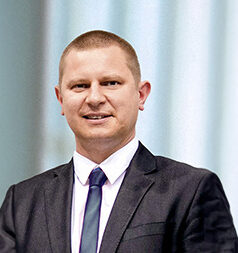
Mariusz Fogtman
Chief Operating Officer
voestalpine Fastening Systems

“The universal furnace solution will allow [the client] to process various parts in various configurations. Apart from technological parameters, it is important for us to limit processed part deformations, which is possible with the solution on order,” said Mariusz Fogtman, chief operating officer, voestalpine Fastening Systems Sp. z o. o.

This is the first cooperation between both partners in this product area. SECO/WARWICK has previously delivered vacuum furnaces to the voestalpine Group.

Press release is available in its original from here.


Railway Supplier voestalpine To Expand with Hardening Line Read More »

CAB Capabilities Expanded for Heat Exchanger Manufacturer

An aluminum heat exchanger manufacturer specializing in the production of heat exchangers recently expanded its production capabilities with a semi-continuous furnace for controlled atmosphere brazing (CAB) aluminum components. The system for semi-continuous operation, based on the cycle multi-stage division, is designed to increase the efficiency and quality of the heat exchangers with ribbed plate construction.

Piotr Skarbiński
Vice President of Aluminum and CAB Products Segment
SECO/WARWICK

SECO/WARWICK provided this CAB system, often chosen by the HVAC industry and manufacturers of car parts, for the industrial production of heat exchangers. The semi-continuous operation mode ensures uniform heating of elements even with above-average dimensions.

“The key advantages of this solution includes higher hourly efficiency — modern brazing technology ensures shorter production cycle time; stable and repeatable quality — the advanced brazing atmosphere control system minimizes the risk of defects, guarantees faster maintenance as well as no production downtime. . . . The semi-continuous CAB system is popular because it allows users to realize a reduction in costs while producing atmosphere brazing with exceptional quality control,” said Piotr Skarbiński, vice president of Aluminum Process and CAB Business Segment in the SECO/WARWICK Group. “We supply solutions to many companies in Asia, and a large part of the contracts are the result of recommendations we receive from our customers.”

The CAB line includes a drying furnace, an inlet purging chamber, a patented heating and brazing chamber, an intermediate cooling chamber with an air jacket and a direct final cooling chamber. The product moves between stages in a horizontal position based on a continuously adjustable cycle time, depending on the load’s type and configuration. The semi-continuous operation mode ensures that even large-sized heat exchangers will be heated evenly during the correct process time.

Press release is available in its original form here.


CAB Capabilities Expanded for Heat Exchanger Manufacturer Read More »

Manufacturer Expands Aluminum Heat Treat Capabilities

A provider in the power solutions industry has enhanced its operations with a heat treat drop-bottom furnace for the solution heat treatment of aluminum castings. This installation will increase the company’s production capabilities, with the furnace having a load setting of 48 in (123 cm) wide x 36 in (91 cm) high x 141 in (358 cm) long.

The furnace, the fifth designed and manufactured by NUTEC Bickley, has a single temperature control zone, typically operating at 1000°F (573°C), with a maximum of 1075°F (580°C). The load setting will accommodate up to three baskets, equivalent to around 3600 lb (1635 kg) of aluminum parts per cycle. The furnace has been customized to be indirect gas-fired using radiant tube burners. Additionally, the project incorporates a motorized quench tank, rails, movement system, and load/unload platform with elevator device.

Arturo Arechavaleta
Vice President, Metal Furnaces
NUTEC Bickley

“Efficient and effective solution heat treatment is a vital part of the aluminum casting process,” said Arturo Arechavaleta, vice-president of Metal Furnaces at NUTEC Bickley. “Without the sort of advanced system that we have custom-designed, volume production of high-quality aluminum parts is not feasible. We’re proud to have played an important role in this technology partnership.”

The indirect gas firing is via single centrifugal recirculation that produces a vertical flow pattern. Heating is achieved with four radiant tube burners that have individual flame safety devices. The burner system incorporates a motorized control butterfly valve, and the gas flow is controlled by proportional ratio regulators. This design, with its baffle arrangement, delivers an even flow pattern, providing excellent temperature distribution and control in the furnace’s load chamber and high-efficiency heat recirculation (convection) horizontally across the aluminum castings. Excellent temperature uniformity was always considered an important parameter, and this has been shown to be ±5.4°F (±3°C) under full test in the provider’s manufacturing facility.

In order to maintain excellent thermal efficiency in operation, the furnace walls are fully lined using ultra large proprietary ceramic fiber modules. Their configuration and fixing provide for excellent insulation and long life coupled with low maintenance. The insulation layer is 6 in (150 mm) thick and has a density of 12 lb/ft3 (192 kg/m3).

The installation will see the drop-bottom furnace itself stationary — in a fixed elevated position — with the quench tank and loading car moving to accommodate baskets at the selected position. The furnace has a single, pneumatically operated horizontal slide door. For these particular aluminum castings, the company will employ a motorized water quench system provided by NUTEC Bickley, as well as its rails included leveling and installation. The tank has been designed to accept a full load of pieces within the work basket when the furnace is positioned vertically above it.

Press releases are available in their original form here.


Manufacturer Expands Aluminum Heat Treat Capabilities Read More »

US Heat Treater Adds Furnaces, Marquenching Capabilities

A commercial heat treating company recently added new furnaces and process improvements to its operations in order to serve manufacturers in advanced industries, including aerospace and defense. The improvements include a high-temperature oxidation furnace, a fully rebuilt furnace, and the expansion of marquenching capabilities.

Phoenix Heat Treating, based in Phoenix, AZ, has introduced a high-temperature oxidation furnace specifically designed for space components. This equipment has a maximum operating temperature of 1975oF and operates in an air atmosphere, providing the thermal stability and precision needed for the demands of aerospace applications and to serve the evolving needs of the space industry.

A fully rebuilt furnace has been reactivated in the company’s production lineup. This furnace is tailored for processing primary long Inconel 718 and A286 age cycles. With a maximum weight capacity of 2000 lbs., it handles heavy and complex loads with a goal of ensuring consistent and reliable results for critical nickel-based alloy applications and improving efficiency and capacity by increasing the number of Inconel 718 cycles per week.

Marquenching operations are also seeing an upgrade as materials have been ordered to increase load sizes from 25 lbs. per load to 250 lbs. per load. Expected to be complete by mid-February, this enhancement represents a tenfold increase in capacity, allowing Phoenix Heat Treating to achieve faster turnaround times and larger batch processing capabilities.

Additionally, a state-of-the-art freeze/temper unit has been brought online. This equipment is capable of reaching temperatures between -270oF and 200oF and will be a part of the company’s aluminum thermal cycling processes, enabling precise control over temperature profiles for optimal material performance. The new unit’s capacity is roughly double that of the previous maximum reached and will allow Phoenix to handle significantly larger loads and meet growing customer demand.

The press release is available in its original form here.


US Heat Treater Adds Furnaces, Marquenching Capabilities Read More »

Skip to content