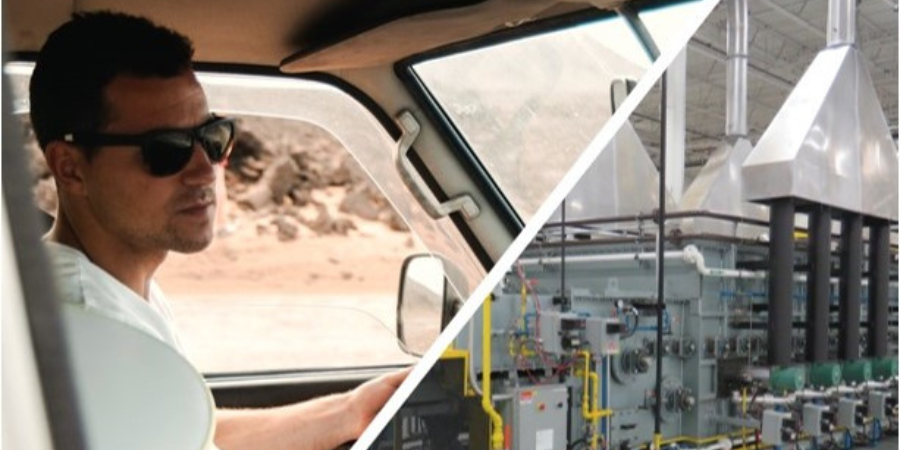
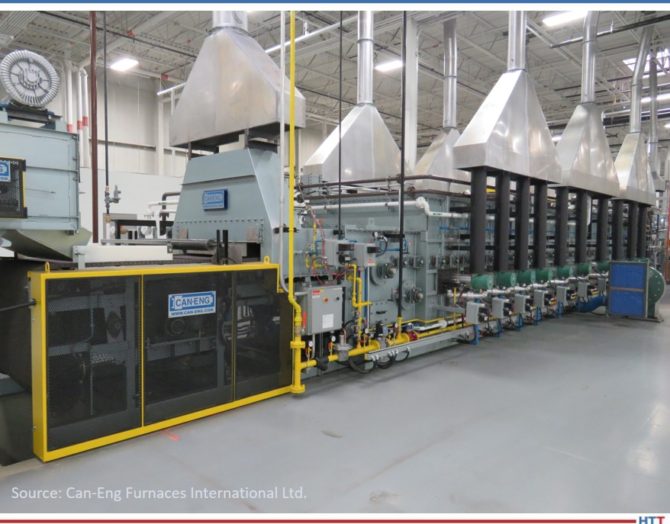
A Michigan-based captive heat treater in the precision automotive and specialty fastener industry will receive a 6000 lb/hr continuous mesh belt furnace to complete its new line.
Can-Eng Furnaces International, the provider of the furnace, utilized their Level 2 Automation to enable the heat treater to track product status, diagnose equipment, and provide process data. The system will lower the heat treater’s energy requirements for the hardening furnace and reduce required atmosphere by one-third. The system is equipped with an automated bin-dumping loader, pre-washer, atmosphere-controlled mesh belt hardening system, oil quench, post wash system, temper furnace, in-line soluble oil system, and bi-directional conveyor discharge.
For Ovako, a centuries old manufacturer of engineering steel, innovative approaches to producing their product has taken the form of electrifying their roller hearth furnaces over the course of the past decade.
The process of converting to electric heating began in 2014, each furnace installed with up to 86 Tubothal® metallic heating elements from Kanthal. Now, 14 roller hearth furnaces are electrified. The estimated CO2 savings is around 1,400 to 2,000 tons per year per furnace.
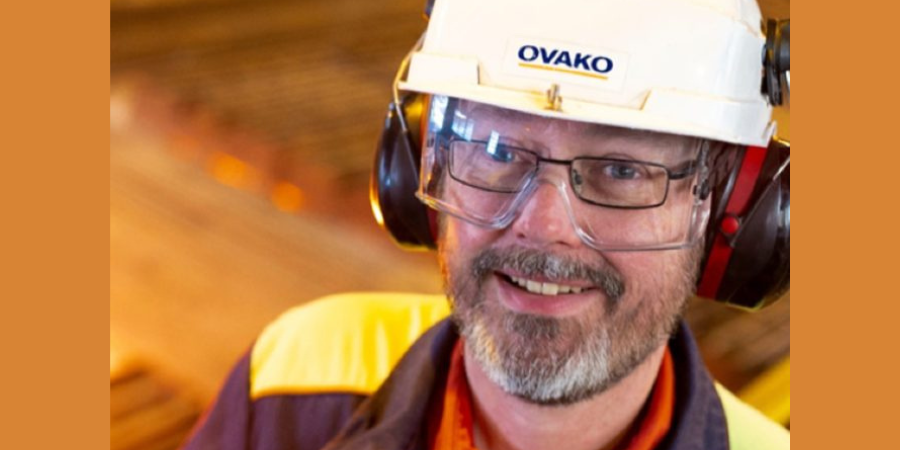
“[In] our heat treatment shop in Hofors,” shares Anders Lugnet, a furnace technology specialist at Ovako (pictured above), “we originally had around 450 gas burners, and there was always a problem somewhere in one of them. Since replacing them with 300-odd Tubothal® elements, the daily maintenance is simply not there. Occasionally, an element needs to be replaced, but it is nothing compared to the way it was.”
He continues that, previously, NOx and CO2 emissions were problematic. But with green electricity, emissions are zero, and with no flue-gas losses, total efficiency has improved significantly.
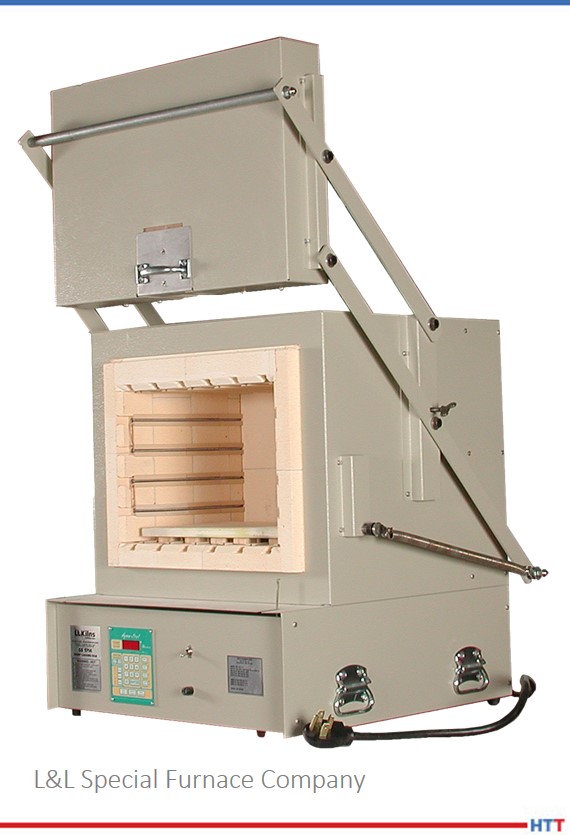
L&L Special Furnace Company ben-mounted box furnace
Worldwide manufacturer of high-purity fused silica and high-end ceramic products is set to receive another bench-mounted box furnace from North American furnace supplier. These materials are used in the semiconductor and photonics industry as well as many other ceramic and composite industries worldwide.
The L&L Special Furnace Co. furnaces are part of the research and development department and are an important component of the testing and quality control department. The Model GS1714 has internal dimensions of 17” wide by 12” high by 14-1/2” deep and the operating voltage of 208, 220, 240 volts single phase, 60 or 50 hertz. It is also equipped for adjustable PID logic and finer temperature control around setpoint.
The furnace is constructed from 3” lightweight IFB firebrick, backed up with 2” of board insulation. The elements are oriented in the furnace to have long life and easy replacement as well as deliver consistent heat distribution with a uniformity gradient of ±7.5°F.
A U.S. manufacturer is set to receive a dual chamber furnace to heat treat automotive parts. This heavy duty furnace-over-oven features 12-gauge sheet steel construction with reinforced members for a solid framework and each chamber is 24” H x 24” W x 36” L.
This is the 7th large Dual Chamber 8000 Series Furnace from Lucifer Furnaces, Inc. that it has shipped to the U.S. auto manufacturer. The upper hardening chamber heats with 45 KW power to banks of elements on sides, door and back. The heating elements are designed with heavy gauge wire mounted in removable holders.
The upper chamber cast hearth plates support the workload and can be easily replaced without disturbing the heating elements. The lower tempering oven with 20 KW power features a stainless-steel liner shielding heating elements from the workload. This liner was designed as a 3-sided liner with a cast hearth plate for durability. A high cfm, ½ hp fan recirculates air past the elements and back through the chamber in a uniform pattern.
This unit was customized with a free-standing control panel providing the ability to separate control operation from the furnace environment. Each chamber has been outfitted with Honeywell Multi Program Controllers with a High Limit Backup Controller to prevent temperature excursion events.
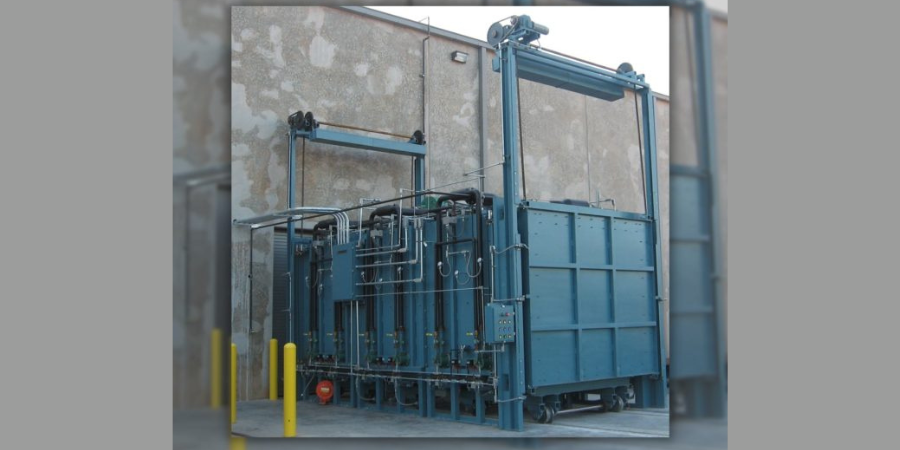
From the southeastern U.S., a leading manufacturer of specialty alloys, pipes, tubes and fittings has placed an order for a large gas fired, car bottom furnace that is scheduled for delivery in Q4 2021.
The furnace from L&L Special Furnace Company will be used for normalizing various steels and specialty alloys at temperatures up to 2,200°F (1,200°C). It will also be used to preheat, stress relieve and temper various steels and large pipe fittings.
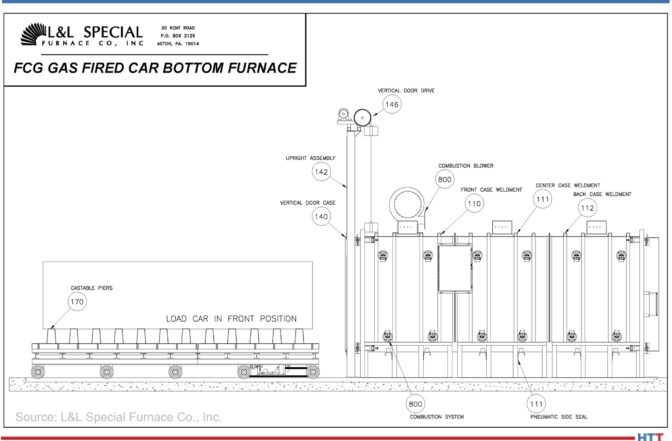
The L&L model FCG4410 has working dimensions of 48” wide by 48” tall by 120” deep. Uniformity of ±25°F ( 12.5°C) or better is expected throughout the work zone. Complete factory testing and on-site commissioning is included.
The gas fired furnace uses six medium velocity burners that fire over and under the load. The furnace car moves in and out of the unit on supplied railroad type rails. The door is mounted to the car and is motorized with all required stops and clearances. The side seals are pneumatic and seal to the car bottom once the car is inside the furnace. Castable piers provide good support for up to a 10,000 pound load. The furnace is completely insulated with ceramic fiber modules.
The control is a floor-standing NEMA12 panel with fused disconnect at the source. All fusing and interconnections are included. The furnace is controlled by a Eurotherm Nanodac program control with two slave units. Three-zone control is provided to promote uniformity. Overtemperature protection is provided along with a six-input paperless chart recorder and jack panel.
An international electric vehicle (EV) automaker has ordered high-pressure gas quenching (HPGQ), tempering, and nitriding furnaces for heat treatment of large high-pressure casting dies, which will be used in the production of aluminum underbody components for electric vehicles.
The tool & die market serving traditional and EV automotive markets use vacuum heat treating technology extensively to produce bright, high-quality parts. SECO/VACUUM Technologies, a SECO/WARWICK Group company, will provide two furnaces and auxiliaries with working zones that can accommodate loads with dimensions up to 1000mm x 1000mm x 2400mm (40″ x 40″ x 96″) and up to 7.5 metric tons of weight.
“[We] have built a reputation with [this client’s] engineering team,” explained Piotr Zawistowski, managing director of SECO/VACUUM, “[and so] we are capable of achieving the required quenching rates within such a large envelope, which will be accomplished with a powerful 500kW quenching system. The [client] also appreciated the custom engineering that we put into handling such a heavy workload.”
The Vector® vacuum hardening furnace is equipped with a convection heating system to improve heat transfer at lower temperatures, thus reducing internal stresses; the cooling system can quench with nitrogen at pressures up to 25 bar. The furnace will exceed NADCA 207 requirements for the quenching process and Class 2 temperature uniformity requirements per AMS2750F.
The nitriding furnace is a pit-type configuration, with working dimensions to match the hardening furnace. The patented ZeroFlow® nitriding process uses uniform high convection heating, precision nitriding potential, and ammonia control, along with vacuum purging to reduce operating costs.
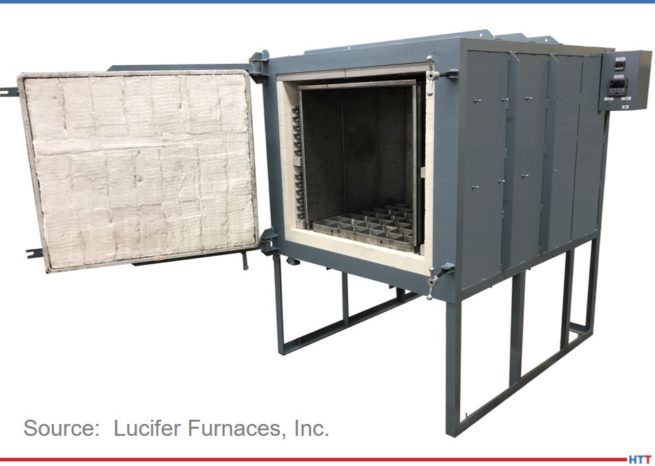
A leading automotive supplier in the U.S. recently received a large oven for its operations. This furnace was customized with a heavy duty cast work tray which sits on the floor of the chamber inside the liner area to support the workload and protect the floor brick.
4000 Series Oven from Lucifer Furnaces
The 4000 series oven from Lucifer Furnaces is a Model 42-T36 and has a chamber size of 30″H x 30″W x 36″L, heating to 1200°F with 35 KW of power.
This model is complete with a high CFM rear mounted fan assembly to recirculate the heated air uniformly throughout the chamber. A stainless-steel liner isolates the heating elements from the work area and directs air forward over the heating elements and back through the chamber in a horizontal pattern for uniform heating.
The horizontal swing door is lined with lightweight pyroblock insulation with a ceramic fiber gasket to reduce heat loss around the chamber opening. A safety microswitch automatically shuts off power to heating elements and fan when door is opened, eliminating electric shock and heat blast hazards to oven operator. Controls include a Honeywell digital time proportioning temperature controller accessorized with a high limit controller for safety in the event of a high temp excursion.
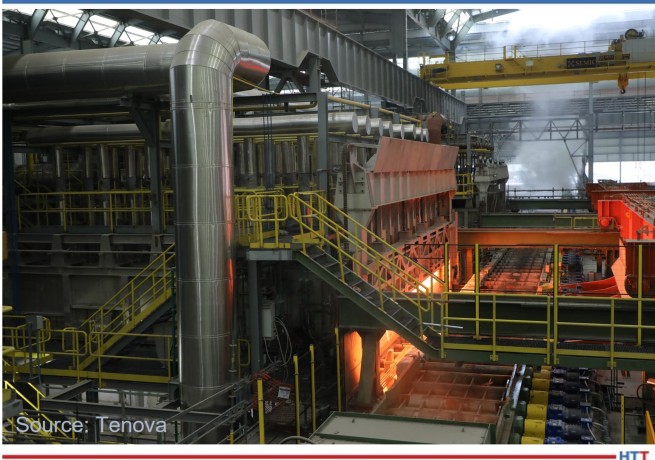
Ternium, a high quality steel manufacturer in the Americas, recently had two new 400 t/h walking beam furnaces (WBF) started at their hot strip mill facility in Pesqueria, Mexico.
Walking Beam Furnace at Ternium new hot strip mill facility
Features of the WBFs will reduce emissions and provide energy savings. The Tenova furnaces are designed to heat steel slabs up to 39 t at 2282°F (1250°C), with a specific consumption of 1.16 MJ/Kg, while keeping NOx emissions lower than 60 ppm. This emissions level is well below the required limit.
The furnaces features include a SmartBurner Monitoring System (SBMS), which enables the monitoring and optimizing of the burner’s performance, operation and maintenance. The SBMS is a network of embedded sensors connected to the Tenova digital infrastructure through secure connection protocols and intrinsic system reliability. The collected data is post-processed locally on an edge computing unit as well as remotely on the Tenova cloud. By constantly monitoring the status of the burner, the SBMS offers breakthrough approaches to inspection, maintenance and tuning, as well as reducing safety risks related to on-site operations.
Paulo Lopez Pesquería Plant Director Ternium
“The Ternium Industrial Center started its first phase in 2013 focused on downstream products as cold rolled and galvanized for the industrial market. Now, we have started up the main production line of the 2nd phase, a new hot rolling mill with a capacity of 4.4 million tons," said Paulo Lopez, Pesquería plant director at Ternium. "The two new WBFs are part of the plant’s new lines and will produce coils to be used in the automotive market in the USMCA area [. . .]."
"This new Tenova equipment joins the previous walking beam furnaces built for Ternium at its plants in San Nicolas, Argentina and in Monterrey, Mexico [. . .]," stated Nicola Cavero, senior vice president of Tenova Italimpianti. "This represents an important new reference for Tenova in the reheating furnaces market."
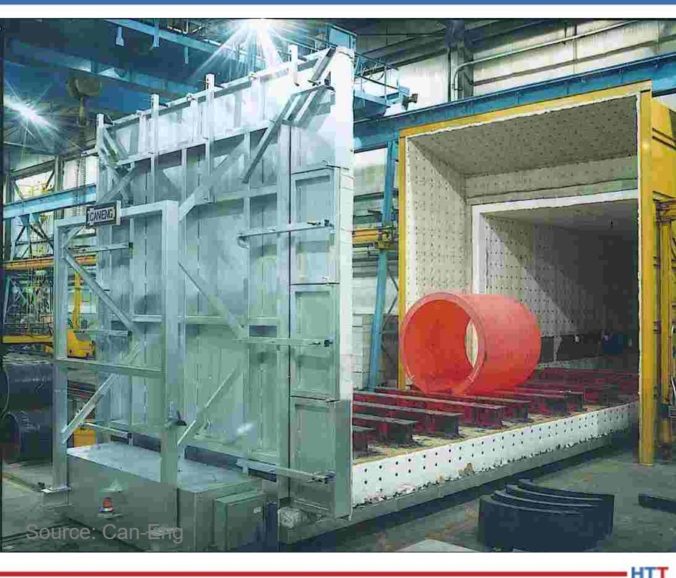
A large metals and mining company has awarded a contract to design and manufacture two 50,000 lb load capacity furnaces. These custom engineered furnaces will support the manufacturing of critical metal hot rolling machine components used in the production rolling of high value-added automotive steel sheet and plate.
Hot Rolling car-bottom in operation, open door, Can-Eng International Furnaces Ltd.
Can-Eng Furnaces International, Ltd. (CAN-ENG), a global provider of thermal processing systems, was able to identify areas of improvement within the customer's existing heat treatment system which allowed them to develop a concept that suited the customer's needs.
The two systems, although located side by side, will utilize completely independent control systems allowing for ultimate flexibility for schedule and maintenance. Both furnaces will be interconnected to the larger plant wide system for data acquisition and trending capabilities with Can-Eng’s support.
One of the world’s largest producers of high volume, specialty automotive fasteners based in Italy has awarded two contracts to Canadian heat treat supplier in order to expand their manufacturing capabilities with a mesh belt fastener heat treatment system.
The two systems being supplied represent CAN-ENG Furnaces International Ltd. (CAN-ENG) high-capacity line of mesh belt fastener heat treatment systems.
The client returned to the furnace manufacturer in order to receive a furnace with proven low energy consumption, reduced part mixing, reduced part damage potential, and high uptime productivity when compared to conventional cast link furnace designs.
The system will include: computerized vibratory loading system, rotary phosphate removal washer, mesh belt hardening furnace, oil quench system, post quench wash system, mesh belt temper furnace, soluble oil, and part containerization system.
CAN-ENG Furnaces International Ltd. (CAN-ENG) high-capacity mesh belt fastener heat treatment system
These fully integrated systems will feature CAN-ENG’s Process Enhancement Technology – PET™ System (Supervisory Control and Data Acquisition System) which provides the client with complete product traceability through the critical thermal process, process data collection, historical event archiving, process variable trend monitoring, scheduling optimization, and energy consumption features which are unique to CAN-ENG systems.
These new systems will be commissioned to the EU in early 2022.




 A Michigan-based captive heat treater in the precision automotive and specialty fastener industry will receive a 6000 lb/hr continuous mesh belt furnace to complete its new line.
 Can-Eng Furnaces International, the provider of the furnace, utilized their Level 2 Automation to enable the heat treater to track product status, diagnose equipment, and provide process data. The system will lower the heat treater’s energy requirements for the hardening furnace and reduce required atmosphere by one-third. The system is equipped with an automated bin-dumping loader, pre-washer, atmosphere-controlled mesh belt hardening system, oil quench, post wash system, temper furnace, in-line soluble oil system, and bi-directional conveyor discharge.