


Total Materia

Terrifically Titanium Heat Treating Results

Source: Total Materia

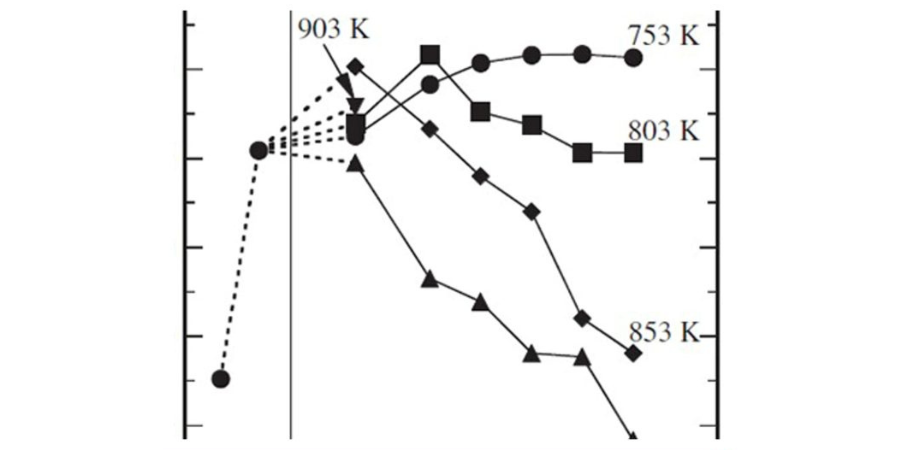
Heat treaters in the medical and aerospace sectors will eagerly tell you about titanium alloys. The hot alloy can be fantastic for intense applications once you reduce residual stresses that are developed during fabrication and increase their strength. This article is specifically about how duplex heat treatment of Ti alloys helps in relieving stress, optimizing ductility and machinability properties, and increasing strength.

An excerpt:

“Most commonly known for their excellent strength, corrosion resistance and low density, titanium alloys are a key material for important applications in the aerospace and medical industries. Duplex heat treatments of Ti alloys helps in stress relieving, optimizing ductility and machinability properties and increases strength further.”

Read more at “Duplex Heat Treatment of Titanium Alloys: Part One

Terrifically Titanium Heat Treating Results Read More »

Presidents’ Day Quiz: What Do Honest Abe and Heat Treating Have in Common?


Source: Total Materia


In honor of Presidents' Day, Heat Treat Today takes a cue from the U.S. penny, where we find embossed on the copper coin the image of one of the two U.S. presidents celebrated on this day, President Abraham Lincoln (16th). The link below will lead you to an article on the basics of heat treating copper and copper alloys; their end products, including wire and cable, sheet, strip, plate, rod, bars, tubing, forgings, castings, and powder metallurgy shapes; and the purposes for heat treating these metals, such as homogenizing, annealing, stress relieving, and precipitation hardening.

Read more: "Heat Treating of Copper and Copper Alloys"

Presidents’ Day Quiz: What Do Honest Abe and Heat Treating Have in Common? Read More »

Direct-Chill Casting

BOTW-50w  Source:  Total Materia

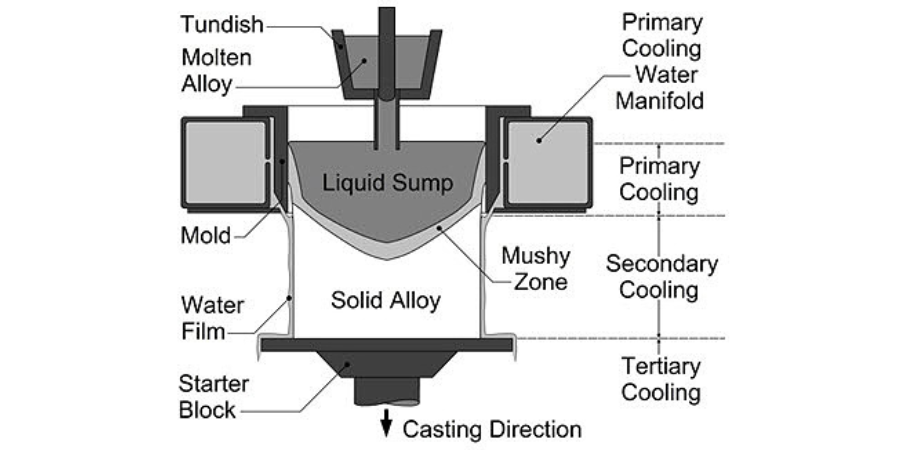
Direct-chill (DC) casting is currently the most common semi-continuous casting practice in non-ferrous metallurgy. The process is characterized by molten metal being fed through a bottomless water cooled mould where it is sufficiently solidified around the outer surface that it takes the shape of the mould and acquires sufficient mechanical strength to contain the molten core at the centre. As the ingot emerges from the mould, water impinges directly from the mould to the ingot surface (direct chill), falls over the cast surface and completes the solidification.

Read More:  Direct-Chill Casting

Direct-Chill Casting Read More »

Pulsed Electric Current Sintering

BOTW-50w  Source:  Total Materia

Pulsed electric current sintering (PECS) also known as spark plasma sintering (SPS) or field assisted sintering (FAST) is a relatively new innovative technique for the consolidation of fine or nanocrystalline powders and has received much attention in the recent years because of its many advantages compared with other sintering/bonding methods such as the hot pressing and hot isostatic pressing (HIP) processes.

Read More:  Pulsed Electric Current Sintering


Pulsed Electric Current Sintering Read More »

The FINEX Process

BOTW-50w  Source:  Total Materia

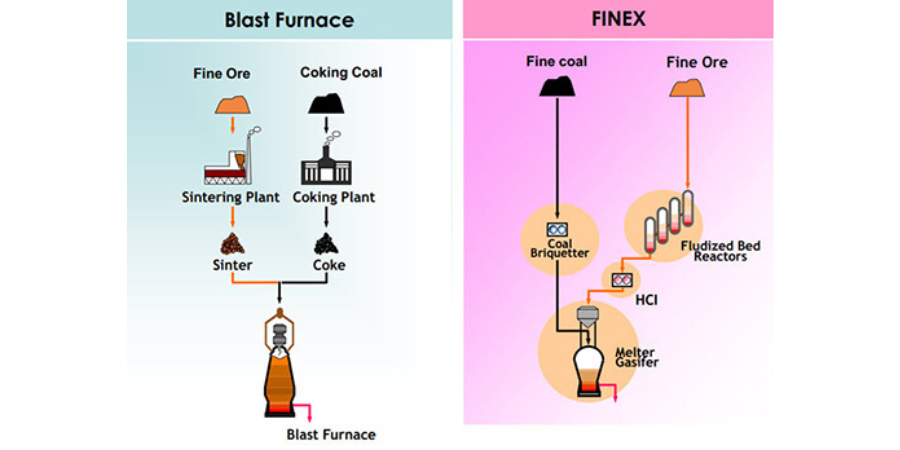
Molten Iron is produced directly using iron ore fines and non-coking coal rather than processing through a sinter plant and coke ovens as traditional blast furnace route. In the Finex process, iron ore fines are charged into a series of fluidized-bed reactors. The fines pass in a downward direction where they are heated and reduced to direct-reduced iron (DRI) by means of a reduction gas – derived from the gasification of the coal – that flows in the counter – current direction to the ore. The DRI fines are then hot-compacted to hot-compacted iron, transferred to a charging bin positioned above a melter gasifier where smelting take place. The tapped product, liquid hot metal, is equivalent in quality to the hot metal produced in a blast furnace ore Corex plant.

Read More:  The Finex Process

The FINEX Process Read More »