

Nitriding

Youngstown Tool & Die Expands with New Nitriding Capabilities

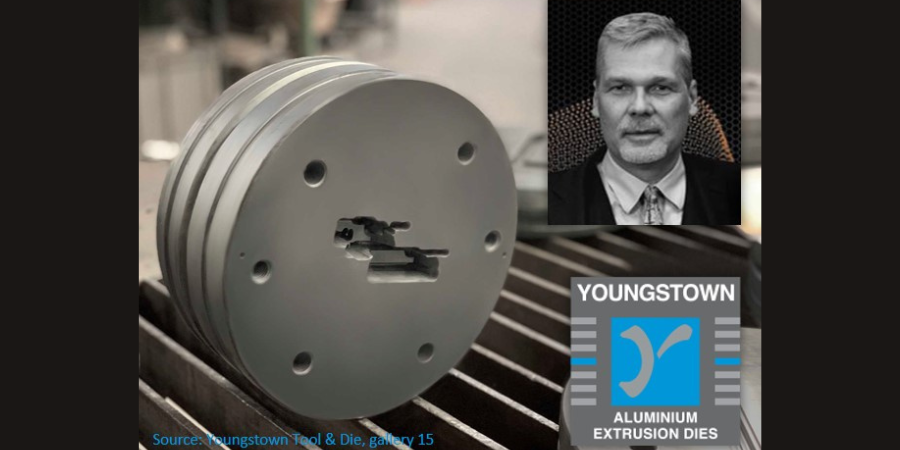
HTD Size-PR LogoOhio-based aluminum extrusion die manufacturer Youngstown Tool & Die (YTD) continues with their expansion strategy, scaling up value-added nitriding services. The installation of the new nitriding system makes it possible for YTD clients to obtain greater performance results from treated dies.

In the last quarter of 2020, Youngstown Tool & Die expanded with NITREX Canada to incorporate Nitreg® controlled nitriding with the installation of a Nitrex turnkey gas nitriding system, complementing their range of heat-treating services.

Roll-out of the expansion started last summer when YTD relocated to a larger manufacturing facility and made investments in new production and finishing equipment to increase its manufacturing capabilities and meet the growing demand in the USA. As part of the new production, YTD installed a Nitrex pit-type NX-1015 nitriding system that boasts a 4,400 lbs. (2,000 kg) capacity for treating aluminum extrusion dies.
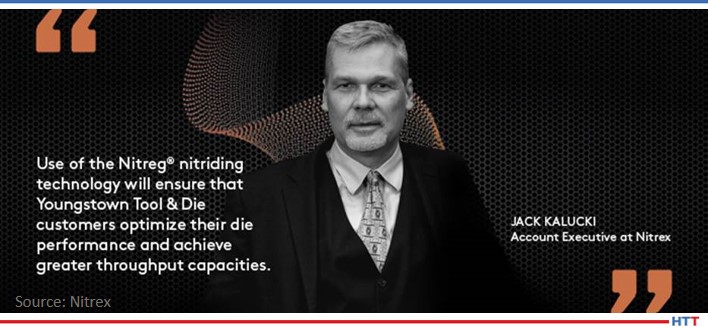
"This is the company’s first purchase of a Nitrex nitriding system and we are glad to be part of their growth strategy," said Jack Kalucki, account executive at Nitrex.

Youngstown Tool & Die Expands with New Nitriding Capabilities Read More »
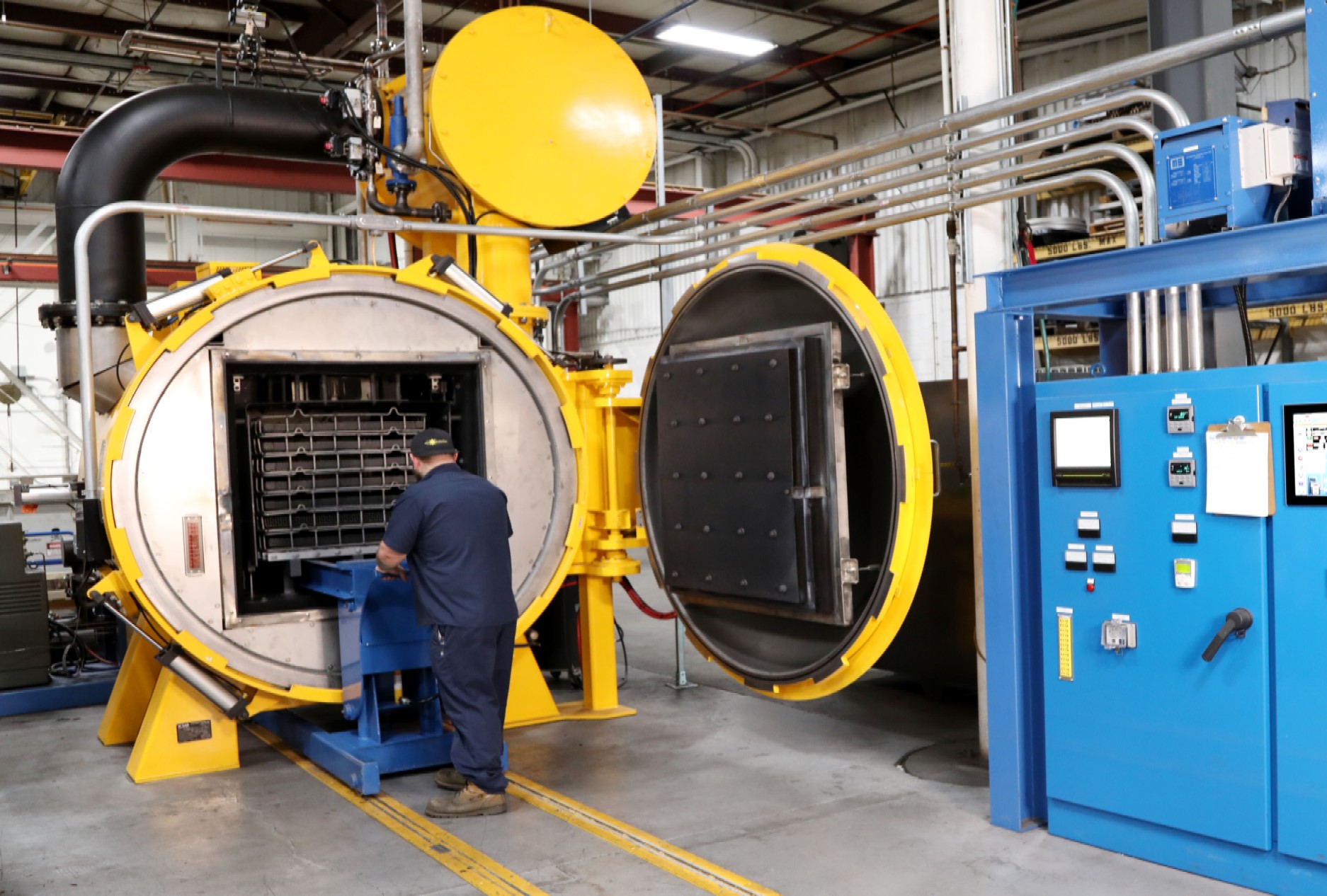
New Nitriding Furnace Installed at Solar Atmospheres

Solar Atmospheres of Souderton, PA, has received a new, state-of-the-art vacuum gas nitriding furnace to support an increasing demand for high-value gas nitriding. The furnace was built by sister company, Solar Manufacturing.

The front-loading furnace incorporates the latest nitriding and recipe system from Solar Manufacturing. The automated control system is useful for single stage as well as two-stage (Floe) processing. All hot zone components are made completely of graphitic materials inert to the anhydrous ammonia used during the nitriding process.

(source: Solar Atmospheres)

New Nitriding Furnace Installed at Solar Atmospheres Read More »

Auto Partner Enters Agreement for New Nitriding Technology

An automotive partner based in the Czech Republic has entered an agreement with a nitriding company based in Montreal, Canada, for a new nitriding system to enhance the durability of stainless steel.

The high performance metals division of Voestalpine AG has entered an agreement with Nitrex Metal, a company that focuses on nitriding/nitrocarburizing technologies, to bring new innovations in stainless steel hardening technologies to the Czech Republic.

“The agreement builds on a strong partnership and confirms the market potential of hardening technologies for stainless steels,” said Marcin Stoklosa, special projects manager of Nitrex Metal.

“We are excited about bringing these innovative heat-treat processes to the Czech Republic market. . . . Nitrex’s proven technologies offer numerous benefits to our industrial customers looking to maximize the life span and quality of their engineered parts and components,” said Zbyněk Drda, Voestalpine Heat Treatment Manager.

Capable of treating 304, 316 and 412 grade stainless steels, the new system with integral process technologies Nitreg®-S and Nano-S™ optimizes the mechanical performance and economic return by making these steels extremely wear and corrosion resistant and capable of achieving a longer useful life. Post cleaning of treated parts and added production steps such as machining are eliminated.

Auto Partner Enters Agreement for New Nitriding Technology Read More »

Carburizing vs Nitriding Engineering Components


Source: Advanced Heat Treat Corp.


Extensive wear or fatigue from friction and contact stress cause many engineering components made of ferrous or titanium alloys to fail. In this Best of the Web

Edward Rolinski,”Dr Glow”, Advanced Heat Treat

Technical Tuesday feature, Edward Rolinski, aka Dr. Glow, from Advanced Heat Treat Corp., compares “wear resistance between engineering components that were carburized vs nitrided,” originally published in his article, “Tribological Performance-Enhancing Surface Treatments for Improving Durability of Engineering Components” at AHT’s website.

An excerpt:

“The results of the tribological studies strongly suggest that for many engineering components, the application of nitriding may be more beneficial than carburizing since the nitrided layer had better wear properties than the carburized layer despite the fact that the layer was about four times as thick.”

Rolinski defines the uses, advantages, and tribological behavior of nitrided and carburized steel and provides illustrations of samples subjected to both treatments.


Read more: “Tribological Performance-Enhancing Surface Treatments for Improving Durability of Engineering Components”

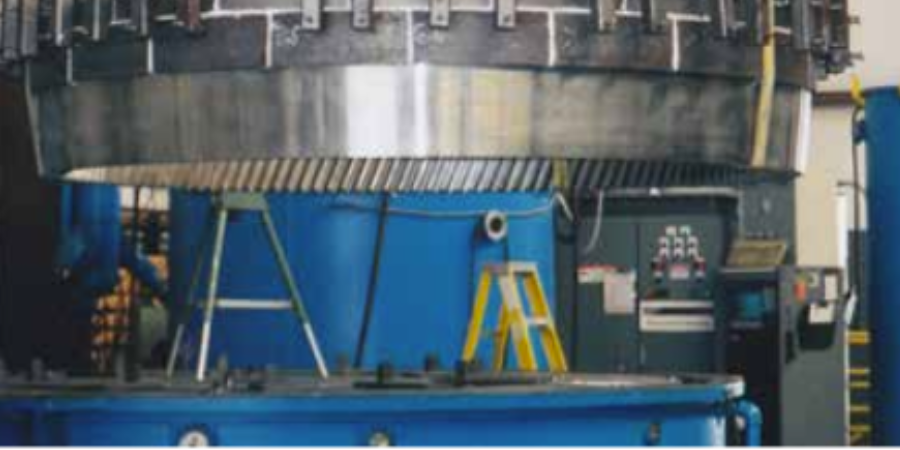
Main image photo credit/caption: Advanced Heat Treat Corp / Advanced Heat Treat’s Cullman, Alabama, location ion nitroding vessel, which the company says is one of the largest in the United States—”big enough for two small cars to fit inside.”


Carburizing vs Nitriding Engineering Components Read More »

The Pros and Cons of Gas and Ion (Plasma) Nitriding


Source: AHTcorp.com


The compound zone acts as a ceramic skin protecting the metal underneath from corrosion. (Photo credit: Advanced Heat Treat Corp)

Engineers considering the advantages and disadvantages of surface treatments typically have a usable lifespan, surface hardness, and fatigue strength in mind. As a process, both gas and ion (plasma) nitriding avoid the issues involved with coatings and achieve similar metallurgical properties, and the compound zone increases corrosion resistance. But what are other areas in which the two processes can be compared, and what are their differences? It’s good to know, particularly since the latter could significantly make a direct impact on the end product.

Jacob McCann, a process metallurgist with AHT Corp., provides a specific list of pros and cons of gas nitriding and ion (plasma) nitriding in our Technical Tuesday feature for today.


Read more: “Gas and Ion (Plasma) Nitriding: What’s the Difference?”

Photo credit: Advanced Heat Treat Corp


The Pros and Cons of Gas and Ion (Plasma) Nitriding Read More »

European Auto Supplier Purchases Nitriding System

A European automotive components supplier has contracted for a turnkey nitriding system which will nitride a variety of H11 and H13 aluminum extrusion dies for manufacturing automotive structural components supplied to most major vehicle manufacturers.

The project involves the replacement of an old gas nitriding furnace with a modern system that will improve gas and energy consumption and meet environmental objectives. Other priorities for the customer were conservation of resources, environmental compliance, and noise reduction. Entirely custom and tested recipes based on potential-controlled Nitreg® technology were developed by Nitrex Metal Inc., of St. Laurent, Quebec, for the application, enabling consistent uniformity and repeatability of results.  In contrast to the previous nitrider, the system is programmed to work with a low consumption of gasses and electricity. Auxiliary hardware such as the effluent neutralizer helps comply with environmental regulations, while a silencer fitted on the cooling blower controls noise exposure for better working conditions.

European Auto Supplier Purchases Nitriding System Read More »

Heat Treat Basics: Nitriding and Carburizing

Pattern Energy, Siemens Determine Cause Of Ocotillo Wind Collapse, Energy Heat Treating  Source:  Metlab

Nitriding and carburizing are the two most common heat treatment practices for surface hardening functional components. The main difference is that in nitriding, nitrogen atoms are made to diffuse into the surface of the parts being processed, whereas in carburizing, carbon is used. There are advantages and disadvantages to both processes.

This excellent blog post by Metlab in the Philadelphia area is a great primer for both processes.

Read More:  Nitriding and Carburizing

Heat Treat Basics: Nitriding and Carburizing Read More »

Distortion Engineering of Gears

BOTW-50w  Source:  Gearsolutions.com

THE CAUSES FOR DISTORTION OF GEARS are complex and the heat treatment process has been named as a main contributing factor. However, the truth is, all the manufacturing steps prior to and after heat treating also make a contribution to distortion. Nevertheless, any thermal operations carried out on gears may trigger and reveal the hidden distortion potential induced by manufacturing. An interesting approach of “distortion engineering” was established by the Collaborative Research Center (CRC) at Bremen University.

Distortion Engineering of Gears Read More »

Ion Nitriding of Titanium Alloys for Gear Applications

BOTW-50w  Source:  Thermal Processing for Gear Solutions
The advantages of ion nitriding heat treatments in many low-alloy steels and titanium alloy gears used in high-performance applications include resisting wear and fatigue.

Thermochemical surface engineer heat treatments are effective in improving the performance of various gears made of ferrous alloys. The cost of machining typical gears during the manufacturing process often exceeds 55 percent of total cost, especially when there is significant grinding after carburizing the gears. Therefore, improvements in the manufacturing of gears that can lead to a reduction in machining are valuable.

Nitriding produces high hardness and compressive stresses in many low-alloy steels used for gears. It is a nearly distortion-free process, which allows for the treating of finished components, thus minimizing costs. The complex nature of the stresses at the contact area of rotating gears leads to contact fatigue and sliding friction. Nitriding is superior to other surface engineering techniques in resisting wear at gear f lanks. When a high-strength alloy steel suitable for nitriding is used, a nitrided surface layer withstands high contact Herztian stress (contact stress) at gear flanks better than a deeper carburized layer in many instances.

Ion Nitriding of Titanium Alloys for Gear Applications Read More »

Quality Counts: Gas Nitriding

BOTW-50w  Source:  Thermal Processing for Gear Solutions

In general, nitriding of parts involves a thermal process that provides a tough, corrosion-resistant, and wear-resistant surface with less distortion compared to other case hardening processes due to processing temperature and no need for quenching. There are different methods of nitriding, including gas nitriding, plasma/ion nitriding, and salt-bath nitriding. This article focuses on gas nitriding.

Read More:  Quality Counts:  Gas Nitriding by Jim Oakes

Quality Counts: Gas Nitriding Read More »

Skip to content