

neutral hardening

Thermal Processing for EV Components

The advent and increasing adoption of electric vehicles (EVs) has brought a wave of change to the automotive supply chain, including the heat treating industry. While the internal combustion engine (ICE) and all its related components may one day become a thing of the past, there are several key areas of every vehicle that aren’t going anywhere fast. In this Technical Tuesday article, Rob Simons, metallurgical engineering manager at Paulo, discusses the difference between EV and ICE vehicles and the latest heat treating trends to be aware of.


ICE vs. EV Technology

The most apparent difference between EVs and ICE vehicles is that, with EVs, fuel and internal combustion engines are no longer needed. The two vehicle types rely on different sets of key components, and when it comes to making the cars run, EVs use fewer parts that require heat treatment.

Table 1. Existing ICE technology vs. EV technology

Without ICE systems, EVs require fewer fasteners, shafts, gears, and rods — all parts that are typically heat treated. But that doesn’t mean heat treatment is less critical for EVs. In fact, certain parts require additional attention on EVs when compared to ICE vehicles, and many safety-critical parts remain the same across both categories. Let’s begin our discussion with the differences in braking systems between the two technologies and what that means for heat treatment.

Latest Trends in Disc Brake Rotors

How EV Brake Systems Work

There’s no question that electric power innovations have completely revolutionized the way vehicles (and the automotive industry) operate. The regenerative braking system is just one aspect of this. Instead of relying on the conventional hydraulic system every time you press the brakes (which uses friction to decelerate), manufacturers have found a way to use the vehicle’s kinetic energy to put the electric motor into reverse, slowing down the vehicle and returning energy to the battery.

Although regenerative braking is more efficient, hydraulic braking still has one key advantage: stopping power. EVs today are equipped with conventional braking mechanisms for emergency purposes.

The Rust Conundrum

To address recurring rotor corrosion, heat treaters introduced ferritic nitrocarburizing (FNC). FNC is a thermal process traditionally used for case hardening, and for brake rotors, it’s used to achieve corrosion resistance.

The Solution: Corrosion-Resistant Rotors with FNC

To address recurring rotor corrosion, heat treaters introduced ferritic nitrocarburizing (FNC). FNC is a thermal process traditionally used for case hardening, and for brake rotors, it’s used to achieve corrosion resistance.

Figure 1 shows a perfect example of the difference that FNC makes. These are pictures of brake rotors from electric vehicles owned by two Paulo team members — one has brake rotors that were ferritic nitrocarburized and show no signs of rust, whereas the other did not go through the FNC process.

Ferritic Nitrocarbonizing Process

FNC is a case hardening technique that uses heat, nitrogen, and carbon to toughen up the exterior of a steel part, improving its durability, decreasing the potential for corrosion, and enhancing its appearance. FNC is unique in that it offers case hardening without the need to heat metal parts into a phase change (it’s done between 975–1125°F). Within that temperature range, nitrogen atoms can diffuse into the steel, but the risk of distortion is decreased. Due to their shape and size, carbon atoms cannot diffuse into the part in this low-temperature process. However, carbon is necessary in the FNC process to generate desirable properties in the intermetallic layer.

Heat Treated Materials for Automotive Seating Components

Safety-Critical Components

Like brake rotors, many automotive seating components (like mechanisms for seat recliners) are here to stay. Thermal processing is used to achieve stringent specifications that are put in place to keep drivers safe in the event of a collision. EV seat components and the thermal processes used to make them crash-ready are identical to those of ICE vehicle components.
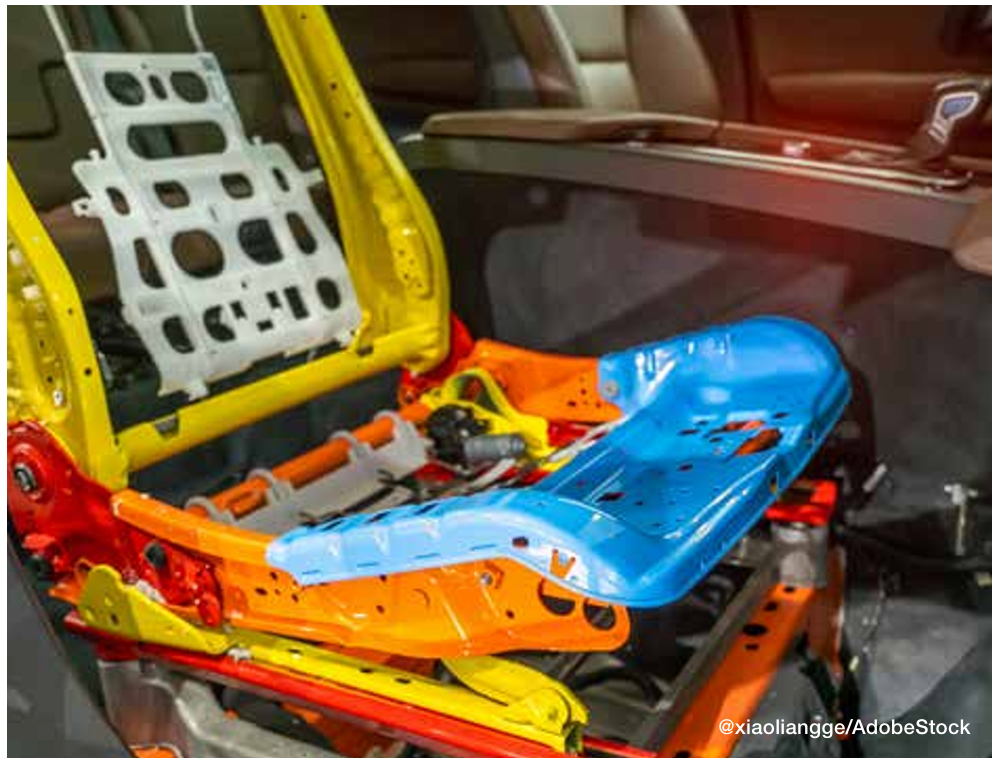
Figure 2. To achieve the stringent specifications for components like seat recliners, identical thermal processing is implemented for both EVs and ICE vehicles.

Seating Components

Generally, these components are case hardened (either carburized or carbonitrided), typically using one of the following materials:

  • 1010 and 1020 carbon steel: These are plain carbon steel with 0.10% carbon content, fairly good formability, and relatively low strength.
  • 1018 carbon steel: 1018 is a grade that’s often chosen for parts that require greater core hardness and better heat treatment response than 1010 or 1020.
  • 10B21 boron steel: Boron steels are becoming more popular in the automotive industry due to their excellent heat treatment response.
  • 4130 alloy steel and 8620 alloy steel: Alloy steels are more responsive to heat treatment than plain carbon steels, so the thermal processing specifications for parts made from these materials are often adjusted to account for the material’s innate strength properties.

Seat Belt Latches

High-strength seat belt latches are usually made from the following materials:

  • 4140 and 4130 alloy steels: 4140 alloy steel is one of the most common engineering steels used in manufacturing. For seat latches and hooks, 4140 and 4130 will be neutral hardened to increase their strength and hardness throughout due to the high performance and precision required of these parts.
  • 1050 carbon steel: 1050 is a medium carbon steel that contains 0.47–0.55% carbon content. Carbon steels are a less expensive choice when compared to alloy steels such as 4140 or 4130.

Seat Frames and Brackets

Seat frames (also known as seat brackets) give car seats their shape using slender pieces of steel joined together to form the skeleton of the seat. These components are often made from boron steels:

  • 10B21 or 15B24 boron steel: These are a good choice for seat brackets because they are only marginally more expensive than other steels used in seating but have impressive toughness, have a good heat treat response, and are weldable.

A Closer Look: Case Hardening for Seating Components

Case hardening diffuses carbon or carbon and nitrogen into the surface of a metal from the atmosphere within a furnace at high temperatures. Adding carbon or carbon and nitrogen to the surface of steel hardens a metal object’s surface while allowing the metal deeper underneath to remain softer, creating a part that is hard and wear-resistant on the surface while retaining a degree of flexibility with a softer, more ductile core. This softness and ductility create toughness in parts, allowing them to respond to stress without failing. Case hardening is a general term for this heat treating method. Depending on the materials and specifications for the part, we apply various case hardening techniques, including carburizing and carbonitriding.

Figure 3. When it comes to heat treating, innovations are rarely exclusive to EVs.

Carbonitriding

During carbonitriding, parts are heated in a sealed chamber well into the austenitic range — around 1600°F — before nitrogen and carbon are added. Because the part is heated into the austenitic range, a phase change occurs, and carbon and nitrogen atoms can diffuse into the part. Carbonitriding is used to harden surfaces of parts made of relatively inexpensive and easily machined or formed steels, which we often see in automotive metal stampings. This process increases wear resistance, surface hardness, and fatigue strength. It is also good for parts that require retention of hardness at elevated temperatures.

Neutral Hardening

Also called through hardening, neutral hardening is a very old method for hardening steel. It involves heating the metal to a specified temperature and then quenching it, usually in oil, to achieve high hardness/strength. In this process, the primary concern is increasing hardness throughout the part, as opposed to generating specific properties between the surface and the core of the part.

All of the metal components of a seat belt, including seat belt loops, tongues, and buckles, are neutral hardened. Specifications typically dictate that these components are hardened to up to 200 thousand pounds per square inch (ksi).

Because seat belt components are visible to the end consumer, their cosmetics are important in addition to their mechanical properties. It’s important to keep the furnace free of soot and thoroughly clean the parts both before and after heat treatment. Proper cleaning readies the part for secondary processing, ensuring the success of activities like polishing and chrome plating.

The Convergence of EV and ICE Vehicles

To learn more about automotive heat treating, download the free Paulo Heat Treat Guide at paulo.com/AutoGuide.

The EV revolution has significantly transformed automotive manufacturing. Despite these changes, EV parts remain remarkably similar to those of their internal combustion engine (ICE) counterparts. Consequently, any advancements in materials or heat treating processes are swiftly adopted across the entire automotive sector. When it comes to heat treating, innovations are rarely exclusive to EVs.

About the Author:

Rob Simons
Metallurgical Engineering Manager
Paulo

Rob provides internal and external customer support on process design, material behavior, job development, reduction of variation, and physical analyses at Paulo. He holds a Bachelor of Science in Metallurgical Engineering from the Missouri University of Science & Technology (formerly known as the University of Mines and Metallurgy) and has worked at Paulo since 1987. Rob has analyzed several million hardness data points and/or process behaviors, leading him to develop many process innovations in the metallurgical field.


For more information: Contact Rob at rsimons@paulo.com.


Find Heat Treating Products And Services When You Search On Heat Treat Buyers Guide.Com


Thermal Processing for EV Components Read More »
Heat Treater Expands Capabilities with Multiple Furnaces

HTD Size-PR Logo

ThermTech, heat treat service provider in Waukesha, WI, has increased their capabilities to provide services for the medical, aerospace, mining and oil, nuclear, and agricultural industries.

Jason Kupkovits, vice president of Sales & Strategic Direction at the company, commented on that ThermTech will be continuing their 40 years of quality assurance, turnaround time, on-site engineering, and customer service standards.

Ben Gasbarre
Executive Vice President of Sales
Gasbarre Thermal Processing Systems

Partnering with Gasbarre Thermal Processing Systems, ThermTech significantly increased their normalizing, annealing, stress relieving, tempering, and neutral hardening capacity through the acquisition of three new furnaces. These three furnaces --- now fully operational --- include: a dual zone, direct-fired box austenitizing furnace; a large batch tempering furnace; and an additional tempering furnace. These furnaces are compliant with AMS2750 at different class certifications.

ThermTech has also added two additional vacuum furnaces from Ipsen, USA. The furnaces have dimensions of 36” wide x 36” tall x 48” long with capabilities of quenching up to 6 bars of pressure utilizing nitrogen or argon gas as the quench medium. These large vacuum furnaces are AMS class 3 (+/-15°F) certified capable of AMS2750.

ThermTech added a solution annealing furnace from Williams Industrial Service to give their operational aluminum line additional heat treat capabilities. This line is capable of a sub-15 second transfer to air blast quench, a water quench range of 55°F up to boiling, a sub-7 second transfer to water quench which exceeds AMS 2770/AMS2771 specifications, as well as load thermocouple monitoring during the solution treatment, quenching, and aging.

Daniel Hill, PE
Sales Engineer
AFC-Holcroft
Source: AFC-Holcroft

Another recent acquisition includes a new austempering/marquenching furnace from Michigan based AFC-Holcroft. This furnace can handle a single part racked in the vertical orientation up to 56" long. The working dimension of the furnace is 36" W x 72" L x 56" H and is capable of operating with salt temperatures ranging from 350°F -- 750°F. "The UBQA system is an environmentally friendly ‘green technology,’" commented Dan Hill, sales engineer at AFC-Holcroft, "which can be used to impart resistance to distorting, cracking or warping of heat-treated components.” Applicable processes include marquenching, austempering, and carburizing with additional washing and tempering capacity accompanying the new marquenching/austempering furnace. Installation is expected in early 2023.

The heat treat service provider's long-term strategy is to increase growth in the Midwest and on a national scale. This includes adding more workers and integrating the use of a robotics handling systems, which is expected to be installed in late 2022.


Find heat treating products and services when you search on Heat Treat Buyers Guide.com


Heat Treater Expands Capabilities with Multiple Furnaces Read More »

Service Heat Treating

In 1974, Richard Armitage saw an opportunity for a quality and service focused commercial heat treater in southeastern Wisconsin and that’s how the story of Service Heat Treating began. They started small with two batch furnaces and have grown over the years to have 18 furnaces total. The company began servicing agricultural and construction equipment suppliers and have diversified over the years to include automotive, consumer products, mining equipment, and other available markets. Included in their staff of 35 employees, Service Heat Treating has top metallurgical and QA experts to support engineering and process design and help solve metallurgical problems.

The company provides nitriding and nitrocarburizing processes in seven state-of-the-art Nitrex nitride furnaces, which are 1 meter diameter by 2 meters deep and have a 4400lb capacity. Austenitic nitrocarburizing for specialized applications is also available. Their six 36” x 72”, 5000lb capacity batch furnaces are capable of austenitic nitrocarburizing, neutral hardening, carbonitriding, carburizing, and a wide variety of specialized annealing processes. Their 36” x 48”, 4000lb capacity vacuum furnaces have 15-bar quench capabilities with services including hardening and annealing stainless steel and high-volume tool steels, and specialty annealing processes.

With their wide variety of processes, this commercial heat treater can engineer specialized processes to meet demanding strength, wear, and corrosion requirements. Their quality system is certified to ISO 9001 by BSI under certificate number FM522321 which ensures consistency and high quality. Inspection procedures exceed the MTI-2000 industry standard and can be tailored to your unique requirements.

Though some of the most interesting projects can’t be discussed due to trade secrets, industrial clients throughout the area know Service as a top metallurgical solutions provider with a record of achievement in case hardening medium and large production runs. That reputation doesn’t come without hard work. Every load is scrutinized: the vacuum department delivers standard stainless steel and tool steel processing quickly and cost effectively; the company develops boutique annealing cycles for making difficult bends; and they other vacuum carburizing capabilities for the most distortion critical applications.

Service Heat Treating is a company based on the principles of the founder: principles like service, as their name suggests, but also a focus on quality and reinvesting in the company to persistently improve services. As a greener future in the heat treat industry edges nearer, the company will continue to pursue cleaner, environmentally friendly technologies and improved process control while looking to new technologies to continually improve growth.


Find heat treating products and services when you search on Heat Treat Buyers Guide.com



Service Heat Treating Read More »

Mesh Belt Atmosphere Heat Treatment Systems: Meeting Demands for Performance, Quality, and Innovation

OCMesh belt furnaces are the workhorse of the heat treating industry. With constant pressure to enhance performance and develop quality products, mesh belt furnaces are keeping up with the demand. In this article written by Tim Donofrio, vice president of Sales at CAN-ENG Furnaces International Limited, discover the ways mesh belt furnaces are addressing demands for innovation and quality.

This Technical Tuesday article appeared in Heat Treat Today’s February 2022 Air & Atmosphere Furnace Systems print edition.


Tim Donofrio
Vice President of Sales
Can-Eng Furnaces International
Source: Can-Eng Furnaces International Ltd.

Introduction

Manufacturers of high volume, high strength metal components constantly face increasing pressures to improve and develop enhanced performance and quality products while simultaneously addressing cost pressures placed upon them. The quality products include cold-formed automotive fasteners and clips, construction nails and screws, cutting and timing chain products, drive system gears, and bearing components, to mention a few. These reference components all require different types of heat treatment processes that impart a unique thermal profile which results in making the component stronger, tougher, more flexible, resistant to wear and corrosion, and improves the overall life of the component.

Mesh Belt Furnaces — Background

Mesh belt furnaces are synonymous with high volume heat treatment of formed, forged, and machined metal components that require soft handling methods to prevent part damage during processing. Furthermore, these systems are well equipped with features that reduce the opportunity for part mixing and contamination within the system. Modern mesh belt furnaces have been put into production around the world to achieve capacities from 100 lb/hr to 7000 lb/hr. Manufacturers today often favor higher capacity heat treatment systems as they offer more efficient returns on investment over lower capacity systems. The heat treatment processes ideally suited for mesh belt furnace systems include neutral hardening, marquenching, austempering, light case carburizing, carbonitriding, carbon restoration, normalizing, and tempering. In most cases, these processes include a multi-step process which involves heating the product to austenitizing temperatures under a reducing or carbon rich atmosphere, followed by an automatic transfer for drop from the furnace belt conveyor into a liquid quench conveyor system where the material transformation takes place. Quench systems vary in size and capacities and are custom designed around the product being heat treated. Design features may include agitation, fluid flow, and conveyor design which can greatly influence the quench speed and material transformation that results in the final physical properties achieved through quenching. Mesh belt heat treatment systems can implement various quench medias that include oil, polymer, water, and molten salts.

Mesh Belt Furnaces — Benefits

Mesh belt furnace benefits have grown significantly from their earlier developments that targeted reduced part damage and part mixing potential. Today, users are exploiting the benefits associated with increased part size range processing flexibility and capability. In the early days, part processing size range was limited to parts that weighed less than 1lb and were less than 4” in length. Today, with design enhancements, users can now process a product range that includes part sections ranging from 3/16” to 1-3/8”, part lengths up to 12” long, and part weights exceeding 2.5lbs each. This increased processing flexibility is made possible through the integration of modernized automated loading and transfer systems that minimize part drop heights and inertia, ensure precise loading, convey, and distribute products that protect against part damage while also ensuring dimensional stability is maintained to acceptable levels.

Additional advancements in the application and use of molten salt quenching have been recently exploited in response to the demand for low distortion and low residual stress level part processing. These demands are largely a result of customers’ needs to engineer products that outlive and outperform previous designs. This is largely a result of recent advancements made to support the shift in transportation technology; most noticeably, vehicle electrification and increased demands of vehicle propulsion systems. This has resulted in improved austemper and martemper technologies, paving the way for new molten salt handling designs that increase the overall safety and use of the systems. Specifically, new techniques for molten salt quench agitation, distribution, and quench drop chute fluid control have greatly improved the controllability of these systems and have also greatly improved the maintainability which has traditionally been difficult for users of previous designs.

Conclusion

It is well understood that the mesh belt furnace design provides significant benefits over other continuous and batch type processing systems for processing high volume and high-quality components that require exact metallurgical properties. The benefits of this system are immense, and system customization allows for further benefits to be integrated. The benefits discussed earlier represent recent advancements made to the mesh belt atmosphere furnace system that users are enjoying today. It should be recognized that several other design benefits also include:

  • Electrical heating systems, natural gas, and atmosphere reduction systems as a means of reducing users’ carbon footprint
  • Improved temperature uniformity of systems to support the expectations of the Automotive Industry Action Group (AIAG) CQI-9 guidelines
  • Hybrid quenching systems that allow for greater processing flexibility and sophisticated Industry 4.0 diagnostics, reporting and data archiving of equipment conditions, and process and product processing attributes

In closing, there are many options available to manufacturers requiring heat treating processes; therefore, the benefits of the mesh belt atmosphere heat treatment system should be strongly considered when seeking out the lowest cost of ownership for manufacturing processes.

About the Author:

Tim Donofrio, vice president of Sales at CAN-ENG Furnaces International Limited, has more than 30 years of thermal processing equipment experience. Throughout his career, he has held various positions within the custom engineered forging, commercial heat treating services, and custom engineered heat treating equipment industries.

Contact Tim at tdonofrio@CAN-ENG.com or (905) 380-6526.

Mesh Belt Atmosphere Heat Treatment Systems: Meeting Demands for Performance, Quality, and Innovation Read More »

Skip to content