

NASA

NASA Aids AM’s Adoption

NASA has selected Elementum 3D (a developer and supplier of metal additive manufacturing (AM) advanced materials, print parameters, and services) to be one of four companies that will produce and distribute GRX-810 material under a commercial co-exclusive license. This is a material that has undergone significant post-processing heat treat research.

The 3D printable high-temperature metal superalloy material has been noted as “breakthrough technology” and will be offered to original equipment manufacturers of airplanes and rockets as well as the entire supply chain.

NASA’s goal of the licensing agreement is to accelerate the adoption of GRX-810 to benefit U.S. technologies, industry, and space exploration. The 3D printer supplier notes that engineers are eager to print with a material capable of creating lighter and thinner engine parts, reducing fuel burn, lowering operating costs, increasing durability, and lowering the tolerance for failure for critical applications.

GRX-810 is an oxide dispersion strengthened (ODS) alloy that can endure higher temperatures and stress. Its strength is derived from the dispersion of tiny particles containing oxygen atoms. The breakthrough superalloy was specifically developed for the extreme temperatures and harsh conditions of aerospace applications, including liquid rocket engine injectors, combustors, turbines, and hot-section components, capable of enduring temperatures up to 1,100°C. Compared to other alloys, GRX-810 can endure higher temperatures and stress up to 2,500 times longer. It’s also 3.5 times better at flexing before breaking and twice as resistant to oxidation damage.

Jeremy Iten Chief Technology Officer Elementum 3D Source: LinkedIn

Over the past nine years, Elementum 3D has gained extensive knowledge and experience in developing, commercializing, and distributing “impossible-to-print” dispersion-strengthened materials similar to GRX-810.

“We are excited to be working with Tim Smith and NASA to bring this exceptional new alloy to the commercial market,” said Jeremy Iten, chief technology officer at Elementum 3D.

NASA’s investment in developing GRX-810 demonstrates its dedication to advancing additive manufacturing. Elementum 3D and the other co-exclusive licensees now assume the responsibility of investing the time and resources to supply the industry with a stronger, more durable superalloy.

The original press release is available here.


Find Heat Treating Products And Services When You Search On Heat Treat Buyers Guide.Com

NASA Aids AM’s Adoption Read More »
39 Heat Treat News Chatter Items To Keep You Current

Heat Treat Today offers News Chatter, a feature highlighting representative moves, transactions, and kudos from around the industry. Enjoy these 39 news bites that will help you stay up to date on all things heat treat.


Equipment Chatter

  1. The precision forging manufacturer Jiangsu Pacific Precision Forging Company has placed an order with SMS group for a fully automatic MP 3150 eccentric closed-die forging press. Pacific Precision will be able to forge aluminum chassis components on a much larger scale. This new expansion provides Pacific Precision with access to the growing automotive market segment for more lightweight designs.
  2. A commercial heat treater in Mexico purchased a third vacuum furnace from SECO/WARWICK Group.
  3. Ecocat India, a catalyst manufacturer, has ordered an advanced technology vacuum gas cooling furnace from SECO/WARWICK. The system will carry out brazing and annealing processes.
  4. Several new CAB lines have been ordered from SECO/WARWICK to be delivered to manufacturers in China. Two companies specifically chose EV/CAB lines while another manufacturer purchased a CAB line.
  5. SECO/WARWICK delivered two CAB lines and one universal chamber furnace for aluminum brazing to an automotive manufacturer in China. The systems will braze large-size coolers for vehicle batteries.
  6. Oetzbach Edelstahl GmbH, a hardening plant, has purchased a third furnace from SECO/WARWICK.
  7. A Swiss commercial heat treater ordered a brazing furnace to be used for nickel and silver from SECO/WARWICK.
  8. Tenova LOI Thermprocess has completed the production optimization of a new Twin-Chamber Melting Furnace (TCF®) at E-Max Billets in Kerkrade, the Netherlands.
  9. An Asian thread rolling die conglomerate selected a SECO/WARWICK vacuum furnace. The Vector® will be used for vacuum hardening and tempering fastener dies.


Company and Personnel Chatter

  1. Hubbard-Hall has expanded its product offering and customer resources by acquiring the assets of Torch Surface Technologies, a specialty chemical company based in Whitmore Lake, MI.
  2. New simulation software is being launched at CENOS Simulation Software. The application portfolio expands with some new electromagnetic case software apps. The first apps will be launched in Q4 or a little later.
  3. Solar Atmospheres of California announced it has been awarded the approval to process parts for Lockheed Martin (LMCO) owned Sikorsky. The Sikorsky approval adds to the existing LMCO process specifications held for vacuum heat treatment of titanium, nickel alloys, and stainless steel per AMS 2801, AMS 2774, AMS 2759/3, and others.
  4. Nel Hydrogen US, a subsidiary of Nel, has entered into a joint development agreement with General Motors to help accelerate the industrialization of Nel’s proton exchange membrane (PEM) electrolyzer platform. The two companies are looking to enable more cost competitive sources of renewable hydrogen.
  5. The Supervisory Board of thyssenkrupp AG extended the appointment of Oliver Burkhard by five years. Burkhard has been a member of the Essen-based group's Executive Board since February 2013, Thyssenkrupp AG director of Labor since April 2013, and additionally CEO of thyssenkrupp Marine Systems since May 2022.
  6. Joe Coleman, cyber security officer of Bluestreak Consulting™, has earned his Cyber AB CMMC Certification as a Registered Practitioner (RP). CMMC is a U.S. Department of Defense (DoD) program that applies to Defense Industrial Base (DIB) contractors.
  7. CG Thermal welcomes associate process engineer Signe Laundrup to the Process Systems Group. Laundrup is a 2021 chemical engineering graduate from the University of California, San Diego. Her background is in manufacturing and research and design.
  8. Tata Steel signed a memorandum of understanding with SMS Group to reduce carbon emissions at Tata’s integrated steel plants across India.
  9. Two heat treat technology companies integrate: C3 Data’s real-time pyrometry compliance software enables digital uploading of certificate data of all TT Electronics.
  10. Ipsen Japan announced the addition of Mr. Masakazu Kanaka in the role of customer service director. Kanaka is responsible for the growth of all Ipsen Japan customer service business, which includes retrofits, parts, and service. He will oversee the aftermarket sales team and field service engineers.
  11. Solar Atmospheres of California announced Honeywell approval to heat treat austenitic steels, martensitic steels, pH steels, tool steels, nickel alloys, cobalt alloys, titanium alloys, and magnetic alloys.
  12. Aluplast – ZTG, an Altest company, recently expanded its production capacity with a second Nitrex nitriding system. The second furnace, a model N-EXT-612, is capable of processing a load of extrusion dies weighing up to 1300lbs.
  13. Solar Atmospheres of Michigan is pleased to announce the addition of Chris Molencupp as their new sales manager.
  14. Metal Exchange Corporation announced that Matt Rohm, current President and Chief Operating Officer (COO), will be promoted to Chief Executive Officer (CEO) of Metal Exchange Corporation effective January 1, 2023. At that time, current CEO Rick Merluzzi will assume the title of executive vice chairman, serving as an advisor to executive chairman, Mike Lefton, on key strategic initiatives for the organization, through the end of 2023.
  15. Quintus Technologies joins the newly opened Application Center at RISE to support further development of additive manufacturing. The AM Center will also include the Quintus press model QIH 15L-2070.
  16. Abbott Furnace Company announced that it has partnered with Obsidian Technical Group for sales and service support across much of the eastern United States.
  17. Robert Roth announced the appointment of Nelson Sanchez as RoMan’s new president, effective January 1, 2023. Sanchez is the first non-family member to hold the office.
  18. Hubbard-Hall hired Aaron Mambrino as chief financial officer. Her expertise lies in driving process changes to create operational synergies, developing strategic partnerships, and LEAN manufacturing.
  19. John Savona, vice president of Americas Manufacturing and Labor Affairs, Ford Blue, will retire on March , after more than 33 years. Bryce Currie will step into the role.
  20. AFC-Holcroft welcomed employees and their families, company retirees, and invited guests to view their newly renovated building as part of an open house.
  21. Solar Atmospheres of California participated in the “Spark of Love” toy drive in coordination with the San Bernardino County Fire Department.
  22. Raytheon Technologies expands Bengaluru operations with opening of Pratt & Whitney India Engineering Center. The facility is co-located with Pratt & Whitney’s India Capability Center and Collins Aerospace engineering and global operations centers.
  23. Lucifer Furnaces in Warrington, PA, a manufacturer of heat treating furnaces and ovens for the last 80 years, has added Brett Wenger to its leadership team as vice president of sales.


Kudos Chatter

  1. Global Thermal Solutions celebrates 15 years in Mexico.
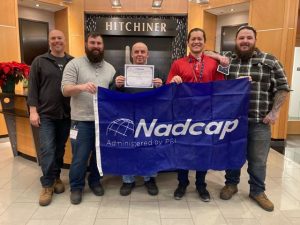
  2. Hitchiner Manufacturing receives Nadcap Accreditation.
  3. Ipsen USA announced that 2023 represents a milestone anniversary. This year marks 75 years since Harold Ipsen founded the company.
  4. Desktop Metal is sponsoring on a new season of BattleBots. The completely rebuilt robot is aided by the design freedoms and fast turnaround times of metal 3D printing.
  5. Solar Atmosphere’s Michigan and Western Pennsylvania facilities have recently been awarded Nadcap Merit status for vacuum heat treating and brazing.
  6. In September, the Swiss Steel Group (SSG) held the 1st Hydrogen Symposium at the Henrichshütte Iron and Steel Works in Hattingen. Speakers from academia, business, and politics held lectures in four sessions.
  7. Borikengineers, a team mentored by Pratt & Whitney employees in Puerto Rico, has advanced to the Qualifiers’ Finals Competition in the FIRST Tech Challenge DC Qualifier. The team won the Judges Choice Award.


Heat Treat Today is pleased to join in the announcements of growth and achievement throughout the industry by highlighting them here on our News Chatter page. Please send any information you feel may be of interest to manufacturers with in-house heat treat departments especially in the aerospace, automotive, medical, and energy sectors to sarah@heattreattoday.com.


Find heat treating products and services when you search on Heat Treat Buyers Guide.com


39 Heat Treat News Chatter Items To Keep You Current Read More »

PA Heat Treater Plays a Role in NASA’s Artemis 1 Mission

HTD Size-PR LogoThe most recent launch of NASA’s Artemis 1 Mission included a large titanium manifold housing designed to rapidly propel astronauts away from the main rocket in case of a catastrophic explosion or any other unexpected event. This critical part was vacuum heat treated by Solar Atmospheres of Western PA.


Titanium manifold weldment after vacuum heat treatment and shown on the Artemis 1 Orion Spacecraft
Source: NASA

Michael Johnson
Sales Manager
Solar Atmospheres of Western PA

On Wednesday, November 16, 2022, NASA’s unmanned Orion spacecraft launched successfully from Cape Canaveral at 1:47 am for a six-week test flight around the moon and back. This launch marks the first iteration of NASA’s moon-to-Mars Artemis 1 program.  For the 2014 Orion launch, NASA introduced the Launch Abort System (LAS). Once fired, the LAS will accelerate the astronauts away from the main rocket at forces up to 10 to 15 times normal gravity (“G’s”).

“Before the mighty Artemis rocket left Earth’s atmosphere with 8.8 million pounds of thrust, many of the components and support hardware had already experienced a lunar-like atmosphere here in western Pennsylvania,” commented Michael Johnson, sales director at Solar Atmospheres. “Many of the [6AL-4V] titanium and Inconel components were processed well below 1×10⁻⁵ Torr throughout thermal processing. Although our crew here on Earth were wearing nitrile gloves, it’s overwhelming to know we had a hand in heat treating these critical parts.”


Find heat treating products and services when you search on Heat Treat Buyers Guide.com


PA Heat Treater Plays a Role in NASA’s Artemis 1 Mission Read More »

Lockheed Martin Agrees to Provide NASA Subsystems to Produce Orion Spacecraft

An aerospace company has made a contract with Lockheed Martin to provide critical components of NASA’s spacecraft. Collins Aerospace Systems, a unit of United Technologies Corp., has obtained a contract with Lockheed Martin to provide critical subsystems to produce NASA’s Orion spacecraft fleet for Artemis missions III through VIII. The systems Collins Aerospace is providing will play an important role in enabling NASA’s goal of boots on the moon by 2024 and establish a sustained presence on and around the moon to prepare for missions to Mars.

Kevin Raftery, VP and general manager of ISR and Space Solutions, Collins Aerospace.

“We’ve been providing life-sustaining solutions for space for 50 years, and we’re proud to be working with Lockheed Martin and NASA to enable decades of future exploration to the moon, Mars, and beyond,” said Kevin Raftery, vice president and general manager, ISR and Space Solutions for Collins Aerospace.

Work for the Orion systems will be performed at Collins Aerospace facilities in Connecticut, Texas, Illinois, and California.

Photo Credit: Lockheed Martin

Lockheed Martin Agrees to Provide NASA Subsystems to Produce Orion Spacecraft Read More »

Superior Steel Alloys Suitable for Combating Stress and Fatigue


Source: NASA


High-performance applications demand components free from flaws. Bearings, gears, and other steel components manufactured with contaminated materials can lead to devastating outcomes. While most steelmaking applications find impurities still slip into the process, for aerospace applications, complete elimination of impurities is the goal. Contaminant-free steel.

Enter the researchers at NASA’s Glenn Research Center where a method has been devised for “creating ultra-pure steel alloys that are free from ceramic particle contamination” and “can be used to make bearings, gears, or any other machine components.”

Glenn’s innovative method starts with only elementally pure (at least 99.99% pure) ingredients and ceramic-free melting processes followed by ceramic-free atomization and powder metallurgy techniques. ~ NASA

Superior Steel Alloys Suitable for Combating Stress and Fatigue Read More »

California Heat Treater Partners with NASA on Moon & Mars Missions

The aerospace team at a heat treating company based in Orange, California, is partnering with NASA to launch manned missions to deep space.

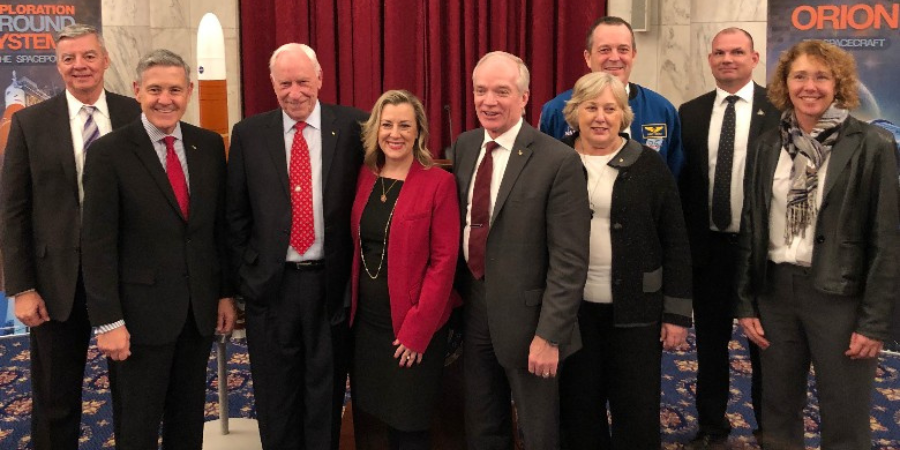
Senator Ted Cruz (R- TX), Chair, Senate Space Subcommittee with Thermal-Vac Administrative Director Heather Falcone after he spoke to suppliers about the commitment to fund deep space exploration in years to come through bipartisan legislation.

Thermal-Vac Technology, which provides brazing, heat treating, and finishing services at its southern California facility, is working with NASA’s exclusive exploration-class space systems: NASA’s Space Launch System (SLS) rocket, Orion spacecraft and the Exploration Ground Systems that launch these vehicles. Thermal-Vac’s aerospace division joins with NASA and aerospace leaders “to return Americans to the Moon and send astronauts to Mars in the early 2030s.”

“Our team is honored to be part of the American efforts to continue being leaders in space exploration,” said Steve Driscol, CEO of Thermal-Vac. “It is a vital part our humanity that we invest in and support these projects to ensure their success now and for years into the future.”

With suppliers in all 50 states, NASA’s journey to deep space is a national effort. 2019 marks the final integration and testing of the rocket and spacecraft leading up to the first integrated launch to the Moon late next year. Aerospace companies across the country are helping to meet NASA’s visionary plan and contribute to America’s unmatched legacy in space.

Photo credit / caption: Thermal-Vac Technology / Eight astronauts from multiple missions to the moon and ISS pose with Congresswoman Kendra Horn (D-OK), Chair, House Space Subcommittee during a reception for SLS-Orion suppliers.


California Heat Treater Partners with NASA on Moon & Mars Missions Read More »

10 Quick Heat Treat News Items to Keep You Current

10 Quick Heat Treat News Items to Keep You Current

Heat Treat Today offers News Chatter, a feature highlighting representative moves, transactions, and kudos from around the industry.

Personnel and Company Chatter

  • A Berwick, Pennsylvania, machining company which offers heat treating among its services was recently acquired by precision machining provider DPMS, based in Santa Clara, California. K-Fab Inc. operates a 22,000-sq.-ft. precision machine shop that manufactures parts for the aerospace, defense, and semiconductor sectors.
  • GKN Powder Metallurgy recently announced a strategic collaboration with HP Inc, becoming the first to deploy the just-launched HP Metal Jet, a groundbreaking binder jetting technology, into its factories to produce functional metal parts for auto and industrial leaders, including Volkswagen and Wilo, and for companies around the world.
  • Joshua Farrell recently took over the Operations Manager position at Mid-South Metallurgical, based in Murfreesboro, Tennessee.

Equipment Chatter

  • California-based Delta H Technologies, LLC, recently delivered a commissioned dual chamber aerospace heat treating system — the largest and most advanced to date — to a leading U.S. military aircraft manufacturer. Both chambers are certified for heating parts up to 1200°F and capable of solution heat treating, aging, annealing aluminum, stress relieving titanium and ferrous castings, weldments, and aging of PH stainless steel.
  • An auto parts manufacturer recently received shipment of a customized oxidation nitriding furnace, manufactured by JGEF Furnace, a vacuum heat treating  equipment supplier with U.S. offices in San Francisco, California. The pit furnace, which has useful dimensions of 43.3 inches (1,100 mm) in diameter x 70.9 inches (1,800 mm) high, has a maximum temperature rating of 1292°F (700°C). The goal for this project was to represent an advanced solution for metallic parts. The furnace includes an advanced oxidation system that ensures the workpieces are preheated in a controlled oxidizing atmosphere and guarantees corrosion resistance, which in turn facilitates nitrogen uptake and growth of the nitride compound layer.
  • A large capacity fastener hardening furnace system has been commissioned by a tier one automotive supplier based in Detroit, Michigan. CAN-ENG Furnaces International Ltd has been contracted to design and commission the system for the company, which offers heat treating among its services.
  • A large capacity SECO/Warwick vacuum furnace was delivered to U.K.-based Wallwork Heat Treatment company just before Christmas.

Kudos Chatter

  • America Makes recently announced the awardees of a Directed Project Opportunity on advancing additive manufacturing (AM) post-processing techniques (AAPT), funded by the Air Force Research Laboratory (AFRL), Materials and Manufacturing Directorate, Manufacturing and Industrial Base Technology Division. Awardee #1 is Arizona State University, in conjunction with Quintus Technologies; Phoenix Heat Treating, Inc.; and Phoenix Analysis & Design Technologies, Inc. Awardee #2 is ASTM International Additive Manufacturing Center of Excellence (AM CoE), a collaborative, which includes ASTM International, Auburn University, EWI, the National Aeronautics and Space Administration (NASA), Wichita State University – National Institute for Aviation Research (NIAR), in conjunction with Quintus Technologies, Carpenter Technologies Corporation, Aerojet Rocketdyne, Rolls Royce Corporation, Honeywell Aerospace, GE Aviation, and Raytheon.
  • Paulo recently announced the recent addition of the St. Louis Division to the approved heat treat sources list for General Motors High-Pressure Die Casting Die Insert Material. The approval list references AWQ49658 which includes the heat treatment specifications for Hot Work Tool Steels for GM High-Pressure Die Casting applications.  The St. Louis Division joins Paulo’s Nashville plant on the approval list, which includes only seven approved locations in the US. AWQ49657 covers approved material providers, heat treaters, and testing labs. Paulo is the only US source with two facilities on the list.
  • Nominations are open for the ASM HTS/Surface Combustion Emerging Leader Award, which recognizes an outstanding early-to-midcareer heat treating professional whose accomplishments exhibit exceptional achievements in the heat treating industry. The award was created in recognition of Surface Combustion’s 100-year anniversary in 2015. The winning young professional will best exemplify the ethics, education, ingenuity, and future leadership of our industry. Deadline for the nomination is February 1, 2019. Past winners include Olga Rowan of Caterpillar in 2015 and Lee Rothleutner of Timken in 2017. For nomination rules and forms, visit the Heat Treating Society website at hts.asminternational.org and click on Membership & Networking and Society Awards.

Heat Treat Today is pleased to join in the announcements of growth and achievement throughout the industry by highlighting them here on our News Chatter page. Please send any information you feel may be of interest to manufacturers with in-house heat treat departments especially in the aerospace, automotive, medical, and energy sectors to the editor at editor@heattreattoday.com.

10 Quick Heat Treat News Items to Keep You Current Read More »

Ptera’s Wings Fold In-Flight with Shape-Memory Alloy

From the wheels of the Mars Curiosity robot to aircraft wings that can fold to different angles while in the air, NASA's Glenn Research Center in Cleveland is expanding the applications for a newly developed alloy that can "remember" and return to its original shape.

In December, Heat Treat Today reported on tires made from heat-treated, shape-memory alloy that results in a woven-mesh metal to provide NASA’s Curiosity robot an easier ride across the rough terrain of Mars. Earlier in January, NASA announced the recent flight series of Ptera, an aircraft with specially made wings meant to improve aerodynamics. The test maneuvers, which took place at NASA’s Armstrong Flight Research Center in California, were part of the Spanwise Adaptive Wing project, or SAW, which aims to validate the use of a cutting-edge, lightweight material to be able to fold the outer portions of aircraft wings and their control surfaces to optimal angles in flight, resulting in multiple in-flight benefits to to aircraft in the future, both subsonic and supersonic -- flying faster than the speed of sound.

SAW, which is a joint effort between Armstrong, NASA’s Glenn Research Center in Cleveland, or GRC, Langley Research Center in Virginia, Boeing Research & Technology in St. Louis and Seattle, and Area-I Inc. in Kennesaw, Georgia, intends to obtain a wide spectrum of aerodynamic benefits in flight by folding wings through the use of an innovative, lightweight material called shape memory alloy. This material is built into an actuator on the aircraft, where it has the ability to fold the outer portion of an aircraft’s wings in flight without the strain of a heavy hydraulic system. Systems with this new technology may weigh up to 80 percent less than traditional systems.

The Spanwise Adaptive Wing concept seeks to enhance aircraft performance through allowing the outboard portions of wings to adapt, or fold, according to different flight condition demands. NASA engineers believe this could create lateral-directional stability and reduce drag. Credits: NASA

The recent series of flight tests at Armstrong successfully demonstrated the material’s application and use by folding the wings between zero and 70 degrees up and down in flight. The shape memory alloy is triggered by temperature and works by using thermal memory in a tube to move and function as an actuator. Upon being heated, the alloy would activate a twisting motion in the tubes, which ultimately moves the wing’s outer portion up or down.

During the SAW test flights, which included long legs of flight in which the necessary maneuvers for the research could be done, onboard controllers heated and cooled the SAW actuators, folding the wing panels to different angles between zero and 70 degrees.

"We put the SAW technology through a real flight environment, and these flights not only proved that we can fly with this technology, but they validated how we went about integrating it," said SAW Principal Investigator Matt Moholt. "We will use the data from these flights to continue to improve upon the actuation system, including speed and smoothness of actually folding the wings, and we’ll apply them as we get ready to fly again in 2018."


Does anyone know the alloy being used in this application? If so, please email editor@HeatTreatToday.com, and we’ll repeat your answer to our entire audience once we receive it.

Heat Treat Today's report on memory shape tires: "NASA Reinvents Wheel: Heat Treated, Shape-Memory Tires"

NASA’s news release and related videos: "NASA Tests New Alloy to Fold Wings in Flight"

The NASA flight test, posted at NASA Armstrong Flight Research YouTube channel:


Ptera’s Wings Fold In-Flight with Shape-Memory Alloy Read More »

NASA Reinvents Wheel: Heat Treated Shape-Memory Tires


Source: Business Insider


Memory foam mattresses and pillows ease millions of restless sleepers through rough nights; perhaps tires made from shape-memory alloy will provide NASA’s Curiosity robot an easier ride across the rough terrain of Mars.

After years of research, NASA recently created a tire made of heat-treated nickel-titanium alloy that results in a woven-mesh metal which “remembers” and returns to its shape.

Read more: “Mars Destroys Tires — So NASA Reinvented the Wheel by Giving It a Memory”

NASA’s news release and related videos: Wheels on the Moon


The NASA spring tire with shape-memory alloy (4X speed), posted at gfycat by Dave Mosher at https://gfycat.com/ConsciousEvenKarakul

https://gfycat.com/ConsciousEvenKarakul

NASA Reinvents Wheel: Heat Treated Shape-Memory Tires Read More »

Will 3-D Printing Replace Brazing? NASA says “Yes.”

NASA’s recent tests to design a technique that would allow additive manufacturing to create durable 3-D rocket parts made with more than one metal show great promise for the technique to eventually replace the brazing process.

Engineers at NASA’s Marshall Space Flight Center in Huntsville, Alabama, tested NASA’s first 3-D printed rocket engine prototype part made of two different metal alloys through an innovative advanced manufacturing process. NASA has been making and evaluating durable 3-D printed rocket parts made of one metal, but the technique of 3-D printing, or additive manufacturing, with more than one metal is more difficult.

An image from a microscope reveals how the two metals, copper alloy and Inconel, mix and interlock to form a strong bond created by the innovative 3-D printing process during manufacturing of the igniter prototype. Credits: NASA/UAH/Judy Schneider

“It is a technological achievement to 3-D print and test rocket components made with two different alloys,” said Preston Jones, director of the Engineering Directorate at Marshall. “This process could reduce future rocket engine costs by up to a third and manufacturing time by 50 percent.”

Engineers at Marshall, led by senior engineer Robin Osborne, of ERC, Inc. of Huntsville, Alabama, supporting Marshall’s Engine Components Development and Technology branch, low-pressure hot-fire tested the prototype more than 30 times during July to demonstrate the functionality of the igniter. The prototype, built by a commercial vendor, was then cut up by University of Alabama–Huntsville researchers who examined images of the bi-metallic interface through a microscope. The results showed the two metals had inter-diffused, a phenomenon that helps create a strong bond.

A rocket engine igniter is used to initiate an engine’s start sequence and is one of many complex parts made of many different materials. In traditional manufacturing, igniters are built using a process called brazing which joins two types of metals by melting a filler metal into a joint creating a bi-metallic component. The brazing process requires a significant amount of manual labor leading to higher costs and longer manufacturing time.

Majid Babai (center), advanced manufacturing chief at NASA’s Marshall Space Flight Center in Huntsville, Alabama, along with Dr. Judy Schneider, mechanical and aerospace engineering professor at the University of Alabama in Huntsville and graduate students Chris Hill and Ryan Anderson examine a cross section of the prototype rocket engine igniter created by an innovative bi-metallic 3-D printing advanced manufacturing process under a microscope. Credits: NASA/MSFC/Emmett Given

“Eliminating the brazing process and having bi-metallic parts built in a single machine not only decreases cost and manufacturing time, but it also decreases risk by increasing reliability,” said Majid Babai, advanced manufacturing chief, and lead for the project in Marshall’s Materials and Processes Laboratory. “By diffusing the two materials together through this process, a bond is generated internally with the two materials and any hard transition is eliminated that could cause the component to crack under the enormous forces and temperature gradient of space travel.”

For this prototype igniter, the two metals–a copper alloy and Inconel–were joined together using a unique hybrid 3-D printing process called automated blown powder laser deposition. The prototype igniter was made as one single part instead of four distinct parts that were brazed and welded together in the past. This bi-metallic part was created during a single build process by using a hybrid machine made by DMG MORI in Hoffman Estates, Illinois. The new machine integrated 3-D printing and computer numerical-control machining capabilities to make the prototype igniter.

While the igniter is a relatively small component at only 10 inches tall and 7 inches at its widest diameter, this new technology allows a much larger part to be made and enables the part’s interior to be machined during manufacturing—something other machines cannot do. This is similar to building a ship inside a bottle, where the exterior of the part is the “bottle” enclosing a detailed, complex “ship” with invisible details inside. The hybrid process can freely alternate between freeform 3-D printing and machining within the part before the exterior is finished and closed off.

“We’re encouraged about what this new advanced manufacturing technology could do for the Space Launch System program in the future,” said Steve Wofford, manager for the SLS liquid engines office at Marshall. “In next-generation rocket engines, we aspire to create larger, more complex flight components through 3-D printing techniques.”


Will 3-D Printing Replace Brazing? NASA says “Yes.” Read More »

Skip to content