Maciej Korecki Vice President of the Vacuum Furnace Segment SECO/WARWICK (source: SECO/WARWICK)
An international arms and military equipment manufacturer in Brazil needed to quickly expand and was recently able to receive a new vacuum furnace to meet their manufacturing demands.
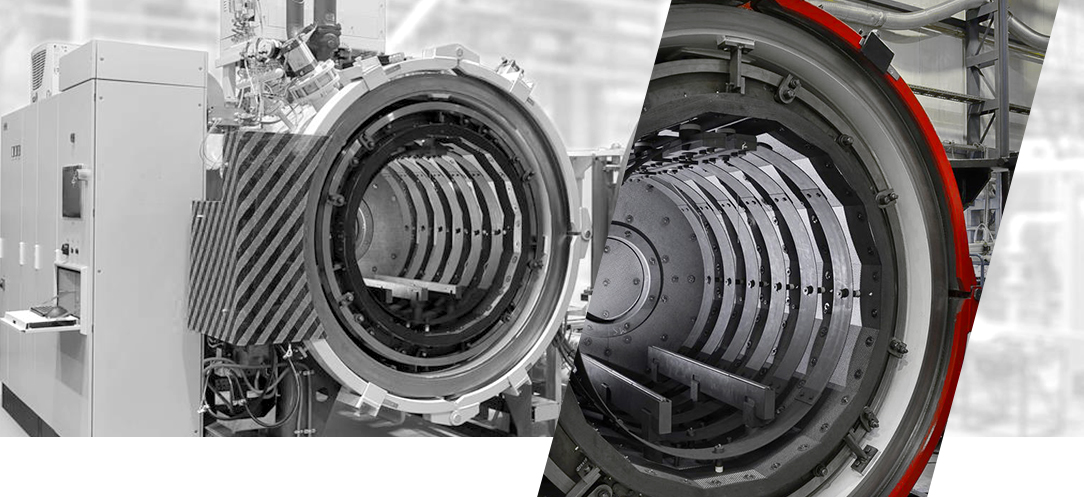
The solution was provided by the parent company to North American SECO/VACUUM, SECO/WARWICK. Their furnace, the VECTOR®, is a single-chamber vacuum furnace that uses gas quenching and can be used for multiple metal heat treatment applications and processes. In this configuration, equipped with a round graphite heating chamber, it may be used for most standard processes including hardening, tempering, annealing, solutionizing, brazing and sintering.
"A situation where we have a product almost ready to be collected is rare. This time, the customer was indeed looking for a standard solution," said Maciej Korecki, vice president of the Vacuum Furnace Segment at the SECO/WARWICK Group.
Maciej Korecki Vice President Vacuum Business Segment SECO/WARWICK (source: SECO/WARWICK)
A global aerospace manufacturer ordered a single-chamber gas quench furnace for their US plant. The turn-key solution also includes auxiliary equipment, such as a closed-loop water system, a gas reservoir, a loader, and carbon fiber fixturing.
The Vector® 2-bar quenching unit from North American based SECO/VACUUM is equipped with high vacuum diffusion pump and convection heating for improved performance at low temperatures. It meets class 2 requirements per AMS2750F (temperature uniformity +/- 6°C (+/- 10°F)). It will be installed in the company’s Center of Excellence and will be used to heat treat 3D printed parts.
This expansion of capabilities continues the relationship that SECO/WARWICK Group has with the manufacturer, who has been expanding their heat treat capabilities with the Group for the last 10 years at locations in Poland, Indonesia, Singapore, France, and the US.
The partnership, commented Maciej Korecki, VP of the Vacuum Business Segment at SECO/WARWICK Group, is a confirmation that the company continues to deliver “products that not only fulfill but exceed their needs.”
Maciej Korecki Vice President Vacuum Furnace Segment SECO/WARWICK (source: SECO/WARWICK)
A tool manufacturer has ordered a retort furnace with vacuum purging for oxidation. While oxidation is primarily used in demanding industries such as automotive and aviation, the technology is increasingly widespread among tool manufacturers.
The retort furnace for the oxidation process operates under a nitrogen and hydrogen mix, then under steam. This furnace can be adjusted to the individual needs of the client, providing the appropriate final hardness and color of the workpieces. According to the supplier, the solution will also enable tempering after vacuum purging.
“Innovations originate . . . also from using the knowledge of our partners and listening to what they want to say,” said Maciej Korecki, vice president of the vacuum segment business at SECO/WARWICK. “We are glad that we can deliver another furnace and increase the production capacity of our partner.”
An international aerospace manufacturer orders two furnaces for its factories in the USA and Singapore. While both are single-chamber vacuum furnaces, they will serve different functions. One will be used for the heat treatment of exotic electrical steels, and the second will be used for annealing parts produced by 3D printing technology.
The furnace purchased for the heat treatment of exotic electrical steels has diffusion vacuum levels and a horizontal chamber. The chamber has the workload size of 24” x 24” x 36” and a 1300 lb. hearth capacity. Additionally, each furnace has a single-chamber, high pressure gas quench heat treat system adaptable to a wide variety of thermal processing applications including annealing, brazing, hardening, LPC and LPN, normalizing, solution heat treating, sintering and tempering.
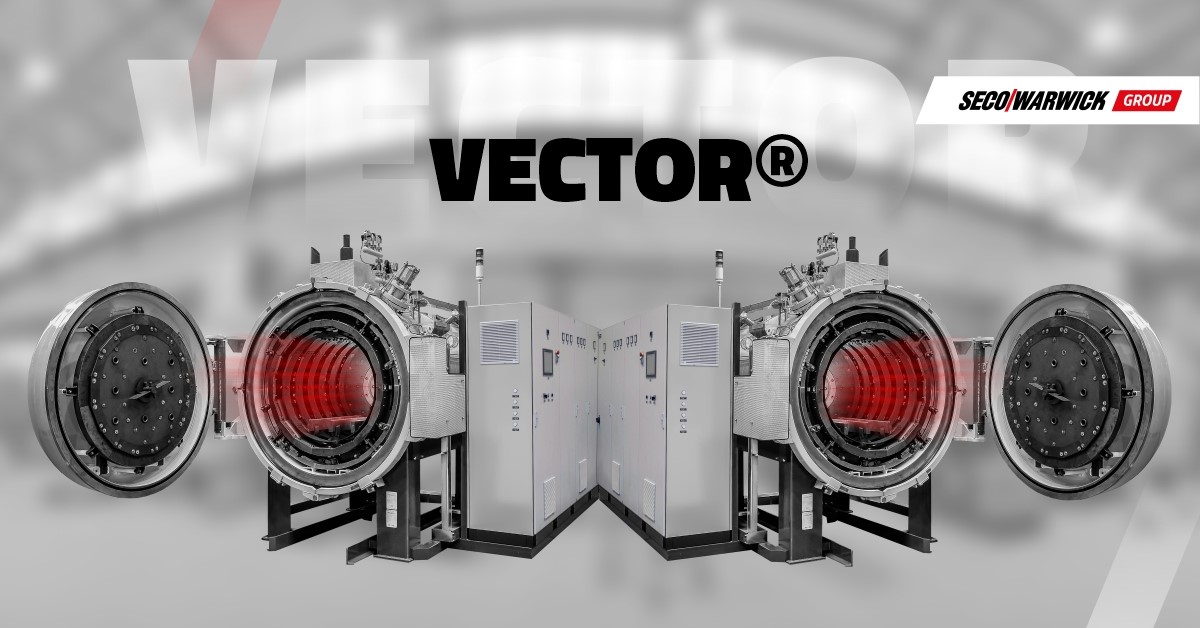
Two SECO?WARWICK Vector Furnaces (photo source: SECO/WARWICK)
Each of the furnaces were bought from SECO/WARWICK Vector furnaces lines. This is the manufacturer's first purchase for a US installation from this supplier. The Vector furnaces lines are used in multiple applications within the aerospace sector, including heat treating turbine blades and landing gear, as well as in the aerospace aftermarket to maintain fleets of aircraft.
Maciej Korecki, Vice President of Vacuum Business Segment, SECO/WARWICK (photo source: SECO/WARWICK.com)
“SECO/WARWICK Group," commented Maciej Korecki, Vice President of Vacuum Business Segment at SECO/WARWICK, "has delivered hundreds of Vector heat treat systems worldwide, many of which are in steady use supporting the aircraft industry. We offer Vector with either a horizontal or vertical chamber depending on part configuration and the process needs of the customer, and we support each customer all over the world with a dedicated team of aftermarket professionals to keep them running at peak efficiency.”
Vector 3D builds upon the single-chamber vacuum furnace technology to combine the advantages of gas quenching capabilities with the growing requirements of the additive manufacturing market. The result allows customers to perform processes such as sintering, debinding, stress-relieving, aging or solution heat treatment, which are essential for the metal 3D printing sector. It has numerous applications in such industries as aerospace, automotive, medical and energy.
A global manufacturer of automotive, power, and aerospace components has commissioned a new heat treat system. This system from SECO/WARWICK is the first furnace with LPC technology for this large Indian company.
The system minimizes the creation of intergranular oxidation (IGO) present in more traditional heat treat processes. The furnace will be dedicated to small and large gear, pinion and other types of automotive gears.
This three-chamber vacuum furnace delivers economical case hardening using low-pressure carburizing (LPC) technology and oil quenching. It can replace existing lines and generators used for mass heat-treatment under protective atmosphere while ensuring higher precision and process repeatability. This solution stands out because of improved process quality, cost reduction from doubling yields, and increased production flexibility.
Maciej Korecki, VP, Vacuum Furnace Segment at SECO/WARWICK (source: SECO/WARWICK)
“Since our . . . furnace was the first LPC technology used in the client’s facility, we had to take a learning curve into account. We worked closely with the engineering staff of the client to ensure they understand and use the technology correctly, exploring all the possibilities, advantages, performance and optimizations it offers,” said Maciej Korecki, VP of Vacuum Business Segment at SECO/WARWICK.
“Successful implementation took time but paid off with much higher quality standards the company can now offer to their clients, who are currently operating on all continents. The client benefited from pre-sale consultation and post-sale installation as well as training assistance,” added Manoranjan Patra, Managing Director at SECO/WARWICK India.
Manoranjan Patra, managing director, SECO/WARWICK India (source: SECO/WARWICK)
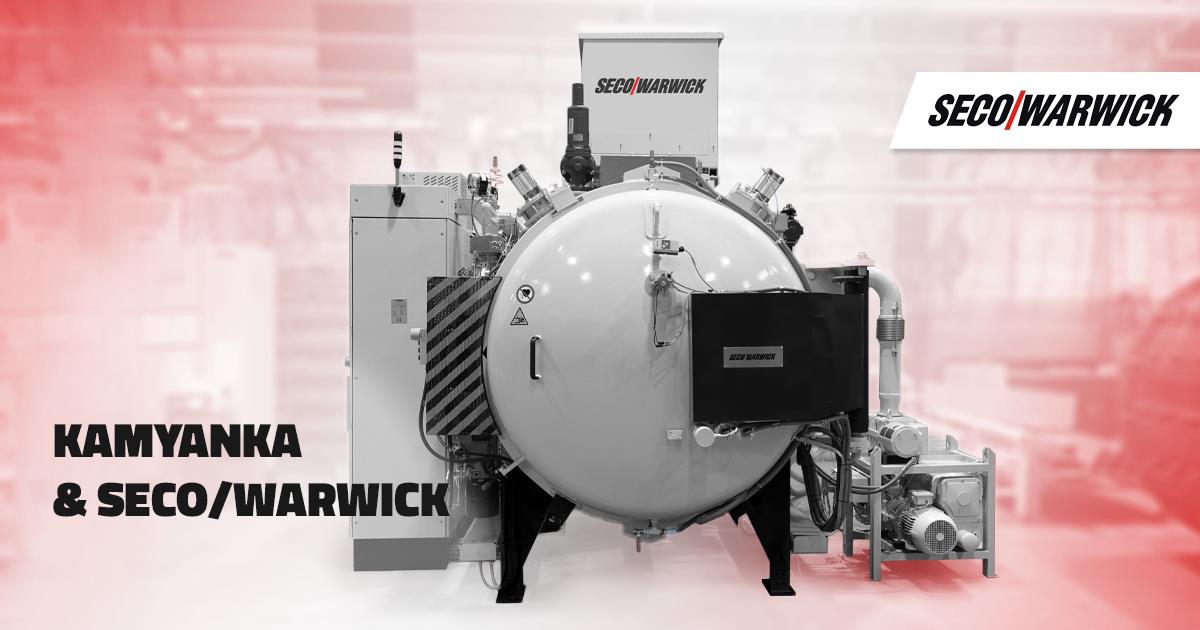
The parent company of a North American furnace manufacturer provided a furnace to Kamyanka Machine Building, an international leader in the production of pumps for manufacturing thread and chemical fibers, metallurgy and oil. The furnace will be equipped with a closed water system and gas installation so that the device can work independently.
Maciej Korecki, VP, Vacuum Furnace Segment at SECO/WARWICK (source: SECO/WARWICK)
Additional equipment from SECO/WARWICK in Meadville, Pennsylvania, will also include a vacuum carburizing option as well as quenching, heating in gas, and isothermal cooling. This will enable Kamyanka Machine Building Plant LLC, based in the Ukraine, to carry out full heat treatment processes in one device in accordance with their requirements. They will be able to perform three heat treatment processes in a single furnace instead of in separate operations.
(source: SECO/WARWICK)
"The solution we implement in Kamyonka Machine Building Plant is the result of many years of experience in the construction and service of the world's best heat treatment solutions," added Maciej Korecki, Vice President of the Vacuum Furnace Segment at SECO/WARWICK.
This is the first order from the Kamyanka Machine Building for SECO/WARWICK.
A machine tool manufacturer has decided to create their own “captive” heat treat department. The company has consequently invested in two different, yet complementary, vacuum heat treatment furnaces.
The CaseMaster Evolution® multi-chamber vacuum furnace (source: SECO/WARWICK)
As is often the case with companies thinking about how to gain better control of their production systems, one of the obvious bottlenecks for the customer was their offsite heat treatment arrangement. While quality from their existing suppliers was not an issue, it was clear that logistics could certainly be streamlined by eliminating the need to outsource parts to an external heat treater. The furnace manufacturer helped them weigh the pros and cons of moving their heat treatment processes into the plant. Ultimately, a decision was made to set up their own department, invest in new vacuum heat treat equipment, and train their production technicians to perform this critical function of the plant.
SECO/WARWICK received an order for a multi-chamber carburizing vacuum furnace with integral gas or oil quench, and a high pressure gas quench vacuum furnace capable of quench pressures up to 15-Bar.
The Vector® 15-Bar high pressure gas quench vacuum furnace (source: SECO/WARWICK)
“We knew the customer was already getting excellent quality from their supplier, so the question was ‘How can we make the process better?’” said Maciej Korecki, VP of Business Segment Vacuum Heat Treatment Furnaces at SECO/WARWICK. “Starting an in-house heat treat department requires some amount of risk tolerance by ownership, and they needed assurance that the return on production improvements would be worth the investment. [We have] the background to help make those determinations, and as a manufacturer of heat treat equipment, the company was able to offer real-world experience on performance that an independent consultant might not be able to provide.”






 n international arms and military equipment manufacturer in Brazil needed to quickly expand and was recently able to receive a new vacuum furnace to meet their manufacturing demands.