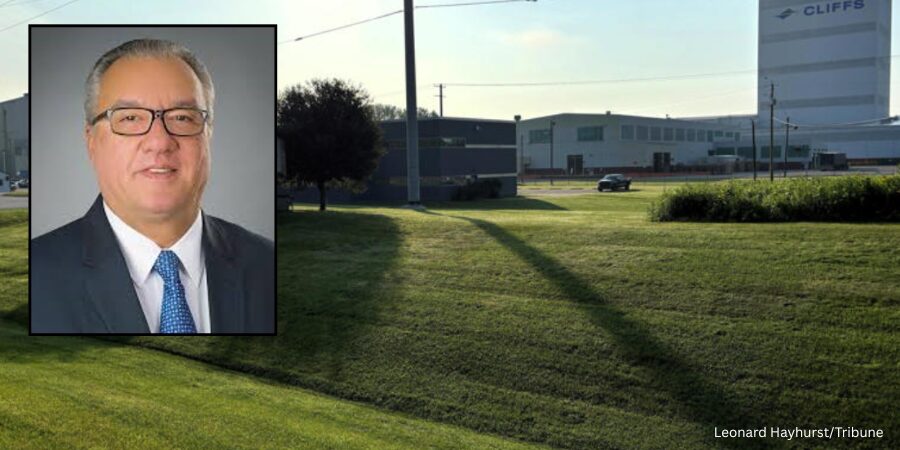
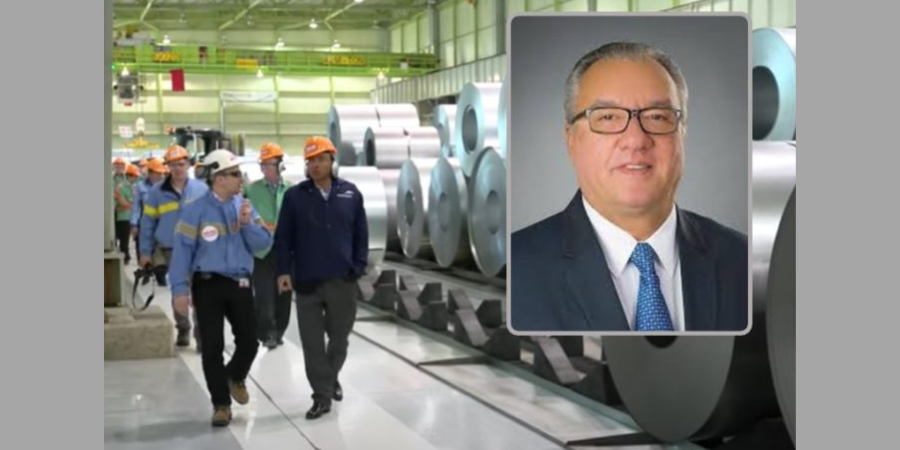
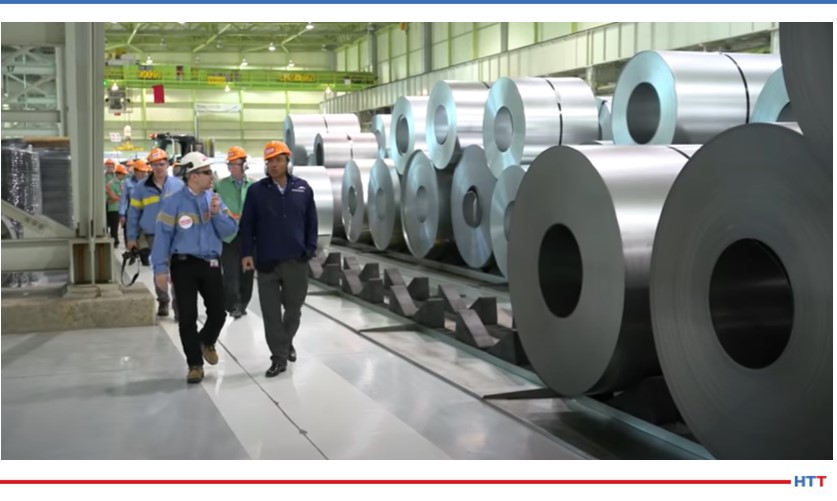
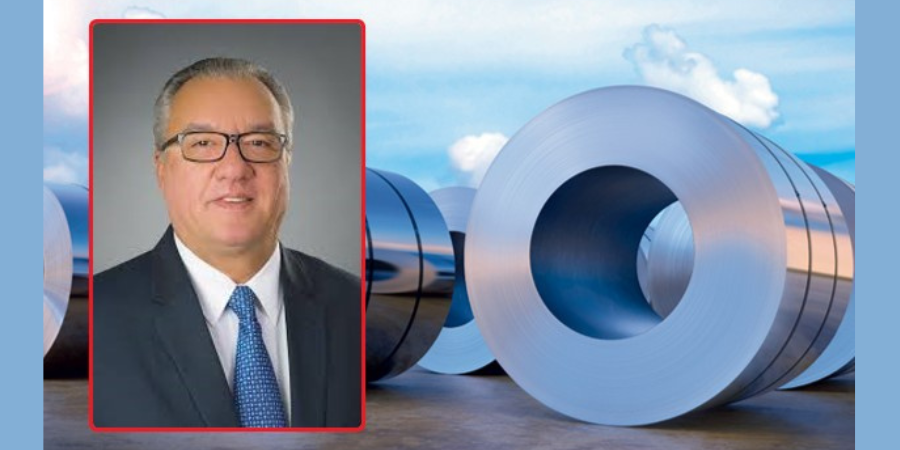
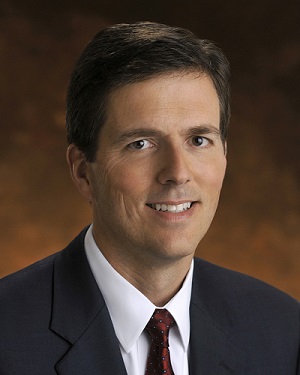
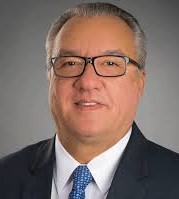
Cleveland-Cliffs has announced the commissioning of its new vertical stainless bright anneal line at its Coshocton Works facility in Coshocton, Ohio. This $150 million investment is now completed and will supply premium stainless steel for high-end automotive and critical appliance applications.
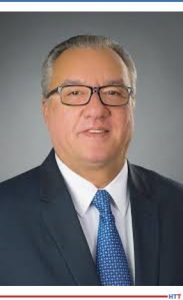
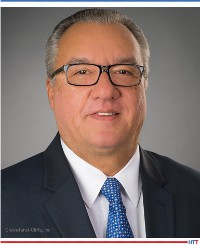
Lourenco Goncalves Chairman, President & CEO Cleveland-Cliffs
The new annealing line uses a 100% hydrogen atmosphere, replacing the conventional acid-based processing, and includes a hydrogen recovery unit to recycle hydrogen and use a 50/50 mix of new and used hydrogen in the process.
Lourenco Goncalves, chairman, president and CEO of Cliffs said: “By using hydrogen and advanced automation, we’re dramatically improving the quality and productivity of this critical product that our customers rely upon Cleveland-Cliffs for.”
To mark the opening, a ribbon cutting ceremony was held on Wednesday, July 2 at 11:00 a.m. ET at Cliffs’ Coshocton Works facility. The event was attended by key elected officials along with Cleveland-Cliffs’ executives, employees, and key customers.
Cleveland-Cliffs is a leading North America-based steel producer with focus on value-added sheet products, particularly for the automotive industry.
Press release is available in its original form here.
As U.S. election results were announced last week, several steel industry players are in the midst of acquisitions that could mean changes for in-house heat treat operators in North America.
Cleveland-Cliffs Expands North American Presence
Lourenco Goncalves Chairman, President, CEO Cliffs Source: Cliffs
Cleveland-Cliffs Inc. (“Cliffs”) today announced that it has successfully completed its acquisition of Stelco Holdings Inc.(“Stelco”). The addition of Stelco enhances Cliffs’ position as the largest flat-rolled steel producer in North America, diversifies Cliffs’ end-markets and expands its geographical presence in Canada. Stelco will continue operations as a wholly-owned subsidiary of Cliffs, preserving the name and iconic Canadian legacy of the business.
Lourenco Goncalves, chairman, president and CEO of Cliffs, stated: “Today marks a transformative step forward for Cleveland-Cliffs. By bringing Stelco into the Cliffs family, we are building on our commitment to integrated steelmaking and good paying union jobs in North America. This acquisition allows us to further diversify our customer base and lower our cost structure. We are excited about the opportunities this acquisition brings and appreciate the warm welcome we have received from all government officials in Canada. We take our permission to operate very seriously and aim to continue the Stelco legacy with dedication and purpose.”
Nothing New: Questions for Nippon-U. S. Steel Acquisition
Takahiro Mori Vice Chairman and Executive Vice President Nippon Steel Source: Nippon Steel
At this time, the U. S. Committee on Foreign Investment has the proposed acquisition under review until late December 2024.
If the deal is approved before the January 2025 inauguration, that does not guarantee that Trump would not overturn the results. However, “The previous Trump administration said it would attract foreign investment and create new jobs,” commented Nippon Steel Vice Chairman and Executive Vice President Takahiro Mori. “This (acquisition) is extremely in line with such a policy.” He still aims to see the deal close before the end of the calendar year.
The press release for the Cliff’s story is available in its original form here.
Cleveland-Cliffs Inc, a major supplier of steel to the automotive industry with heat treat capabilities, has announced its acquisition of Stelco Holdings Inc, an integrated steelmaker with two operational sites in the province of Ontario. The $2.5B (USD) transaction will bring 1,800 workers into the Cleveland-based steelmaker’s current workforce of 18,000 employed across its facilities in the United States and Canada.
Cleveland-Cliffs Inc. (Cliffs) recently released its definitive agreement to acquire Stelco Holdings Inc, increasing its steelmaking footprint and doubling the company’s exposure to the flat-rolled spot market, which includes raw materials, energy, and healthcare. Stelco adds capabilities that complement Cliffs’ existing operations, confirming the Cleveland-based steelmaker’s commitment and leadership in integrated steel production in North America.
Lourenco Goncalves Chairman, President and CEO Cleveland Cliffs
Stelco’s facilities consist of Lake Erie Works, a new integrated steelmaking facility in North America, and Hamilton Works, a downstream finishing and cokemaking facility, adding capabilities that complement Cliffs’ existing operations and product portfolio, while diversifying its market industries. Upon completion of the transaction, Cliffs shareholders will own approximately 95% and Stelco shareholders will own approximately 5% of the combined company, on a fully diluted basis.
“We did this deal the way it should be done, reaching a respectful agreement between the two parties that keeps national interests at the forefront and recognizes the importance of the workforce,” said Lourenco Goncalves, chairman, president and CEO of Cliffs. “The enterprise value of this transaction is significantly lower than the cost of building an equivalent replacement mill in the United States, and the cost structure is lower than what a new U.S. mill would provide us. Stelco is a company that respects the Union, treats their employees well, and leans into their cost advantages. With that, they are a perfect fit for Cleveland-Cliffs and our culture. We look forward to proving that our ownership of Stelco will be a net benefit for Canada, the province of Ontario, and the cities of Nanticoke and Hamilton.”
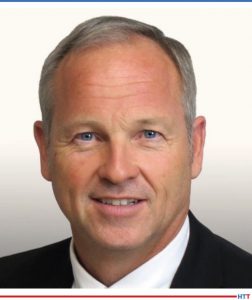
Alan Kestenbaum Executive Chairman & CEO Stelco Holdings
“I am proud of what we have accomplished over the past seven years, and the value we have generated,” said Alan Kestenbaum, executive chairman and CEO of Stelco. “Most importantly, we have revitalized Stelco and restored it to its iconic status in Canada. I know thac Cliffs will continue to build upon the excellent work and life environment we have created for all of our employees and continue to be a reliable supplier to our valued customers, while maintaining Stelco’s stature and reputation in Canada and maintaining our Canadian national interests. One of the important drivers for this transaction was receiving a meaningful portion of the consideration in Cliffs shares. I have strong belief and optimism in the North American steel market. I believe that Lourenco and his team have created a winning platform, and I intend to remain an investor in Cliffs for a long time to come as he and his team continue to build out their platform and business.”
Pictured in featured image: Lourenco Goncalves
The press release is available in its original form here.
We get it. You read all day: emails, memos, furnace monitoring screens. To give your eyes a break, Heat TreatTodaywanted to provide some grab and go visual resources. In this original content piece, check out some visuals to help you learn about the difference between Nitriding and FNC; discover how the U.S. is doing in the race to green steel production; and get an example of the type of numbers that are normal for a CQI-9 probe method A test.
In Heat TreatToday's August 2021 Automotive print edition, Lourenco Goncalves, chairman, president, and CEO of Cleveland-Cliffs, Inc. made a big statement: "The United States is the benchmark of the world in all things steel. Amongst all major steelmaking nations, we have by far the greenest emissions profile."
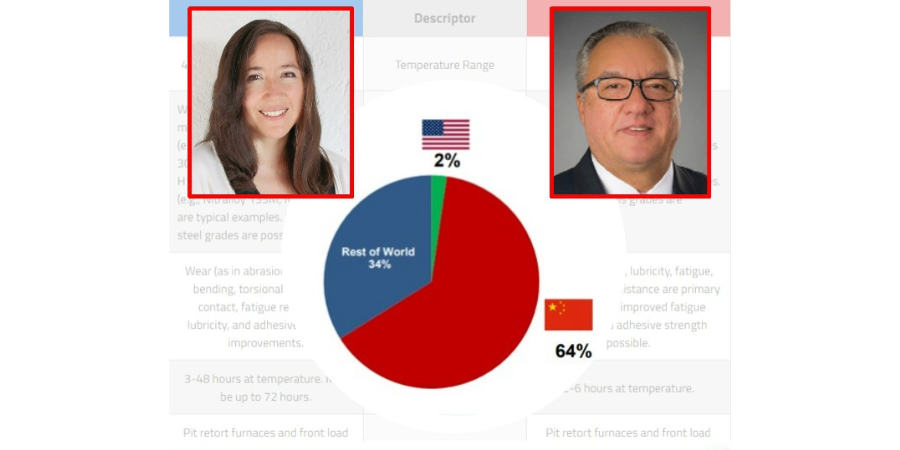
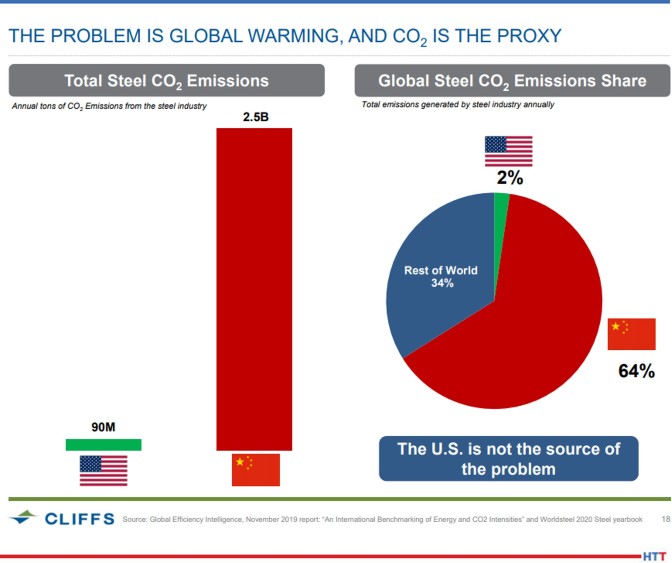
In a climate where the United States often gets a bad rap when it comes to environmental concerns, Lourenco's statement is hard to believe. But, the data below contradicts this bad reputation. Check out the graphic below to learn how the United States stacks up to other countries in steel production.
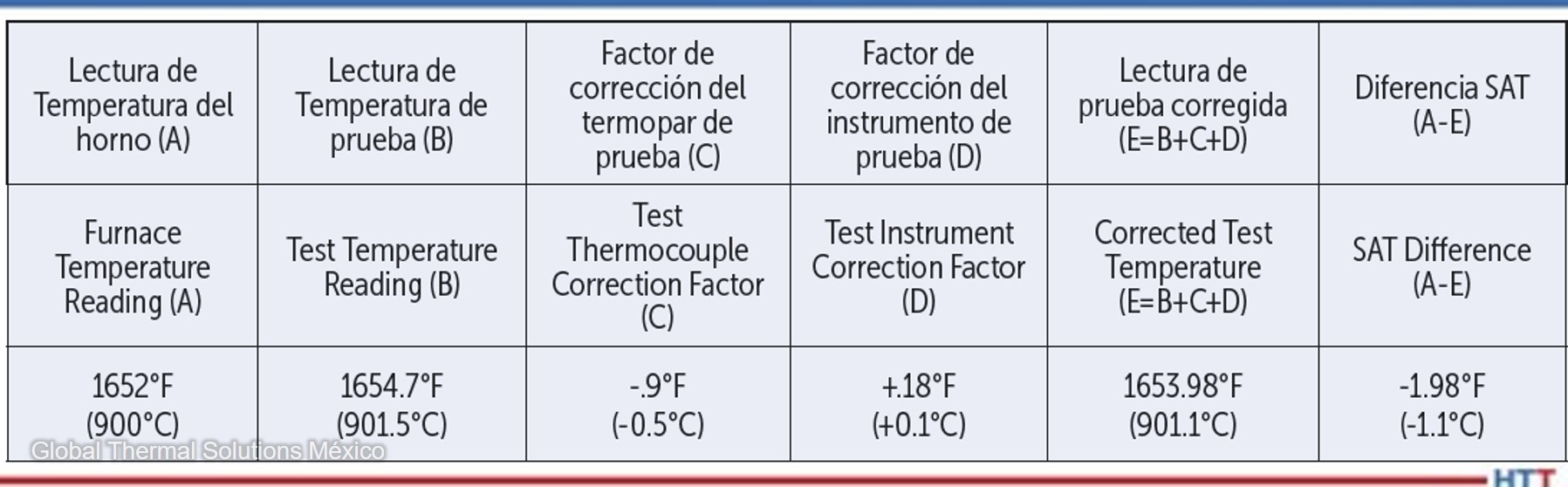
Ensuring heat treating equipment falls within CQI-9 standards can be tricky. According to Erika Zarazúa, regional purchasing manager at Global Thermal Solutions, probe method A may be the best way to identify variations in control systems.
If you're curious about how probe method A works, view the chart below (in both English and Spanish) for an example of the kind of numbers that are typical for this test method.
Table 1. Probe method A Tabla 1. Método de sonda A
These days, it seems like most heat treat shops are updating equipment or changing procedures to accommodate demands for ferritic nitrocarburizing. But how different are the two processes, really? When it comes to materials commonly processed, time cycles involved, and atmospheres required, where does the difference between nitriding and FNC begin? The chart below is a quick and easy guide to distinguishing the difference between these two hardening processes. Skim away or take a deep dive into the technicalities!
Erika Zarazúa, a 40 Under 40 Class of 2021 member, is a metallurgical engineer with over 18 years of experience in heat treatment operations and temperature measurement and has worked in multiple engineering, quality, and project roles in the automotive and aerospace industries. Erika currently holds the position of regional purchasing manager at Global Thermal Solutions.
How can steel production be "green"? Where does the United States stand in steel production when compared to the rest of the world?
Lourenco Goncalves, chairman, president, and CEO of Cleveland-Cliffs, Inc. answers these questions and more in this article, originally published in Heat TreatToday'sAugust 2021 Automotiveprint edition.
Lourenco Goncalves Chairman, President, CEO Cleveland-Cliffs, Inc.
The United States is the benchmark of the world in all things steel. Amongst all major steelmaking nations, we have by far the greenest emissions profile. On average, each ton of steel produced in the United States generates 1.0 tons of CO2 emissions, compared to a ton of steel produced by China which generates 2.5 tons of CO2 emissions. The U.S. generates only 2% of all the greenhouse gas emissions from global steel production, while China contributes 64%.
The attributes that make our industry so green are the use of scrap, natural gas as both a reductant and energy source, and green iron ore pellets in blast furnaces. Because scrap cannot be used in a closed loop, natural gas and pellets allow for a healthy participation of low-carbon intensity virgin iron and steel units in a well-balanced ecosystem.
Steel’s emissions profile also makes it the lowest-carbon option compared to other materials perceived to be green, such as aluminum and carbon fiber. Adjusting for part weight, production of the equivalent volume of these competing materials generates 5 to 10 times more CO2 emissions than steel made in the United States.
This emissions profile is just one of many attributes that will support steel’s continued position as the material of choice in automotive light vehicle bodies. On top of being the greenest material and having a 100-year incumbency advantage, steel is more affordable than aluminum and is easier to weld, form, and repair or replace. Our continued innovation in advanced high strength steels (AHSS) has allowed us to produce thinner, lighter-weight, yet stronger materials, and closed the gap on the perceived density advantages that the aluminum industry has touted.
Even though we boast a low emissions profile, our work is not done. At Cleveland-Cliffs, we have made public our target to reduce greenhouse gas emissions by 25% by 2030. In our global discussion about decarbonization, the use of hydrogen (H2) as an iron-reducing agent has emerged as playing a key role in a carbon neutral future. While clean and leaving only steam (H2O) as its byproduct, large scale H2 use in steelmaking is an unproven technology that comes with enormous practical challenges, including safety and prohibitive costs. Knowing what we know today, we are probably decades away from H2 becoming part of any affordable and easily available technology.
At Cliffs, we don’t want to rely on breakthrough technologies, but rather deal with practical decarbonization options. Our efforts involve the use of the hydrogen contained in natural gas, which is actually a mix of 95% CH4 and 4% C2H6. Natural gas is used as the reducing agent at our new, state-of-the-art DRI facility in Toledo, OH, as well as a meaningful supplemental reductant in all eight of our blast furnaces. The abundance of cheap natural gas in the United States will continue to provide us ample opportunity to decarbonize.
Steel is the inevitable material of choice in a modern, greener world. As the largest flat-rolled steel producer in North America, Cleveland-Cliffs will remain on the cutting edge in shaping the future and further cementing our industry as the envy of the world.
About the Author: Lourenco Goncalves is chairman, president, and CEO of Cleveland-Cliffs, Inc.
Cleveland-Cliffs Inc. announced that they formally completed its purchase of ArcelorMittal USA. According to a statement from the company, the combined company made pro-forma revenue of $17 billion on a full-year basis from 2019, and combined adjusted earnings of about $1.7 billion.
In the agreement, Cleveland-Cliffs took control of ArcelorMittal USA’s six steel-making facilities, eight finishing facilities, two iron ore mining and pelletizing operations, and three coal and coke-making operations.
Lourenco Goncalves Board of Directors, President, and CEO Cleveland-Cliffs Inc.
In addition to the ArcelorMittal deal, Cleveland-Cliffs also said it had acquired full ownership of two New Carlisle, Indiana steel plants, I/N Tek and I/N Kote. Cleveland-Cliffs previously shared part ownership of the plants with Nippon Steel Corporation but now owns both plants 100%. According to Cleveland-Cliffs, the factories generated $121 million in earnings in 2019.
Cleveland-Cliffs also added a separate plant owned by Nippon Steel in Alabama as a long-term supplier for automotive grade slabs.
In a statement, Lourenco Goncalves, CEO of Cleveland-Cliffs, said the slew of deals “opens a new chapter in the history of the steel business in the United States. The assets we have acquired will be combined with our existing footprint, including AK Steel, Precision Partners, AK Tube, several mining and pelletizing facilities, our research and development center, and the most modern direct reduction plant in the world, which we have just started to operate in Toledo, OH.”
The company’s new, wider footprint, Goncalves said, would allow Cleveland-Cliffs to be “a major player in supporting American manufacturing, American future investments in infrastructure, and the prosperity of the American people through good paying middle-class jobs.”
Read about "Cleveland-Cliffs Inc. Acquires Arcelor Mittal USA" here.
(photo source: video from https://usa.arcelormittal.com/products-and-markets)
Lourenco Goncalves Board of Directors, president, and CEO Cleveland-Cliffs
Cleveland Cliffs Inc. announces that it has entered into a definitive agreement with ArcelorMittal S.A., in which Cleveland-Cliffs will acquire substantially all of the operations of ArcelorMittal USA LLC and its subsidiaries for approximately $1.4 billion.
Upon closure of the transaction, Cleveland-Cliffs will be the largest flat-rolled steel producer in North America with combined shipments of approximately 17 million net tons in 2019. The company will also be the largest iron ore pellet producer in North America with 28 million long tons of annual capacity.
Lourenco Goncalves, Chairman of the Board, president, and CEO ofCleveland-Cliffs, will lead the expanded organization. “Steelmaking is a business where production volume, operational diversification, dilution of fixed costs, and technical expertise matter above all else,” he says, “and this transaction achieves all of these. ArcelorMittal is a world-class organization that we have long admired as our customer and our partner, and we know for a fact that they have taken good care of their U.S. assets.”
“The acquisition of ArcelorMittal USA amplifies our position in the discerning automotive steel marketplace, and further improves our position in important U.S. markets such as construction, appliances, infrastructure, machinery, and equipment,” he says. “It also adds to our strong legacy raw material profile and growing finishing capabilities. The transaction will enable us to become a more efficient fully-integrated steel system, with the ability to realize all of our operational and financial goals.”
AK Steel, a leading producer of flat-rolled carbon, stainless, and electrical steel products was recently acquired by Cleveland-Cliffs Inc., an iron ore company, with a definitive merger agreement to position the new company to create a vertically integrated producer of value-added iron ore and steel products.
Lourenco Goncalves, chairman of the board, president, and CEO of Cleveland-Cliffs
Under the terms of the merger, Cleveland-Cliffs will acquire all of AK Steel’s common stock, and expand their capabilities across the entire manufacturing process, from mining to pelletizing to the development and production of finished high-value steel products, including next-generation advanced high strength steels for automotive and other industries.
“By combining the best-in-class quality of AK Steel’s assets and its enviable product mix with Cliffs’ debt profile and proven management team, we are creating a premier North American company, self-sufficient in iron ore pellets and geared toward high value-added steel products,” said Lourenco Goncalves, chairman of the board, president, and CEO of Cleveland-Cliffs, who will lead the expanded organization. He added that the new company “is well-positioned to serve both the blast furnace and electric arc furnace segments.”
Roger K. Newport, CEO of AK Steel
“The combination of Cliffs’ iron ore pellet capabilities and our innovative, high-quality steel product development and production is strategically compelling,” said Roger K. Newport, CEO of AK Steel. “Together, we expect to be able to take advantage of growth opportunities faster and more fully than either company could on its own. With AK Steel’s 120-year heritage, which began in Ohio, and expertise in steelmaking, AK Steel and Cliffs make an excellent combination, which we expect will facilitate a smooth integration process.”
A Cleveland-based iron ore mining company recently broke ground on its first hot-briquetted iron (HBI) production facility in the Toledo area.
Lourenco Goncalves, chairman, president, and CEO of Cleveland-Cliffs
Cleveland-Cliffs hosted company officials and state and local representatives to launch construction on the plant, which is expected to produce 1.6 million metric tons per year of customized, high-quality HBI. This will make Cleveland-Cliffs the sole producer of high-quality customized feedstock for the domestic electric arc furnace (EAF) steelmakers located in the Great Lakes region.
“Today we are launching a new era for the iron and steel industry in the United States,” said Lourenco Goncalves, chairman, president, and CEO of Cleveland-Cliffs of the $700 million investment. “As Cleveland-Cliffs begins the construction of the first hot-briquetted iron (HBI) production plant in the Great Lakes region, we are taking the initial steps to enable EAF steelmakers to produce the specs associated with high margin steels for sophisticated end markets, such as automotive and others.”
“For several decades, Cleveland-Cliffs has been supplying the American steelmakers in the Great Lakes with customized pellets to feed their blast furnaces,” Goncalves added. “With the growth in participation of EAFs, it was just a matter of time for Cliffs to become a supplier of these important steelmakers. Our HBI will be for the EAFs the same great feedstock our taconite pellets are, and will continue to be, for our blast furnace clients.”
“This facility is an important step for economic development in heavy industry right here in the heart of America,” said Ohio congresswoman Marcy Kaptur.
Founded in 1847, Cleveland-Cliffs Inc. is the largest and oldest independent iron ore mining company in the United States, supplying iron ore pellets to the North American steel industry from mines and pellet plants located in Michigan and Minnesota. Additionally, Cleveland-Cliffs operates an iron ore mining complex in Western Australia.
Pictured L-R: Clifford Smith, Executive Vice President, Business Development, Cleveland-Cliffs Inc.; Dean Monske, President and CEO, Regional Growth Partnership; Paul Toth, President and CEO, Toledo-Lucas County Port Authority; Congresswoman Marcy Kaptur, U.S. House of Representatives (OH-09); Lourenco Goncalves, Chairman, President & CEO, Cleveland-Cliffs Inc.; Mayor Wade Kapszukiewicz – City of Toledo; Peter Ujvagi, Toledo City Councilman; and Alex Johnson, CEO & President, Midwest Terminals. (Photo: Business Wire)