

Ford Motor Company

Heat Treating with Digital Solutions for the 21st Century

OCOn this Technical Tuesday, dive deep into this article to learn Industry 4.0 heat treating solutions to enduring problems. As author and captive heat treater Joseph Mitchell, director of Operations & Technology for The Miller Company, says, "These solutions have the capability to mitigate incessant (and costly) problems in our thermal and metal processing industry." Let's take a closer look at Industry 4.0 solutions to the problem of coil wraps "sticking" during batch annealing.

Joseph Mitchell
Director of Operations & Technology
The Miller Company

As US manufacturing recovers from the ill effects of a seemingly unremitting pandemic and corollary supply chain challenges, the advance of Industry 4.0 and Industrial Internet of Things (IIOT) necessitates manufacturing industries reevaluate their business practices. For maximum profitability, business "as usual" simply will no longer suffice. Jason Ryska, global chief engineer at Ford Motor Company, suggests even production behemoths overlook the obvious:

In many production processes, data analytics provides the agility to keep up with market trends and technology advancements. An exception to this trend is automotive production, a multi-billion-dollar industry that is underutilizing data collection and underestimating the potential improvement that may come from understanding the data being collected.

This quote is from a technical article written by Ryska in which he discusses current state and offers a glimpse of future state that is gained by a manufacturer investigating potential new solutions for old process problems by applying Industry 4.0 technologies.1

Metal industry leaders may ask, to the quote above, could we replace "automotive production" with "heat treating?" I believe there is a strong argument against such an exchange of words; however, in-depth examination at the plant level indicates deficiencies exist for the heat treating industry related to acceptance of IIOT technology and application of data analytics. Where do we observe the shortcomings? Perhaps, as suggested by Ryska, in our day-to-day comfort zone: "over reliance on employee experience and interpretation vs. physical measurements."

This keen insight into the current state of automotive manufacturing can be equally applied to different manufacturing landscapes throughout U.S. industry. Reviewing a familiar heat treating problem will help to illustrate the need for and applicability of digital monitoring and data collection for decision making and future development of advanced analytics like machine learning and AI. These solutions have the capability to mitigate incessant (and costly) problems in our thermal and metal processing industry.
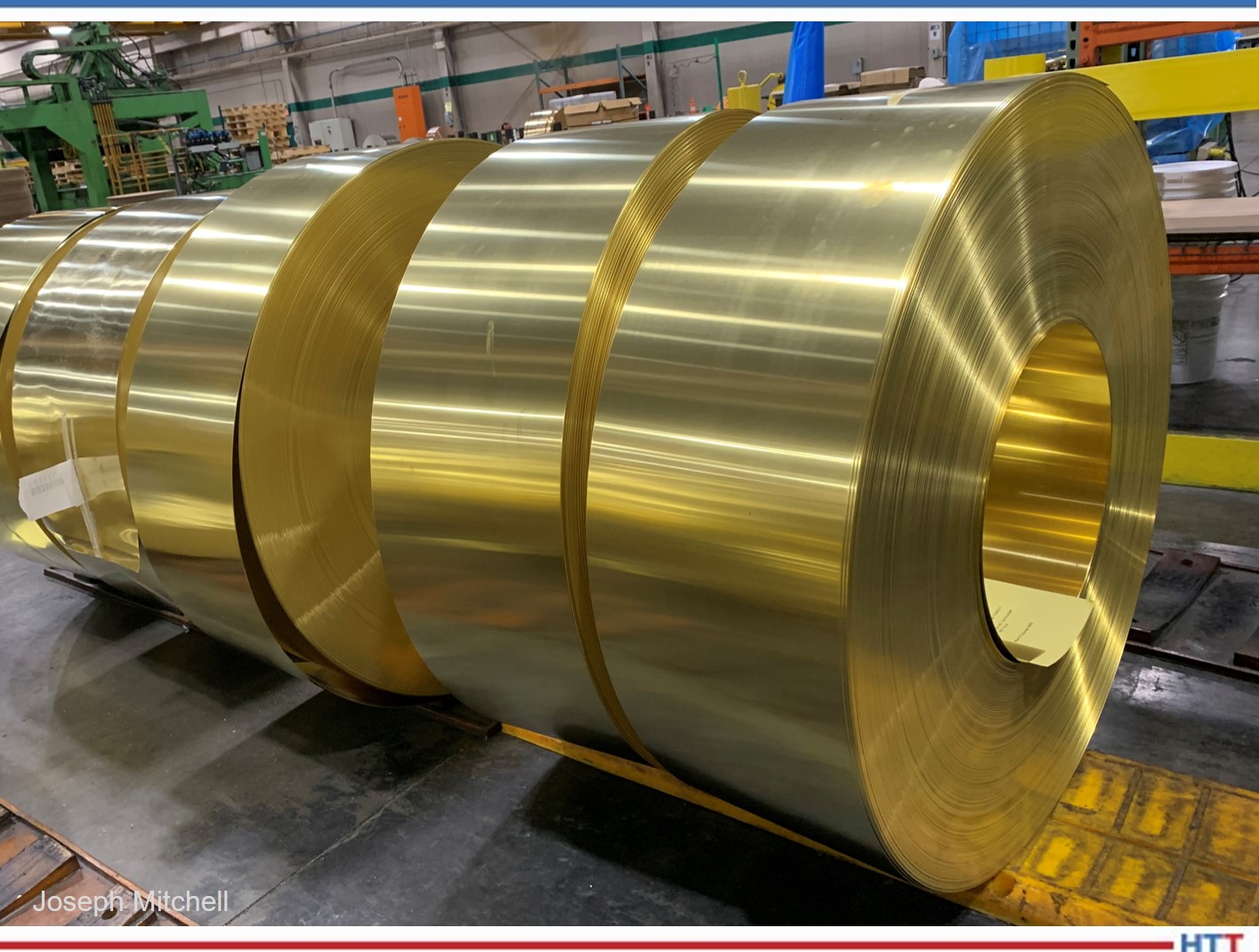
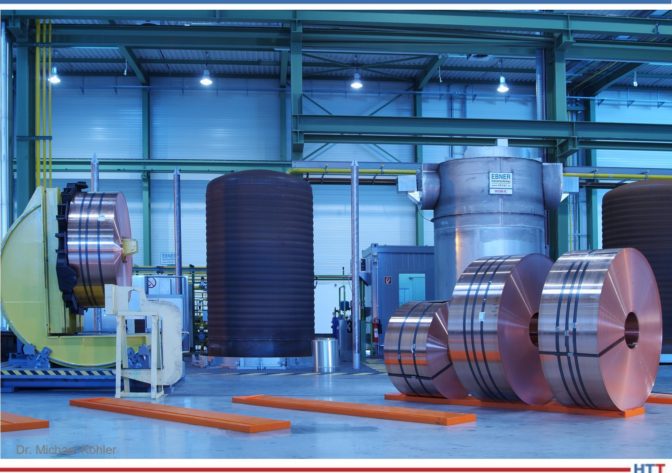
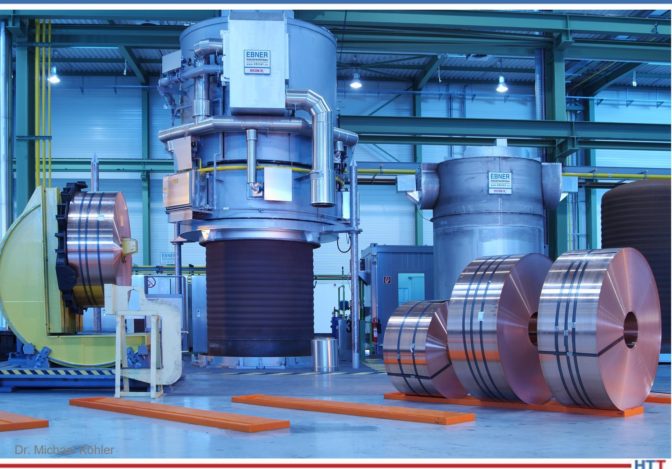
Yellow brass finished width coils; alloy C26800

Heat Treat Industry

In manufacturing, the same problems often occur again and again. In the metals industry, casting and thermal processing, in conjunction with continuing operations, present daily challenges to product quality. Troublesome and costly conundrums – like residual stress, distortion, cracking/poor forming in downstream operations, and poor surface quality/coating adhesion – occur regularly, causing waste, rework, late delivery, and lost profit.

Metallurgists, engineers, and technologists all understand the frustration of untold hours devoted to researching solutions to material processing problems. Some already have well known solutions while others may randomly appear seem, after causing much angst, to disappear (sometimes not as quickly as would be preferred). Regardless of that type of problem, the time, effort, and resources put into finding the solution cannot be redeemed.

The advance of Industry 4.0 and, more specifically, IIOT into modern manufacturing can provide our metal production sector the ultimate tools for unraveling costly and recurring quality issues. We understand this progression will be gradual and very slow.

Nonetheless, implementation of digital technologies is critical for our heat treating/materials processing industry. The fact CQI-9 4th ed. requires all instrumentation and process controls be digital by June 2023 supports the emphasis placed on eliminating analog based instruments and reengineering manufacturing processes for implementation of digital data collection and, thereby, steering heat treaters (automotive suppliers and, hopefully, non-automotive industrial heat treaters) toward eventual adoption of Industry 4.0 technologies.

In this article, we review a specific quandary typically encountered during batch annealing and examine why application of digital monitoring and data collection, and eventual integration of Industry 4.0 technologies, would facilitate understanding and assist in resolving the problem.
The Problem (Define)

A report, written in 1940 by T.J. Daniels, titled "The Prevention of Sticking in Bright Annealing Sheet Steel" is interesting for many reasons, and, for purpose of this article, provides an example of an early 20th century heat treating headache which, unfortunately, is still with us in the present century.2

The report consists of two parts:

Part I - Investigation of Factors Influencing Sticking

  1. Pressure
  2. Annealing temperature
  3. Length of time at temperature

Part II - Prevention of Sticking

  1. Multiple varieties of trial suspensions tested
  2. Temperature, pressure, and time held constant for each test
  3. Trials performed 2x each
  4. Trials performed 3x for promising suspensions

Despite the efforts and subsequent process improvements in heat treating and manufacturing processes as discussed in Daniels' report, we find the following, equally interesting 21st century report, addressing the same subject in Hot and Cold Rolling Processes, Sticking and Scratching Problems After Batch Annealing, Including Coil Compression Stress Effects, by J.J. Bertrandie, L. Bordignon, P.D. Putz, and G. Volger.3

This 2006 report discusses the same sticking phenomenon (coil wraps adhering together after batch annealing) and expands its research into an accompanying quality problem that may occur in conjunction with or subsequent to batch annealing: material scratching. The report documents field trials and laboratory investigations.

The amount of investigative work described in this second report is noteworthy and the results provide data-backed conclusions. However, the problem addressed, potential causes studied, and solutions prescribed did not eliminate the phenomenon of sticking following batch anneal of ferrous and nonferrous coils. Fast-forward fifteen years to 2021 and the sticking phenomenon remains a topic of discussion (and source of grief) for heat treaters across continents.

My experience with a heat treater located in the Midwest, who occasionally encountered coil wraps sticking together during batch anneal of sheet steel, resulted in experiments with anti-sticking agents applied using a spray system, as well as studies for improved control of cooling the furnace charge. The cooling temperature gradient influences contraction of outer wraps which, if pressure is excessive, may result in wrap adhesion (cementation): growth of crystals across material wraps.

Although sporadic, costs were significant when sticking occurred. Unfortunately, the success of our experiments was limited due to time constraints and production requirements (nothing new here). As we know, a hit-or-miss success rate is not good for business; consequently, continuous improvement (CI) must be built into the system. Fortunately, technology is allowing this CI business approach by way of Industry 4.0.
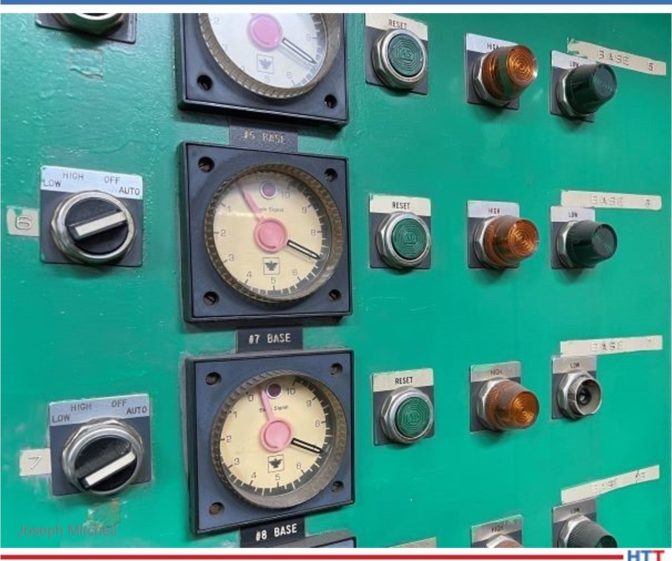
Per CQI-9 rev. 4, analog process monitoring is coming to an end

Descriptive Analytics (Measure)

I first will acknowledge many industrial processing plants operate using, shall we say, not exactly new or sufficiently updated equipment. Also acknowledged is the necessity of skilled and experienced personnel for monitoring and performing critical tasks. Nonetheless, with all else being equal, the fact this quality defect persists suggests industrial heat treaters need new solution for this old and burdensome problem. In short, transformation to digital technologies must occur in the metals processing industry for improved understanding and resolution of regularly occurring problems coming from complex manufacturing/processing systems.

At minimum, for study and resolution of our sticking problem, I recommend a supervisory control and data acquisition system (SCADA). Management should have "eyes" on the process at all times. SCADA allows digital process monitoring (real-time), process alarms (out-of-spec parameters), and automatic control (process adjustment) that will help improve process control at site location or via remote access. Likewise, data acquisition for historical review is critical for answering the question, "what happened and when?"

Digital collection and transfer of data (cloud-based or in-house server) and use of statistical analysis (data analytics) will help a company improve production through the development of predictive maintenance models, building understanding of equipment capability for effective and efficient processing, and defining key process parameters for best quality.

SCADA may be incrementally introduced into a manufacturing system (e.g., a single bell/box annealing furnace) and scaled accordingly. Another strategy is investment in IIOT technology software/apps/system. My experience includes investigation of IIOT as a service with MindSphere. This technology is scalable and can be integrated with legacy equipment for eventual connection with both old and new machines/processes. This is  a more practical  option considering few small-to-midsize heat treaters have cash for an all-at-once approach.

During initial installation stages, be sure to capture key process variables and the need for strategic placement of data gathering sensors based upon best opportunities for process impact like:

  1. furnace atmosphere / time / temperature
  2. material cleanliness / required microstructure / coil tension
  3. strip thickness / strip width / process routing / pre & post processing

Data input from locations other than annealing furnace are of equal concern:

  1. pickle tank temperature / acid concentration
  2. rinse tank temperature / cleanliness / cycle time
  3. surface roughness / temper rolls / anti-sticking oil

As noted earlier, I understand use of equipment that is in disrepair or outdated is a reality for some heat treaters; fortunately, use of SCADA system would provide necessary data to justify purchasing new equipment and/or upgrading old equipment. A data driven proposal presented in unbiased digital format is an advantage for showing upper-management current state-of-affairs and possible return on investment (ROI) if funding is provided and investments are made.
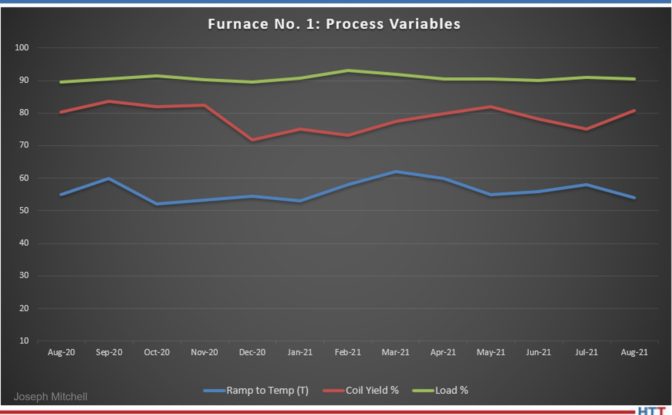
 

Digital monitoring of process variables: easy access of data for historical review and troubleshooting

Diagnostic Analytics (Analyze)

At this point, we have a SCADA (or similar) system in place, either for a given furnace/machine, work-cell, or eventually for an entire manufacturing/processing system. In our case, the process parameters associated with sticking, and therefore the ones which need to be monitored, include temperature, time, pressure, surface condition, and reactivity.4 The stage for descriptive analytics is set; data is collected/summarized, but no direct decisions/predictions develop from this digital data stream. We learn "what happened” and proceed with the question, "why" did "X" happen? Thereby, we enter the world of diagnostic analytics in the quest for root causes, seeking to understand unusual events: why did no sticking occur when we processed alloy "A" last week, but this week alloy "A" exhibits sticking?

Following our statistical study used in descriptive and diagnostic analysis that was performed using data analysis software, we continue applying statistical methods for our investigation. The objective is discovery and confirmation of relationships and/or trends, which may relate to, or show causes for, sticking (coil wraps adhering together).

Predictive Analytics (Improve)

Rarely in a heat treating/material processing dilemma is the root cause readily disclosed; my experience in heat treating is that "bad" phenomenon often occur and disappear with impunity, leaving root cause analysis a moot point. We breathe a sigh of relief and enjoy the quiet before the next storm.

In the past, this unfortunate scenario likely resulted from one of two things: first, the inability to measure multiple variables simultaneously; and second, if a system is in place identifying and monitoring key variables, then management's inability of correlating (note: correlation may not ≠ causation) effects of multiple process variables. This inability leads to dependency and/or relationships preventing meaningful and/or accurate interpretation of data. At best, this does no more harm than allow the continued ill-effects of current problem, but at worst, it leads to incorrect conclusions, possible worsening of the problem at hand, and new problems.

Here  is where management of forward-thinking companies --  focused on developing optimal manufacturing efficiencies, equipment effectiveness, increased profit, and competitive advantage --differentiate themselves by advocating application of digital technologies. In this case, it means moving toward artificial intelligence (AI); smart machines/machine learning.

Many options related to machine learning software and machine connectiveness are available (e.g., Siemens, GE Digital, Samsara, etc.). Your SCADA system provider is a great place for beginning investigation into predictive/prescriptive software solutions using machine learning tools.

Another example of a systems approach for digital transformation is Smart Prod ACTIVE. Profiled in Foundry Trade Journal last winter, this information and communication technology (ICT) platform, designed for optimizing foundry production, illustrates the growing possibilities for increased competitive advantage and profit growth based upon implementation of digital technologies, such as EnginSoft - smart ProdACTIVE.5

Prescriptive Analytics (Control)

Heat treating consists of many interrelated processes and/or systems. Prescriptive analytics, by way of simulation software/modeling tools, leads to applicable solutions; as Luigi Vanfretti, an associate professor of electrical, computer, and systems engineering at Rensselaer Polytechnic Institute, states, "You need to have a way to understand the interaction of the systems, and, in an integrated way, you need to optimize them together."6

Digital data collection and advanced analytics open the door for data-driven decisions and improved understanding of a process. When we are able to investigate cause-effect relationship(s) and our modeling tools suggest appropriate/optimal adjustment for non-normal process variation, we can achieve standardization of a given heat treating process, possibly even aimed at specific equipment in a manufacturing system.

In other words, the optimization factors of bell furnace "A" may not be optimal for bell furnace "B." The parameters for various aspects of the manufacturing system may need adjustment based on equipment performance/condition or other factors (e.g., coil mass, time at soak temperature, surface roughness (rolls), incoming strip cleanliness, etc.).

In this manner, continuous improvement throughout the manufacturing system becomes a part of our day-to-day business.
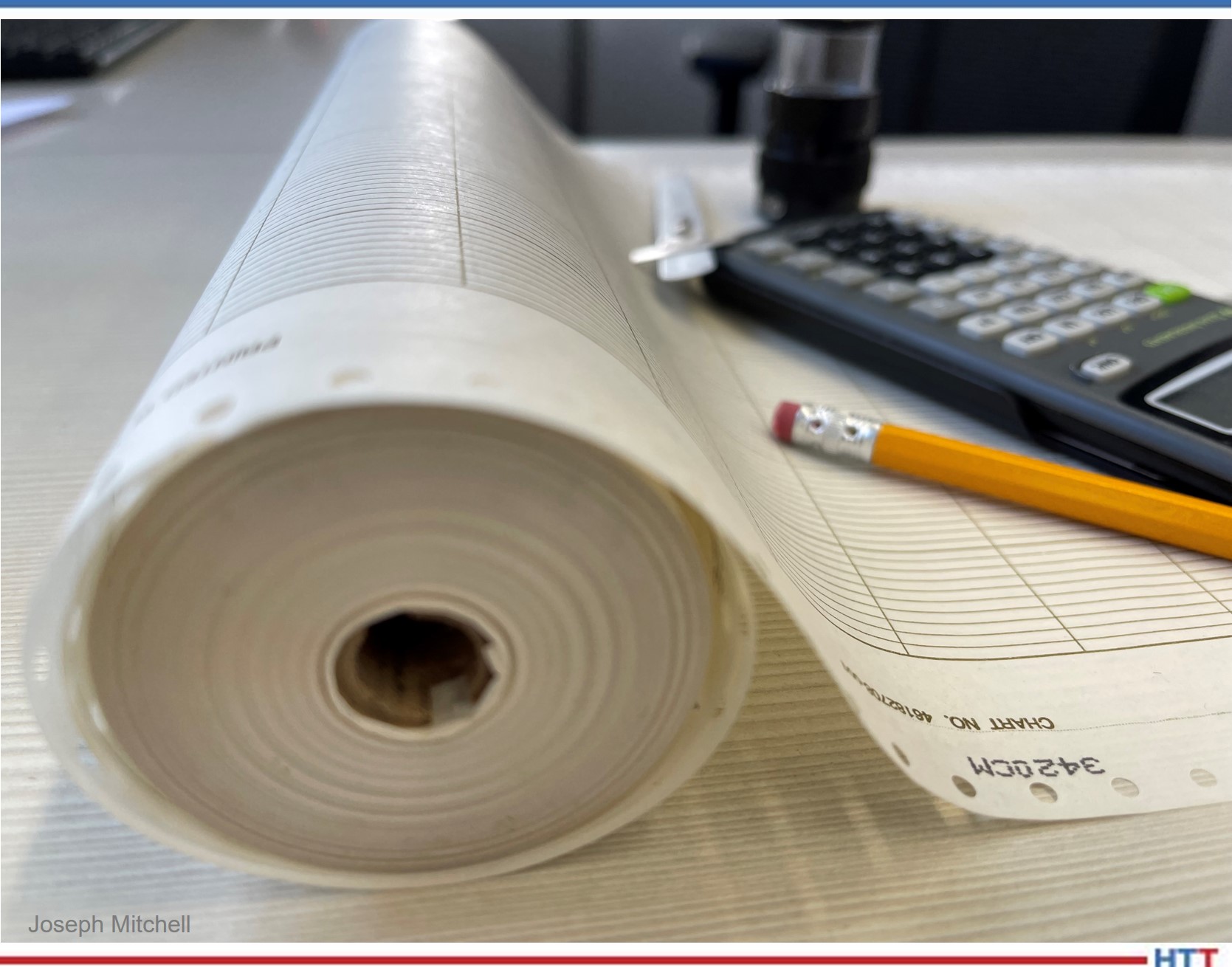
Chart recording; still valid, but not user friendly for data retrieval and statistical analysis

Digital Integration/Transformation

We examined a 21st century approach for resolving a 20th century problem: coil wraps sticking together post-anneal. This material processing phenomenon typically encountered when batch annealing ferrous or nonferrous materials may result from many interrelated process variables; that is, one or more sources of non-normal variation within a thermal processing system and/or manufacturing process.

The heat treating system, as well as the manufacturing system which is comprised of numerous material processes both upstream and downstream, requires continuous monitoring. As supported by CQI-9 (4th ed.), digital instrumentation is deemed necessary (for automotive suppliers) for surveillance and documentation of thermal processing parameters. Acquisition of digital data (e.g., SCADA) facilitates advanced analytics for predicting process outcomes and thereby prescribing optimal solutions which lead to process improvements.

Thus, application of digital monitoring/data collection, advanced analytics, and integration of Industry 4.0 technologies will enhance understanding, provide heretofore unknown process correlations/relationships, and thereby lead to problem mitigation.

As we close this article, some may ask, is digital transformation essential in our heat treating industry? Is IIOT and the all-encompassing Industry 4.0 a necessity for industrial heat treaters and others involved in material processing?

Perhaps a well-worn quote from W. Edwards Deming provides our answer: "It is not necessary to change. Survival is not mandatory."

About the Author: Joseph Mitchell is director of Operations & Technology for The Miller Company, a service slitting center which supplies bronze and specialty copper alloy precision metal strip. With a BS in Industrial Management and MBA from Lawrence Technological University, his interests include metallurgy and practical application of Industry 4.0 concepts/digital technologies for developing business strategy that provide optimal use of assets, energy, and process controls within the metals and automotive industry.


References

1 J. Ryska, Industry 4.0 Meets the Stamping Line - Ford Motor Company's stamping division looks to leap into Industry 4.0 the same way Henry Ford led the transformation from Industry 1.0 to 2.0, Advanced Materials and Processes, Feb/Mar 2020, Vol 178, NO 2, p 25-28.

2 T. Daniels, "The Prevention of Sticking in Bright Annealing Sheet Steel,” Thesis; submitted for degree requirements, MS Chemical Engineering, Georgia School of Technology.

3 J.J. Bertrandie, L. Bordignon, P.D. Putz, G. Volger, Hot and Cold Rolling Processes, Sticking and Scratching Problems after Batch Annealing, including Coil Compression Stress Effects. Directorate-General Research, European Commission, Technical Steel Research, EUR 22059 EN, 2006, Sticking and scratching problems after batch annealing, including coil compression stress effects - Publications Office of the EU (europa.eu).

4 J.J. Bertrandie, L. Bordignon, P.D. Putz, G. Volger., p 21.

5 Foundry Trade Journal, Die Casting World, Vol. 194, No. 3771, Jan/Feb 2020, p 22.

6 Luigi Vanfretti, Modeling Electric Aircraft, Rensselaer Research, RPI, 2019 Research Report; Modeling Electric Aircraft | Office for Research (rpi.edu)


Additional resources mentioned in this article

EnginSoft - smart ProdACTIVE

MindSphere

Heat Treating with Digital Solutions for the 21st Century Read More »

Who’s Winning the Steel v. Aluminum Battle? Both, in the Form of Mixed Materials, per Auto Industry Watchers


Source: SME Media


It wasn’t long ago that auto industry watchers were casting votes for either steel or aluminum in what was to be a big competition in what metals would be used in automotive lightweighting.

Would it be the heavy-weight champion steel which was ramping up its development of high-strength, lower-weight steels? Or would the new contender on the block, aluminum, gather more adherents to lightweighting in the wake of Ford Motor Company choosing aluminum for its F-150 and Super Duty pickup bodies?

An excerpt:

“A consensus has emerged. The future for the industry is a mix of materials, a mix that will vary from vehicle to vehicle. It’s also likely to be a more complex future, with composite materials making inroads in the long run.”

Jay Baron, retired president of the Center for Automotive Research (CAR), Ann Arbor, Michigan

“You have to take into account all sorts of factors,” said Jay Baron, retired president of the Center for Automotive Research (CAR), Ann Arbor, Michigan. Vibration and stiffness figure into the equation, he said. And there’s cost. “It’s much more than weight and strength.”

Designing and building vehicles with a patchwork quilt approach to materials is how some brands are tackling the lightweighting challenge. Most are also exploring advanced technological processes such as a combination of 3D printing and artificial intelligence, friction welding technology, and rethinking other automotive systems, e.g., braking.

Read more: “Lightweighting’s New Phase


Main image credit / caption: Manufacturing Technology Inc. (MTI) / The MTI-built LF35-75 at Lightweight Innovations for Tomorrow is ideal for unique part geometries, near-net shapes and full-size part development for all industries, according to MTI. 


Who’s Winning the Steel v. Aluminum Battle? Both, in the Form of Mixed Materials, per Auto Industry Watchers Read More »

Heat Treat Radio #21: James Jan & Andrew Martin on Development of Modeling Software

Welcome to another episode of Heat Treat Radio, a periodic podcast where Heat Treat Radio host, Doug Glenn, discusses cutting-edge topics with industry-leading personalities. Below, you can either listen to the podcast by clicking on the audio play button, or you can read an edited version of the transcript. To see a complete list of other Heat Treat Radio episodes, click here.


Audio: James Jan & Andrew Martin on Development of Modeling Software

In this conversation, Heat Treat Radio host, Doug Glenn, publisher of Heat Treat Today, interviews Ford Motor Company’s James Jan about Ford’s cooperation with AVL on the development of modeling software to help predict and avoid cracking on aluminum cylinder heads. Andrew Martin from AVL also joins the conversation with what exactly it is they did with Ford.

Click the play button below to listen.


Transcript: James Jan & Andrew Martin on Development of Modeling Software

The following transcript has been edited for your reading enjoyment.

Mr. James Jan, Ford Motor Company (JJ): My name is James Jan. I graduated from the University of Michigan in Ann Arbor, and I have a Ph.D. in mechanical engineering and during my Ph.D. studies, I focused on multiphase flow. Basically it is the full mechanics but we deal with multiple phases—usually it is a mixture of liquid and gas. I graduated in 1994 and I’ve been working with industry, the automotive industry, to be more specific, since my graduation. I have worked in the auto industry for 20+ years, since 1994. However, I’ve been involved in quite a few different subjects in my career even though they are all sensor or fluid mechanics, spent three years writing software (which is also a CFD software), and I work on the intake exhaust manifold and work on the local problems. I was pulled into Ford for this current project back in 2011. That was the time I got very heavily involved in the development of the heat treat process. Before that CFD, but after that it’s about heat treat.

Doug Glenn, Heat Treat Radio (DG): As Mr. Jan says, he is now heavily involved with heat treat, specifically on modeling of the quenching process for aluminum cylinder heads. I asked Mr. Jan to explain the issue that Ford was having. But before he describes the situation, it is important for you to know that Ford was addressing this issue long before nearly all other car manufacturers and is, in fact, a leader in industry with regard to resolving this highly technical heat treat and product design situation. Here is how Mr. Jan describes the situation that set the ball rolling nearly 20 years ago at Ford.

Structural failure in valve bridge area

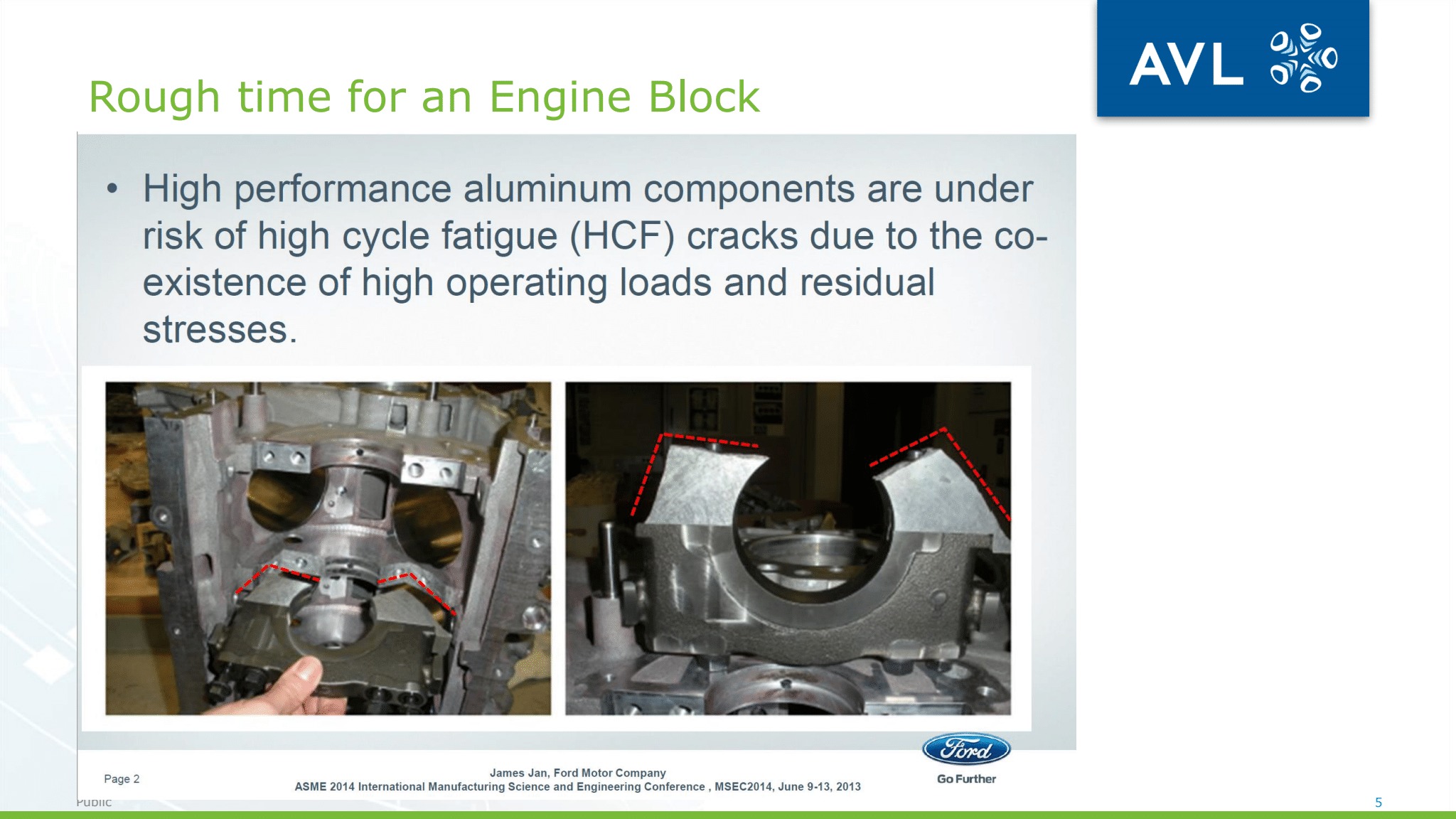
JJ: The reason that they wanted to solve the problem is because during the heat treat process there are a lot of cracks. The cracking problem during heat treating has been a quality concern for Ford for many, many years. I would say that the problem has been there for 20 some years. In the past, during the cracking process, one of the remedies would be to do a lot of trial and error. For example, during water quench if they see a crack, they switch to air, and if the air doesn’t work, then they switch to polymer. Or if this is cracking somewhere or in some location, they add more material in that area. So, it’s pretty much like responding to the problem, rather than trying to understand the problem and to predict the problem. So that is where the whole thing comes in that the researchers started the project in 2002 because they believe that they really needed a tool to predict the problem rather than responding to it.

DG: So, the problem Ford was having was decades old. And it is a problem that many manufacturers have. It is the age-old problem of being able to predict residual stresses formed during the quenching process that ultimately result in cracking and component failures. Ford, like many other manufacturers, were simply doing trial and error until they got the right combination of part geography, heat treat cycle, and quenching medium and quench orientation. The problem is, that process takes a long, long time and it costs a huge amount of money. Here is Mr. Jan describing the issue with a trial and error approach.

JJ: Every time they make a change to a design, they have to build a prototype part. There will be cost involved because when you build the prototype, you still need a die, you still need the testing process, and then once you have built it you have to run the test to see if it cracks or not. This back and forth just simply takes too much time and too much cost.

DG: The thinking was that if the design engineer and manufacturing engineer could talk earlier in the process, it would help save time and money. Specifically, it would be better if the design engineer could interact with some sort of predictive modeling system that fairly accurately represented the heat treating and quenching portion of the manufacturing process to predict residual stresses and potential cracking issues before they happened. If that were possible, it would save Ford thousands if not hundreds of thousands of dollars. Here is Mr. Jan describing the idea.

JJ: This has something to do with the product development process. When any company tries to development product, their first objective is to satisfy the functional requirement. So basically, if you have an engine and you want a certain horsepower, you want to make sure your engine will satisfy the horsepower. At the beginning of design, their only concern is about functionality, they don’t care about anything else. Once the design is fixed, somebody needs to make it. I belong to manufacturing engineering, so we do not deal with designing, we deal with how to make that part.

During the design process, they usually do not have manufacturing information. Once the design is done, which is usually pretty late in the design cycle, the part has pretty much been determined already. Then we come to manufacturing and we try to quench it, and find, “Oh, gee, it’s cracked.” Then we tell product development, “We have a cracking problem,” and they say, “I wish you had told me earlier.” That is where the problem comes in. Because we are not able to know if the process works or not until we have a physical part, so that’s why Ford’s research tried to initiate a project that said even though design is still ongoing and the manufacturing generally has not started yet, let’s try to do some virtual process simulations to see whether it will crack or not.

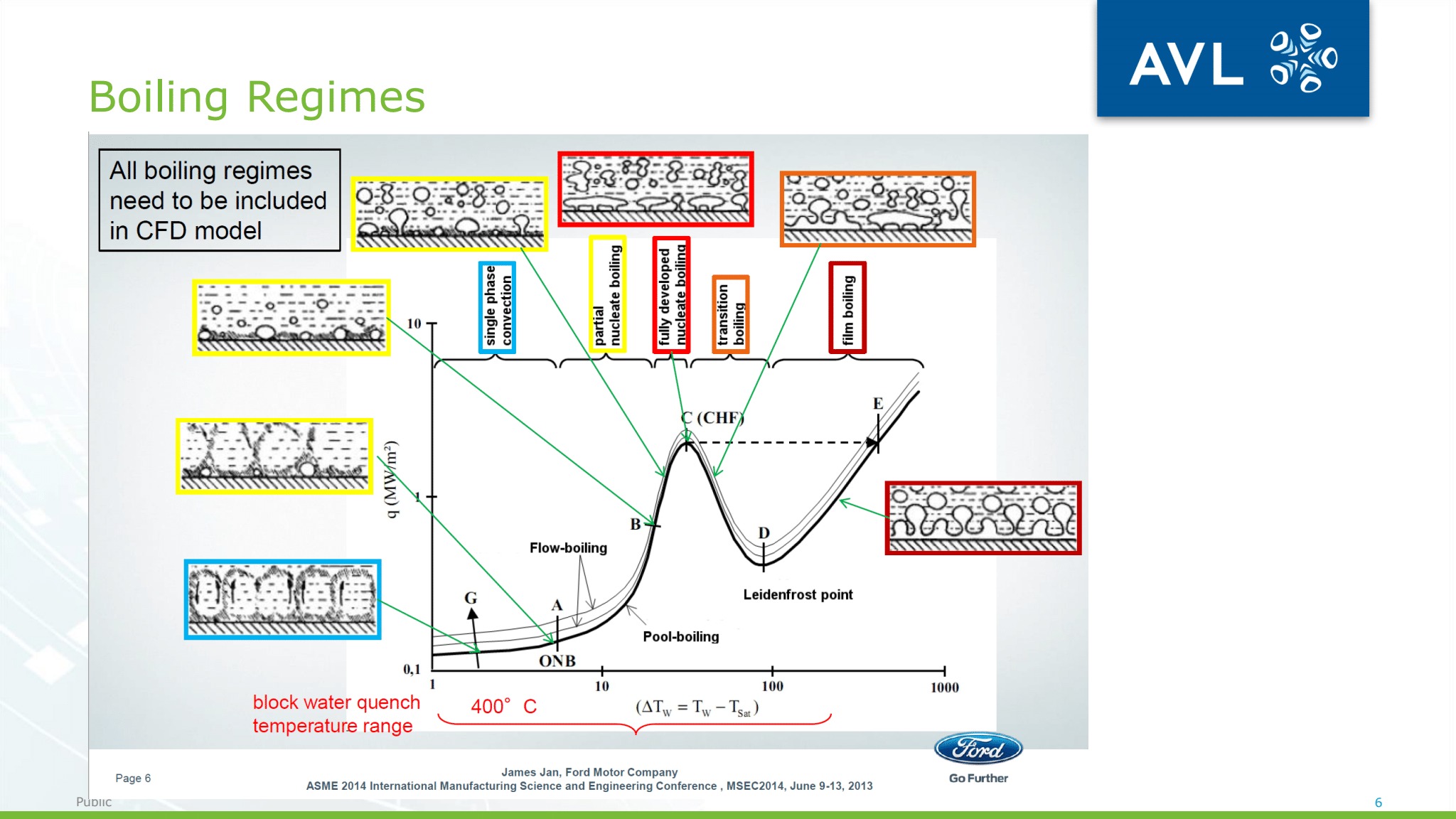
DG: The specific tool that Ford was looking for was a tool that could predict multiphase flow quenching outcomes, what many of our listeners would recognize as the Leidenfrost Effect or vapor boiling. According to Mr. Jan:

JJ: The boiling process, because the physics is very complicated, we couldn’t find any commercial software on the market that would solve the problem. So, we contacted AVL at the time.

DG: As Mr. Jan said, since they weren’t able to find any commercially available software to predict the multiphase Leidenfrost Effect, they turned to AVL. So, Heat Treat Radio put a call into AVL Powertrain Engineering in Plymouth, Michigan, and spoke with Andrew Martin, who is the direct of advanced simulation technologies. We asked him about AVL’s relationship with Ford.

Andrew Martin, AVL (AM): Our relationship has gone back to about 20 years now. Twenty years ago, Ford was seeing cracking in the cylinder heads—and not only Ford but many of its competitors out in the marketplace. So, this was something they wanted to explore. AVL as a company, currently at about 10,000 engineers, has always had a strong relationship with Ford. We develop engines and transmissions together, and things like that. Ford came to us and asked can you look into this? They knew that we had a good CFD code and we were doing a lot of multiphase work, especially on things like fuel injection and boiling in water jackets and things like that. They knew we had a reputation in those areas, so they wanted to work with us on coming up with some sort of a simulation and analysis approach for the boiling that occurs during quenching analysis. Between us, we did the research and that led to a technical paper that was published, I think ASME, but that was in 2002. James (Jan) was involved in that paper back then as well.

DG: I asked Andrew to briefly describe the cylinder head issue that Ford brought to them.

AM: Cylinder heads are very complicated because they have so many cavities. When you quench something like that, then the vapor gets trapped in certain areas and that can lead then to localized residual stresses.

DG: And what did AVL have to bring to the table?

Boiling regimes

AM: Previously, they were doing it the old-fashioned way, they were doing with thermocouples. They would thermocouple a cylinder head and quench it and then look at the data and get the HTCs (heat transfer coefficients) from it then feed that back into the CFD code and then make some assessments about the residual stresses and the distortion. But that is a very expensive way of doing it and it doesn’t lend itself very well as a designing tool. They wanted to find some mathematical approach for doing that. James is extremely experienced in CFD and has used a whole bunch of our CFD codes that compete with AVL FIRE. But he then started using FIRE and realizing that given all the tools that he had at his disposal, FIRE was the one that was giving the best results for doing this boiling analysis.

DG: Andrew referred to AVL FIRE which is a brand name of a specific product offered by AVL. I asked him to briefly explain that product.

AM: AVL FIRE is a CFD (computational fluid dynamics) code. It is an engineering discipline that is quite common and quite popular. We then used CFD to model the boiling that goes within a tank of water and the interface between the component and the water, the so-called film boiling barrier. We model what happens with FIRE CFD code, we model what is happening at the transition of the interface between the metal component and the water. Because when something that hot gets plunged into water, it is quite an interesting thing that happens—it is called the Leidenfrost Effect. Initially, what happens is the component is so hot, it forms a film around the outside of it, a vapor film, and perversely that vapor film then insulates the component from the water. That film slowly breaks down then you get into nucleate boiling and things like that, and that becomes a lot more aggressive and the cooling happens much faster until you eventually get a single phase. But actually modeling the boiling process is what the CFD code does. That is the secret sauce that we’re bringing to the party here.

DG: And, in fact, this secret sauce that Andrew refers to is quite unique. Earlier, James Jan from Ford mentioned that the AVL model was able to handle multiphase analysis, where most other models simply ignored one of the phases, usually gas, and focused exclusively on the interaction between the hot metal and water. I asked Andrew to unpack this more sophisticated modeling process and what developments have been made since they initially started working with Ford.

AM: Since then, it’s matured a lot further within the software. We now have different meshing approaches and we’ve also moved beyond water as well, of course. A lot of quenching is done in water, but there is also a lot of gas quenching, so blown air quenching, which takes longer but is less aggressive. And then we’ve got into steels as well. The original work we did with James was more on aluminum and that doesn’t have the same phase transformation issues as steel does. So

Typical simulation results

we’ve done a lot more work with steel recently, where we have to take account of that latent heat, that then forms a sort of a knee in the cooling, so we then model that. When we doing steel, of course, we’re using oil more commonly, so then we have different properties of oil to consider, different fluid properties of that. Most recently and what has been very interesting, we’ve been involved with a Canadian casting company on spray quenching. There you have a mix

between blown air and actually liquid itself where we’re spraying a jet of fluid at the component. Mathematically, that is a heck of a lot more complicated because you have to model the spray and you have to model the Ledienfrost Effect and the cooling and so on.

DG: Given the solution that AVL brought to Ford, I was curious if both Ford and both AVL were happy with the partnership. First, James Jan from Ford on how Ford and AVL worked together to develop the tool.

JJ: As a matter of fact, even though AVL worked with us to provide us the technology, it is not like we just go buy it and use it.

Simulation variables

Actually, we worked together about 3 to 4 years. On our end, we provided a lot of testing data because we work with a university and we also have an experiment facility inside Ford. When they provided the tool to us, it is still like a banana. They have the basic formulation working but they haven’t tested or validated, so there are 3 to 4 years where we were actually working like partners. It is not like, ok, I’m going to Home Depot, buy a tool and come home and use it. No. We actually did not put the AVL tool into production use until 2015. So there was about 3 to 4 years of time going back and forth trying to improve software. Until today, we still own a small piece of the technology, that is proprietary to our company Ford. Even though to AVL and buy their software and they bring it home, they may not produce the same results that we do, because we have a secret recipe in Ford.

AM: We’ve been very happy with the willingness of Ford to develop the process further, to mature it. They saw that we had something that was useful and beneficial and brought value, but actually James has been phenomenal, because he’s really pushed that agenda as well, and written papers and taken it to conferences, and I think he’s been very impressed with what AVL FIRE has been able to do, so he will talk to anybody about it. So we love it.

DG: Finally, I asked Andrew Martin from AVL who, in his estimation, would also benefit from the AVL fire and similar products, and what changes are being made for the future.

AM: It’s casting companies for sure. I was talking to a British company that makes castings, like high-end blocks for Astin Martins and Land Rovers and so on, and they have certain specifications they have to meet. They are not allowed to have a residual stress more than a certain level in a certain direction. Now how do they know that that’s the case? They can actually cast a few and then heat treat them and then cut them up and see how the material releases, but that rather destroys the actual component in the first place. So companies like that that want to know where are the residual stresses in the component and they want that as something that they can certify the component for, it is very good for that sort of company. Automotive is an obvious candidate, but also we’ve been doing a lot more work in aerospace where the residual stresses that they do want to know where are they and how much are they. Things like landing gears and stuff like that.

DG: And how about the future?

AM: Well, our software is developed over in Europe. I talked to Dr. David Greif the product manager the other day asking him where are we going with this. We’re making it a lot more easy to use. We’re putting workflows in place in AVL FIRE that sort of lead the user through the steps needed to predict the residual stresses and so on. The meshing of the components got a lot simpler using this polymeshing and it more leads you by the hand, as opposed to being a general purpose CFD code where you’ve got to build your own methodology to start off with. FIRE has a methodology built in for doing quenching and that’s brilliant. We’re doing a lot of work with gears at the moment. We’re working with a vacuum furnace company in Wisconsin called ECM Group and they’ve been using AVL FIRE for predicting the residual stresses in the components, so we’ve got a great relationship with ECM and that’s taking us in different directions as well. They are especially doing work on the gear side, so that’s been interesting.

DG: In fact, the whole relationship between Ford and AVL is interesting, as well as the ability to bridge the gap between design and heat treatment. Specifically, the quenching part of heat treatment. With advances in technology and modeling packages like AVL’s FIRE, high volume producers like Ford and other automotive, as well as aerospace manufacturers, have the opportunity to save significant dollars by modeling the process before they jump into the manufacturing process with both feet.

This interview is a follow up to an article in Heat Treat Pro, a publication of ASM International, “Using Virtual Tools for Quenching Process Design” by James Jan and Madhusudhan Nannapuraju. Images from powerpoint presentation and provided by AVL.

Doug Glenn, Publisher, Heat Treat Today
Doug Glenn, Heat Treat Today publisher and Heat Treat Radio host.


To find other Heat Treat Radio episodes, go to www.heattreattoday.com/radio and look in the list of Heat Treat Radio episodes listed.

Heat Treat Radio #21: James Jan & Andrew Martin on Development of Modeling Software Read More »

Using Virtual Tools for Quenching Process Design

By validating CFD simulation results with thermocouple data, Ford Motor Company is now using virtual tools to study aluminum cylinder head quenching process and gains valuable information for process design and optimization. James Jan and Madhusudhan Nannapuraju presented a study titled “CFD Investigation of Quench Media and Orientation Effects on Structural Stress Induced in the Intense Quenching Processes for Aluminum Cylinder Heads” at Heat Treat 2017 as part of the proceedings of the 29th ASM Heat Treating Society Conference, October 24–26, 2017, Columbus, Ohio, USA. (Copyright © 2017 ASM International® All rights reserved.)

This article is a synopsis of the study, which can be read in its entirety here: “CFD Investigation of Quench Media and Orientation Effects on Structural Stress Induced in the Intense Quenching Processes for Aluminum Cylinder Heads”


Heat treatment is a common manufacturing process to produce high-performance components. Although heat treatment incorporating a quenching process can produce parts with durable mechanical properties, an unwanted effect of intense quenching is the induced thermal residual stress, which often is a leading cause for quality issues associated with high cycle fatigues. During the product development cycle, it is not uncommon to switch between air and water quenching and change quench orientation in order to minimize residual stress. However, the choice of quench media and quench orientation is often determined by intuitive engineering judgment at best and trial-and-error iterative method at worst.

In recent years, digital verification using finite element analysis (FEA) is gaining popularity because of its efficiency. The computational method to predict the residual stress involves two calculations. The first step is to calculate the temperature history; then the temperature data is used as thermal-load-to-structure analysis for stress and deformation calculation.

A popular method for temperature calculation is the heat transfer coefficient (HTC) method, however, the biggest drawback of HTC method is that the method relies on thermocouple measurement for calibration and the calibrated HTC may not be applicable to different design and quenching process. With the advancement in computation fluid dynamics CFD technologies, the temperature history in quenching now can be accurately calculated. Since thermal residual stress is directly linked to non-uniform temperature distribution in the metal, spatial temperature gradient is evaluated to study the performance of different quench media and configuration.

Figure 1: Heat treatment process for aluminum cylinder heads and quality concern associated with quenching process.

Air Quench Process for Cylinder Heads

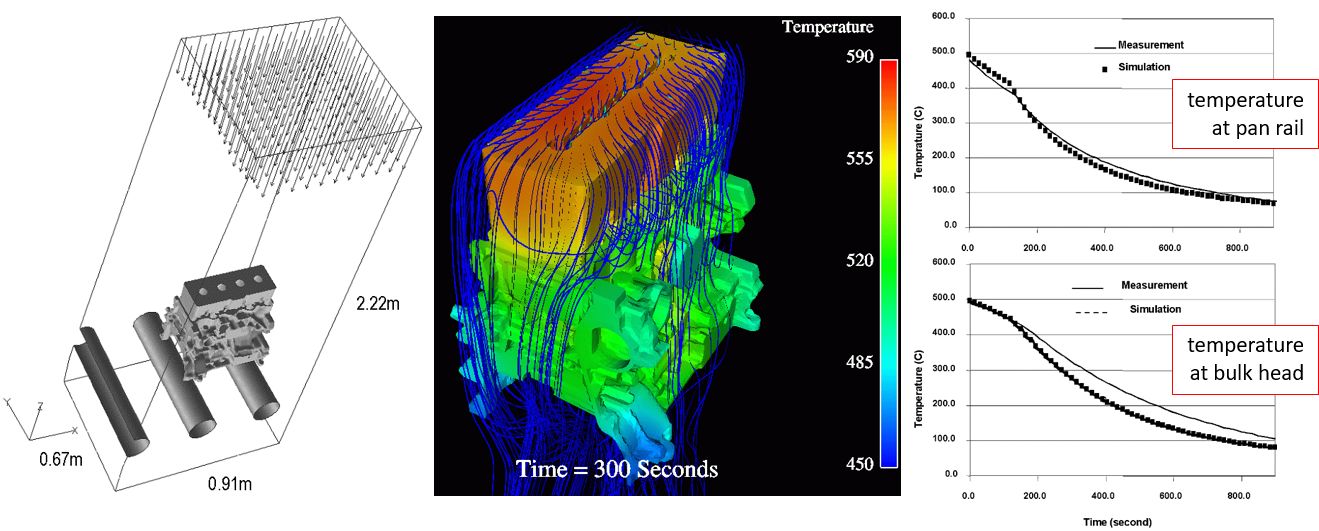
The main heat extraction mechanism in air quenching is forced convection. In our CFD model, it is assumed that the buoyancy effect and radiation heat transfer have a negligible impact on the accuracy. The CFD simulation results are compared with thermocouple readings, and the overlapping curves illustrate an excellent agreement and validate our model.

Figure 2: CFD model and comparison to thermocouple measurement for air quenching a cylinder block with riser attached.

We use CFD to study and compare four different air quenching configurations. One unique advantage of CFD simulation over physical testing is its capability to visualize flow patterns and to identify low heat transfer regions under stagnant air pockets. The quenching configuration (a), (b) and (c) represent a conveyer style quenching environment, (d) represents a basket style quenching environment. See Figure 3.

Figure 3: Air flow and air pockets surrounding cylinder head for all air quenching configurations, 60 seconds into quenching.

The cooling curve plot shows that the cylinder head quenched in a basket (d) cools faster compared to those quenched on a conveyer (a), (b), and (c). According to the temperature gradients plot, basket quenching (d) cools faster at a higher temperature gradient than conveyer quenching (a) and (c). The only exception is (b). In-depth investigation of the location of high-temperature gradient indicates that the regions between the water jacket and intake port are susceptible to high residual stress.

Figure 4: Cooling curve and temperature gradient for all air quenching configurations.

Figure 5: High-temperature gradient locations for conveyer quenching (a) and basket quenching (d), 60 seconds into quenching.

Water Quench Process for Cylinder Heads

The physics of water quenching is much more involved than air quenching. Ford Motor Company adapted the quench model framework by AVL FIRE™, which is based on the Eulerian-Eulerian multiphase model, and developed our own proprietary database to simulate the water boiling process. Extensive work has been done on computation and experiments to validate the numerical methods. The CFD simulations compared to lab experiment on cooling curves provide strong evidence that our CFD model is accurate and that it can predict temperature profile on every quenching orientation without calibration.

Figure 6: Experimental and CFD simulation for cylinder block; cooling curves from CFD and thermocouple are plotted together for comparison.

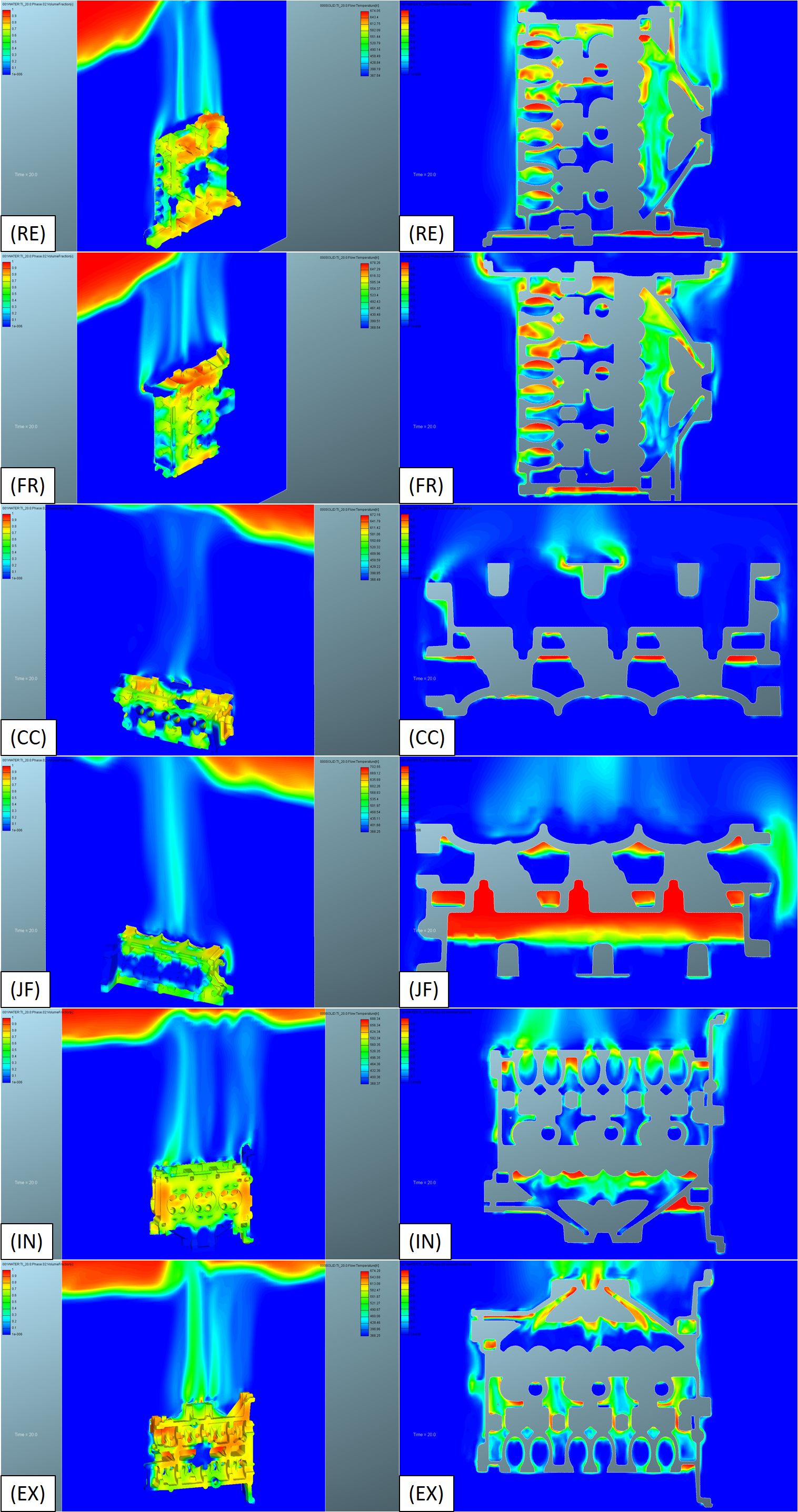
Six different quench orientations are studied, and the vapor patterns and vapor pockets are plotted for in-depth investigation. The cooling curve and temperature gradient plot illustrate that orientation has little impact on overall cooling characteristics, and maximum temperature gradient is similar except that they occur at different time, even though the vapor pattern and locations of vapor pockets are drastically different in each quenching orientations.

Figure 7: Vapor Pattern and Vapor Pocket Entrapped inside Cylinder Heads, 20 seconds into quenching.

Figure 8: Cooling curve and maximum temperature gradient for all water quenching configurations.

Observing the location of the high-temperature gradient, for rear face up (RE) and cam cover face up (CC) quenching, high-temperature gradient appears in the intake port area, similar to the air quenching cases. Since the high-temperature gradient is observed near the intake port for all quenching cases, both air quenching and water quenching, very likely it is a design-related issue.

Figure 9: High-Temperature Gradient Locations for Rear Face up (RE) and Cam Cover Face up Quenching (CC), 20 seconds into Quenching.

Comparison of Air and Water Quenching Process

The underlying heat extraction for air and water quenching is very different. While air quenching relies on convection heat transfer to cool the metal, water quenching relies on water to vapor phase change to take the heat away. Therefore, metal cools significantly faster in water quenching than in air quenching. The maximum temperature gradient for water quenching is also much larger than air quenching. Since water only vaporizes in areas in contact with a hot surface, the heat loss is a local phenomenon subject to vapor escape route and the supply of fresh water. In other words, the heat transfer may not be as smooth as air quenching and it is reflected in the fluctuation of high-temperature gradient plot.

A much higher temperature gradient in water quenching does not necessarily generate much higher residual stress. We can also see in the plot that the duration of peak temperature gradient only lasts about 15 seconds. In this duration, the metal may exceed yielding stress and plastic deformation starts. However, the final deformation also depends on how long the state of stress stays in plastic deformation zone.

Figure 10: Cooling curve and maximum temperature gradient for selected air and water quenching configurations.

Conclusions

The rapid, large temperature drop in the quenching process has two opposite effects on the eventual outcome. On one hand, the large cooling rate produces metals with better quality, but it also induces residual stress. Thanks to the advancement of 3D CFD methodology, now the metal cooling in the quenching process can be much better understood using computer simulations. By using validated air and water quench modeling method, we compared the cooling curves and temperature gradient to evaluate quenching performance for various quenching configurations.

For air quenching processes, the study finds that cylinder heads cool faster in basket quenching than in conveyer quenching environment. The explanation is that airflow is accelerated when passing through the narrow gaps between cylinder heads in basket quenching. For water quenching processes, the study finds the orientation has little effect on the overall cooling rate as well as maximum temperature gradient except for a time shift in the maximum gradient. The results also show that the temperature gradient in water quenching is significantly larger than air quenching but last a much shorter period of time. Studying the temperature gradient for all air and water quenching case reveals a weak spot between the intake port and water jacket. Since this spot appears in all quenching cases, it should be remedied by a design change rather than changing the manufacturing process alone.

References

  • Koc, M., Culp, J., Altan, T. “Prediction of Residual Stresses in Quenched Aluminum Blocks and Their Reduction through Cold Working Processes,” Journal of materials processing technology, 174.1 (2006), pp342-354.
  • Wang, D.M., Alajbegovic, A., Su, X.M., Jan, J., “Numerical Modelling of Quench Cooling Using Eulerian Two-Fluid Method”, Proceedings of IMECE 2002, ASME-33499 Heat Transfer, vol. 3, 2003, pp. 179-185. LA, USA.
  • Srinivasan, V., Moon, K., Greif, D., Wang, D.M., Kim, M., “Numerical Simulation of Immersion Quench Cooling Process”: Part I, Proceedings in the International Mechanical Engineering Congress and Exposition, IMECE2008, Paper no: IMECE2008-69280, Boston, Massachusetts, USA, 2008.
  • Srinivasan, V., Moon, K., Greif, D., Wang, D.M., Kim, M., “Numerical Simulation of Immersion Quench Cooling Process”: Part II, Proceedings in the International Mechanical Engineering Congress and Exposition, IMECE2008, Paper no: IMECE2008-69281, Boston, Massachusetts, USA, 2008.
  • Kopun, R., Škerget, L., Hriberšek, M., Zhang, D., Stauder, B., Greif, D., “Numerical simulation of immersion quenching process for cast aluminium part at different pool temperatures”, Applied Thermal Engineering 65, pp. 74-84, 2014
  • Jan, J., Prabhu, E., Lasecki, J., Weiss, U, “Development and Validation of CFD Methodology to Simulate Water Quenching Process,” Proceedings of the ASME 2014 International Manufacturing Science and Engineering Conference, Detroit Michigan, 2014.


Photo credit for all images: Ford Motor Company; cited in “CFD Investigation of Quench Media and Orientation Effects on Structural Stress Induced in the Intense Quenching Processes for Aluminum Cylinder Heads”, Heat Treat 2017: Proceedings of the 29th ASM Heat Treating Society Conference October 24–26, 2017, Columbus, Ohio, USA.


Using Virtual Tools for Quenching Process Design Read More »

Electric Cars with AI to Expand VW-Ford Alliance

Ford Motor Company and Volkswagen AG announced they are expanding their global alliance to include electric vehicles and will collaborate with Argo AI to introduce autonomous vehicle technology in the U.S. and Europe. Volkswagen and Ford independently will integrate Argo AI’s SDS into vehicles.

Ford will also become the first additional automaker to use Volkswagen’s electric vehicle architecture and Modular Electric Toolkit – or MEB – to deliver a high-volume zero-emission vehicle in Europe starting in 2023. For Ford, using Volkswagen’s MEB architecture is part of its more than $11.5 billion investment in electric vehicles worldwide. Both companies will  continue to target additional areas where they can work together on electric vehicles because of their goal to accelerate the transition to sustainable and affordable mobility. 

“Looking ahead, even more customers and the environment will benefit from Volkswagen’s industry-leading EV architecture. Our global alliance is beginning to demonstrate even greater promise, and we are continuing to look at other areas on which we might collaborate,” Volkswagen CEO Dr. Herbert Diess, said. “Scaling our MEB drives down development costs for zero-emissions vehicles, allowing for a broader and faster global adoption of electric vehicles.”

The alliance, which covers collaborations outside of Volkswagen and Ford’s joint investments in Argo AI, does not entail cross-ownership between the two companies and is independent from the investment into Argo AI.


Electric Cars with AI to Expand VW-Ford Alliance Read More »

U.S. Automaker Expands Capacity at Assembly Plants for Incoming SUVs

A major U.S. automaker recently announced plans to transform its Chicago manufacturing facility to expand capacity for the production of three new SUVs.

Ford Motor Company is investing $1 billion in Chicago Assembly and Stamping Plants, the company’s oldest continually-operated automobile manufacturing plant, to prepare for the Ford Explorer, Police Interceptor Utility and Lincoln Aviator.

Joe Hinrichs, president, Global Operations

With the Chicago investment, to begin in March and be completed later in the spring, Ford is building an all-new body shop and paint shop at Chicago Assembly and making major modifications to the final assembly area.  At Chicago Stamping, the company is adding all-new stamping lines. Advanced manufacturing technologies at the plants include a collaborative robot with a camera that inspects electrical connections during the manufacturing process. In addition, several 3D printed tools will be installed to help employees build these vehicles with even higher quality for customers.

“We are proud to be America’s top producer of automobiles. Today, we are furthering our commitment to America with this billion dollar manufacturing investment in Chicago and 500 more good-paying jobs,” said Joe Hinrichs, president, Global Operations. “We reinvented the Explorer from the ground up, and this investment will further strengthen Ford’s SUV market leadership.”

Chicago Assembly, located on the city’s south side, is Ford’s longest continually operating vehicle assembly plant. The factory started producing the Model T in 1924 and was converted to war production during World War II.


Photo credit/caption: Ford/Jason Hoskins, Ford employee, learns to build the all-new 2020 Ford Explorer.

U.S. Automaker Expands Capacity at Assembly Plants for Incoming SUVs Read More »

Flex-N-Gate to Build $95M Plant in Detroit to Supply Ford

BOTW-50w  Source:  Today’s Motor Vehicles

Flex-N-Gate owner Shahid Khan says his company will invest $95 million in construction and capital costs for a Detroit-area facility that will supply parts to Ford Motor Co. Potential additional investment in the project could push the project to at least $100 million. Khan says the project will create at least 400 and up to 650 new jobs in Detroit over the next three years; at full capacity, up to 750 total jobs could be added.”

Read More:  Flex-N-Gate to Build $95M Plant in Detroit to Supply Ford

Flex-N-Gate to Build $95M Plant in Detroit to Supply Ford Read More »

Skip to content