


Abbott Furnace Company

Heat Treat Radio #128: Silicon Carbide Without Transformers: How Is That Possible?


In this episode of Heat Treat Radio, Tony Busch of Control Concepts, Christina Clowes of I Squared R, and Dr. Stephen Feldbauer of Abbott Furnace Company join host Doug Glenn to discuss a new transformer-free approach to electrically heated furnaces. The group walks through how SCR power controllers paired directly with silicon carbide heating elements can reduce system cost, simplify design, and improve control accuracy. They also explore the global adoption of zero-cross technology and its growing relevance in North America.

Below, you can watch the video, listen to the podcast by clicking on the audio play button, or read an edited transcript.



The following transcript has been edited for your reading enjoyment.

Introduction (0:45)

Doug Glenn: We’re going to be talking about a relatively new combination of two fairly well-known technologies that will help some people save money. Those two technologies are SCR power controllers and silicon carbide heating elements. It’s actually kind of a little case study. If you’ve got an electrically heated furnace, this would be one you’ll want to stay and hear.
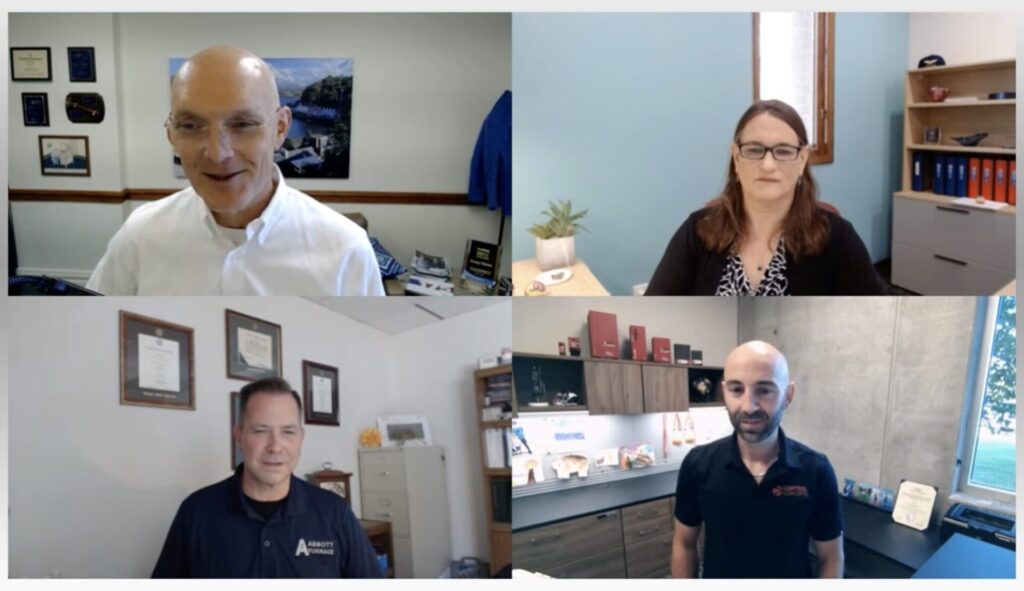
Clockwise from top left: Doug Glenn (host), Christina Clowes of I²R Elements Company, Tony Busch of Control Concepts, and Dr. Stephen Feldbauer of Abbott Furnace Company

Our first guest is Tony Busch from Control Concepts. Tony Busch is the North American sales manager for Control Concepts. Next is Christina Clowes, the vice president over at I²R Elements Company. Our final guest is Dr. Stephen Feldbauer, the director of research and development at Abbott Furnace Company.

A Furnace with a New Configuration (1:45)

Doug Glenn: To get a sense of this furnace that we’re talking about, can you describe the situation and this new configuration of power controls for the heating elements?

Steve Feldbauer: What I can say is that this was a new piece of equipment to replace an old technology for a new facility.

Okay, so they were going to move to a new facility and they said, “Hey, we don’t want this old stuff. Let’s look at just buying a new furnace for this application.”

This is for the casting industry. The molds go into the furnace and traverse through; the furnace preheats them so that operators can then pull them out and fill them with metal. So it’s a continuous furnace for mold preheating application for the casting industry.

It was exciting! We had an electrically heated furnace, and then began talking with Tony and Christina. Control Concepts had this concept, no pun intended: Traditionally, design of an electrically heated furnace above a certain temperature (1850 degrees), we use silicon carbide heating elements and — due to resistance changes over time — we have to put transformers in there that allow us to keep upping the voltage and maintain heating capability. Control Concepts said, “Hey, we can take innovate technology and save some money, make things a little easier, and get rid of the transformers.”

And we really had a great outcome.
Doug Glenn: This is a foundry industry application, the preheating of molds, and this is a continuous furnace. You guys, Abbott, obviously won that bid to supply that furnace. I’m sure it was a competitive situation, so congratulations.

Traditional SCR and Silicon Carbide Heating Element Configuration (4:40)

Doug Glenn: So Tony, one of the great features of this Abbott furnace that helped them win this order was this relatively new configuration of the power supplies. as Steve was saying. Tell us a little bit more about the SCRs and the silicon carbide heating elements.

Tony Busch: I think it’s important to understand where we came from and where we are now with this new technology.

In the past, at least in North America, silicon carbide heating elements produce a high temperature, a high current. To help that happen and so you do not have a big, thick gauge wires, a transformer would be added to the design very close to the furnace. This reduces the conductor size. That transformer often was a multi-tap transformer. From a SCR power controller standpoint, you would be controlling the power on the primary side of the transformer, let’s say 480 volt stepping down into 60-70, whatever volts are required for the application. To use a transformer with a power controller, you need phase angle power control.

This is how it has been done in the past with phase angle firing varying every half cycle into the primary of a transformer.

The New Setup (06:09)
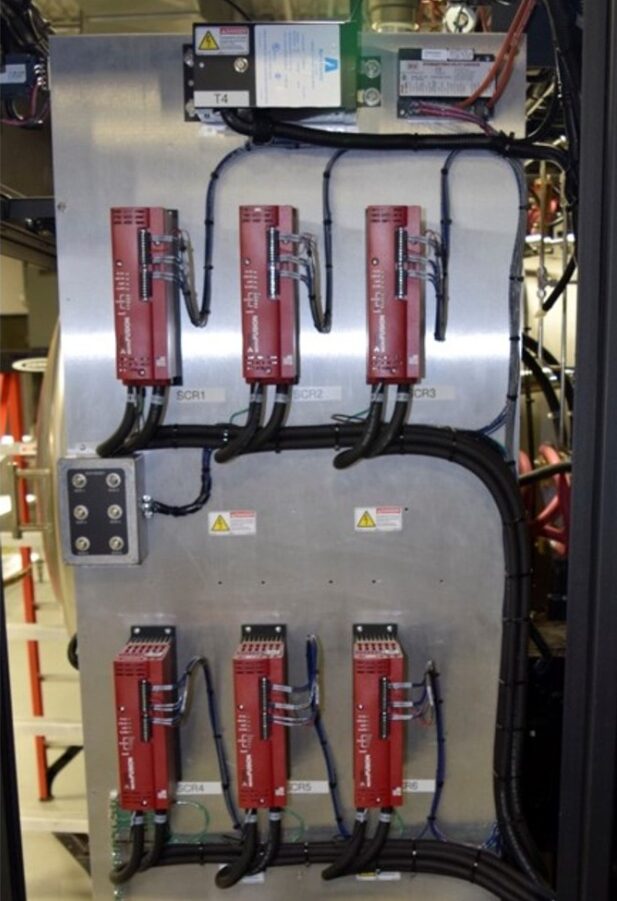
Example of SCR power controller units attached directly to industrial furnace. Source: Control Concepts

Doug Glenn: What is the new configuration?

Tony Busch: With the new scheme, we are removing the transformer. Now you have an SCR power controller firing directly into the silicon carbide heating elements.

To do this, you will have to have slightly bigger power controllers, but you’re completely eliminating the transformer and you’re going directly into it. To take it a step further, we use a special firing mode called Fast Zero Cross. This mode satisfies the heating elements.

We are maintaining a very smooth watt density output to the heating elements. You can control it and the power feedback if you need to, which is essentially your unit of measure to control the power, which can be in KW versus voltage or current.

Doug Glenn: That’s on the power side. Control side of things. That’s basically the new arrangement: removal of the transformer; direct feed into the heating element, with some advantages. Christina, how about the heating element? Can you tell us a little bit about the heating element in this situation?

Christina Clowes: This is not a unique heating element in this particular case, because the same heating element configuration probably would’ve been used even if you were using a multi-tap transformer based system.

The key to the operation here is the very rapid switching of full sine waves through the heating elements, where you’re proportioning the “on-to-off” cycles, electrical cycles, so rapidly that the heating element does not have time to respond to the very high instantaneous loadings during each “on” cycle.

For example, in the U.S., typically you are looking at a power supply that’s at 60 hertz, 60 cycles per second. One electrical cycle is one 60th per second, or 16.66 milliseconds. In that case, if you were regulating the outputs from the heating elements to 50%, you would have one cycle on, followed by one cycle off, and that being repeated continually.

The heating element during that one cycle, that 16.66 milliseconds, does not have enough time to respond firmly to that very high loading. As a result, the RMS voltage, the natural average voltage over time, governs the load into the heating elements. So, you can design around systems based on 480 volts but regulate the RMS output on the controller to whatever the heating element needs to generate the amount of power that’s needed by the process.

The control is the key to this operation.

Doug Glenn: Is it possible to use a standard or any type of heating element or do you need a special silicon carbide type?

Christina Clowes: It is not a special silicon carbide. We designed this particular application around the needs of the process, the operating temperature, the specific loading required for the process. But it is a different control methodology that’s really the key.

New Technology for North American (10:22)

Doug Glenn: While this technology is somewhat new in North America, it is actually not new on a global context. Can you address this?

Christina Clowes: In Europe, this kind of zero-cross base system has been commonplace for quite some years; also in Asia. The difference in North America is, I think, tradition, more than anything else. People have been used to using phase angle control for silicon carbide heating elements. That’s kind of where this technology grew out from, and people have stuck with that because it works. But this new technology though gives an opportunity to save money and space, while achieving the same result.

Doug Glenn: So for the North American market, this is somewhat new. But it is a proven technology. It’s not a new technology that we are still trying to get our hands around. It’s been done globally, which is an important point.

Cost Savings for the Customer (11:45)

Doug Glenn: With respect to cost savings for the customer, can you describe the capital expenditures, operating costs, and even maintenance costs?

Steve Feldbauer: We know that by eliminating the transformer, there’s the substantial costings. The SCR is doing the change in the voltage and controlling and eliminating that need for the transformer.

By eliminating that piece of equipment, you’re seeing upwards of anywhere between a 50 to 75% cost savings per heating zone. That’s a big number. There’s a wide range in that cost savings depending on the size of the heating zone, the size of the furnace, and the number of heating zones. That is a substantial saving.

In addition, the customer sees savings in shipping costs. In this case, removing the transformer reduced the size of the furnace by 2,100 pounds. That goes directly into your shipping cost.

Customers also see a lot less downtime because every time that you would want to change the tap in a traditional furnace, you have to power the furnace down, which interrupts production. There’s a knowledge base needed to know when and how to change the tap. But with this new technology, the furnace just continually operates.

There is also space savings. That transformer takes up space, which limits where we can put in things. For example, for the last line on a continuous furnace with a belt, the placement of the belt is dictated by where we put the transformers because the transformers typically go up underneath the hot box. Without the transformer, we now have flexibility and design.

So, we save in a number of different areas.

Maintenance of the SCR (14:24)

Doug Glenn: Maintenance wise, are the SCRs easier to maintain?

Steve Feldbauer: There is not much maintenance required for the SCRs. Once you put them in and they are set up, our customers really do not have to touch them unless they have to replace them. As far as tuning them and similar maintenance, there’s really not a lot that goes into them. Especially since now, you’re also not changing voltages. There’s not a lot of variability in the system. It’s set up and it just sits there and controls itself.

Advantages for the Customer (17:45)

Doug Glenn: What are the advantages for the customer?

Steve Feldbauer: There are many advantages in terms of cost, maintenance, and the ease in usage. There’s also less training, because you’re not teaching someone when or how to change a tap. This is a marked change in how you look at electrical furnace control in North America. This is something that is widely used throughout the rest of the world, so it’s not a new technology, but it’s new and innovative to North America. If you can optimize and streamline the process, why wouldn’t you?

Upgraded Features: Digitization and Data (18:58)

Doug Glenn: I also understand there are upgraded features because you’ve moved to an SCR and into a digital world with being able to get data back out of the furnace and understand the operation of the system because of the digitalization of it. Do you want to address that?

Tony Busch: By having a digital SCR power controller, you can connect up to your network, whether it’s Ethernet IP or Modbus TCP. You are able to collect all of that data. From that data, you are able to do things such as monitor the KW per hour. If you’re starting your process, and you want to know how much power was consumed during that particular time period, you can reset your KW per hour. Then you can find out how much you consumed when you are done and evaluate your efficiencies. All of that is recorded within the power controller. It’s essentially an industrial grade power meter built in.

Also, now that you are directly coupled with the silicon carbide heating elements, you have a very accurate load resistance monitoring capability. You are able to analyze the resistance and determine the health of your silicon carbide heating elements.

You can also plot a resistance curve. So you would know that if tolerance drifts 10, 20, 30%, you may be looking at a predictive maintenance situation where you look at your heating elements at some point and monitor the load currents. For a three-phase setup, if you notice that one of the phases is unbalanced, you may want to evaluate and determine the cause. You are able to be alerted without manually getting in there with a multimeter and doing your own research.

Christina Clowes: Compared to phase angle firing, which has been historically the most commonly used in North America, switching to a zero-cross system, a full sine wave based system, the SCRs turn on and off at zero volts potential.
To learn more about how SCR power controllers support tighter control when directly coupled with heating elements, you can click the image above to read this in-depth technical article co-written by Tony Busch.

As a result, that doesn’t produce any transient spikes that create a harmonic overlay, so there’s no electrical noise being generated. Utility companies do penalize their customers for generating electrical noise on their supplies.

In addition, because you have false sine waves, you have unity power factor, essentially. There’s no poor apparent power factor, which you have with a phase angle firing because you’re chopping the sine wave and conducting only part of the sine wave.

When you have purely resistive load, in the case of a Star Bar element, there’s no reactance, inductance, or capacitance. But because of the way that a phase angle SCR fires, it appears that there’s a power factor and people pay for energy that they are not consuming. This is more efficient way of driving an element system with a better handle over the energy that you’re consuming.

Doug Glenn: Is it more difficult to engineer these systems?

Christina Clowes: The exciting or interesting part is introducing new technology to people that actually helps them and provides real benefits. The total cost of the system is simplified and reduced, which makes it far more attractive for Star Bar-based systems to be sold into applications.

Doug Glenn: Right, right. Okay. Tony, how about you? What was interesting and challenging?

Tony Busch: Sure, yes. Christina touched on it a little bit. It would be that power factor in harmonics — being able to show the ability and not be penalized from your utilities for power factor and potential harmonics. Those questions come up, you know, pretty much anytime you’re using an electric furnace and SCR power controllers, but it’s much more easy to demonstrate to customers that you’re not going to see any of those issues. And I’ve seen our electric bill. When you’re running phase angle, you get these big old penalties that come up on there. It’s nice to be to pass that savings onto the customers with this new application.

Doug Glenn: Yeah. Yeah, that’s interesting. And Steve, I saved you for last because you were the ones that really had to interface with the customer. What was interesting or challenging for you guys?

Steve Feldbauer: I’ll tell you what, it was exciting for us to be able to provide new technology — new to North America — that number one makes it simpler for the customer to use.

You know, one of the challenges is always trying to teach people, “when do I need to change a tap or is there really some other problem?” Well, this eliminates that. Now we’re helping them to be able to operate the furnace more efficiently. And, you know, they don’t require all of the training.

We’re also able to pass on some cost savings because we aren’t buying that transformer. We’re able to have some leeway internally for design and construction. So all the way around, it’s a win-win, right? For the customer, for us, and for the industry, in general. Because now we’re able to move the heating technology forward.

Sustainability Benefits of the SCR Power Controller (26:31)

Doug Glenn: Yeah. I probably should have asked this question before, but there’s always a lot of talk about sustainability and greenness. Are there advantages here on this system?

Steve Feldbauer: Tony, you want to talk about it? I’m sure you can address the harmonics and different things that actually help out.

Tony Busch: Most definitely. From a power controller standpoint, the efficiency is right around 99.9%; you’re not really getting any losses through the power controller. And now you’re talking about being full wave firing, so you’re not trimming back that sine wave, you’re eliminating all those other harmonics. You should see a benefit from all of your equipment, if they ever experience that as well as, and your utility bill, not seeing that power factor.

Doug Glenn: Yeah. So basically I guess that’s it. The simple answer is if you’re reducing your energy bill, then obviously we’re using less energy and that’s probably less of a carbon footprint depending on where your electricity’s coming from. Well guys, thanks very much. This is a very interesting, great partnership between the three companies, obviously for the benefit of customers. Appreciate you working for the benefit of a customer and for spending a little bit of time with us here today.


About the Guests

Tony Busch
North American Sales Manager
Control Concept

Tony Busch is Control Concept’s North American Sales Manager. Currently in his 15th year with Control Concepts, he has experience in assembly, testing, troubleshooting, field service and an expert understanding of application engineering of SCR power controllers. Tony has a bachelor’s degree in electrical construction from Dunwoody College of Technology which he now applies the electrical concepts to power controllers and their related applications.

For more information: Contact Tony at tony.busch@ccipower.com.

Christina Clowes
Corporate Vice President and Director
I Squared R Elements Co., Inc.

Christina Clowes is the Corporate Vice President and a Director of I Squared R Elements Co., Inc., located in Akron, NY. She has been at I Squared R for the past 9 years and a little over 40 years in the thermal processing industry, focusing on new product and application development.

For more information: Contact Christina at christina.clowes@isquaredrelement.com.
Dr. Stephen Feldbauer
Director of Research and Development
Abbott Furnace Company

Dr. Stephen Feldbauer received his Ph.D. in 1995 from Carnegie Mellon University in Materials Science and Engineering. He joined Abbott Furnace Company in 2002 where he is currently the Director of Research and Development. Dr. Feldbauer is also a Senior Adjunct Faculty member in Engineering at the Pennsylvania State University. He is the author of numerous articles, publications, and has been awarded eight patents in both the USA and Europe. He is an active member of the MPIF, the American Welding Society’s C3 Committee on Brazing, and a co-chair of the Markets committee of NAATBatt International.

For more information: Contact Stephen at sfeldbauer@abbottfurnace.com.

Heat Treat Radio #128: Silicon Carbide Without Transformers: How Is That Possible? Read More »

39 Heat Treat News Chatter Items To Keep You Current

Heat Treat Today offers News Chatter, a feature highlighting representative moves, transactions, and kudos from around the industry. Enjoy these 39 news bites that will help you stay up to date on all things heat treat.
 

Equipment Chatter

  1. The precision forging manufacturer Jiangsu Pacific Precision Forging Company has placed an order with SMS group for a fully automatic MP 3150 eccentric closed-die forging press. Pacific Precision will be able to forge aluminum chassis components on a much larger scale. This new expansion provides Pacific Precision with access to the growing automotive market segment for more lightweight designs.
  2. A commercial heat treater in Mexico purchased a third vacuum furnace from SECO/WARWICK Group.
  3. Ecocat India, a catalyst manufacturer, has ordered an advanced technology vacuum gas cooling furnace from SECO/WARWICK. The system will carry out brazing and annealing processes.
  4. Several new CAB lines have been ordered from SECO/WARWICK to be delivered to manufacturers in China. Two companies specifically chose EV/CAB lines while another manufacturer purchased a CAB line.
  5. SECO/WARWICK delivered two CAB lines and one universal chamber furnace for aluminum brazing to an automotive manufacturer in China. The systems will braze large-size coolers for vehicle batteries.
  6. Oetzbach Edelstahl GmbH, a hardening plant, has purchased a third furnace from SECO/WARWICK.
  7. A Swiss commercial heat treater ordered a brazing furnace to be used for nickel and silver from SECO/WARWICK.
  8. Tenova LOI Thermprocess has completed the production optimization of a new Twin-Chamber Melting Furnace (TCF®) at E-Max Billets in Kerkrade, the Netherlands.
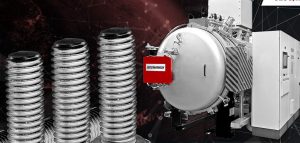
  9. An Asian thread rolling die conglomerate selected a SECO/WARWICK vacuum furnace. The Vector® will be used for vacuum hardening and tempering fastener dies.


Company and Personnel Chatter

  1. Hubbard-Hall has expanded its product offering and customer resources by acquiring the assets of Torch Surface Technologies, a specialty chemical company based in Whitmore Lake, MI.
  2. New simulation software is being launched at CENOS Simulation Software. The application portfolio expands with some new electromagnetic case software apps. The first apps will be launched in Q4 or a little later.
  3. Solar Atmospheres of California announced it has been awarded the approval to process parts for Lockheed Martin (LMCO) owned Sikorsky. The Sikorsky approval adds to the existing LMCO process specifications held for vacuum heat treatment of titanium, nickel alloys, and stainless steel per AMS 2801, AMS 2774, AMS 2759/3, and others.
  4. Nel Hydrogen US, a subsidiary of Nel, has entered into a joint development agreement with General Motors to help accelerate the industrialization of Nel’s proton exchange membrane (PEM) electrolyzer platform. The two companies are looking to enable more cost competitive sources of renewable hydrogen.
  5. The Supervisory Board of thyssenkrupp AG extended the appointment of Oliver Burkhard by five years. Burkhard has been a member of the Essen-based group's Executive Board since February 2013, Thyssenkrupp AG director of Labor since April 2013, and additionally CEO of thyssenkrupp Marine Systems since May 2022.
  6. Joe Coleman, cyber security officer of Bluestreak Consulting™, has earned his Cyber AB CMMC Certification as a Registered Practitioner (RP). CMMC is a U.S. Department of Defense (DoD) program that applies to Defense Industrial Base (DIB) contractors.
  7. CG Thermal welcomes associate process engineer Signe Laundrup to the Process Systems Group. Laundrup is a 2021 chemical engineering graduate from the University of California, San Diego. Her background is in manufacturing and research and design.
  8. Tata Steel signed a memorandum of understanding with SMS Group to reduce carbon emissions at Tata’s integrated steel plants across India.
  9. Two heat treat technology companies integrate: C3 Data’s real-time pyrometry compliance software enables digital uploading of certificate data of all TT Electronics.
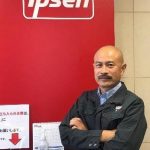
  10. Ipsen Japan announced the addition of Mr. Masakazu Kanaka in the role of customer service director. Kanaka is responsible for the growth of all Ipsen Japan customer service business, which includes retrofits, parts, and service. He will oversee the aftermarket sales team and field service engineers.
  11. Solar Atmospheres of California announced Honeywell approval to heat treat austenitic steels, martensitic steels, pH steels, tool steels, nickel alloys, cobalt alloys, titanium alloys, and magnetic alloys.
  12. Aluplast – ZTG, an Altest company, recently expanded its production capacity with a second Nitrex nitriding system. The second furnace, a model N-EXT-612, is capable of processing a load of extrusion dies weighing up to 1300lbs.
  13. Solar Atmospheres of Michigan is pleased to announce the addition of Chris Molencupp as their new sales manager.
  14. Metal Exchange Corporation announced that Matt Rohm, current President and Chief Operating Officer (COO), will be promoted to Chief Executive Officer (CEO) of Metal Exchange Corporation effective January 1, 2023. At that time, current CEO Rick Merluzzi will assume the title of executive vice chairman, serving as an advisor to executive chairman, Mike Lefton, on key strategic initiatives for the organization, through the end of 2023.
  15. Quintus Technologies joins the newly opened Application Center at RISE to support further development of additive manufacturing. The AM Center will also include the Quintus press model QIH 15L-2070.
  16. Abbott Furnace Company announced that it has partnered with Obsidian Technical Group for sales and service support across much of the eastern United States.
  17. Robert Roth announced the appointment of Nelson Sanchez as RoMan’s new president, effective January 1, 2023. Sanchez is the first non-family member to hold the office.
  18. Hubbard-Hall hired Aaron Mambrino as chief financial officer. Her expertise lies in driving process changes to create operational synergies, developing strategic partnerships, and LEAN manufacturing.
  19. John Savona, vice president of Americas Manufacturing and Labor Affairs, Ford Blue, will retire on March , after more than 33 years. Bryce Currie will step into the role.
  20. AFC-Holcroft welcomed employees and their families, company retirees, and invited guests to view their newly renovated building as part of an open house.
  21. Solar Atmospheres of California participated in the “Spark of Love” toy drive in coordination with the San Bernardino County Fire Department.
  22. Raytheon Technologies expands Bengaluru operations with opening of Pratt & Whitney India Engineering Center. The facility is co-located with Pratt & Whitney’s India Capability Center and Collins Aerospace engineering and global operations centers.
  23. Lucifer Furnaces in Warrington, PA, a manufacturer of heat treating furnaces and ovens for the last 80 years, has added Brett Wenger to its leadership team as vice president of sales.


Kudos Chatter

  1. Global Thermal Solutions celebrates 15 years in Mexico.
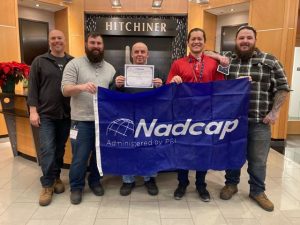
  2. Hitchiner Manufacturing receives Nadcap Accreditation.
  3. Ipsen USA announced that 2023 represents a milestone anniversary. This year marks 75 years since Harold Ipsen founded the company.
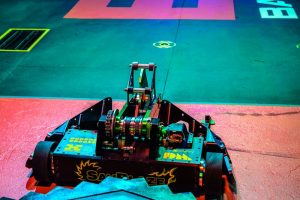
  4. Desktop Metal is sponsoring on a new season of BattleBots. The completely rebuilt robot is aided by the design freedoms and fast turnaround times of metal 3D printing.
  5. Solar Atmosphere’s Michigan and Western Pennsylvania facilities have recently been awarded Nadcap Merit status for vacuum heat treating and brazing.
  6. In September, the Swiss Steel Group (SSG) held the 1st Hydrogen Symposium at the Henrichshütte Iron and Steel Works in Hattingen. Speakers from academia, business, and politics held lectures in four sessions.
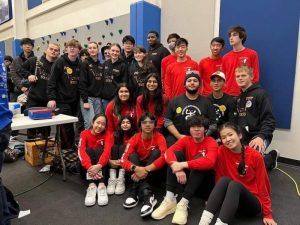
  7. Borikengineers, a team mentored by Pratt & Whitney employees in Puerto Rico, has advanced to the Qualifiers’ Finals Competition in the FIRST Tech Challenge DC Qualifier. The team won the Judges Choice Award.


Heat Treat Today is pleased to join in the announcements of growth and achievement throughout the industry by highlighting them here on our News Chatter page. Please send any information you feel may be of interest to manufacturers with in-house heat treat departments especially in the aerospace, automotive, medical, and energy sectors to sarah@heattreattoday.com.



Find heat treating products and services when you search on Heat Treat Buyers Guide.com


39 Heat Treat News Chatter Items To Keep You Current Read More »

Global Automotive Supplier Orders Brazing Furnace

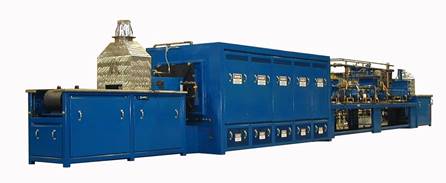
A global automotive supplier has placed an order for an electrically heated continuous belt brazing furnace to be installed in Mexico in the 4th quarter of 2020.

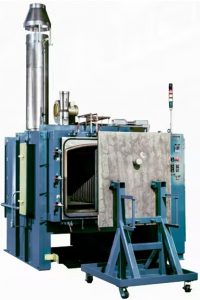
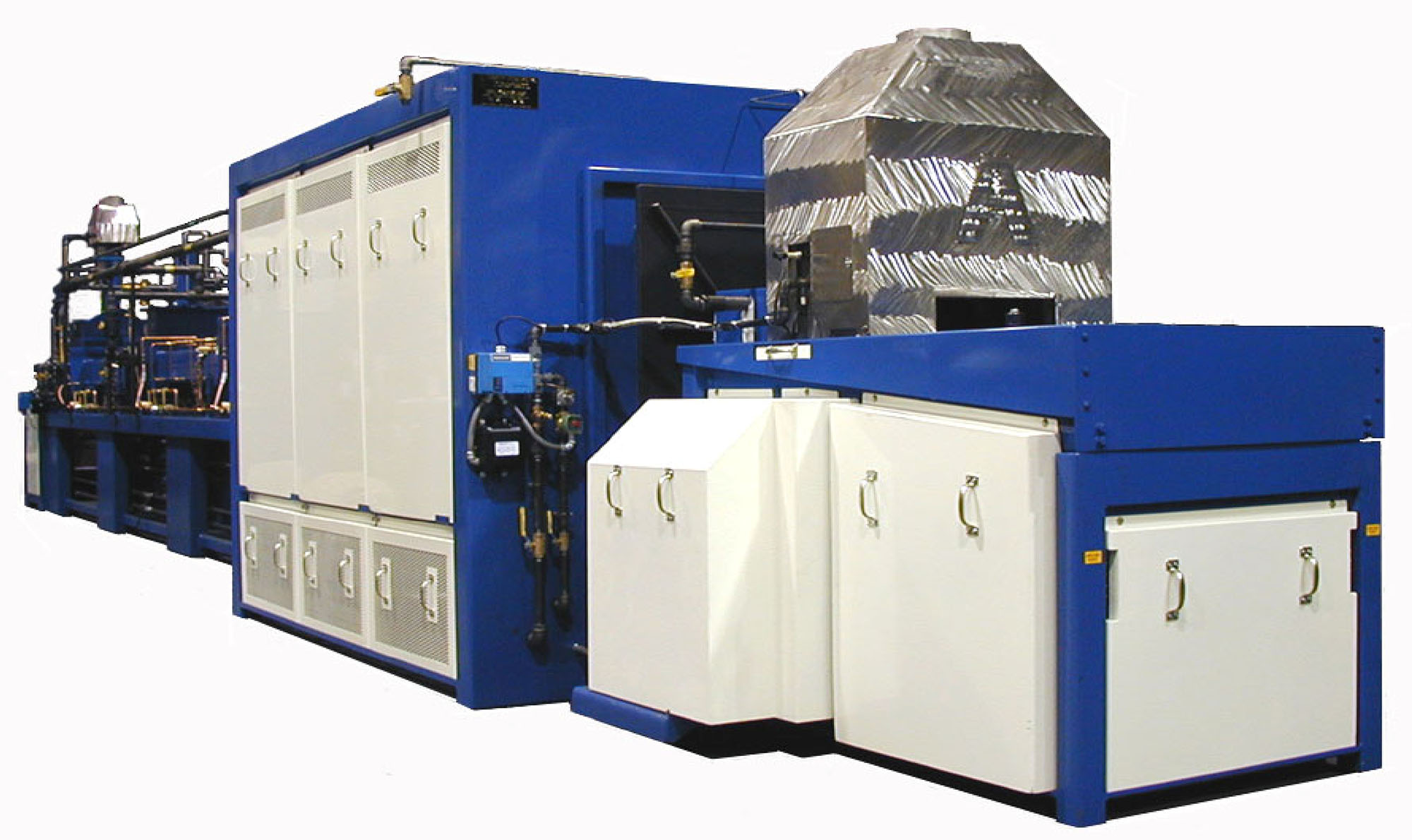
Abbott Furnace, Electrically Heated Continuous Belt Brazing Furnace (photo source: Abbott Furnace Company)

Abbott Furnace Company will design and manufacture the industrial furnace for brazing of fuel delivery components and their Mexico location will install and provide after sale support of the four (4) zone line that is rated for 2,150° F and includes a 24” wide belt and silicon carbide domed muffle.


(photo source: Dhiva Krishna on unsplash)


Global Automotive Supplier Orders Brazing Furnace Read More »

This Week in Heat Treat Social Media


Welcome to the inaugural column of Heat Treat Today‘s first offering of This Week in Heat Treat Social MediaAs you know, there is so much content available on the web that it’s next to impossible to sift through all of the articles and posts that flood our inboxes and notifications on a daily basis. So,  Heat Treat Today is here to bring you the latest in compelling, inspiring, and entertaining heat treat news from the different social media venues that you’ve just got to see and read!
If you have content that everyone has to see, please send the link to editor@heattreattoday.com.    


1. Entropic Time (Backwards Billy Joel Parody) by A Capella Science

Let’s start your Friday off with this energetic, fun, and educational video that Paul Mason of Thermo-Calc Software shared. (And, you’ll be singing the song all day! You’re welcome!)


2. COVID-19

We have all been affected by the COVID-19 virus. It has produced experiences that none of us has ever ventured through before in our lifetime.

This week in the heat treat industry, we’ve received numerous cancellations of spring and early summer trade shows. See how  Austria’s Reed Exhibitions is helping with the healthcare needs of those in Vienna.
 

Additionally, many of the heat treat companies have shared their statuses and plans for business via social media posts. Here are a few of them:


3. What’s So Cool About Manufacturing?

Check out Abbott Furnace Company’s collaboration with Saint Mary’s Area Middle School to introduce kids to the world of manufacturing.


4. Reading and Podcast Corner

You may have a bit more time to catch up on the reading and podcast listening you’ve been yearning to do. May we recommend two brief articles written by industry experts and an informative podcast.

Check out Gerry McWeeney’s article, “Pros and Cons of Remote Monitoring in Heat Treat”


For those of you interested in medical devices.


And, for your listening pleasure, be sure to download the latest Heat Treat Radio episode entitled, Women in Heat Treat, with Ellen Conway Merrill and Rosanne Brunello.  They will inspire you!


5. Launch into Your Weekend with a Reading by Jackson

No additional caption needed! Happy Friday, everyone!

(Editor’s Note: Users of Firefox may have difficulty playing the below video. If so, please use another browser like Chrome.)


This Week in Heat Treat Social Media Read More »

Global Automotive Supplier, Precious Metals Producer Purchases Continuous Belt Furnaces

Brazing Furnace for Automotive Supplier (Image Source: Abbott Furnace Co.)

A diversified global automotive supplier, focused on metal forming, aluminum casting, fluid systems and flexible assemblies to help automakers meet their lightweight requirements, and a multinational corporation that specializes in producing chemicals and precious metals and operating in more than 30 countries worldwide, have placed orders for furnaces to be installed in the 2nd quarter of 2020. Abbott Furnace Company will design, manufacture, and install both furnaces.

Calcine Furnace for Precious Metals Producer (Image Source: Abbott Furnace Co.)

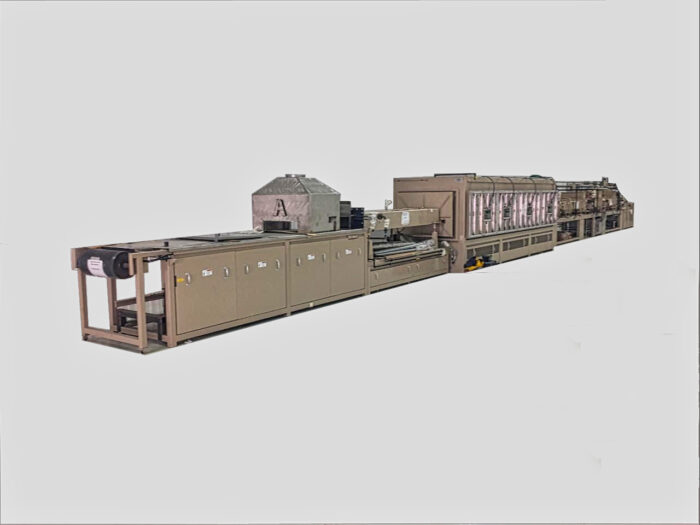
The automotive supplier has placed an order for a continuous belt stainless steel brazing furnace to be installed in Mexico. They will receive a five (5) zone electrically heated industrial furnace that is rated for 2,150°F and includes a 30” wide belt, silicon carbide muffle and will feature Abbott Furnace’s Varicool convective cooling system.

The precious metals producer has placed an order for an electrically heated continuous belt calcine furnace. The industrial furnace that is rated at 1,850°F and includes an 18” wide inconel belt, silicon carbide muffle and data acquisition system.


(Image Source: Marc Kleen on Unsplash.com)

Global Automotive Supplier, Precious Metals Producer Purchases Continuous Belt Furnaces Read More »

Powder Metal Company Serving Automotive Industry to Add Sintering Furnace

A company specializing in manufacturing high volume, ferrous-based powder metal components in the automotive market has placed an order with Abbott Furnace Company for an electrically heated continuous belt sintering furnace to be delivered in the 2nd quarter of 2020. The furnace is rated at 2,150° F and also includes the unique Abbott Varicool Cooling System.

Additionally, Abbott is also fulfilling an order for an electrically heated continuous belt soft magnetic alloy processing furnace from a manufacturer in the powder metal industry providing components to the metals and mining market. Their furnace will also ship in the 2nd quarter of 2020. The furnace has a maximum temperature of 1850° F in an air, nitrogen, or steam atmosphere and includes a Delube chamber, oxidation chamber, water-jacketed cooling chamber, and a Thermostack thermal oxidizer.  The furnace will be controlled through an Allen Bradley Micrologix PLC. This furnace design will help the P/M industry to grow in the electrification segment of the market.


Powder Metal Company Serving Automotive Industry to Add Sintering Furnace Read More »

15 Quick Heat Treat News Items to Keep You Current

15 Quick Heat Treat News Items to Keep You Current

Heat Treat Today offers News Chatter, a feature highlighting representative moves, transactions, and kudos from around the industry.

Personnel and Company Chatter

  • Leroy M. Ball has recently been appointed to the Board of Directors at Allegheny Technologies Incorporated (ATI). Ball, 50, is president and CEO of Koppers Holdings Inc.
  • Heat Treat Today 2018 40 Under 40 recipient Matt Clinite of Ipsen USA has recently been promoted from Midwest Regional Sales Owner to Customer Service Sales Manager, effective immediately. Clinite joined the company in June 2014 as a Sales Engineer.
  • Vesuvius plc recently announced that it has acquired CCPI Inc., a specialty refractories producer focused on tundish (steel continuous casting) applications and aluminum. Based in Ohio, CCPI will become part of Vesuvius’ Advanced Refractories business unit.
  • Gasbarre has announced that the company will no longer be using the J.L. Becker name, but instead, are transitioning to its new name, Gasbarre Thermal Processing Systems. Thermal Processing Systems is one of the three new business units that now comprise Gasbarre Products, Inc. The other two units are Powder Compaction Solutions and Manufacturing Technologies.
  • Marisa A. Oeltjen has been added to the Bluestreak I Bright AM™  team as customer success support specialist. Ryan Wenzel, working from Bluestreak I Bright AM™’s Northeast Ohio location, serves as a database analyst and key member of the tech support group.
  • Howard Kimberley has joined Aeromet International as Chief Executive Officer. Kimberley has extensive experience in the aerospace industry including senior executive positions at GKN and Hampson Industries, and most recently as CEO of international aerospace group Shimtech since its formation in 2011.
  • Abbott Furnace Company recently announced it will be hosting its Fifth Annual Continuous Brazing Symposium in Mexico this spring in Puebla, Mexico from May 21 – 23, 2019.
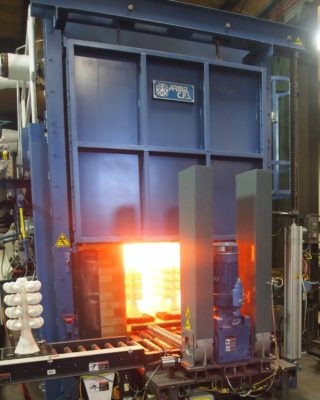
  • A European manufacturer of investment castings for the medical industry recently purchased a gas-fired pusher furnace from Armil CFS, Inc. The 2-row pusher furnace will be used for the burnout and pre-heating of investment casting molds.
  • A midwestern facility of a US-based manufacturer of safety-critical fasteners and assembly solutions has purchased a new MB48-120 mesh belt furnace from AFC-Holcroft, replacing an older AFC-Holcroft installation. The new mesh belt furnace will be used in the production of metal fasteners.
  • Several orders have been met by SECO/WARWICK for various equipment and systems: 1) An American manufacturer of flat rolled aluminum sheet recently added a new SECO/WARWICK sow and T-bar preheat furnace system 2) The main producer of forgings in Central Europe for strategic markets recently invested in a single-chamber furnace type PEK. 3) A manufacturer of high quality matrix forgings, construction connectors and manual tools purchased a CaseMaster AFS – a multipurpose Sealed Quench chamber furnace, intended for thermal and thermo-chemical treatment in a controlled endothermic atmosphere.  4) SECO/WARWICK provided an additional atmosphere generator system to a supplier of engineered carbon and graphite solutions for severe service lubrication applications in the aerospace, petrochemical, energy, industrial, and defense sectors. 5) The company updated and simultaneously extended a box furnace’s productive longevity for a leading international participant in the field of precious metals and advanced materials. 
  • Lindberg/MPH announced the shipment of a single-zone tube furnace to an engineering company in the nuclear power industry.

Kudos Chatter

U.S. Rep. Mike Kelly (PA) meets with Onex Inc and members of NWIRC

  • U.S. Rep. Mike Kelly (PA) recently met with Onex Inc and members of NWIRC with the purpose of hearing firsthand from Onex employees about NIST MEP’s impact on Pennsylvania’s manufacturing industry.
  • Dana Incorporated‘s motor and inverter joint venture, TM4, recently announced it has reached a major milestone with the production of its 12,000th TM4 SUMO™ electric powertrain for buses and commercial vehicles in China.
  • For the ninth time, The Timken Company, a world leader in engineered bearings and power transmission products, has been recognized as one of the World’s Most Ethical Companies. Ethisphere Institute is a global leader in defining and advancing the standards of ethical business practices.


Special Mention

On Valentine’s Day, Thermcraft lost its founder, Mr. Morris L. Crafton, at 93. In 1971, Mr. Crafton and his wife Clara founded Thermcraft on the principle of providing the best customer service available in the thermal processing industry.

Born in West Palm Beach, Florida, Mr. Crafton grew up in North Carolina and served in the US Navy during WWII, and then after college, he was called again to serve his country during the Korean War. After his military service, Mr. Crafton  moved his family to Washington, PA, where he ran a popcorn business and, in time, became a partner in a business that manufactured replacement heating elements for industrial and laboratory furnaces.

After returning to North Carolina, he decided to start his own company. With the full support of his wife Clara, they secured a small warehouse in downtown Winston Salem and began making replacement heating elements for industrial and laboratory furnace applications.

Thermcraft was moved to its current facility in 1979, just a few miles south to the edge of Winston Salem. Through new product development and various acquisitions, the Craftons began to grow Thermcraft into the company it is today.

Mr. Crafton lost Clara to cancer in 1995. He eventually turned the reigns of Thermcraft over to his son Tom, but that didn’t stop Mr. Crafton from being involved in the day-to-day business. He continued to drive himself to work well into his 92nd year, making mail runs and performing various other tasks. He enjoyed a daily walk through the factory, talking to his employees and staying on top of what was going on within his company.

Mr. Crafton will be missed by all who knew him. He will be remembered as a strong leader who was kind and generous to those around him. He had a great sense-of-humor and often left those he met with the saying, “glad you got to see me.”

“We are certainly glad we had the opportunity to meet you, Mr. Crafton,” is the sentiment of all at Thermcraft.

Heat Treat Today offers its condolences to the family of Mr. Morris Crafton and the team at Thermcraft.


Heat Treat Today is pleased to join in the announcements of growth and achievement throughout the industry by highlighting them here on our News Chatter page. Please send any information you feel may be of interest to manufacturers with in-house heat treat departments especially in the aerospace, automotive, medical, and energy sectors to the editor at editor@heattreattoday.com.


15 Quick Heat Treat News Items to Keep You Current Read More »

Skip to content