Today’s News from Abroad installment investigates the influence AI is bearing on the global field of heat treating, as well as a 2023 sustainability report and a future-looking question about the German foundry model amid transformations and a shortage of skilled workers.
Heat TreatTodaypartners with two international publications to deliver the latest news, tech tips, and cutting-edge articles that will serve our audience — manufacturers with in-house heat treat. heat processing, a Vulkan-Verlag GmbH publication, serves mostly the European and Asian heat treat markets, and Furnaces International, a Quartz Business Media publication, primarily serves the English-speaking globe.
AI News No.1: Smart Manufacturing Proves Its Value
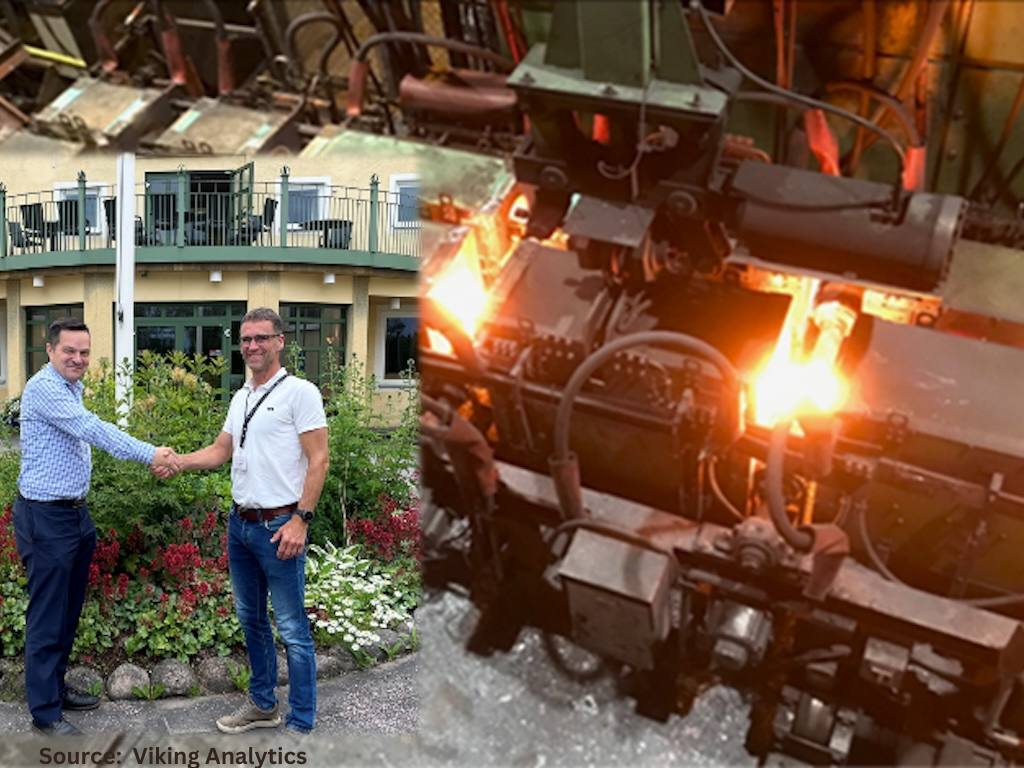
Viking Analytics and Bharat Forge sign a three-year contract
“A new agreement has been signed between Viking Analytics and Bharat Forge Kilsta (BFK) from Karlskoga. The agreement, which is for three years, provides BFK with the AI-based optimization tool ‘Smartforge’ after a 10-month implementation phase. Smartforge optimizes the forging process, primarily in the critical heat keeping process where the problems with scrap are greatest. The goal is to reduce discarded products by 50% and contribute to energy savings and a more environmentally friendly production.”
AI News No. 2: Global Industry Goes “All In” With AI
Digital transformation and the concept of a sustainable economy go hand in hand with energy and environmental challenges.
“According to a report by the Boston Consulting Group (BCG), nearly 80 percent of companies around the world consider innovation to be one of their three main priorities this year, and 66% of them plan to increase spending for this purpose, of which 42% are ready to invest up to 10% more than before. Innovation is one of the SECO/WARWICK Group’s values, embedded in its DNA. Industry 4.0 is the guiding principle in the Group’s mentality and strategic direction, which identifies AI, automation and digitization as a priority.”
A Sustainability Commitment to a Greener, Equal Future Shows Results
Tenova’s 2023 Sustainability Report illustrates the company’s ESG-guided sustainability framework, including energy efficiency initiatives, circular economy solutions, and sustainable innovation.
“Tenova has announced the launch of its new Sustainability Report, which tracks the progress the company has made against its sustainability agenda over the past year. The Report illustrates the company’s ESG-guided sustainability framework, including energy efficiency initiatives, circular economy solutions, and sustainable innovation. . . . Tenova’s flagship technologies–Direct Reduction Iron (DRI), Electric Arc Furnaces (EAFs), and the Silicon Steel ones–are essential in driving the decarbonization of both the metals industry and the planet. This is demonstrated by its major international projects, which are set to make a substantial impact on sustainability in Europe, China, and other parts of the world.”
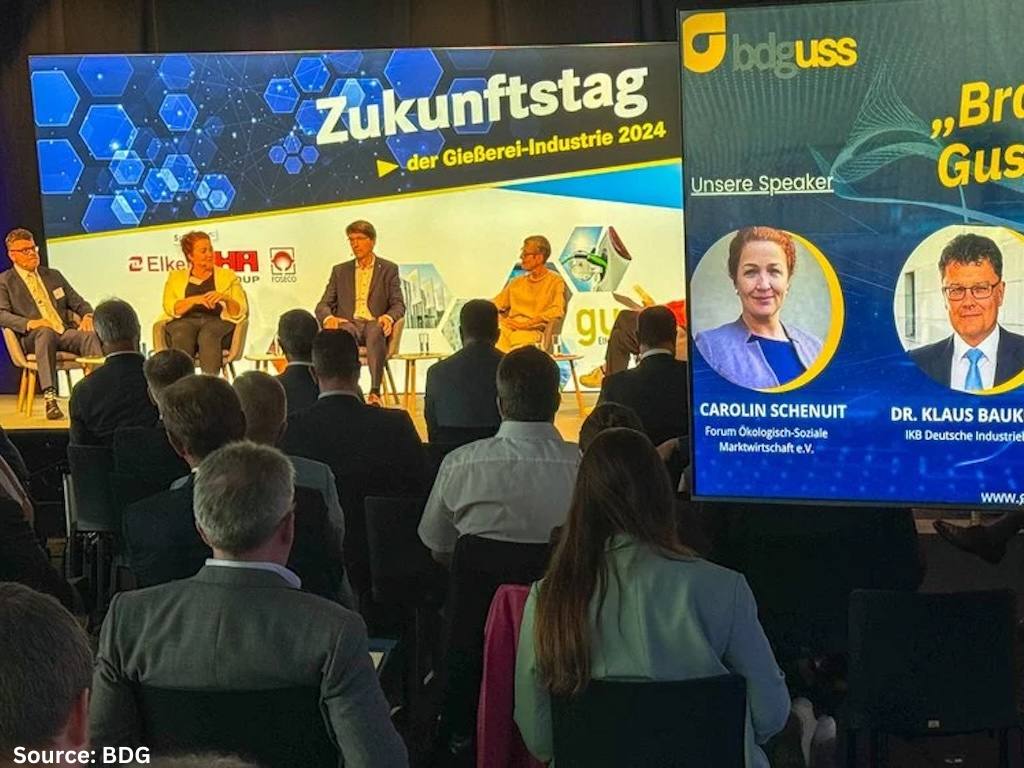
At its third “Zukunftstag“ (Future Day), the German Foundry Association (BDG) discussed: Do we still need casting from Germany? And why is the industry currently facing such difficulties?
“At its third ‘Zukunftstag’ (Future Day), the German Foundry Association (BDG) posed a rhetorical question to stakeholders and the industry: Do we still need casting from Germany? And why is the industry currently facing such difficulties? The Federal Association of the German Foundry Industry launched the ‘Future Day’ format in 2020 in order to visualize and establish generally applicable topics from corporate management and framework conditions in open discourse with experts from outside the industry, in addition to the industry’s technically focused conferences. In addition to economic policy framework conditions, the program revolved around skilled workers in the afternoon. The German foundry industry, part of the energy-intensive SME sector, is struggling amid transformations and a shortage of skilled workers.”
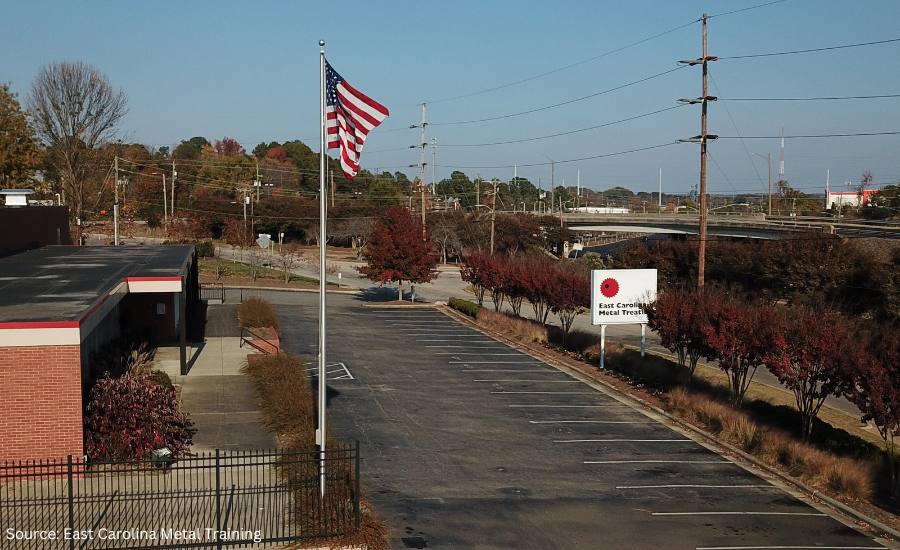
In the North American heat treating industry, potential comes in many forms, and learning to utilize it is what can change the industry from mediocre to extraordinary. East Carolina Metal Treating, a North Carolina heat treater, has embraced the potential in their past and present heat treat equipment, new digital technologies, and their irreplaceable, diverse employees to unlock their status as a stand-out heat treater.
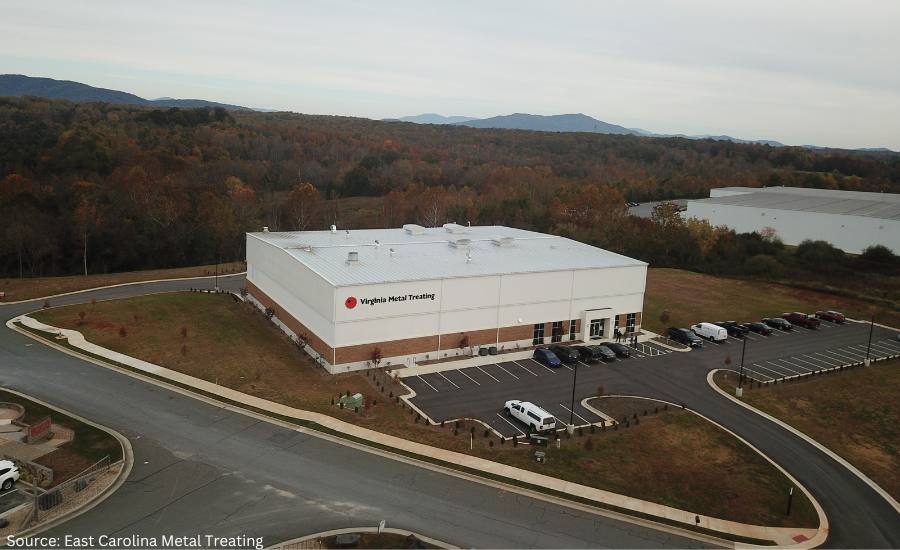
East Carolina Metal Treating facility in North Carolina
Since 1976 when they boasted only a single salt pot, East Carolina Metal Treating has increased the range of their heat treating equipment significantly. Today, the company has three cryogenic units (36 x 36 x 48 inches), five atmosphere furnaces (36 x 36 x 48 inches), and four inductions units — to name just a few. This array of equipment has enabled the company to serve a wide range of industries (including the aerospace, automotive, and medical industries) with quality service and a fast turnaround time with offerings including a metallurgical hardness testing lab.
Embracing all the potential modern equipment brings requires new monitoring and documentation technology. This new technology, in turn, provides additional potential for continual improvement. Integral to this improvement is Bluestreak, a provider of management solutions, which provides the company with a secure, organized place to process furnace charts, customer documents, and much more. Embracing this particular technology helps the company to achieve a high level of customization in their heat treating processes as no one process is the same.
Harnessing the potential of equipment, technology, and people creates an even brighter future for East Carolina Metal Treating. In the next five to ten years, they plan to expand their range of equipment by adding aluminum quenching equipment. This will require an increase in the team’s technological capabilities, which they will address by training the 3rd generation of owner/operators, adding 20,000 square feet to their new facility in Lynchburg, VA, and creating a third facility in the southeast/mid-Atlantic region. With this ability to embrace a diverse team and new heat treat technologies, East Carolina Metal Treating is excited for a bright future.
Understanding abrasion can be the key to extending the life of your refractory lining. The following article provided by Plibrico Company examines abrasion resistance, its role in choosing a refractory solution, and what factors to take into consideration when assessing counter-measures.
Refractory material is designed to be very durable, withstand extreme service conditions and defy mechanical abuse in many different types of thermal-processing operations. However, severe conditions that cause abrasion in the form of high levels of mechanical scraping and airborne particulate matter can challenge refractories, shortening their service lives.
Abrasion resistance is one of the most critical and possibly the most misunderstood considerations when choosing a refractory solution. A clear understanding of what abrasion is and, perhaps more importantly, what it is not can prevent needless repair costs and lead to significant savings. This is especially important when evaluating refractory designs for a new application or when considering upgrades for an existing one.
What Abrasion Is
Abrasion is the destructive process that causes a material to wear away through mechanical scraping or scratching. Anyone who has ever grated cheese or sanded wood has experienced the abrasion encountered in everyday life. As abrasion continues, thin layers of the abraded material are removed, leaving the object thinner and usually making its surface smoother.
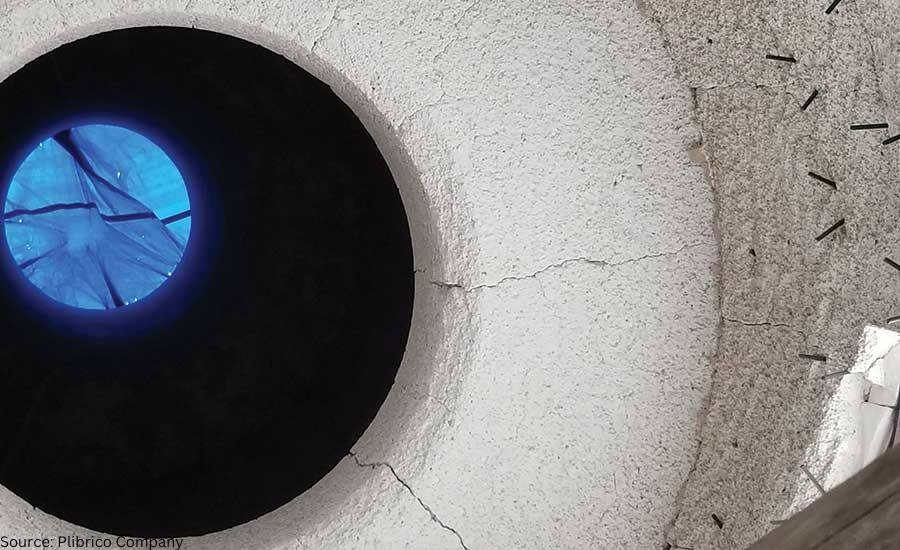
The same process can be observed in the refractory world. Refractory linings are abraded by high-velocity airborne particulate, cleaning tools and fuel/process materials that pass through the unit and come into contact with the lining. The telltale sign of abrasion is a refractory lining that has steadily become thinner while its surface has become smoother. The surface may even shine as if it had just been polished, which is not surprising when we consider that polishing is another common form of abrasion.
Fig. 1. Abrasion damage to the refractory bottom of a choke ring of a thermal-oxidizer unit
What Abrasion is Not
Abrasion is considered a type of mechanical abuse, but it is not the only type of mechanical abuse to which refractory linings are subjected. Equally common is impact: the sudden, forceful collision between the refractory lining and a moving object. Impact can come from a variety of sources. The moving object may be a cleaning tool, a piece of process material, a chunk of fuel or a dislodged mass of refractory or slag, depending on the application. Impact with such objects typically results in chips and cracks in the refractory lining.
Refractory materials designed for abrasion resistance tend to have increased strength and hardness compared to those found in traditional refractories, and these abrasion-resistant materials may provide some resistance to impact. Abrasion-resistant properties can also lead to increased brittleness. This is because if the impact exceeds the strength of the material, chipping and cracking could potentially be worse than in traditional refractories.
Compression and tension are also forms of mechanical abuse and can be caused by changes in the shape of the refractory lining as it is heated or cooled or by movements of the furnace shell itself – by intentional design or otherwise. Here again the increased strength and corresponding brittleness of the material could potentially result in a negative effect on the refractory lining.
All types of mechanical abuse can cause thinning of the refractory lining, so it is important to conduct a detailed investigation into the destructive mechanism before drawing any conclusions. Refractory solutions designed to resist abrasion may not be helpful against damage caused by impact, compression or tension.
Similarly, solutions designed to address other types of mechanical abuse may be ineffective against abrasion. For example, stainless steel needles are commonly incorporated into refractory linings to extend service life when impact resistance is required. The needles bridge cracks formed as a result of the impact, making it more difficult for these cracks to grow and connect. This helps the refractory lining hold together longer. The bridging provided by needles has no effect in an abrasion situation, however, since crack growth is not caused by the abrasion process.
Meeting Abrasion-Resistance Demands
Once abrasion is identified as the main mode of failure, there are several options to counter it. Selecting a refractory material based on a raw material hard enough to resist the abrasion is a common technique. For one material to abrade another it must be harder than the material being abraded. For instance, a diamond can be used to scratch glass, but glass cannot be used to scratch a diamond.
It follows that refractory materials based on very hard raw materials, like silicon carbide, can be used to resist abrasion and extend the life of the lining. It should be remembered, however, that a refractory lining is made up of many different materials, not just the main constituent raw materials. Clay, cement, silica and other softer components will still be exposed and abraded even if abrasion of the main aggregate is stopped completely.
Another option is to investigate the source of the abrasion and make adjustments to the process. Can a less-abrasive cleaning tool be used? Is there a way to limit the contact of the abrading process materials with the refractory lining? Is it possible to adjust the angle between the refractory lining and the incoming airborne particulate?
A seemingly minor change in the process, with minimal cost and no downsides to the operation, can save in refractory replacement costs. When changes to the process are not an option, it is best to consider the abrasion resistance of the lining as a whole and select a specifically designed abrasion-resistant solution. A qualified, knowledgeable refractory solution expert with genuine experience will help you make the best decision for your specific application, taking into consideration the following:
Speed of installation
Service life
All-in price
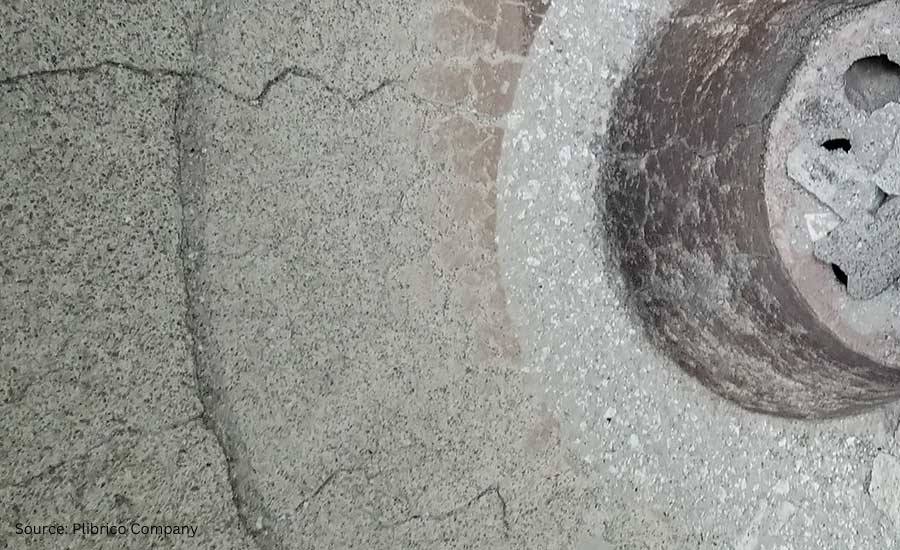
Fig. 2. Airborne particle matter has contributed to the abrasion damage seen in the refractory of a thermal-oxidizer choke ring. Notice on the left side of the photo how the abrading of the refractory lining becomes worse.
Abrasion-Resistance Testing
The most common measure of holistic abrasion resistance used to compare refractory solutions is the ASTM 704 test. This test exposes refractory lining materials to a stream of abrasive particulate that cause a portion of the sample to be abraded over time. By keeping sample size and shape constant – along with particle velocity, particle material and test duration – various refractory materials can be compared on an apples-to-apples basis.
This testing can be performed by any qualified refractory testing lab and most reputable refractory manufacturers. Test results are recorded based on the volume of material lost from the sample during the test and are reported in cubic centimeters. Products with excellent abrasion resistance consistently test at 5 cc of loss or less, while elite materials can score less than 3 cc of loss.
Products designed specifically for abrasion resistance will report ASTM 704 results on their material technical data sheets. It is important to remember that the abrasion-loss numbers reported on material technical data sheets are based on samples prepared in a lab under controlled conditions. Achieving these same properties in the field under real-world, job-site conditions would require a high-quality refractory installer partnered with a world-class refractory manufacturer.
Fig. 3. Severe conditions lead to abrasion damage in the refractory lining of this dry-ash hopper. Notice the abrasion damage goes past the anchor line, leaving the bottom-left anchors exposed.
Conclusion
The thinning of a refractory lining due to abrasion is a source of frustration for many thermal-processing operations and is one of the most common modes of failure encountered in the refractory world. But, by taking the time to understand the failure mechanism and learn about the options available, you can realize significant savings by avoiding needless costs in the future.
A company developing advanced alternative renewable energy technologies large-scale industrial applications is expanding their heat treat capabilities with two identical vacuum furnaces.
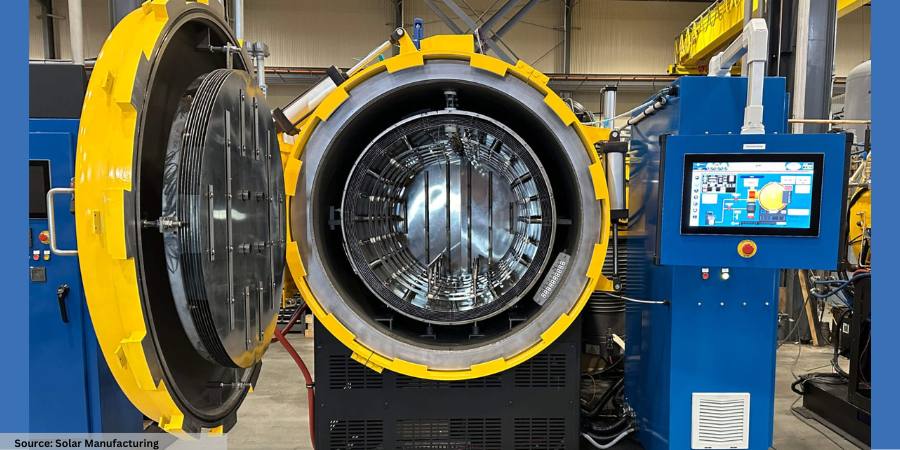
The Research and Development team of Solar Manufacturing, Solar Atmospheres, assisted the client’s engineers to verify the process in the Mentor® Pro vacuum furnace prior to sending this furnace. Solar Manufacturing shipped the identical vacuum furnaces and assisted the company’s engineers to verify the molybdenum shielded hot zone operation of the new equipment at the developer’s facility. The furnace’s internal gas quenching system processes workloads to quench at 2 bar positive pressure in either nitrogen or argon gas, a flexibility that assists the company in achieving results across a wide range of metallurgical applications.
The client also finds benefit from the compact design of the Mentor® Pro features a molybdenum shielded hot zone measuring 18” wide x 18” high x 36” deep, capable of temperatures up to 2500°F, and a workload weight capacity of up to 1,000 lbs.
The press release is available in its original form here.
Heat TreatToday offers News Chatter, a feature highlighting representative moves, transactions, and kudos from around the industry. Enjoy these 10 news items.
Equipment
Premier Furnace Specialists received orders for nine pieces of heat treating equipment to be delivered to a range of manufacturing operations, all of which are currently in various stages of completion and testing or delivery and installation.
A manufacturer in the composites industry recently received shipment of a cabinet oven from Gruenberg, an industrial oven and sterilizer manufacturer. The furnace will be used for curing composite parts under a vacuum.
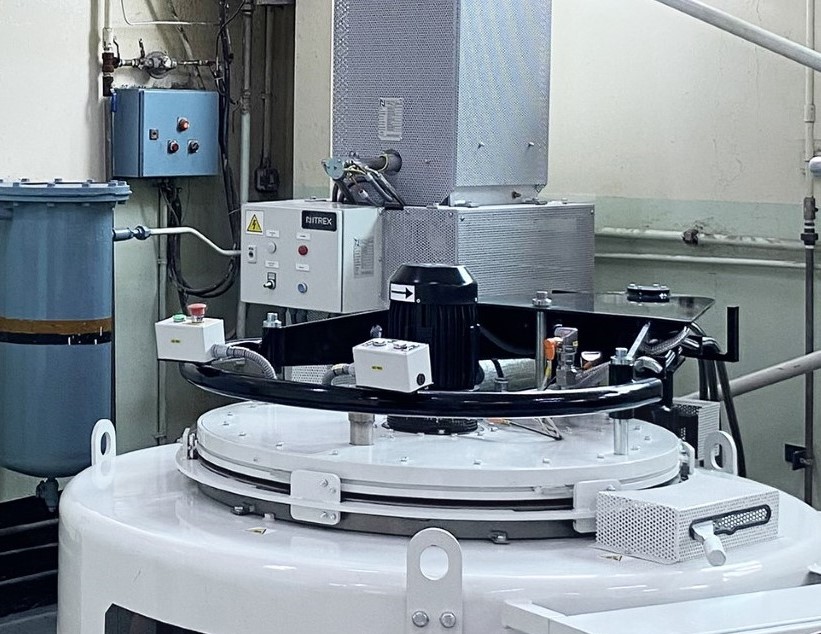
A second nitriding system was installed by Nitrex to increase capacity at Balexco, an aluminum extrusion company in Bahrain focusing on increasing production capacity.
Nine furnaces in various stages of completion and testing on the floor at Premier Furnace SpecialistsGruenberg cabinet oven shipped to composites manufacturerNitrex nitriding system installed at Balexco
Company & Personnel
Greg Miller National Business Manager Superheat
Cognizant, a professional services company that helps clients modernize technology, announced intent to acquire Belcan, a global supplier of digital engineering services for multiple industries, including aerospace, defense, and automotive.
Greg Miller has joined Superheat as national business development manager for the United Kingdom and Ireland. Greg will continue to work from his base in Lanarkshire, Scotland, bringing experience in manufacturing and preventative maintenance, with a foundation in induction heating.
Kudos
On July 2, 2024, David Lynch celebrated 40 years with Induction Tooling, Inc. This milestone was accomplished by his commitment to excellence and consistent hard-work and dedication.
Superheat, an on-site heat treatment service provider based in New Lenos, IL, recently received two Industrial Safety Training Council (ISTC) Safety Achievement Awards: one for achieving three consecutive years with zero recordable injuries and another for celebrating five years without an OSHA lost workday case. Bret Cadenhead, regional HSE manager at Superheat, represented the company at the awards event in Beaumont, Texas.
StandardAero celebrates 60 years of providing service to Pratt & Whitney Canada’s PT6A turboprop across four overhaul locations worldwide. In 1964, Dallas Airmotive (acquired by the company in 2021) became the first independent MRO provider to enter into a turboprop agreement with Pratt & Whitney Canada.
Centorr Vacuum Industries celebrates its 70th year in business in the vacuum furnace industry. The company was founded in Somerville, MA, as Vacuum Industries in 1954, and Centorr Furnace Company in 1962 in Suncook. NH. The two companies merged in 1989 in their current facilities in Nashua, NH.
Sławomir Woźniak, CEO of the SECO/WARWICK Group, celebrates five years in the position, managing all three brands: SECO/WARWICK, Retech, and SECO/VACUUM.
StandardAero’s engine overhaul center in San Antonio, TX, has completed correlation of its first test cell for the CFM International LEAP-1B turbofan engine, as part of its introduction of LEAP-1A and LEAP-1B maintenance, repair and overhaul (MRO) capabilities.
Bill Stuehr (L), president & CEO of Induction Tooling, Inc., congratulates David Lynch (R) on 40 years with the companyBret Cadenhead, Superheat (R), receives ISTC Safety Achievement AwardSławomir Woźniak President & CEO SECO/WARWICK GroupCentorr Vacuum Industries, Nashua, NH, location
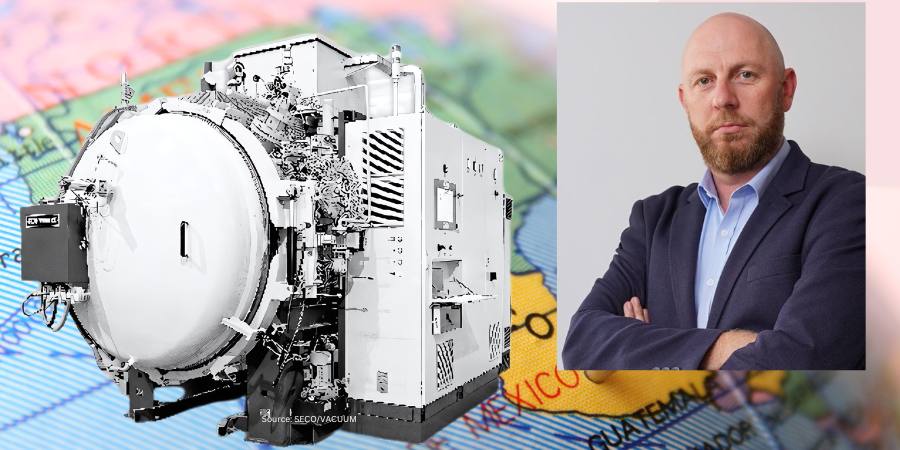
A U.S.-based automotive manufacturer is expanding its production capacity for brazing stainless heat exchangers with the order of a single-chamber vacuum furnace. The equipment will be integrated into an existing line’s thermal process operations, which is located at their Mexico facility.
Peter Zawistowski Managing Director SECO/VACUUM TECHNOLOGIES, USA Source: SECO/WARWICK
The heat treater ordered the furnace from SECO/VACUUM specifically for immediate delivery, allowing brazing of automotive components to begin without delay.
“We built this furnace to be ready to be shipped and put into operation very quickly, which is just the solution they were looking for,” said Piotr Zawistowski, managing director of SECO/VACUUM.
The press release is available in its original form here.
Heat TreatToday publishes eight print magazines a year, and included in each is a letter from the editor, Bethany Leone. This letter first appeared in May 2024 Sustainabilityprint edition.
Feel free to contact Bethany at bethany@heattreattoday.com if you have a question or comment.
In a 2022 episode of Heat TreatRadio, Justin Dzik, a business development manager at Fives North American Combustion, Inc., forecasted a shift in our industry: “If you go down far enough in the [EPA] scopes, obviously that includes processes for heat treatments of steel. Who knows how long that will take, but for sure, that is probably the future path in the next quarter century or so.” As Michael Mouilleseaux’s column on page 12 of this magazine demonstrates. [Read Michael’s column here. – Editor]Dzik’s prediction about the need for understanding environmental regulations shaping our future is not far off.
Later in 2022, I attended a technical talk on environmental regulations and how to calculate emissions in heat treat operations. Much of the talk was spent defining terms, which I was surprised by; where were all of the interesting graphs and action items? The presenter knew something that I did not: heat treat industry experts still needed to build a foundation of definitions to understand this topic, before making decisions.
Who Needs To Understand EPA Scopes?
Not everyone has studied environmental regulations in depth. Basically, if you aren’t the one responsible for tracking emissions and cutting emissions in your operations, you do not need to know these scopes. (If that’s you, you may stop reading and continue to the next column!)
However, if you either are (a) obligated to report GHGE (greenhouse gas emissions) at your site or are (b) responsible for cutting GHGE, or you want to have a stake in these conversations, this column is for you. Given that this whole magazine is about sustainable technologies, this is your “back pocket” introduction to the EPA’s GHGE scopes for heat treaters.
EPA Scopes Defined
These three EPA greenhouse gas emissions classifications were originally created as part of the agency’s efforts to trace their own environmental impact and set goals to reduce these emissions. For in-house heat treat operations, knowing what these “scopes” mean will help you identify what carbon cutting initiatives apply to you and what is under your control.
The scopes classify GHGEs that occur from the operations of a business or agency. Each define where the emissions are produced and who is responsible for producing them; together, this is a way to assess the business’s overall “environmental impact.”
3 Scopes
Scope 1 are the directemissions that the company owns or can control; this is descriptive of all emissions that are the direct result of burning fossil fuel on-site, including emissions from transportation vehicles.
Scope 2 describes indirectemissions that are produced from generating electricity.
And Scope 3 describes indirect emissions created from a company’s value chain; that is, emissions produced when another entity created or delivered a product the company uses.
Application
Understanding what can and cannot be controlled helps frame strategic environmental targets. For instance, while scope 2 emissions are indirect, the source of your electricity (whether it involves GHGE or not) affects your carbon footprint. Since it falls outside the direct scope “1,” it will require more strategic thinking when considering any operational transitions that use electricity, like adding an induction hardening line.
The more indirect, often the more secondary effects there may be when pursuing environmental impact reducing changes. For example, promoting remote work to reduce scope 3 emissions related to employee transportation is often desirable from an employee satisfaction standpoint. However, this introduces new variables: Do employees commute to coworking spaces? What is the GHGE impact of their work-from-home setups? Are there social well-being consequences of this shift, negative or positive?
To use these scopes to define environmental stewardship goals, we also need to ask the right questions about our context:
What areas need upgrades?
What are the economic and social outcomes of these actions?
Do we need to reassess technologies that our operations should invest in?
Sustainability Heat Treat Resources
That’s the “back-pocket” summary. There are more robust resources on epa.gov and plenty of videos on YouTube when you search “epa scopes about.” Here are additional heat treat-specific resources:
On December 6, 2023, Gasbarre’s Bryan Stern presented a webinar “Understanding Carbon Footprint and Costs of Atmosphere and Vacuum Processing.”
A Georgia-based provider of natural gas measurement and control products and solutions has announced the acquisition of a distribution and service center for the natural gas industry, extending its capabilities for heat treating manufacturers.
“We’re excited to welcome the Tri-State team to Equipment Controls,” said Jeb Bell, president of Equipment Controls Company. “Tri-State has built its reputation on a foundation of exceptional service. Their motto, ‘The Service Matters,’ resonates with our values, and we’re eager to extend that level of service to our customers.”
“We look forward to our future with ECCO. Our shared vision and complementary strengths will enable us to deliver exceptional value to our customers and the natural gas industry as a whole,” said Paul Hayes, president of Tri-State Meter and Regulator Service, Inc.
ECCO will be keeping Tri-State’s brand, team, offices, products, and service offerings.
This press release is available in its original form here.
The need to understand how certain furnace designs operate comes at a time when heat treaters are weighing each energy cost and benefit of their systems and processes. Read on for a quick summary on how dual chamber furnaces preserve energy.
On April 17-19, 2024, TAV VACUUM FURNACES provided a speaker at the 4th MCHTSE (Mediterranean Conference on Heat Treatment and Surface Engineering). The speech focused on the energy aspects of vacuum heat treatment, a subject towards which all of us within the industry need to pay attention for reducing the carbon emissions aiming at a zero net emissions future.
We have already analyzed the essential role that vacuum furnaces will play in this transition, with a focus on the optimization of energy consumption in our previous article. With this new presentation, we wanted to emphasize how selecting the right vacuum furnace configuration for specific processes may impact the energy required to perform such process. For doing so, we compared two different furnace designs — single chamber vs. dual chamber vacuum furnaces — detailing all of the components’ energy consumption for a specific process.
TAV DC4, dual chamber vacuum furnace for low pressure carburizing and gas quenching Source: TAV VACUUM FURNACES
As a sneak peek into our presentation, we will summarize below how the main features of the two vacuum furnaces design are affecting their energy performance.
Let’s start by introducing the protagonist of our comparison: a single chamber, graphite insulated vacuum furnace, model TAV H4, and a dual chamber furnace TAV DC4, both having useful volume 400 x 400 x 600 mm (16” x 16” x 24”) (w x h x d).
In a single chamber vacuum furnace, like the TAV H4, the entire process is carried out with the load inside the furnace hot zone. This represents a highly flexible configuration that can perform complex heat treatment recipes with a multiple sequence of heating and cooling stages and to precisely control the temperature gradients at each stage.
Configuration of the TAV DC4 dual chamber vacuum furnace Source: TAV VACUUM FURNACES
Alternatively, a dual chamber vacuum furnace, like the TAV DC4, is equipped with a cold chamber, separated from the hot zone, dedicated for quenching. Despite the greater complexity of this type of vacuum furnace, the dual chamber configuration allows for several benefits.
First, in dual chamber furnaces, the graphite insulated hot chamber is never exposed to ambient air during loading and unloading of the furnace; for this reason, the hot chamber may be pre-heated at the treatment temperature (or at a lower temperature, to control the heating gradient). But in single chamber vacuum furnaces, the hot zone must always be loaded and unloaded at room temperature to avoid damages due to heat exposure of graphite to oxygen.
Because dual chamber furnaces have more controlled heating, this will result in both faster heating cycles and lower energy consumption, as a substantial amount of energy is required to heat up the furnace hot zone. This advantage obviously will be more relevant in terms of energy savings the shorter the time is between subsequent heat treatments.
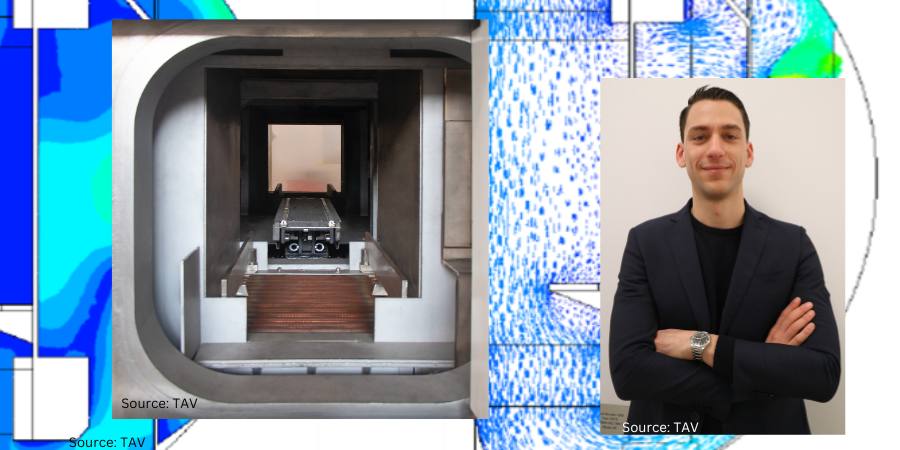
View of the cold chamber of the TAV DC4 dual chamber vacuum furnace Source: TAV VACUUM FURNACES
Secondly, since the quenching phase is performed in a separated chamber, the hot zone insulation can be improved in dual chamber vacuum furnaces by increasing the thickness of the graphite board without compromising cooling performance. This translates into a significantly lower heat dissipation, to the extent that at 2012°F (1100°C) the power dissipation per surface unit (kW/m2) is reduced by 25% compared to an equivalent single chamber vacuum furnace.
Additionally, quenching in a dedicated cold chamber allows to obtain higher heat transfer coefficients and higher cooling rates compared to a single chamber vacuum furnace. Since the cold chamber is dedicated solely to the quenching phase, it can be designed for optimizing the cooling gas flow only without the need to accommodate all the components required for heating. All things considered, the heat transfer coefficient achievable in the TAV DC4 can be, all other things being equal, even 50% higher compared to a single chamber vacuum furnace. Secondly, since the cold chamber remains at room temperature throughout the whole process, only the load and loading fixtures need to be cooled down; as a result, the amount of heat that needs to be dissipated is significantly less compared to the single chamber counterpart.
CFD simulation showing a study on the cooling gas speed in a section of the cooling chamber for the TAV DC4 dual chamber vacuum furnace Source: TAV VACUUM FURNACES
For heat treatments requiring high cooling rates, it is possible to process significantly higher loads on the dual chamber furnace compared to the single chamber model; translated into numbers, the dual chamber model can effectively quench as much as double processable in a single chamber furnace, depending on the alloy grade, load configuration and overall process. The savings in terms of energy consumption per unit load (kWh/kg) achievable in the dual chamber furnace for such processes can be as high as 50% compared to the single chamber furnace.
In the end, the aim of the speech was to highlight how the energy efficiency of vacuum furnaces is highly dependent on the machine-process combination. Choosing the right vacuum furnace configuration for a specific application, instead of relying solely on standardised solutions, will improve significantly the energy efficiency of the heat treatment process and drive the return on investment.
About the Author
Giorgio Valseccchi R&D Manager TAV VACUUM FURNACES
Giogio Valsecchi has been with the company TAV VACUUM FURNACES for nearly 4 years, after having studied mechanical engineering at Politecnico di Milano.
Heat TreatToday publishes eight print magazines a year, and included in each is a letter from the publisher, Doug Glenn. This letter first appeared in June 2024 Buyers Guideprint edition.
The Heat Treat Today team does a lot of fun things throughout the year, but Heat Treat Kids is probably the most fun. If you haven’t seen it, I’ll give you a link toward the end of this column so you can see some of the cute kids and the cute answers to some kid-level questions. For those of you who are old enough, it harkens back to Art Linkletter’s “Kids Say the Darndest Things” TV program. If you’ve never heard of Art Linkletter, click this link.
Once a year we run the Heat Treat Kids feature in one of our print magazines. It seems a bit out of place for a technical trade journal to run such a non-technical feature, we admit that. Then again, it is really not all that out of place. One of the abiding principles that we live by at Heat Treat Today is the understanding that “it is all about people.” While the vast majority of our content is technical in nature and typically deals with inanimate equipment, processes, or technologies, the truth is we only write about these with the hope that they will make peoples’ lives better. It seems too obvious, but it is often forgotten: what we do, we do for people. If you look closely enough at our website or in nearly any of our various e-newsletters and print publications, you’ll see these words: We believe people are happier and make better decisions when they are well informed. The focus of the statement is “people” and our desire to see them “happier.”
Our desire to see people happier and making better decisions boils over into all the different areas of what we do. For example, we’ve converted our September print editions (which are typically distributed at either Furnaces North America or the ASM Heat Treat Show) into our “People of Heat Treat” edition. There are typically very few technical articles in the September edition, but it is rife with content about various people in the North American heat treat market. It’s in this edition we announce each year’s 40 Under 40 honorees . . . which we’ve been doing since 2018. So far, we’ve bestowed this honor on 240 rising young heat treat leaders. By the way, nominations for 40 Under 40 are always open. If you know a rising young leader in the industry, please nominate them at www.heattreattoday.com/40under40promo. [40 Under 40 nominations for 2024 closed June 28, 2024; this year’s class will be announced on September 9, 2024. – Editor]We will also include our annual “Endings” feature in the September edition; this is a feature where we acknowledge the death of some key people in the industry.
September is a fun and very well-read edition, but it is not the only place where we focus on people. You might notice that Heat Treat Today often includes pictures of people on our magazine covers, and we almost always include a picture of a person in our weekday e-newsletter, Heat Treat Today. We also include the picture of the article authors in our magazine.
And finally, in our monthly Heat Treat Radio podcast, we periodically highlight a Heat Treat Legend or a Heat Treat NextGen. Both of these periodic features are simple interviews with heat treat people to learn more about them and what makes them tick. The Legends feature is where we interview some industry “old timers” who have had a significant impact on the industry. Heat Treat NextGen is where we interview up and coming leaders in the industry.
The edition you hold in your hand is our annual Heat Treat Buyers Guide. It is chock-full of equipment information . . . hardly a face to be seen. Nonetheless, we’re hopeful that all of this equipment information will help you be happier and make better decisions.