

Nitriding offers a unique combination of surface hardness, wear resistance, fatigue performance, and dimensional stability, making it a preferred thermochemical treatment for a wide range of industrial components. Readers will learn about the key benefits of nitriding, as well as the strengths and limitations of gas, plasma, and salt bath processes. In this Technical Tuesday installment, the aim of this guide by Daniel H. Herring, aka The Heat Treat Doctor®, and Dr. Edward Roliński, a senior scientist and recognized authority on plasma and ion nitriding, is to help engineers and heat treaters evaluate which nitriding technology best aligns with material requirements, case depth targets, and performance objectives.
This informative piece was first released in Heat Treat Today’s August 2026 Annual Automotive Heat Treating print edition.
Why Choose Nitriding?
Nitriding is a unique process that offers design engineers the ability to both predict and control the outcome of the heat treating process. The key advantage is that it significantly increases surface hardness, wear resistance, and fatigue life of component parts while minimizing dimensional change due to the low temperature nature of the process.
#1 Minimal Post-Processing
Nitriding can be used on a variety of component parts and metal forming tools made of steel or cast irons for applications in which wear, fatigue, or corrosion resistance is an important consideration. Steels, stainless steels, tool steels, powder metallurgy parts, and many other materials can be nitrided.
Notes:
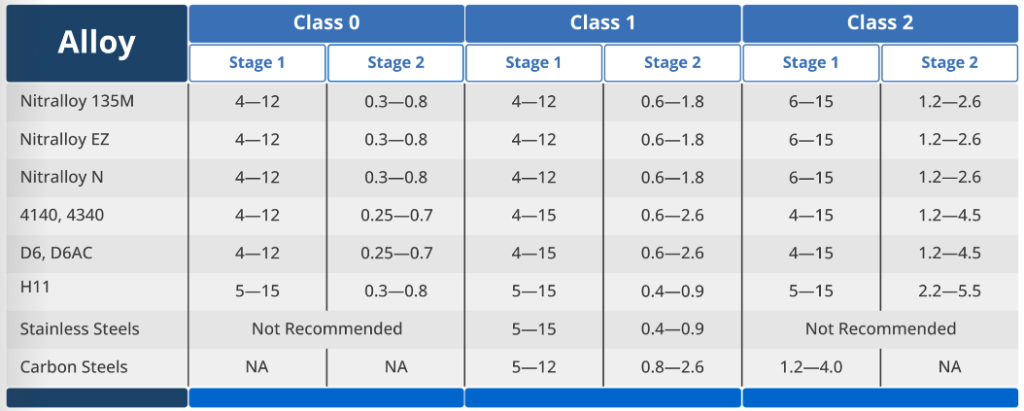
1. Class 0: No white layer permitted on the surface of a nitrided part.
2. Class 1: 0.0127 mm (0.0005 inches) maximum white layer, 15% porosity or less.
3. Class 2: 0.0254 mm (0.001 inches) maximum white layer, 10%–50% porosity of the thickness of the white layer.
Dimensional change in nitriding is primarily governed by composition, tempering temperatures, time/temperature of nitriding, relative thickness of case/core, shape of the part, and areas masked off to prevent nitriding. The amount of growth is typically constant for identical parts nitrided in different batches by a fixed processing cycle. Most parts are nitrided in a two- or three-stage process and not ground after nitriding (Table A). This affords them excellent dimensional stability (Herring 2011). Once the amount of growth for a particular part has been established, allowances can be made during final machining (prior to nitriding) to ensure repeatable results.
By contrast, heat treating processes such as hardening or carburizing are performed at higher temperatures and result in dimensional and/or shape changes often requiring post-heat treat manufacturing steps (Roliński 2014). As such, the nitriding process has become an ever more popular choice.
#2 Case Depth Control
Nitriding as a thermochemical process is capable of producing a variety of case depths, an attribute affected by temperature, time, and nitriding potential (if there is not a compound zone formed). Caution should be used when stating a required case depth since a number of definitions for total case depth are in use. For this article, authors will use Table B to show how case depths are typically total case depths (core hardness + 50 HV0.5) that vary by material.
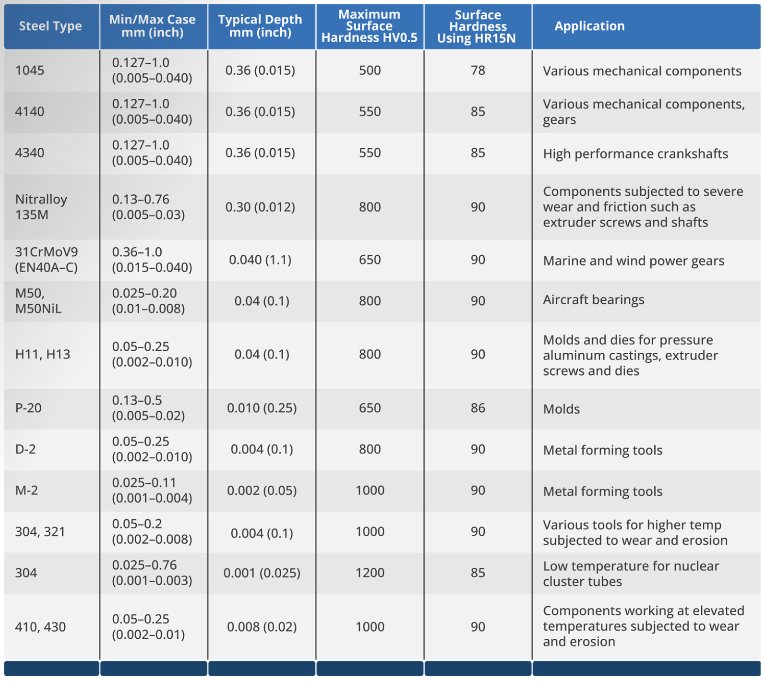
For example, on an M2 tool steel, the case depth might vary between 25–100 µm (0.001”–0.004”). By contrast, 4140 or Nitralloy® can produce case depths in ranging from 100–500 µm (0.004–0.020”), with 305–380 µm (0.012–0.015”) being typical. For low/medium carbon steels and powder metal, white layer thickness may vary from 5µm–25 µm (0.0002”–0.001”) and is the overriding consideration.
#3 Enhancing Tribological Properties
Nitriding enhances various key tribological properties related to friction, wear resistance, lubrication interaction, and texture. These include improvement in sliding motion and reduced energy losses; wear characteristics involving resistance to adhesion, abrasion, fatigue, and corrosion; and lubrication, especially as it relates to load-carrying capacity, surface roughness, and surface texture/hardness.
#4 Nitriding Applications
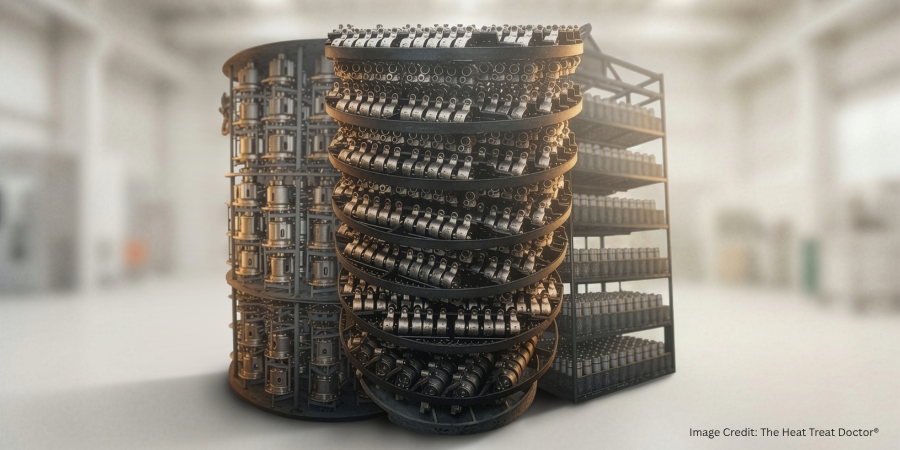
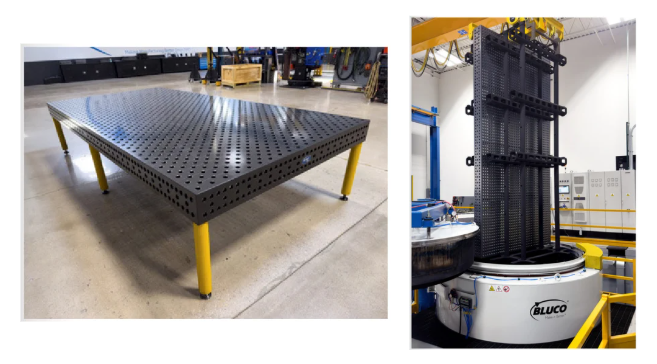
The nitriding process can be used for surface hardening of both very small and very large parts (see lead image above and Figure 1). Typical examples are gears and shafts, stamping dies, piston rods, springs, pump housings, and welding tables. Dies are typically made of cast iron or tool steels, while gears and other powertrain components are made of alloy steels. All applications require precise control of the compound zone (i.e., white layer) thickness. If selective nitriding is required, areas are masked using a stop-off paint, or in plasma processes, mechanical masking is an option.
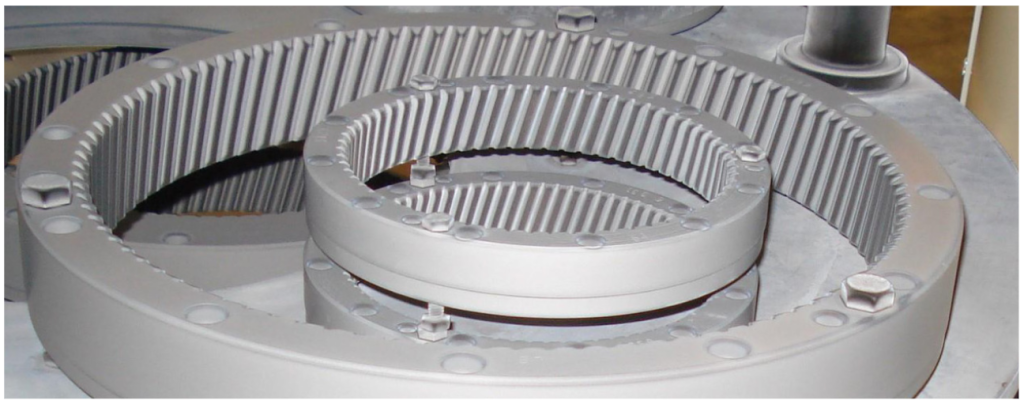
Once finished, nitrided surfaces are typically smooth and grayish in appearance (Figure 2). If a “shiny” or “bright” surface or one of extremely low roughness is required, polishing methods can be used (e.g., superfinishing). The surface has high hardness, and is under residual compressive stress, which is critical in increasing bending fatigue and rolling contact fatigue (RCF) properties.
Gas, Plasma, Salt Bath
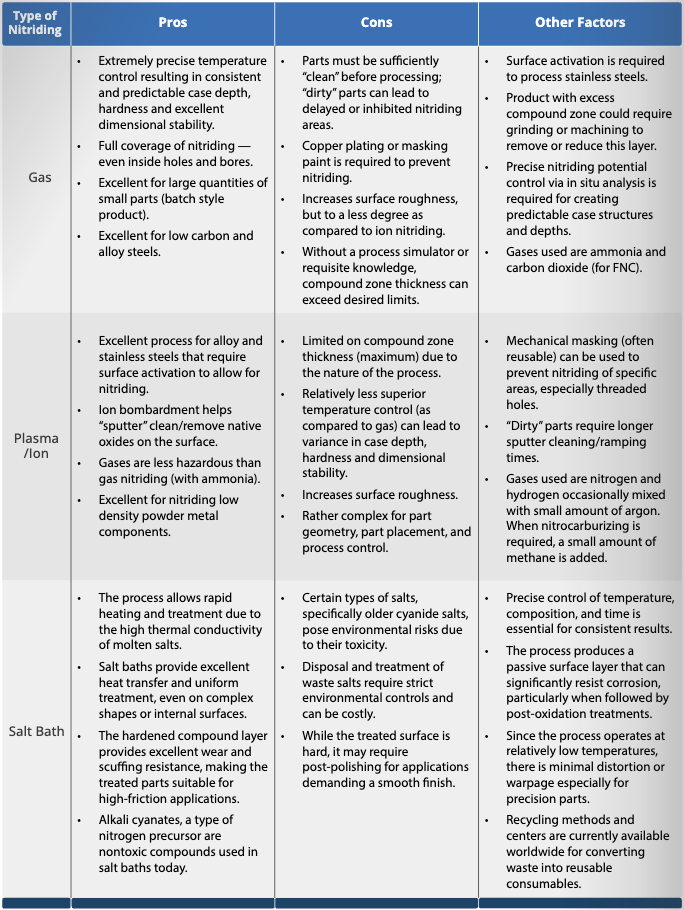
There are three types of nitriding, each with their own strengths and limitations: gas, plasma/ion, and salt bath. Table C highlights these differences for immediate comparison. For a further breakdown of each process’s strengths, the authors have written unique articles exploring the three processes in greater depth, available on www.heattreattoday.com under each of the names:
Conclusion
Nitriding is a key technology to achieve heat treated results that modern manufacturing expects. But between gas, plasma, and salt bath, there are pros and cons to whichever method is chosen. Engineers need to assess what material needs and process outcomes are most significant to the outcome in order to select the right technology.
References
Boßlet, Jochim. n.d. Melonite®/QPQ Process Brochure. HEF Durferrit.
Hemsath, Mark K., and Daniel H. Herring. 2019. “Nitriding—Growth and Tribological Benefits for Surface Engineering.” In Heat Treating Progress 2019 Conference Proceedings. Materials Park, OH: ASM International.
Herring, Daniel H. 2011. “Principles of Gas Nitriding, Parts 1–4.” Industrial Heating, April–May.
Herring, Daniel H. 2013. “Masking Techniques, Part One.” Industrial Heating, April.
Herring, Daniel H. 2020. “An Overview of Nitriding—Technology and Tribological Benefits.” Industrial Heating, March.
Mittemeijer, Eric J., and Marcel A. J. Somers, eds. 2026. Thermochemical Surface Engineering of Steels. Elsevier.
Pye, David. 2003. Practical Nitriding and Ferritic Nitrocarburizing. Materials Park, OH: ASM International.
Resnick, Michael. n.d. “Private Correspondence.” HEF Durferrit USA. https://www.hefusa.net/salt_bath_nitriding_liquid_nitriding/overview.html
Roliński, E. 1987. “Effect of Plasma Nitriding Temperature on Surface Properties of Stainless Steel.” Surface Engineering 3: 35–40.
Roliński, E. 2004. “Ion Nitriding and Nitrocarburizing of Sintered PM Parts.” Industrial Heating, October: 33–35.
Roliński, E. 2005. “When and Why Ion Nitriding/Nitrocarburizing Makes Good Sense.” Industrial Heating, August: 67–72.
Roliński, E. 2005. “Negative Effects of Reactive Sputtering in Industrial Plasma Nitriding.” Journal of Materials Engineering and Performance 14 (3): 343–350.
Roliński, E. 2006. “Plasma Nitriding Automotive Stamping Dies.” Heat Treating Progress 6 (5): 19–23.
Roliński, E. 2014. “Plasma Assisted Nitriding and Nitrocarburizing of Steel and Other Ferrous Alloys.” In Thermochemical Surface Engineering of Steels, chap. 11, edited by E. J. Mittemeijer and M. A. J. Somers, 413–449. Cambridge, UK: Woodhead Publishing.
Roliński, Edward. 2024. “Practical Aspects of Sputtering and Its Role in Industrial Plasma Nitriding.” ASM Handbook Online Update, Vol. 5: Surface Engineering. Materials Park, OH: ASM International.
Roliński, E., J. Arner, and G. Sharp. 2005. “Negative Effects of Reactive Sputtering in Industrial Plasma Nitriding.” Journal of Materials Engineering and Performance 14 (3): 343–350.
Roliński, E., G. Sharp, and A. Konieczny. 2006. “Plasma Nitriding Automotive Stamping Dies.” Heat Treating Progress 6 (5): 19–23.
Roliński, E., and G. Sharp. 2004. “Ion Nitriding and Nitrocarburizing of Sintered PM Parts.” Industrial Heating, October: 33–35.
Roliński, E., and G. Sharp. 2005. “When and Why Ion Nitriding/Nitrocarburizing Makes Good Sense.” Industrial Heating, August: 67–72.
Roliński, E., and G. Sharp. 2017. “Controlling Plasma Nitriding.” Materials Performance and Characterization 6 (4): 698–716.
Roliński, E., J. Ludeman, J. McCain, V. Popovski, and M. Woods. 2021. “Nitriding Mechanisms of Ferrous Powder Metal Products in Gas, Salt, and Plasma Methods.” In Proceedings of PowderMet2021/AMPM2021/Tungsten2021, 330–337.
SAE International. n.d. AMS 2759/10 Aerospace Material Standard (latest revision).
Senatorski, J., J. Tacikowski, E. Roliński, and S. Lampman. 2017. “Tribology of Nitrided and Nitrocarburized Steels.” In ASM Handbook, Vol. 18: Friction, Lubrication, and Wear Technology, edited by George E. Totten, 638–652. Materials Park, OH: ASM International.
Spies, H. J., and A. Dalke. 2014. “Case Structure and Properties of Nitrided Steels.” In Comprehensive Materials Processing, edited by G. Krauss, Vol. 12, 439–488. Oxford, UK: Elsevier.
Winter, K. M., and J. Kalucki. 2013. “Gas Nitriding and Gas Nitrocarburizing of Steels.” In ASM Handbook, Vol. 4A: Steel Treating—Fundamentals and Processes, edited by Jon I. Dossett and George E. Totten, 647–679. Materials Park, OH: ASM International.
About The Authors

(The Heat Treat Doctor®)
The HERRING GROUP, Inc.
Dan Herring, who is most well known as The Heat Treat Doctor®, has been in the industry for over 50 years. He spent the first 25 years in heat treating prior to launching his consulting business, The HERRING GROUP in 1995. His vast experience in the field includes materials science, engineering, metallurgy, equipment design, process and application specialist, and new product research. He is the author of six books and over 1000 technical articles.

Dr. Edward Rolinski, affectionately known as “Doctor Glow,” is a distinguished senior scientist having spearheaded research on plasma/ion nitriding since the 1970s. He holds advanced degrees in manufacturing technology and metallurgy, including a PhD and Doctor of Science. His focus has been on plasma nitriding processes, especially involving titanium alloys and powder metallurgy. Over his career, Dr. Rolinski authored numerous influential technical chapters and articles, including for ASTM International and the ASM Handbook, and is a prolific contributor to industry publications. After decades of leadership and innovation in surface engineering and heat treating, he is now a consultant in the heat treating industry.
For more information: Contact Dan at dherring@heat-treat-doctor.com.