As manufacturers look for greater control, precision, and flexibility in surface hardening, plasma nitriding has emerged as a versatile alternative to traditional nitriding methods. In this article, Daniel H. Herring, aka “The Heat Treat Doctor,” and Dr. Edward Rolinski, a senior scientist and recognized authority on plasma and ion nitriding, examine the advantages of plasma nitriding, including its ability to treat stainless steels, selectively harden complex geometries, and process powder metallurgy components.
If you’re looking for a broader introduction, watch for the upcoming print feature, “Nitriding Selection Guide: Gas, Plasma, or Salt Bath?” for an overview of nitriding, its key benefits, and a side-by-side of the three primary nitriding processes.
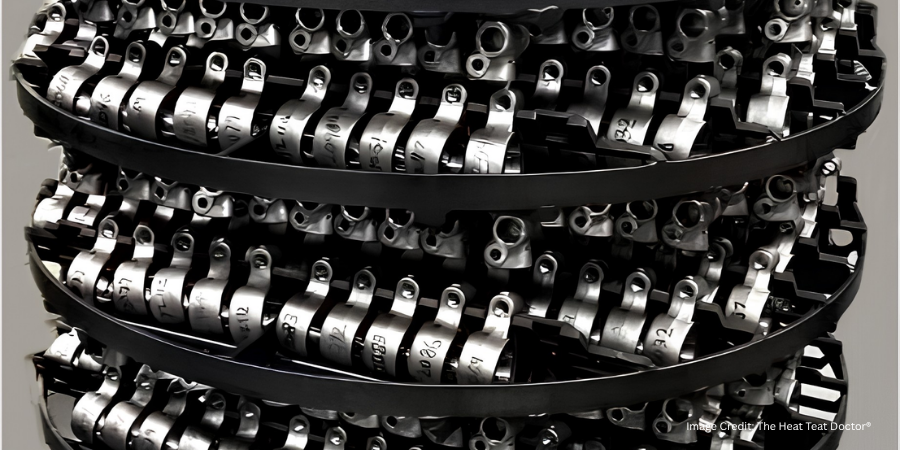
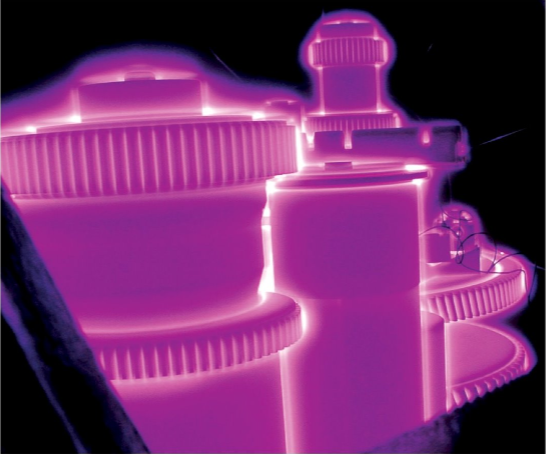
Plasma nitriding can be used over a broad range of heat treating temperatures and is used for all types of ferrous alloys (Figures 1 and 2). Additionally, it has the ability to activate the surfaces of oxidized stainless steels to allow them to be nitrided (Winter and Kalucki 2013; Roliński 1987).
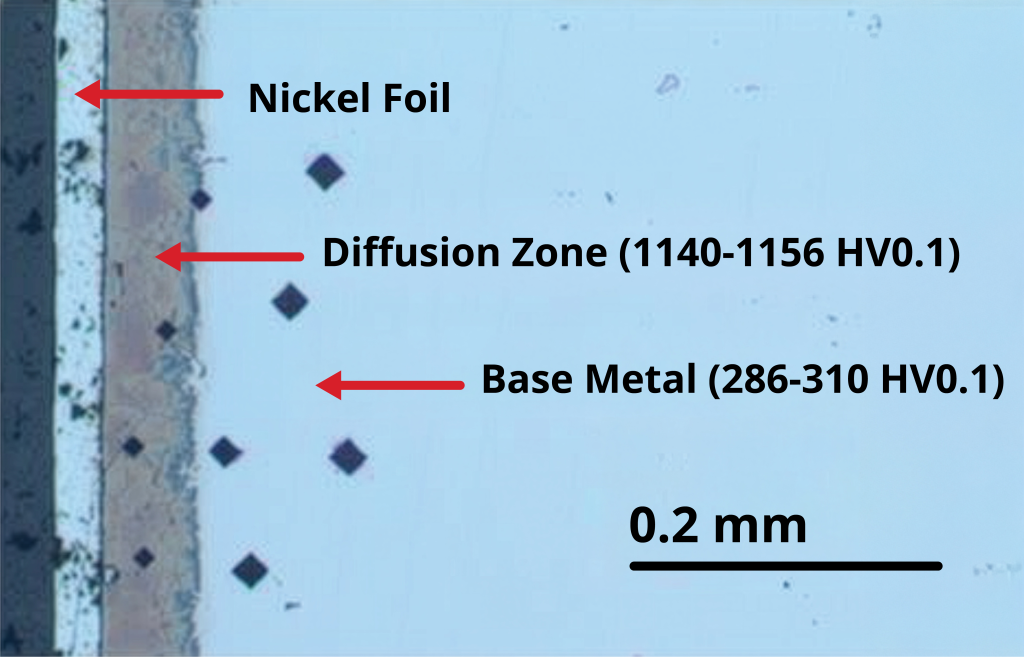
Activation of the surface involves both ion bombardment and sputtering of the surface/cathode in the areas where the glow discharge covers the surface (Figure 3). The actual contact area of the part with the cathodic base plate or fixture does not nitride. The problem of edge effect, which is related to uneven distribution of sputtered atoms at corners and edges of a component (Roliński et al. 2005; Roliński 2024), is addressed primarily by proper adjustment of the processing gas pressure, which changes the thickness of the cathodic glow, making it more uniform around contour of the part. Masking areas that do not need to be hardened is simple. For example, a nut on a thread or a steel plate on a section with small holes is sufficient to protect those surfaces from the glow discharge and prevent nitriding.
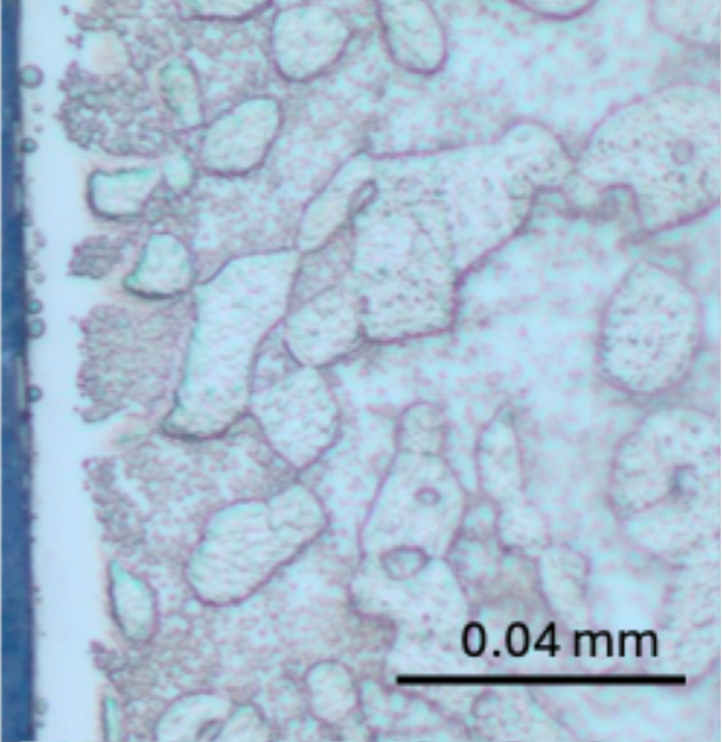
Plasma nitriding is a unique process capable of surface hardening low-density sinter/powder metal (PM) products, even those less than 7.3 g/cm3 (Figure 4) and PM stainless steels (Roliński 2004). This is especially true when a portion of the treated component requires masking (Roliński and Sharp 2005, 2004). Active nitrogen species generated by the glow discharge penetrate only near-surface cavities/porosities, forming a nitrided layer. By contrast, ammonia in gas nitriding penetrates throughout the entire thickness of the component increasing the brittleness of the nitrided part.
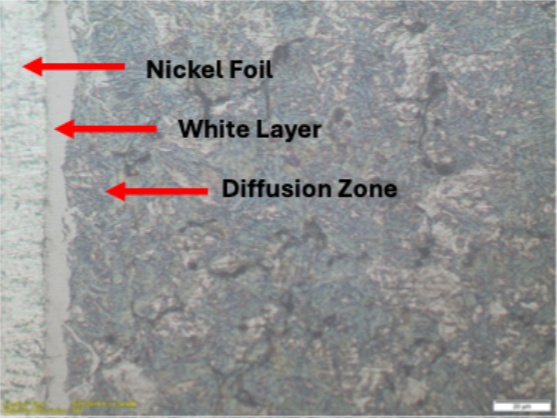
Plasma nitriding is a low-nitriding potential process because the compound zone/white layer is typically very thin without extreme control accuracy of the nitriding parameters. This is a result of sputtering and a low partial pressure of nitrogen during processing (Roliński 2014). Plasma nitriding requires much less processing gases, such as nitrogen and hydrogen, than gas nitriding with ammonia. In addition, only small quantities of hydrocarbon gases are needed to dope the atmosphere and form epsilon-type compound zones at the surface (Roliński and Sharp, 2004).
Long parts, such as extruder screws and shafts, can be plasma nitrided even in “cold-wall vessels,” which do not have external heaters (Hemsath and Herring 2019).
References
Hemsath, Mark K., and Daniel H. Herring. 2019. “Nitriding—Growth and Tribological Benefits for Surface Engineering.” In Heat Treating Progress 2019 Conference Proceedings. Materials Park, OH: ASM International.
Herring, Daniel H. and Edward Roliński. 2026. “Nitriding Selection Guide: Gas, Plasma, or Salt Bath?” Heat Teat Today, August.
Roliński, E. 1987. “Effect of Plasma Nitriding Temperature on Surface Properties of Stainless Steel.” Surface Engineering 3: 35–40.
Roliński, E., J. Arner, and G. Sharp. 2005. “Negative Effects of Reactive Sputtering in Industrial Plasma Nitriding.” Journal of Materials Engineering and Performance 14 (3): 343–350.
Roliński, E., and G. Sharp. 2004. “Ion Nitriding and Nitrocarburizing of Sintered PM Parts.” Industrial Heating, October: 33–35.
Roliński, E., and G. Sharp. 2005. “When and Why Ion Nitriding/Nitrocarburizing Makes Good Sense.” Industrial Heating, August: 67–72.
Roliński, E. 2014. “Plasma Assisted Nitriding and Nitrocarburizing of Steel and Other Ferrous Alloys.” In Thermochemical Surface Engineering of Steels, edited by E. J. Mittemeijer and M. A. J. Somers, 413–449. Cambridge, UK: Woodhead Publishing.
Winter, K. M., and J. Kalucki. 2013. “Gas Nitriding and Gas Nitrocarburizing of Steels.” In ASM Handbook, Vol. 4A: Steel Treating—Fundamentals and Processes, edited by Jon I. Dossett and George E. Totten, 647–679. Materials Park, OH: ASM International.
About The Authors

(The Heat Treat Doctor®)
The HERRING GROUP, Inc.
Dan Herring, who is most well known as The Heat Treat Doctor®, has been in the industry for over 50 years. He spent the first 25 years in heat treating prior to launching his consulting business, The HERRING GROUP in 1995. His vast experience in the field includes materials science, engineering, metallurgy, equipment design, process and application specialist, and new product research. He is the author of six books and over 1000 technical articles.

Dr. Edward Rolinski, affectionately known as “Doctor Glow,” is a distinguished senior scientist having spearheaded research on plasma/ion nitriding since the 1970s. He holds advanced degrees in manufacturing technology and metallurgy, including a PhD and Doctor of Science. His focus has been on plasma nitriding processes, especially involving titanium alloys and powder metallurgy. Over his career, Dr. Rolinski authored numerous influential technical chapters and articles, including for ASTM International and the ASM Handbook, and is a prolific contributor to industry publications. After decades of leadership and innovation in surface engineering and heat treating, he is now a consultant in the heat treating industry.
For more information: Contact Dan at dherring@heat-treat-doctor.com.