

MANUFACTURING HEAT TREAT NEWS

Acquisition of Wisconsin Heat Treat Company to Expand Value-Added Services

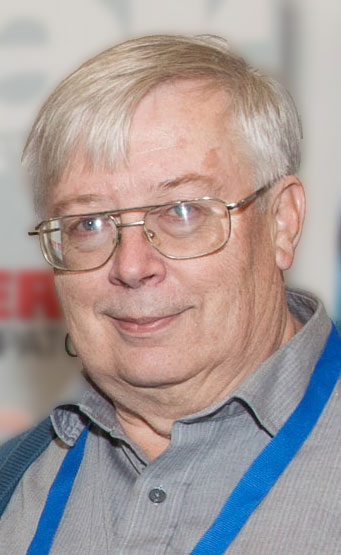
John Hubbard, Chairman of TPH

A Wisconsin heat treating company has been acquired by an industry holdings group in a bid to build a leading thermal processing company based on value-added services.

Thermal Process Holdings, Inc. (TPH), purchased Hudapack Metal Treating, Inc., which owns and operates heat treat facilities in Elkhorn and Franklin Wisconsin. In TPH’s acquisition of Hudapack, co-founded by Gary Huss, Charles Davis, and Earl Pack, the company’s strategy is to identify and bring together leading businesses that share a focus on world-class safety, quality, service, and advanced technology. TPH also owns and operates Diamond Heat Treat, based in Rockford, Illinois, and Certified Heat Treating, based in Springfield, Ohio.

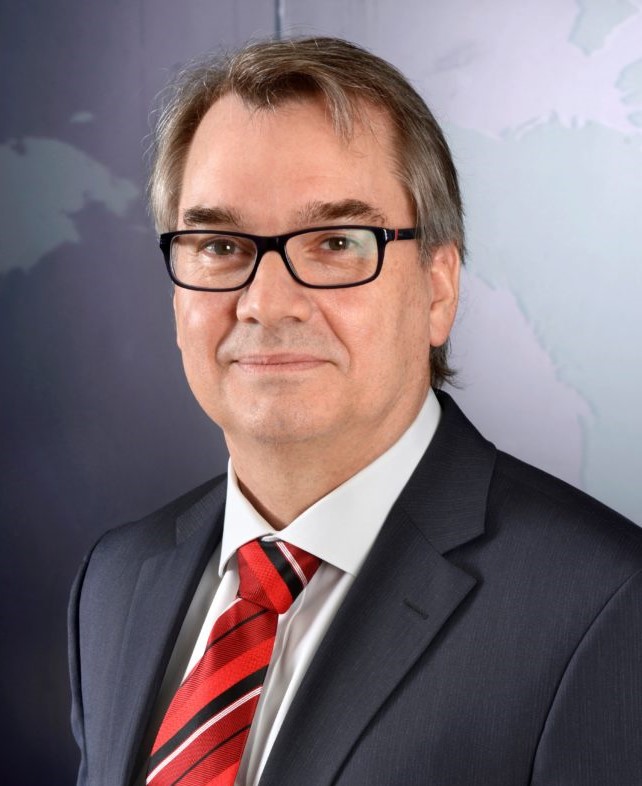
Gary Huss, co-founder and President of Hudapack

“We are excited to announce the third acquisition in our strategy to build a best-in-class company that offers a range of advanced services,” said John Hubbard, Chairman of TPH. “I have known and respected Gary Huss for over 30 years and am appreciative that he has entrusted us with the two businesses he has successfully built. I am also pleased that Greg Huss has agreed to become the General Manager of both Elkhorn and Franklin and look forward to working with him as we seek to grow Hudapack.”

“We began operations in 1985 and have been more successful than I ever imagined. When making the difficult decision to sell the business and retire, an important consideration was finding a buyer who would ensure the continued success of the business and provide opportunities for the Hudapack employees. I am confident that John Hubbard and the TPH team will carry out those objectives. I am also delighted that Greg will become GM of both locations. He has spent his career in the business and this transition provides an exciting leadership opportunity for him,” said Gary Huss, co-founder and President of Hudapack.


Acquisition of Wisconsin Heat Treat Company to Expand Value-Added Services Read More »
Heat Treat Tips: Induction Heating — Stuff You Should Know

During the day-to-day operation of heat treat departments, many habits are formed and procedures followed that sometimes are done simply because that’s the way they’ve always been done. One of the great benefits of having a community of heat treaters is to challenge those habits and look at new ways of doing things. Heat Treat Today101 Heat Treat Tips, tips and tricks that come from some of the industry’s foremost experts, were initially published in the FNA 2018 Special Print Edition, as a way to make the benefits of that community available to as many people as possible. This special edition is available in a digital format here.

In today’s Technical Tuesday, we continue an intermittent series of posts drawn from the 101 tips. The category for this post is Induction Heating, and today’s tips–#29, #73, and #83–are from Dr. Valery Rudnev, FASM, Fellow of IFHTSE, “Professor Induction”, Director of Science & Technology at Inductoheat Inc., an Inductotherm Group company. Dr. Rudnev is a regular contributor to Heat Treat Today


Heat Treat Tip #29

Induction Heating Non-Ferrous Metals & Alloys

Dr. Valery Rudnev, FASM, Fellow IFHTSE, Professor Induction, Director Science & Technology, Inductoheat Inc., an Inductotherm Group company

Steel components by far represent the majority of hot worked and heat-treated parts for which electromagnetic induction is used as a source of heat generation. At the same time, many other non-ferrous metals and alloys are also inductively heated for a number of com­mercial applications. Induction heating of low electrically resistive metals such as Al, Mg, Cu, and others typically require using lower electrical frequencies compared to carbon steels, cast irons, or high resistive non-magnetic metals (such as Ti or W, for example) and metallic alloys. The lower value of electrical resistivity results in smaller current penetration depth (depth of heat source gen­eration), making it possible to apply much lower frequencies without facing the danger of eddy current cancellation.

Heat Treat Tip #73

Induction Hardening Powder Metal

When induction hardening powder metallurgy (P/M) materials, it is good practice to have a minimum density of at least 7.0 g/cm3 (0.25 lb/in.3). This will help obtain consistent induction hardening results. When hardening surfaces that have cuts, shoulders, teeth, holes, splines, slots, sharp corners, and other geometrical discontinuities and stress risers, it is preferable to have a minimum density of 7.2 g/cm3 (0.26 lb/in.3). Low-density P/M parts are prone to cracking due to a penetration of the gases into the subsurface areas of the part through the interconnected pores. Interconnected pores contribute to decreased part strength and rigidity compared with wrought materials. In addition, the poor thermal conductivity of porous P/M parts encourages the development of localized hot spots and excessive thermal gradients and also requires the use of quenchants with intensified cooling rates to obtain the required hardness and case depths. This is so because an increase in pore fraction and a reduction in density negatively affect the hardenability of P/M materials compared to their wrought equivalents.

Heat Treat Tip #83

Induction Hardening Cast Iron

Induction hardening of cast irons has many similarities with hardening of steels; at the same time, there are specific features that should be addressed. Unlike steels, different types of cast irons may have similar chemical composition but substantially different response to induction hardening. In steels, the carbon content is fixed by chemistry and, upon austenitization, cannot exceed this fixed value. In contrast, in cast irons, there is a “reserve” of carbon in the primary (eutectic) graphite particles. The presence of those graphite particles and the ability of carbon to diffuse into the matrix at temperatures of austenite phase can potentially cause the process variability, because it may produce a localized deviation in an amount of carbon dissolved in the austenitic matrix. This could affect the obtained hardness level and pattern upon quenching. Thus, among other factors, the success in induction hardening of cast irons and its repeatability is greatly affected by a potential variation of matrix carbon content in terms of prior microstructure. If, for some reason, cast iron does not respond to induction hardening in an expected way, then one of the first steps in determining the root cause for such behavior is to make sure that the cast iron has not only the proper chemical composition but matrix as well.


These tips were submitted by Dr. Valery Rudnev, FASM, Fellow IFHTSE, Professor Induction, Director Science & Technology, Inductoheat Inc, an Inductotherm Group company.


If you have any questions, feel free to contact the expert who submitted the Tip or contact Heat Treat Today directly. If you have a heat treat tip that you’d like to share, please send to the editor, and we’ll put it in the queue for our next Heat Treat Tips issue. 

Heat Treat Tips: Induction Heating — Stuff You Should Know Read More »

Steelmaker Invests in Q&T Production at Alabama Plant

A Swedish steelmaker is responding to the increase in demand for quenched and tempered (Q&T) steels in the U.S. by investing the equivalent of approximately $110 million in its Mobile, Alabama, steel mill.

Martin Lindqvist, SSAB’s President and CEO

SSAB’s investment is targeted to increase annual production capacity of Q&T in Mobile from 330,000 tons (U.S.) to 440,000 tons (U.S.) and to reduce costs.

“SSAB is a global leader in Q&T steels and we have largely driven market growth through application development together with customers,” said Martin Lindqvist, SSAB’s President and CEO. “Over the past 20 years, we have increased Q&T volumes by an average of 7 percent a year. There is great market potential as Q&T penetration is still relatively low in, for example, North and South America, where we now plan to increase capacity.”

The investment of around SEK 1 billion is scheduled to take place 2019-2021 and is targeted at three areas: formatting, blasting & painting, as well as shipping capacity.

In parallel, a new, accelerated cooling system will also be installed and this will improve the potential to grow volumes of more advanced premium products while reducing the need for alloys. The investment has been designed to include the potential to build additional Q&T capacity through direct quenching similar to the technology currently used at SSAB’s production facilities in Finland and Sweden.


Steelmaker Invests in Q&T Production at Alabama Plant Read More »

Sacrificial Lambs: Hardness Testing and Heat Treating


Source: Gear Technology


Charles D. Schultz, president of Beyta Gear Service

In a recent blog post at Gear Technology, Charles D. Schultz, president of Beyta Gear Service, addressed the importance of accuracy when describing hardness test location and the reason why “sacrificial lambs” are needed during production.

“I cannot emphasize enough that if you are not cutting up parts or coupons you do not know what is really happening during your thermal processing.” ~ Charles D. Schulz


Read more: “Gear Materials: More Inside Heat Treating Trivia”

Photo Credit: Gear Technology

Sacrificial Lambs: Hardness Testing and Heat Treating Read More »

Nevada, Wisconsin Construction Equipment Manufacturer Expansion Includes Heat Treat

A manufacturer and supplier of earth-moving equipment recently announced expansion plans that include two of its brands building new facilities in Nevada and Wisconsin, one to host a new heat treat shop.

Jeff Dawes, President and CEO of Milwaukee-based Komatsu Mining Corp

Komatsu Equipment Company will a build state-of-the-art, $47 million customer support and service center in Elko, Nevada. This announcement comes not long after Komatsu Mining Corp reported intentions to construct a new headquarters and manufacturing campus near the location of the company’s original machine shop off South First Street in Milwaukee, Wisconsin.

Komatsu’s investment of nearly $300 million at the Milwaukee site will include the design and construction of advanced machine, heat treat, and fabrication shops; state-of-the-art technology, R&D, and robotics labs; as well as new office and training facilities. Komatsu Mining Corp. aims to reduce energy consumption with green initiatives, including solar panels, wind spires, a remotely operated closed-loop heat treat system, green spaces, LED lighting and other sustainable solutions. Project completion is expected in 2022.

“The new campus provides us opportunity for advancement in state-of-the-art facilities that expand our capabilities on a global scale,” said Jeff Dawes, President and CEO of Milwaukee-based Komatsu Mining Corp. “Our new facilities will be designed to enhance safety, efficiency and environmental sustainability – all top priorities of Komatsu worldwide, allowing us to better serve our customers and deliver innovative solutions.”

John Pfisterer, president of Komatsu Equipment Company

Of the new 189,000 sq-ft manufacturing space in Elko, Nevada, Komatsu Equipment Company John Pfisterer said: “The new building offers an exciting opportunity to bring together local employees of two major Komatsu subsidiaries: KEC and Komatsu Mining Corp. (KMC), into one integrated organization. Collaborating directly in a shared, state-of-the-art space, these combined teams will enhance customer support and operational efficiency.”

The new building will include a six-bay, full-service construction equipment and mechanical rebuild shop; a heavy welding and fabricating shop, large enough for rebuild and manufacturing of large shovel and truck structures and manufacturing of truck bodies; a heavy machine shop with large, horizontal milling and boring machine, plus vertical lathe capability; and a construction equipment and rental-machine yard. The Nevada project is planned for completion in early 2020.


Nevada, Wisconsin Construction Equipment Manufacturer Expansion Includes Heat Treat Read More »

Steelmaker Completes Acquisition of Rebar Facilities

A steel and metal manufacturer based in Irving, Texas, which includes heat treating in the processes it provides recently announced the company has completed the acquisition of 33 rebar fabrication facilities as well as steel mills in the United States.

Barbara Smith, Chairman of the Board, President, and Chief Executive Officer of Commercial Metals

Commercial Metals Company acquired the plants from Gerdau S.A., a producer of long and specialty steel products in the Americas. The steel mills are located in Knoxville, TennesseeJacksonville, FloridaSayreville, New Jersey; and Rancho Cucamonga, California.

“I am thrilled to welcome the approximately 3,200 employees of these operations to Commercial Metals Company,” said Barbara Smith, Chairman of the Board, President, and Chief Executive Officer of Commercial Metals. “The successful completion of the transaction represents an important step in our strategy to be the leading concrete reinforcing specialist as well as a significant provider of merchant and wire rod products.  With our expanded geographic footprint and added operational flexibility, this transaction supports our vertically integrated steelmaking model and will leverage our existing rebar manufacturing technology and customer service core competencies.”

Photo credit: BizJournals.com

Steelmaker Completes Acquisition of Rebar Facilities Read More »

Recognizing the U.S. Veterans Within the Heat Treat Industry

Although Veteran’s Day, set aside to honor military veterans — those who served in the United States Armed Forces — is November 11, because this year the date falls on a weekend, Monday, November 12, is the day the U.S. observes the celebration and commemoration of this federal holiday.

Veterans Day coincides with other international holidays, including Armistice Day and Remembrance Day, celebrated in countries that mark the anniversary of the end of World War I. (Major hostilities of World War I formally concluded at the 11th hour of the 11th day of the 11th month of 1918, when the Armistice with Germany went into effect.)

A number of heat treating and heat treat-related businesses are owned and operated by veterans of U.S. military branches, and it is our honor to recognize some of those companies below. In addition, we feature 3 members of our class of 2018 40 Under 40 who are U.S. veterans.

Baker Furnace, based in Brea, California, designs and manufactures industrial ovens, heat treat furnaces, and pollution control equipment. Acquired in 2015 by Thermal Product Solutions.

Century Inc., headquartered in Traverse City, Michigan, provides precision machining, heat treating, welding and cladding, and testing and inspection services for a variety of industries, including aerospace, automotive, defense, and energy sectors.

Certified Metal Craft is a brazing, cryogenics, and heat treating company based in El Cajon, California.

Nick Suchoski

Global Furnace Materials, based in Janesville, Wisconsin, is a leading distributor for semi-finished refractory metal products. Owner Nick Suchoski, who served in the US Army as a combat engineer, was featured in a previous Veterans Day article on Heat Treat Today, “Veteran-Owned Heat Treat Supplier Commits 1% of Profits to Warrior 360” and was selected for Heat Treat Today‘s 40 Under 40 inaugural class of 2018.

Quality Calibration Servies LLC, based in New Berlin, Wisconsin, an ISO/IEC: 17025 accredited full service metrology lab.

RIS Enterprises, based in Oxnard, California, provides calibration services, industrial instrumentation, and products to manufacturers, laboratories, and industrial companies in Southern California, Utah and Nevada. (including Nadcap certification).

40 Under 40 recipients and Honorable Mentions:


Lee Rothleutner

In addition to Nick Suchoski, Lee Rothleutner, Prinicipal Development Engineer with The Timken Company, and a veteran of the U.S. Coast Guard, was represented in our 40 Under 40 class of 2018. Recipient of an Honorable Mention for the 40 Under 40 class of 2018, Matt Watts, Business Development Manager with Ultra Furnace Parts, served in the United States Air Force as an Avionics Test Station and Analysis Technician on the B1 Bomber.

Matt Watts

We ask our Heat Treat Today readers to join with us in honoring our U.S. veterans, including those who work among us in the heat treating industry.

Recognizing the U.S. Veterans Within the Heat Treat Industry Read More »

Heat Treat Today’s Meet the Consultants: Adeel Karim

Heat Treat Today recently unveiled its Heat Treat Consultants page in the October 2018 print edition (available in digital format here) and at FNA in Indianapolis, Indiana. We offer this comprehensive listing of heat treat industry consultants as part of our efforts to help minimize the effects of heat treat “brain drain.” With so many heat treat brains growing older, the expertise that once used to reside inside of manufacturing operations is dwindling. Where, then, do manufacturers with in-house heat treat departments go when they need heat treat answers?

Turn to Heat Treat Today and our comprehensive list of heat treat industry consultants, which we will introduce to you one by one in this occasional feature, “Meet the Consultants”. There is no more comprehensive list of heat treat consultants. Learn more about Adeel Karim in below’s inaugural entry, and then click through to the page to read more details about each consultant. We are adding more regularly. Contact them directly, or call us and we’ll introduce you to them. Whether it’s a technical process question, a safety concern, a compliance issue, or a business related question, one of our heat treat consultants will be able to help. If you are a consultant and would like to be listed, please contact Doug Glenn.


Name: Adeel Karim
Company Name: Doctor Furnace, Inc.
Location: Tampa, Florida, USA
Years in Industry: 15+
Consulting Specialties: Pyrometry /Nadcap Implementation

Email: Adeel@doctorfurnace.com | Phone: 614-519-0740, 352-315-9090

Briefly:

Adeel Karim is Doctor Furnace, the role he took on not long after he founded Heat Treat Professionals, Inc., in 2002 to provide clients with Nadcap and heat treating consulting. He went on to launch Doctor Furnace Inc. which continues to contribute to the industry today by offering clients expertise in pyrometry and Nadcap implementation (specification knowledge includes: AMS 2750,  PWA F40, BAC 5621, RPS, DPS 1.700, GE P10TF1 and F3, and Bell Helicopter to name just a few), as well as the latest and best products and services to the heat treatment industry. Adeel operates as a training specialist and private consultant in pyrometry in all aspects of the industry, including to Fortune 500 companies in aerospace and defense, and is currently on the lecturing circuit for pyrometry. In addition, Adeel is also part owner of ZK SONS, Inc, a holding company of IT, agriculture, and vocational education companies, and a concierge jeweler specializing in custom diamond and luxury watches with offices in Tampa, Dubai, and Karachi under the business name of Carats & Cents.

Publications or Significant Accomplishments:

  1. Founded Heat Treat Professionals Inc. (2002).
  2. Founded Doctor Furnace Inc. (2004).
  3. Nadcap heat treat consultant and pyrometry expert for Boeing, Lockheed, Rolls Royce, GE Aircraft, Pratt & Whitney, and Safran Snecma Group amongst others. Implementation of Nadcap in heat treatment, chem processing, welding, and NDT amongst others.
  4. Author of “The Latest on AMS 2750 Rev. E”, published at Industrial Heating (2014).
  5. GAP analysis, procedure writing, training, cap ex survey , and Nadcap response development support.
  6. Record 228 companies with zero failures in any discipline in attaining Nadcap Accreditation.
  7. Global Lecturer & Consultant for the latest revisions of AMS 2750, CQI 9, BAC 5621, RPS 953, PWA F40, and GE P10 T F3.
  8. Consultant with GE Aviation (2011-2013).

Links to Other Resources from This Consultant

References available upon request from the Consultant

Heat Treat Today’s Meet the Consultants: Adeel Karim Read More »

Specialty Alloys Firm Enhances AM Capabilities with Powder Lifecycle Technology Acquisition

A Pennsylvania producer and distributor of premium specialty alloys recently announced it has acquired a leader in the development and supply of advanced metal powders and powder lifecycle management solutions.

Carpenter Technology Corporation, based in Philadelphia, Pennsylvania, broadens its role as a leader in solutions provider in additive manufacturing with the approximately $81 million purchase of LPW Technology Ltd (LPW), based in Widnes, Chesire, United Kingdom, with additional processing operations near Pittsburgh, Pennsylvania. The acquisition incorporates metal powder lifecycle management technology with quality control and traceability.

Tony R. Thene, Carpenter’s president and CEO

Carpenter’s alloy production includes titanium alloys, nickel- and cobalt-based superalloys, stainless steels, alloy steels, and tool steels and is used in applications within the aerospace, transportation, medical, and energy sectors.

“Our aggressive development in key aspects of Additive Manufacturing (AM) demonstrates our commitment to build on our industry-leading position in this space,” said Tony R. Thene, Carpenter’s president and CEO. “The acquisition combines LPW’s metal powder lifecycle management technology and processes with our technical expertise in producing highly engineered metal powders and additively manufactured components.”

Phil Carroll, LPW’s founder

Lifecycle management technology is becoming increasingly important to understanding how materials behave before, during, and after production in the powder-bed fusion process.  Understanding powder behavior is critical as AM becomes more widely adopted and implemented across various industries.

“LPW’s innovative platforms and enabling technology further solidify Carpenter’s position as a preferred provider of end-to-end next generation Additive Manufacturing solutions,” said Phil Carroll, LPW’s founder. “I’m extremely proud of the accomplishments we’ve achieved at LPW and I’m excited to be part of Carpenter’s continued growth and leadership in AM.”


Photo credit: Additive Manufacturing Magazine


Specialty Alloys Firm Enhances AM Capabilities with Powder Lifecycle Technology Acquisition Read More »

Steel Rail Producer Looks to Invest in Mill Expansion

A leading North American steel rail producer is looking to invest at least $200 million into the expansion of its footprint in Pueblo, Colorado.

Evraz Rocky Mountain Steel has three mills in Pueblo and is considering building another or replacing one of the existing mills in the Steel City. The Pueblo city council approved a $15 million incentive package for the company.

“It is hard to find anybody in Pueblo who has not had a family member work at the steel mill in the last 135 years. The investment the community looks to make in this project celebrates the incredible workforce at the steel mill who will continue to make Pueblo proud. We look forward to 135 more years,” said Jeff Shaw, President and CEO of Pueblo Economic Development Corp. “Since 1882, the year that the first rail came out of the Colorado Fuel and Iron Plant, Pueblo has been known as the Steel City. The steel industry and the CF&I steel mill, now EVRAZ, has literally been the backbone of the community. Not only does the mill produce steel that is used all over the world, it also provides thousands of direct and ancillary jobs that bolster the local economy and help keep Pueblo moving forward in a strong and thriving direction. ”

Evraz has until December 2019 to make a final decision.


Steel Rail Producer Looks to Invest in Mill Expansion Read More »

Skip to content