An isostatic press manufacturer based in Columbus, Ohio, has expanded its operations facility to increase its heat treating capacity and technological capabilities.
Amercian Isostatic Presses, Inc., which manufactures temperature and pressure products, including hot isostatic pressing (HIP), cold isostatic pressing (CIP), warm isostatic pressing (WIP), SinterHIPs, vacuum furnaces, and other equipment and accessories, serves the aerospace, automotive, energy, defense, and medical sectors.
Hot isostatic pressing (HIPing) is most commonly used in the medical and aerospace industries. The HIPing process is a high pressure, high temperature technique that can be used for both composite materials and powder metals. HIPing results in the decreased porosity in parts and a densification in powder metals.
HIPing is in an autoclave style furnace, where parts are exposed to high temperatures and high gas pressure and later cooled. Parts made of tool steel, duplex, martensitic, and austenitic stainless steels, nickel-based alloys, cobalt-based alloys, titanium and even some carbon steels are frequently HIPed. The combination of temperature and pressure reduces the part’s porosity while maintaining its original shape. Decreased porosity gives the finished component part increased mechanical properties.
A U.K.-based thermal processing service provider announced it has begun production at its facility in Greenville, SC, where it recently expanded its hot isostatic pressing (HIP) services. The site houses heat treating operations, EDM, and other capabilities to serve the aerospace, defense, power generation, medical, and general industries.
HIP Product Fabrication – metal part from powder metal Source: Bodycote
The additional HIP capacity at Bodycote‘s Greenville location was commissioned to service the development and processing of advanced materials for industries situated within the Southeastern U.S. as well as other Bodycote facilities in the supply chain. With HIP capacity now in full production, Bodycote is able to meet the rising demand for highly reliable additive manufacturing post-processing. The company has more than HIP vessels of varying sizes in multiple locations. Processing capability can accommodate components nominally up to 6.5ft in diameter by 12ft high, and weighing over 30,000kg.
The press release is available in its original form here.
Featured photo: HIP furnace being lowered into place
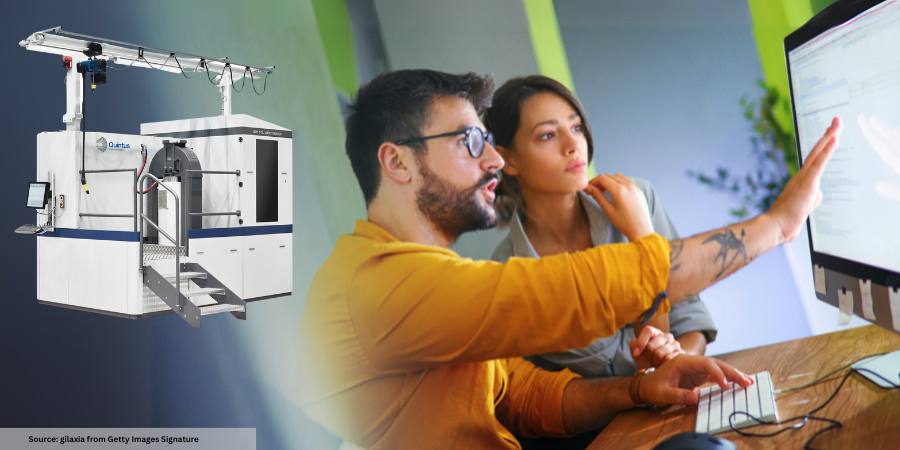
A hot isostatic press will add a new capability to the research infrastructure already in place at the Sydney Manufacturing Hub (SMH), the advanced manufacturing research facility at the University of Sydney, Australia.
Hot isostatic pressing (HIP) has become a critically important technology for the densification of unconventional microstructures associated with additive manufacturing (AM) across a broad spectrum of industries. It has proven of particular value in developing high-performance materials and building advanced metallic structures for mission-critical applications, for example within the aerospace, hypersonics, defense, biomedicine, energy, mining & minerals, and oil & gas sectors.
According to Professor Simon Ringer, Pro-Vice-Chancellor (Research Infrastructure) at University of Sydney, the SMH (as a research facility) is focused on offering the broadest possible range of advanced manufacturing capabilities, aiming to support the entire AM workflow from design right through to final part conformity in one facility.
“This [Quintus Technologies] hot isostatic press delivers enormous uplift in our university’s contribution to the national advanced manufacturing capability,” states Prof. Ringer. “It aligns critically with our own initiatives such as at the Sydney Biomedical Accelerator and our Net Zero Initiative. Moreover, this is a nationally significant capability that will allow our researchers to partner with industry to blaze new trails in manufacturing-related R&D.”
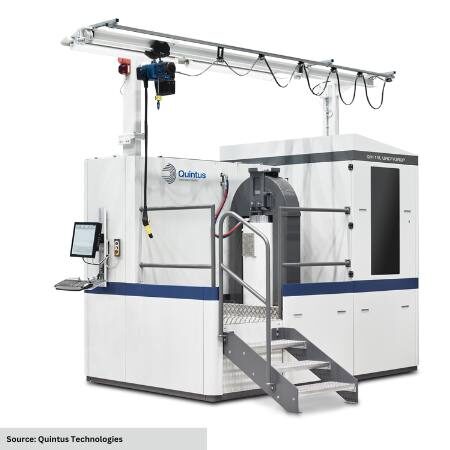
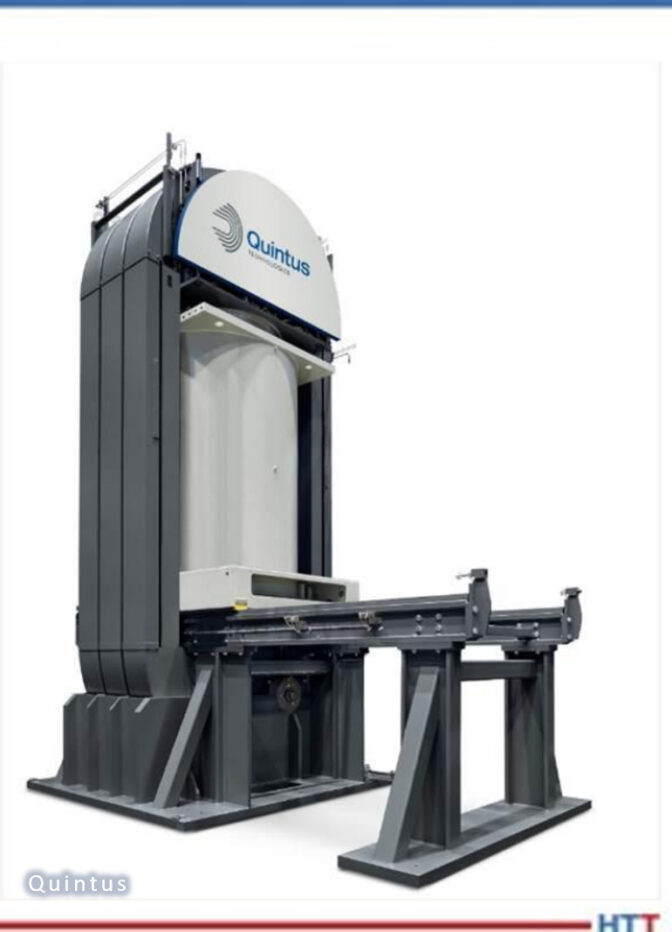
The Quintus Hot Isostatic Press going to the Sydney Manufacturing Hub is equipped with URQ® and URC® technology. Source: Quintus Technologies
The SMH selected the press model QIH 15L M URQ® + URC®, equipped with several proprietary features that streamline the HIP process and produce finished 3D printed parts with maximized theoretical density, ductility, and fatigue resistance. Uniform Rapid Quenching® (URQ) delivers an impressive cooling rate of 103K/minute while minimizing thermal distortion and nonuniform grain growth. HPHT™ (High Pressure Heat Treatment) combines stress-relief annealing, HIP, high-temperature solution-annealing (SA), high pressure gas quenching (HPGQ), and subsequent aging or precipitation hardening (PH) in one integrated furnace cycle.
Quintus’s strong focus on materials science and materials processing research, exemplified by the URQ functionality, was of special interest to the Sydney hub, Prof. Ringer relates. He also cites the intrinsic safety of the vessel and yoke design, along with the rapid cycle time for processing AM parts, as major benefits for the facility, which is geared to enable concept-to-production demonstration capabilities.
“Our new HIP capability will address a significant gap in the AM community in the Australian region and further offer the potential for SMEs (small and medium enterprises) and start-up companies to access this critical process,” Prof. Ringer adds.
SMH’s broad user base extends from its own researchers to those from other local universities and research organizations to private industry and collaborations with international institutions.
Jan Söderström CEO Quintus Technologies
“As the industry leader in advanced hot isostatic pressing technology for over 70 years, we have noted exceptional interest in new manufacturing approaches that improve quality, lower cost, and reduce environmental impacts,” says Jan Söderström, CEO of Quintus Technologies. “We are excited to work with the talented researchers at the Sydney Manufacturing Hub to deepen their expertise and refine processes for pressure-supported heat treatment, laying the foundation to advance both productivity and sustainability for operations in Australia and its neighbors.”
The hot zone of the model QIH 15L M URC® measures 7.32 inches (186 mm) in diameter and 19.7 inches (500 mm) high. The press operates at a maximum pressure of 207 MPa (30,000 psi) and a maximum temperature of 2,552°F (1,400°C). It will be installed in the Hub’s purpose-built facility on the University of Sydney’s Darlington campus in January 2025.
This press release is available in its original form here.
Find Heat Treating Products and Services When You Search on Heat Treat Buyers Guide.com
Kittyhawk, Inc., backed by the Dallas-based private equity firm Trive Capital, has acquired Stack HIP, LLC from Stack Metallurgical Group (SMG). The acquisition represents a significant expansion of capacity and capabilities in hot isostatic pressing (HIP) for aerospace, space, defense, and medical applications.
Operating from its facility in Albany, OR, Stack HIP provides HIP services to aerospace, defense, and medical clients by operating the largest high-pressure HIP vessels in North America. This enables them to process large, complex castings and additively manufactured metallic parts. Post-closing, SMG will continue to operate its classical heat treatment and aluminum special processing facilities in Portland, OR, Spokane, WA, and Salt Lake City, UT.
Brandon Creason President Kittyhawk
“We’re excited to welcome Stack HIP customers, employees, and suppliers into the Kittyhawk family,” said BrandonCreason, president of Kittyhawk. “Stack HIP will allow Kittyhawk to service mission critical parts up to 63” in diameter, enabling us to process the full array of components for our customers. At Kittyhawk, we commit every day to providing the best service and quality to our customers, and we’re thrilled to now do that with the added capabilities and dedicated employees of Stack HIP.”
Doug Puerta CEO Stack Metallurgical Group
Doug Puerta, CEO of SMG commented, “We look forward to continued collaboration with Kittyhawk to deliver a differentiated level of service, quality, and value to our shared customers. This transaction will allow both companies to further drive capacity, quality, and capabilities in our respective services to best serve the PNW market.”
“This is an important step in growing the platform specialized in this highly-differentiated HIP capability. [Kittyhawk] continues to benefit from strong industry tailwinds, and we are excited to support our customers by investing in capacity,” said David Stinnett, partner at Trive.
This press release is available in its original form upon request.
Aalberts surface technologies, a global provider of specialized thermal processing, surface treatment, and material coating solutions, announced on Wednesday, February 14, 2024, that it is making changes to its U.S. portfolio in response to changing market dynamics. The provider has made investments in its Canton, OH, facility, adding austempering capabilities which will provide a logistically favorable option to clients located in the Midwestern, Eastern, and Northeastern U.S. markets. To balance the capacity available in the market with demand, the heat treat provider will be closing its plant in Ft Smith, AR.
Steve Wyatt President Aalberts surface technologies – HIP | Braze | Heat Treatment
Source: Aalberts Surface Technologies
“The decision to exit the austempering market in the South was a difficult one, but the market for austempering in the addressable market for our Ft Smith, AR plant simply is not sufficient to sustain the operation. We recognize the hardships that this difficult decision may create and will be working with our Ft Smith Team to minimize the impact as much as possible, including exploring opportunities at one of the many other Aalberts locations,” says Steve Wyatt, president of Aalberts surface technologies – HIP | braze | heat treatment.
The austempering capabilities in Canton, OH, will startup in mid-February 2024 and be fully production ready by the end of March 2024. The decommissioning of the Ft Smith, AR, plant will begin in mid-February 2024, with production expected to cease when we have completed working with clients to transition their product, but not later than April 2024.
Oliver Jaeger CEO Aalberts surface technologies LinkedIn
“We are focused on optimizing our portfolio around the globe; this initiative is about responding to what the market needs and where it is needed. In our business, logistics is a significant percentage of the total cost of our services, therefore, we must constantly be seeking ways to minimize that cost for our customers. We are committed to growing in the U.S. and look forward to partnering with our customers to develop solutions that contribute to our mutual success,” says Oliver Jaeger, CEO of Aalberts surface technologies.
The original press release from Aalberts surface technologies is available upon request.
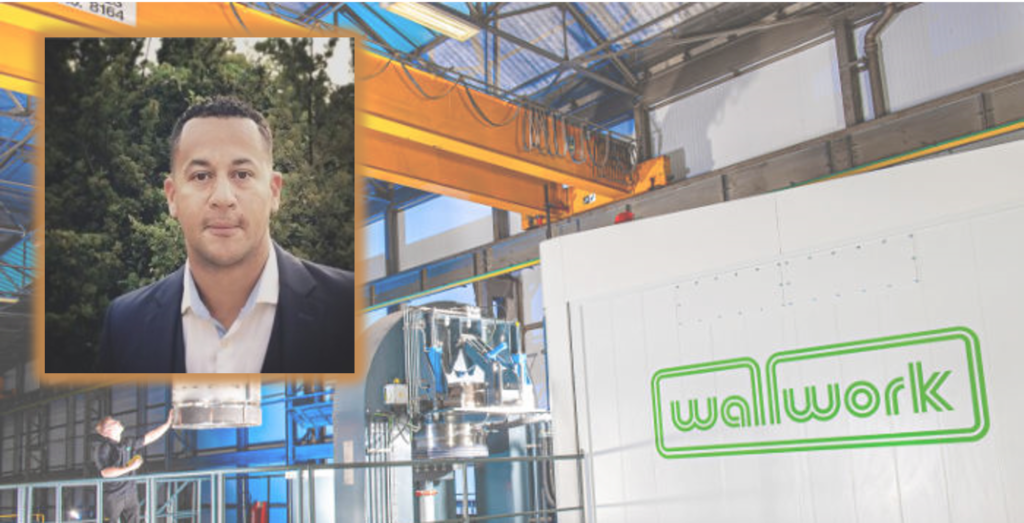
Bringing forward plans by two years, Wallwork Group have signed for a second hot isostatic press. Following hot on the heels of opening their £10 million Wallwork HIP Centre, Wallwork Group is installing this HIP to meet and serve increasing demand from various manufacturers.
David Loughlin Business Manager Wallwork HIP Centre
This second HIP from Quintus Technologies, a high pressure manufacturer with North American locations, has been contracted following Quintus completing the commissioning of the first HIP in the third quarter of 2023.
“We expected strong demand from UK castings, 3D printing, powder fabrication, and near-net-shape manufacturers. Especially, as the UK is currently under-served with hot isostatic pressing capacity,” says Wallwork HIP Centre, business manager, David Loughlin.
Adds Simeon Collins, group director of Wallwork, “Demand from customers for processing components in our first hot isostatic press has been astonishing. It is prudent to bring forward planned investment for the next HIP, knowing it will take most of 2024 to build and install. We hope to have it up and running by early 2025. Deciding to prepare pits for expansion during the first installation has proved right.”
The second HIP will be identical to the first, operating at pressures from 40 to 207 MPa (5,800 to 30,000 psi) and temperatures up to 2282°F (1250°C). It will also have the latest rapid cooling technology, as well as the capability to offer increased cycle pressures at elevated temperatures, complements engineering advances in metal 3D printing and more.
This press release from Wallwork Group can be found in its original form here.
Stephen Harris
Group Chief Executive
Bodycote
Source: LinkedIn
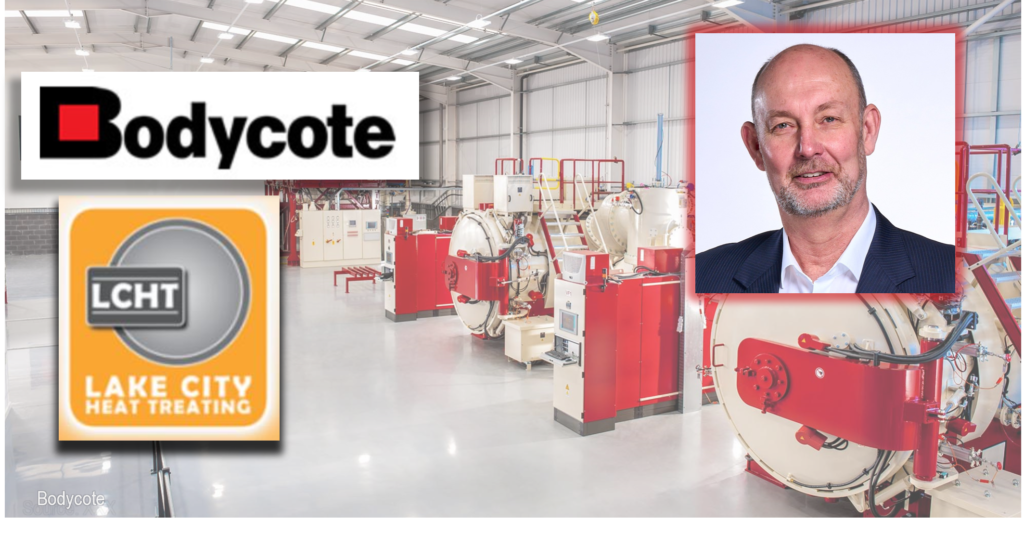
Bodycote has announced its acquisition of Lake City Heat Treating, based in Warsaw, Indiana, which was successfully completed on January 19, 2024. The midwestern heat treater is a leading medical market provider of hot isostatic pressing (HIP) and vacuum heat treatment services, primarily supplying the orthopedic implant market as well as civil aerospace.
Stephen Harris, group chief executive of Bodycote plc, commented: "This acquisition is an excellent fit, and it allows us to better address the growth opportunities in the medical and aerospace markets." With this acquisition, the heat treater will increase their range of specialist thermal processing and heat treatment solutions available to these industries.
Lake City Heat Treating is forecast to have achieved 2023 full year revenues of around $14m (£11m). The business revenue grew 30% in 2023 and looking ahead is expected to continue to deliver good progress.
Their constant growth reflects the high-quality business that has successfully gained share among distinguished medical and aerospace OEMs. The acquisition fits with Bodycote’s strategy to grow its Specialist Technologies businesses.
This Bodycote press release can be found in its original form here.
Find Heat Treating Products And Services When You Search On Heat Treat Buyers Guide.Com
Two new specialist technology focused businesses, Lake City Heat Treat and Stack Metallurgical Group, have been acquired by Bodycote.
Bodycote has agreed to acquire Lake City Heat Treat based in Warsaw, Indiana, a Medical market HIP and vacuum heat treatment business; and Stack Metallurgical Group based in the Pacific Northwest of the U.S., a key provider of HIP, heat treatment and metal finishing services.
The businesses are complementary to the commercial heat treater’s existing operations and will both expand its geographic footprint in North America and provide additional customer reach. Comprising of two HIP and three heat treatment sites, the businesses will be integrated into Bodycote’s existing specialist technologies business and aerospace, defense and energy classical heat treatment business respectively.
Stephen Harris, Group Chief Executive of Bodycote plc, commented, “These investments are an important and exciting enabler of our strategy to further enhance and grow our Specialist Technologies businesses. In addition, they will also expand our footprint in Aerospace and Medical heat treatment on the West Coast and in Indiana in the U.S."
The heat treater also announced plans to open a new HIP plant utilizing one of their existing sites in greater Los Angeles. The capacity is intended to support the rapid growth in space and civil aviation markets in the Los Angeles area.
The combined gross consideration for the acquisitions is 119 million pounds ($145 million) on a cash and debt free basis. The net economic consideration is approximately 106 million pounds ($130 million).
Find heat treating products and services when you search on Heat Treat Buyers Guide.com
A supersized cold isostatic press from an HIP supplier with North American locations will be supplied for Lingchuang Special Material Co. to domestically produce isostatic graphite.
Quintus Technologies will be supplying a press model QIC 2.4 x 4.5 - 2000 to maximize operation and output capabilities. The press itself is setting new standards along with a new energy management system that offers energy savings of more than 30 percent compared to conventional intensifier solutions.
The cold isostatic press
Source: Quintus
Noted Lingchuang's vice president, Zhongxin Zhao, "In order to ensure the stability and consistency of product quality that reaches the international level, we have adopted the most advanced technology that has been proved in production at home and abroad. . . .Our key equipment is mainly imported, and the production process has reached a high degree of automation, stability, and environmental protection."
Lingchuang's CIP will be equipped with a new, first-of-its-kind feature: a redesigned pressure vessel that is floating during pressurizing, extending the life of the guide rail system and ensuring operation over a very long period of time.
"Lingchuang is a young company with a far-ranging outlook," comments Jan Söderström, CEO of Quintus Technologies. "Its founders saw opportunity in the shortage of domestic high-end specialty graphite materials."
Find heat treating products and services when you search on Heat Treat Buyers Guide.com
In December 2022, the first HIP batch on Latin American soil was performed. The journey to success in HIP, as any HIP user will agree, is a bumpy road. What are the challenges that aerospace manufacturers with in house heat treating should be aware of when considering HIP processing? Learn how HT-MX Heat Treat & HIPing — the heat treater who ran the first HIP batch in Latin American history — navigated the transition from small tooling jobs to HIP processing for aerospace parts.
Read the English version of the article below, or find the Spanish translation when you click the flag above right!
This original content article, first published in English and Spanish translations, is found in Heat Treat Today's March Aerospace Heat Treatingprint edition.
Writing this story as the first Latin American company to offer Nadcap accredited hot isostatic pressing brings a flood of memories and images to mind. HT-MX’s beginnings were simple, but also filled with challenges, failures, and lessons. When the company began, we were certain that, though small, we were still a “heat treat plant” and not just a shop.
Contact us with your Reader Feedback!
Being located in Mexico means that there were large companies with headquarters located far away — potential customers — that would be deciding on their heat treat supplier close to their location. We worked hard to be and to present ourselves as being very professional. But a lesson soon learned was that achieving trust with partners takes a lot more than a good speech and a clean plant.
Unsurprisingly, the first jobs were simple tooling work, like quench and tempering tooling and carburizing gears. A junior engineer and I would drive around in my old hatch-back to local machine shops and pick up a small shaft or gear and bring it back to the plant. We would get so excited when we got the case depth right.
With minimal resources, we decided to complete quality control ourselves. We became friends with a quality manager from a local company, and he came over to help on weekends and after 6:00pm until the audit date came. His knowledge is still in use at HT-MX to this day. I remember celebrating with a “Carne Asada” (a Mexican style barbecue) when we finished that first audit, thinking we had just made a huge step forward, not realizing how far away we still were from our vision.
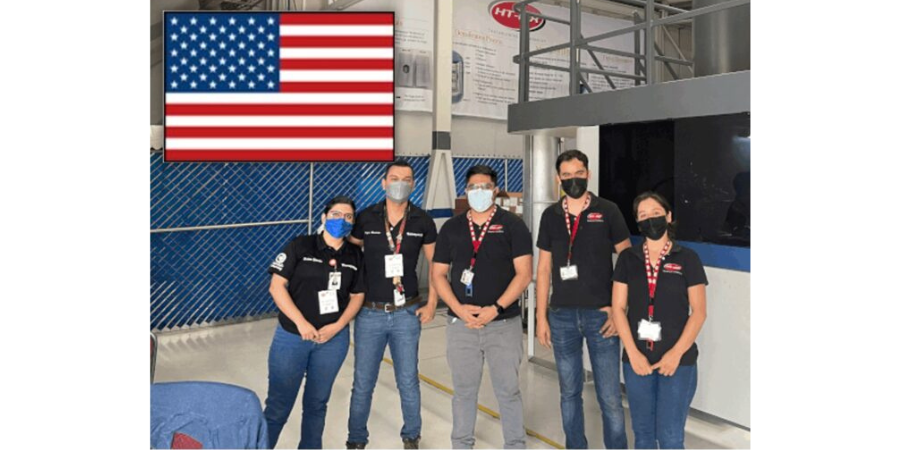
HT-MX Team
Source: HT-MX Heat Treat & HIPing
But as time passed, we turned our attention to the aerospace industry in Chihuahua, a city with four OEMs. We received the AS9100 certification and started working on Nadcap accreditation. This required time, but by then, a pretty strong engineering team was in action, and successfully obtained Nadcap accreditation in late 2019. Again, we celebrated with a Carne Asada, this time, with a better understanding on where we were and what future challenges we needed to face.
Taking On Hot Isostatic Pressing
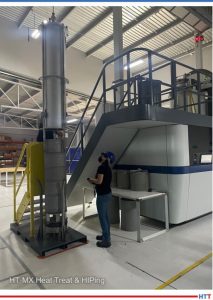
HIP system at HT-MX
Source: HT-MX Heat Treat & HIPing
The pandemic hit. Boeing’s 737 Max crisis continued to impact the industry. Moving into aerospace was slow with limited volume, especially compared to what we had seen in the automotive and oil and gas industry. But by now, international companies were more willing to transfer heat treat operations to Mexican suppliers, and we were ready, beginning with running aluminum batches, precipitation hardening, annealing, and other standard processes. It was during this early start to serve the aerospace industry that we heard about hot isostatic pressing (HIP).
Around 2019 during an aerospace cluster event, an OEM with a local presence approached us with their HIP requirements. I had only heard of HIP, but I was immediately interested — until I found out how much one of those machines cost!
But good financing through government programs helped make this HIP project a reality. Timing was not the best, as the federal election in Mexico caused a temporary Mexican currency depreciation, handicapping the project at its beginning.
Getting the proper certifications and validations proved to be a long and complex process, too. Theoretically, we knew what to expect, in terms of getting the Nadcap checklist approved, but the reality was a little different. Gaining Nadcap certification slowly builds a certain culture into any company in its day-to-day activities. Translating that culture into a completely different business unit, new crew, and new process proved to bring its own challenges.
HIP Challenges: Pressure, Temperature, Thermocouples, and Argon Supply
Heat treating usually handles temperature, atmosphere control (or lack of), and regular traceability requirements. HIP, however, adds a few new dimensions to what we usually see: internal pressure, very high temperatures — up to 3632°F (2000°C) — and argon supply. It was the first time HT-MX dealt with a process that incorporated up to 30,000 psi and also used a lot of high purity argon.
Pressure has its own challenges, though the HIP press takes care of those challenges. Still, the internal workings on these kinds of presses are fundamentally different than that of a regular heat treat furnace. Yes, you need to heat it up, but apart from that, it’s not even a furnace but a press. Understanding how the machine works, what happens inside with all that pressure, how it affects the components undergoing hot isostatic pressing, and how it affects the baskets you’re using is a critical learning curve.
High temperatures change everything about running these types of cycles. We work with metals, which means temperatures range between 1832°F and 2372°F (1000°C and 1300°C). This has an impact on thermocouple selection, calibration, and more; with the company’s thermocouple product suppliers based in the U.S., this entails more challenges and extra costs. I have lost count on those urgent same-day trips to the border to retrieve critical spares in time. It’s an 800-km/498-mi roundtrip! We have fortunately found a great supplier that has offered the technical feedback we needed, and we have started to finally understand and control our thermocouple consumption. Although, I must be honest here, we still have a lot to learn in this aspect.
Then, there’s the argon supply. HT-MX never expected it to be a challenge, but it turns out getting the proper supplier — one that understands the requirements and is willing to work with you from validation to production — is key. You might be able to start your validation process using argon transported in gas containers but eventually you will need to switch to liquid argon. That proved to be more difficult than expected. There are not many projects requiring these kind of alliances locally. Getting the right supplier was key and more of a challenge than expected. And then came the lessons on efficiently using the liquid argon, avoiding excessive venting of the tank, and being all around smart with the HIP schedule. This has been a constant learning process, one that has high costs.
Final Hurdles: Certifications, Current Events, and Energy Costs
Once our company had the Nadcap certification, we still needed to get the OEM’s approval for the HIP process, then the approval for the specific version of the HIP process, and then the actual approval for the part numbers.
These approvals were handled by the headquarters’ engineering department and not locally. It was a time-consuming process, with several test runs, lab testing, multiple audits, visits, and more testing, etc. And while all of this was happening, we still had to design the operation, locate critical suppliers not available in Mexico, create alliances with suppliers, etc. Writing this down in a few lines makes it seem simpler and quicker than it really was.
Additionally, in instances like this, Mexican companies, especially small ones, face much more scrutiny than U.S. or European-based companies, and must prove themselves in every single step. It makes sense, even if it feels a little unfair, as HT-MX had no proven track record of high tech processes such as HIP. It does cost extra time, extra care, and sometimes extra testing, but it is the reality we face and we must overcome the extra hurdles.
While navigating HIP approval, the pandemic hit. Months later, the war in Europe began with significant impacts on the cost of energy. Our main clients were high volume and low margin, and with energy prices rising, our competitiveness began to diminish. To adapt and evolve, we decided to add some smaller furnaces for smaller parts, invest in training and increased sales efforts, and focus on AMS/Nadcap-based customers, letting go of major clients. Slowly, things began to turn around.
The First Official HIP Batch in Latin America History
In December 2022, HT-MX ran the first official HIP batch in Latin American history. It was a long time coming. I always thought that running that first batch would feel like reaching the Everest summit. When the day came, it just felt like reaching Everest’s base camp. We still have a long way to go to be truly an established HIP supplier. Now, it’s back to climbing and shooting for that summit, that summit that will perpetually precede the next summit.
There are still several challenges: stabilizing new processes and improving established ones. But I am confident we will move forward in this new stage. And I am so looking forward to the next Carne Asada.
About the Author: Humberto Ramos Fernández is a mechanical engineer with a master’s degree in Science and Technology Commercialization. He has over 14 years of industrial experience and is the founder and current CEO of HT-MX Heat Treat & HIPing, which specializes in Nadcap-certifi d controlled atmosphere heat treatments for the aerospace, automotive, and oil and gas industries. With customers ranging from OEMs to Tier 3, Mr. Ramos has ample experience in developing specific, high complexity secondary processes to the highest requirements.