As Heat Treat Today takes the rest of the week off to enjoy a full harvest filled with family and friends, we want to be sure that we let you know how grateful we are to serve and support you in your heat treating needs. This year, we rejoice in the friendships, successes, and wonderful people God has blessed us with in this industry.
Be blessed this Thanksgiving, and we'll see you bright 'n early on Monday, November 29th.
Let's talk about "firsts" and the importance of starting new adventures in the heat treat industry. From her editorial perspective, Karen Gantzer, editor of Heat TreatToday, shares her experience meeting the patient, informative experts in the heat treat industry in today's original content article. Where will your next "first" take you?
This article first appeared inHeat TreatToday's November 2021 Vacuum Furnacesprint edition. Feel free to contact Karen Gantzer at karen@heattreattoday.com if you have a question, comment, or any editorial contribution you’d like to submit.
Karen Gantzer Managing Editor Heat TreatToday
In January of 2019, our publisher and close family friend, Doug Glenn (Doug, his wife Mary, and I go all the way back to our days at Grove City College), called me, a middle school English teacher, and asked me if I’d consider working for them as an editor. While I was honored that they would think of me, my initial response was something like, “Doug, I don’t know anything about heat treating and besides, I’m a humanities girl, not STEM!” He assured me that I could learn the industry and it would be a fun ride. A first for me to dip my toes into STEM waters!
Well, fast forward to present day, having just passed my second year with the Heat TreatToday team, I can truly attest that it has been an exciting, yet growth-filled adventure in many ways. I don’t teach and grade papers of 7th and 8th graders, but I do have the privilege to work with the most talented and inspiring group of dedicated and committed men and women. What a joy to look forward each day to working not only with the Heat TreatToday team, but also with you, the experts in the industry.
I attended my first trade show in October 2019 — The ASM Heat Treat Show in Detroit. I was such a newbie and it was pretty overwhelming, but an enjoyable experience. Doug, Mary, and the managing editor, Laura Miller, were incredibly kind in not only introducing me to many of you, but I was also thankful for the patient tutorials many of you gave as I began learning the industry. I’ve mentioned this Socrates quote many times, but I truly believe it, “The beginning of wisdom is the definition of terms.” You helped me understand the terms!
While last year was a blur for us all with the cancellation of in-person trade shows, this year was an oasis for those of us extroverts who are energized by the face-to-face time that real, live shows provide. During this year’s Ceramics Expo in Cleveland and the ASM Heat Treat Show in St. Louis, I was able to meet so many of you — for the first time in person — who before this summer, I’d never met but had communicated with often.
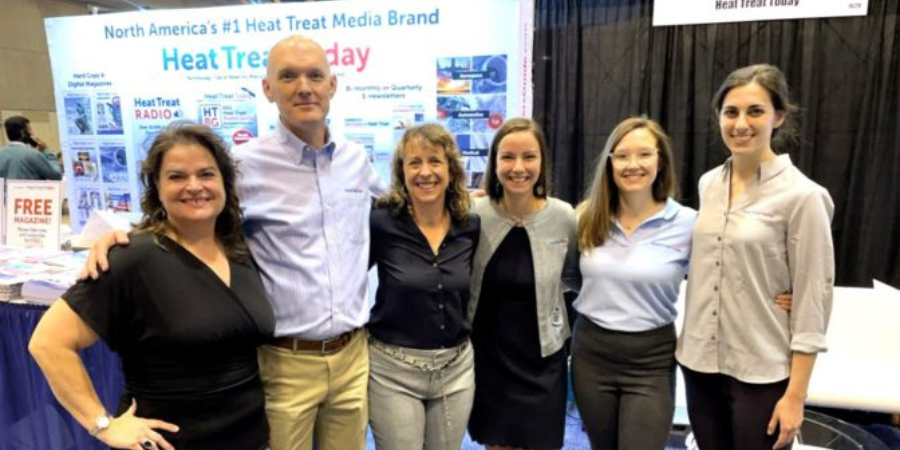
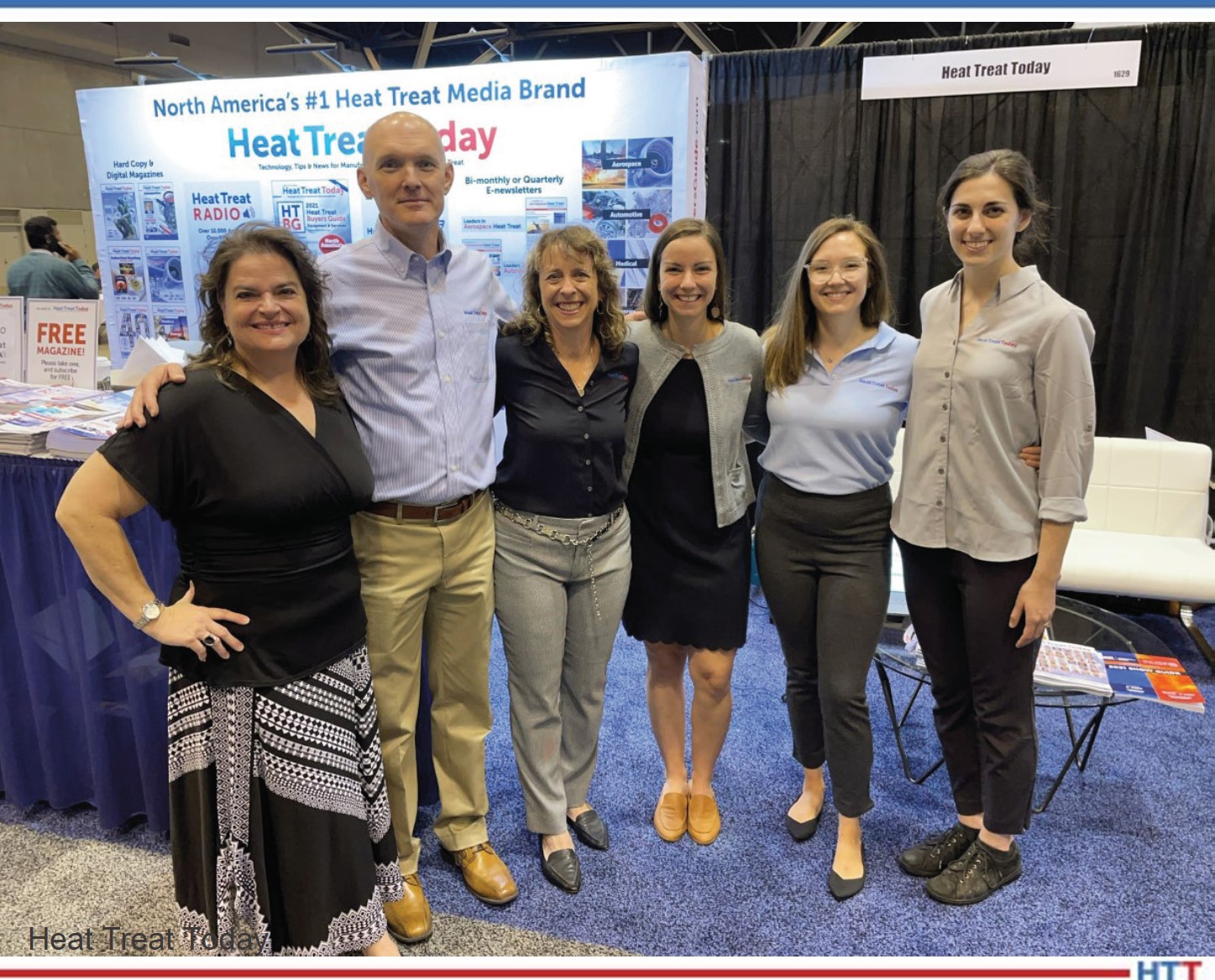
Heat TreatToday team at the ASM Heat Treat Show 2021 in St. Louis. Left-Right: Michelle Ritenour, Doug Glenn, Karen Gantzer, Alyssa Bootsma, Ellen Porter, and Bethany Leone.
I truly believe we were created to be in community with one another, and these trade shows offered the opportunity to connect at a deeper level than emails afford. I loved talking with people about what they were working on and how Heat TreatToday could help in sharing their successes.
One of the people I had the pleasure of meeting was Carlos Carrasco of Carrasco Industrial Furnaces, a veteran expert in the industry. As we were chatting about article ideas, he asked if we’d be open to publishing the content in both English and Spanish. We loved the idea and so, with this issue, we are proud to feature our first ever Spanish-translated article entitled, “Guía para la Selección de Equipos para Tratamiento Térmico!” (p.33) which is “A Guide to Selecting Heat Treating Equipment” (p.28). We were honored to work with Carlos.
Taking those first steps can be wobbly, but oh so exhilarating when you experience the satisfaction of deciding to take on the unknown — whether it’s a career change, meeting new people, or accepting a new opportunity. It’s worth the effort. Go for it!
Heat Treat Today publishes eight print magazines a year, and included in each is a letter from the publisher, Doug Glenn. This letter first appeared in Heat Treat Today'sNovember 2021 Vacuum Heat Treating print edition.
Doug Glenn Publisher and Founder Heat TreatToday
“Inflation” is in the news, and it could have a significant impact on the heat treat industry. What is it? Why is it suddenly a problem? How might it impact the heat treat industry? Below are simple answers in layman’s language, but if you want to dig deeper into inflation, let me STRONGLY recommend two books by the late Dr. Hans Sennholz (1922–2007): Age of Inflation (1979, paperbacks selling on Amazon for more than $600.00! – I guess I’m keeping my copy under lock and key!) and Money and Freedom (1985, available free in PDF format found here).
What Is Inflation?
Simply stated, it is an increase in the amount of money in the economy – period. When you “inflate” a balloon, you increase the amount of air inside the balloon. In the same way, monetary inflation is the increase in the amount of money inside the economy. Properly understood, inflation is NOT rising prices; however, rising prices CAN be, and often are, one effect of inflation. The media and much of the general public, including our governing officials, often use “inflation” and “rising prices” synonymously. They are NOT the same thing, and it helps to know the difference if you’re going to have an intelligent conversation with anyone about the topic. Short answer: Inflation is an increase in the amount of money in the economy – period.
Why Is It Suddenly a Problem?
The short answer to that question is also simple. Take a look at the chart which shows two different measures of the amount of money in the economy – M1 and M2. There is no need to define M1 and M2 for the purposes of this column, but suffice it to say that both measure the amount of money in the economy and that M1 is part of M2. Look at the far right-hand side of the chart. See anything unusual?
In 2020, the curves headed for the stars. Notice that the chart starts in 1959. We have NEVER seen this type of inflation (an increase in the money supply) since 1959 and, based on my knowledge, NEVER before in the history of this country. While a general rise in all prices is NOT inflation, one of the main effects of inflation is a general rise in all prices. Not all prices will rise at the same time or at the same rate, but if the money supply is increased (inflation) then there is more money per item to be purchased and over time, people will bid up the price of all goods and services.
Short answer: Rising prices (which is what the media mean when they say inflation”) are suddenly a problem because we are inflating the money supply at an enormous rate never seen in the history of this country; and since there is more money per item to be purchased, it is INEVITABLE that prices will rise.
This economic law is inexorable and unchangeable – much like the law of gravity. At the rate we’re inflating (increasing the money supply) we WILL have rising prices.
How Will Inflation Impact the Heat Treat Industry?
There’s nothing special about the heat treat industry when it comes to inflation (an increase in the money supply) and rising prices (one effect of inflation). Just like every other industry and every other household, manufacturers with their own in-house heat treat departments WILL be hit with increasing prices for nearly all goods and services. These rising prices are the result of the increase in the supply of money in our economy (inflation). There is no predicting how it will hit or how quickly prices will rise or when price increases will stabilize, if ever. But what we can say with certainty is that one cause for rising prices is inflation and we are inflating at rates never seen in the history of this country.
Hans Sennholz’s books, mentioned in the first paragraph of this column, are excellent resources for understanding inflation and the reasons why our rulers, both Republican and Democrat, do not have the courage to stop increasing the money supply. Our Founding Fathers warned us about what they called “fiat” money – paper money not backed by silver or gold. The U.S. Constitution clearly states that only gold and silver should be money, NOT paper (ref: Art.1, Sec. 10, Clause 1). Nonetheless, there have been supposedly “wiser” men who felt that paper money would be a better option. So here we are, inflating at unprecedented rates and bracing ourselves for what could be a very interesting ride.
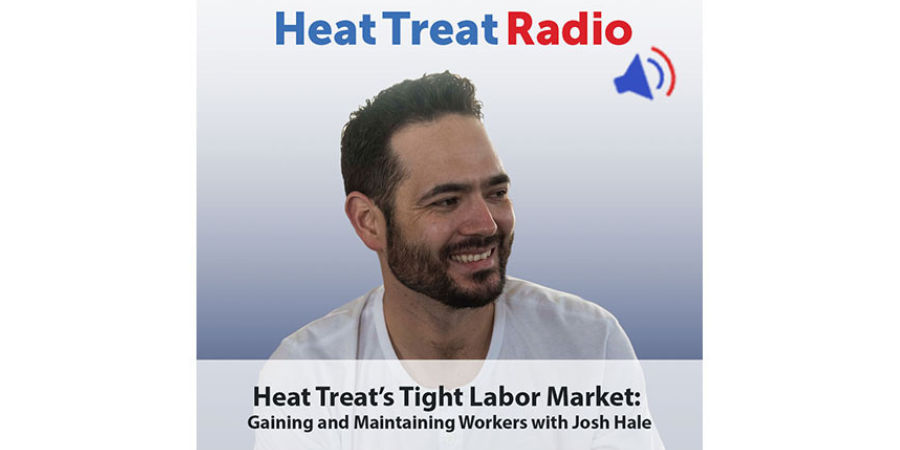
Heat TreatRadiohost Doug Glenn has a timely discussion with Josh Hale of International Search Partners, North America’s only heat treat specific headhunter organization, about the exceptionally tight labor market and what captive and commercial heat treat shops can do to gain and maintain the valuable workers they’re in need of.
Below, you can either listen to the podcast by clicking on the audio play button, or you can read an edited transcript.
The following transcript has been edited for your reading enjoyment.
One of the canine "workers" at International Search Partners
Doug Glenn (DG): I don't think that we've had a non-technical issue that is as important as this one, and that is the labor shortage that is real and that most people believe is going to get only worse over the next several years. Here to discuss that with us is Josh Hale who is with International Search Partners. Josh, first off, welcome to Heat TreatRadio. If you don't mind, if you would give our listeners just a brief background about you, where you come from, and your role in helping people fill roles in the heat treat industry.
Josh Hale (JH): Yes, for sure. Thanks for having me, Doug. I've been recruiting since about 2004, and when I say recruiting, I mean helping different companies identify, hire and engage, and eventually bring on board employees at all various types of levels. We are International Search Partners. We are actually founded in 1998, so for over 20 years we've been working pretty exclusively in the heat treat space. I always kind of say we do about half our business with furnace and other manufacturers, about half with commercial heat treaters and then a mix of stuff tangential to the industry, whether that be forging companies or other kind of industrial manufacturing. Again, I've been recruiting in personnel, hiring, and job market space for a long time. I came and joined ISP and acquired the company about six or seven years ago now. ISP has a long history in heat treat, I've got a lot of history in recruiting, and here we are.
DG: You're in the right business at the right time, I can tell you, because it seems very interesting out there. I was looking at your website and I've got to deviate a little bit. So, it's not just you – apparently you've got at least one other person and two canines that are helpful to you, yes?
JH: Haha, yes! In fact, one of the canines is here in the room. If the computer wasn't mounted up I could show him off.
DG: So, you've got Jessica Maier as one of your helpers? A partner?
Jessica Maier Senior Recruiter International Search Partners
JH: Yes, exactly. Jessica works with us. She's based out of San Diego. I'm based out of Austin Texas. We both work remote, working from home. I've got the weekend vibes with the Hawaiian shirt today. I don't need to go into the office or anything. But yes, we work very consistently and tightly together. Then, there is Jim McNeal, who actually founded our company in 1998. We jokingly call him "President Emeritus," but with that emeritus status, he works with us on a few select clients here and there. Then, we've got a rotating group of consultants that we bring on board on more of an ad hoc basis, so we're prepared and able to scale, as necessary, for hot markets like this. But, the core is me and Jessica, and for smaller industries like heat treat, that works pretty well.
I would be remiss not to mention that we also have a new junior recruiter- Jessica just recently had a baby, so 2-month old Lincoln is practicing to be able to pick up the phone here pretty soon to help us out too.
DG: Well, at the time of this recording, since we're talking about babies, one of our staff members is actually in the hospital delivering.
JH: In about 25 years we'll be celebrating the new 40 Under 40 class between them.
DG: Right, exactly. And, you know, I should mention that Josh was a member of our 40 Under 40 Class in 2019.
Let's talk about this: Based on your business, you, probably more than anybody in the heat treat industry, have a good 30,000 foot view of the labor situation. Is it severe? How severe is it and what can we say about that at this point?
JH: I haven't seen anything like this in all my years of recruiting, in or outside of heat treat. I think it's affecting a lot of industries. Most of the data points I would reference on this are a little more empirical, but for example, I was in St. Louis for the ASM Heat Treat show a couple weeks ago. I was just kind of making my rounds and saying “hi” to people as I like to go to these shows to put a face behind a name with people I typically spend time on the phone with or emailing, and everybody was telling me, "Hey, we need help. Please help me find a candidate. We need candidates. Please send us resumes." That was the consistent theme. So, there is an empirical data point.
We tend to keep track of our open searches in a fluid way, if you will. Without getting into the weeds too much, what I mean by that is that we've got clients that come to us with, "Hey, we've got an empty seat, we need to fill it. Go out there and find somebody." We've got clients who come and retain our services for really urgent searches, but we actually do quite a lot of business in, what I call, “keeping our eyes open.” Like, you don't necessarily have an opening but you like to see a good talent when you come across it. Since I specialize in the industry, I can keep you in mind. We do a lot of work that way too which is less of an open position and more of a “keep your eyes open” situation.
With that, it's how we work. Typically, we may have anywhere between 20-30 real open positions and then maybe 50% more on this “keep your eyes open” thing. Right now, I have probably 50-55 actual open positions. This is twice as much as normal. Honestly, in this type of market, this is with me not doing any kind of real outbound efforts to generate new positions because I have too much to work on. Again, it's kind of empirical- it's not real data driven, but from my experience, I've never seen it like this.
DG: So, in essence, it is real; I don't think we have to convince anyone of that. From your perspective, it's pretty nearly doubled the number of open positions that you're actively looking for, and I'm sure there would be a lot of other people in that other category you mentioned about- if you find somebody, let me know.
JH: And, certainly, there is an opportunity for a lot more open positions if I were to chase after it. I'm just in a situation where there is so much business right now for existing clients that getting a new client would be difficult.
DG: Well, after this airs, you might have to hire a third and fourth partner to get things going, because, I can tell you, there's a lot of people looking.
Just anecdotally from our side, myself and my wife just got back from attending the Metal Treating Institute fall meeting this year down in your neck of the woods, down in San Antonio. To a man, to a company, to a person, everybody was looking for people to work. It could be in key, higher level management areas as well as shop floor- I need a guy that knows how to load a furnace.
In your company, specifically, very briefly: Are you guys dealing with furnace operator type people or do you tend to deal with more of the engineer/management type folks?
JH: More of the engineer/management type folks is where we really specialize. We placed a furnace operator or two in the last couple of years, but it's very rare for us. But, from talking to customers/clients/people, those hourly production type positions are definitely a situation where companies are struggling. It's kind of a long way to answer your question but historically we haven't really done a lot of work in that space because at that hourly production level you can hire somebody off the street and train them. You're not going to necessarily pay my fee to go out there and find that type of person, while in this market, more and more companies are telling me they're willing to pay a fee if we can find somebody, so it's coming up more and more.
DG: And that is the operative word – if you can find someone, which is not easy. Obviously, a lot of those jobs tend to be more regional – you can hire people locally, but it is difficult.
I want to delve into causation a bit. We know we've got a very, very tight labor market, and there are a lot of theories around about why that is. I'm curious, from your perspective, Josh, what's causing it? What's the issue here?
JH: There is a lot of theorization out there. I could spend hours going down the rabbit hole. There are some really interesting theories. In fact, did you listen to the guy speak the keynote at MTI? He talked a little bit about this idea of men not coming back to the workforce. I've listened to some of his talks and one thing that he mentions that I really buy into is this idea that the boomer generation had dual incomes, they were working and they really generated a lot of wealth and that wealth now about to get inherited by younger generations. These younger generations see that and aren't necessarily motivated to work as much.
People are moving towards the “YOLO Economy”
This is the kind of theory that I would buy into because one of the other aspects that I'm seeing a lot of in the market (and I've heard people pine on in some of the editorials out there) is this idea they call the "YOLO Economy." The YOLO Economy is, basically, the idea that you only live once. Now people are coming at this, especially coming out of COVID, like, "I don't want to go back to that job. I want to try to get the band back together. I want to go write a novel. I want to do crafts and they start a little Etsy business and sell those on-line. I can travel more." They maybe want to work part-time and travel, especially if they've got some foundation from an inheritance, I see that as a real factor here.
For someone like me, a hardworking, nose-to-the-grindstone kind of guy, this is so hard to put my mindset around, but I hear it come up a lot. It's like, "Hey, I'm done going into the office 40 hours a week."
DG: Very, very interesting. First off, YOLO is great; I hadn't heard that before, so that's helpful. But, you know, it is interesting the change in psychology, if you will. It's something only a first world nation, first world economy, which is a lot of the western hemisphere is these days, where there is enough wealth out there that they don't really need to worry about working. I'm a boomer, right? I'm on the tail end of the boomers, so yes, double income or whatever, the kids wouldn't necessarily need to worry about working and, if you don't need to work, you don't. That is the nature of man.
JH: Another factor that I think has come into play here, speaking of not working (especially COVID affected this): people are retiring earlier. If you were going to retire in three or four years and then COVID hits, "I might as well do it now," that kind of thing is coming up. That affects heat treat, especially, as it's kind of an older industry in terms of the core workforce. We're seeing a lot of that too. So, people retiring, people not wanting to go back to work- all those factors definitely affect it. There is a confluence of things. Like I said, we could go hours going down this rabbit hole – it's really interesting.
DG: Even things as political as immigration policy are certainly having an effect on the labor market.
Let's move on to this: What kind of advice would you give, Josh, to companies nowadays who are looking to fill a position, which is, essentially, as we said, pretty much everybody? From your perspective, what are some of the fundamentals they ought to be thinking about?
JH: The analogy I like to use, when people talk about recruiting or hiring, is the sports team: If you were trying to build out the world's greatest basketball team – just like you're trying to build out the world's greatest heat treat or the world's greatest furnace OEM – if you're going to try to do that, you want the best people to try out for your team.
If you take this analogy down further, when you're trying to build the world's best basketball team, you're not going to hope that LeBron James applies to join your team. You're going to go out there and tap him on the shoulder and say, "Hey, my team's really good. Come and join us. We're a championship squad." You need to take that proactive recruiting approach. That's part of the services that obviously our company offers; we specialize in this, we're in this day in and day out, and we're building up this bench of people to go out there and proactively recruit, again, not coming in and applying to a job.
But you can do that if you have your own company too. I would advise anybody who owns a business or is managing a business to have a good pipeline of people at the ready all the time. It's easy to get comfortable – I've got my team, I've got my department set up. It's not going to be like that a lot. Somebody like me might go in there and pull somebody away.
"The 'LeBron James' style of recruiting is proactive and necessary."-Josh Hale
DG: You're not doing yourself any favors with that, Josh.
JH: Well, you know, if it happens, I always tell people, you can either be a client or you can be a source, one or the other. But yes, somebody might retire, somebody might take that YOLO philosophy and leave. So, you should always have that bench going, always continually be networking. I tell people, too, you don't want to be afraid to “top-grade”: If you do have the opportunity to bring somebody in who's maybe better than the existing person, that can help you and your team and can build up the morale and the overall core a little bit better.
DG: What do you mean by that? Are you suggesting you replace a person with whom you are currently happy with somebody who’s better, or just hire them in addition to that person?
JH: If you can hire in addition to is the best solution because it widens your bench a little bit, to use the sports team analogy, if you can replace your starter, put your starter on the bench, and have a great guy who can come in and pinch hit or whatever, that helps a lot.
So just have that kind of philosophy. It's kind of a forward thinking philosophy, it's a proactive-type philosophy. I think that's the biggest thing. You can't wait until someone gives notice and leaves, now you've got an empty seat and now you’re struggling and your hair is on fire. You really need to do this constantly. That's my biggest piece of advice.
The other bullet point that comes up when I think about this, (and there are people out there that don't want to hear it), but you really need to kind of loosen your requirements a little bit. People come to me saying, "Hey, I've got an opening. We need to have XYZ on the resume and everything else." And I say, "Look, that person you're looking for just doesn't exist." You've got to be a little more realistic in your requirements and hopefully that will help attract the right people.
DG: Once they've got that person in house, one of the other big concerns here is they can gain the right people, but how do you maintain them? What type of advice would you give companies for keeping good workers?
JH: Again, it goes back to the idea of trying to be a little more forward thinking. I think COVID shifted a lot of things. I've seen a lot of stats. More and more people are allowing people to work from home. That's not always possible in the heat treat or commercial manufacturing type environment, but if it is possible to spend a day at home doing some CAD drawings, let them do that. That engages them more and makes them feel more at home.
Being creative with some of the compensation. More and more companies are paying more and more. I think wages are going to generally increase. But, at the end of the day, the market is the market, so I don't expect anybody to overpay just to hire somebody. There are other creative ways of compensation. Vacation is a big one, some work-life balance. . . There are types of benefits. Those kinds of things go a long way.
Offer autonomy, purpose, and mastery in your workplace to maintain workers.
And then, too, trying to have good morale. Morale is kind of a cliche word, but I think it carries a lot of weight. It gives you a reputation in the market as a place that you want to work for. I've heard it said that people like to work for, basically, three things: autonomy, purpose, and mastery. Get somebody in there and give them those things. Give them some opportunity to work and 'do their thing' with that autonomous nature, not being micromanaged. Give them some ability to be trained to grow and develop to create that mastery. And, if you can get them on there for a bigger purpose, that really helps a lot too. People don't want to be just a cog in the system. If they know they're contributing to, whatever it is, growth or more market share or new R&D development, these kinds of things. If they're contributing to something bigger, that's going to keep them on board and it's going to keep them passionate about it and it's going to probably help them maybe think they want to bring their friends into the fold. That's another great way to hire- the internal referral program.
DG: Have you seen, over the time you've been doing this, the motivation for people who want to work change? I know the guys you were talking about, the fellow who gave the presentation at the most recent MTI meeting, they talked about the differences in the generations- the boomers, the X, the Y, the millennials, whatever. Have you seen tangible evidence of a shift in the motivation of what really does engage the different age groups?
JH: I'm going to answer that a couple different ways. At the end of the day, nobody is working for free. Salary is a consistent hot bun for anybody looking to make a move. But I have seen, and a lot of people tell me, that one of their reasons they are looking to leave their company is stagnation. So, I talk about that kind of overall purpose. A lot of people I talk to are saying, "The company I'm with has been doing the same thing in the same way for 50 years and I'm interested in making some upgrades." I can't tell you how many times I've placed a candidate. I ask everybody I work with, "Why are looking to make a move? Why would you consider leaving your current company?" One of the consistent answers I get is, "Well, you know, I made a suggestion for an improvement and my boss told me that we're not going to do that. I know it's going to make an impact and they're not letting me." Having that, again, forward thinking, engaged employees, try their ideas out, be willing to invest in new technology. If you've still got microfiche in your company, you're doing something wrong.
DG: For those of you who don't know what that is, you better Google that one: microfiche.
JH: But I am serious. Move on to the touchscreen computers or the iPads. People are still doing stuff in triplicate in field service reports and things like this. People want to work for technologically advanced company that they can feel good about.
People want to work for technologically advanced companies that they can feel good about.
DG: I'm going to see if you know this one: I was telling somebody the other day, I said, "I still remember when I was in school using a mimeograph machine." I don't know if you know what that one is.
JH: I don't think I've heard of that!
DG: That was the way before Xerox machines. When you did hard copies, you put this thing on a drum and you basically turn it and it would crank out copies in blue. Anyhow, it's an old time one.
Let's move from the company’s perspective of advice to help a company who's looking to hire someone to just talking to the individual who might be in a position that you just talked about or maybe some other motivation like, "You know what? It's time for me to move." They need to make a move for whatever the reason might be. Is there any advice you can give those people for entering a labor market? Obviously, it's a job seeker's market, right?
JH: I'd say a couple things: One, my first piece of advice is, as you said, it is a job seeker's market. But it's now. This is not a job seeker's market forever.
Strike while the iron is hot. If you have any potential idea or any inkling that maybe there is something better out there for you, I'm of the opinion, nothing ventured, nothing gained. I use the idea of big mistake, small mistake. It would be a big mistake to pass on the opportunity to land your dream job, but the small mistake to spend 30 minutes on a phone interview with a company. I would encourage somebody to talk to anybody, to put those feelers out there, have those initial phone interviews.
Now, when you get down the process of an interview, if you decide you don't want to work for the company, you don't want to waste people's time, but for an initial phone interview, sending a resume off, it is truly nothing ventured, nothing gained. It's a big mistake to miss an opportunity but a little mistake to not even try. I would definitely encourage that.
Also, if people are really looking out for their career, if at all possible, opening up the geography helps a lot. I know for some people that's just not possible, but if you could be just a little bit more bold in looking at some potential different regions/areas, that definitely opens up the door for a lot more potential.
People ask for my advice that are looking for the next step. People have in their mind this idea that their career progression is going to be on a linear upgrade. I tell people it's not always going to be like that. If you think of it more like a step up, across, up, across – with that visual – I think it sometimes helps people. What you're going to want to do is leverage your current skills to get to that next company that can then catapult you up a bit. But it's not necessarily going to be going from engineer to engineering manager; it might be going from engineer to senior engineer with opportunity to move to engineering manager.
Be realistic in some of those expectations and not being afraid to utilize your skill set and leverage that to a new company. I hear a lot of times people saying, "Well, I've been an engineer for 10 years. I'm kind of bored with it. I don't want to do CAD drawings anymore." And I say, "But you're really good at that and that's in demand right now. Maybe get with a company where you can do 80% CAD instead of 100% CAD and spend 20% of your time on projects you like." You kind of step up instead of just going linear with the growth.
DG: What do you say to those people, (some might call them naysayers, others might call them very pragmatic people), who say, "Well the grass is always greener." What do you say to those folks who are kind of discouraging employees from looking at something else because, "You're going to go over to that company and it's not going to be what you thought it was.”
JH: There is certainly some validity to that. But, also, like I said, it's kind of a nothing ventured, nothing gained situation. I think that people who have really successful careers are bold, and they take some of these risks. Also, you've got to look at it on a case by case basis. There has been many a time when I've talked to somebody who's had a jumpy work history and maybe has had that "grass is greener" mentality a little too often. I've told them, "Look, you should probably get a couple years under your belt before you talk to me."
Find the happy medium between being too jumpy and being too stable in your career.
There are cases where that makes sense, but I think especially in heat treat, I've seen a lot of people that have been stable, they stay at their company a long time. If you've been with your company, especially going on the 10 year mark, it's kind of time to think about it. I'd say between 7-12 years, you've got to start thinking, "Are you going to retire at the company you are at now or are you going to start to make a move?" There is the opposite of being too jumpy and that's being too stable. Sometimes people look at someone like, "You've been with only one company for 30 years? You're not going to learn our ways."
There is kind of a happy medium there. Like I said, I'd tell people, look, be bold. Don't be afraid to take risks. This is a good market, and your skills are in demand. If you land with the wrong company, you'll find something else. It's not that big of a risk. But, when you're going through the interview process, ask a lot of questions. The candidate is interviewing the company as much as the company is interviewing the candidate.
DG: It's a scary thing to change jobs. I've heard statistics say that the one thing that frightens people more than public speaking is losing their job.
Now you mentioned, one of your first pieces of advice for potential job seekers was strike while the iron is hot. This is the time. You mentioned it's not going to last forever. How long do you think this tight labor market is going to be around? What's you prognostication here?
JH: For my business, I hope forever. But, seriously, I don't think so. These things are cyclical. I would say that we've probably got at least another 2-3 years that it's going to be like this. And then we'll probably see the broader economy start to shift at that time. I think, too, it's going to depend a little bit on how our industry is affected, specifically. There are some political implications. I think COVID helped quite a bit in bringing some of the manufacturing on shore, which I've read about in Heat TreatToday a couple of times. There are some things in our industry that might make it even tighter for longer.
I think, too, and maybe you have some comments on this, Doug, from the MTI meeting [in October 2021], but there seems to be a little bit of resistance in heat treat to get with some technology that can bring in some robotics and things of this nature, that would probably help with the labor market, but I think in our industry and specifics, it doesn't go that way as fast as some other industries.
DG: I think that's true. I was listening to those conversations when they were talking about the introduction of robotics. To me, my initial thought was, "Well that's easy. Robotics are easy if you've got high volume, low variable production." In other words, you're running a lot of the same part. Especially with commercial heat treating, which is not necessarily a large portion of the audience that we have, a lot of what we have are the captive heat treater, but, especially in the commercial heat treat world, you're dealing with basically a job shop which is very hard to automate.
But, with our more typical listener/reader with the captive heat treat shops, there is the opportunity for that and those things could, definitely, make a difference in the labor market. Yes, it's important. I think those people will move in that direction. I think we all will, the more comfortable we become with automation and artificial intelligence and things like that, the more we'll move in that direction.
Strike while the iron is hot.
This has been good. Is there anything else? I always like to ask the question just in case there is anything that has popped to your mind that you think would be helpful to our listeners. Anything else you would want to add?
JH: It's a really interesting time right now. I don't know that I'd add anything than what we've talked about. There is a lot of speculation out there. There are a lot of interesting analyses about what's happening. Like I said, it could be a rabbit hole we spend a lot of time going down. But, for sure, if there is anybody thinking there is even a potential opportunity, I'd strike now while the iron's hot. And, for companies looking to hire, I would get creative and try to be proactive and reach out to people and try to have that bench of candidates and try to think about how you can loosen your requirements, whether it be in-house training or maybe have somebody who hits 8 out or 10 bullet points you want instead of 10 out 10, that helps a lot.
Happy Halloween! Instead of the spook, we wanted to give you something to celebrate this weekend the way YOU know how to: through heat treating. Whether you know a heat treater on a tight budget or your shop is ready to "try something new", we want to show you TWO uses of pumpkins for your shop this Fall.
Pumpkins as Furnaces
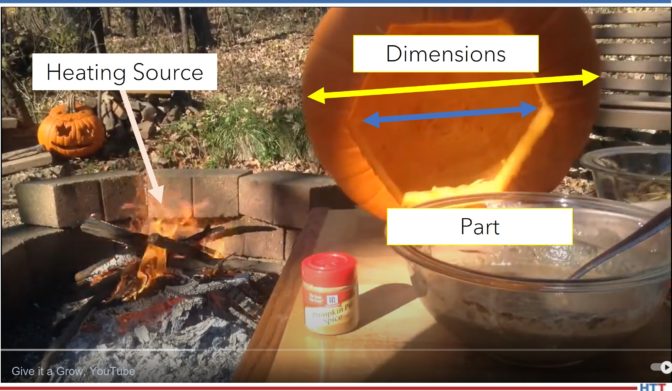
Pumpkins make great ovens. The orange gourds, commonly converted into jack-o-lanterns this late-October, have a proven degree of structural integrity that can maintain heat for one cycle.
This process works best for heat treating parts that need to be introduced to gaseous H2O during the cycle time.
As you can clearly see below, the pumpkin can serve as a "furnace" for special parts.
Dimensions: 11.5" outer diameter x 11" total height; heating chamber is 10.75" diameter x 10.25" height; wall thickness is 3/4"
Temperature: range from 0-450 degrees Fahrenheit lasting 1 cycle (max)
Materials: organic matter derived from Cucurbita pepo
Cycle times may vary depending on the size and quality of vessel. For the example used in this article, the cycle ranged from roughly 0.75-1.25 hours. Controls are not included.
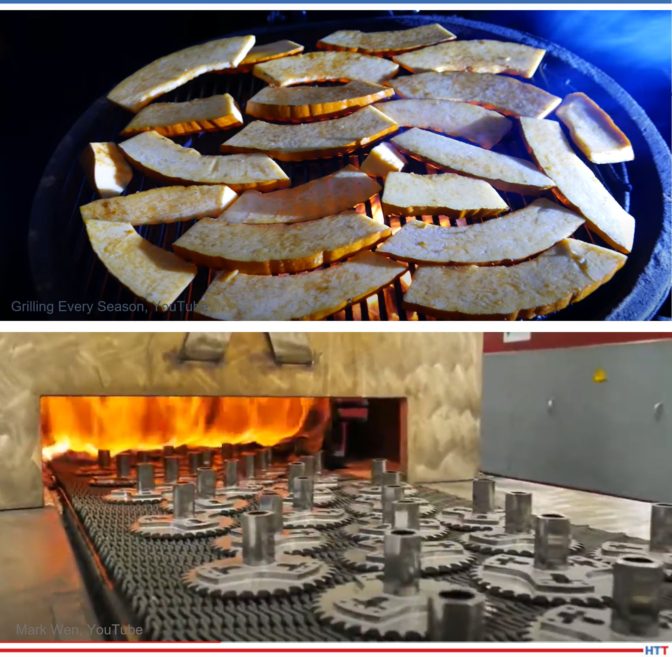
Pumpkins don’t just make great furnaces, they are also parts to be heat treated. If it's slow on the shop floor this Fall, just take a lousy pumpkin from your doorstep and get to work!
While a pumpkin does have more prep involved, word has it this “part” is edible, too. Follow these steps when these parts come to your shop:
Be sure that the coating used for the part is of highest quality. Cinnamon, allspice, and a hint of salt with olive oil have the right chemical composition for this part.
When applying the coating, it is imperative to evenly distribute it across all parts in order to achieve consistent, predictable results.
I'll leave the heat treating to you, but I recommend an open flame furnace for these parts. In this instance, discoloration is to be expected, but this is typically what customers want to see. Bonus: No quenching or cleaning required.
Transfer parts to a cooling location.
For best results, heat treat parts in small batches.
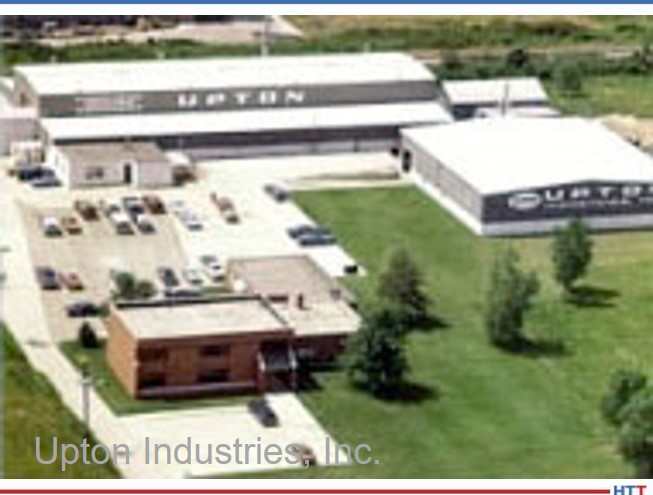
Heat treat solution manufacturer in Roseville, MI has been acquired by Kolene Corporation, a global leader of custom-designed and engineered molten salt bath equipment and specialty chemical formulations.
Upton Industries, Inc.
"We are proud to carry on Upton's strong brand and legacy as a part of Kolene Corporation as we move forward," commented Roger L. Shoemaker, chairman & CEO of the company.
Founded in 1937, Upton Industries, Inc. design and manufacture thermal processing systems in the metal heat treating industry. They apply their Engineered Thermal Solutions methodology to heat treat equipment including box type, car bottom, lift-off and specialty furnaces that utilize either electric heating or gas-fired systems.
Kolene will maintain both its Detroit headquarters location and the Upton Roseville location, which will be home to all Kolene’s manufacturing and fabrication. Bringing the two companies together will give the new company 50,000 sq. ft. of manufacturing, fabrication, and commercial processing capabilities.
W. Scott Schilling President Kolene Corporation
"After thoroughly evaluating Upton’s capabilities," said W. Scott Schilling, president of Kolene, "it was apparent that there are tremendous synergies between the two companies. Capitalizing on these synergies will allow [the company] to expand into applications and revenue segments where we have not historically been. [We] will also have the ability to become more vertically integrated due to Upton’s manufacturing and fabrications capabilities, which will allow us to strengthen our overall margins."
In its 82nd year, Detroit-based Kolene Corporation provides custom-designed and engineered equipment, specialized chemical formulations, and processes for cleaning and conditioning metal surfaces. Currently, their products are used worldwide for casting cleaning, alloy descaling, coatings removal, engine rebuild and other demanding automotive, industrial, and military applications.
A new resource created and run by the Metal Treating Institute (MTI) offers tools to those seeking a career in the heat treat industry. Review some of these insightful videos, resources for young professionals, and a network to further your heat treating capabilities below!
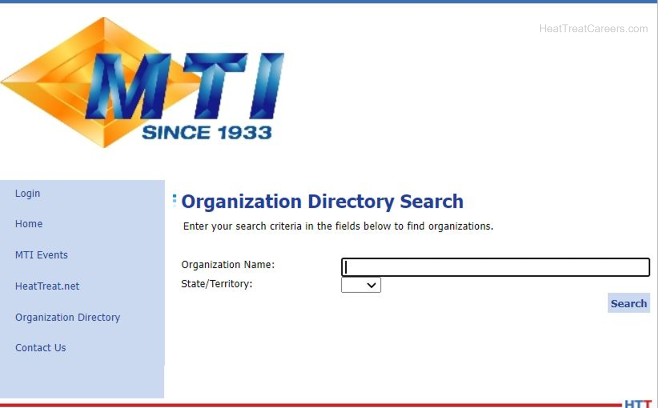
There’s a new kid on the block trying to get young people to join the heat treat “club”. A product of the Metal Treating Institute (MTI), this new website called HeatTreatCareers.com features site tours, first-hand testimonials, and orientation videos for anyone seeking to understand the world of heat treat. These handy videos and brief articles also include resources for heat treaters who are looking to outsource some of their processes or for equipment solutions as they update and expand their offerings.
Calling All Young Industry Professionals
If you know someone who is new to heat treat – maybe a potential hire, a new hire, or a colleague who is looking into joining the field – they must check out this website. For young professionals, this website provides specific direction, explains what heat treating is, and how to pursue a career in it.
Three resources that HeatTreatCareers.com offers are:
“What is Heat Treating?” video (see below)
Searchable directory for heat treaters in your state (or by name)
MTI YES Management Training Program
There are more training opportunities available here to increase professional management and/or technical knowledge pertinent for the heat treating industry.
But perhaps the most import aspect of this website is we get to hear from real heat treaters how this industry is more than a job. Be it the relationships or the day-to-day challenges that inspire creative thinking, it can be hard to locate one specific reason why anyone would enter our obscure industry. The video below makes a great case for this.
More Resources to Increase Heat Treat Capacity
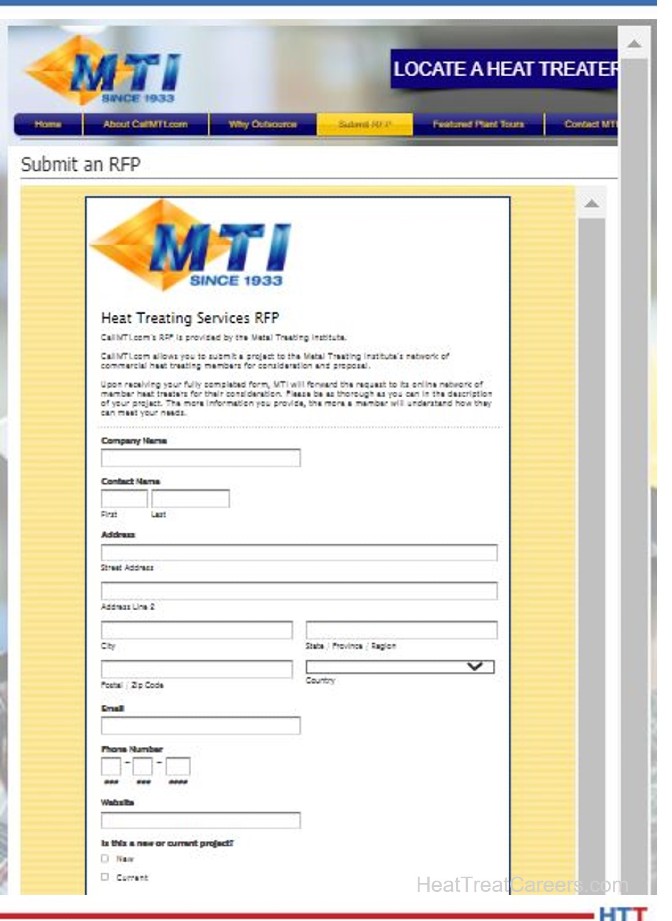
For the young-at-heart and those who are ALWAYS looking to try something new, there are several resources for you, too. The first is a RFP form that allows you to propose a wild heat treat project to a network of commercial heat treaters to help you complete the project. This feature is part of the CallMTI.com resource, which connects you with MTI members from 40 states and eight countries, who are open for consultation.
Another resource is the “Why Outsource” tab that you can navigate to after clicking the Featured Plant Tours page. This resource helps you identify which heat treating challenges you’d prefer to overcome via outsourcing. Those challenges could include:
finding qualified good-workers
meeting OSHA safety requirements
funding needed equipment
continuing on-going maintenance
Of course, feel free to use that career finder that we mentioned above. Who doesn’t like a new challenge?
Bottom line: The website has something to offer everyone, especially if you are looking for a change or a challenge. And, by the way, who can visit the site and leave feeling unimpressed. . .?
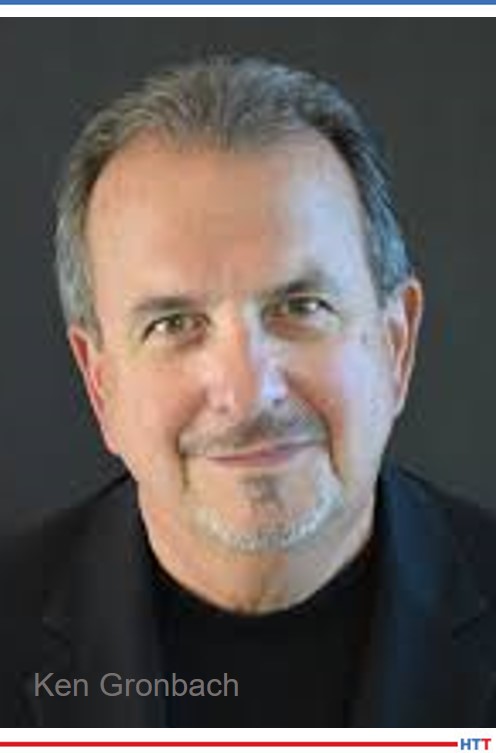
"What came first: money, in its various forms, or people? People. The idea and concept of money precipitated from people. Therefore, demographics cause economics and economics is a symptom of demographics. If you are an economist or an accountant, I realize this can be a painful, demeaning truth. But it is a truth none-the-less. Demography is destiny, and money is a byproduct of demographics." Kenneth W. Gronbach, author, expert, and futurist in the field of Demography and Generational Marketing, doesn't hold back as he writes his hot-take of what the new business model will look like!
This guest column appears in the Heat TreatToday September 2021 Trade Showprint edition. Ken typically writes for the magazine in this edition where many young heat treaters -- 40, to be exact -- are featured annually. Give it a read, and email editor@heattreattoday.com if you have an op-ed or guest column that you would like to submit to Heat TreatToday!
Kenneth Gronbach President/CEO KGC Direct LLC
Hello, 40 Under 40 Class of 2021. There are big changes ahead in corporate structures large and small. And you Millennial-types are going to lead the charge. Human Resources will finally gain the dominance and importance it deserves. Remember when Human Resources was called “Personnel” and it was manned by B players who handed out insurance forms? Those days are gone. If a corporation is not led by A-players in Human Resources, it will not survive. The Chief Human Resource Officer will be the new Chief Financial Officer. You heard it here.
Ask anyone on a corporate board of directors who their key corporate C-level players are, and they will tell you: Chief Executive Officer and Chief Financial Officer, and may even include Chief Operations Officer. The brains, the money, and the day to day. But what about the Chief Marketing Officer and the Chief Human Resource Officer? Communicating with the customer and developing the talent to serve them. What a concept!
The most important question any business must ask is one of demographics: How big is my end user market and is my end user market getting bigger or smaller? How many people are in my end user market? If my end user market is expanding, then we have opportunity to grow. If my end user market is shrinking, we have a problem that must be addressed posthaste. Why? Because the volume of my business is directly linked to the size of my end user market.
This is the essence of demographics. But wait, there’s more. So, we have determined that our end user market demographics are significantly expanding, and we have an opportunity to grow our business. But this is not going to happen by itself. We will need talent, people. Who are they? Where are they? How much training will they need? How much will they cost? How long before they ramp-up? Wait, we need an expert Chief Human Resource Officer. In fact, governed by the new normal in modern protocols, if a corporation doesn’t have a Chief Marketing Officer and a Chief Human Resource Officer, they don’t even need a CEO, COO or CFO!
Let’s examine the new normal people/talent challenges the Chief Human Resource Officer will face.
Diversity and Inclusion: Black Lives Matter. Hiring and training African Americans, Asians and Latinos. Dealing fairly with LGBT issues. Recognizing Minority majority as it becomes the norm. Managing disability issues. It’s a new ball game
Women in Leadership: Women outnumber men in college and law school. They will lead, but they will face challenges in the male dominated C-level management culture.
Three Generations in the Workplace: En masse post-Covid exiting by the huge Baby Boomer Generation. The diminutive middle-age Generation X management shortage. The influx of the giant Generation Y/Millennials.
Big challenges to be sure, but they are not insurmountable, and, if handled correctly, these challenges will be a springboard into the realm of incredible opportunity. Take Human Resources seriously. Very seriously. And challenge your Chief Marketing Offi cer to understand his/her future market for your business, not just the market you presently enjoy.
Bob Dylan sang that, “The times, they are a changin’. . .”. It’s truer now than ever before. Yes, change may be painful, but if you don’t change, time will pass you by. Be well, Kenneth W. Gronbach.
About the Author:Kenneth W. Gronbach is a gifted keynote speaker and nationally recognized author, expert, and futurist in the field of Demography and Generational Marketing. He makes the science of shifting demography come alive with real life examples which make it relevant to today’s culture, business climate, and economy. With nearly three decades experience in retail advertising and marketing, Ken saw the direct results of shifting demographics in his clients’ profits. Eventually, his passion for the subject changed the direction of his career, to the benefit of readers of his books and attendees of his keynotes and other presentations. Contact Ken at ken@kcgdirect.com.
Thermcraft, Inc., a manufacturing company of thermal processing equipment, has recently been acquired. Nancy Crafton, widow of Thomas Crafton, the former president & CEO, shared details with the company family and introduced them to the new owner, saying, "Tom would be happy to know there is a bright future for Thermcraft."
Alloy Engineering, a diverse fabricator specializing in high-temperature & corrosion-resistant alloys, notes that the acquisition fits in the company's strategy to expand their high temperature product offering. Through the purchase, the company will be able to leverage their expertise in high temperature alloys along with Thermcraft's expertise in ceramics and heaters to deliver some innovative products to both existing and new customers and markets.
"I am excited and eager," said Lee Watson, president & CEO of Alloy Engineering, "to take the reputation built by the Crafton family along with the Thermcraft employees and grow it to the next level. By merging the core competencies of both companies and taking innovative solutions to market, we will provide a solid future for both of our companies."
Heat Treat Today is happy to announce the winners of the 40 Under 40 Class of 2021! Click here to see the list, or click to access the 2021 Heat Treat Today Heat Treat Show September digital edition.