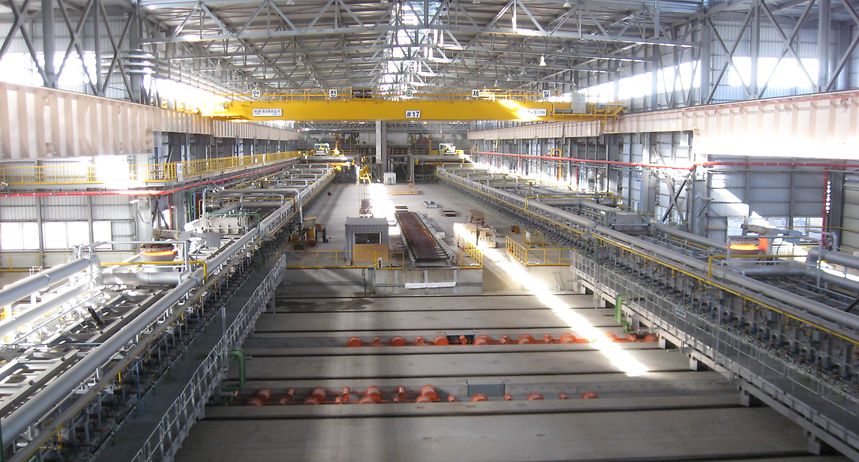
A leading Ohio steel producer recently advanced an expansion project by ordering heat treating equipment to increase its supply of hot-rolled coils for end-use in the automotive sector, as well as construction, agriculture, and general manufacturing applications.
North Star Bluescope Steel Limited, based in Delta, Ohio, recently placed an order with international technology group ANDRITZ for a tunnel furnace along with two shuttle furnaces to convey slabs from casters to the company’s two-stand roughing mill.
Besides the furnace equipment, ANDRITZ will supply Level 1 and Level 2 automation systems. The shuttle furnaces will be installed during the fourth quarter of 2020. The tunnel furnace is scheduled to start production by the end of 2021.
North Star BlueScope also plans on adding a third electric arc furnace and a second continuous caster. The expansion will increase the annual capacity by 800,000 to 900,000 metric tons.
Ron Beltz, Bluestreak | Bright AM’s™ Director of Strategic Accounts
Additive Manufacturing (AM) is a disruptive technology trend that is continuing to influence the future of the manufacturing industry and will continue to provide additional opportunities for heat treaters going forward. The global market for 3D printing and directly related services is continuing to have significant growth each year. The 2019 Wohlers Report (which draws upon the expertise of 80 authors and contributors located in 32 countries) forecasts for 2020 $15.8 billion for all AM products and services worldwide and expects that revenue forecast to climb to $23.9 billion in 2022, and $35.6 billion in 2024. In this article, Ron Beltz, Bluestreak | Bright AM’s™ Director of Strategic Accounts, discusses heat treating, additive manufacturing, and serialization.
Additive manufacturing has been advancing rapidly over the last few years and has been used by a wide variety of companies to quickly produce working prototypes and parts. Now that the prototypes have been fine-tuned, tested, and proven in real-world situations, more and more parts are being mass-produced via additive manufacturing. In years past, plastic has been used as the primary 3D printing material, but now, other materials and combinations of materials continue to be incorporated into additively manufactured products, such as various metals, cements, wood, and even glass.
Using micrometer-thick digital “slices” generated from computer-aided design to 3D-print a solid object with metal powders is definitely not the end of the story. Just as with casting or machining metal parts, a series of post-processing heat treatments are required to reduce the part’s internal stresses, increase its density, and even help develop the final shape, finish, and necessary physical properties.
The relationship between heat treatment and 3D printing has been proven not only to be beneficial but is now a definite part-specification requirement in many cases, as the heat treatment of 3D printed projects has been shown to dramatically increase the strength and stiffness of certain parts. Also, by combining heat treatment processes with 3D printing, manufacturers are able to directly thermocouple the pieces they are producing while also improving the specific characteristics of the end product (i.e., hardness, elongation, fatigue strength, etc.).
Some type of heat treatment is absolutely necessary for most AM parts. One of the issues of additive manufacturing is the possibility of internal defects. Direct metal laser sintering (DMLS) regularly produces near 100% dense parts, but to provide another level of control to help reduce part failure, hot isostatic pressing (HIP), instead of heat treating, is successfully being used by many aerospace companies and in the casting industry. As a post-additive manufacturing treatment, HIP is also used to remove internal defects and increase the overall strength of the part to help reduce fatigue failure.
The HIP process works by applying high heat and uniform pressure to fully solidify the part. NADCAP certification is a common requirement for HIP processing as these parts are typically used in aerospace applications. Many 3D-printed components that are expected to be used in nuclear, gas turbine, marine, or medical applications also require an additional HIP treatment to fully densify the metal part, eliminating pores that can lead to catastrophic failures.
Solution annealing is another heat treatment option for production-grade parts (typically aluminum) that require enhanced mechanical properties. The process heats the part to a high temperature, and then it is rapidly cooled, resulting in a change in microstructure and improved ductility. Additionally, vacuum heat treatments are frequently used for metal parts produced via additive manufacturing.
To gain an additional share of the AM market, some heat treaters are adding other in-house post-AM part processing services, such as:
Machining: Machining of surfaces, support structures, threads, etc., likely will be required to ensure dimensional accuracy of the finished part. Few AM parts meet specifications “as built,” and if nothing else, the surface of the part that was connected to the build plate will need to be finished. Most manufacturing companies already have machining systems on hand, but heat treaters should poll their customers to see if this (or the other services mentioned below) is something they need.
Surface Treatments: Surface finishing of specific parts also might be required to improve the overall quality of the surface finish¹, reduce surface roughness, clean internal channels, or remove partially melted particles on a part.
Inspection and Testing: Metrology, inspection, and nondestructive testing of parts will also be needed post-processing and possibly at multiple points during manufacturing production and post-processing. Destructive testing of a sampling of parts in a production run and analysis of test/witness coupons or tensile bars, powder chemistry, material microstructure, and more may also be needed to gather the necessary data to help with process qualification and ultimately part certification.
There are some opportunities for heat treaters to provide additional services to their existing and future customer base while increasing their value as a long-term business partner.
Regarding actual additive manufacturing part production issues, there are two related MES/QMS software products currently on the market: Bluestreak and Bright AM. Both products were developed over the past fourteen years by Throughput Consulting Inc., headquartered in Delafield, Wisconsin. The flagship Bluestreak MES/QMS software platform is being used by heat treaters and other post-processing service-based manufacturing companies such as fabrication, powder coating, surface finishing, plating, and forge. However, the Bright AM MES/QMS software system is being used by additive manufacturing production facilities, which have some unique requirements (identified in the paragraphs below). Manufacturers and OEMs may already be using a production control, work order management and quality management system designed by Throughput Consulting Inc. which allows for excellent integration between systems and makes interactive business much easier, less error-prone, and more highly automated while eliminating much of the paper documents/forms that change hands between companies today.
When additively manufacturing parts in an AM production facility, especially in mass production of repeat part builds, regardless of whether it is a captive or commercial 3D-printing facility, some challenges have surfaced that were not as much an issue with the previous Industry 3.0 subtractive manufacturing production methodologies.
As you will see in the following paragraphs, some of these challenges carry over into heat treating and testing of these parts.
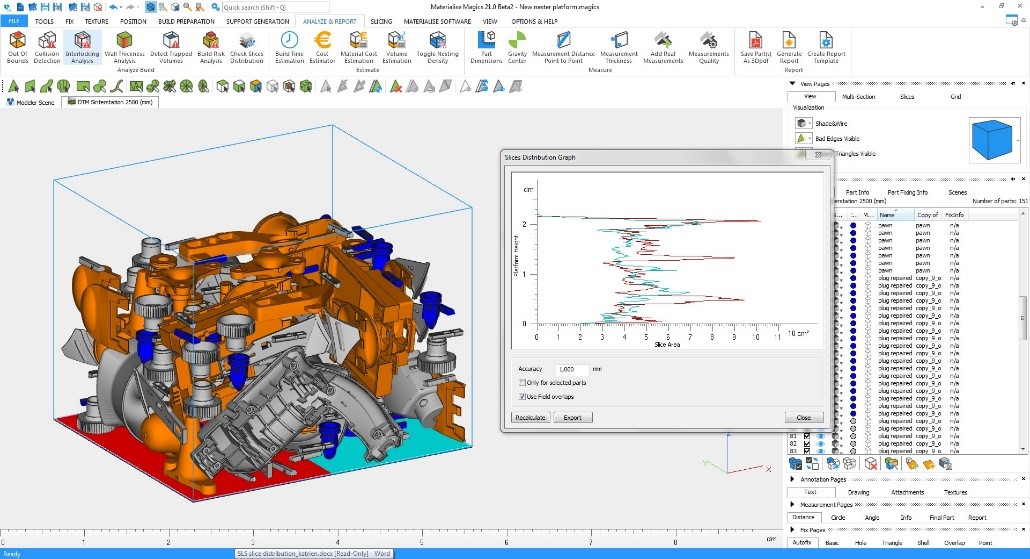
Printing a myriad of parts, each with its own serial number, that have been combined or batched into the same build plate/platform (see Figure 1 below) raises the additional challenge of guaranteeing that unique serial numbers were generated for each part, then 3D-printed on each Part, and subsequently tracked by each individual serial number.
Figure 1 Multiple parts on the same build plate (courtesy of Materialise)
Similar to tracking parts through the various operating steps that comprise your various heat treat processes, AM facilities also must have real-time visibility into each step of the part-production process, tracking where each part is in the overall process (i.e., which operating step each part is on, all while integrating the necessary quality management into the mix.
When AM production facilities send many different kinds of parts (all with unique serial numbers) to heat treat facilities with some parts requiring different processing steps, the software systems need to be able to track in real-time exactly where each individual part is located within the facility. Even though the heat treater is not responsible for generating and assigning serial numbers to the parts, there still needs to be complete traceability, accountability, and auditability of every step of processing that was associated with that part, especially if it was determined that there was a part failure in the aerospace, aviation, or medical end-use application of that particular part.
Serial numbers on parts can be generated from multiple user-defined serial number formats or templates, along with the ability to specify certain characters that should be excluded from automatically generated serial numbers (such as “o”, “l”, “I”, “x”). Each company, division, or AM production facility may have a different format it wants to use, such as a combination of plant #, date, time, and printer #. Regardless of the format used, serial numbers must be unique. Additionally, the template used must be able to be individually assignable for every customer part (and the same part # might be used by multiple customers).
There are multiple ways that serial numbers can be applied to the parts before they are sent for heat treating. Both AM facilities’ and heat treaters’ production floor software must provide for detailed serial number tracking of all parts throughout the build and post processing activities, from the beginning of AM production (after the part design phase) all the way through to heat treating, finishing, testing, and shipping.
Sometimes AM parts that heat treaters receive will also have a build plate ID as an additional identifier, along with the serial number. Build plate IDs are typically platform-centric, with the appropriate process management/operating steps applied for the various parts that are to be produced on that platform or build plate. The build ID needs to connect all of the related work orders for traceability as well as electronically linking all documentation/forms associated with a particular work order and build ID. The documentation audit trail of individual processing activities needs to be kept intact when the parts are sent to an outside heat treat vendor as another one of the required operating steps for that part. In addition to this, the actual build plate can either be tracked as a separate piece of equipment (typical) or as an inventory item.
For heat treating as well as AM production facilities, an integrated equipment maintenance module needs to be tied directly to production control (on the selected piece of equipment) and part specification requirements, to ensure the build plate, 3D printers, furnaces, testing equipment, etc., are serviced, calibrated, and/or maintained appropriately for compliance and optimal use.
Along with having a work order just for the build plate, there can also potentially be one work order for each part on the build plate, and that work order can be used to generate a vendor traveler to accompany the parts to the offsite heat-treating facility. Figure 2 below gives an example of two different part-build work orders on the same build plate.
The build work order tracks the actual build process, similar to tracking every step of the heat treat process, and provides operator instructions that may include pictures, diagrams, videos, or specification requirements. Then when the various parts/coupons/test bars are removed from the build plate, they travel either within your facility or to outside vendor post-processing and are tracked on their individual work orders.
Two specific tracking/configuration possibilities need to be managed by the MES/QMS software:
All parts on the build plate following the same process/route (i.e., operation steps)
Parts/coupons/test bars that take separate processing routes from the build plate—some may be sent on to heat treating, and others may be sent to destructive testing
Very similar to heat treat processing, AM production facilities need to have the ability to define and generate new work order packages to rapidly repeat previous work order part builds with exactly the same part-build process, but also have the capability to use the latest version of processing requirements and specifications for the selected part(s). This supports the global goal for repeatability, higher quality, and fewer nonconformances in AM part production with complete, auditable historical production data that maximizes throughput and, I might add, to run as paperless as possible (Internal and external auditors hate digging through file cabinets.). Most heat treaters have done a great job of mastering the art of part process repeatability for the repeat parts their customers continue to send to them.
Even though there is a continuing goal to keep reducing the number of nonconformances in part builds, nonconformances, especially in start-up AM production facilities, do occur frequently and must be managed accordingly on the production floor. Similar to the requirements of post-processing facilities, including heat treating, shop floor software systems need to be able to show supervisors and senior management what is really happening on the production floor in real-time with greater visibility and to continuously keep track of each individual part with the appropriate documentation to back up the decisions that were made on the fly on the floor, whether it is
Nonconformance dispositioning
Customer concession granted
Applied CAPAs (corrective and preventive actions)
Quality characteristics (or data questions that must be answered by the operator)
Control plans
Part sampling plans
Customer PPAPs (production part approval process)
Additional requirements may include:
Document management with version control
Compliance and specification management and assurance of adherence
Interfacing with individual pieces of equipment (including part testing equipment)
User viewing restrictions (i.e., ITAR, EAR, etc.)
Integration with ERP systems (including the customer’s ERP system)
Real-time notifications of certain triggering events (via SMS and/or email)
Equipment maintenance per specification requirements tied directly to production processing control
Ability to use mobile devices to access the system anywhere, anytime, any device
Raw material usage tracking (with automatic reorder notifications per preset thresholds)
Visibility into what is really happening on the production floor in real-time
Ability to conduct a risk assessment (per ISO 9001:2015)
SPC (statistical process control) to spot negative trends before out-of-tolerance conditions occur
Manage the order hold process related to scrap parts, nonconformances, etc.
Facilitate outside processing (i.e., heat treat, coating, finishing, testing) via a vendor traveler
Manage real-time changes to part specifications and the sequence of processing steps
Ability to attach various media to individual operating steps in the part-build process
Automatic qualification of equipment, personnel, and vendors used in the AM part-build
Real-time splitting and combining of parts in the various operation steps within the work order to optimize the routing and scheduling of work on the production floor.
Each of these system requirements has its own set of unique functions that support processing an individual part, whether it is heat treating, surface finishing, coating or additive manufacturing, but there are some overlap and similarities of the part servicing requirements. There is also a big corporate continuous improvement quest, regardless of the type off services a company provides. A lot more can be said about the specific use of each of the bulleted items above, but since I wanted to keep this article somewhat short and to the point, those can be covered in a future article, or you can reach out to me at ron.beltz@go-throughput.com with any questions or need for clarification on any of the items. Happy heat treating of more AM parts!
Ron Beltz serves as Bluestreak I Bright AM’s™ Director of Strategic Accounts and assists in marketing strategy while managing the sales and business development activities from the company’s Tampa, Florida, location. Ron is a graduate of Control Data Institute of Technology and also received additional training from Hewlett Packard, Digital Equipment Corp., and the Dale Carnegie Management Training Series. Prior to joining Bluestreak™, Ron has functioned as director of IT/CIO for a steel company in Canton, Ohio, and technical director for a multinational consulting firm, serving as an engagement manager over teams in the U.S., Canada, India, and a nearshore solution center located in Montreal.
Ron has assisted many organizations with determining their specific requirements and packaging turnkey solutions which achieve the business/operational goals set forth. He has served on several boards, been invited to present at IT users groups, technical schools, class graduations, and was a previously elected official.
A global aluminum manufacturer of products for multiple applications, including aerospace, automotive and packaging, recently announced that its Ravenwood, West Virginia, facility has been selected by the U.S. Department of Defense for a nearly $9.5 million grant to increase throughput, quality, and performance of cold-rolled aluminum.
Constellium will perform electrical, mechanical, and hydraulic system upgrades to Ravenswood’s 144" cold rolling mill, which is critically important for the manufacture of high-performance aluminum plate for ballistic and blast protection of military vehicles.
The funding was awarded to Constellium SE by the U.S. Department of Defense’s Cornerstone OTA and will be managed by the Army Research Laboratory (ARL) at Aberdeen Proving Ground, Maryland. Constellium will use the funds to perform electrical, mechanical, and hydraulic system upgrades to Ravenswood’s 144" cold rolling mill and add state of the art automation and process controls. The mill is critically important for the manufacture of high-performance aluminum plate for ballistic and blast protection of military vehicles. Army and Marine Corps modernization programs will require an increased capacity of the U.S. industrial base to produce cold rolled plate over the next decade. In coordination with Cornerstone and ARL, Constellium will also invest in developing manufacturing processes and armor plate that will optimize the additional capacity and process controls of the upgraded mill.
Buddy Stemple, CEO of Constellium Rolled Products Ravenswood
"This investment by the Department of Defense will enable us to meet the increased demand for cold-rolled plate over the next 5 to 10 years and also significantly improve the performance of armor against constantly evolving threats," commented Buddy Stemple, CEO of Constellium Rolled Products Ravenswood. "We are very excited to have this opportunity to help protect our troops."
Heat TreatTodayoffers News Chatter, a feature highlighting representative moves, transactions, and kudos from around the industry.
Personnel & Company Chatter
A leading provider of metal and carbon fiber 3D printers, Markforged, recently announced the opening of a new manufacturing facility in Billerica, Massachusetts. The 25,000 square-foot space will enable the company to more than double its production capacity, support increased demand for Markforged 3D printers, and create new jobs.
Rodrigo Belloc has been appointed the president of Gerdau Special Steel North America, Jackson, Mich. He replaces Mark Marcucci, who is retiring from his position after 28 years with the company and 43 in the steel industry. Previously, Belloc was CEO of Gerdau Diaco in Colombia and Gerdau Metaldom in the Dominican Republic.
Allied Mineral Products opened the doors to its newest precast shapes manufacturing facility near Johannesburg, South Africa. This marks Allied’s sixth precast shapes location worldwide.
Vorteq Coil Finishers LLC, a provider of coil coating services for metal products, recently acquired the assets of California-based Western Metal Decorating, which produces coated aluminum and steel products serving pre-painted markets. As part of the transaction, the Western operation will be renamed Vorteq Pacific LLC.
Leica Microsystems is delighted to announce a new UK partnership with Struers Ltd., the UK’s leading manufacturer of equipment, consumables, and services for materialographic analysis. Leica microscopes, accessories, and imaging products specifically designed for industrial and material analysis applications will now also be available from Struers Ltd. in the UK.
Getec Industries added friction stir welding (FSW) services to its Thermal Solutions division in Torrance, California. The new capabilities will enable the company to supply large extruded aluminum heat sinks to the electronics industries.
Equipment Chatter
Inductotherm Heating & Welding recently announced the successful commissioning of a new Thermatool 250kW CFI welder to GRC LLC.
Kudos Chatter
MTI recently recognized three Solar employees for their commitment to MTI. On October 5, Bob Hill, President of Solar Atmospheres of Western PA, was honored with the prestigious M. Lance Miller Legend Award, in recognition of his leadership and lifetime commitment to the heat treating industry and MTI. Hill’s heat treating career began in 1980 when he joined Precision Heat Treating, Inc. as Vice President. Hill moved on to Solar Atmospheres of Souderton PA in 1995. Within five years, Hill was promoted to President, to head Solar’s newest venture 370 miles away in Western PA. In addition to Hill’s involvement with MTI, two other employees from the Solar Family of Companies—Patrick Reilly and John Hahn—are recent graduates from YES, MTI’s Leadership Training Program
Innovation Leader awards recently went to SECO/WARWICK for the third time. The “Business Leader” event is a prestigious competition. The jury gives awards to the companies distinguished by their transparency and business honesty with innovative successes as their trademarks. On October 28, 2019, at the prestigious gala, Katarzyna Sawka, Global Group Marketing Director SECO/WARWICK, received the Innovation Leader Award on behalf of the company.
Bodycote recently celebrated Dan McCurdy, who retired in June 2019 after 21 years of service, as this year’s recipient of the prestigious HTS George H. Bodeen Heat Treating Achievement Award. Dan received the award at a ceremony during this year’s AMS International Heat Treat Conference event that was held in Detroit on October 15-17, 2019.
Katarzyna Sawka, Global Group Marketing Director SECO/WARWICK, received the Innovation Leader Award on behalf of the company.
Heat TreatToday is pleased to join in the announcements of growth and achievement throughout the industry by highlighting them here on our News Chatter page. Please send any information you feel may be of interest to manufacturers with in-house heat treat departments especially in the aerospace, automotive, medical, and energy sectors to Karen Gantzer at karen@heattreattoday.com
Jack Titus (Photo courtesy of Dagenais Photography)
Jack Titus has managed a R&D metallurgical laboratory with all manner of scientific instrumentation as well as transferred plasma nitriding, LPC and HPGQ (high pressure gas quench) technology from around the world to the U.S. He holds patents on vacuum furnace and vacuum carburizing technology.
In this article for Heat TreatToday, Jack shares his experience as a member of a team whose task was to transfer the nitriding process known as ion nitriding. The lessons he learned are valuable to heat treaters today.
Photo: autosport.com
One of the ways companies advance their technology offering is by transferring technology from other sources, primarily offshore entities that have developed a process that has been successful in their home market. However, there are associated risks because what has been accepted in one market may not be as popular in another. One major variable is the different design culture: an intangible that is easy to overlook. An analogy I often use when explaining this cultural difference deals with race cars. European Formulae One race cars have a sleek-looking, open-wheel design that’s easy on the eye. In contrast, the NASCAR grand-national series of race cars appears bulky and rugged—more like our passenger cars—and look crude compared to Formulae One, but they have huge engines and are fully capable of reaching speeds of well over 200 mph.
European—especially German—engineered furnaces often appear as sleek looking as Formulae One cars and are very capable of successful heat treating, but they are fragile and require more attention to maintenance than their U.S.-based counterparts. This was certainly the case with Degussa and their 20-bar vacuum furnaces and sinter–hip systems, as well as ALD’s low-pressure carburizing (LPC) and high pressure gas quench (HPGQ) systems. The following discussion documents my experience as part of the team that endeavored to transfer the nitriding process known as ion nitriding, developed by Kloeckner Ionon GmbH, a German company that advanced the process in the mid-1970s. The process and events are accurate as far as my memory from that era can muster. I’ll use initials for the names of the companies or the individuals and substitute “The Company” for the U.S. transferee.
The transferee team consisted of a manager, a marketing director, and others tasked with “Americanizing” the product—a big mistake. My task was to spend about a month at a Kloeckner commercial heat treat facility learning how the process was controlled and the do’s and don’ts for preparing loads so I could train potential users on the technology. To further the effort, company S purchased a smaller production unit from Kloeckner with all of the current state-of-the-art (German) controls to be installed in the R&D section of The Company for conducting sales tests.
At that time in the mid-1970s, other U.S.-based companies were just putting their toes in the water to see if the process was real, but Kloeckner was the perceived expert in the field.
The unit placed in R&D was a fully capable vertical unit with a hearth plate 24-in. (609 mm) diameter by 48 in. (1219 mm) high, the result of years of development by Kloeckner. The Company was just entering the digital age, upgrading from analog controls, so the decision was made to develop their own process control for discrete logic and temperature control. All of the voltage, ampere, and temperature controls in the Kloeckner unit were analog with dampening features that made for very smooth outputs. Again, at the time, Allen-Bradley was the primary manufacturer of PLCs used by company S for furnace motion control, but the nitriding unit had no material handling requirements, therefore, all of the controls were process variables, making a full blown PLC unnecessary. Barber Coleman was the other digital controller company that specialized in plastic injection molding process control using their EDAC programmable logic controller, which made it the logical choice for the primary controller. It employed EPROMS that could be programmed and erased at will, making logic changes much easier. The EDAC was also used on The Company’s vacuum furnaces successfully, so using it seemed a wise course.
For those unfamiliar with plasma nitriding, the following is the Reader’s Digest version of the process:
A DC voltage converted from AC via a series of diodes with a maximum of 1000 volts is applied to a work piece and is the cathode of the circuit. Radiation shields and the vessel proper are the anode with a positive ground. When the power is applied to the parts and nitrogen and dissociated ammonia are used, it produces a purple glow. The learning curve associated with plasma nitriding is pretty complex, and dealing with holes—especially blind holes—can be problematic.
When power is first applied to the work piece after evacuation the moisture and/or residue left on parts causes a long delay in heating as an arcing phenomenon begins. Specialized circuitry in the logic measures the voltage drop as arcs occur and “crowbars” the power to a choke, a transformer that absorbs the current and allows it to dissipate to ground. In doing so, a huge magnetic field is created that must be accounted for, and that is one of the reasons the EDAC was used. It was intrinsically hardened against such severe interferences so much that, with the choke side of the cabinet door opened, the image on the EDAC CRT was pulled off the screen momentarily without any damage to the processor.
The glow produced by the energy is referred to as the glow seam: as the partial pressure in the vessel increases, the glow seam becomes thinner and power is concentrated. It could then create a seam overlap resulting in very intense and localized power within holes of a certain size, enough to locally melt the metal. When processing parts of various sizes and shapes, care must be taken to avoid these circumstances.
One of the disadvantages of the process is the very long time it takes for the sparking and arcing to subside and allow enough continuous power to heat the parts. Pre-process degreasing and/or thorough washing was mandatory to reduce the sparking and arcing time. We eventually learned that preheating parts, even in air, to 400°F (204°C) dramatically improved heating time. Part of Kloeckner’s control logic embedded within the solid-state circuitry counted the arcs per second. If the arcing reached a certain level, power was reduced, which allowed a more sustained applied energy—improving the heating time but not nearly the same positive effect as preheating.
During my initial visit to a Kloekner heat treat, I was astounded at the amount of hands-on experience required to control the process. Since nitriding takes place between 900°F (482°C) and 1000°F (537°C)—which is below the visible color range—when viewing through a sight glass, the operator would cover himself and the sight glass with a black photographer’s cape so as to shield out ambient light, allowing him to easily see the dull red of the relative temperature of the parts in the load. Along the way of transferring the process learning curve, it became obvious why Kloeckner only employed pit vessels for plasma nitriding. Since there was no additional heat source other than the energy produced by the glow seam, parts located in the center of the part array would heat much faster than parts positioned around the perimeter of the circular base plate. Therefore, when processing multipart loads, parts expected to take longer to heat would always be placed in the center of the arrangement.
As a typical load was coming up to heat, the operator would visually inspect the parts for color variation and, if detected, pause heating until all parts became uniform before continuing to heat. A thermocouple was used for temperature control; however, placing it required some experience. The end of the TC was protected by an alumina tube to isolate the high voltage and prevent it from shorting to the TC and damaging the analog to digital input board.
I recall that in the mid-1970s, furnace OEMs were just beginning to find ways to relieve the operator from having to make process decisions by incorporating more intelligence into controllers, yet here was a process that required more human intervention not less.
One of the major mistakes The Company made during the learning curve transfer was selling the Kloeckner sales unit to a commercial heat treat in Fort Worth that already had a U.S.-developed (but larger) nitrider. I strongly opposed this move because it would compare Kloeckner’s mature product with years of development behind it and its fluid operation to our new larger unit where development was in its infancy. The Company’s nitrider design reflected the same engineering as their pusher furnaces—over-designed, bulky, and lacking the mature engineering that flows from an evolved design. As a result, the news spread that The Company’s product was not equal to the German unit. Compounding that error in judgment, our marketing director, affectionately known as “Wild Bill”, was promoting plasma nitriding as the end all process before we knew all of the process’s benefits and shortcomings.
Traditional nitriding is still an atmosphere process where little care is required in making up part loads, while plasma nitriding requires careful planning to avoid overlapping the glow seam when parts are placed on the base plate or positioned on racks. As word spread throughout the industry about the special attention and loading complexities required, the honeymoon was short-lived.
A classic example of loading issues arose when I was asked to assist in creating a loading arrangement for synchronizer rings for Chevy Muncie, where the first horizontal vessel was sold. It consisted of two vessels sharing one vacuum system; however, each had its own power supply. Those involved had designed a flat horizontal base plate with vertical posts where rings were placed with spacers between each to avoid the expected overlapping glow seam. The main problem was nonuniform heating from the center to the perimeter, since all parts were the same mass and size. The solution was to orient the load horizontally to align it with the horizontal radiation shields. The rack supporting the rings was circular with an open center. The main support allowed for horizontal posts projecting out on opposite sides of the center support so rings could be slid over the posts while retaining the spacers.
I recall a funny story early in the development when a small laboratory-size ionitrider was designed for experimentation and was sold to two gentlemen who planned on building a commercial enterprise for nitriding. In a rented garage in Iowa with a garden hose supplying cooling water in the evening after normal working hours, I was instructing the two guys and their wives on the operation using the EDAC. Three of the four looking over my shoulder were completely perplexed as I was populating the screen with temperature inputs, pressure, and so on. Suddenly one of the wives blurted out, “Hey! There’s nothing to this! It’s just like my microwave.” And from that beginning we have the rest of the story: Advanced Heat Treat in Waterloo, Iowa.
The moral of this story is this: When transferring technology, change as little as possible, because if do, you are doomed to repeat the evolutionary mistakes that the original design team experienced.
A new heat treat system that will help produce products for the logging industry has been ordered by Oregon Products.
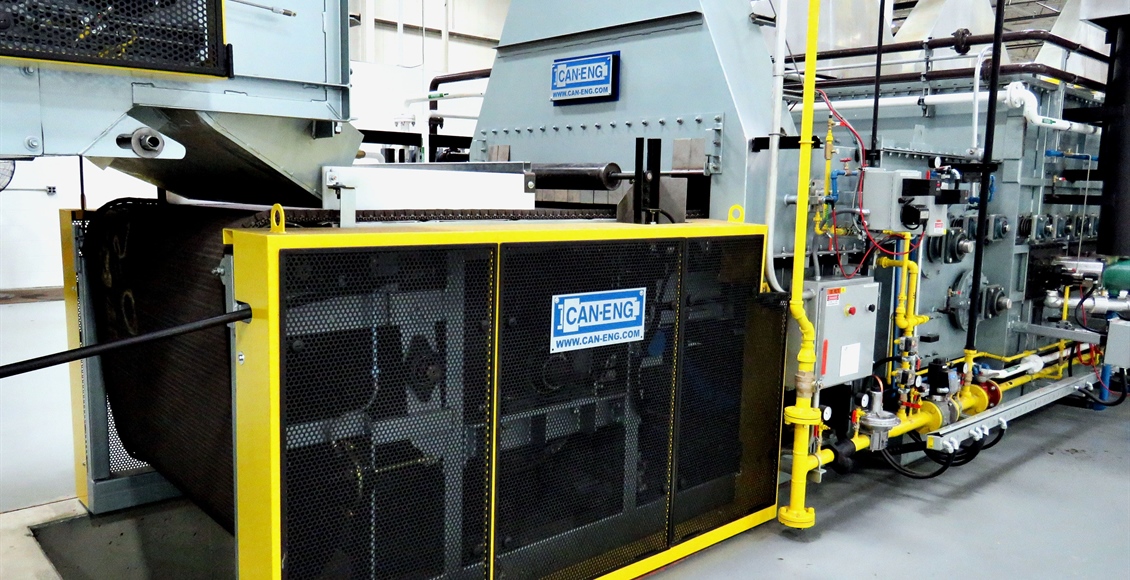
Oregon Products, a brand of Blount International, Inc., will be adding a new continuous high capacity mesh belt austemper heat treatment system to its production facilities. A global manufacturer of saw chain and other replacement products for the forestry industry, Oregon plans to use the new equipment as part of a long-standing commitment to continuous quality improvement.
Kaitlyn McNaughton Director of Engineering and R&D Labs Blount International
“The primary business driver of this project is quality,” said Kaitlyn McNaughton, Director of Engineering and R&D Labs. “This new furnace is primarily targeted to raise the bar on quality for our harvester chain products, which perform under the highest loads and most extreme conditions.”
The austemper system, which CAN-ENG Furnaces International, Ltd. will design and commission, integrates a computerized loading system, pre-wash system, atmosphere-controlled mesh belt austenitizing furnace, molten salt quench conveyor system, post quench residual salt removal and recycling system, mesh belt parts drying oven, unloading system and CAN-ENG’s PET™ system which provides vital features such as individual lot/product traceability, detailed process data collection for continuous process improvements and comprehensive Industry 4.0 equipment diagnostics capability.
The system is scheduled for commissioning early 2020.
Heat treating is the unsung hero of the commercial and military aviation industries. Much like the support staff behind any good play or movie, or the mom behind the Olympic athlete, heat treating of critical aerospace parts is relegated to the background, to the fine print of the credits—if at all. But if it were not for heat treating, planes would not fly, ships would not sail, submarines would not dive, and cars would not drive. Bob Hill’s article, which first appeared in the 2014 edition of the SME Aerospace and Defense Yearbook, and then in Heat Treat Today’sMarch 2019 Aerospace print edition, introduces you to the technical world of vacuum heat treating and why vacuum thermal processing is vital to the aerospace and defense industries.
First, let’s nail down what we mean by “heat treating.” In simple terms, heat treating is cooking metal much like you would cook food – with a predetermined recipe and desired outcome in mind. Metal is placed into an oven, or more accurately a furnace (ovens typically operate at temperatures less than 1,000°F), and precisely held at a specified temperature for a pre-determined period. The metal is then cooled either slowly or quickly depending on what properties are desired. Thermal processing can make the metal harder, softer, stronger, more flexible, more rigid, more wear-resistant, chemically altered, or a host of other desirable metallurgical properties.
In aerospace and defense, the majority of metals must be heat treated in a special type of furnace that is void of air. These furnaces are called vacuum furnaces. Vacuum furnaces keep detrimental elements such as water molecules and oxygen from coming into contact with the metal. A vacuum furnace does this by sealing the critical metal components inside an airtight vessel, pumping out all the air from within the vessel to a deep vacuum level, and then performing the heat treatment recipe before returning the load to room temperature and breaking the vacuum. Many titanium, stainless steel, and nickel alloys are extremely reactive at elevated temperatures and will become contaminated if exposed to any air or water molecules. Vacuum furnaces help eliminate these detrimental metallurgical reactions.
Secondly, let’s look at which flight-critical airplane parts are vacuum heat treated. Critical parts are found in jet engines where turbines, stators, vanes and other engine parts are exposed to extremely high operating temperatures for sustained periods of time. Most of these parts are made of titanium and nickel alloys, and they require vacuum heat treating in order to give them the strength and wear resistance necessary to be reliably installed in jet engines. GE, Pratt & Whitney, and Rolls Royce are among the leading supplier of jet engines, and the heat treatment of these parts is critical and carefully controlled.
Today’s commercial aerospace engineers are making greater use of composite technology in airframes and primary structures. This approach offers a weight savings on average of 20% when compared to conventional aluminum designs. Carbon fiber reinforced plastic, or composites, are inferior when handling compressive loads but are excellent with tensional loads. When aerospace engineers needed another material to support the major structural and flight-critical components within the new aircraft and searched for the optimum material to address strength, weight, and resistance to galvanic corrosion, it was quickly decided that aluminum was a poor choice. Titanium, however, can withstand comparable loads better than aluminum, has minimal fatigue concerns, and is highly resistant to corrosion. Since titanium is stronger than aluminum and their weights are equivalent, less titanium by weight than aluminum can be used to achieve the same part strength. Since weight reduction drives down fuel consumption, titanium in both military and commercial aerospace is king!
Titanium
Because titanium plays such a critical role in today’s aerospace arena, let’s take a more thorough look at why titanium needs to be heat treated, and more specifically, why it needs to be vacuum heat treated. Titanium is both chemically and thermodynamically very reactive. At elevated temperatures, titanium will absorb hydrogen if present. Hydrogen, unfortunately, once diffused into titanium causes the metal to become brittle and reduces the appealing properties of titanium. When titanium is pickled or heated in an air furnace (not in a vacuum furnace), hydrogen will impregnate the titanium. The process of removing this hydrogen from titanium is called vacuum degassing. Currently, most aerospace material specifications require that all titanium have no more than 30 parts per million (ppm) of hydrogen.
Because titanium is a relatively expensive metal, more people are looking at recycling. In the titanium scrap world, there are times when infusing hydrogen into titanium is beneficial. For example, when a titanium reclaimer wants to pulverize titanium into a powder for further processing, it is much easier to do when the metal is brittle. Super-saturating hydrogen into titanium – hydriding – can only be done inside a vacuum furnace and is always followed by a dihydride once the titanium is in final powder form.
Vacuum Heat Treating—In-House or Outsource
The expertise necessary to operate a vacuum heat treating furnace is notable. Vacuum technology has immensely improved over the years and operating a vacuum furnace today is truly a science. Some manufacturers buy and operate their own vacuum furnaces. These furnaces typically run the same product day in and day out. Maintaining and troubleshooting vacuum furnaces can be a very time-consuming distraction. The true hidden costs of running and maintaining a vacuum furnace are not very well known.
That is why some companies choose to outsource their heat treating to commercial heat treaters who vacuum heat treat 24/7/365. These heat treat companies relieve their customers of the headaches of owning and operating a vacuum furnace. They benefit by allowing the vacuum heat treat experts to take care of compliance to stringent specifications that are necessary within any manufacturing scope of work.
Current Market Conditions
The aerospace industry, especially commercial aerospace, is experiencing significant growth currently. With commercial aircraft sales at an all-time high, vacuum heat treatment is extremely strong today and well into the future. Airbus’ decision to locate an assembly plant in Mobile, Alabama, is just one additional sign that the commercial aerospace industry is experiencing aggressive growth and looking to expand its supply base.
New Processes and Materials
One process that could significantly impact the aerospace community is additive manufacturing—3D printing parts utilizing various methods. Some parts are produced by laying down atomized powdered metals or laying down wire layer after layer until the entire part is fully printed or constructed. Unlike “subtractive” manufacturing which takes a bar of metal and shaves off the unneeded excess, additive manufacturing adds only that metal which is needed, so there is essentially no scrap. With subtractive manufacturing, frequently 80% of the original metal stock ends up as scrap and needs to be recycled.
Exactly how additive manufacturing will impact the aerospace world remains to be seen. There are multiple metallurgical hurdles to overcome before any flight-critical part is placed in an aircraft. Even parts additively manufactured need vacuum heat treating, most notably vacuum stress relieving or vacuum sintering. Nonetheless, additive manufacturing is a disruptive technology that machinists and vacuum heat treaters alike will be watching.
Nadcap
Any heat treater of aerospace parts must comply with the critical processing criteria enforced by Nadcap, an organization established years ago to ensure that aerospace suppliers were meeting and maintaining high-quality standards. Heat treaters also have to be AS9100D-certified before they can process aerospace parts. In addition to Nadcap, many aerospace companies have their own quality standards audited by their individual customers. These are called “prime certifications”, and these standards meet and often surpass requirements from Nadcap and AS9100D.
Conclusion
Although heat treating plays a relatively hid-den part in the aerospace and defense supply chain, it remains a critical link. Working with your local vacuum heat treater early in the development process will prove to be a good investment. Aerospace heat treating will continue to be an important link in the aerospace supply chain for many years to come.
About the Author: Bob Hill, FASM, is President, of Solar Atmospheres of Western PA. This paper originally appeared in the 2014 edition of the SME Aerospace and Defense Yearbook and then in Heat Treat Today’sMarch 2019 Aerospace print edition. It is published here with permission from the author.
An industrial gases company recently announced an investment to build a new, large-scale air separation unit (ASU) in Indianapolis, Indiana, a state of the art plant that will produce essential raw materials for metal fabrication facilities and heat treating operations, as well as other manufacturers in the Midwest. The ASU is slated for completion Q1, 2021.
“This investment underscores Messer’s commitment to strategic U.S. expansion to meet growing market demand,” said Jens Luehring, president & CEO, Messer Americas. “We chose to invest in Indianapolis, Indiana, due to its strong pro-business climate and optimal proximity to customers. Messer aims to become the premier supplier of choice for industrial, medical and specialty products in the Americas, providing innovative solutions for our customers with excellent speed to market and reliability. This investment directly supports that mission and strengthens our presence in the Midwest.”
The new air separation plant will produce medical and industrial gases for several industries, including metal fabrication, chemical, welding, glass, healthcare, and food processing.
Mayor Joe Hogsett with the City of Indianapolis
Messer, which acquired most of the North American gases business of Linde plc, as well as certain Linde business activities in South America, is one of the leading industrial gas companies in North and South America.
“We’re excited to keep building a city with a competitive business climate and a vibrant quality of life that appeal to world-class companies like Messer,” said Mayor Joe Hogsett with the City of Indianapolis. “We proudly welcome Messer and the dozens permanent and temporary good-paying jobs that it brings, to the economic landscape of our city.”
Heat TreatTodayoffers News Chatter, a feature highlighting representative moves, transactions, and kudos from around the industry.
Personnel & Company Chatter
A long-term agreement to supply materials used in the manufacture of naval nuclear reactor components has been signed between BWX Technologies, Inc., and Allegheny Technologies Incorporated.
Kennametal Inc. announced that it has formed a 3D printing materials and production business unit, Kennametal Additive Manufacturing, as part of its infrastructure segment. The new business unit combines the company’s longstanding expertise in materials science and wear-resistant solutions with additive manufacturing capabilities to supply high-performance metal additive powders and fully finished 3D printed parts for wear, erosion, corrosion, and high-temperature applications.
StandardAero Component Services celebrated the grand opening of the company’s 30,000 sq. ft. expansion of its Hillsboro, Ohio, engine component manufacturing and engine component repair facility. The additional working space and capital improvements included the building and additional equipment to support aerospace engine low-pressure turbine vane manufacturing. The Hillsboro location expansion completes StandardAero’s current plans for new building and expansion investments, which have also occurred at its Cincinnati, Miami and Kansas City locations over the last 18 months.
Equipment Chatter
A 30-ton tilting rotary furnace for aluminum recycling was installed by GHI at the new facility of Latem Aluminium in Villadangos, Spain.
No. 965, a 1350ºF (~733ºC) electrically-heated cabinet oven from Grieve, has been purchased for heat treating titanium at the customer’s facility.
Tangshan Zhengfeng Iron & Steel Co., LTD, in Hebei Province, China, recently commissioned three iRecovery® (intelligent waste heat recovery systems) from Tenova, a Techint Group company. Tenova iRecovery® systems will be applied downstream of the new Consteel® Evolution to recover the waste heat and to use it for the production of steam, which will then be available for the existing power plant.
A vacuum drying oven has been shipped to the aerospace industry by Tenney Environmental, a division of Thermal Product Solutions. This vacuum drying oven is designed to remove moisture from a large spacecraft engine after it goes through a washing process. The previous conventional method of drying took over 12 hours due to the intricacy of small diameter tubing, fine screen meshes, and other hard to get to areas. The vacuum drying oven will reduce that time to 4 hours. This vacuum drying oven utilizes radiant heat wrapped around the pressure walls to heat the product to approximately 100°F.
An electrically heated two-zone bottom flow conveyor oven was shipped to the consumer goods industry by Wisconsin Oven. This belt conveyor oven will be used to cure a latex barrier coating onto maple syrup bottles.
Exlabesa, an aluminum extrusion provider for the construction industry in Europe, recently ordered a multi-chamber PR130 melting furnace (complete with charging unit) for its Hertwich continuous homogenizing plant at its Padron (Spain) based facility. This furnace will increase its capacity to 60,000 tons from its Padron casthouse. The new furnace with a capacity of 130 tons per day is designed for a relatively wide range of scrap. The temperature level in the main chamber from which the melt is tapped for casting is about 1800°F (1000°C).
Walsin Yantai Stainless Steel Co. Ltd. has contracted with Primetals Technologies to design and manufacture a new stainless steel combination mill to convert billets from an existing plant into finished products with precision tolerance and surface quality. Located in Yantai, Shandong Province, China, the new mill project with Primetals Technologies will be completed in consortium with CERI Long Product Co. Ltd., including all electrics and automation to approach Industry 4.0. The combination mill will have a straight bar outlet, a bar-in-coil outlet, and a wire rod outlet.
A leading industrial engineering and manufacturing group recently completed several furnace projects for global clients. Fives was contracted by Habaş, a leading conglomerate in Turkey which operates in the field of industrial gases, steel, LPG, and heavy machine manufacturing, to design and supply a new generation slab reheating furnace, the Stein Digit@l Furnace®, for its hot strip mill, located in Izmir, Turkey. In addition, Shijiazhuang Iron & Steel Company within China’s HBIS Group ordered two Stein Digit@l Furnaces® from Fives to reheat blooms and billets. The walking beam furnace will have a production capacity of 130 tons per hour and will operate on natural gas. Fives was also selected by Yantai Walsin Stainless Steel to design and supply an ultra-low NOx emission furnace to reheat long products. Yantai Walsin Stainless Steel is a subsidiary of Walsin Lihwa, a world-leading manufacturer of stainless steel, power cables, and wires.
A 500°F (260°C) enhanced-duty walk-in oven was delivered by Lewco Inc., of Sandusky, Ohio, that will be used to dry various parts during a manufacturing process.
Kudos Chatter
Kaydon Ring & Steel, Inc. recently passed its Non-Destructive Testing Nadcap Audit, achieving 24-month merit, granting Aerospace NDT process accreditation. (Heather Szymanski Sr. Quality Engineer)
Flash Steelworks, located in Washington, Michigan, provides a patented process for heat-treating steel that leads to mass reduction, performance improvement, and cost savings. This distinction gained them a position among 24 semi-finalists for the 10th annual Accelerate Michigan Innovation Competition, where the top prize is $350,000.
Materials Solutions, a Siemens company specialized in additive manufacturing (AM), has achieved Nadcap accreditation for AM in the aerospace industry. The accreditation is reportedly the first by a UK company. Materials Solutions, which has its headquarters in Worcester, has provided AM parts and components to the aerospace industry since its founding in 2006. The business is a pioneer in the use of selective laser melting (SLM) technology for the manufacture of high-performance metal parts. SLM applications in the Materials Solutions factory range from high-temperature components found in gas turbines and jet engines, to tooling applications as well as lightweight structural components and hydraulic applications.
Heat TreatTodayis pleased to join in the announcements of growth and achievement throughout the industry by highlighting them here on our News Chatter page. Please send any information you feel may be of interest to manufacturers with in-house heat treat departments especially in the aerospace, automotive, medical, and energy sectors to the editor at editor@heattreattoday.com
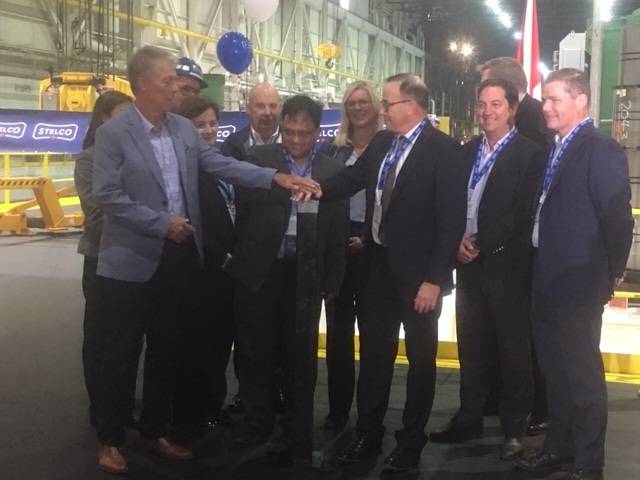
Hamilton, Ontario, mayor Mayor Fred Eisenberger greets Stelco officials at the ribbon cutting ceremony for the company’s new $30 million batch annealing facility. (Photo credit: Ken Mann, GlobalNews.ca)
An integrated and independent steelmaker based in Ontario, Canada, recently celebrated the opening of its new $30 million dollar batch annealing facility with a ribbon-cutting ceremony.
Stelco opened the plant in Hamilton, Ontario, earlier in the summer as a part of the company’s focus on investment in new technology and expansion of its production of flat-rolled value-added steels, including premium-quality coated, cold-rolled and hot-rolled steel products for the automotive, construction, and appliance industries. The restart of a modernized and upgraded temper mill, along with the installation of new annealing furnaces, will allow Stelco to add a full range of up to 200,000 net tons of fully processed cold-rolled steel to its product mix.
Main photo credit and caption: The Spec.com video (Youtube) / Alan Kestenbaum, Stelco executive chairman, at the ribbon-cutting