ALUMINUM PROCESSING NEWS

Novelis-Kobe South Korean Joint Venture Includes Pusher & Annealing Furnaces

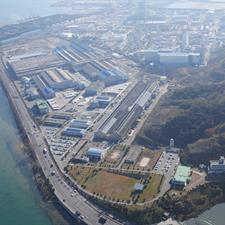
Arial mage of the mill in Ulsan, South Korea

A new aluminum rolling entity located in the industrial hub of Ulsan, South Korea, is the result of a global joint venture project designed to support the increasing demand for high-strength and lightweight aluminum for automotive and specialty products including electronics and building materials in Asia.  This comes four years after a major expansion at the site that included a new three-stand hot finishing mill, as well as a pusher furnace and annealing furnaces.

Ulsan Aluminum Ltd. was formed by Novelis, the world leader in aluminum rolling and recycling, selling to Kobe Steel, a producer of aluminum rolled products in Japan, its ownership interest in its Ulsan, South Korea, facility for $315 million. Novelis and Kobe Steel together own the Ulsan Aluminum Ltd. facility, with each company remaining responsible for its own metal supply and commercial relationships.

All 600 employees at the plant are now employed by Ulsan Aluminum. Novelis’ interest in Ulsan Aluminum will remain a key part of its Asian manufacturing interests, which also includes the Yeongju facility in South Korea and the Changzhou facility in China.

“This strategic partnership further supports Novelis’ continued commitment to growth in the Asian automotive industry and creates new capabilities to meet the increasing demand for aluminum sheet,” said Sachin Satpute, President of Novelis Asia. “Through an increase in operational efficiencies and process enhancements, this partnership will provide our global customers greater access to the numerous benefits of aluminum.”

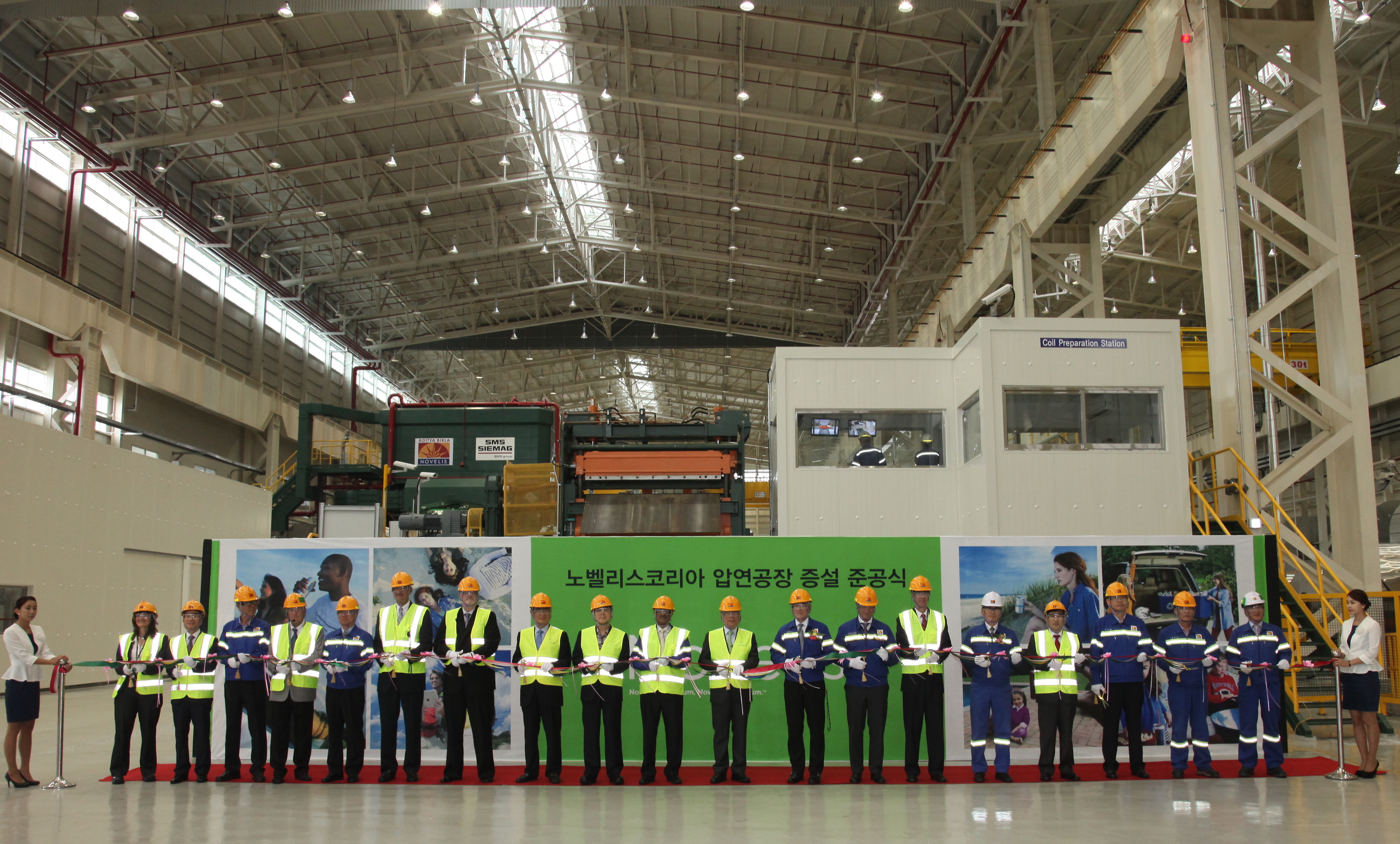
Ulsan facility officials at groundbreaking of furnace expansion, 2013.


“Ulsan Aluminum is committed to providing first-class rolled aluminum products and services to benefit our customers in the region. We will continue to operate with a high-quality and safety-first mentality, and will support the local market with innovative aluminum products,” said Jerry Quick, President and CEO of Ulsan Aluminum Ltd.


Novelis-Kobe South Korean Joint Venture Includes Pusher & Annealing Furnaces Read More »

Aluminum Aging Oven Shipped to Aerospace Parts Manufacturer

An aerospace parts manufacturer recently acquired an electrically heated aluminum aging oven as part of an upgrade of its line. The SWH series batch oven was ordered to replace antiquated equipment in order to facilitate compliance with AMS 2750E Class 2 specifications. Wisconsin Ovens, a Thermal Product Solutions (“TPS”) brand, completed the shipment in August 2017.


Aluminum Aging Oven Shipped to Aerospace Parts Manufacturer Read More »

Austal Delivers Aluminum EPF Catamaran to U.S. Navy

  Source: Light Metal Age

Austal USA recently delivered the USNS Yuma, the eighth Expeditionary Fast Transport (EPF) vessel, an aluminum catamaran, to the U.S. Navy. The 338-foot long Yuma is capable of transporting 600 tons 1,200 nautical miles at an average speed of 35 knots and is designed to operate in austere ports and waterways, providing added flexibility to U.S. warfighters worldwide.

Around 700 tonnes of aluminum in the form of plate, extrusions, and forgings is used in the construction of the Yuma. Custom panels created by friction stir welding are joined with custom extrusions using a combination of TIG and gas metal arc welding. Although no surface treatment is used above the waterline, the hull is painted below the waterline. Aluminum provides a strong weight ratio and enables Austal to produce a ship that can efficiently achieve high speeds with a shallow draft. The structure weight of an aluminum ship is approximately half that of a steel ship and is comparable to fiberglass. Other benefits of using aluminum in marine applications are that it is also easy to form, resistant to corrosion, doesn’t require paint to protect the surface, can be welded with well-established commercial processes, and is easy to repair.

Read more: Austal Delivers Aluminum EPF Catamaran to U.S. Navy

Austal Delivers Aluminum EPF Catamaran to U.S. Navy Read More »

Hydro Acquires Sapa to Become a Global, Integrated Aluminum Company

  Source:  Light Metal Age

Norsk Hydro signed an agreement with Orkla to acquire its 50% interest in Sapa for a total enterprise value of NOK 27 billion (~US$3.24 billion), giving Hydro full ownership of the global leader in extruded aluminium solutions.

Read more:  Hydro Acquires Sapa to Become a Global, Integrated Aluminum Company by Light Metal Age

Hydro Acquires Sapa to Become a Global, Integrated Aluminum Company Read More »

R&D Aids Aluminum Use for Auto Industry

  Source:  Advanced Manufacturing Media – SME

Automakers such as General Motors Co. are introducing new assembly materials and challenging their engineers to develop new approaches to manufacturing. Consequently, GM, for instance, is using more aluminum and aluminum extrusions because engineers find them resilient, easy to work with and more corrosion-resistant than low-carbon steel. It uses extruded aluminum for frame rails, sheet aluminum for body panels and complex aluminum castings as substitutes for multicomponent assemblies that require assembly into a large unit. 

Read more:  R & D Aids Aluminum Use by Dave Lukasak

R&D Aids Aluminum Use for Auto Industry Read More »

Weldaloy’s Aluminum Heat-treating Capacity Increased

On the heels of a recent expansion of their seamless rolled ring capabilities, Weldaloy continues to grow with the addition of a new low temperature aluminum aging oven. The new oven will increase Weldaloy’s aluminum heat-treating capacity.

Ovens created specifically for aluminum can reduce cycle times and increase productivity by optimizing temperature uniformity through adequate airflow. This translates to a better product that can be made in a repeatable recipe.

“We’re receiving more and more requests for large aluminum work, so we needed to add this low temperature aluminum aging oven to be able to increase our capacity and meet production needs. This addition will allow us to produce more parts in the same amount of time for our customers while maintaining quality,” said Kurt Ruppenthal, Vice President & General Manager at Weldaloy.

Many of the new opportunities for aluminum work have come from the oil and gas industry and the aerospace industry, as well as from the private space sector. Weldaloy recently achieved the AS9100C certification for their Quality Management System, which has opened the door for them to work with more aerospace companies that require certification of their suppliers.

“We look forward to continuing to grow our aluminum capabilities to meet the increase in demand,” said Ruppenthal.

Weldaloy’s Aluminum Heat-treating Capacity Increased Read More »

Drive Aluminum: Safety

Drive Aluminum is a four-segment video series published by the Aluminum Association (www.aluminum.org). Featuring former NASA astronaut, Dan Tani, these videos are meant to promote the use of aluminum among automakers and are full of interesting facts about the fuel efficiency, strength, carbon footprint/life cycle assessment, and safety of aluminum. This segment highlights Safety.

Drive Aluminum: Safety Read More »

Drive Aluminum: Strength

Drive Aluminum is a four-segment video series published by the Aluminum Association (www.aluminum.org). Featuring former NASA astronaut, Dan Tani, these videos are meant to promote the use of aluminum among automakers and are full of interesting facts about the fuel efficiency, strength, carbon footprint/life cycle assessment, and safety of aluminum. This segment highlights Strength.

Drive Aluminum: Strength Read More »

Age-hardening an Aluminum Underwater Buoy Frame

BOTW-50w  Source:  Metlabheattreat.com

Metlab recently assisted TrimMaster in fabricating an aluminum frame for an underwater buoy that would meet customer specifications. Mike Allard, Sales Manager, explains “We were faced with the prospect of welding the aluminum assembly to put it together, and knew that there would be reduced strength at the weld joint. By changing the welding wire we used, we could take advantage of Metlab’s heat treating process, especially their large furnaces to accommodate these parts, to raise the strength of all weldment components to a T-6 condition, giving us the strength that we needed for the application.”

Read More:  Age-hardening an Aluminum Underwater Buoy Frame

Age-hardening an Aluminum Underwater Buoy Frame Read More »

Reduced Heat Treatment Requirements for Components Made with Aluminum-Cerium Alloys

BOTW-50w  Source:  Engineering 360

“The key to the alloys’ high-temperature performance is a specific aluminum-cerium compound, or intermetallic, that forms inside the alloys as they are melted and cast. This intermetallic melts only at temperatures above 2,000 degrees Fahrenheit.

That heat tolerance makes aluminum-cerium alloys very attractive for use in internal combustion engines, Rios says. Tests have shown them to be stable at 300 degrees Celsius, a temperature that would cause traditional alloys to begin disintegrating. In addition, the stability of this intermetallic sometimes eliminates the need for heat treatments typically required for aluminum alloys.

Read More:  Aluminum-Cerium Alloys Could Boost Engine Efficiency and Rare Earth Production

Reduced Heat Treatment Requirements for Components Made with Aluminum-Cerium Alloys Read More »