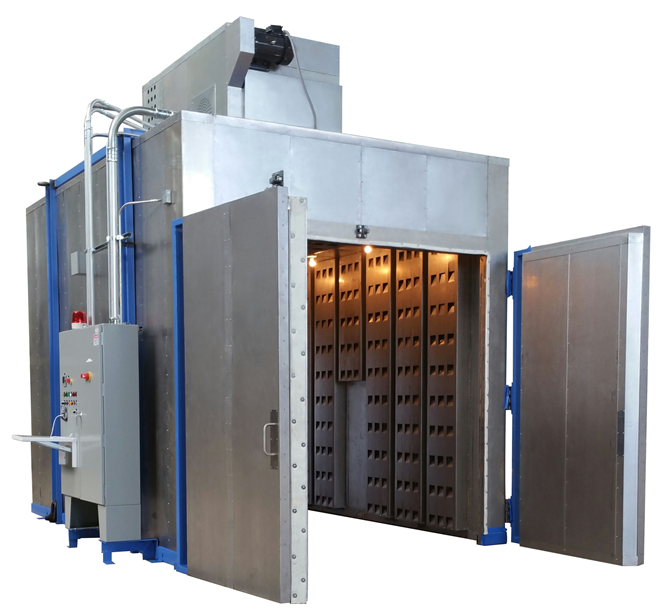
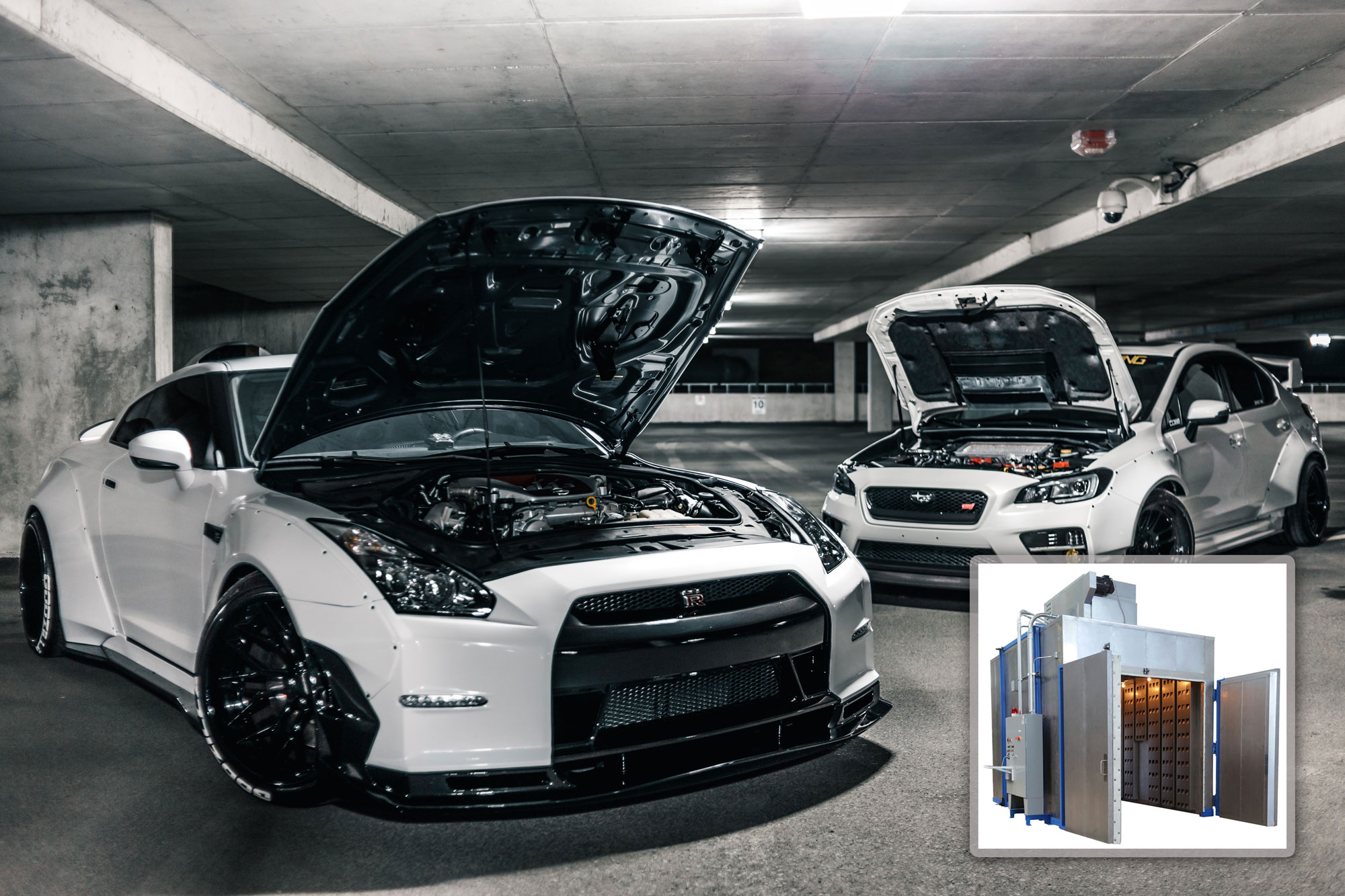
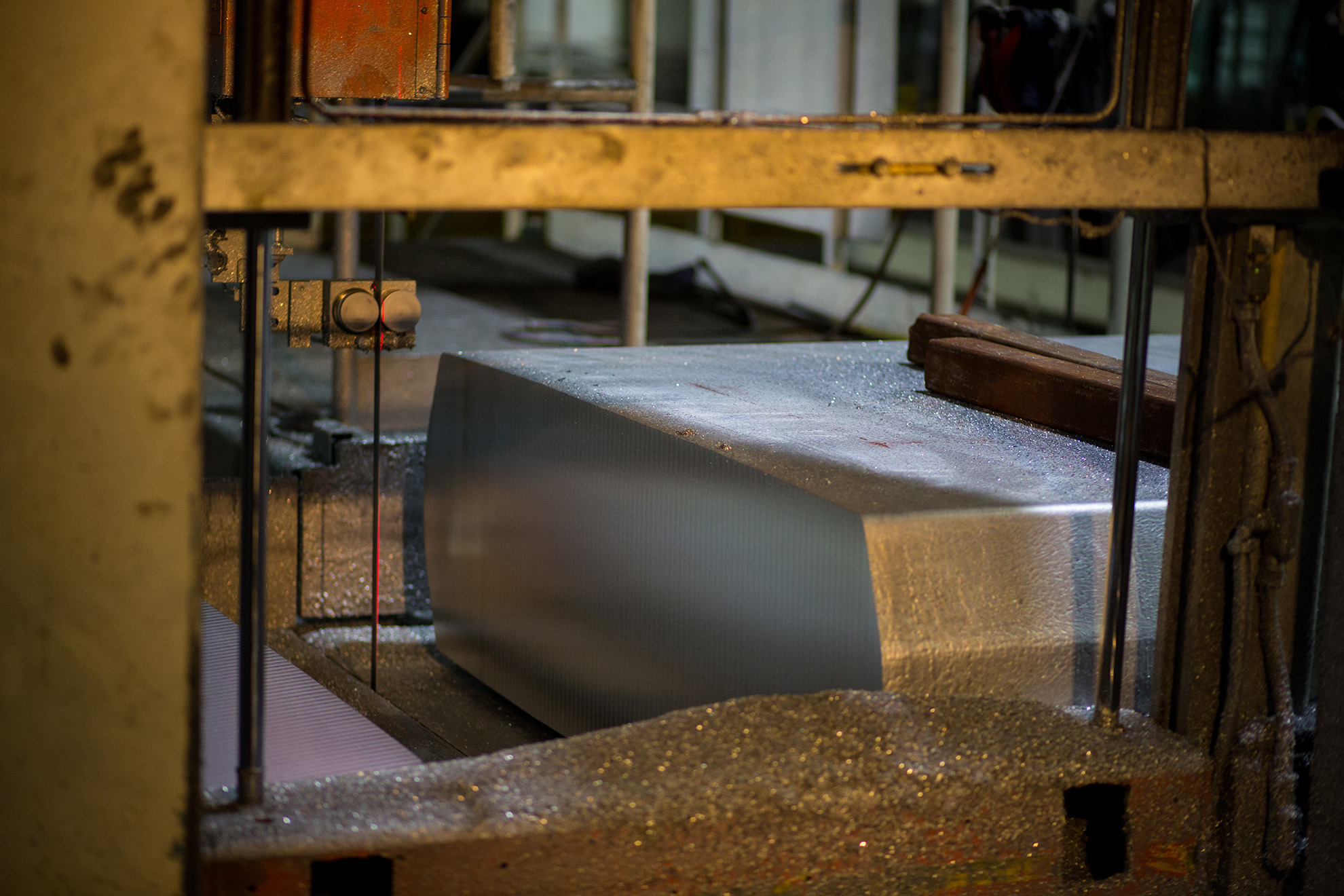
A leading tier 1 automotive supplier recently placed a large order for eight (8) custom designed walk-in ovens for aluminum aging of automotive parts with furnace manufacturer DELTA H.
(source: DELTA H)
The ovens will be qualified at class 2 (+/-10°F) and feature all necessary performance requirements for compliance to CQI-9 and AMS2750E specifications. DELTA H collaborated with the customer for 6 months on the design and approval phase.
All 8 ovens will be commissioned in late summer 2020.
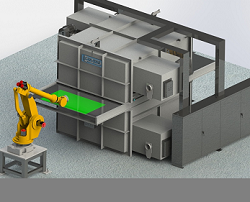
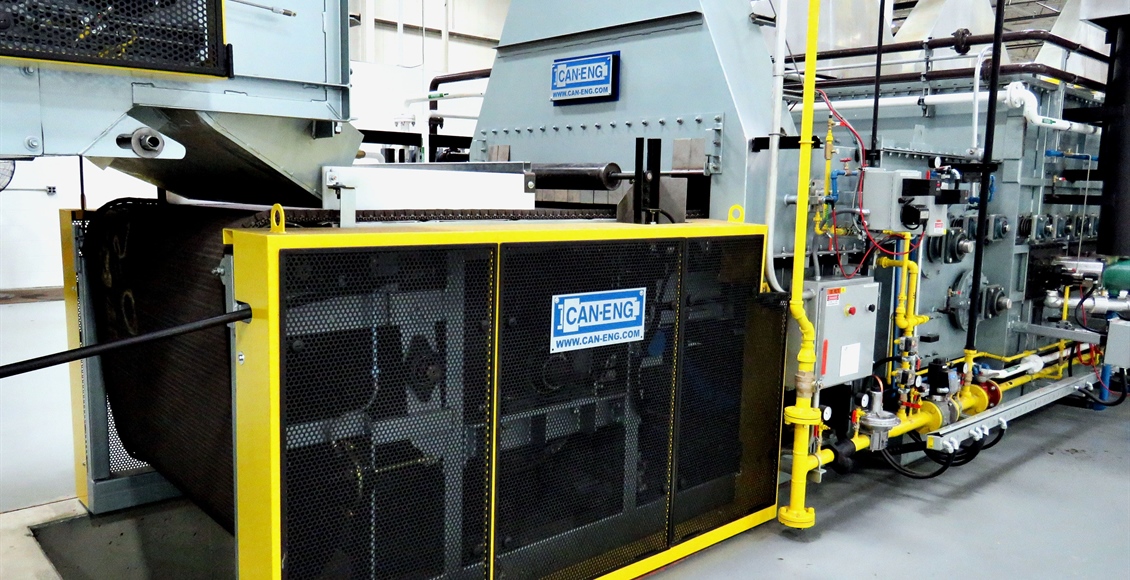
A research organization recently awarded a contract to a North American furnace manufacturer for the supply of a rapid-heating furnace to be used for product development of lightweight hot-stamped and formed aluminum automotive components. This organization will integrate the aluminum-sheet heating furnace with existing equipment to support both automotive manufacturers and Tier 1 suppliers throughout North America.
(source: Can-Eng)
Can-Eng Furnaces International Ltd., of Niagara Falls, Ontario, was chosen for this project because it has significant experience in the development of lightweight, thin-walled automotive structural components. Can-Eng provided the customer with a unique rapid-heating furnace system that offers significant reduction in floor space requirements, flexibility for processing a wide range of product sizes, and the flexible operating temperatures required for various stamped and formed products. The system will be fully integrated with flexible robotic handling and material handling automation.
It wasn’t long ago that auto industry watchers were casting votes for either steel or aluminum in what was to be a big competition in what metals would be used in automotive lightweighting.
Would it be the heavy-weight champion steel which was ramping up its development of high-strength, lower-weight steels? Or would the new contender on the block, aluminum, gather more adherents to lightweighting in the wake of Ford Motor Company choosing aluminum for its F-150 and Super Duty pickup bodies?
An excerpt:
“A consensus has emerged. The future for the industry is a mix of materials, a mix that will vary from vehicle to vehicle. It’s also likely to be a more complex future, with composite materials making inroads in the long run.”
Jay Baron, retired president of the Center for Automotive Research (CAR), Ann Arbor, Michigan
“You have to take into account all sorts of factors,” said Jay Baron, retired president of the Center for Automotive Research (CAR), Ann Arbor, Michigan. Vibration and stiffness figure into the equation, he said. And there’s cost. “It’s much more than weight and strength.”
Designing and building vehicles with a patchwork quilt approach to materials is how some brands are tackling the lightweighting challenge. Most are also exploring advanced technological processes such as a combination of 3D printing and artificial intelligence, friction welding technology, and rethinking other automotive systems, e.g., braking.
Main image credit / caption: Manufacturing Technology Inc. (MTI) / The MTI-built LF35-75 at Lightweight Innovations for Tomorrow is ideal for unique part geometries, near-net shapes and full-size part development for all industries, according to MTI.
A Pennsylvania company that provides aluminum fabrication, extrusion, and casting products across a variety of industries recently celebrated the completion of the expansion of its facility in Leetonia, Ohio, where new equipment was installed aimed at increasing the company’s capabilities.
Pennex Aluminum, which was also marking the 40th anniversary of Pennex being purchased by the Metal Exchange Corporation, specializes in aluminum extrusions and fabricated components for the automotive, construction, HVAC, landscaping, and off-road vehicle markets at the Leetonia facility.
A global aluminum manufacturer of products for multiple applications, including aerospace, automotive and packaging, recently announced that its Ravenwood, West Virginia, facility has been selected by the U.S. Department of Defense for a nearly $9.5 million grant to increase throughput, quality, and performance of cold-rolled aluminum.
Constellium will perform electrical, mechanical, and hydraulic system upgrades to Ravenswood’s 144" cold rolling mill, which is critically important for the manufacture of high-performance aluminum plate for ballistic and blast protection of military vehicles.
The funding was awarded to Constellium SE by the U.S. Department of Defense’s Cornerstone OTA and will be managed by the Army Research Laboratory (ARL) at Aberdeen Proving Ground, Maryland. Constellium will use the funds to perform electrical, mechanical, and hydraulic system upgrades to Ravenswood’s 144" cold rolling mill and add state of the art automation and process controls. The mill is critically important for the manufacture of high-performance aluminum plate for ballistic and blast protection of military vehicles. Army and Marine Corps modernization programs will require an increased capacity of the U.S. industrial base to produce cold rolled plate over the next decade. In coordination with Cornerstone and ARL, Constellium will also invest in developing manufacturing processes and armor plate that will optimize the additional capacity and process controls of the upgraded mill.
Buddy Stemple, CEO of Constellium Rolled Products Ravenswood
"This investment by the Department of Defense will enable us to meet the increased demand for cold-rolled plate over the next 5 to 10 years and also significantly improve the performance of armor against constantly evolving threats," commented Buddy Stemple, CEO of Constellium Rolled Products Ravenswood. "We are very excited to have this opportunity to help protect our troops."
A new heat treat system that will help produce products for the logging industry has been ordered by Oregon Products.
Oregon Products, a brand of Blount International, Inc., will be adding a new continuous high capacity mesh belt austemper heat treatment system to its production facilities. A global manufacturer of saw chain and other replacement products for the forestry industry, Oregon plans to use the new equipment as part of a long-standing commitment to continuous quality improvement.
Kaitlyn McNaughton Director of Engineering and R&D Labs Blount International
“The primary business driver of this project is quality,” said Kaitlyn McNaughton, Director of Engineering and R&D Labs. “This new furnace is primarily targeted to raise the bar on quality for our harvester chain products, which perform under the highest loads and most extreme conditions.”
The austemper system, which CAN-ENG Furnaces International, Ltd. will design and commission, integrates a computerized loading system, pre-wash system, atmosphere-controlled mesh belt austenitizing furnace, molten salt quench conveyor system, post quench residual salt removal and recycling system, mesh belt parts drying oven, unloading system and CAN-ENG’s PET™ system which provides vital features such as individual lot/product traceability, detailed process data collection for continuous process improvements and comprehensive Industry 4.0 equipment diagnostics capability.
The system is scheduled for commissioning early 2020.
An industrial aluminum company headquartered in Atlanta, Georgia, recently received approval of its proposed acquisition of an Ohio-based aluminum rolled products producer, which would increase its capacity to provide lightweighting materials for the automotive market.
The European Commission announced approval for Novelis Inc. to acquire Aleris Corporation, conditioned upon the sale of Aleris’ plant in Duffel, Belgium, which produces aluminum for the automotive and specialties markets. Novelis is working expeditiously to market the plant to potential buyers, with the chosen counterparty and the definitive agreement for divestiture subject to European Commission approval.
With this conditional approval in the European Union, as well as a clear path forward for approval in the U.S., Novelis focuses on obtaining approval from the Chinese State Administration for Market Regulation (SAMR).
Steve Fisher, president and CEO, Novelis Inc
“Today’s announcement is another step forward in bringing Novelis and Aleris together, which will benefit our customers, employees, and the aluminum industry as a whole,” said Steve Fisher, president and CEO, Novelis Inc. “Overall, this transaction will strengthen our ability to compete against steel in the automotive market, meet growing customer demand for aluminum, achieve our recycling goals, and bolster our sustainability platform worldwide. In addition, it will further enhance our strategic position in Asia and diversify our overall product portfolio.”
The company expects to close the transaction by January 21, 2020, the outside date under the merger agreement.
A large aluminum producer recently announced a large investment in a new rolling plant in Ashland, Kentucky.
Braidy Industries, Inc. (Braidy) and Rusal jointly announced the approval by their respective Boards of Directors for Rusal to invest $200 million in Braidy Atlas mill. The companies estimate that it has been more than three decades since a greenfield aluminum rolling mill like Braidy was built in the U.S. The deal is expected to close in the second quarter of 2019.
Craig Bouchard, Braidy Industries Chairman and CEO
“This is a sustainability match made in heaven for the global aluminum industry,” said Craig Bouchard, Braidy Industries Chairman and CEO.
Rusal intends to supply 200,000 tons of certified low-carbon prime aluminum ingot and slabs each year for a 10-year period, allowing Braidy to target lower carbon emissions.
Braidy is dependent on long-term supplies of high-quality, low-carbon aluminum, which is rarely supplied in the high quantity required for their production. If met, this order would be one of the world’s largest for one mill of high-quality, pre-alloyed and low-carbon primary aluminum slabs.
A manufacturer of aluminum profiles and complex extrusion press products recently purchased a nitrocarburizing system for its new state-of-the-art manufacturing facility in northwestern Romania.
Quebec-based Nitrex delivered and installed the turnkey NX-815 nitrocarburizing system for Swiss corporation Alu Menziken Extrusion AG, incorporating the Nitreg®-C technology for treating aluminum extrusion dies at the greenfield site which produces a range of profile products for aerospace and automotive companies. The process technology adapts to the application requirements to deliver improved performance of extrusion dies.
“With a focus on the environment, Alu Menziken also sought to introduce eco-friendly technologies for all equipment at its greenfield facility. Not only is there a benefit of reduced process gas use with the Nitrex system, the integral high-efficiency neutralizer also helps comply with environmental regulations,” said Marcin Stoklosa, Nitrex European Project Manager.
A supplier of infinite aluminum recently announced it plans to invest in two new aluminum extrusion presses to support the growing automotive, architectural and transportation markets in North America.
Hydro plans to install a 4,500-ton 10” aluminum press line at its Cressona, Pennsylvania, location to serve the traditional automotive and distribution segments and also installing a 7,000-ton dual container 12”/14” press line in the West region to serve the electric vehicle, transportation, and commercial building and construction segments.
“We are very excited about Hydro’s continued investments in North America,” said Jack Pell, Vice President of Automotive Business Development for Hydro Extrusion North America. “This new equipment merges state-of-the-art billet heating and quench capabilities with larger billet diameters and enables us to produce larger extruded aluminum shapes with thinner walls from stronger alloys – the ‘holy grail’ for our automotive customers.”
Hydro expects these presses to be operational by 2020.