The Government of Canada announced it is to receive Lockheed Martin’s 5th Generation F-35 Lightning II aircrafts as a result of the Future Fighter Capability Project competition.
The Royal Canadian Air Force will add 88 of the F-35A multirole stealth fighters. The aerospace and defense industries will benefit with high value jobs in the production of these aircraft.
“Canada is our friend and a close ally. Their decision to procure almost 90 jets underscores the value of the incredible F-35 Lightning II,” said Lt. Gen. Mike Schmidt, program executive officer at F-35 Joint Program Office United States Air Force. The F-35 strengthens Canada’s operational capability with its allies as a cornerstone for interoperability with NORAD and NATO.
“Together with our Canadian industry partners, we are honored by this selection and the sustainment of critical jobs that will continue to equip Canadian workforces with advanced skills,” said Lorraine Ben, chief executive at Lockheed Martin Canada. “The F-35 program yields tremendous economic benefits for Canada’s aerospace and defense industry."
Find heat treating products and services when you search on Heat Treat Buyers Guide.com
Beginnings and endings often come together. As we begin a new year this month, we want to pause to remember a few lives that came to an end. Although the following are by no means the only important endings, Heat Treat Today would like to honor the memory of the following individuals who left their mark in the heat treating world.
This article first appeared in Heat Treat Today's December 2022 Medical and Energy print edition. Feel free to contact Bethany Leone at bethany@heattreattoday.com if you have a question, comment, or any editorial contribution you’d like to submit.
William “Bill” Cleary Surface Combustion (1960–2022)
Bill Cleary joined Surface Combustion directly after graduating college and remained with the company through the next 36 years. Working as a mechanical engineer and later as senior sales engineer, Bill was a constant presence at Surface Combustion — always the first person to help and listen.
Roger Joseph Fabian Lindberg & Bodycote (1940–2022)
Roger Fabian received his B.S. in metallurgical engineering in 1962 and his MBA in 1980 from Rensselaer Polytechnic Institute. He began his career with Lindberg Corporation in 1962 as a plant manager at Lindberg’s Boston Division, and in 1964 transferred to the Berlin Division, where he was named chief metallurgist and quality control manager. He was promoted to division manager at Berlin in 1979 and named vice president of Lindberg Heat Treating Company in 1992. When Lindberg was purchased by Bodycote Thermal Processing in 2001, Roger was named Eastern Region sales manager and finally retired in 2010 after 48 years. Roger had many professional accomplishments, including president of ASM International, president of the ASM Heat Treating Society (an affi liate society of ASM International), and was a long-time member of both societies. He also served as a president for the Metal Treating Institute (MTI), and as chairman of the ASM Technical Programming Board. He was instrumental in the development of the Center for Heat Treating Excellence (CHTE) at Worcester Polytechnical Institute and served as director-at-large and industrial liaison. He was known to be always a gentleman and a friend.
Klaus Hemsath Surface Combustion (1935–2022)
Klaus Hemsath and his family emigrated from Germany in 1967 to begin work at Surface Combustion. To this day, Klaus has over 60 patents to his name in the United States. Among his many accomplishments in the heat treating industry, Klaus founded Indugas, Inc. and wrote several books on climate change. Klaus will be greatly missed by his son, Mark Hemsath (Nitrex), as well as all others in the heat treating industry who knew him.
David Soderberg County Heat Treat (1951–2022)
With over 45 years of experience in metallurgy, Dave Soderberg had a vast knowledge of nitriding, aluminum solution aging, stress relieving, and other heat treating processes. His expertise especially honed in on aerospace heat treating, where he was appointed the designated supplier quality representative by GE Aerospace Engineering Group. Dave was a skilled metallurgist, able to develop heat treatments according to custom specifications.
Jon K. Tabor Allied Mineral Products (1933–2022)
After a 65-year career in refractories, Jon Tabor joined Allied Mineral Products in 1970 and helped to build it to the multi-national corporation it is today. Some of John’s accomplishments at Allied were transforming it into an employee-owned company and establishing a manufacturing presence in several countries, including China, South Africa, the Netherlands, and Brazil.
Keep that furnace running! Obviously, a furnace leak can be quite counterproductive and make it troublesome or even impossible to keep it going. What can be done? Thankfully, there are several solutions. This best of the web article gives helpful measures in defining leaks, detecting leaks, solutions for effectively stopping a leak, and much more.
As you move through the post, you'll encounter a tutorial that starts with the basics. A furnace leak if defined with differences described between a normal leak and something such as an outgassing problem. Then, other information is presented with descriptions on the rate of the leak and possible locations for said leak. The article continues with methods for leak checking and wraps up with a check list of sorts for vacuum furnace users.
An excerpt:
Some operators or leak checking personnel will often use a stethoscope when checking for leaks, as its ability to transmit low-volume sounds and eliminate external noise is exceptional. Often in gross leaks or some smaller leaks, a standard paint brush and soapy wash solution is helpful. Brush the solution around suspected leak areas. Big leaks will blow big bubbles at the leak while smaller leaks will form very fine foam.
The monthly Industrial Heating Equipment Association (IHEA) Executive Economic Summary released in January takes a look at the 3 common problems for the economy and provides another sector that may be surprising player. Usually, inflation, recession, and supply chain have been considered the culprits for the economic downturns in past months. There is something else edging in as cause for concern: the worker shortage. Specifically, the looming problem that the Boomer generation is retiring.
By 2030, the report projects, every worker of this generation will have reached retirement age. It is forecasted: "These people will be very hard to replace, and it will be expensive." Worker shortages have been discussed before, but now the study is showing that things are at "crises level."
"Remarkably stable" due, in part to "expansion of capital spending" Source: IHEA
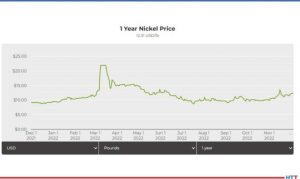
The 10 economic indices have all shown a drop except two: Durable Goods and Metal Pricing. Metal prices are remaining stable even as there are signs of reducing demand. The report credits this to companies thinking there will be a slowdown this year. Global events do make copper rather volatile, but nickel and aluminum are holding steady.
"The metal markets have been stabilizing to a degree." Source: IHEA
All of these indices are slowing down: New Auto Sales, New Home Start, Steel Consumption, Industrial Capacity Utilization, Purchasing Managers Index, Capital Expenditure, Factory Orders, and Transportation Activity. It's difficult to pin just a few reasons for this, but supply and demand issues, high interest rates, and high prices overall have consumers hanging on to their money if they can.
Some supply chain resolution but "consumer demand is frequently frustrated by the lack of the desired vehicle." Source: IHEA
In the automotive arena, heat treaters can find measures of security in knowing production is still expanding.
"The estimate is that another 5 million homes are needed." Source: IHEA
Yes, the numbers are down, but overall there is a great need yet for housing. Multi-family homes see numbers still up by 12%, so that reflects well for heat treaters providing construction needs.
Some slowing in the steel sector Source: IHEA
The report on steel consumption shows decline in the three major "drivers" for the industry: commercial construction, vehicle manufacturing, and the oil and gas business.
Anne Goyer, Executive Director of IHEA
2023, it would seem, is going to see a lot of spending on labor. There is hope even while seeing numbers drop, and it is possible that the nation is moving into a better time. The claim is that the "recession threat [is fading]," and supply chain circumstances are improving with China and elsewhere.
Check out the full report to see specific index growth and analysis which is available to IHEA member companies. For membership information, and a full copy of the 11-page report, contact Anne Goyer, executive director of IHEA. Email Anne by clicking here.
Find heat treating products and services when you search on Heat Treat Buyers Guide.com
Plot your heat treat events with Heat TreatToday's Industry Calendar. This planner is located under "Resources" on www.heattreattoday.com, and it is always updating with the latest industry events. As you make your spring 2023 plans, check out three of the season's events in this original content piece!
If you have an event to add -- or want to give us a heads up on an event that you and others are going to attend -- feel free to reach out to the editors at editor@heattreattoday.com.
Jump over to the "Resource" tab on the website, and you'll find the Industry Calendar located fourth down. This calendar lets you search by month in list or calendar view format so that you can visualize your season with ease.
Preview of Spring 2023 events
AEROMAT 2023
When: March 14 - March16
"For more than 30 years, ASM International has hosted the AeroMat conference and exposition which showcases the interchange of pertinent technical information on aerospace industry material and processes."
Additive Manufacturing Users Group 2023 (AMUG)
When: March 19 - March 23
"Expert, intermediate and novice users of all commercial additive manufacturing technologies are encouraged to attend the AMUG Conference. AMUG is a global community focused on accelerating the education and advancement of additive manufacturing and 3D printing. Additive Manufacturing Users Group (AMUG) Conference brings together engineers, designers, managers, and educators from around the world to share expertise, best practices, challenges . . ."
Metalcasting Congress 2023
When: April 25 - April 27
"For more than a century, Metalcasting Congress has shaped the future of foundries. From cutting-edge research on the latest breakthroughs to professional networking and business development, Metalcasting Congress is the foundry industry’s premier gathering in North America."
There's so much more! Explore theIndustry Calendarhere.
Find heat treating products and services when you search on Heat Treat Buyers Guide.com
By this time of the year, New Year's resolutions have fallen to the wayside. Rather than feeling discouraged, treat each day as a new opportunity for learning and advancement. Heat Treat Today compiled an easy-to-access resource for you chock full of heat treat technical information.
These 23 ways help you set goals to access new technology, connect with industry leaders, review old and trusted practices, and so much more. We hope this original content article is helpful and would love to hear from you in the Reader Feedback button below!
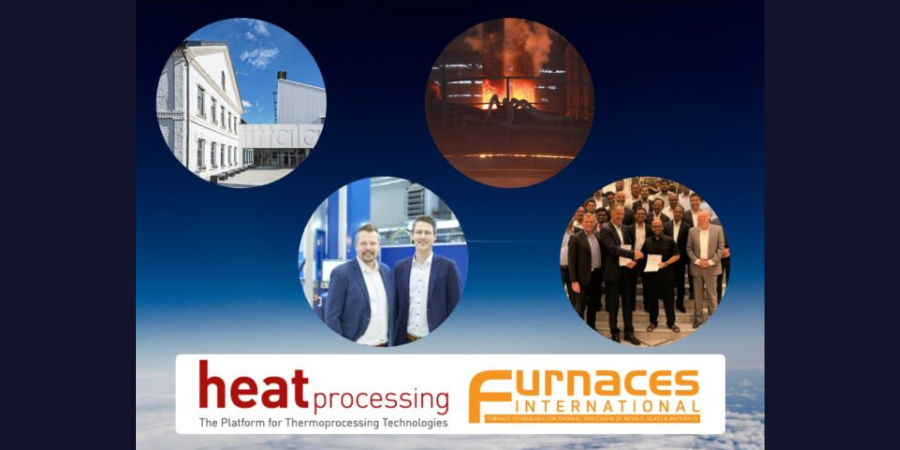
Heat Treat Today is partnering with two international publications: heat processing, a Vulkan-Verlag GmbH publication that serves mostly the European and Asian heat treat markets, and Furnaces International, a Quartz Business Media publication that primarily serves the English-speaking globe. Through these partnerships, we are sharing the latest news, tech tips, and cutting-edge articles that will serve our audience — manufacturers with in-house heat treat.
In this issue, we look at updates on industry events around the globe such as electric furnaces in Finland and new technology to accommodate additive manufacturing advances.
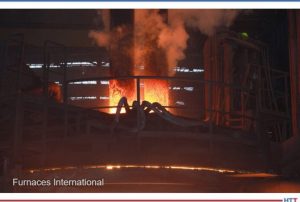
“After the decision taken by Stahl Gerlafingen to upgrade its Electrode Regulation System as part of its secondary steelmaking process, AMI supplied the DigitARC® PX3 ERS which was delivered in May 2022, with all onsite commissioning work finished in mid-2022.”
Read More: “AMI Automation supplies steel producer with DigitARC® PX3 ERS” at furnaces-international.com
Reducing CO2 Emissions with Electric Furnace in Finland
“Iittala to receive €10 million electric furnace investment” (Source: Furnaces International)
“Fiskars Group will replace the Iittala factory’s existing, natural gas-powered furnaces with electricity-powered furnaces. The investment will reduce the factory’s CO2 emissions by approximately 10,000 tons a year (74%) and decrease nitrogen oxide and fine particle emissions.”
From right to left: Mr. Safwan Sobhan, Vice Chairman Bashundhara Group shaking hands with Mr. Burkhard Dahmen, Chairman of the Managing Board & CEO, SMS group. BMSIL & SMS Group team members during contract signing at Dhaka. (Source: SMS group)
“Bashundhara Multisteel Industries Limited, the Steel Division of Bashundhara Group, one of the largest business conglomerates in Bangladesh, signed a contract with SMS group to install an integrated facility to produce more than two million tons of hot rolled coils annually with the goal of filling the gap in demand for flat products in Bangladesh. The plant will be located at Bangabandhu Sheikh Mujib Shilpa Nagar (BSMSN), Mirsharai, Chattogram. In the future, this plant can be expanded to produce four million tons annually.”
Read More: “Bashundhara Multisteel and SMS group sign contract for integrated CSP® plant” at heat-processing.com
New Tech Accelerates Material Deposition and Alloys in AM Advancements
Dr.-Ing. Tobias Stittgen (right) and Thomas Horr, the two Managing Directors of ponticon GmbH, are standing next to a pE3D system. (Source: ponticon)
“At Formnext, ponticon GmbH will introduce its new pE3D system for Dynamic Material Deposition (DMD), a process developed for additive manufacturing, coating and repairing complex-shaped metallic workpieces. The new system combines high process speed with utmost precision and high flexibility in terms of the choice of alloying elements. With the [DMD] process developed by ponticon, alloys of any elemental compositions can be deposited on metallic and ceramic components.”
Read More: “High-precision laser cladding with short process times” at heat-processing.com
Heat Treat Todayoffers News Chatter, a feature highlighting representative moves, transactions, and kudos from around the industry. Enjoy these 19 news bites that will help you stay up to date on all things heat treat.
Equipment Chatter
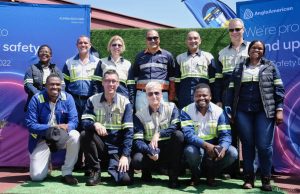
Global commodities group, Anglo American, and thyssenkrupp Steel have signed a memorandum of understanding to collaborate on developing new pathways for the decarbonization of steelmaking. The collaboration will focus on joint research to accelerate the development of high-quality input stock for lower carbon steel production, using both conventional blast furnace and direct reduction iron.
SECO/WARWICK delivered additional CAB lines to SUZHOU RETEK in China.
Tenova was contracted by Sinova Global to supply the basic engineering of a new silicon metal plant in Tennessee. The site will be North America’s most modern and efficient silicon metal plant, a greenfield development for Sinova Global.
Collaborative R&D between Anglo American and thyssenkrupp Steel for greener steelmaking technologies
Two CAB lines for SUZHOU RETEK
Sinova Silicon Metal Plant from Tenova
Company and Personnel Chatter
Brighton Science and Hubbard-Hall partner to provide the Infinity Surface Cleaning Intelligence Program, which is designed to aid manufacturers to prepare surfaces and prevent problems.
Thermal-Vac Technology, Inc. announced the completion of a new microgrid from Verdant Microgrid, LLC. Collaboration with the following companies ensured the completion: Eos Energy Enterprises of Edison, NJ; Stronghold Engineering, Inc. of Perris, CA; and GridSwitch Asset Management Services of Moon, PA.
Bryan Stern has joined Gasbarre as the product development manager for Gasbarre Thermal Processing Systems. Bryan’s experience, knowledge, and forward-thinking will allow him to support existing clients and advance the company’s growing footprint in the vacuum furnace market.
Ipsen recently launched a new website with the goal of providing a better user experience for customers worldwide. IpsenGlobal.com now incorporates all Ipsen locations, products, and services under one domain.
Furnaces North America 2022, the premier trade show and technical conference in the North American heat treating industry, attracted over 1,200 attendees from around the world. The show produced by the Metal Treating Institute in partnership with its media partner, Heat Treat Today.
Bryan Stern Product Development Manager Gasbarre Thermal Processing Systems
New website: IpsenGlobal.com
FNA Technical Sessions, many exhibitors and attendees
Kudos Chatter
Doug Peters, CEO of Peters’ Heat Treating, received the Winslow Award, an honor that is given to an individual or business that has made valuable economic improvements.
A two chamber vacuum oil quench furnace has received Nadcap accreditation. Solar Manufacturing designed the furnace for Solar Atmospheres of Western PA.
Ayla Busch was honored with the German Leadership Award 2022. This award was presented at the annual alumni convention of the Collège des Ingénieurs and is an award for innovative corporate leadership in the German economy.
Texas Heat Treating, Inc. announces that both Round Rock and Texas Heat Treating Worth just completed ISO 17025 lab audits. The audits came back with no findings.
Representatives from TAV VACUUM gave a speech during the first day of the 27th IFHTSE Congress & European Conference on Heat Treatment 2022. The talk was about the heat treatment of titanium alloys, specifically, “Vacuum heat treatment of Ti6Al4V alloy produced via SLM additive manufacturing.”
RETECH, a SECO/WARWICK Group company, was acknowledged as “The Most Innovative Metallurgical Equipment Specialist in 2022 for the USA” by Acquisition International Magazine. Additionally, Earl Good, its managing director, has been honored by The Corporate Magazine in the “Top 20 Most Dynamic Business Leaders of 2022.″
Nitrex Metal, Inc. announced that it was selected for the “American Dream” series airing on Bloomberg and Amazon Prime. The series explores the entrepreneurial stories of men and women who founded and built incredible companies from the ground up.
Jim Oakes, president of Super Systems, has been awarded the first ever Furnaces North America (FNA) Industry Award at the trade show’s opening night kickoff reception.
At the recent 2022 MTI fall meeting held in Indianapolis, IN, the Metal Treating Institute recognized Roy Adkins, director of Corporate Quality, with the MTI Award of Industry Merit. This award is given in recognition of current and ongoing commitment to the betterment of the commercial heat treating industry with one or more significant accomplishments.
Hubbard-Hall has been awarded the Top Workplaces 2022 honor by HearstMedia Services in Connecticut. The award is based solely on employee feedback gathered through a third-party survey that is administered by employee engagement technology partner Energage LLC.
Pelican Wire Calibration Laboratory received “ISO/IEC 17025:2017” accreditation from ANSI National Accreditation Board.
Doug Peters Receives 53rd Annual Winslow Award
Lars Wagner, COO at MTU Aero Engines AG, presents Ayla Busch with the award.
Solar Atmospheres of Western PA’s Nadcap Accredited Furnace
RETECH company and managing director receive honors
Nitrex Metal, Inc. part of “American Dream” TV series
Industry Award to Jim Oakes, president of Super Systems
Roy Adkins (center) with past MTI Presidents, Jim Oakes (left) and Don Hendry (right)
Heat Treat Today is pleased to join in the announcements of growth and achievement throughout the industry by highlighting them here on our News Chatter page. Please send any information you feel may be of interest to manufacturers with in-house heat treat departments especially in the aerospace, automotive, medical, and energy sectors to sarah@heattreattoday.com.
Find heat treating products and services when you search on Heat Treat Buyers Guide.com
In preparation for Heat Treat Radio episode #87 (looking at ways to increase productivity especially with data management) coming tomorrow, take a look at these three articles from the Heat Treat Today files to get you warmed up. No matter where you are in the digitization process, you'll find something to help here.
Taking the step from a paper and whiteboard system to a computerized system is a big jump. Maybe that's been done, maybe that's still being considered. Already digital? Then there are always efficiency and organization improvements to run an even more productive shop. Lastly, what does the future hold? How best to stay on the cutting edge of data management?
Read this original content article for guidance and encouragement in the use of digital systems for the heat treat shop.
1. Heat Treat Control Panel: Best Practices in Digital Data Collection, Storage, Validation
Heat Treat Today asked six heat treat industry experts a controls-related question, "As a heat treat industry control expert, what do you see as some of the best practices when it comes to digital data collection and storage and/or validation of instrumentation precision?" This article gives reasons for why you collect and store data and some helpful ideas for making sure those records are preserved.
Contact us with your Reader Feedback!
One expert had this to say: "electronic data must be validated for precision; checked; and calibrated periodically as defined by internal procedures or customer standards. Data must be protected from alteration, and have specific accuracy and precision."
Read the entire piece to get even more perspectives.
2. Heat Treat Case Study: Predicative Maintenance with Digital Thyristor Power Control
Tony Busch Sales Application Engineer Control Concepts
Tony Busch, sales application engineer at Control Concepts, Inc., takes a look at digital maintenance systems. These systems play a part in recording and monitoring data, and they contribute to the overall productivity of the heat treat shop. This article makes a strong case for intelligent controllers.
"Digital power controllers can calculate resistance and provide precise power control. Predictive maintenance is achieved by knowing when an element has reached its useful life. Intelligent power control includes embedded algorithms with teach function to calculate data and predict what is likely to happen next in the life of a heating element," emphasizes Busch.
Find out more about the benefits of digital connectivity here.
3. DUAL PERSPECTIVES: The Heat Treat Shop of 2050
Global ideas emerge in this article, as two men from very different locations, give some thoughts about digitization in the next 20 years or so. Hear from each expert - one representing the European market; one representing the North American market - as they discuss the role of technology, the human element, and heat treating of the future.
Thomas Schneidewind says, "digitization must always remain only a tool, not an end in itself." He reminds readers that importance always must be placed on the human element. Doug Glenn counters with, "For commercial heat treat shops where variability is high and volumes are relatively low, much of the same will be true with less and less human interaction needed."
Explore the rest of the forecast from Thomas Schneidewind, the editor-in-chief of heat processing magazine, and Doug Glenn, the publisher and founder of Heat TreatToday here.
Find heat treating products and services when you search on Heat Treat Buyers Guide.com
Additive manufacturing (AM) at a commercial scale began about 30 years ago and has expanded well beyond its original scope. As AM becomes increasingly prominent across different industries, heat treaters need to know how to handle AM parts in their shops. Learn about the history of binder jetting AM, the alloys used in this technology that require heat treatment, and what heat treaters should expect for the future.
Read why Animesh Bose of Desktop Metal thinks that binder jetting AM is only going to be used more and more in several heat treating sectors.
This article first appeared in Heat Treat Today’s December 2022 Annual Medical and Energy print edition.
Binder Jetting of Metals: Origins
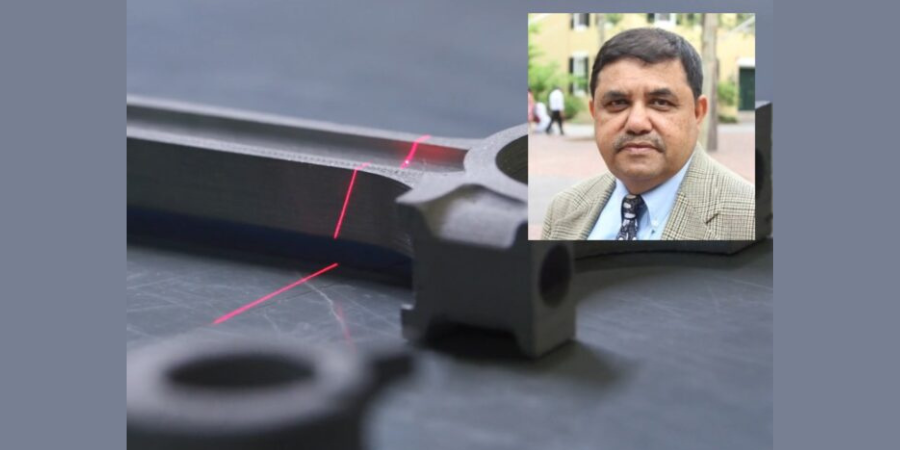
Animesh Bose Vice President of Research & Development Desktop Metal Source: LinkedIn
Additive manufacturing (AM) at a commercial scale began about 30 years ago and has expanded well beyond its original scope. At the beginning, rapid prototyping (RP) was the name for the burgeoning technology; it emerged in the 1990s to bridge the gap between the need for quickly produced prototypes for manufacturers, not just plastic replicas. Rapid tooling (RT) of metal tooling parts joined RP R&D at this time as the research frontier for materials engineers. The current name for these technologies stands at “additive manufacturing,” or AM, though the popular terminology is simply “3D printing.”
Polymers
Developments in polymer AM also advanced rapidly with both extrusion-based technology as well as through advancements in Digital Light Processing of photopolymers. Stratasys Ltd., an American-Israeli manufacturer of 3D printers, software, and materials for polymer additive manufacturing as well as 3D-printed parts on-demand, began using a material extrusion-based process with their FFF (fused filament fabrication) technology to print parts, patented in 1989. This worked by feeding coils of polymeric materials though a printer, which would extrude the material through a small, heated chamber where the material would pass through a small orifice to extrude – or print – in a three dimensional design. This method allowed for very fine, hair-like material to print in a precise X ,Y, and Z motion, building layer by layer. Vat polymerization was another polymer AM technology that gained traction and involved photopolymer processing. Both technologies are currently used for polymeric materials. Interestingly, both processes have been adapted and are being used for metal 3D printing.
Metal AM
In 1993, an MIT engineering professor named Emanuel “Ely” M. Sachs – a man who could be considered the father of metal binder jetting technique – along with his colleagues from MIT patented the process of laying fluent, porous materials in layers between 50- to 100-micron thickness to form 3D parts. They were able to do this by spraying an organic binder on each layer of material where they wanted to increase the height of the part to produce a bonded layer in the selected area. This layering is repeated several times before the unbonded powder is removed immediately or after further processing.
One of the biggest advancements in metal AM happened in 2014 when GE Aviation combined multiple parts into one huge, complex design using a laser-based additive manufacturing method called direct metal laser melting. The end result was an airplane fuel nozzle made of 20 parts for the LEAP™ engine. All of AM came into the limelight, and direct metal laser melting – a melt-based technology – just took off.
But there were limitations to this laser process, the main one being cost and special powder requirements to layer and melt to form the part. The process was also technologically intensive and not fast enough for high volume production (as would be necessary for automotive or consumer good-type application).
Binder Jetting Technology
Binder jetting that had been developing in the early 2000s started to gain traction as a non-melt-based process for high volume mass production. Instead of melting the powder material, a binder is used to adhere the powder metal layers where needed. This method of printing results in a more uniform final part microstructure compared to the melt-based processes. ExOne, a binder jet 3D printing company, pursued the binder jetting technology using a license from MIT. In 2015, Desktop Metal was formed, and they focused on high volume mass production by binder jet using their Single Pass Jetting (SPJ™) technology. As binder jet gained traction, other companies entered the market (HP, GE, and Digital Metal). Desktop Metal recently acquired ExOne and efforts at developing standards for the technology are in full swing.
Heat Treating of AM Metals
Stainless Steels
There are two popular types of stainless steel for AM. The first is 17-4 PH, a precipitation-hardened stainless steel, which I like to call an “all purpose” stainless steel. When heat treated, one can achieve varying levels of strength, hardness, and elongation; and since it’s stainless steel it has a reasonable corrosion resistance. The aging treatments are already well-established – for example, H900, H1100, etc. The other popular grade is 316L, a non-heat treatable grade used in the food industry among others. Now, most stainless steels have chromium and nickel in decent amounts, so companies have developed a grade which is called “nickel-free stainless steel” for applications where people might be allergic to nickel. This class of alloy is also heat treatable. There are many more stainless steel grades that are being developed by the binder jet process.
Low Alloy Steels
Many low alloy steels are used in AM. For example, 4140 and 4340 have various, small amounts of alloying elements. These low alloy steels also need to be heat treated.
Tool Steels
Again, most tool steels are heat treatable. One of the most popular grades is H13; it is a tool steel that is heat treatable and can achieve fairly high hardness. It’s used for dies and other types of tooling.
Then, there is a category of tool steels known as A2 and D2; those are steels in which the strength can be changed through heat treatment.
Metal Alloys with Binder Jetting
There are also non-steel alloys that are used in binder jetting and require heat treatment. One example is nickel-based alloys, which fall in the broad category of super alloys. With some of these alloys, a heat treater would solutionize the part by taking it to a high temperature (950-1000°C), hold it for 60 minutes, and then quench in water, high pressure gas, or (in some instances) in air. The part then undergoes an aging treatment for several hours, depending on part thickness.
Additionally, there is a class of copper alloys with small amounts of zirconium and chromium that is heat treatable. These alloys have lower thermal and electrical conductivity compared to pure copper but have an advantage of higher strength and hardness over pure copper, which is very soft and malleable. For example, in applications that require additional strength and hardness compared to copper, the copper zirconium-chromium-based alloys may be appropriate since their strength and hardness can be increased by heat treatment.
This is just an introduction to the many alloys that have been used in binder jetting that need heat treatment.
Future of Binder Jet and Heat Treat
While heat treaters know about AM in the medical and aerospace industries, AM will likely gain more traction in the automotive industry. Presently, these are relatively small parts, but you will begin to see larger components coming from AM; one of the things to be aware of is that AM can create organic shapes, including all kinds of twisted and complex metal geometries. To ensure that these organic shapes do not distort or droop, larger parts must be well-supported. The development of a software known as Live Sinter™ by Desktop Metal offers the possibility of negatively distorting a complex shaped part (in the green state) so that after sintering, the part shrinks and distorts to eventually provide the desired complex shape at the end. This allows for the possibility of sintering parts either with minimal or without any support structures.
Heat treaters can also anticipate high volume AM production. This is one of the major focuses for binder jet engineers – to reduce costs for most automotive parts – as it will make AM very appealing to this cost-conscious industry.
Finally, optimizing sintering processes and related equipment for AM parts will result in meeting the production demands of the industry, and this will lead to AM parts being seen in heat treat shops more regularly. It would not be a stretch to consider (since there are heat treatments where gas atmosphere quenching at high pressures is possible), that the complete heat treatment cycle may be performed in the same furnace.
About the Author: Animesh Bose is the vice president of Research & Development at Desktop Metal, where he is responsible for building out the company’s palette of materials that can be used to print quality parts. He has been involved in the area of powder metallurgy and particulate materials (PM) for more than thirty years.







 Find heat treating products and services when you search on Heat Treat Buyers Guide.com


 William “Bill” Cleary



 Source:










 Heat Treat