Doug Glenn

Special Report: MTI & IHEA Combined Meeting Photo Gallery

Special Report by Doug Glenn, Heat Treat Today Publisher

Doug Glenn, Publisher, Heat Treat Today

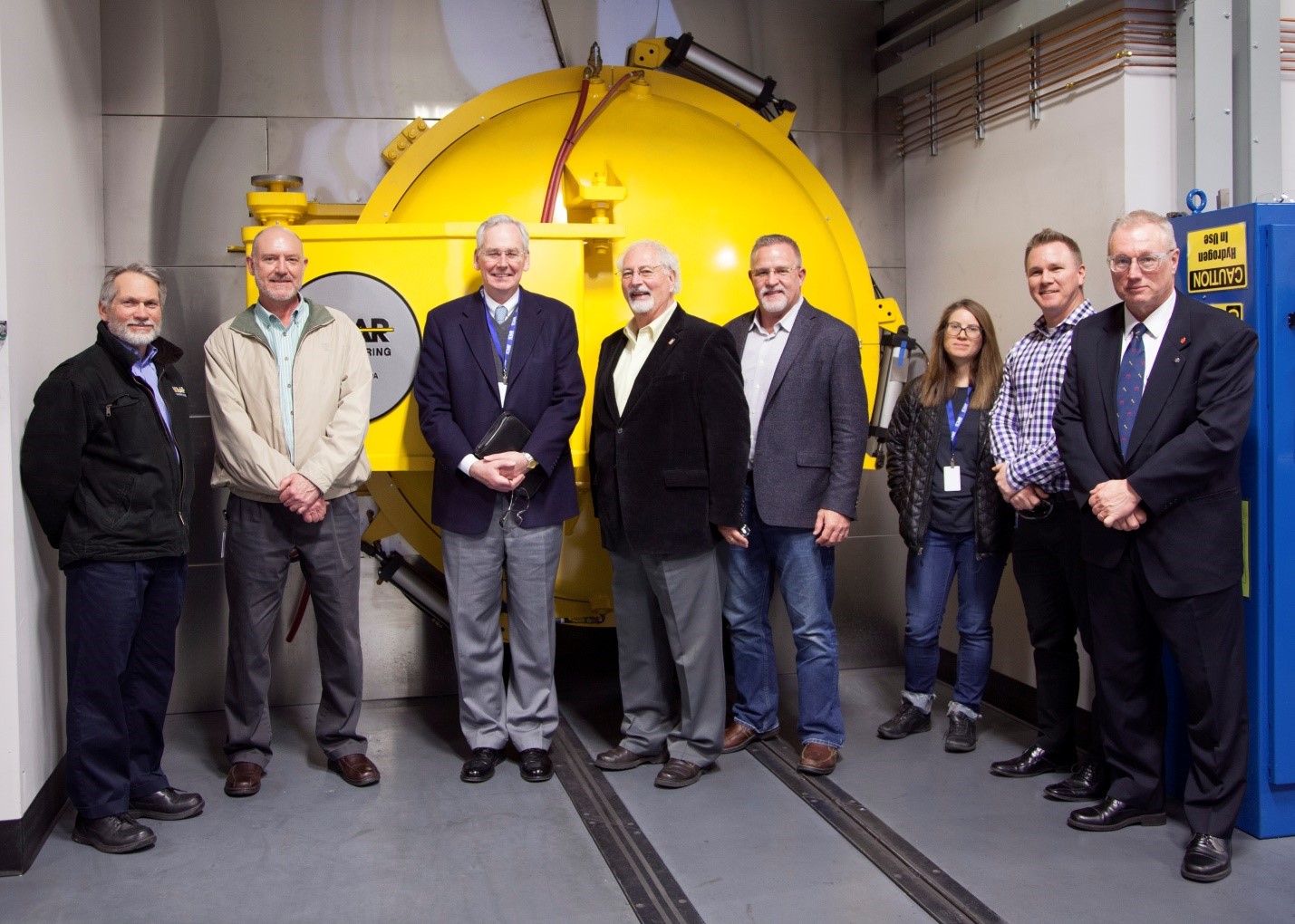
As mentioned in yesterday's special report, the Metal Treating Institute (MTI) and the Industrial Heating Equipment Association (IHEA) kicked off their combined triennial meeting yesterday in Scottsdale, Arizona, at the Talking Stick Resort.

For manufacturers with in-house heat treat departments, this event carries significance  . . . even though it is not an event many (or any) of you might attend. It's at this event where the suppliers of your equipment, components, technology, and know-how update and hone their skills for helping you accomplish the heat treating you do every day.

Because many of you in the aerospace, automotive, medical, and energy sectors may know and recognize some of the attendees at this event (and because we all like seeing OUR pictures online!), today's Special Report is a selection of photos taken at last night's Opening Reception. Enjoy today's Special Report and let your favorite vendor know you saw them on Heat Treat Today if/when you see them next.

Also, special thanks goes out to these three generous sponsors for helping to underwrite the cost of this event:

Photos from Opening Reception:


Special Report: MTI & IHEA Combined Meeting Photo Gallery Read More »

One Fix for Heat Treat Brain Drain

Doug Glenn, Publisher, Heat Treat Today

A Special Report by Doug Glenn, Publisher

Manufacturers with in-house heat treat would benefit from what’s going on this week in Scottsdale, Arizona. As many of you have expressed, experts are leaving your organizations, and they are not easy to replace.

Heat Treat Today recently had a manufacturer in the mid-Atlantic region call to say, “We need help with stress relieving!” They had nowhere to turn so they called us. This same type of thing is happening time and time again across the country as those with in-house heat treat knowledge retire or move on to other companies.

Where does a manufacturer with in-house heat treat turn for heat treating knowledge?

Besides subscribing to one of Heat Treat Today‘s regular newsletters and visiting the website periodically, in-house heat treaters can tap into the resources that have converged on Scottsdale this week. Starting today at the Talking Stick Resort in Scottsdale, North America’s largest gathering of heat treating industry professionals are holding a combined meeting with two of the nation’s most prestigious thermal processing organizations:

Both of these organizations have separate semi-annual meetings, but once every 3 years they have a combined mega-meeting that brings in one of the largest gatherings of heat treat intelligence in all of North America. Companies from Canada, Mexico, and the USA are represented. This week’s meeting has drawn over 200 attendees and is full of educational sessions and networking opportunities to keep North America’s heat treat minds fresh and progressive.

Companies with in-house heat treat should consider tapping into one or both of these organizations to help them fill the brain drain that is happening and will continue to happen over the next decade.

Brain drain is a real phenomenon.

Heat Treat Today spoke with one company who estimated that up to 60 percent of the heat treat brains in their organization will retire within the next 10 years. This is not an isolated case. Baby boomers, who make up the vast majority of today’s heat treat industry brain trust, are beginning to retire and there are not enough metallurgists graduating from North American universities to fill the gap. Where are these manufacturers with in-house heat treat going to turn for specific, real-life heat treat help?

MTI CEO, Tom Morrison seen here with Mary and Doug Glenn of "Heat Treat Today" in Scottsdale, Arizona, as plans are being finalized for this week's big heat treat brain trust meeting.
MTI CEO, Tom Morrison takes a “selfie” with Heat Treat Today’s Mary and Doug Glenn in Scottsdale, Arizona, as plans are being finalized for this week’s big heat treat brain trust meeting.

Both MTI and IHEA encourage manufacturers with in-house heat treat to join their organizations. This would be a great place to start. Both of these organizations are capable of fielding nearly any heat treat-related questions and if they don’t know the answers, they know people who will know the answers.

Both organizations also provide excellent training programs targeted especially for manufacturers with in-house heat treat.

  • IHEA’s combustion, safety, and induction seminars are all highly rated and reasonably priced. For more information on these courses, click here.
  • MTI offers a wide spectrum of heat treating courses in their “Heat Treat Academy”. Some are free, some come at a price. Click here for more information on the Heat Treat Academy.

So, here is a challenge. If you are a manufacturer with in-house heat treat, and your company is located near Scottsdale, Arizona, I suggest you send one or more of your top heat treat personnel over to the Talking Stick hotel/resort/casino sometime on Tuesday or Wednesday to join in on the meetings of top heat treat minds. If you’re brave and compulsive enough to take the challenge, please send me an email and I’ll help make the arrangements.

Otherwise, think about joining one or both of these organizations.

Finally, you can always contact Heat Treat Today with any heat treat related problems or questions.


One Fix for Heat Treat Brain Drain Read More »

IHEA Report for March Shows Surge in Vehicle Sales, Home Starts

The Industrial Heating Equipment Association’s monthly economic executive summary reported very strong gains for both automotive and light truck sales as well as new home starts. Regarding new home starts, here is an extended quote for the 12-page monthly report available in full to IHEA members:

The news in the housing sector is very good right now and that is in the face of those headwinds that have been referenced all year. Thus far the consumer is shrugging out the higher price of homes as well as the bigger down payments and there has been buying at a variety of levels – from the starter home to the much more expensive “McMansion.” The fastest growing segment is still the multi-family home and there are still major shortages of this kind of abode. The recovery this month after a down period the month before is somewhat related to the weather, but not as much as would have been assumed this time of year. There is evidence that housing activity is surging in the jobs data as well – over 60,000 jobs added in construction this month. The majority of these are in the housing sector as there has not been a huge recovery in either commercial construction or in public sector activity.


The dozen indicators reported were split evenly between those that were up and those that were down. Significant is the fact that the PMI saw a slight dip but has been strong, in the mid-sixties, for quite some time, reaching a peak in December 2017 at 70.

Anyone interested in receiving a copy of the full report which includes statistics and analysis of the following indicators should contact Anne Goyer, Executive Director of IHEA. You can email Anne by clicking here.


IHEA Report for March Shows Surge in Vehicle Sales, Home Starts Read More »

IHEA Report Shows Industrial Capacity Utilization at Peak Levels

The monthly heat treat industry report released by the Industrial Heating Equipment Association (IHEA) showed year-high industrial capacity utilization coming in with a 77.1% figure, the highest number seen in recent history.

Industrial Capacity Utilization is at a 12-month high.

The report covers roughly a dozen other key indicators important to many in the heat treating industry. The January report also showed increases in auto production, new home starts, and a handful of other regularly-reported indices. There were some falling numbers: steel consumption and capital expenditures both dipped in December.

Other indices in the report include: metal prices (aluminum, copper, steel, nickel), the purchasing managers index, durable goods shipments, and factory orders to mention a few.

The report does not only report on indices, it also includes commentary from IHEA’s economic consultant who is keenly involved in the heat treating industry.

To receive these monthly reports, contact Anne Goyer, Executive Director at IHEA.

IHEA Report Shows Industrial Capacity Utilization at Peak Levels Read More »

Heat Treating Combustion Company Expands Distribution in Mexico

AOM Industrial, SAS de CV was recently contracted by Olstrad Engineering Corporation to supply NOXMAT burners and spare parts, Elektrogra valves and actuators, Econox atmosphere probes and controls, as well as Olstrad combustion control systems in Mexcio. AOM and Olstrad entered into the dealer agreement in late April.

The dealer arrangement adds to AOM’s already impressive line of products and gives Olstrad clientele in Mexico a convenient, local and experienced office in Mexcio.

Click here to find out more about Olstrad Engineering Corporation.

AOM is located at:

AOM Industrial, SAS de CV

Bari 146, Nuevo Las Puentes

Apodaca, NL, CP 66612 – Mexico

+52 (81) 8647-0391

aomindustrial.com.mx

Heat Treating Combustion Company Expands Distribution in Mexico Read More »

Component Repair Technologies Featured in Crain’s Cleveland Business Article: Heat Treat Furnace Highlighted

A recently article in Crain’s Cleveland Business news (click here for full article) featured Component Repair Technologies (CRT), an aerospace heat treating company that performs a wide variety of in-house aircraft engine repair processes including machining, flame spray applications, welding, heat treat, chrome and nickel plating, shot peening, nondestructive testing, visual and dimensional inspection, and acid and alkaline cleaning . The company works on a wide variety of parts from several different engine models.

The Crain’s article featured a photo of a large vertical vacuum furnace manufactured by Solar Manufacturing, Inc. The furnace was designed and built specifically to CRT requirements.

The furnace is critical for CRT’s daily operations and has logged more than four thousand cycles since being commissioned over five years ago. The unit is in use virtually 24 hours a day, seven days a week.  The furnace pictured has a working hot zone 84″ in diameter by 60″ high and will operate to 2400ºF in high vacuum conditions.  The furnace has a hearth capacity of 5,000 lbs. and includes a 300 HP motor fan and heat exchanger for rapid argon gas quenching at up to two atmospheres overpressure.  Under heating and in the vacuum mode, the furnace operates to the mid-10-5 Torr vacuum range — approximately the same vacuum level found on the surface of the moon.

Elevator hearth vacuum furnace at Component Repair Technologies, Mentor, Ohio
(Photo courtesy: Component Repair Technologies, Inc. )
Elevator hearth vacuum furnace at Component Repair Technologies, Mentor, Ohio

Component Repair Technologies Featured in Crain’s Cleveland Business Article: Heat Treat Furnace Highlighted Read More »

360 Degree Part Design: Listen to Your Heat Treat Department

Publisher’s Note: Joe Powell, President of Akron Steel Treating Company and IQ Technologies, raises a very compelling point that part designers should work closely with heat treaters to achieve the lowest possible cost of production. In his introduction, he lists out some lofty goals that were set by an ASM Committee back in 1999…a meeting I was fortunate to attend. The goals were lofty then, and they continue to be lofty now. Mr. Powell offers a road map for getting closer to these goals.

Enjoy the read.

Doug Glenn, Publisher


By Joe Powell, President, Akron Steal Treating & IQ Technologies


It’s now 2017, almost 18 years since the ASM R+D committee set forth its Vision 2020, a list of goals for the heat treating industry by the year 2020:

BACKGROUND AND INDUSTRY NEEDS

Industry needs have been determined from the information brought forth by various

committee efforts and surveys over the last five years. Heat treating industry executives identified many of these needs, and prepared a view of the ideal future. This view has been named Vision 2020, and the established performance targets, based in energy, environment, productivity and quality, and industry performance are:

  • Reduce energy consumption by 80%
  • Improve insulation
  • Achieve zero emissions
  • Reduce production costs by 75%
  • Increase furnace life ten-fold
  • Reduce the price of furnaces by 50%
  • Achieve zero distortion and maximum uniformity in heat treated parts
  • Return 25% on assets
  • Create 10-year partnerships with customers.”

It appears our industry has a way to go before meeting the Vision 2020 goals.  Whether you work for a captive heat treating division of a part manufacturer or do heat treating at a commercial heat treating shop for many different part manufacturers, the goals set forth in 1999 are still worth pursuing.

What can we do to speed up the process of achieving these goals?   

The above goals can be summarized as making “better parts” at a total lower cost of manufacture.   Heat treating is a crosscutting technology.  To become more efficient in the heat treating process we must look at not only our heat treating processes, but also look concurrently “upstream” and “downstream” from the heat treating process.  All the parties in the part making value stream must collaborate to eliminate waste in each of their own processes as well as the waste that occurs from the interaction between each process.  Doing the proper processes in the right order is also key to eliminating waste.  For example, create a “near net shape” part before carburizing so the carburize layer that took so long to diffuse into the part is not removed in the post-hardening grinding operation.

[blocktext align=”left”]Heat treating considerations must become part of the design and engineering processes from their inception. Heat treaters must give their input for what material is best for the part application, considering not only the desired part fit and function, but the needed physical and mechanical properties. [/blocktext]

Two of the above goals: “reduce production costs by 75%” and “achieve zero distortion and maximum uniformity in heat treated parts” will require innovations in not only heat treating processes, but also heat treating equipment.   The modeling of the heat treating process must become an integral part of the FEA modeling of the part design.  The designer should focus on fit and function as well as achieving the needed mechanical properties, all at the lowest overall cost of manufacture.   Part design engineers cannot meet these goals employing the same heat treating processes and using the same alloys of material that have been used for the last 100 years.   Innovations in heat treatment must be developed collaboratively, crosscutting the many silos of expertise that are needed for making the part.

Part distortion after heat treatment costs part makers billions of dollars each year in post-heat treat operations.  Achieving predictable part distortion after quenching with optimal grain refinement for a given alloy of steel depends on selecting the proper heat treat methods, e.g., proper racking, uniform heating, uniform atmosphere protection and most importantly the proper quenching process.  However, the selection of the optimal quenching method is only enabled by a coordinated choice of the type of alloy used.  Although higher alloy steel allows the use of gas quenching, air hardening steels usually mean higher cost.  In addition, a higher hardenability steel does not always equate to the optimal hardness, ductility and part compressive surface stress state.  The part designer must work with both the steel maker and the heat treater to optimize all three dimensions of hardened part properties.

Again, heat treating considerations must become part of the design and engineering processes from their inception. Heat treaters must give their input for what material is best for the part application, considering not only the desired part fit and function, but the needed physical and mechanical properties.  If we are to minimize waste in post-heat treat operations to achieve proper fit and function, at the lowest overall cost of manufacture, we need to collaborate with all the parties in the part making value chain.

Heat treating equipment in most heat treating departments is the same basic designs as decades ago.   The sunk costs in equipment the heat treater often dictates what heat treat processes will be done to the parts with little or no regard to the effect heat treatment has on total overall cost of manufacture.  Since heat treatment costs are typically between 5% to 10% of the total part cost, demonstrated cost savings from innovative heat treatments alone are rarely enough to justify a change to a new type of processing equipment even if demonstrated to be clearly better.

However, if the total cost of heat treatment includes an examination of the waste created “upstream” and “downstream” of the heat treatment process, often a change in heat treat processes can be shown to have a much larger effect on lowering he overall cost of parts making while making a better part for the end-user.  Achieving a proper balance of hardness and ductility in the part can be enhanced by also achieving a higher compressive surface stress state after quenching.   Higher compressive residual stresses can significantly increase part performance or yield higher power density at nominal cost.   Regardless of part hardness, compressive residual surface stress will usually enhance part wear and fatigue performance.   But to enable the optimal intensive quench that gives compressive residual surface stresses requires the part designer to collaborate with the heat treater.

A faster quench cooling rate usually will provide higher hardness to a deeper level in the part for a given alloy of steel.   Most heat treat metallurgists believe the higher cooling rate also means more part distortion or a higher probability of part cracking.  So many parts are designed around higher alloy air hardening grades of steel to get lower distortion after quenching.  However even gas quenching can cause unacceptable distortion in thin parts with complex shapes.

[blocktext align=”right”]Modern heat treat process modeling and intensive quenching practices have shown that the relationship between the probability of part cracking and rate of quench cooling is a bell curve. [/blocktext]

Modern heat treat process modeling and intensive quenching practices have shown that the relationship between the probability of part cracking and rate of quench cooling is a bell curve.  While it is true at very low cooling rates, such as gas quenching and molten salt quenching, there is a very low probability of part cracking, we also now know that at very high cooling rates which are uniformly applied to the part shell from the very beginning of the quench, the probability of part cracking is also very low.   The key is to eliminate the non-uniformity part cooling caused by film boiling at the very beginning of the quench process.

The benefit of “uniform + intensive” quench cooling is predictable part distortion and optimal grain refinement for a given alloy of steel.  In addition, intensive quench cooling develops “current” compressive surface stresses that hold the part like a die.  Even after tempering, high residual compressive surface stresses remain when designed into the part with the proper material alloy selection and the proper uniform and intensive quench process make for better parts at a total lower cost.   An added benefit is the elimination of the oil quenchants for increased safety, decreased environmental impact and cleaner parts without washing.

CONCLUSION:        

As heat treaters today, we must find the optimal processes and apply them in the best available equipment that eliminates the pains of heat treating from distortion and non-uniform properties for not only our customers, but our customers’ customer.  Obviously, we heat treaters cannot do this in a vacuum.  (Pun intended!)  Heat treating is integral and crosscutting with many different process technologies in the part making value stream.

For the heat treating industry to achieve the goals set forth for us so long ago, we must collaborate with all the other members in the part making value chain to optimize the heat treating processes we have always used and in some cases find new ways.  The simple fact is everyone at each step of part design and manufacture must collaborate to eliminate waste for the benefit of all in the lean value stream.  The order of processing is also very important.  To get it all right, the part making value map cannot be done from the individual silos of expertise.

Therefore, the selection of the optimal heat treatment process for a better part at a lower overall cost of manufacture is only enabled by a collaboration of the part designers, material makers and manufacturing engineers all working with their heat treater.


360 Degree Part Design: Listen to Your Heat Treat Department Read More »

Aerospace Manufacturer Replaces Batch IQs with Integrated Vacuum System

A North American based aerospace manufacturer is replacing two integral quench batch furnaces with an integrated vacuum furnace heat treat system. In addition to running low pressure carburizing (LPC), the vacuum heat treat furnace is also capable of austenitizing, brazing, gas quenching, cryogenic treating and tempering. The SyncroTherm(r) system, provided by ALD Vacuum Systems, Inc. a wholly owned subsidiary of Advanced Metallurgical Group N.V., is believed to be the first of its type to be installed west of the Mississippi. This is the third unit being installed in the aerospace industry capable of performing processes compliant with Nadcap (National Aerospace and Defense Contractors Accreditation Program). The vacuum heat treat furnace will have five independently controlled hot zones each rated for load sizes of 24″ x 20″ x 9″ high and up to 110 lbs. The complete systems will be a “lights-out,” fully-automated system with individual part tracking and complete process history retention along with a consistent process cadence.

Aerospace Heat Treating
Photo Credit: www.corelitecomposites.com

Aerospace Manufacturer Replaces Batch IQs with Integrated Vacuum System Read More »

ASM International Developing Stronger Relationships

ASM Leadership Visits Solar Atmospheres & Solar Manufacturing
Pictured left to right: Jim Nagy, President, Solar Manufacturing; Don Jordan, FASM, Vice President/Corporate Metallurgist, Solar Atmospheres; Bill Mahoney, Managing Director, ASM International; Fred Schmidt, Vice President, ASM; Ron Aderhold, Associate Managing Director and Chief Information Officer, ASM; Rachel Stewart, Student Board Trustee, ASM; Jamie Jones, VP of Operations, Solar Atmospheres; Roger Jones, Corporate President, Solar Atmospheres. Photo Courtesy: Solar Atmospheres

Souderton, PA – ASM International visited Solar Atmospheres on Wednesday, March 22 to renew stronger relationships with supporting companies, and to gain a better understanding of Solar’s commitment and involvement with ASM.  Managing Director, Bill Mahoney, along with Ron Aderhold, ASM Associate Managing Director and Chief Information Officer, Fred Schmidt, ASM Vice President, and Rachel Stewart, Student Board Trustee, met with representatives from Solar and toured the facility.

ASM presented firsthand information on the objectives and progress of the ASM renewal, spearheaded by Mahoney.  Some of the objectives are pursuing an easier renewal process, developing stronger relations with affiliate societies, improving professional development, and developing a culture of excellence within the headquarters at Materials Park, OH.

Solar Atmospheres came away from this meeting with a high level of confidence with the new team at ASM Materials Park, and we are encouraged with the early results from the renewal deployments, and Solar offers complete support of the program for the betterment of the society.

ASM International Developing Stronger Relationships Read More »

Online Tickets Now Available for ITPS 2017

The online ticket shop for ITPS 2017, 2nd International Thermprocess Summit, held at the InterContinental Hotel in Düsseldorf, Germany on June 27 and 28, 2017 is now open at www.itps-online.com.  The tickets for the two-day conference cost Euro 950 (approximately $1,010) plus VAT. Reduced rate tickets (Euro 800/$850 plus VAT) are available for members of VDMA Metallurgy and CECOF (European Committee of Industrial Furnace and Heating Equipment Association).

The ITPS 2017 conference program has also been finalized. High-profile international speakers will include Prof. Dr. Ernst Ulrich von Weizsäcker (Club of Rome / keynote address), Dr. Paul Rübig (EU Parliament) and Dr. Richard Mark Soley (Industrial Internet Consortium).  The conference will address not only scientific and practical aspects of thermo process technology but also the general global, economic and industry policy conditions. The impact of digitization on industry will be presented, in addition to the latest news from selected industrial customer groups (e.g. car manufacturing and the metal processing industry) and new business models. The complete ITPS 2017 program is available at www.itps-online.com.


Successful Duo: Conference and Exhibition

The second part of the Thermprocess Summit will be the exhibition in the foyer of the InterContinental Hotel, complementing the conference. The sponsor this year is LOI Thermprocess GmbH, presenting its capabilities alongside other well-known companies such as Himmelwerk GmbH, Elster GmbH (Honeywell Thermal Solutions), IBS and ITG Induktionsanlagen GmbH. Companies can book stands and sponsor packages. Contact Jennifer Dübelt (e-mail: DuebeltJe@messe-duesseldorf.de; (Tel.: +49 211-4560520) for application forms or visit  www.itps-online.com/exhibition-and-sponsorship.

ITPS & The Bright World of Metals

Four years ago, Messe Düsseldorf, VDMA Metallurgy/Frankfurt, the European thermo process association CECOF and the trade magazine “heat processing” published by Vulkan Verlag launched the ITPS conference and exhibition with great success. Every two years, Düsseldorf becomes the hotspot for the global thermo process industry and the industries that use its products – with ITPS and THERMPROCESS taking place alternately. The international portfolio includes events in Asia and the U.S. The four international technology trade fairs GIFA (International Foundry Trade Fair), METEC (International Metallurgical Trade Fair), THERMPROCESS (International Trade Fair for Thermo Process Technology) and NEWCAST (International Trade Fair for Castings) will take place from June 25 – 29, 2019 in Düsseldorf, Germany. A high-quality program consisting of seminars, international congresses and lecture series will   support the exhibits. Further information is available at www.gifa.com, www.metec-tradefair.com, www.thermprocess-online.com,  www.newcast.com and www.tbwom.com.

For further information about ITPS 2017, contact Messe Düsseldorf North America, 150 North Michigan Avenue, Suite 2920, Chicago, IL 60601. Telephone: (312) 781-5180; Fax: (312) 781-5188; E-mail: info@mdna.com; Visit our web sites www.itps-online.com , www.tbwom.com and

http://www.mdna.com

Social Media Links

Online Tickets Now Available for ITPS 2017 Read More »

Skip to content